

We use cookies to ensure our website works properly and to personalise your experience. Cookies policy
Pravara college of pharmacy chincholi.
Sunscreens remain a cornerstone of photoprotection, yet people with oily skin often avoid them because of greasy texture, shine and concern about clogged pores. This has encouraged interest in herbal formulations, which are widely perceived as lighter and gentler. This narrative review examines what is currently known about herbal sunscreen formulations in relation to the biology of oily skin. It summarises the physiology of sebum production, the principles of ultraviolet (UV) protection and sunscreen testing, and the photoprotective properties reported for aloe, green tea, turmeric, licorice, pomegranate, grape, rosemary, calendula and related botanicals. Formulation strategies suited to oily skin (gels, oil-in-water emulsions and emulgels), preparation and development steps, and quality-control and efficacy evaluation parameters are discussed. Twelve published studies are compared in tabular form, with attention to study design and the type of evidence they provide. The reviewed literature shows that most botanical extracts display antioxidant and anti-inflammatory activity in vitro and, in some cases, in animal or human studies, but that low in-vitro sun protection factor (SPF) values are common, spectrophotometric estimates are frequently over-interpreted, and clinically validated SPF, UVA protection and photostability data for herbal-only products are scarce. None of the studies reviewed enrolled participants selected for oily skin. Botanicals therefore appear better supported as adjuncts to approved UV filters than as stand-alone sunscreens. Research priorities include standardised extracts, validated efficacy testing, oily-skin-specific usability and tolerability studies, and transparent reporting.
1.1 Background
Solar ultraviolet (UV) radiation is the principal environmental cause of sunburn, photoaging and skin cancer, and it is regarded as both a mutagen and a non-specific damaging agent in skin (D’Orazio et al., 2013). Protective behaviours such as shade, clothing and timing of outdoor activity are complemented by topical sunscreens, which are the most widely used photoprotective products. Regular use depends, however, on whether a product is pleasant to wear. For people with oily skin, a heavy or occlusive sunscreen can feel greasy, exaggerate facial shine and, in the perception of many users, aggravate acne. These concerns are a common reason for inconsistent use and make oily skin an important, though under-studied, target population for sunscreen formulation.
In parallel, consumer and academic interest in plant-derived cosmetic ingredients has grown. Botanical extracts are rich in polyphenols, flavonoids and other secondary metabolites that absorb UV radiation, scavenge free radicals or modulate inflammatory signalling, and reviews of the field describe a large and heterogeneous literature (Torres et al., 2020; Hakim et al., 2023). “Herbal sunscreen” has consequently become a popular formulation project, particularly in pharmacy education and in regions with a strong tradition of medicinal plants. The term is used loosely, however. It may denote a product whose only active ingredient is a plant extract, a conventional filter-based product enriched with botanicals, or simply a gel with a natural label. These are scientifically very different things.
1.2 Rationale, aim and objectives
The rationale for this review is that two bodies of knowledge, the biology and cosmetic behaviour of oily skin on one hand and the evidence for botanical photoprotection on the other, are rarely examined together. A formulation that looks promising in a cuvette may be unsuitable for sebum-rich skin, and a texture that suits oily skin may offer no verified protection. The aim of this review is therefore to critically appraise the current evidence on herbal sunscreen formulations with particular reference to their suitability for oily skin.
The specific objectives are to: (i) describe the physiology and cosmetic characteristics of oily skin; (ii) outline the science of UV protection and sunscreen testing; (iii) review the photoprotective properties and limitations of selected botanical ingredients; (iv) discuss formulation strategies and preparation steps appropriate to oily skin; (v) summarise quality-control and efficacy evaluation parameters; (vi) compare published studies of herbal photoprotective preparations; (vii) examine safety, regulatory and methodological limitations; and (viii) identify research gaps and priorities.
1.3 Review approach
This is a narrative review, not a systematic review, and no formal protocol, risk-of-bias tool or meta-analysis was used. Literature was identified through targeted searches of open web indexes and publisher, repository and regulatory pages using combinations of terms such as herbal sunscreen, photoprotection, botanical extract, oily skin, sebum, emulgel, in-vitro SPF and preservation challenge test. Peer-reviewed articles, review papers, international standards and regulatory documents were prioritised. Because access to some databases was restricted, the coverage should be considered illustrative rather than exhaustive. Only sources whose bibliographic details could be confirmed are cited, and the few records that could be only partly confirmed are marked with a dagger (†) in the reference list. Where a study did not report a parameter, this is stated rather than inferred. Evidence is labelled throughout as in vitro, animal, human or review-level evidence, because conclusions that are acceptable at one level are not transferable to another.
2. Oily Skin: Physiology, Characteristics and Cosmetic Implications
2.1 Sebaceous gland physiology
Sebaceous glands are found throughout the human body except on the palms and soles, and they secrete sebum, a lipid mixture that reaches the surface through the hair follicle. Most sebum lipids are also produced elsewhere in the body, but wax esters and squalene are characteristic of the sebaceous gland (Smith & Thiboutot, 2008). Sebaceous glands are active at birth, become relatively quiescent in childhood and expand markedly at puberty, which explains why oily skin and acne typically emerge in adolescence (Endly & Miller, 2017). Sebum production is influenced by hormones, genetic factors, diet and environmental conditions, so oiliness is variable between individuals and across the face; it is generally most pronounced in the central facial region.
Sebum is not simply a nuisance. It contributes to the skin’s lipid film, to water retention in the stratum corneum and to antimicrobial defence, and its functions have been debated for decades (Smith & Thiboutot, 2008). Oily skin (seborrhoea) is the cosmetic and clinical expression of excess secretion. Endly and Miller (2017) note that sebum output above roughly 1.5 mg per 10 cm² over three hours is regarded as excessive, although the boundary between normal and oily skin is in practice assessed subjectively and by instrument, and is not sharply defined.
2.2 Characteristics and consequences
Clinically, oily skin appears shiny and feels greasy, often with visibly enlarged follicular openings, and it is associated with acne vulgaris and seborrhoeic conditions (Endly & Miller, 2017; Smith & Thiboutot, 2008). These characteristics have direct consequences for topical product design, summarised in Table 1. The implications column reflects design reasoning derived from these properties and is not itself a finding of the cited studies.
Table 1: Characteristics of Oily Skin and Their Implications for Sunscreen Formulation
| Characteristic | Description | Implication for sunscreen design |
|---|---|---|
| Excess sebum secretion | Sebum output above about 1.5 mg/10 cm² per 3 h is considered excessive (Endly & Miller, 2017). | Vehicles should add little additional oil phase and should feel light rather than occlusive. |
| Shine and greasy feel | Visible gloss, particularly on the forehead, nose and cheeks. | After-feel, matte appearance and spreadability are central to acceptance and consistent use. |
| Characteristic lipid composition | Wax esters and squalene are specific to sebaceous lipids (Smith & Thiboutot, 2008). | Lipid-soluble actives and oils interact with sebum, so stability and sensory behaviour should be tested on skin, not only in the container. |
| Enlarged follicular openings | Larger visible pores are often attributed to oily skin (Endly & Miller, 2017). | Particulates, waxes and heavy emollients can be perceived as pore-clogging; texture and residue need evaluation. |
| Association with acne | Sebum is one of several contributors to acne vulgaris (Smith & Thiboutot, 2008). | Ingredient choice should consider comedogenic potential and irritancy, ideally with human data. |
| Variable regional oiliness | Oiliness differs across facial regions and individuals. | Studies should record sebum level (for example by instrument) rather than rely on self-described skin type. |
2.3 Comedogenicity and why it matters for herbal products
Concern about pore-clogging is long-standing. Kligman and Mills (1972) described “acne cosmetica”, in which cosmetic ingredients appeared to induce comedones, and subsequent work ranked ingredients using the rabbit ear assay and human models (Fulton, 1989). Draelos and DiNardo (2006) later argued that the comedogenicity concept needs re-evaluation, because animal ratings of single raw materials do not reliably predict the behaviour of a finished formulation on human skin, where concentration, vehicle and other ingredients matter. Two practical points follow. First, “non-comedogenic” is a claim that should be supported by testing of the finished product and should not be inferred from an ingredient list or from a light, non-greasy feel. Second, greasiness and comedogenicity are different properties: an oily-feeling vehicle is not necessarily comedogenic, and a pleasant dry-touch vehicle is not necessarily safe for acne-prone skin.
This matters for herbal formulations because natural origin is frequently, and wrongly, equated with suitability for oily skin. Many botanical preparations use fixed oils, waxes or butters as carriers, and their behaviour on sebum-rich skin is hard to predict. Usability on oily skin is therefore treated in this review as an empirical question that has to be answered by measurement.
3. Ultraviolet Radiation and the Science of Sun Protection
3.1 UV radiation and skin
The UV region of sunlight reaching the earth is conventionally divided into UVB (280–320 nm) and UVA (320–400 nm). UVB is absorbed mainly in the epidermis, where it produces direct DNA damage, erythema and immunosuppression, whereas the longer wavelengths of UVA penetrate more deeply and act largely through reactive oxygen species (ROS) (D’Orazio et al., 2013). UVA constitutes the great majority of the UV that reaches the surface (Pannakal et al., 2025). In the dermis, UV-induced oxidative stress is associated with induction of matrix metalloproteinases, collagen degradation and photoaging (Fisher et al., 2002). Figure 1 summarises these differences in simplified form.
3.2 Sun protection metrics
The sun protection factor (SPF) expresses the ratio of the minimal erythema dose on protected skin to that on unprotected skin and is therefore a measure of protection against erythema, which is driven mostly by UVB. It is determined in vivo on human volunteers according to ISO 24444 (International Organization for Standardization [ISO], 2019b). UVA protection is characterised separately: in vitro, ISO 24443 measures UVA protection by transmittance through a thin film on a roughened substrate (ISO, 2021), and a complementary in-vivo method exists (ISO, 2022). Broad-spectrum labelling also relies on the critical wavelength, the wavelength below which 90% of the integrated absorbance lies, with a value of at least 370 nm used in European recommendations (European Commission [EC], 2006). Photostability, meaning retention of protective capacity after irradiation, is a further requirement because some filters degrade on exposure (Gaspar & Maia Campos, 2006).
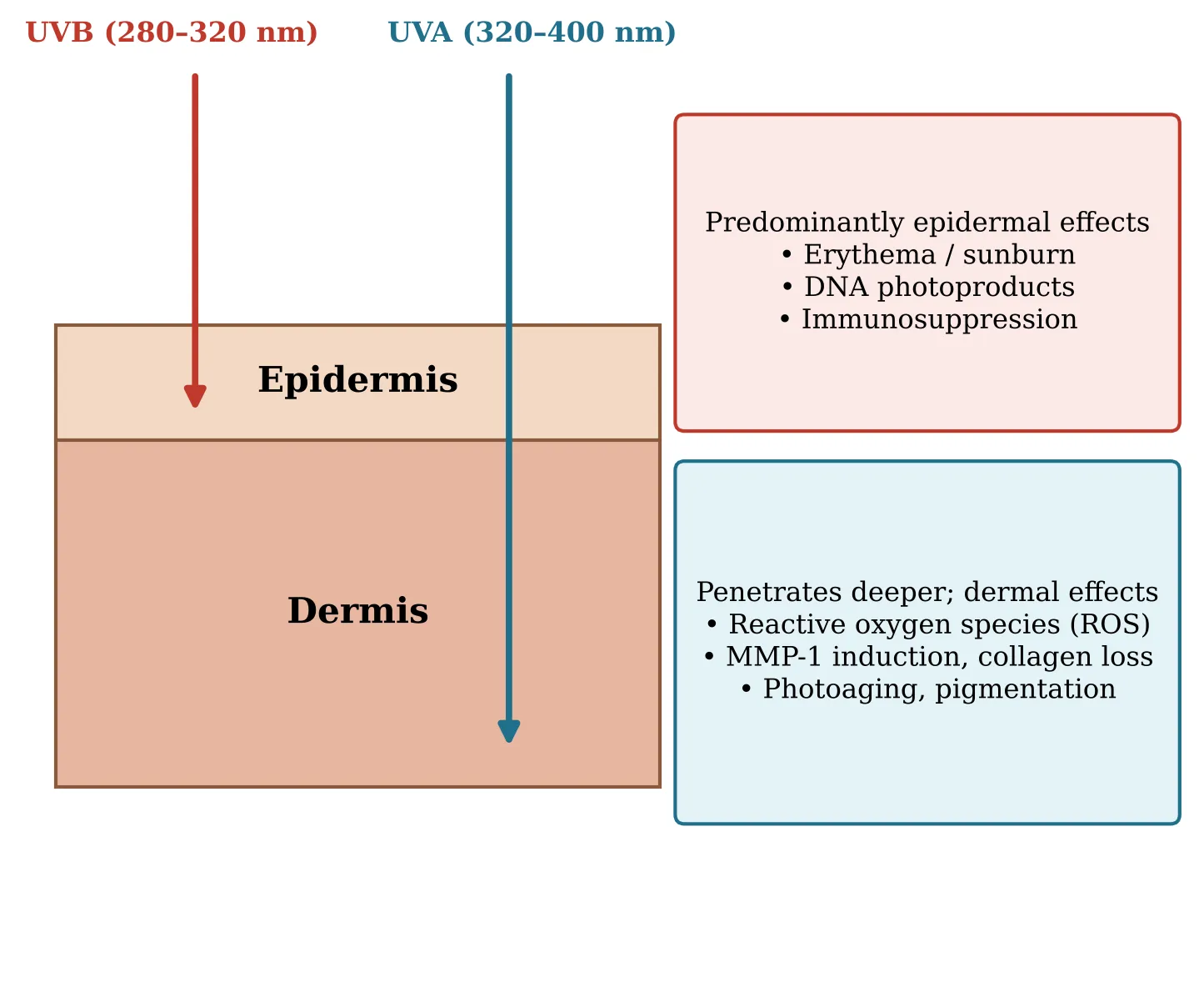
Figure 1: Penetration of UVB and UVA Radiation into Skin and Associated Biological Effects. Original Conceptual Illustration Prepared by the Author, Simplified from D’Orazio Et Al. (2013); Not to Scale.
Regulatory frameworks define how these metrics may be used. In the United States, sunscreens are over-the-counter drugs regulated under monograph M020 (U.S. Food and Drug Administration [FDA], 2021). In the European Union, they are cosmetic products under Regulation (EC) No 1223/2009 (European Parliament & Council of the European Union, 2009), with efficacy and labelling recommendations set out in Commission Recommendation 2006/647/EC (EC, 2006). These documents are discussed further in Section 9.
3.3 In-vitro spectrophotometric estimation and its limits
Because in-vivo testing is expensive and requires ethical oversight, laboratory studies of herbal preparations usually rely on a spectrophotometric approach based on the equation of Mansur et al. (1986), which simplifies the method of Sayre et al. (1979). A dilute solution of the sample is scanned from 290 to 320 nm at 5-nm intervals and the SPF is estimated as SPF = CF × Σ EE (λ) × I (λ) × Abs (λ), where CF is a correction factor of 10, EE (λ) the erythemal effect spectrum, I (λ) the solar intensity and Abs (λ) the absorbance of the solution. The method was applied by Dutra et al. (2004) to commercial emulsions as a simple, preliminary screening tool.
The approach is useful for ranking extracts within one laboratory but it should not be treated as a measurement of sunscreen performance. The absorbance of a solution is not equivalent to the protective film formed on skin; the method ignores film thickness, vehicle effects, photostability and UVA protection; and results depend strongly on solvent and concentration. Ácsová et al. (2021) showed this clearly with vegetable oils. The five most promoted oils had in-vitro SPF values between 0.0 and 0.4 and in-vivo values of 1.2 to 2.8, far lower than the values in earlier reports, which the authors attributed to deviation from the original method; they further concluded that the dilution approach is unsuitable for materials with very little photoprotection and that an SPF below 1 is physiologically impossible and meaningless. A study of Sideritis raeseri extracts illustrates a related problem: spectrophotometric SPF values of the order of 23–26 fell markedly over six days at room temperature, indicating extract instability that a single measurement would hide (Xhuvani et al., 2026).
3.4 Filters, botanicals and non-filtering photoprotection
UV filters absorb, scatter or reflect radiation and are the basis of regulatory SPF claims. Botanicals can contribute in three distinct ways: by absorbing some UV (usually weakly in the UVB range), by neutralising ROS and inflammatory signals after radiation has entered the skin, and by supporting skin barrier or repair processes. The second and third mechanisms constitute biological protection, which is not measured by the SPF test. They are nevertheless of genuine interest, and reviews of botanical photoprotection typically present such agents as complementary to, rather than replacements for, filters (Torres et al., 2020). This distinction underpins the interpretation of the studies reviewed in Section 8.
4. Herbal Ingredients Investigated for Photoprotection
4.1 Mechanistic framework
Most reported photoprotective effects of botanicals are mediated by polyphenols and related compounds that scavenge radicals, chelate pro-oxidant metals, and modulate redox-sensitive signalling, for example through inhibition of inflammatory pathways and of matrix-degrading enzymes (Katiyar & Elmets, 2001; Fisher et al., 2002; Torres et al., 2020). Figure 2 outlines this framework. It is important to note that the cascade illustrated concerns damage after UV has been absorbed by skin, so that these effects complement but do not substitute for blocking of radiation at the surface. Table 2 summarises the botanicals discussed below, together with the level of evidence retrieved for each.
4.2 Aloe vera
Aloe vera gel is obtained from the leaf parenchyma of Aloe barbadensis and is a widely used hydrating, soothing and gel-forming ingredient in topical products (Surjushe et al., 2008). Its value in sunscreen formulation is mainly as a lightweight, water-rich base and as a skin-conditioning component, which is attractive for oily skin because it adds moisture without a heavy oil phase. This should be distinguished from photoprotective activity: within the sources reviewed here, aloe is better supported as a vehicle and soothing ingredient than as a UV-protective active, and claims of SPF contribution need to be supported by validated testing of the finished product.
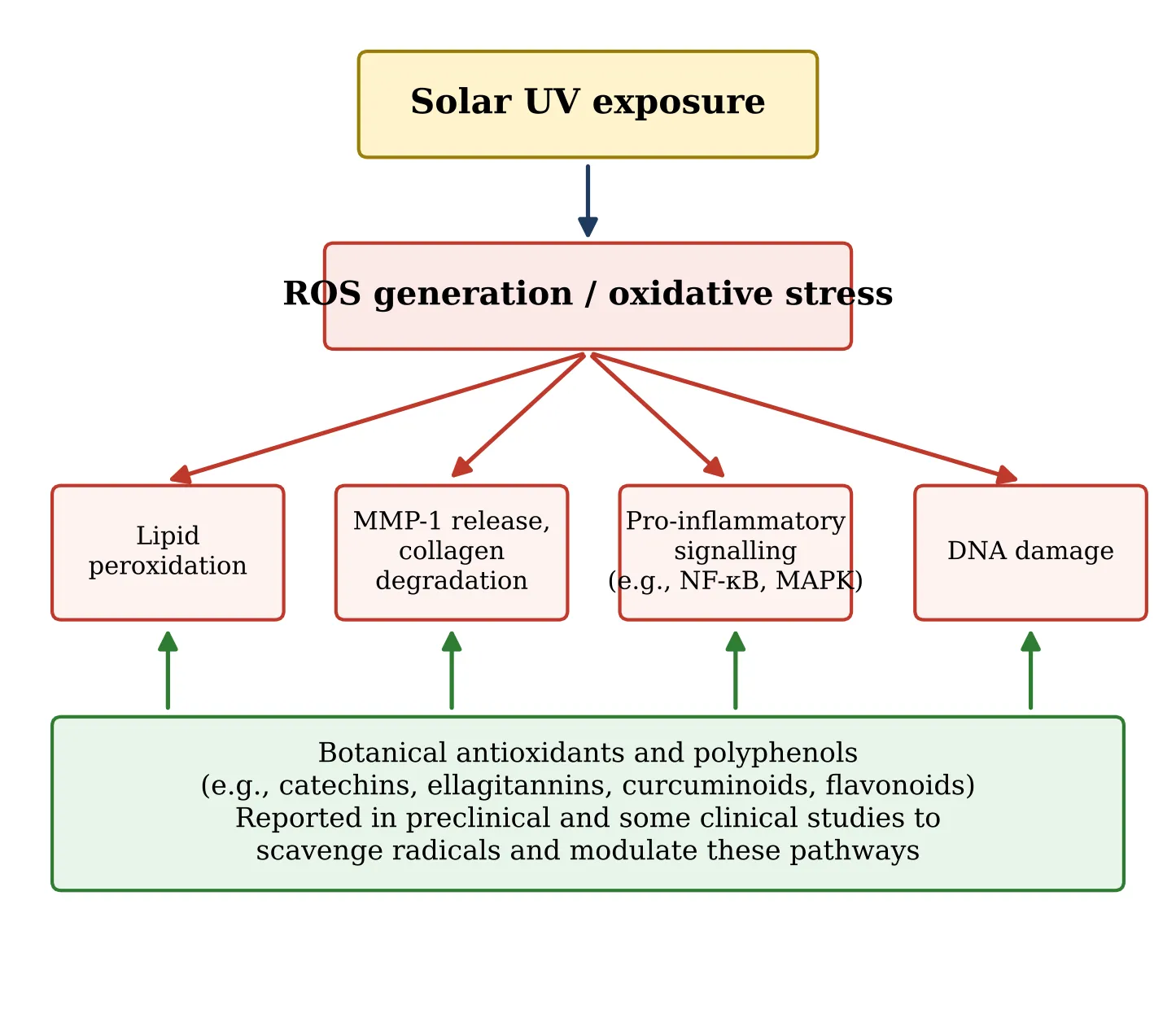
Figure 2: UV-induced Oxidative Stress Pathways and Proposed Sites of Action of Botanical Antioxidants. Original Conceptual Illustration Prepared by the Author, Based on Fisher Et Al. (2002), Katiyar and Elmets (2001) and Torres Et Al. (2020). the Mechanisms Shown Describe Biological Protection, Not UV Filtering.
4.3 Green tea (Camellia sinensis)
Green tea has one of the largest preclinical evidence bases among the botanicals considered. Its catechins, particularly epigallocatechin-3-gallate (EGCG), are antioxidant polyphenols that, in laboratory and animal studies, reduce UV-induced oxidative stress, inflammation and DNA damage (Katiyar & Elmets, 2001; Prasanth et al., 2019). Topical application of green tea polyphenols was also reported to protect human skin from UV-induced erythema in experimental settings (Elmets et al., 2001). A review of tea extracts nevertheless noted that effects had not been systematically defined and that results were sometimes conflicting (Li et al., 2014). Formulation-related concerns include the susceptibility of catechins to oxidation and colour change, which must be controlled by pH, antioxidant stabilisers and packaging. Green tea is also relevant to oily skin biology, since it has been discussed as an option for sebum-related concerns (Endly & Miller, 2017); that discussion concerns oiliness rather than UV protection and should not be merged with it.
4.4 Turmeric (Curcuma longa)
Curcumin, the principal curcuminoid of turmeric, has antioxidant and anti-inflammatory activity that has been explored in several skin conditions (Vollono et al., 2019). Its translation into products is hindered by poor aqueous solubility, low bioavailability and chemical instability (Anand et al., 2007; Nelson et al., 2017). Nelson et al. (2017) further caution that curcumin is chemically reactive and can interfere with many laboratory assays, so apparently promising in-vitro activity should be interpreted carefully. Practical drawbacks include intense yellow colour and staining of skin and clothing, which are significant for facial sunscreens. Turmeric constituents have also been included in photoallergy testing of herbal cosmetic ingredients (Pan et al., 2021), reinforcing the need for tolerability data. Overall, curcumin is better viewed as an antioxidant adjunct requiring protective delivery systems than as a ready-to-use sunscreen ingredient.
4.5 Licorice (Glycyrrhiza glabra)
Licorice root contains flavonoids, including glabridin, that are used in cosmeceuticals for skin lightening and anti-inflammatory effects (Cerulli et al., 2022). In a study using B16 murine melanoma cells and guinea pig skin, Yokota et al. (1998) reported that glabridin inhibited tyrosinase activity and that topical 0.5% glabridin inhibited UVB-induced pigmentation and erythema in guinea pig skin, along with in-vitro anti-inflammatory effects. This is animal and cell-culture evidence and concerns glabridin, not whole-herb extract. The systemic toxicity of glycyrrhizin after high oral intake is well documented (Pastorino et al., 2018), but this should not be extrapolated to topical use; it does however support standardisation of the constituent profile of licorice extracts used in products.
4.6 Pomegranate (Punica granatum)
Pomegranate peel and fruit extracts contain ellagitannins, such as punicalagin, and ellagic acid, and are among the more extensively studied plant extracts for UV-related endpoints. Afaq et al. (2005) reported that a pomegranate fruit extract modulated UVB-induced signalling in normal human epidermal keratinocytes. A proprietary pericarp extract showed broad antioxidant activity in cell-free assays, protected human dermal fibroblasts against UVA-induced lipid peroxidation and, in a reconstructed human skin model, reduced UVA-induced MMP-1 release and several inflammatory mediators (Pannakal et al., 2025). An aged pomegranate extract displayed high antioxidant capacity and reduced ROS and cytokine levels in cell models, and was also evaluated in a randomised, double-blind, placebo-controlled trial in 60 women assessing UV-induced erythema and pigmentation-related outcomes, with no adverse effects reported (Ikeda et al., 2025). Delivery has also been examined: nanoemulsions prepared with pomegranate seed oil or medium-chain triglyceride oil were reported to deliver peel polyphenols into deeper skin layers in vitro (Baccarin & Lemos-Senna, 2017). Taken together, pomegranate has a comparatively strong body of mechanistic data, but the SPF or UVA-PF contribution of finished topical products has not been established in the studies retrieved.
4.7 Grape (Vitis vinifera)
Grape seed and grape pomace polyphenols, including proanthocyanidins, are potent antioxidants. In mice, dietary grape seed proanthocyanidins reduced photocarcinogenesis (Mittal et al., 2003), and this literature has been reviewed with respect to oxidative stress and immune protection (Katiyar, 2008). For topical sunscreen use, the most directly relevant data come from grape pomace extract incorporated into filter-based systems. In an in-vitro study, a hydroethanolic extract added at 10% w/w to a sunscreen system containing UV filters increased initial SPF, helped retain SPF and critical wavelength after two hours of simulated solar exposure, and showed no SPF of its own when used without filters (Hübner et al., 2019). A subsequent clinical study reported an in-vivo SPF of 12.30 for the extract-containing emulsion against 10.20 for the filter-only emulsion, and a UVA-PF of 4.33 against 3.67, with both samples judged safe in patch and photosensitisation tests (Hübner et al., 2020). These findings are the clearest example in the reviewed literature of a botanical acting as an adjunct, increasing the performance of established filters rather than replacing them.
4.8 Rosemary (Rosmarinus officinalis)
Rosemary is rich in rosmarinic acid and diterpenes such as carnosic acid, and its phytochemistry and biological activities have been reviewed (Andrade et al., 2018). Rosmarinic acid has been described as a photoprotective agent against UV radiation in cell-based studies (Sánchez-Campillo et al., 2009). Its practical interest for formulators lies as much in antioxidant stabilisation of lipid-containing products as in direct photoprotection. No studies of rosemary-based sunscreens with validated SPF testing were identified in the sources reviewed here, so any photoprotective contribution should be regarded as unproven.
4.9 Calendula (Calendula officinalis)
Calendula is traditionally used for wound healing and skin inflammation, and anti-inflammatory and wound-healing effects have been reported in animal models (Parente et al., 2012). In a formulation study, gels and creams containing 5% hydroethanolic calendula leaf extract were stable in terms of pH, showed good antioxidant capacity and, as the authors reported, very low spectrophotometric SPF, around 1.75; the authors concluded that calendula cannot be considered a stand-alone sunscreen, although it might be tested alongside synthetic filters (Deuschle et al., 2015). The study also found that gels spread better than creams while creams showed smaller viscosity changes, a practical illustration of vehicle trade-offs. As a member of the Asteraceae, calendula can cause contact sensitisation in susceptible individuals (Reider et al., 2001).
4.10 Other botanicals
Several other plant extracts have been tested using spectrophotometric SPF methods. A gel containing Moringa oleifera leaf and Citrus aurantifolia peel extracts reported an SPF of 23.86 for its best formulation and maintained it after storage (Rinatha et al., 2023). Gels containing a brown alga extract (Sargassum oligocystum) reached in-vitro SPF values of 5.3–8.8, which the authors characterised as low-level protection (Moghimipour et al., 2026). Kaempferia galanga and its cinnamate derivative are discussed in an Indonesian review of herbal sunscreens (Hakim et al., 2023). Other examples are reviewed by Torres et al. (2020), including Polypodium leucotomos extract. These results are generally preliminary and should be read with the methodological cautions described in Section 3.3.
Table 2: Botanical Ingredients, Key Constituents and Reported Photoprotective Properties
| Botanical (part) | Key constituents discussed | Reported properties relevant to photoprotection | Evidence level in sources reviewed | Principal cautions |
|---|---|---|---|---|
| Aloe vera (leaf gel) | Polysaccharide-rich gel, high water content | Hydrating, soothing, gel-forming base (Surjushe et al., 2008) | Review level; no validated SPF data in sources reviewed | Role as UV-protective active unproven; preservation of water-rich gels |
| Green tea (leaf) | Catechins, mainly EGCG | Antioxidant, anti-inflammatory, DNA-protective effects (Katiyar & Elmets, 2001; Prasanth et al., 2019) | In vitro, animal, limited human (Elmets et al., 2001) | Oxidation and discoloration; inconsistent results across extracts (Li et al., 2014) |
| Turmeric (rhizome) | Curcuminoids | Antioxidant, anti-inflammatory (Vollono et al., 2019) | Mainly in vitro and preclinical | Instability, low bioavailability, staining, assay interference, photoallergy testing needed |
| Licorice (root) | Glabridin and other flavonoids | Tyrosinase and inflammation inhibition; reduced UVB pigmentation and erythema in guinea pigs (Yokota et al., 1998) | In vitro and animal | Constituent variability; allergenic potential should be assessed |
| Pomegranate (peel, fruit) | Ellagitannins (punicalagin), ellagic acid | Reduced UVA-induced lipid peroxidation, MMP-1 and cytokines in vitro (Pannakal et al., 2025); human trial reported (Ikeda et al., 2025) | In vitro, ex vivo model, one randomised trial | Extract-specific results; no validated SPF of topical products identified |
| Grape (seed, pomace) | Proanthocyanidins, other phenolics | Adjunct that increased in-vivo SPF and UVA-PF of a filter-based emulsion (Hübner et al., 2020) | In vitro, animal, human (adjunct use) | No SPF when used without filters (Hübner et al., 2019) |
| Rosemary (leaf) | Rosmarinic acid, carnosic acid | Cell-based photoprotective effects of rosmarinic acid (Sánchez-Campillo et al., 2009) | In vitro; review | No validated SPF studies identified |
| Calendula (flower, leaf) | Flavonoids, triterpenoids | Antioxidant; anti-inflammatory in animals (Parente et al., 2012); SPF about 1.75 in vitro (Deuschle et al., 2015) | In vitro and animal | Low SPF; Asteraceae contact allergy (Reider et al., 2001) |
5. Formulation Strategies for Oily Skin
5.1 Design principles
Formulating for oily skin involves balancing three goals that can conflict: delivering the intended protective or antioxidant effect, achieving a light sensory profile, and maintaining physical, chemical and microbiological stability. The attributes that together determine usability include texture and spreadability, after-feel and shine, rheology, the choice of emollients and oil phase, pH compatibility, stability, preservation and demonstrated tolerability. Some of these, such as rheology, spreadability and pH, can be measured readily; others, such as after-feel and shine, require sensory or instrumental evaluation on human skin.
5.2 Vehicle selection
Gels, oil-in-water (o/w) emulsions and emulgels are the vehicles most often proposed for oily skin, because they contain little or no heavy oil phase and leave a lighter residue. Their characteristics are compared in Table 3. Hydrogels based on carbomer or cellulose derivatives are easy to prepare and feel fresh, but they are poor carriers for lipophilic UV filters and many lipophilic botanical actives. Emulgels combine an o/w emulsion with a gelling agent and have been described as thixotropic, greaseless, easily spreadable and well suited to hydrophobic actives (Panwar et al., 2011). Conventional o/w creams accommodate lipophilic ingredients well but need careful emulsifier and emollient selection to avoid a greasy after-feel.
Table 3: Formulation Vehicles Considered for Herbal Sunscreens on Oily Skin
| Vehicle | Typical components | Advantages for oily skin | Limitations |
|---|---|---|---|
| Hydrogel | Water, carbomer or HPMC, neutralising agent, humectant, preservative | Light, fresh, non-greasy; easy to prepare. In one study, carbomer gels spread better than HPMC gels (Moghimipour et al., 2026). | Limited capacity for lipophilic ingredients; extract may be unstable at gel pH; water-rich so preservation is critical. |
| O/w emulsion (lotion, light cream) | Oil phase, emulsifier, water, thickener, preservative | Accommodates lipophilic filters and extracts; adjustable skin feel. | Emollient and emulsifier selection can cause greasy feel; more complex stability (creaming, coalescence). |
| Emulgel | O/w emulsion plus gelling agent | Described as thixotropic, greaseless and easily spreadable (Panwar et al., 2011). | Two-system complexity; compatibility between emulsifier and polymer needs testing. |
| Nanoemulsion-based systems | Oil, surfactant, water, high-energy or low-energy emulsification | Reported to deliver plant polyphenols into deeper skin layers in vitro (Baccarin & Lemos-Senna, 2017). | Higher surfactant content; skin-surface sunscreen performance not shown by permeation data; scale-up and regulatory considerations. |
| Hydroalcoholic gel or spray | Water, ethanol, gelling agent | Fast drying, light feel. | Alcohol may irritate or dry some skin; solvent affects extract stability and apparent SPF. |
5.3 Gelling agents, oil phase and pH
Rheology determines both stability and consumer perception. In a gel study, formulations with carbomer 940 at 2.1% reached viscosities of roughly 41,000–55,000 cP at 10 rpm while 4% HPMC gels were in the range of roughly 7,000–8,000 cP, with higher spreadability for the carbomer gels (Moghimipour et al., 2026). The same study found that at the highest extract level a carbomer gel became biphasic and non-uniform, a reminder that extract components can destabilise polymer networks. For emulsions, the proportion and type of oil should be minimised and chosen for sensory lightness. Because carbomer thickens only after neutralisation, final pH must be balanced between polymer performance, extract stability and skin compatibility; the pH of the gels in the cited study ranged from about 5.9 to 7.2 depending on the polymer (Moghimipour et al., 2026). The extract itself may alter pH and viscosity, so these parameters should always be re-measured after incorporation.
5.4 Stability and preservation
Plant extracts are chemically complex and can degrade, change colour or precipitate on storage, and they also supply nutrients for microorganisms. Water-rich herbal gels are therefore particularly vulnerable to microbial contamination, and cosmetic products containing natural or minimally processed raw materials are recognised to be prone to it (Dobariya et al., 2026). The same study adapted the ISO 11930 challenge test to include microorganisms associated with raw materials and observed marked differences between preservative systems, even though all met the acceptance criteria. Physical stability is equally important: cream formulations of calendula extract showed smaller viscosity variation than gels in storage testing, whereas gels spread more easily (Deuschle et al., 2015). Stability testing therefore needs to follow the product through realistic temperature cycling and light exposure.
5.5 Combining botanicals with UV filters
Because botanicals alone rarely deliver validated SPF, one pragmatic strategy is to use them as functional additives in filter-containing products. Grape pomace extract is the best-documented example (Hübner et al., 2019; Hübner et al., 2020). This approach shifts the regulatory and testing framework toward that of conventional sunscreens, but it also makes claims about SPF and UVA protection verifiable and keeps the botanical’s role honestly defined.
6. Preparation and Development of Herbal Sunscreen Formulations
6.1 Plant material and extraction
Reproducibility starts with the plant. Correct botanical identification, specified plant part, harvest conditions and post-harvest handling all affect constituent profile. Extraction methods range from simple maceration and percolation to more advanced techniques, and the choice of solvent, temperature and time determines which constituents are recovered (Azmir et al., 2013; Sasidharan et al., 2011). Student projects typically use maceration with ethanol, as in the Moringa and lime peel gel (Rinatha et al., 2023). Solvent also affects apparent photoprotective behaviour: in the Sideritis study, water extracts gave higher spectrophotometric SPF values than water–ethanol extracts (Xhuvani et al., 2026), so results from different solvents are not directly comparable.
6.2 Standardisation
Standardisation ensures that each batch of extract contains a defined amount of one or more marker constituents. Without it, a formulation reported as containing “5% extract” may differ greatly between batches. At minimum, studies should report plant part, solvent, extraction ratio and yield, and should measure a simple marker such as total phenolic content, as in the Sargassum gel study, which reported 30.611 mg gallic acid equivalents per gram of extract and a yield of about 16.7% (Moghimipour et al., 2026). Chromatographic fingerprints of key constituents are better still.
6.3 Formulation workflow
A sensible development sequence is shown in Figure 3. After characterising the extract, excipient compatibility is checked and prototype formulations are prepared. A typical gel preparation involves dispersing the gelling agent in water, adding humectant and preservative, neutralising where required, and adding the extract after dispersion, with attention to the order of addition and temperature to avoid degrading heat- or pH-sensitive constituents. Emulsions are prepared by heating oil and water phases separately, emulsifying under controlled shear and cooling with gentle stirring before adding heat-labile extracts. Three batches are normally prepared to confirm reproducibility, and batch size, mixing conditions and order of addition should be recorded so that another laboratory can repeat the work; laboratory formulations rarely transfer unchanged to larger batches.
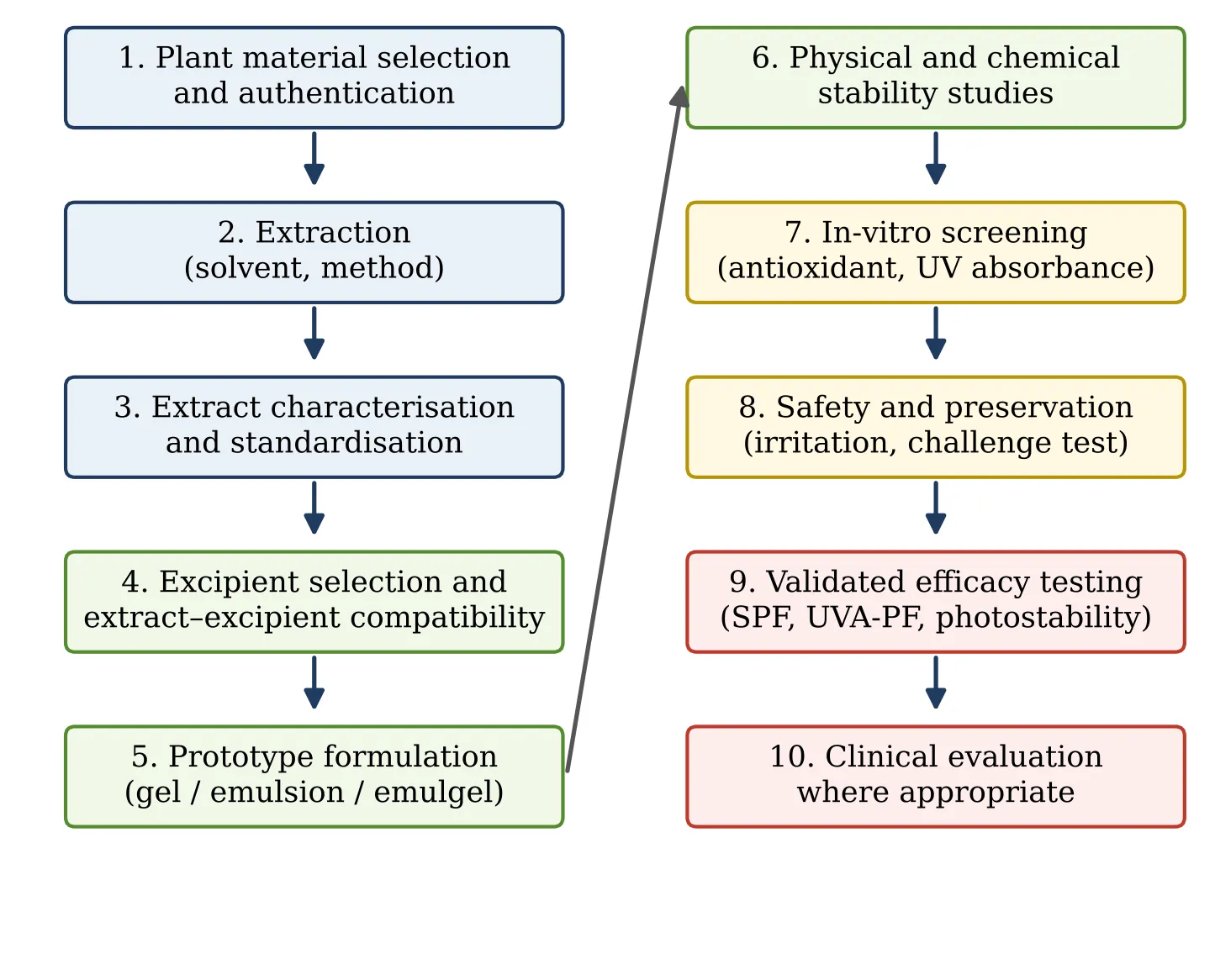
Figure 3: Stepwise Development and Evaluation Workflow for a Herbal Sunscreen Formulation. Original Conceptual Workflow Prepared by the Author from the Literature Reviewed; It Is Not an Experimental Protocol.
7. Evaluation Parameters and Quality Control
7.1 Physicochemical and sensory evaluation
Evaluation proceeds from simple product characteristics to biological tests. Organoleptic properties, homogeneity, pH, viscosity and spreadability are routine and were reported in the gel studies reviewed (Deuschle et al., 2015; Moghimipour et al., 2026). For oily-skin products, sensory and instrumental assessment of greasiness, shine and absorption time should be added, because these parameters decide whether the product will be used. Table 4 summarises the main parameters, the methods commonly used and their purpose.
Table 4: Quality-control and Evaluation Parameters for Herbal Sunscreen Formulations
| Parameter | Method or standard | Purpose | Remarks |
|---|---|---|---|
| Appearance, colour, odour, homogeneity | Visual and olfactory inspection; slide or glass inspection | Detect phase separation, particles, discoloration | Colour change on storage can signal extract degradation. |
| pH | Calibrated pH meter on dispersion or directly | Skin compatibility; polymer and extract stability | Re-measure after extract incorporation and after storage. |
| Viscosity and rheology | Rotational viscometer at defined spindle and speed | Stability and sensory behaviour | Gel and cream viscosities differ in change on storage (Deuschle et al., 2015). |
| Spreadability | Parallel-plate or similar method under defined weight | Ease of application, uniform film | Reported for gels in Moghimipour et al. (2026). |
| Physical stability | Storage at defined temperatures, freeze–thaw cycles, centrifugation | Predict shelf-life; detect creaming or syneresis | Test with the intended packaging. |
| Antioxidant capacity | DPPH or similar radical-scavenging assays | Characterise biological activity of extract and formulation | Does not measure sunscreen performance. |
| In-vitro SPF (screening) | Spectrophotometric equation of Mansur et al. (1986) | Preliminary ranking of extracts and formulations | Not a substitute for ISO 24444; follow original method (Ácsová et al., 2021). |
| UVA protection and critical wavelength | ISO 24443 in-vitro method (ISO, 2021) | Assess broad-spectrum protection | Requires film on suitable substrate and irradiation step. |
| In-vivo SPF and UVA-PF | ISO 24444 (ISO, 2019b); ISO 24442 (ISO, 2022) | Validated efficacy claims | Requires ethics approval and trained testing laboratory. |
| Photostability | Measurement of SPF or absorbance before and after simulated sunlight | Detect loss of protection on exposure | Shown to differ with filter and extract combinations (Hübner et al., 2019). |
| Microbiological quality and preservation | ISO 11930 challenge test (ISO, 2019a) | Confirm effective preservation | Include raw-material-associated organisms where relevant (Dobariya et al., 2026). |
| Skin tolerability and photosafety | Patch, repeated-insult, phototoxicity and photoallergy tests | Exclude irritation and photosensitisation | Human testing needs ethical approval; see Hübner et al. (2020) for a design. |
| Oily-skin usability | Sebum measurement, panel scoring of shine and greasiness | Verify suitability for target skin type | Rarely reported in published herbal sunscreen studies. |
7.2 Efficacy testing: interpretation hierarchy
Evaluation results should be read in a hierarchy. Antioxidant assays and extract absorbance indicate biological or optical potential only. In-vitro SPF of a formulation is a screening result. Validated in-vitro UVA and photostability data are more informative, and in-vivo SPF and UVA-PF determined to ISO standards remain the basis of labelling. Human tolerability testing is separate from, and required in addition to, efficacy testing. A table of formulation properties without these elements describes a cosmetic gel, not a verified sunscreen.
8. Review and Comparison of Published Studies
8.1 Studies included in the comparison
Table 5 compares twelve studies that could be bibliographically verified and that illustrate the range of methods used for herbal or plant-based photoprotective preparations: in-vitro spectrophotometric screening, formulation and stability studies, cell and tissue models, animal work and human studies. The table is illustrative rather than exhaustive. Parameters that were not reported in the available record are indicated as “Not reported”. Numerical values are given as stated by the study authors and have not been recalculated.
Table 5: Comparison of Selected Published Studies on Herbal or Plant-Based Photoprotective Preparations
| Author and year | Botanical ingredient | Formulation type | Study design / evaluation method | Main reported findings | Limitations |
|---|---|---|---|---|---|
| Yokota et al. (1998) | Glabridin from licorice extract | Topical glabridin solution (0.5%) on guinea pig skin; B16 cell assays | Cell culture and guinea pig skin; tyrosinase and inflammation assays | Inhibited tyrosinase; 0.5% topical glabridin inhibited UVB-induced pigmentation and erythema in guinea pigs; anti-inflammatory effects in vitro | Animal and cell evidence; purified constituent, not whole extract; no SPF; not reported for humans |
| Dutra et al. (2004) | Not applicable (commercial products) | Ten commercial sunscreen emulsions | UV spectrophotometric SPF determination (Mansur-based) | Proposed as a simple, rapid method for preliminary in-vitro SPF of emulsions | Method study, not a herbal study; preliminary screening only |
| Deuschle et al. (2015) | Calendula officinalis leaf extract (5%) | Gel and cream | pH, viscosity, spreadability, DPPH antioxidant assay, spectrophotometric SPF | Stable pH; gels spread better, creams showed less viscosity variation; good antioxidant capacity; SPF about 1.75 | In-vitro only; low SPF; no UVA, photostability or human data reported |
| Baccarin & Lemos-Senna (2017) | Pomegranate peel polyphenols (ethyl acetate fraction) | Nanoemulsions with pomegranate seed oil or MCT oil | In-vitro skin permeation and retention (Franz cells) | Polyphenols delivered into deeper skin layers | Permeation study; no SPF or photoprotection endpoint reported |
| Hübner et al. (2019) | Grape pomace (Vitis vinifera) hydroethanolic extract, 10% w/w | Sunscreen systems with and without UV filters and extract | In-vitro SPF, critical wavelength, photostability (2 h exposure), DPPH assay | Extract alone gave no SPF; with filters, higher initial SPF and better retention after irradiation; critical wavelength about 376–380 nm | In-vitro only; one harvest, cultivar and batch; synergy inferred from comparisons; inconsistencies in the text noted |
| Hübner et al. (2020) | Grape pomace extract, 10% w/w | Emulsion with three UV filters, with or without extract | In-vitro tests plus human SPF (10 volunteers), patch (60) and phototoxicity/photosensitisation (30) tests | In-vivo SPF 12.30 vs 10.20; UVA-PF 4.33 vs 3.67; both samples judged safe | Small SPF panel; extract used as an adjunct to filters; not oily-skin-specific |
| Ácsová et al. (2021) | 14 virgin vegetable oils | Neat oils and diluted oils; sunscreen oil controls | In-vitro Mansur method and in-vivo ISO SPF (10 volunteers) | Five most promoted oils: in-vitro SPF 0.0–0.4, in-vivo 1.2–2.8; tamanu oil in-vitro 11.2; dilution method judged unsuitable | Individual in-vivo values for the remaining oils not reported; oils, not extracts |
| Rinatha et al. (2023) | Moringa oleifera leaf with Citrus aurantifolia peel (ethanol maceration) | Gel; ratios 1:1, 1:2, 2:1 | Spreadability, pH, adhesion before and after storage; SPF determination | Formula III highest SPF 23.86 ± 0.19, unchanged after stability testing; no significant physical differences | SPF method not specified in the record consulted; no UVA, photostability or human data reported |
| Pannakal et al. (2025) | Pomegranate pericarp extract (proprietary) | Extract at 0.001% in cell and tissue models | Cell-free antioxidant assays; fibroblast lipid peroxidation; reconstructed skin model with UVA | Up to 74% protection of lipid peroxidation; reduced MMP-1 and inflammatory mediators in reconstructed skin | In-vitro; company-affiliated research; no SPF; no topical formulation tested |
| Ikeda et al. (2025) | Aged Punica granatum extract | Extract in cell models and clinical trial | TEAC assay, cell models, randomised double-blind placebo-controlled trial (60 women) | High antioxidant capacity (977.08 ± 15.73 mmol Trolox/100 g); reduced ROS and cytokines in vitro; no adverse effects reported | SPF not reported; route, dose and detailed trial outcomes not extracted from the record consulted |
| Moghimipour et al. (2026) | Brown alga Sargassum oligocystum extract (0–10%) | Carbomer 940 and HPMC gels | pH, viscosity, spreadability, 3-month stability, Mansur SPF | SPF 5.3–8.8 for extract gels vs about 0.6–1.0 without; SPF plateaued at 10%; SPF 50 reference product measured 15.2 | In-vitro, solution-based UVB estimate; authors call results preliminary |
| Xhuvani et al. (2026) | Sideritis raeseri extracts | Aqueous and water–ethanol extracts (not formulated) | Mansur SPF over six days at room temperature and refrigerated | SPF fell from 26.4 to 17.9 (water, room temperature); refrigeration preserved SPF better | Solution-based; extract only; no formulation, UVA or human data |
8.2 Synthesis
Several patterns emerge. First, apparent SPF depends heavily on method, solvent and extract concentration. Spectrophotometric values ranged from about 1.75 in calendula gels and creams (Deuschle et al., 2015) and 5–9 in alga gels (Moghimipour et al., 2026) to 23–26 for a moringa–lime gel and a mountain tea extract (Rinatha et al., 2023; Xhuvani et al., 2026). These numbers cannot be compared across studies, and the comparison with a commercial SPF 50 product, which measured only about 15 by the same method in the alga study, shows that the scale itself is unreliable. Ácsová et al. (2021) demonstrated that when in-vitro and in-vivo SPF are measured together the difference can be large for natural materials.
Second, the only studies that included validated human efficacy testing evaluated the botanical as an adjunct to synthetic filters rather than as a sole active (Hübner et al., 2019; Hübner et al., 2020). In these, the extract contributed no SPF on its own but increased the performance of the filter system modestly. This supports the view that the most defensible role for many botanicals is supportive.
Third, the data on pomegranate show a different type of evidence. Pannakal et al. (2025) and Ikeda et al. (2025) concern antioxidant, anti-inflammatory and tissue-level protection, not sunscreen performance. Such biological protection may be valuable but should be reported as such. Fourth, vehicle effects are real but under-investigated: gels and creams differed in spreadability and viscosity stability (Deuschle et al., 2015), and carbomer and HPMC gels differed strongly in viscosity and spreadability (Moghimipour et al., 2026), yet none of the studies related these properties to sensory acceptance or photoprotective performance on skin. Finally, and most importantly for the present review, none of the studies enrolled participants selected by sebum level or skin type in a way that allowed conclusions about oily skin. Figure 4 summarises the evidence framework implied by these observations.
9. Safety, Limitations and Regulatory Considerations
9.1 Safety of botanical ingredients
Natural origin does not guarantee safety. Plants and plant products are well-known causes of irritant and allergic contact dermatitis, and some contain phototoxic compounds that increase sensitivity to UV (Evans & Schmidt, 1980). The risk is highly relevant to sunscreens, which are applied to large areas of skin that will then be exposed to light. Photoallergy testing of herbal cosmetic ingredients including curcumin, Coptis, Phellodendron and shikonin was carried out using patch and photopatch methods in 33 healthy Chinese subjects at concentrations of 5–50% (Pan et al., 2021), illustrating both the interest in and the need for such testing. Asteraceae members such as calendula can sensitise (Reider et al., 2001). Safety evaluation of a finished herbal sunscreen should therefore include irritation, sensitisation and photosafety assessment appropriate to the ingredients, with additional attention for acne-prone skin. Statements such as “100% safe” or “natural therefore harmless” are not scientifically justified.
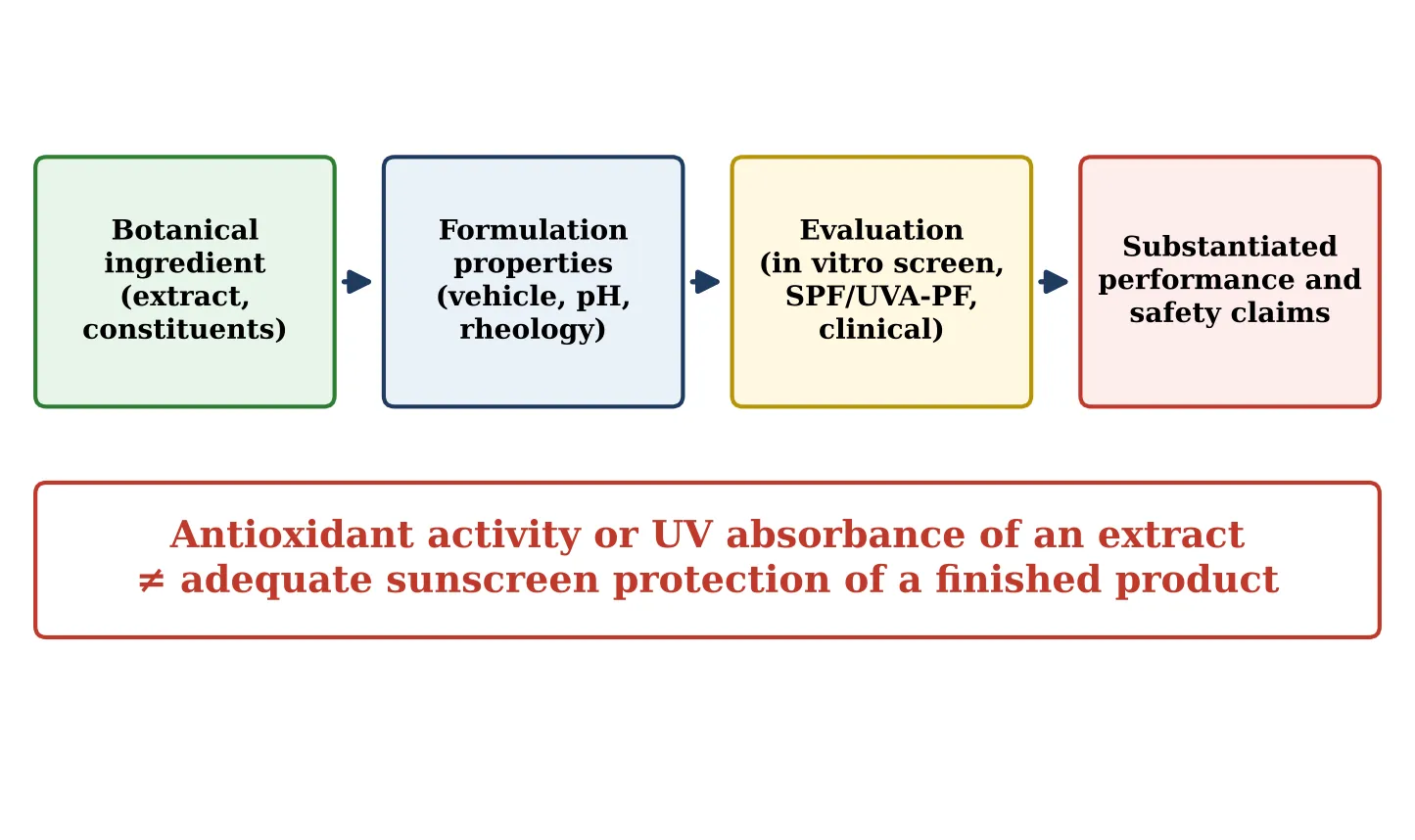
Figure 4: Evidence Framework for Herbal Sunscreen Claims. Original Conceptual Framework Prepared by the Author, Synthesising the Evidence Reviewed in This Manuscript.
9.2 Regulatory framework
In the United States, sunscreen is regulated as a non-prescription drug under the over-the-counter monograph system (FDA, 2021), so a herbal ingredient cannot be marketed as the active ingredient of a sunscreen without meeting the relevant requirements. In the European Union, sunscreens are cosmetic products governed by Regulation (EC) No 1223/2009, which restricts the permitted UV filters, and efficacy claims should follow Commission Recommendation 2006/647/EC, including minimum SPF, a UVA-PF of at least one-third of the labelled SPF and a critical wavelength of at least 370 nm (EC, 2006; European Parliament & Council of the European Union, 2009). Claims made on cosmetic products are also subject to common criteria set out in Commission Regulation (EU) No 655/2013 (European Commission, 2013). Requirements in other jurisdictions, including India, differ and should be checked directly with the applicable authority before any product is marketed. A laboratory formulation made for coursework is not a marketed product, and none of the approaches discussed here should be taken as authorisation to sell or recommend such a product.
9.3 Limitations of the evidence and of this review
The evidence base has several recurring limitations: reliance on in-vitro screening, small and unstandardised samples, poorly characterised extracts, single batches, lack of UVA and photostability data, short stability periods, industry-affiliated research on proprietary extracts, and publication in journals of variable editorial rigour. Some included reports are small formulation studies, and their results should be treated as hypothesis-generating. This review has its own limitations. It is narrative, its search was not exhaustive, access to some databases was restricted, and the number of studies tabulated is small. Conclusions are therefore stated cautiously and should be updated as higher-quality evidence appears.
10. Research Gaps and Future Directions
The gaps identified from this review are summarised in Table 6. Together they point toward a research agenda in which oily skin is treated as a defined study population and herbal ingredients are evaluated with the same rigour as conventional sunscreen components.
Table 6: Research Gaps and Suggested Directions
| Research gap | Evidence from this review | Suggested direction |
|---|---|---|
| Oily-skin-specific evidence | None of the studies in Table 5 selected participants by sebum level. | Clinical and instrumental studies in participants stratified by sebum output, measuring shine, greasiness, tolerability and acne-related outcomes. |
| Validated efficacy testing of herbal-only products | Human SPF/UVA-PF data are available only for a botanical used with filters (Hübner et al., 2020). | ISO-based SPF, UVA-PF and photostability testing of finished herbal products, reported with raw data. |
| Over-reliance on spectrophotometric SPF | In-vitro values vary widely and can be misleading (Ácsová et al., 2021; Xhuvani et al., 2026). | Use the Mansur method only for screening, follow the original methodology and report concentration, solvent and path length. |
| Extract standardisation | Plant part, solvent and marker content are incompletely reported across studies. | Report extraction ratio, yield and marker compounds; use chromatographic fingerprints. |
| Stability and preservation of water-rich herbal gels | Natural materials are prone to contamination (Dobariya et al., 2026); stability is often tested for only a few weeks. | Long-term stability with challenge testing on the finished formulation. |
| Comedogenicity and tolerability | Comedogenicity of finished herbal sunscreens is rarely evaluated. | Human comedogenicity and acne-prone-skin tolerability studies on finished products. |
| Delivery and photostability of unstable actives | Curcumin and catechins are unstable or poorly bioavailable (Nelson et al., 2017). | Encapsulation and stabiliser strategies evaluated with biological and photoprotective endpoints. |
| Transparent reporting | Inconsistencies and missing data in several reports. | Adopt reporting checklists for formulation and efficacy studies, including negative results. |
CONCLUSION
Herbal sunscreen formulations for oily skin address a real consumer need, and the underlying biology provides a plausible rationale: UV-induced oxidative stress and inflammation can be modulated by polyphenol-rich botanicals, and lightweight gels and emulgels can reduce the greasiness that discourages sunscreen use. However, the evidence retrieved in this review does not support the view that herbal extracts can by themselves replace approved UV filters. Antioxidant activity and absorbance of an extract are not the same as sunscreen protection of a finished product; spectrophotometric SPF values are unreliable when used as claims; and the best-supported role of botanicals is as adjuncts that may improve the performance or biological profile of filter-based formulations. Safety cannot be assumed from natural origin, and the suitability of any formulation for oily skin has to be demonstrated by measurement rather than inferred from texture.
For students and formulators, the practical implications are to standardise the extract, design a vehicle that is light and stable, preserve it effectively, report in-vitro SPF only as a screening result, and avoid unsupported claims. For researchers, the priorities are oily-skin-specific human studies, validated efficacy testing and transparent reporting. Until these are available, herbal sunscreens for oily skin are best regarded as a promising, but largely unproven, area of formulation science.
INTRODUCTION
1.1 Background
Solar ultraviolet (UV) radiation is the principal environmental cause of sunburn, photoaging and skin cancer, and it is regarded as both a mutagen and a non-specific damaging agent in skin (D’Orazio et al., 2013). Protective behaviours such as shade, clothing and timing of outdoor activity are complemented by topical sunscreens, which are the most widely used photoprotective products. Regular use depends, however, on whether a product is pleasant to wear. For people with oily skin, a heavy or occlusive sunscreen can feel greasy, exaggerate facial shine and, in the perception of many users, aggravate acne. These concerns are a common reason for inconsistent use and make oily skin an important, though under-studied, target population for sunscreen formulation.
In parallel, consumer and academic interest in plant-derived cosmetic ingredients has grown. Botanical extracts are rich in polyphenols, flavonoids and other secondary metabolites that absorb UV radiation, scavenge free radicals or modulate inflammatory signalling, and reviews of the field describe a large and heterogeneous literature (Torres et al., 2020; Hakim et al., 2023). “Herbal sunscreen” has consequently become a popular formulation project, particularly in pharmacy education and in regions with a strong tradition of medicinal plants. The term is used loosely, however. It may denote a product whose only active ingredient is a plant extract, a conventional filter-based product enriched with botanicals, or simply a gel with a natural label. These are scientifically very different things.
1.2 Rationale, aim and objectives
The rationale for this review is that two bodies of knowledge, the biology and cosmetic behaviour of oily skin on one hand and the evidence for botanical photoprotection on the other, are rarely examined together. A formulation that looks promising in a cuvette may be unsuitable for sebum-rich skin, and a texture that suits oily skin may offer no verified protection. The aim of this review is therefore to critically appraise the current evidence on herbal sunscreen formulations with particular reference to their suitability for oily skin.
The specific objectives are to: (i) describe the physiology and cosmetic characteristics of oily skin; (ii) outline the science of UV protection and sunscreen testing; (iii) review the photoprotective properties and limitations of selected botanical ingredients; (iv) discuss formulation strategies and preparation steps appropriate to oily skin; (v) summarise quality-control and efficacy evaluation parameters; (vi) compare published studies of herbal photoprotective preparations; (vii) examine safety, regulatory and methodological limitations; and (viii) identify research gaps and priorities.
1.3 Review approach
This is a narrative review, not a systematic review, and no formal protocol, risk-of-bias tool or meta-analysis was used. Literature was identified through targeted searches of open web indexes and publisher, repository and regulatory pages using combinations of terms such as herbal sunscreen, photoprotection, botanical extract, oily skin, sebum, emulgel, in-vitro SPF and preservation challenge test. Peer-reviewed articles, review papers, international standards and regulatory documents were prioritised. Because access to some databases was restricted, the coverage should be considered illustrative rather than exhaustive. Only sources whose bibliographic details could be confirmed are cited, and the few records that could be only partly confirmed are marked with a dagger (†) in the reference list. Where a study did not report a parameter, this is stated rather than inferred. Evidence is labelled throughout as in vitro, animal, human or review-level evidence, because conclusions that are acceptable at one level are not transferable to another.
2. Oily Skin: Physiology, Characteristics and Cosmetic Implications
2.1 Sebaceous gland physiology
Sebaceous glands are found throughout the human body except on the palms and soles, and they secrete sebum, a lipid mixture that reaches the surface through the hair follicle. Most sebum lipids are also produced elsewhere in the body, but wax esters and squalene are characteristic of the sebaceous gland (Smith & Thiboutot, 2008). Sebaceous glands are active at birth, become relatively quiescent in childhood and expand markedly at puberty, which explains why oily skin and acne typically emerge in adolescence (Endly & Miller, 2017). Sebum production is influenced by hormones, genetic factors, diet and environmental conditions, so oiliness is variable between individuals and across the face; it is generally most pronounced in the central facial region.
Sebum is not simply a nuisance. It contributes to the skin’s lipid film, to water retention in the stratum corneum and to antimicrobial defence, and its functions have been debated for decades (Smith & Thiboutot, 2008). Oily skin (seborrhoea) is the cosmetic and clinical expression of excess secretion. Endly and Miller (2017) note that sebum output above roughly 1.5 mg per 10 cm² over three hours is regarded as excessive, although the boundary between normal and oily skin is in practice assessed subjectively and by instrument, and is not sharply defined.
2.2 Characteristics and consequences
Clinically, oily skin appears shiny and feels greasy, often with visibly enlarged follicular openings, and it is associated with acne vulgaris and seborrhoeic conditions (Endly & Miller, 2017; Smith & Thiboutot, 2008). These characteristics have direct consequences for topical product design, summarised in Table 1. The implications column reflects design reasoning derived from these properties and is not itself a finding of the cited studies.
Table 1: Characteristics of Oily Skin and Their Implications for Sunscreen Formulation
| Characteristic | Description | Implication for sunscreen design |
|---|---|---|
| Excess sebum secretion | Sebum output above about 1.5 mg/10 cm² per 3 h is considered excessive (Endly & Miller, 2017). | Vehicles should add little additional oil phase and should feel light rather than occlusive. |
| Shine and greasy feel | Visible gloss, particularly on the forehead, nose and cheeks. | After-feel, matte appearance and spreadability are central to acceptance and consistent use. |
| Characteristic lipid composition | Wax esters and squalene are specific to sebaceous lipids (Smith & Thiboutot, 2008). | Lipid-soluble actives and oils interact with sebum, so stability and sensory behaviour should be tested on skin, not only in the container. |
| Enlarged follicular openings | Larger visible pores are often attributed to oily skin (Endly & Miller, 2017). | Particulates, waxes and heavy emollients can be perceived as pore-clogging; texture and residue need evaluation. |
| Association with acne | Sebum is one of several contributors to acne vulgaris (Smith & Thiboutot, 2008). | Ingredient choice should consider comedogenic potential and irritancy, ideally with human data. |
| Variable regional oiliness | Oiliness differs across facial regions and individuals. | Studies should record sebum level (for example by instrument) rather than rely on self-described skin type. |
2.3 Comedogenicity and why it matters for herbal products
Concern about pore-clogging is long-standing. Kligman and Mills (1972) described “acne cosmetica”, in which cosmetic ingredients appeared to induce comedones, and subsequent work ranked ingredients using the rabbit ear assay and human models (Fulton, 1989). Draelos and DiNardo (2006) later argued that the comedogenicity concept needs re-evaluation, because animal ratings of single raw materials do not reliably predict the behaviour of a finished formulation on human skin, where concentration, vehicle and other ingredients matter. Two practical points follow. First, “non-comedogenic” is a claim that should be supported by testing of the finished product and should not be inferred from an ingredient list or from a light, non-greasy feel. Second, greasiness and comedogenicity are different properties: an oily-feeling vehicle is not necessarily comedogenic, and a pleasant dry-touch vehicle is not necessarily safe for acne-prone skin.
This matters for herbal formulations because natural origin is frequently, and wrongly, equated with suitability for oily skin. Many botanical preparations use fixed oils, waxes or butters as carriers, and their behaviour on sebum-rich skin is hard to predict. Usability on oily skin is therefore treated in this review as an empirical question that has to be answered by measurement.
3. Ultraviolet Radiation and the Science of Sun Protection
3.1 UV radiation and skin
The UV region of sunlight reaching the earth is conventionally divided into UVB (280–320 nm) and UVA (320–400 nm). UVB is absorbed mainly in the epidermis, where it produces direct DNA damage, erythema and immunosuppression, whereas the longer wavelengths of UVA penetrate more deeply and act largely through reactive oxygen species (ROS) (D’Orazio et al., 2013). UVA constitutes the great majority of the UV that reaches the surface (Pannakal et al., 2025). In the dermis, UV-induced oxidative stress is associated with induction of matrix metalloproteinases, collagen degradation and photoaging (Fisher et al., 2002). Figure 1 summarises these differences in simplified form.
3.2 Sun protection metrics
The sun protection factor (SPF) expresses the ratio of the minimal erythema dose on protected skin to that on unprotected skin and is therefore a measure of protection against erythema, which is driven mostly by UVB. It is determined in vivo on human volunteers according to ISO 24444 (International Organization for Standardization [ISO], 2019b). UVA protection is characterised separately: in vitro, ISO 24443 measures UVA protection by transmittance through a thin film on a roughened substrate (ISO, 2021), and a complementary in-vivo method exists (ISO, 2022). Broad-spectrum labelling also relies on the critical wavelength, the wavelength below which 90% of the integrated absorbance lies, with a value of at least 370 nm used in European recommendations (European Commission [EC], 2006). Photostability, meaning retention of protective capacity after irradiation, is a further requirement because some filters degrade on exposure (Gaspar & Maia Campos, 2006).
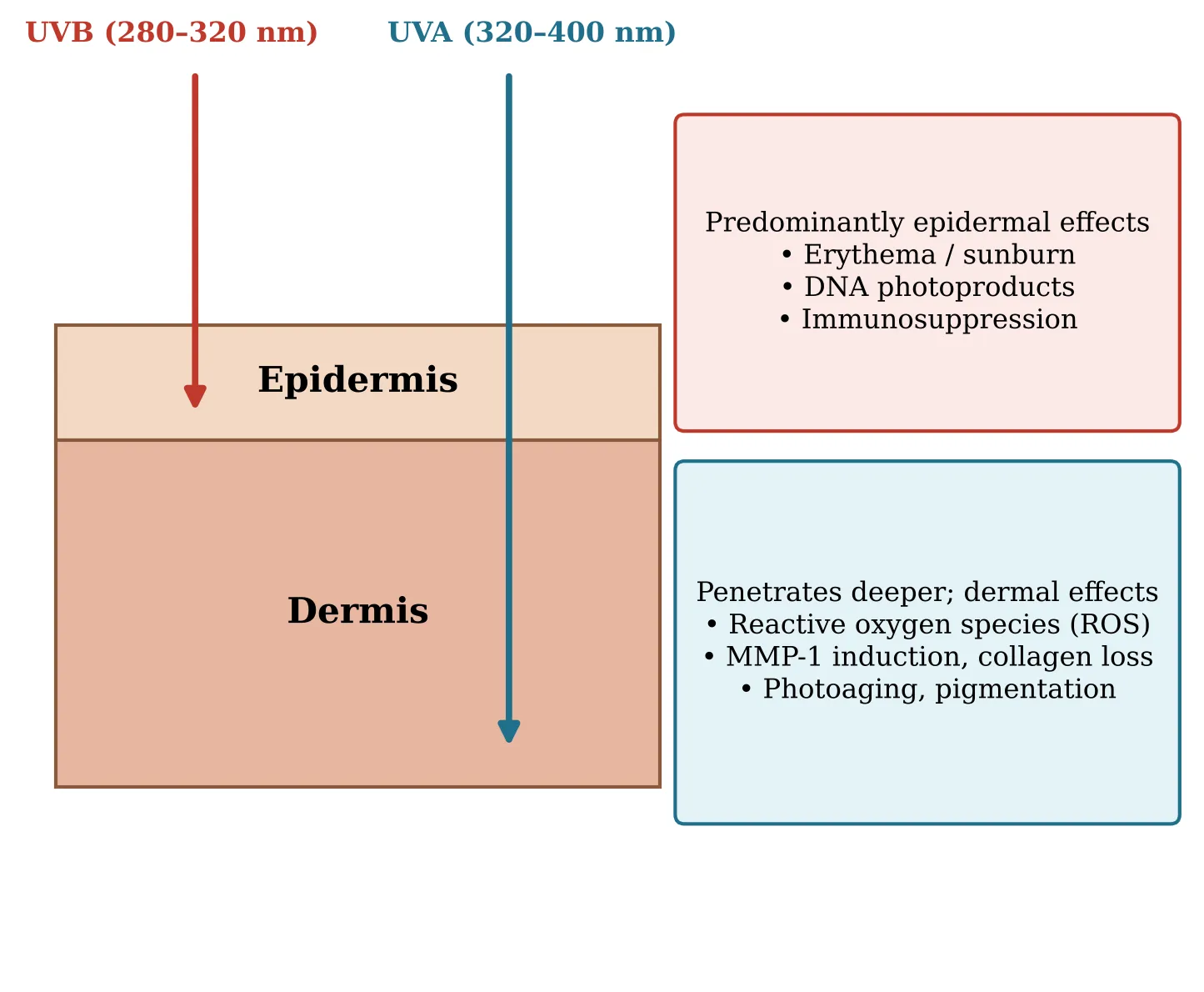
Figure 1: Penetration of UVB and UVA Radiation into Skin and Associated Biological Effects. Original Conceptual Illustration Prepared by the Author, Simplified from D’Orazio Et Al. (2013); Not to Scale.
Regulatory frameworks define how these metrics may be used. In the United States, sunscreens are over-the-counter drugs regulated under monograph M020 (U.S. Food and Drug Administration [FDA], 2021). In the European Union, they are cosmetic products under Regulation (EC) No 1223/2009 (European Parliament & Council of the European Union, 2009), with efficacy and labelling recommendations set out in Commission Recommendation 2006/647/EC (EC, 2006). These documents are discussed further in Section 9.
3.3 In-vitro spectrophotometric estimation and its limits
Because in-vivo testing is expensive and requires ethical oversight, laboratory studies of herbal preparations usually rely on a spectrophotometric approach based on the equation of Mansur et al. (1986), which simplifies the method of Sayre et al. (1979). A dilute solution of the sample is scanned from 290 to 320 nm at 5-nm intervals and the SPF is estimated as SPF = CF × Σ EE (λ) × I (λ) × Abs (λ), where CF is a correction factor of 10, EE (λ) the erythemal effect spectrum, I (λ) the solar intensity and Abs (λ) the absorbance of the solution. The method was applied by Dutra et al. (2004) to commercial emulsions as a simple, preliminary screening tool.
The approach is useful for ranking extracts within one laboratory but it should not be treated as a measurement of sunscreen performance. The absorbance of a solution is not equivalent to the protective film formed on skin; the method ignores film thickness, vehicle effects, photostability and UVA protection; and results depend strongly on solvent and concentration. Ácsová et al. (2021) showed this clearly with vegetable oils. The five most promoted oils had in-vitro SPF values between 0.0 and 0.4 and in-vivo values of 1.2 to 2.8, far lower than the values in earlier reports, which the authors attributed to deviation from the original method; they further concluded that the dilution approach is unsuitable for materials with very little photoprotection and that an SPF below 1 is physiologically impossible and meaningless. A study of Sideritis raeseri extracts illustrates a related problem: spectrophotometric SPF values of the order of 23–26 fell markedly over six days at room temperature, indicating extract instability that a single measurement would hide (Xhuvani et al., 2026).
3.4 Filters, botanicals and non-filtering photoprotection
UV filters absorb, scatter or reflect radiation and are the basis of regulatory SPF claims. Botanicals can contribute in three distinct ways: by absorbing some UV (usually weakly in the UVB range), by neutralising ROS and inflammatory signals after radiation has entered the skin, and by supporting skin barrier or repair processes. The second and third mechanisms constitute biological protection, which is not measured by the SPF test. They are nevertheless of genuine interest, and reviews of botanical photoprotection typically present such agents as complementary to, rather than replacements for, filters (Torres et al., 2020). This distinction underpins the interpretation of the studies reviewed in Section 8.
4. Herbal Ingredients Investigated for Photoprotection
4.1 Mechanistic framework
Most reported photoprotective effects of botanicals are mediated by polyphenols and related compounds that scavenge radicals, chelate pro-oxidant metals, and modulate redox-sensitive signalling, for example through inhibition of inflammatory pathways and of matrix-degrading enzymes (Katiyar & Elmets, 2001; Fisher et al., 2002; Torres et al., 2020). Figure 2 outlines this framework. It is important to note that the cascade illustrated concerns damage after UV has been absorbed by skin, so that these effects complement but do not substitute for blocking of radiation at the surface. Table 2 summarises the botanicals discussed below, together with the level of evidence retrieved for each.
4.2 Aloe vera
Aloe vera gel is obtained from the leaf parenchyma of Aloe barbadensis and is a widely used hydrating, soothing and gel-forming ingredient in topical products (Surjushe et al., 2008). Its value in sunscreen formulation is mainly as a lightweight, water-rich base and as a skin-conditioning component, which is attractive for oily skin because it adds moisture without a heavy oil phase. This should be distinguished from photoprotective activity: within the sources reviewed here, aloe is better supported as a vehicle and soothing ingredient than as a UV-protective active, and claims of SPF contribution need to be supported by validated testing of the finished product.
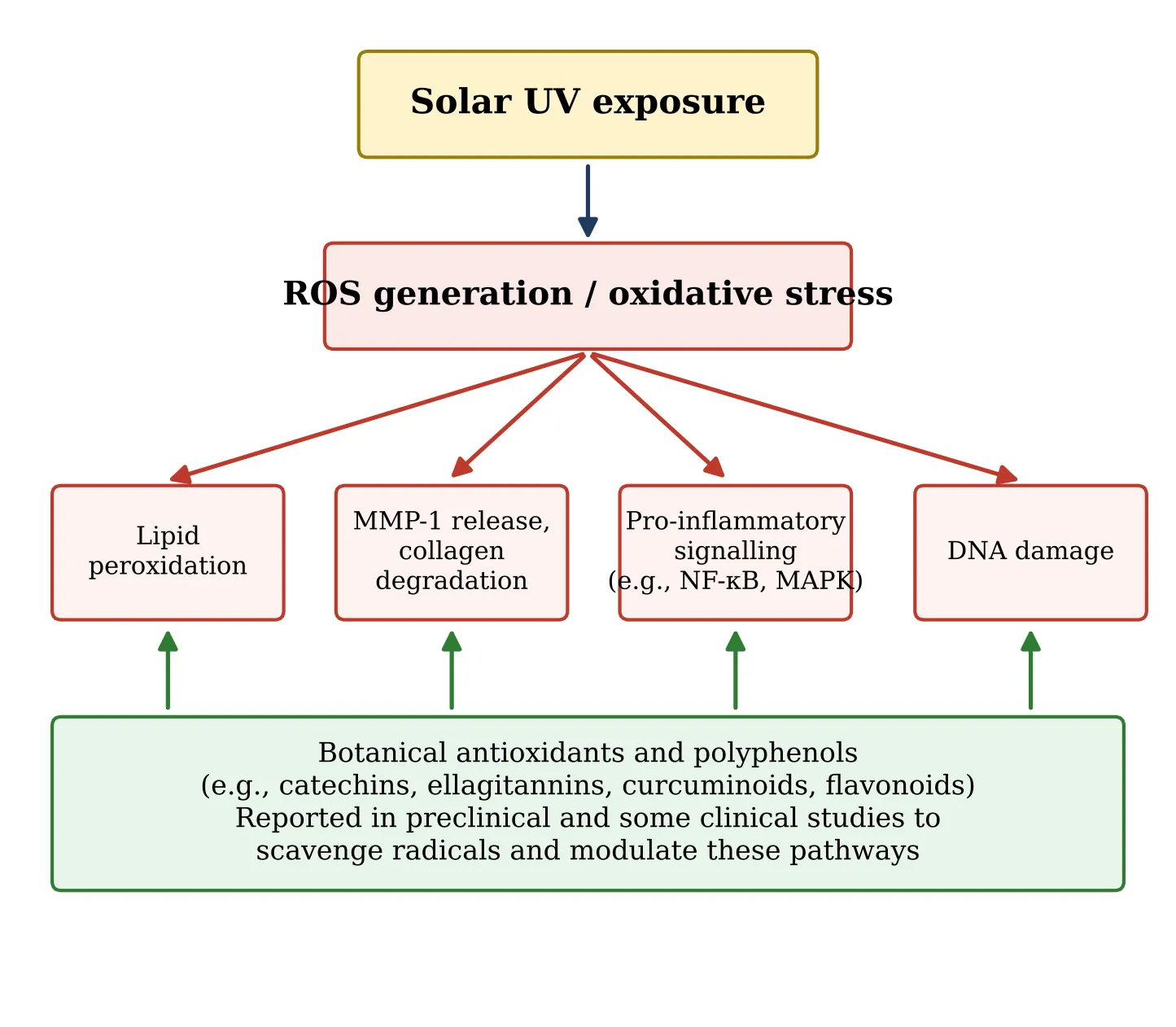
Figure 2: UV-induced Oxidative Stress Pathways and Proposed Sites of Action of Botanical Antioxidants. Original Conceptual Illustration Prepared by the Author, Based on Fisher Et Al. (2002), Katiyar and Elmets (2001) and Torres Et Al. (2020). the Mechanisms Shown Describe Biological Protection, Not UV Filtering.
4.3 Green tea (Camellia sinensis)
Green tea has one of the largest preclinical evidence bases among the botanicals considered. Its catechins, particularly epigallocatechin-3-gallate (EGCG), are antioxidant polyphenols that, in laboratory and animal studies, reduce UV-induced oxidative stress, inflammation and DNA damage (Katiyar & Elmets, 2001; Prasanth et al., 2019). Topical application of green tea polyphenols was also reported to protect human skin from UV-induced erythema in experimental settings (Elmets et al., 2001). A review of tea extracts nevertheless noted that effects had not been systematically defined and that results were sometimes conflicting (Li et al., 2014). Formulation-related concerns include the susceptibility of catechins to oxidation and colour change, which must be controlled by pH, antioxidant stabilisers and packaging. Green tea is also relevant to oily skin biology, since it has been discussed as an option for sebum-related concerns (Endly & Miller, 2017); that discussion concerns oiliness rather than UV protection and should not be merged with it.
4.4 Turmeric (Curcuma longa)
Curcumin, the principal curcuminoid of turmeric, has antioxidant and anti-inflammatory activity that has been explored in several skin conditions (Vollono et al., 2019). Its translation into products is hindered by poor aqueous solubility, low bioavailability and chemical instability (Anand et al., 2007; Nelson et al., 2017). Nelson et al. (2017) further caution that curcumin is chemically reactive and can interfere with many laboratory assays, so apparently promising in-vitro activity should be interpreted carefully. Practical drawbacks include intense yellow colour and staining of skin and clothing, which are significant for facial sunscreens. Turmeric constituents have also been included in photoallergy testing of herbal cosmetic ingredients (Pan et al., 2021), reinforcing the need for tolerability data. Overall, curcumin is better viewed as an antioxidant adjunct requiring protective delivery systems than as a ready-to-use sunscreen ingredient.
4.5 Licorice (Glycyrrhiza glabra)
Licorice root contains flavonoids, including glabridin, that are used in cosmeceuticals for skin lightening and anti-inflammatory effects (Cerulli et al., 2022). In a study using B16 murine melanoma cells and guinea pig skin, Yokota et al. (1998) reported that glabridin inhibited tyrosinase activity and that topical 0.5% glabridin inhibited UVB-induced pigmentation and erythema in guinea pig skin, along with in-vitro anti-inflammatory effects. This is animal and cell-culture evidence and concerns glabridin, not whole-herb extract. The systemic toxicity of glycyrrhizin after high oral intake is well documented (Pastorino et al., 2018), but this should not be extrapolated to topical use; it does however support standardisation of the constituent profile of licorice extracts used in products.
4.6 Pomegranate (Punica granatum)
Pomegranate peel and fruit extracts contain ellagitannins, such as punicalagin, and ellagic acid, and are among the more extensively studied plant extracts for UV-related endpoints. Afaq et al. (2005) reported that a pomegranate fruit extract modulated UVB-induced signalling in normal human epidermal keratinocytes. A proprietary pericarp extract showed broad antioxidant activity in cell-free assays, protected human dermal fibroblasts against UVA-induced lipid peroxidation and, in a reconstructed human skin model, reduced UVA-induced MMP-1 release and several inflammatory mediators (Pannakal et al., 2025). An aged pomegranate extract displayed high antioxidant capacity and reduced ROS and cytokine levels in cell models, and was also evaluated in a randomised, double-blind, placebo-controlled trial in 60 women assessing UV-induced erythema and pigmentation-related outcomes, with no adverse effects reported (Ikeda et al., 2025). Delivery has also been examined: nanoemulsions prepared with pomegranate seed oil or medium-chain triglyceride oil were reported to deliver peel polyphenols into deeper skin layers in vitro (Baccarin & Lemos-Senna, 2017). Taken together, pomegranate has a comparatively strong body of mechanistic data, but the SPF or UVA-PF contribution of finished topical products has not been established in the studies retrieved.
4.7 Grape (Vitis vinifera)
Grape seed and grape pomace polyphenols, including proanthocyanidins, are potent antioxidants. In mice, dietary grape seed proanthocyanidins reduced photocarcinogenesis (Mittal et al., 2003), and this literature has been reviewed with respect to oxidative stress and immune protection (Katiyar, 2008). For topical sunscreen use, the most directly relevant data come from grape pomace extract incorporated into filter-based systems. In an in-vitro study, a hydroethanolic extract added at 10% w/w to a sunscreen system containing UV filters increased initial SPF, helped retain SPF and critical wavelength after two hours of simulated solar exposure, and showed no SPF of its own when used without filters (Hübner et al., 2019). A subsequent clinical study reported an in-vivo SPF of 12.30 for the extract-containing emulsion against 10.20 for the filter-only emulsion, and a UVA-PF of 4.33 against 3.67, with both samples judged safe in patch and photosensitisation tests (Hübner et al., 2020). These findings are the clearest example in the reviewed literature of a botanical acting as an adjunct, increasing the performance of established filters rather than replacing them.
4.8 Rosemary (Rosmarinus officinalis)
Rosemary is rich in rosmarinic acid and diterpenes such as carnosic acid, and its phytochemistry and biological activities have been reviewed (Andrade et al., 2018). Rosmarinic acid has been described as a photoprotective agent against UV radiation in cell-based studies (Sánchez-Campillo et al., 2009). Its practical interest for formulators lies as much in antioxidant stabilisation of lipid-containing products as in direct photoprotection. No studies of rosemary-based sunscreens with validated SPF testing were identified in the sources reviewed here, so any photoprotective contribution should be regarded as unproven.
4.9 Calendula (Calendula officinalis)
Calendula is traditionally used for wound healing and skin inflammation, and anti-inflammatory and wound-healing effects have been reported in animal models (Parente et al., 2012). In a formulation study, gels and creams containing 5% hydroethanolic calendula leaf extract were stable in terms of pH, showed good antioxidant capacity and, as the authors reported, very low spectrophotometric SPF, around 1.75; the authors concluded that calendula cannot be considered a stand-alone sunscreen, although it might be tested alongside synthetic filters (Deuschle et al., 2015). The study also found that gels spread better than creams while creams showed smaller viscosity changes, a practical illustration of vehicle trade-offs. As a member of the Asteraceae, calendula can cause contact sensitisation in susceptible individuals (Reider et al., 2001).
4.10 Other botanicals
Several other plant extracts have been tested using spectrophotometric SPF methods. A gel containing Moringa oleifera leaf and Citrus aurantifolia peel extracts reported an SPF of 23.86 for its best formulation and maintained it after storage (Rinatha et al., 2023). Gels containing a brown alga extract (Sargassum oligocystum) reached in-vitro SPF values of 5.3–8.8, which the authors characterised as low-level protection (Moghimipour et al., 2026). Kaempferia galanga and its cinnamate derivative are discussed in an Indonesian review of herbal sunscreens (Hakim et al., 2023). Other examples are reviewed by Torres et al. (2020), including Polypodium leucotomos extract. These results are generally preliminary and should be read with the methodological cautions described in Section 3.3.
Table 2: Botanical Ingredients, Key Constituents and Reported Photoprotective Properties
| Botanical (part) | Key constituents discussed | Reported properties relevant to photoprotection | Evidence level in sources reviewed | Principal cautions |
|---|---|---|---|---|
| Aloe vera (leaf gel) | Polysaccharide-rich gel, high water content | Hydrating, soothing, gel-forming base (Surjushe et al., 2008) | Review level; no validated SPF data in sources reviewed | Role as UV-protective active unproven; preservation of water-rich gels |
| Green tea (leaf) | Catechins, mainly EGCG | Antioxidant, anti-inflammatory, DNA-protective effects (Katiyar & Elmets, 2001; Prasanth et al., 2019) | In vitro, animal, limited human (Elmets et al., 2001) | Oxidation and discoloration; inconsistent results across extracts (Li et al., 2014) |
| Turmeric (rhizome) | Curcuminoids | Antioxidant, anti-inflammatory (Vollono et al., 2019) | Mainly in vitro and preclinical | Instability, low bioavailability, staining, assay interference, photoallergy testing needed |
| Licorice (root) | Glabridin and other flavonoids | Tyrosinase and inflammation inhibition; reduced UVB pigmentation and erythema in guinea pigs (Yokota et al., 1998) | In vitro and animal | Constituent variability; allergenic potential should be assessed |
| Pomegranate (peel, fruit) | Ellagitannins (punicalagin), ellagic acid | Reduced UVA-induced lipid peroxidation, MMP-1 and cytokines in vitro (Pannakal et al., 2025); human trial reported (Ikeda et al., 2025) | In vitro, ex vivo model, one randomised trial | Extract-specific results; no validated SPF of topical products identified |
| Grape (seed, pomace) | Proanthocyanidins, other phenolics | Adjunct that increased in-vivo SPF and UVA-PF of a filter-based emulsion (Hübner et al., 2020) | In vitro, animal, human (adjunct use) | No SPF when used without filters (Hübner et al., 2019) |
| Rosemary (leaf) | Rosmarinic acid, carnosic acid | Cell-based photoprotective effects of rosmarinic acid (Sánchez-Campillo et al., 2009) | In vitro; review | No validated SPF studies identified |
| Calendula (flower, leaf) | Flavonoids, triterpenoids | Antioxidant; anti-inflammatory in animals (Parente et al., 2012); SPF about 1.75 in vitro (Deuschle et al., 2015) | In vitro and animal | Low SPF; Asteraceae contact allergy (Reider et al., 2001) |
5. Formulation Strategies for Oily Skin
5.1 Design principles
Formulating for oily skin involves balancing three goals that can conflict: delivering the intended protective or antioxidant effect, achieving a light sensory profile, and maintaining physical, chemical and microbiological stability. The attributes that together determine usability include texture and spreadability, after-feel and shine, rheology, the choice of emollients and oil phase, pH compatibility, stability, preservation and demonstrated tolerability. Some of these, such as rheology, spreadability and pH, can be measured readily; others, such as after-feel and shine, require sensory or instrumental evaluation on human skin.
5.2 Vehicle selection
Gels, oil-in-water (o/w) emulsions and emulgels are the vehicles most often proposed for oily skin, because they contain little or no heavy oil phase and leave a lighter residue. Their characteristics are compared in Table 3. Hydrogels based on carbomer or cellulose derivatives are easy to prepare and feel fresh, but they are poor carriers for lipophilic UV filters and many lipophilic botanical actives. Emulgels combine an o/w emulsion with a gelling agent and have been described as thixotropic, greaseless, easily spreadable and well suited to hydrophobic actives (Panwar et al., 2011). Conventional o/w creams accommodate lipophilic ingredients well but need careful emulsifier and emollient selection to avoid a greasy after-feel.
Table 3: Formulation Vehicles Considered for Herbal Sunscreens on Oily Skin
| Vehicle | Typical components | Advantages for oily skin | Limitations |
|---|---|---|---|
| Hydrogel | Water, carbomer or HPMC, neutralising agent, humectant, preservative | Light, fresh, non-greasy; easy to prepare. In one study, carbomer gels spread better than HPMC gels (Moghimipour et al., 2026). | Limited capacity for lipophilic ingredients; extract may be unstable at gel pH; water-rich so preservation is critical. |
| O/w emulsion (lotion, light cream) | Oil phase, emulsifier, water, thickener, preservative | Accommodates lipophilic filters and extracts; adjustable skin feel. | Emollient and emulsifier selection can cause greasy feel; more complex stability (creaming, coalescence). |
| Emulgel | O/w emulsion plus gelling agent | Described as thixotropic, greaseless and easily spreadable (Panwar et al., 2011). | Two-system complexity; compatibility between emulsifier and polymer needs testing. |
| Nanoemulsion-based systems | Oil, surfactant, water, high-energy or low-energy emulsification | Reported to deliver plant polyphenols into deeper skin layers in vitro (Baccarin & Lemos-Senna, 2017). | Higher surfactant content; skin-surface sunscreen performance not shown by permeation data; scale-up and regulatory considerations. |
| Hydroalcoholic gel or spray | Water, ethanol, gelling agent | Fast drying, light feel. | Alcohol may irritate or dry some skin; solvent affects extract stability and apparent SPF. |
5.3 Gelling agents, oil phase and pH
Rheology determines both stability and consumer perception. In a gel study, formulations with carbomer 940 at 2.1% reached viscosities of roughly 41,000–55,000 cP at 10 rpm while 4% HPMC gels were in the range of roughly 7,000–8,000 cP, with higher spreadability for the carbomer gels (Moghimipour et al., 2026). The same study found that at the highest extract level a carbomer gel became biphasic and non-uniform, a reminder that extract components can destabilise polymer networks. For emulsions, the proportion and type of oil should be minimised and chosen for sensory lightness. Because carbomer thickens only after neutralisation, final pH must be balanced between polymer performance, extract stability and skin compatibility; the pH of the gels in the cited study ranged from about 5.9 to 7.2 depending on the polymer (Moghimipour et al., 2026). The extract itself may alter pH and viscosity, so these parameters should always be re-measured after incorporation.
5.4 Stability and preservation
Plant extracts are chemically complex and can degrade, change colour or precipitate on storage, and they also supply nutrients for microorganisms. Water-rich herbal gels are therefore particularly vulnerable to microbial contamination, and cosmetic products containing natural or minimally processed raw materials are recognised to be prone to it (Dobariya et al., 2026). The same study adapted the ISO 11930 challenge test to include microorganisms associated with raw materials and observed marked differences between preservative systems, even though all met the acceptance criteria. Physical stability is equally important: cream formulations of calendula extract showed smaller viscosity variation than gels in storage testing, whereas gels spread more easily (Deuschle et al., 2015). Stability testing therefore needs to follow the product through realistic temperature cycling and light exposure.
5.5 Combining botanicals with UV filters
Because botanicals alone rarely deliver validated SPF, one pragmatic strategy is to use them as functional additives in filter-containing products. Grape pomace extract is the best-documented example (Hübner et al., 2019; Hübner et al., 2020). This approach shifts the regulatory and testing framework toward that of conventional sunscreens, but it also makes claims about SPF and UVA protection verifiable and keeps the botanical’s role honestly defined.
6. Preparation and Development of Herbal Sunscreen Formulations
6.1 Plant material and extraction
Reproducibility starts with the plant. Correct botanical identification, specified plant part, harvest conditions and post-harvest handling all affect constituent profile. Extraction methods range from simple maceration and percolation to more advanced techniques, and the choice of solvent, temperature and time determines which constituents are recovered (Azmir et al., 2013; Sasidharan et al., 2011). Student projects typically use maceration with ethanol, as in the Moringa and lime peel gel (Rinatha et al., 2023). Solvent also affects apparent photoprotective behaviour: in the Sideritis study, water extracts gave higher spectrophotometric SPF values than water–ethanol extracts (Xhuvani et al., 2026), so results from different solvents are not directly comparable.
6.2 Standardisation
Standardisation ensures that each batch of extract contains a defined amount of one or more marker constituents. Without it, a formulation reported as containing “5% extract” may differ greatly between batches. At minimum, studies should report plant part, solvent, extraction ratio and yield, and should measure a simple marker such as total phenolic content, as in the Sargassum gel study, which reported 30.611 mg gallic acid equivalents per gram of extract and a yield of about 16.7% (Moghimipour et al., 2026). Chromatographic fingerprints of key constituents are better still.
6.3 Formulation workflow
A sensible development sequence is shown in Figure 3. After characterising the extract, excipient compatibility is checked and prototype formulations are prepared. A typical gel preparation involves dispersing the gelling agent in water, adding humectant and preservative, neutralising where required, and adding the extract after dispersion, with attention to the order of addition and temperature to avoid degrading heat- or pH-sensitive constituents. Emulsions are prepared by heating oil and water phases separately, emulsifying under controlled shear and cooling with gentle stirring before adding heat-labile extracts. Three batches are normally prepared to confirm reproducibility, and batch size, mixing conditions and order of addition should be recorded so that another laboratory can repeat the work; laboratory formulations rarely transfer unchanged to larger batches.
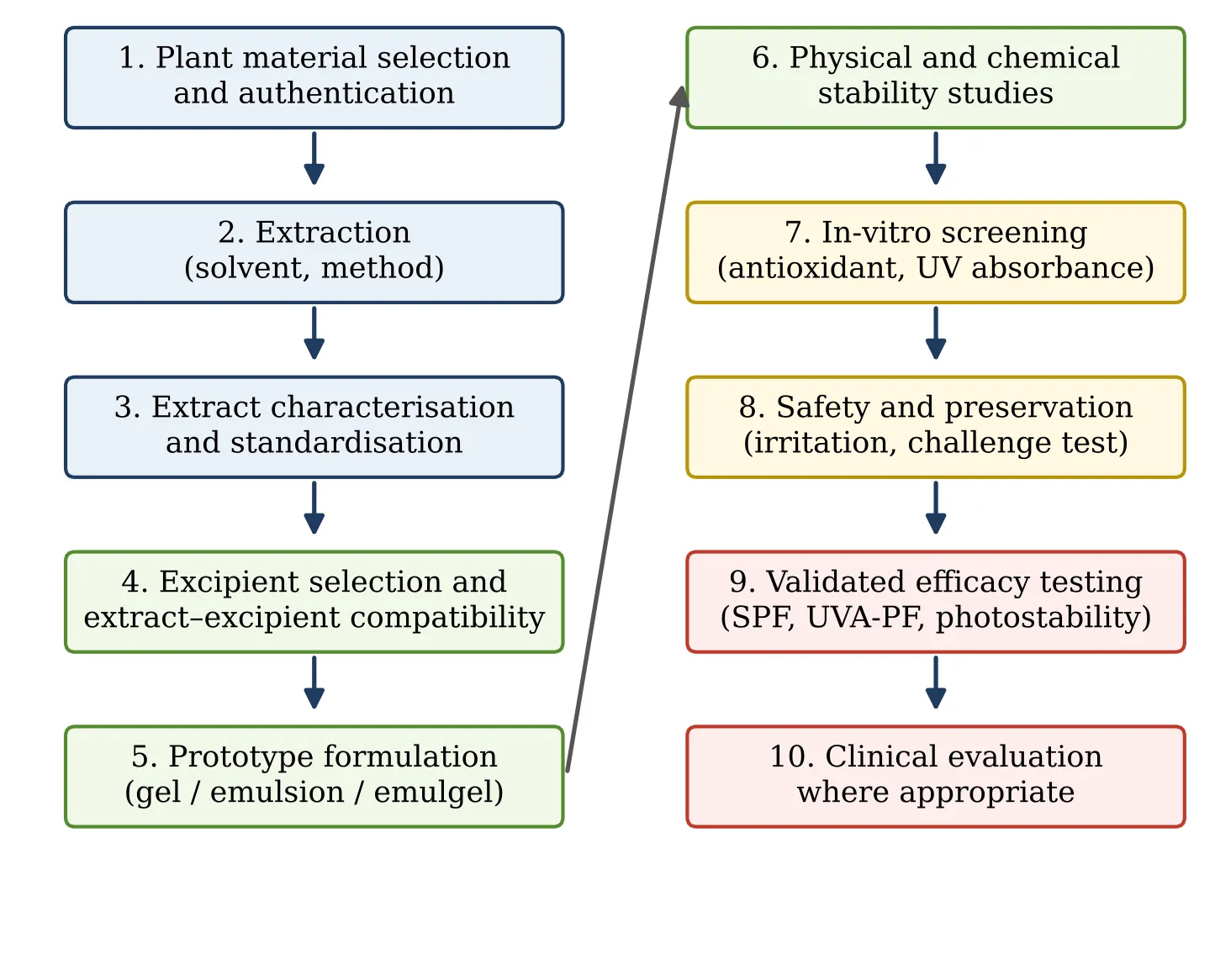
Figure 3: Stepwise Development and Evaluation Workflow for a Herbal Sunscreen Formulation. Original Conceptual Workflow Prepared by the Author from the Literature Reviewed; It Is Not an Experimental Protocol.
7. Evaluation Parameters and Quality Control
7.1 Physicochemical and sensory evaluation
Evaluation proceeds from simple product characteristics to biological tests. Organoleptic properties, homogeneity, pH, viscosity and spreadability are routine and were reported in the gel studies reviewed (Deuschle et al., 2015; Moghimipour et al., 2026). For oily-skin products, sensory and instrumental assessment of greasiness, shine and absorption time should be added, because these parameters decide whether the product will be used. Table 4 summarises the main parameters, the methods commonly used and their purpose.
Table 4: Quality-control and Evaluation Parameters for Herbal Sunscreen Formulations
| Parameter | Method or standard | Purpose | Remarks |
|---|---|---|---|
| Appearance, colour, odour, homogeneity | Visual and olfactory inspection; slide or glass inspection | Detect phase separation, particles, discoloration | Colour change on storage can signal extract degradation. |
| pH | Calibrated pH meter on dispersion or directly | Skin compatibility; polymer and extract stability | Re-measure after extract incorporation and after storage. |
| Viscosity and rheology | Rotational viscometer at defined spindle and speed | Stability and sensory behaviour | Gel and cream viscosities differ in change on storage (Deuschle et al., 2015). |
| Spreadability | Parallel-plate or similar method under defined weight | Ease of application, uniform film | Reported for gels in Moghimipour et al. (2026). |
| Physical stability | Storage at defined temperatures, freeze–thaw cycles, centrifugation | Predict shelf-life; detect creaming or syneresis | Test with the intended packaging. |
| Antioxidant capacity | DPPH or similar radical-scavenging assays | Characterise biological activity of extract and formulation | Does not measure sunscreen performance. |
| In-vitro SPF (screening) | Spectrophotometric equation of Mansur et al. (1986) | Preliminary ranking of extracts and formulations | Not a substitute for ISO 24444; follow original method (Ácsová et al., 2021). |
| UVA protection and critical wavelength | ISO 24443 in-vitro method (ISO, 2021) | Assess broad-spectrum protection | Requires film on suitable substrate and irradiation step. |
| In-vivo SPF and UVA-PF | ISO 24444 (ISO, 2019b); ISO 24442 (ISO, 2022) | Validated efficacy claims | Requires ethics approval and trained testing laboratory. |
| Photostability | Measurement of SPF or absorbance before and after simulated sunlight | Detect loss of protection on exposure | Shown to differ with filter and extract combinations (Hübner et al., 2019). |
| Microbiological quality and preservation | ISO 11930 challenge test (ISO, 2019a) | Confirm effective preservation | Include raw-material-associated organisms where relevant (Dobariya et al., 2026). |
| Skin tolerability and photosafety | Patch, repeated-insult, phototoxicity and photoallergy tests | Exclude irritation and photosensitisation | Human testing needs ethical approval; see Hübner et al. (2020) for a design. |
| Oily-skin usability | Sebum measurement, panel scoring of shine and greasiness | Verify suitability for target skin type | Rarely reported in published herbal sunscreen studies. |
7.2 Efficacy testing: interpretation hierarchy
Evaluation results should be read in a hierarchy. Antioxidant assays and extract absorbance indicate biological or optical potential only. In-vitro SPF of a formulation is a screening result. Validated in-vitro UVA and photostability data are more informative, and in-vivo SPF and UVA-PF determined to ISO standards remain the basis of labelling. Human tolerability testing is separate from, and required in addition to, efficacy testing. A table of formulation properties without these elements describes a cosmetic gel, not a verified sunscreen.
8. Review and Comparison of Published Studies
8.1 Studies included in the comparison
Table 5 compares twelve studies that could be bibliographically verified and that illustrate the range of methods used for herbal or plant-based photoprotective preparations: in-vitro spectrophotometric screening, formulation and stability studies, cell and tissue models, animal work and human studies. The table is illustrative rather than exhaustive. Parameters that were not reported in the available record are indicated as “Not reported”. Numerical values are given as stated by the study authors and have not been recalculated.
Table 5: Comparison of Selected Published Studies on Herbal or Plant-Based Photoprotective Preparations
| Author and year | Botanical ingredient | Formulation type | Study design / evaluation method | Main reported findings | Limitations |
|---|---|---|---|---|---|
| Yokota et al. (1998) | Glabridin from licorice extract | Topical glabridin solution (0.5%) on guinea pig skin; B16 cell assays | Cell culture and guinea pig skin; tyrosinase and inflammation assays | Inhibited tyrosinase; 0.5% topical glabridin inhibited UVB-induced pigmentation and erythema in guinea pigs; anti-inflammatory effects in vitro | Animal and cell evidence; purified constituent, not whole extract; no SPF; not reported for humans |
| Dutra et al. (2004) | Not applicable (commercial products) | Ten commercial sunscreen emulsions | UV spectrophotometric SPF determination (Mansur-based) | Proposed as a simple, rapid method for preliminary in-vitro SPF of emulsions | Method study, not a herbal study; preliminary screening only |
| Deuschle et al. (2015) | Calendula officinalis leaf extract (5%) | Gel and cream | pH, viscosity, spreadability, DPPH antioxidant assay, spectrophotometric SPF | Stable pH; gels spread better, creams showed less viscosity variation; good antioxidant capacity; SPF about 1.75 | In-vitro only; low SPF; no UVA, photostability or human data reported |
| Baccarin & Lemos-Senna (2017) | Pomegranate peel polyphenols (ethyl acetate fraction) | Nanoemulsions with pomegranate seed oil or MCT oil | In-vitro skin permeation and retention (Franz cells) | Polyphenols delivered into deeper skin layers | Permeation study; no SPF or photoprotection endpoint reported |
| Hübner et al. (2019) | Grape pomace (Vitis vinifera) hydroethanolic extract, 10% w/w | Sunscreen systems with and without UV filters and extract | In-vitro SPF, critical wavelength, photostability (2 h exposure), DPPH assay | Extract alone gave no SPF; with filters, higher initial SPF and better retention after irradiation; critical wavelength about 376–380 nm | In-vitro only; one harvest, cultivar and batch; synergy inferred from comparisons; inconsistencies in the text noted |
| Hübner et al. (2020) | Grape pomace extract, 10% w/w | Emulsion with three UV filters, with or without extract | In-vitro tests plus human SPF (10 volunteers), patch (60) and phototoxicity/photosensitisation (30) tests | In-vivo SPF 12.30 vs 10.20; UVA-PF 4.33 vs 3.67; both samples judged safe | Small SPF panel; extract used as an adjunct to filters; not oily-skin-specific |
| Ácsová et al. (2021) | 14 virgin vegetable oils | Neat oils and diluted oils; sunscreen oil controls | In-vitro Mansur method and in-vivo ISO SPF (10 volunteers) | Five most promoted oils: in-vitro SPF 0.0–0.4, in-vivo 1.2–2.8; tamanu oil in-vitro 11.2; dilution method judged unsuitable | Individual in-vivo values for the remaining oils not reported; oils, not extracts |
| Rinatha et al. (2023) | Moringa oleifera leaf with Citrus aurantifolia peel (ethanol maceration) | Gel; ratios 1:1, 1:2, 2:1 | Spreadability, pH, adhesion before and after storage; SPF determination | Formula III highest SPF 23.86 ± 0.19, unchanged after stability testing; no significant physical differences | SPF method not specified in the record consulted; no UVA, photostability or human data reported |
| Pannakal et al. (2025) | Pomegranate pericarp extract (proprietary) | Extract at 0.001% in cell and tissue models | Cell-free antioxidant assays; fibroblast lipid peroxidation; reconstructed skin model with UVA | Up to 74% protection of lipid peroxidation; reduced MMP-1 and inflammatory mediators in reconstructed skin | In-vitro; company-affiliated research; no SPF; no topical formulation tested |
| Ikeda et al. (2025) | Aged Punica granatum extract | Extract in cell models and clinical trial | TEAC assay, cell models, randomised double-blind placebo-controlled trial (60 women) | High antioxidant capacity (977.08 ± 15.73 mmol Trolox/100 g); reduced ROS and cytokines in vitro; no adverse effects reported | SPF not reported; route, dose and detailed trial outcomes not extracted from the record consulted |
| Moghimipour et al. (2026) | Brown alga Sargassum oligocystum extract (0–10%) | Carbomer 940 and HPMC gels | pH, viscosity, spreadability, 3-month stability, Mansur SPF | SPF 5.3–8.8 for extract gels vs about 0.6–1.0 without; SPF plateaued at 10%; SPF 50 reference product measured 15.2 | In-vitro, solution-based UVB estimate; authors call results preliminary |
| Xhuvani et al. (2026) | Sideritis raeseri extracts | Aqueous and water–ethanol extracts (not formulated) | Mansur SPF over six days at room temperature and refrigerated | SPF fell from 26.4 to 17.9 (water, room temperature); refrigeration preserved SPF better | Solution-based; extract only; no formulation, UVA or human data |
8.2 Synthesis
Several patterns emerge. First, apparent SPF depends heavily on method, solvent and extract concentration. Spectrophotometric values ranged from about 1.75 in calendula gels and creams (Deuschle et al., 2015) and 5–9 in alga gels (Moghimipour et al., 2026) to 23–26 for a moringa–lime gel and a mountain tea extract (Rinatha et al., 2023; Xhuvani et al., 2026). These numbers cannot be compared across studies, and the comparison with a commercial SPF 50 product, which measured only about 15 by the same method in the alga study, shows that the scale itself is unreliable. Ácsová et al. (2021) demonstrated that when in-vitro and in-vivo SPF are measured together the difference can be large for natural materials.
Second, the only studies that included validated human efficacy testing evaluated the botanical as an adjunct to synthetic filters rather than as a sole active (Hübner et al., 2019; Hübner et al., 2020). In these, the extract contributed no SPF on its own but increased the performance of the filter system modestly. This supports the view that the most defensible role for many botanicals is supportive.
Third, the data on pomegranate show a different type of evidence. Pannakal et al. (2025) and Ikeda et al. (2025) concern antioxidant, anti-inflammatory and tissue-level protection, not sunscreen performance. Such biological protection may be valuable but should be reported as such. Fourth, vehicle effects are real but under-investigated: gels and creams differed in spreadability and viscosity stability (Deuschle et al., 2015), and carbomer and HPMC gels differed strongly in viscosity and spreadability (Moghimipour et al., 2026), yet none of the studies related these properties to sensory acceptance or photoprotective performance on skin. Finally, and most importantly for the present review, none of the studies enrolled participants selected by sebum level or skin type in a way that allowed conclusions about oily skin. Figure 4 summarises the evidence framework implied by these observations.
9. Safety, Limitations and Regulatory Considerations
9.1 Safety of botanical ingredients
Natural origin does not guarantee safety. Plants and plant products are well-known causes of irritant and allergic contact dermatitis, and some contain phototoxic compounds that increase sensitivity to UV (Evans & Schmidt, 1980). The risk is highly relevant to sunscreens, which are applied to large areas of skin that will then be exposed to light. Photoallergy testing of herbal cosmetic ingredients including curcumin, Coptis, Phellodendron and shikonin was carried out using patch and photopatch methods in 33 healthy Chinese subjects at concentrations of 5–50% (Pan et al., 2021), illustrating both the interest in and the need for such testing. Asteraceae members such as calendula can sensitise (Reider et al., 2001). Safety evaluation of a finished herbal sunscreen should therefore include irritation, sensitisation and photosafety assessment appropriate to the ingredients, with additional attention for acne-prone skin. Statements such as “100% safe” or “natural therefore harmless” are not scientifically justified.
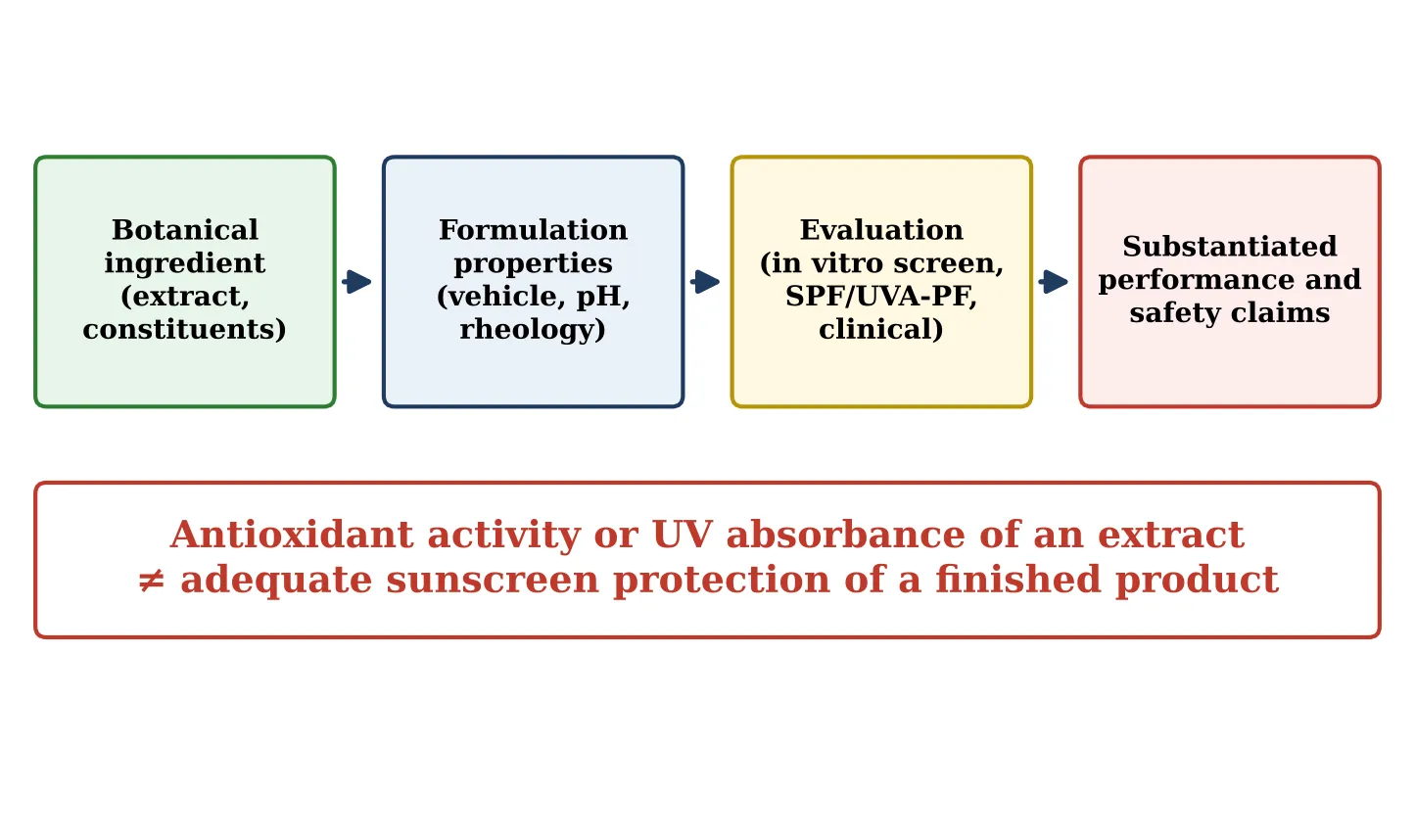
Figure 4: Evidence Framework for Herbal Sunscreen Claims. Original Conceptual Framework Prepared by the Author, Synthesising the Evidence Reviewed in This Manuscript.
9.2 Regulatory framework
In the United States, sunscreen is regulated as a non-prescription drug under the over-the-counter monograph system (FDA, 2021), so a herbal ingredient cannot be marketed as the active ingredient of a sunscreen without meeting the relevant requirements. In the European Union, sunscreens are cosmetic products governed by Regulation (EC) No 1223/2009, which restricts the permitted UV filters, and efficacy claims should follow Commission Recommendation 2006/647/EC, including minimum SPF, a UVA-PF of at least one-third of the labelled SPF and a critical wavelength of at least 370 nm (EC, 2006; European Parliament & Council of the European Union, 2009). Claims made on cosmetic products are also subject to common criteria set out in Commission Regulation (EU) No 655/2013 (European Commission, 2013). Requirements in other jurisdictions, including India, differ and should be checked directly with the applicable authority before any product is marketed. A laboratory formulation made for coursework is not a marketed product, and none of the approaches discussed here should be taken as authorisation to sell or recommend such a product.
9.3 Limitations of the evidence and of this review
The evidence base has several recurring limitations: reliance on in-vitro screening, small and unstandardised samples, poorly characterised extracts, single batches, lack of UVA and photostability data, short stability periods, industry-affiliated research on proprietary extracts, and publication in journals of variable editorial rigour. Some included reports are small formulation studies, and their results should be treated as hypothesis-generating. This review has its own limitations. It is narrative, its search was not exhaustive, access to some databases was restricted, and the number of studies tabulated is small. Conclusions are therefore stated cautiously and should be updated as higher-quality evidence appears.
10. Research Gaps and Future Directions
The gaps identified from this review are summarised in Table 6. Together they point toward a research agenda in which oily skin is treated as a defined study population and herbal ingredients are evaluated with the same rigour as conventional sunscreen components.
Table 6: Research Gaps and Suggested Directions
| Research gap | Evidence from this review | Suggested direction |
|---|---|---|
| Oily-skin-specific evidence | None of the studies in Table 5 selected participants by sebum level. | Clinical and instrumental studies in participants stratified by sebum output, measuring shine, greasiness, tolerability and acne-related outcomes. |
| Validated efficacy testing of herbal-only products | Human SPF/UVA-PF data are available only for a botanical used with filters (Hübner et al., 2020). | ISO-based SPF, UVA-PF and photostability testing of finished herbal products, reported with raw data. |
| Over-reliance on spectrophotometric SPF | In-vitro values vary widely and can be misleading (Ácsová et al., 2021; Xhuvani et al., 2026). | Use the Mansur method only for screening, follow the original methodology and report concentration, solvent and path length. |
| Extract standardisation | Plant part, solvent and marker content are incompletely reported across studies. | Report extraction ratio, yield and marker compounds; use chromatographic fingerprints. |
| Stability and preservation of water-rich herbal gels | Natural materials are prone to contamination (Dobariya et al., 2026); stability is often tested for only a few weeks. | Long-term stability with challenge testing on the finished formulation. |
| Comedogenicity and tolerability | Comedogenicity of finished herbal sunscreens is rarely evaluated. | Human comedogenicity and acne-prone-skin tolerability studies on finished products. |
| Delivery and photostability of unstable actives | Curcumin and catechins are unstable or poorly bioavailable (Nelson et al., 2017). | Encapsulation and stabiliser strategies evaluated with biological and photoprotective endpoints. |
| Transparent reporting | Inconsistencies and missing data in several reports. | Adopt reporting checklists for formulation and efficacy studies, including negative results. |
CONCLUSION
Herbal sunscreen formulations for oily skin address a real consumer need, and the underlying biology provides a plausible rationale: UV-induced oxidative stress and inflammation can be modulated by polyphenol-rich botanicals, and lightweight gels and emulgels can reduce the greasiness that discourages sunscreen use. However, the evidence retrieved in this review does not support the view that herbal extracts can by themselves replace approved UV filters. Antioxidant activity and absorbance of an extract are not the same as sunscreen protection of a finished product; spectrophotometric SPF values are unreliable when used as claims; and the best-supported role of botanicals is as adjuncts that may improve the performance or biological profile of filter-based formulations. Safety cannot be assumed from natural origin, and the suitability of any formulation for oily skin has to be demonstrated by measurement rather than inferred from texture.
For students and formulators, the practical implications are to standardise the extract, design a vehicle that is light and stable, preserve it effectively, report in-vitro SPF only as a screening result, and avoid unsupported claims. For researchers, the priorities are oily-skin-specific human studies, validated efficacy testing and transparent reporting. Until these are available, herbal sunscreens for oily skin are best regarded as a promising, but largely unproven, area of formulation science.
REFERENCES

Bhagyashree Khalkar, Balu Jagtap, Herbal Formulations of Sunscreen on Oily Skin, Int. J. of Pharm. Sci., 2026, Vol 4, Issue 11, 5083-5115. https://doi.org/10.5281/zenodo.24553369
 10.5281/zenodo.24553369