View Article

Abstract

Rheumatoid arthritis (RA) remains a challenging, chronic inflammatory condition marked by persistent joint pain, swelling, and progressive cartilage wear. While conventional oral non-steroidal anti-inflammatory drugs (NSAIDs) like diclofenac sodium provide reliable relief, their long-term use is frequently restricted by severe gastrointestinal and systemic side effects. Topical drug delivery offers a safer, more targeted approach by concentrating the therapeutic agent directly at the site of inflammation while minimizing systemic exposure. This review examines the formulation development, technological evaluation, and therapeutic potential of an innovative roll-on oil combining diclofenac sodium and Zingiber officinale (ginger extract) for managing rheumatoid arthritis symptoms. Evidence indicates that the formulated roll-on oil possesses ideal physicochemical traits, such as a skin-safe pH (5.0–7.0), strong physical stability, and optimal flow dynamics for smooth roller ball application. The delivery system establishes a steady, prolonged drug release profile covering 12 to 24 hours, alongside enhanced transdermal flux. Systematically, the formulation achieves synergy through a dual-action pathway: diclofenac inhibits pain-mediating cyclooxygenase (COX) enzymes, while ginger suppresses key pro-inflammatory cytokines. This combined action effectively reduces joint swelling and pain. Furthermore, the targeted transdermal route avoids the digestive complications associated with oral NSAIDs, offering a convenient, clean, and hands-free application method well-suited for patients with limited joint mobility. The diclofenac sodium and ginger roll-on oil emerge as a promising, budget-friendly, and patient-centric alternative therapy. By seamlessly bridging advanced pharmaceutical delivery with natural anti-inflammatory agents, it offers an effective strategy to enhance the daily quality of life for individuals living with rheumatoid arthritis.

Keywords

Rheumatoid arthritis, inflammation, pain, stiffness, roll-on

Introduction

× Popup Image

Arthritis denotes inflammation of a joint, affecting any joint in the body. The Greek word “arthritis” is derived from the root words “arthron” and “ites” which means “inflammation of joints”. It is a long-term, inflammatory, systemic autoimmune disease that causes stiffness, swelling, and pain in the joints. There is unknown cure, but proper early treatment can help to prevent permanent joint damage1.

TYPES OF ARTHRITIS:

  • Rheumatoid arthritis (RA)
  • Osteoarthritis (OA)
  • Psoriatic Arthritis (PsA)
  • Ankylosing Spondylitis (AS)
  • Gout
  • Pseudogout (Calcium Pyrophosphate Deposition Disease – CPPD)
  • Septic Arthritis
  • Juvenile Idiopathic Arthritis (JIA)2

Rheumatoid arthritis (RA) is a complex autoimmune condition that affects roughly 0.5% to 1% of the worldwide population3. The word "rheumatism" itself originates from a 2,500-year-old Greek term meaning "flowing current," a nod to the way joint pain and inflammation seem to move throughout the body4. It causes chronic inflammation in the synovial joints, which gradually breaks down cartilage and leads to bone erosion and joint deformity5. Standard treatments typically depend on non-steroidal anti-inflammatory drugs (NSAIDs) like diclofenac sodium to manage symptoms by blocking cyclooxygenase (COX) enzymes and lowering prostaglandin production6. However, research suggests that natural alternatives like ginger also offer strong, dose-dependent anti-inflammatory benefits. While ginger works well on its own as a substitute for synthetic medications, pairing it with diclofenac sodium can achieve effective anti-inflammatory results even at lower doses7.
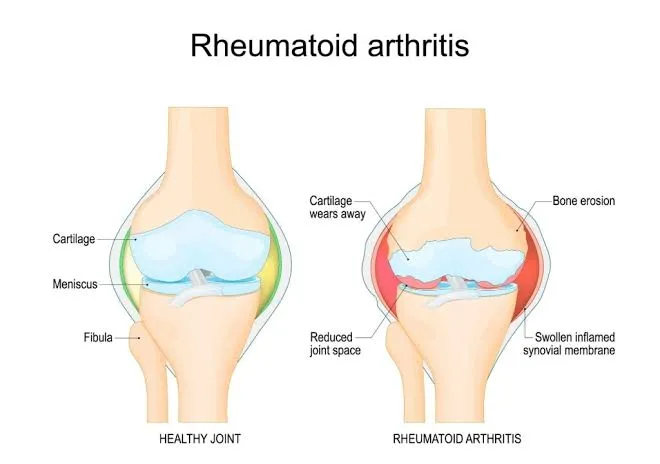
figure

Figure 1: Rheumatoid Arthritis

TYPES OF RHEUMATOID ARTHRITIS:

Seropositive RA: When someone has seropositive rheumatoid arthritis, their blood content shows high levels of specific antibodies known as anti-cyclic citrullinated peptides (anti-CCPs). These antibodies are directly linked to joint inflammation. Generally, this form of the condition tends to be more aggressive and comes with stronger symptoms compared to other types.

Seronegative RA: In contrast, seronegative rheumatoid arthritis happens when anti-CCP antibodies are not present in the blood. This version is less frequent, affecting roughly 20 out of every 100,000 individuals diagnosed with RA. The symptoms are typically milder but can be unpredictable, making this type harder to pin down. Because of the diagnostic challenge, it is frequently misidentified; actually, a study of approximately 10,000 people with a seronegative RA diagnosis revealed that 10% actually had a completely different condition, such as spondylarthritis, psoriatic arthritis, or axial disease.

Juvenile RA: When rheumatoid arthritis develops in individuals below the age of 16, then it is known as juvenile RA or juvenile idiopathic arthritis (JIA). Along with standard joint symptoms like pain, stiffness, and swelling, young patients often experience systemic signs such as fevers, skin rashes, and swollen lymph nodes8.

AFFECTED AREAS:
  • Feet
  • Hands
  • Hips
  • Knees2

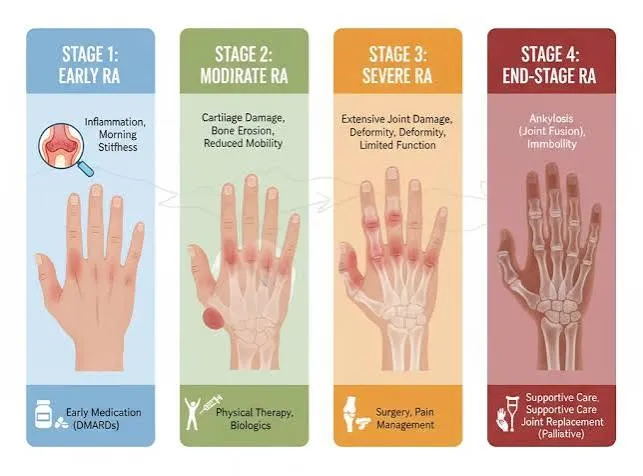
figure

Stages of Rheumatoid arthritis:8Figure 2: Steps of Rheumatoid Arthritis

FACTORS RESPONSIBLE FOR RA:

  • Misdirected Immune Response: The immune system of the person falsely outbreaks its own healthy tissues, specifically targeting the lining of the joints.
  • Genetic Factors: Inherited traits and specific family gene markers can make an individual much more susceptible to developing the condition.
  • Environmental Triggers: External elements, such as smoking or exposure to certain lung irritants, can spark or accelerate the inflammatory process in people who are already at risk.
  • Hormonal Influences: Fluctuations and imbalances in hormones, particularly estrogen, help explain why the condition appears at different rates across different demographics.
  • Daily Habits and Lifestyle: Everyday choices, including diet, physical activity levels, and overall wellness habits, play a significant role in managing systemic inflammation.
  • Gut Health Disruptions: An imbalance in the community of microbes residing in the digestive tract can negatively impact immune regulation and contribute to systemic inflammatory responses8.
  • Tobacco and Alcohol Use: Regular smoking and heavy alcohol intake can trigger immune system imbalances and heighten systemic inflammation, raising the likelihood of developing the condition9.

SYMPTOMS OF RA:

  • Joint Pain and Tenderness
  • Morning Stiffness
  • Swelling and Warmth
  • Symmetrical Joint Involvement
  • Reduced Joint Mobility
  • Fatigue and Weakness
  • Low-Grade Fever
  • Joint Deformities (in advanced stages)
  • Nodules8

ADVANCED THERAPIES:

  • Immunosuppressants3
  • Non-steroidal anti-inflammatory drugs (NSAIDs): Eg. Diclofenac
  • Disease-modifying anti-rheumatic drug: Eg. Methotrexate, leflunomide, hydroxychloroquine, and sulfasalazine
  • Biologics: Eg. TNF biologics and non-TNF biologics
  • Janus kinase (JAK) inhibitors: Eg. Tofacitinib and baricitinib10

PATHOPHYSIOLOGY OF RHEUMATOID ARTHRITIS:

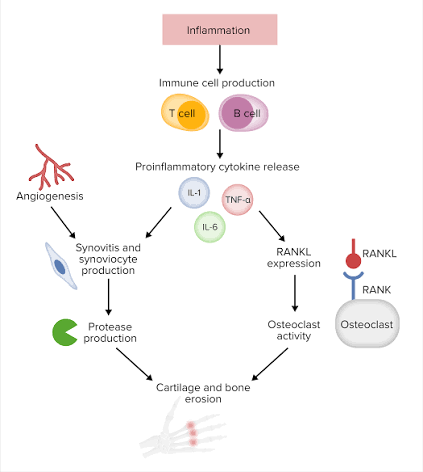
During this process, the body manufactures self-attacking antibodies known as ACPAs, while weakened regulatory T cells fail to keep the immune system properly balanced. As a result, aggressive pro-inflammatory white blood cells—including Th1, Th17 cells, monocytes, and macrophages—flood the area and release a wave of destructive chemical signals, like TNF-α, IL-1, IL-6, and IL-17. These signals provoke specialized joint cells (fibroblast-like synoviocytes) into releasing cartilage-destroying enzymes, spreading the painful inflammation from joint to joint. Furthermore, extensive health data reveals that heavy smoking significantly amplifies this risk for both men and women, driving up the overall severity of the condition6, 11.
figure

Figure 3: Pathophysiology of Rheumatoid Arthritis

TOPICAL DRUG DELIVERY SYSTEM:

Serving as the human body's largest organ, the skin performs vital functions such as shielding against heat, cold, and microbes, regulating internal temperature, and acting as a sensory gateway. For any topical treatment to work effectively, its formula must successfully cross the outermost layer—known as the stratum corneum—to penetrate deeper into the skin's underlying tissue. The skin consists of three main layers:
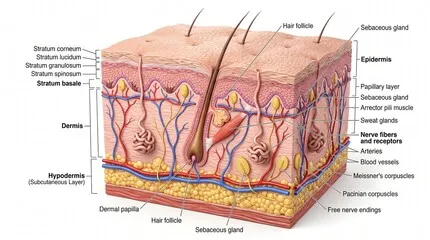
  • Epidermis: It is the outermost protective barrier.
  • Dermis: It is the middle layer, including connective tissue, blood vessels, and nerve endings.
  • Hypodermis: It is the innermost subcutaneous layer made of fat and connective tissue for insulation and cushioning12.

figure

Figure 4: Layers of Skin

ADVANTAGES OF TOPICAL DRUG DELIVERY SYSTEM:

  • Avoid first pass metabolism.
  • Avoidance of GI incompatibility.
  • Improve the physiological and pharmacological response.
  • Greater patient compliance.
  • Offer suitability for self medication.
  • Enhance therapeutic efficacy13.

ROLL-ON FORMULATION:

Among various topical options, roll-on formulations have become increasingly popular thanks to their convenience, portability, and ease of use. The built-in applicator ensures an even layer of the product across the target area without requiring direct hand contact, which keeps the application hygienic and minimizes the risk of contamination. Research highlights that roll-ons offer strong physical stability, efficient drug delivery, and high rates of patient satisfaction. Consequently, creating a topical roll-on combining diclofenac sodium and ginger (Zingiber officinale) represents a fresh and promising strategy for managing rheumatoid arthritis6.

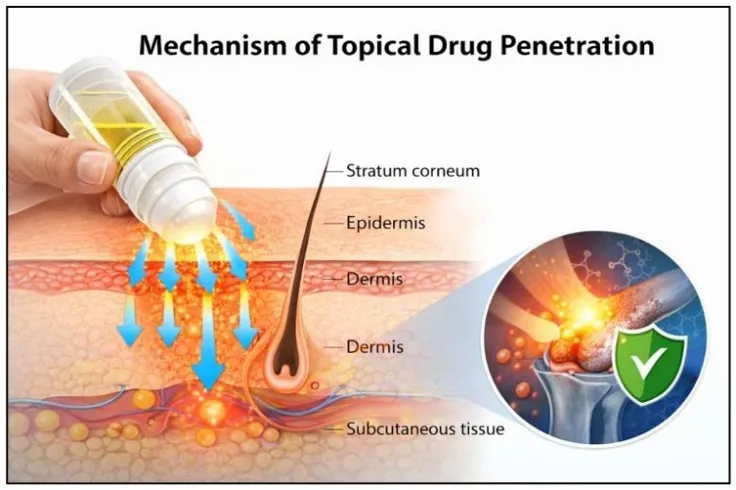
MECHANISM OF TOPICAL DRUG PENETRATION:
figure

Figure 5: Mechanism of Drug Penetration

MATERIAL REQUIRED:

DRUG PROFILE:

1)Ginger:
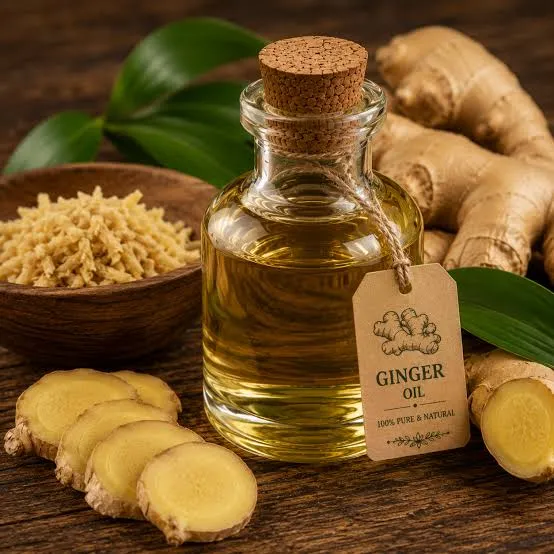
figure

Figure 6: Ginger Oil

Synonyms: Zingiber, Zingiberis.

Biological source: Zingiber officinale roscoe

Family: Zingiberaceae1

Geographical source: Native to Southeast Asia; also grown in the Caribbean, Africa, Australia, Mauritius, Jamaica, Taiwan, and India. India produces over 35% of the world's ginger.

Chemical Constituents:

  • Gingerols
  • Shogaols
  • Zingerone
  • Essential oils: Camphene, Zingiberene, and Cineole1

Fresh ginger (Zingiber officinale) is packed with more than 300 active compounds—chiefly volatile oils, phenols, and terpenoids—with gingerol standing out as its primary pungent, bioactive component14.

Mechanism of action: It blocks certain enzymes (called COX and LOX) and other inflammatory triggers (like prostaglandins and leukotrienes) that act like alarm bells for pain8.

Uses:

  • Soothes aches and swelling: Thanks to its natural anti-inflammatory qualities, ginger helps take the edge off joint and body pain.
  • Supports steady blood sugar: It can be a helpful addition for keeping blood sugar levels balanced and helping the body use insulin more efficiently.
  • Fights off germs: Ginger packs natural antibacterial and antifungal properties that give your immune system a hand in clearing out infections.
  • Relieves cramps and sore muscles: Whether you are dealing with monthly period cramps or sore muscles after a workout, ginger helps ease that discomfort14.

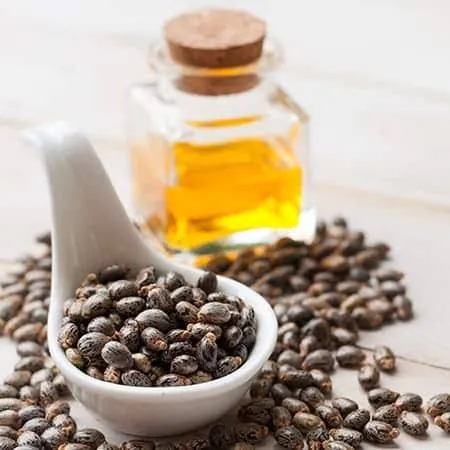
2) Castor oil:

figure

Figure 7: Castor Oil

Synonyms: Castor bean oil, castor oil seed, oleum ricini, ricinus oil, oil of palma christi, cold-drawn castor oil.

Biological Source: It is the fixed oil obtained by the cold expression of the seeds of Ricinus communis Linn.

Family: Euphorbiaceae

Geographical Source: It is mostly found in India, Brazil, America, and China; in Thailand; and in India; and cultivated in Gujarat, Andhra Pradesh, and Karnataka.

Chemical Constituents:

  • Ricinoleic acid
  • Isoricinoleic acid
  • Stearic acid
  • Dihydroxy stearic acids

Castor oil gets its natural laxative powers mostly from a special component called ricinoleic acid, which makes up about 90% of its total fatty acid content. Along with that heavy concentration, it also packs vitamin F to round out its natural profile.

Uses:

  • Gentle Health & Personal Care: It works as a mild laxative and fights off fungus, making it a handy base for ointments, soothing lipsticks, toothpastes, and hair oils. Its key component, ricinoleic acid, is even used in certain contraceptive creams and jellies.
  • Everyday Industry: Beyond personal care, castor oil serves as a useful wetting agent, plasticizer, and lubricant.
  • Manufacturing & Production: Dehydrated castor oil is great for making linoleum and alkyd resins. Overall, its biggest industrial jobs are creating protective coatings, pharmaceuticals, and cosmetics15.

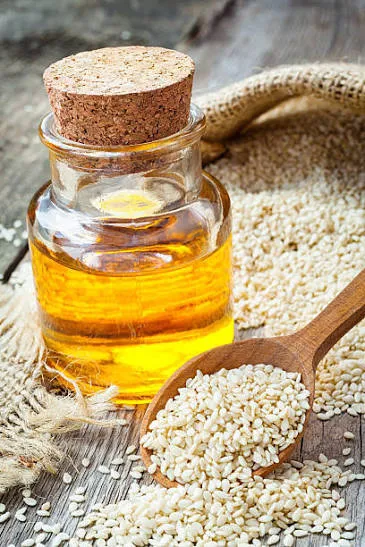
3) Sesame oil:

figure

Figure 8: Sesame Oil

Synonyms: Benne oil; teel oil; gingelli oil; sesamum seed oil.

Biological Source: It is found by refining the expressed or extracted oil from the seeds of cultivated varieties of Sesamum indicum Linn.

Family: Pedaliaceae.

Geographical Source: The plant is widely cultivated in India, China, Japan, the East Indies, the West Indies, and the southern United States.

Chemical Constituents:

  • Lignan sesamin (1%)
  • Sesamolin
  • Vitamins A and E
  • Tocopherol
  • Sesaminol
  • Carbohydrates (20%)
  • Proteins (20–25%)

When sesame oil goes through the industrial refining process, a natural compound called sesamolin transforms into powerful antioxidant phenols known as sesamol.

Uses:

  • Used as a Penetration enhancer
  • Used as demulcent, in dysentery and urinary complaints,
  • As a solvent for injection of steroids, antibiotics, and hormones,
  • As mild laxative, nutritive, emollient, in manufacture of cosmetics, iodized oil, antiacids, and ointment.
  • It serve as a vehicle for fat-soluble substances.
  • As an antioxidant and radical scavenger, used in the cosmetic industry15.

4) Camphor:

figure

Figure 9: Camphor

Biological source: Cinnamomum camphora

Family: Lauraceae16

Geographical source: Native to China, Taiwan, and Japan.

Chemical constituent:

  • 1,8-Cineole (Eucalyptol)
  • Linalool
  • Safrole
  • Alpha-Pinene & Beta-Pinene
  • Camphene & Limonene
  • Eugenol

Uses:

  • Creates the right temperature balance: It blends warming and cooling sensations to help comfort the body17.
  • Wakes up your senses: It gently stimulates your nerve endings.
  • Eases discomfort: Acts as a natural pain reliever (analgesic).
  • Acts as a soothing distraction: Works as a counter-irritant to help take your mind off deeper aches.
  • Boosts blood flow: Helps get your circulation moving more freely18.
Sr. No. Ingredients Uses
1. Diclofenac sodium Non-steroidal anti-inflammatory Drug (NSAID)
2. Ginger Herbal anti-inflammatory agent
3. Sesame oil Penetration enhancer
4. Camphor Cooling agent
5. Benzyl alcohol Preservative
6. Castor oil Base oil

EVALUATION PARAMETERS:

1) Organoleptic characters:

  • Appearance: Clear, Turbid, etc.
  • Colour: Yellow, Dark yellow, brown, etc.
  • Odour: Strongly medicinal, warm, pungent, aromatic, etc.
  • Touch sensation: Warm, cold, etc4.
  • Texture: Smooth, Non-sticky, Oily, etc.
  • Consistency: Viscous, Non-viscous, Free flowing, etc8.

2) Physicochemical parameters:

  • pH determination: Checked carefully with a standard pH meter, the ideal balance sits right between 5.0 and 7.0. Keeping it in this range ensures the formula is gentle and completely non-irritating on your skin.
  • Viscosity test: Viscosity is basically a measure of how thick a liquid is and how much it resists flowing—the higher the number, the thicker and more sluggish the fluid. Tested using a standard Ostwald viscometer, the ideal range for this formula sits comfortably between 110 and 150 cps, ensuring it has just the right consistency14.
  • Acid Value: It shows the amount of free fatty acids present. Lower the acid value, improved the stability and less rancidity8.

3) Safety study:

  • Skin irritation test: Before applying it broadly, test a tiny drop on your inner forearm. Keep an eye on the area to see if your skin stays calm and comfortable, or if you notice any redness, itching, or irritation8.

4) Microbiological Evaluation: To ensure safety, the product undergoes strict microbiological testing. This confirms it is completely free from harmful bacteria, fungi, and dangerous pathogens, keeping the total microbial count safely within secure limits8.

CONCLUSION:

A recent study highlights the effectiveness of a topical roll-on oil combining diclofenac sodium and ginger for easing the daily discomfort of rheumatoid arthritis. Researchers found that this unique blend delivers powerful anti-inflammatory, pain-relieving, and antioxidant benefits. Ultimately, the findings suggest that this roll-on formulation offers a practical, budget-friendly, and gentler alternative for managing rheumatoid arthritis symptoms.

RESULT:

This gentle, skin-friendly formula (maintaining a balanced pH between 5.0 and 7.0) is stable, smooth, and perfectly textured to glide easily through a roller-ball applicator. Lab tests confirm it works harmoniously with all its ingredients, offering a steady 12-to-24-hour release that helps the medicine deeply penetrate the skin barrier. By pairing the targeted pain relief of diclofenac with the natural, soothing properties of ginger, it tackles inflammation from two different angles to effectively calm sore, swollen joints. Best of all, it delivers localized relief right where you need it—keeping your hands clean and completely bypassing the stomach upset often caused by traditional oral pain relievers.

REFERENCES

  1. Komal Chavan, Snehal Balkrishna Thombre, Sonal Satish Khandhagle, Anjali Vijendra Rathod, Prerna Prakash Vaishnav, and Sanskruti Sandeep Lembhe, A Formulation and Evaluation of Curcuma Longa and Zingiber Oil for Arthritis, International Journal of Pharmaceutical Sciences (2025), Volume 3, Issue 6, 2698-2702.
  2. Hrutuja Ravindra Raut, Ram Devidas Sabbanwar, Aditya Ganesh Sadedar, and Archana Kajale-Kulkarni, Herbal oil for arthritis: A review, World Journal of Biology Pharmacy and Health Sciences (2025), 24 (01), 233-247.
  3. Ghodge Karan Maroti, Divya Dakhore, Rutika Dase, and Syed Ansar Ahmed, Development and Evaluation of a Polyherbal Oil Formulation from Vitex negundo and Selected Medicinal Plants for the Management of Rheumatoid Arthritis, Journal of Pharma Insights and Research (2025), 307-312.
  4. Nutan Bodhale, Irshad Ahmad, Khushbu Mohourle, Vaishnavi Shankarpure, and Vaishnavi Rajurkar, Formulation of Herbal Anti-Arthritis Oil Using Zingiber officinale and Boswellia serrata, International Journal of Pharmaceutical Sciences (2026), Volume 4, Issue 6, 7256-7262.
  5. Yoshiya Tanaka, Rheumatoid arthritis, Tanaka Inflammation and Regeneration (2020), 1-8.
  6. Dhanashri Shivatare, Sharda Sonwane, Dhanashree Jarande, and Gayatri Solaskar, Formulation and Evaluation of Pain Relief Roll-On Containing Diclofenac Sodium and Curcumin for Rheumatoid Arthritis, International Journal of Pharmaceutical Sciences (2026), Volume 4, Issue 5, 4012-4021.
  7. Mousmi D. Thakur, Navin R. Sheth, and Mihir K. Raval, Assessment of In vitro Anti-Inflammatory Activity of Ginger and Diclofenac Sodium Combination, International Journal of Pharmaceutical Sciences and Drug Research (2020), 12 (5), 442-447.
  8. Miss. Shreya Sachin Santre, and Mr. Sameer Salam Ahmed, Formulation and Evaluation of Herbal Medicated Oil for Rheumatoid Arthritis, International Journal of Innovative Research in Technology (2026), Volume 13, Issue 1, 5312-5322.
  9. Pallav Dave, Risk factors involved in the development of rheumatoid arthritis, Himalayan Journal of Health Sciences (2024), 9 (1): 19-24.
  10. Breanna N. Lindler, Katelyn E. Long, Nancy A. Taylor, and Wei Lei, Use of Herbal Medications for Treatment of Osteoarthritis and Rheumatoid Arthritis, MDPI (2020), 1-18.
  11. Parjanya Shah, Jayesh Trivedi, and Parth Shah, Pathophysiology of Rheumatoid Arthritis, International Clinical Case Reports and Reviews (BioRes Scientia Publishers) (2024), Volume 2, Issue 1, 1-4.
  12. Mohit Mahajan, Vaibhav Vaidya, Prachi Farande, Shrutika Bhagde, and Rohit Jadhav, Review on Essential Oils and Ways to Use Them for the Treatment of Arthritis, Biosciences Biotechnology Research Asia (2024), Volume 20 (4), 1181-1194.
  13. Dr. Rajesh Kumar Nema, Dr. Harish Sharma, Dr. Gyanesh Kumar Sahu, and Ms. Prerana Sahu, Novel Drug Delivery System, Nirali Prakashan.
  14. Swarali G. Samudre, Mohini A. Girase, Nandini G. Pakale, Tejal M. Pawar, and Vaishali D. Shewale, Formulation and Evaluation of an Ayurvedic Polyherbal Oil for Arthritis Treatment Using Boswellia serrata, Vitex nergundo, and Medicinal Herbs, International Journal of Novel Research and Development (2026), Volume 11, Issue 5, i272-i284.
  15. Aditya Sanjay Nikam, Aparna Rajabhau Avhad, Anushka Rajendra Pathak, Lalan Ketan Wagh, and Avinash Bhaskar Darekar, Herbal Analgesic Oil, International Journal for Research Trends and Innovation (2024), Volume 9, Issue 6, 108-120.
  16. Padmaja Kota, Jagadeesh Panda, Mary Sulakshana Palla, and Anita Raj Panigrahi, Formulation and Evaluation of Pain Relief Herbal Roll-On, World Journal of Pharmaceutical Sciences (2022), 10 (05), 52-55.
  17. Sandesh Siddheshwar, Mahadik Maya, Dr. Garje Sanjay, and Dr. Sayyad Gaffar, Formulation and Evaluation of Herbal Arthritis Oil for Joint Pain Relief Using Akarkara (Anacyclus pyrenthrus), International Journal of Pharmaceutical Sciences (2025), Volume 3, Issue 6, 682-689.
  18. Ms. Akhila R. Anmulwar, Ms. Samiksha S. Amilkanthwar, Ms. Savi Bharodkar, Ms. Swati V. Bhalkande, and Prof. Shubham P. Jaiswal, Formulation and Evaluation of Herbal Pain Relief Roll on Using Menthol and Peppermint Oil, Journal of Advance and Future Research (2026), Volume 4, Issue 3, 632-643.
  19. Pandey G, et al., Anti-inflammatory roll-on formulation and development to treat rheumatoid arthritis, International Journal of Pharmaceutical Science and Research (2025), 16 (2), 145–152.
  20. P. Kota, J. Panda, M. S. Palla, and A. R. Panigrahi, Formulation and evaluation of pain relief herbal roll-on, World Journal of Pharmaceutical Sciences (2026), volume 10, 52-55.

Reference

  1. Komal Chavan, Snehal Balkrishna Thombre, Sonal Satish Khandhagle, Anjali Vijendra Rathod, Prerna Prakash Vaishnav, and Sanskruti Sandeep Lembhe, A Formulation and Evaluation of Curcuma Longa and Zingiber Oil for Arthritis, International Journal of Pharmaceutical Sciences (2025), Volume 3, Issue 6, 2698-2702.
  2. Hrutuja Ravindra Raut, Ram Devidas Sabbanwar, Aditya Ganesh Sadedar, and Archana Kajale-Kulkarni, Herbal oil for arthritis: A review, World Journal of Biology Pharmacy and Health Sciences (2025), 24 (01), 233-247.
  3. Ghodge Karan Maroti, Divya Dakhore, Rutika Dase, and Syed Ansar Ahmed, Development and Evaluation of a Polyherbal Oil Formulation from Vitex negundo and Selected Medicinal Plants for the Management of Rheumatoid Arthritis, Journal of Pharma Insights and Research (2025), 307-312.
  4. Nutan Bodhale, Irshad Ahmad, Khushbu Mohourle, Vaishnavi Shankarpure, and Vaishnavi Rajurkar, Formulation of Herbal Anti-Arthritis Oil Using Zingiber officinale and Boswellia serrata, International Journal of Pharmaceutical Sciences (2026), Volume 4, Issue 6, 7256-7262.
  5. Yoshiya Tanaka, Rheumatoid arthritis, Tanaka Inflammation and Regeneration (2020), 1-8.
  6. Dhanashri Shivatare, Sharda Sonwane, Dhanashree Jarande, and Gayatri Solaskar, Formulation and Evaluation of Pain Relief Roll-On Containing Diclofenac Sodium and Curcumin for Rheumatoid Arthritis, International Journal of Pharmaceutical Sciences (2026), Volume 4, Issue 5, 4012-4021.
  7. Mousmi D. Thakur, Navin R. Sheth, and Mihir K. Raval, Assessment of In vitro Anti-Inflammatory Activity of Ginger and Diclofenac Sodium Combination, International Journal of Pharmaceutical Sciences and Drug Research (2020), 12 (5), 442-447.
  8. Miss. Shreya Sachin Santre, and Mr. Sameer Salam Ahmed, Formulation and Evaluation of Herbal Medicated Oil for Rheumatoid Arthritis, International Journal of Innovative Research in Technology (2026), Volume 13, Issue 1, 5312-5322.
  9. Pallav Dave, Risk factors involved in the development of rheumatoid arthritis, Himalayan Journal of Health Sciences (2024), 9 (1): 19-24.
  10. Breanna N. Lindler, Katelyn E. Long, Nancy A. Taylor, and Wei Lei, Use of Herbal Medications for Treatment of Osteoarthritis and Rheumatoid Arthritis, MDPI (2020), 1-18.
  11. Parjanya Shah, Jayesh Trivedi, and Parth Shah, Pathophysiology of Rheumatoid Arthritis, International Clinical Case Reports and Reviews (BioRes Scientia Publishers) (2024), Volume 2, Issue 1, 1-4.
  12. Mohit Mahajan, Vaibhav Vaidya, Prachi Farande, Shrutika Bhagde, and Rohit Jadhav, Review on Essential Oils and Ways to Use Them for the Treatment of Arthritis, Biosciences Biotechnology Research Asia (2024), Volume 20 (4), 1181-1194.
  13. Dr. Rajesh Kumar Nema, Dr. Harish Sharma, Dr. Gyanesh Kumar Sahu, and Ms. Prerana Sahu, Novel Drug Delivery System, Nirali Prakashan.
  14. Swarali G. Samudre, Mohini A. Girase, Nandini G. Pakale, Tejal M. Pawar, and Vaishali D. Shewale, Formulation and Evaluation of an Ayurvedic Polyherbal Oil for Arthritis Treatment Using Boswellia serrata, Vitex nergundo, and Medicinal Herbs, International Journal of Novel Research and Development (2026), Volume 11, Issue 5, i272-i284.
  15. Aditya Sanjay Nikam, Aparna Rajabhau Avhad, Anushka Rajendra Pathak, Lalan Ketan Wagh, and Avinash Bhaskar Darekar, Herbal Analgesic Oil, International Journal for Research Trends and Innovation (2024), Volume 9, Issue 6, 108-120.
  16. Padmaja Kota, Jagadeesh Panda, Mary Sulakshana Palla, and Anita Raj Panigrahi, Formulation and Evaluation of Pain Relief Herbal Roll-On, World Journal of Pharmaceutical Sciences (2022), 10 (05), 52-55.
  17. Sandesh Siddheshwar, Mahadik Maya, Dr. Garje Sanjay, and Dr. Sayyad Gaffar, Formulation and Evaluation of Herbal Arthritis Oil for Joint Pain Relief Using Akarkara (Anacyclus pyrenthrus), International Journal of Pharmaceutical Sciences (2025), Volume 3, Issue 6, 682-689.
  18. Ms. Akhila R. Anmulwar, Ms. Samiksha S. Amilkanthwar, Ms. Savi Bharodkar, Ms. Swati V. Bhalkande, and Prof. Shubham P. Jaiswal, Formulation and Evaluation of Herbal Pain Relief Roll on Using Menthol and Peppermint Oil, Journal of Advance and Future Research (2026), Volume 4, Issue 3, 632-643.
  19. Pandey G, et al., Anti-inflammatory roll-on formulation and development to treat rheumatoid arthritis, International Journal of Pharmaceutical Science and Research (2025), 16 (2), 145–152.
  20. P. Kota, J. Panda, M. S. Palla, and A. R. Panigrahi, Formulation and evaluation of pain relief herbal roll-on, World Journal of Pharmaceutical Sciences (2026), volume 10, 52-55.

Photo
Shraddha Bhende
Corresponding author

G. H. Raisoni Institute of Life Sciences, Nagpur, Maharashtra, India.

Photo
Namrata Muddalwar
Co-author

G. H. Raisoni Institute of Life Sciences, Nagpur, Maharashtra, India.

Photo
V. S. Babu Agala
Co-author

G. H. Raisoni Institute of Life Sciences, Nagpur, Maharashtra, India.

Shraddha Bhende, Namrata Muddalwar, V. S. Babu Agala, Development and Evaluation of Pain Relief Roll-on Containing Diclofenac Sodium and Zingiber Officinale for Rheumatoid Arthritis: A Review, Int. J. of Pharm. Sci., 2026, Vol 4, Issue 11, 5040-5049. https://doi.org/10.5281/zenodo.24549430

More related articles
Dissolving and Hydrogel-Forming Microneedles for T...
Aasha Makavana, Kintu Acram, Innocent Ayebembeire, Margaret Umi...
Nanotechnology-Based Drug Delivery Systems: Recent...
Mayuri Vyapari, Pallavi Mohape, Kalyani Shinde...
Advanced Smart Hydrogels for Targeted Cosmeceutica...
Rani K. Kuriakose, Nidha Afsal, Nandhu Krishnan G., Fathima Nezri...
Development of Forced Degradation Studies, Regulatory Perspectives, and Stabilit...
Sonali Wayase, Rutika Bhise, Payal Zambare, Vinayak Kale...
From Crude Plant Extracts to Reproducible Nanomedicine: Phytochemical Standardiz...
Sonu Jacob, Vyshnavy Biju, Devikrishna Vijayan, Aleena Paul, Fathimath Shahana, Nehala M. N....
Beyond Neurofibroma: An Unusual Giant Posterior Truncal Lipomatous Lesion in an ...
Alfeena N., Shaiju S. Dharan, Grace N. Raju, Azeem Mohammed Basheer, Nandana RS...
Related Articles
Recent Advances in Neurosteroid-GABA-A-Signaling and Targeted Pharmacotherapy of...
Nivedita Patil, Dr. Sunil Pawar, Jayshri Chavan, Neha Patil, Mrunal Pendharkar...
Formulation and Evaluation of Transferosomal Gel of Delgocitinib for Enhanced Tr...
Gundlapally Hari Kiriti Varma, Vijaya Kuchana, G. Dinesh...
Design, Prepare and in Vitro Evaluation of Lapatinib Solid Lipid Nanoparticles...
Ashutosh Pradhan, Swarupa Mayee Kalta, Madhusmita Sahoo...
Crispr-Edited Medicinal Plants for Enhanced Phytochemical Yield...
Dnyanesh Patil, Dr. Tushar Shelke, Apeksha Thite, Sahil Nivate, Shekhar Murumkar...
Dissolving and Hydrogel-Forming Microneedles for Transdermal Delivery of Biologi...
Aasha Makavana, Kintu Acram, Innocent Ayebembeire, Margaret Umi...
More related articles
Dissolving and Hydrogel-Forming Microneedles for Transdermal Delivery of Biologi...
Aasha Makavana, Kintu Acram, Innocent Ayebembeire, Margaret Umi...
Advanced Smart Hydrogels for Targeted Cosmeceutical Delivery: Mechanisms, Polyme...
Rani K. Kuriakose, Nidha Afsal, Nandhu Krishnan G., Fathima Nezrin M. A., Dhiya Mirza C. Gafoor, Ama...