

We use cookies to ensure our website works properly and to personalise your experience. Cookies policy
Department of Pharmacology, Bapuji Pharmacy college, SS Layout Davanagere-577004, Karnataka, India
Balanites roxburghii is a traditionally important medicinal plant belonging to the family Zygophyllaceae and is widely recognized for its nutritional, ethnomedicinal, and pharmacological significance. Various parts of this plant, including in the fruits, leaves, bark, roots, and seeds, have been used in traditional system of medicine for treating several health conditions. Phytochemical investigations have reported the presence of diverse bioactive constituents, steroidal saponins, flavonoids, alkaloids, terpenoids, phenolic compounds, and other secondary metabolites. These constituents are considered responsible for several biological activities attributed to the plant, including antioxidant, antimicrobial, anti-inflammatory, antidiabetic, hepatoprotective, and other pharmacological effects. The plant also has potential nutritional and economic value because of the usefulness of its fruits and seeds. This review summarizes the available information on the botanical characteristics, geographical distribution, traditional uses, phytochemical composition, nutritional properties, and reported pharmacological activities of Balanites roxburghii. The review also highlights the therapeutic potential of the species and identifies the need for further scientifically controlled studies to establish its safety, mechanisms of action, standardized phytochemical profiles, and clinical applicability
Balanites Roxburghii planch in local language is called Ingala, hingota, thorn tree, desert date. Traditionally every part of this tree has its own ethnomedicinal value due to its rich phytochemical profile, including saponins, proteins, carbohydrates, flavonoids, alkaloids, lipid and organic acids. The fruit pulp is used to treat chronic coughs, respiratory distress, the bark is chewed by shepherds to prevent dehydration on long journeys also used as an anthelmintic agent.[1] During droughts, the leaves are harvested and eaten as a leafy green vegetable. B. aegyptiaca, B. rotundifolia, and B. wilsoniana Dawe & Sprague are examples of the genus's high seed oil content, which may be utilised to produce biodiesel.[2]
Plant Profile
The genus Balanites consists of nine species, which are 1-Balanites wilsoniana, 2-Balanites maughamii, 3-Balanites striflora, 4-Balanites rox-burghii, 5-Balanites aegyptiaca, 6-Balanites pedicellaris, 7-Balanites ango-lensis, 8-Balanites rotundoiflia, 9-Balanites glabra. This plant has been utilised in Ayurvedic formulations due to its benefits to the environment and human health.[3]
Taxonomical Classification:[4]
|
Kingdom |
Plantae |
|
Phylum |
Tracheophyta |
|
Class |
Magnoliopsida |
|
Order |
Zygophyllales |
|
Family |
Zygophyllaceae |
|
Genus |
Balanites |
|
Species |
Balanites roxburghii |
Vernacular name:[4]
|
Kannada |
Ingula, Ingudi, Ingalukke |
|
Hindi |
Hingan, Hingu, Hingot |
|
English |
Desert Date |
|
Sanskrit |
Ingudi, Gouritvae |
|
Telugu |
Gara |
Morphology
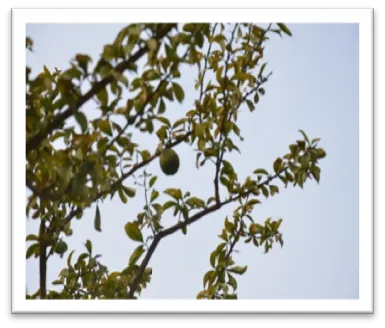
Plant Type: A spiny, evergreen or semi-deciduous shrub or small-to-medium-sized tree. It is a hardy xerophytic plant characterized by a branched, thorny canopy and bifoliate (two-foliate) leaves, typically found in arid and dry deciduous scrub forests.[5]
Height: Typically grows between 3 to 8 meters (approximately 10 to 26 feet) in height, occasionally reaching up to 10 meters in favorable conditions.
The trunk is crude and usually branched at the base. Bark is dark brown to grey, deeply split. Branches armed with strong yellow or green thorns up to 8 cm long.
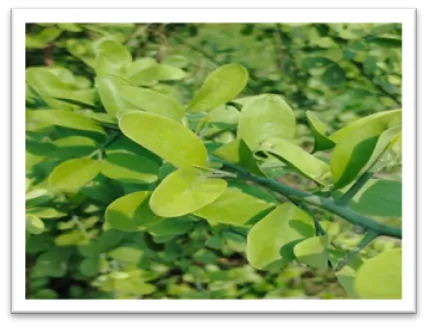
Leaves are divided into two leaflets; the leaflets are egg-shaped, disproportionate, 2.5 to 6 cm long, bright green, and leathery.
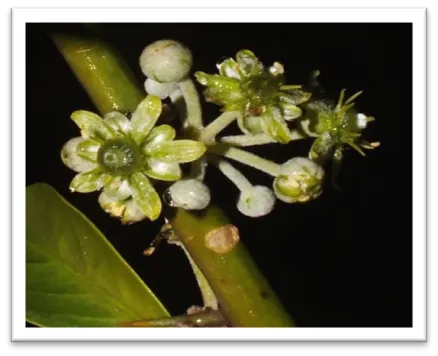
Flowers are ambrosial, yellowish green, and have a diameter of 1.4 cm in fascicles in the leaf axils.[6]
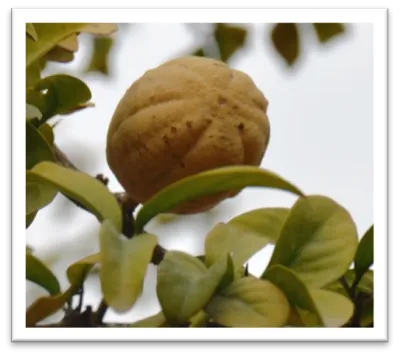
The fruit is a long, shallow drupe, 2.5 to 7 cm long and 1.5 to 4 cm in diameter. Young fruits are greenish and tormented, changing to yellow, elongated, and glabrous when mature. The pulp of the fruit is bittersweet and consumable. The seed is 1.5 to 3 cm long and 1.8–2.5 cm in diameter, light brown, stringy, and extremely rigid.[7]
Geographical Distribution
The Desert Date (Balanites roxburghii) is a hardy tree native to South Asia, Pakistan, and Myanmar. In India, it thrives across dry landscapes and scrublands, with major populations found throughout Gujarat, Rajasthan, Maharashtra, Madhya Pradesh, Telangana, Andhra Pradesh, Tamil Nadu, and the scrub jungles of Karnataka.[8]
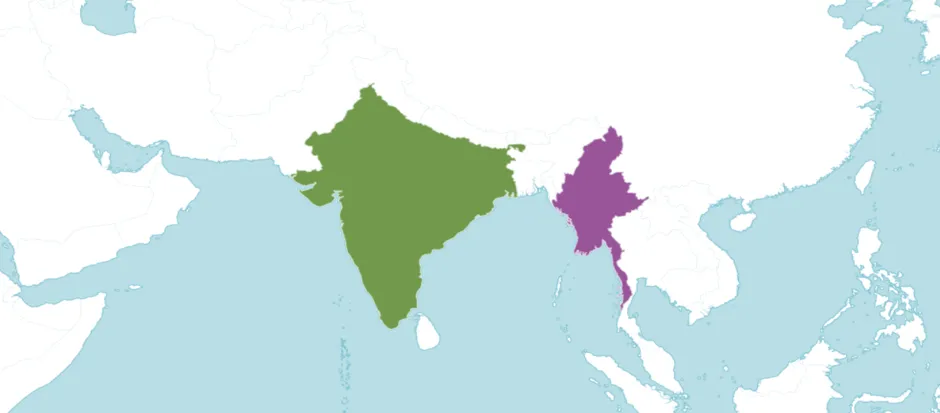
Figure 1: Global distribution of Balanites Roxburghii . Green: Native range.
Purple: Introduced and naturalized regions. Source: POWO/Kew Science.[9]
PHYTOCHEMISTRY
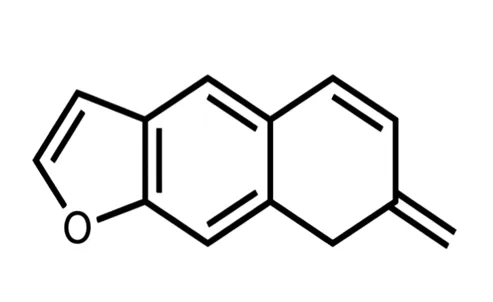
LEAVES: The plant Balanites roxburghii contain saponin, furanocoumarin, and flavonoid namely quercetin 3-glucoside, quercetin-3-rutinoside,3-glucoside,3-rutinoside,3-7-diglucoside and 3-rhamnogalactoside of isorhamnetin.[10]
FRUIT: The fruit’s mesocarp contains 1.2 to 1.5% protein and 35 to 37% sugars, 15% organic acids, other constituents such as 3-rutinoside and 3-rhamnogalactoside, diosgenin. It also contains a mixture of 22R and 22S epimers of 26-(O-b-D-glucopyranosyl)-3-b-[4-O-(b-D-glucopyranosyl)-2-O-(a-L-rhamnopyranosyl)-b-D-glucopyranosyloxy]-22,26 dihydroxyfurost-5-ene.
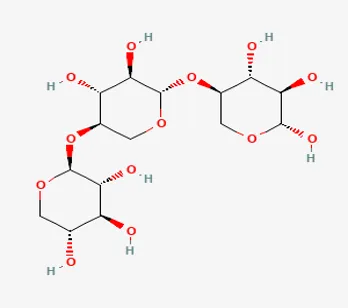
However, the kernel contains the above saponin present in the mesocarp as a xylopyranosyl derivative. [From the fruits (mesocarp) of B. aegyptiaca, the furostanol glycoside balanitioside and 6-methyldiosgenin, [the spirostanol glycoside] balanitin-3 have been reported.[11]
BARK: Chemical analysis of the stem bark reveals a rich composition of secondary metabolites. Identified compounds include the furanocoumarins bergapten and D


STEM: The stem of Balanites roxburghii contains diverse range of phytoconstituents, steroidal saponins, flavonoids, phenolic compounds and alkaloids. The characterised steroidal saponins such as deltonin, protodentonin and other spirostanol glycosides have been reported.
ROOT: It is reported to contain steroidal saponin about 1% glycosides and major sapogenin is yamogenin and Diosgenin.[13]
|
A |
|
B |
|
c |
|
D |
|
F |
|
E |
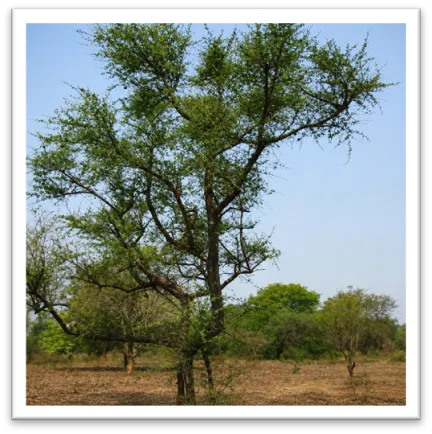
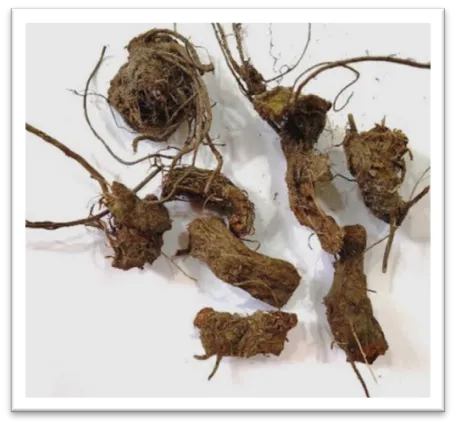
Figure 02: Morphological parts of Balanites roxburghii A: Leaves B: StemC: Fruit D: Flower E: Tree F: Root
|
B |
|
A |
|
D |
|
C |
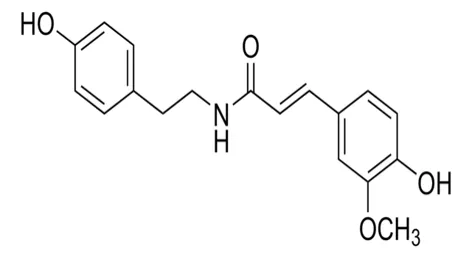
Figure03: Structure of Phytochemicals (A: Furanocoumarin A, B: Xylopyranosyl
TRADITIONAL USES
Conventionally it has been used as an emetic, anthelmintic, anti-fungal, purgative, cathartic, colic, expectorant, for whooping cough, skin diseases, and dog bite. As per Ayurveda, the bark is anthelmintic, spasmolytic, for cough, and skin diseases. The leaf is anthelmintic while the root is emetic. The fruits have been used in whooping cough and skin diseases. The paste of the bark is prepared and applied externally on the affected part of the body. The whole plant is used in snake bite. The seeds are used as an expectorant (for cough and colic). The kernel is used in skin diseases and burns. Roots and fruits contain 0.2–2.2% and 0.3–3.8% diosgenin (which is used in contraceptives), respectively. The steroids (sapogenin) are used in the synthesis of drugs like sex hormones and oral contraceptives. In case of pain and swelling, the bark of the plants is used by the traditional healers. The plant Balanites roxburghii having antifertility efficacy and anti-inflammatory activity.[14]
PHARMACOLOGICAL PROVED ACTIVITIES
1. Antimicrobial Activity
The stem bark of Balanites roxburghii (Hingota), traditionally used in Ayurveda to treat coughs, pain, swelling, and skin diseases, was evaluated using aqueous and ethanolic extracts to determine their phytochemical profiles and antibacterial efficacy against E. coli, S. aureus, S. typhi, and K. pneumoniae. Qualitative screening revealed that both extracts contained alkaloids, saponins, flavonoids, and tannins, though glycosides and phytosterols were exclusive to the aqueous phase, and proteins and fats to the ethanolic phase. In vitro agar diffusion assays demonstrated that both extracts significantly inhibited all test pathogens in a dose-dependent manner, with S. typhi exhibiting the highest susceptibility. The ethanolic extract exhibited superior overall antibacterial potency, producing larger zones of inhibition (ZIs) than the aqueous extract across most tested concentrations. A minor exception was noted at 62.5 mg/ml, where the aqueous extract showed slightly larger ZIs against S. typhi and K. pneumoniae than the ethanolic extract. Remarkably, at concentrations of 250 and 500 mg/ml, the crude ethanolic extract displayed antibacterial efficacy comparable to the standard drug, gentamicin. Specifically, at 500 mg/ml, the ethanolic extract produced a 9.5±1.0 mm zone of inhibition against E. coli, yielding an Activity Index of 1.3 relative to the standard antibiotic. These results provide scientific validation for the traditional therapeutic use of B. roxburghii bark in treating infectious conditions. Furthermore, the successful inhibition of E. coli and S. aureus offers potential clinical avenues for managing opportunistic infections in HIV/AIDS patients.[15]
2. Antioxidant Activity
The in vitro antioxidant efficacy of Balanites roxburghii Planch. fruit extracts represent a significant area of pharmacological interest, particularly regarding their capacity to mitigate oxidative stress-induced biological injury through free radical scavenging mechanisms. Evaluation of hexane, ethyl acetate, methanol, and water fractions across three established testing paradigms specifically DPPH radical scavenging, reducing power, and β-carotene/linoleic acid bleaching assays demonstrates distinct, solvent-dependent antioxidant profiles. In the DPPH radical scavenging assay, the crude methanol fraction exhibits the highest potency, yielding the lowest half-maximal effective concentration (EC50) value of (34µg/mL), followed sequentially by the ethyl acetate (39µg/mL), hexane (48µg/mL), and aqueous (54µg/mL) extracts. Furthermore, the reducing capacity of the extracts correlates positively with concentration, wherein the methanol and ethyl acetate fractions exhibit superior reductive activities, likely driven by high concentrations of electron-donating phenolic and flavonoid compounds. Similarly, in the β-carotene bleaching method, lipid peroxidation-inhibiting activity is concentration-dependent; the methanol extract displays outstanding inhibitory efficacy (ranging from 54.46±1.05% at 4mg/mL) to 82.59±2.56% at 20 mg/mL, whereas the aqueous extract exhibits the weakest overall performance. Collectively, these findings underscore the therapeutic potential of B. roxburghii fruits as a rich, natural reservoir of bioactive antioxidant phytoconstituents.[16]
3. Anti-inflammatory Activity
The anti-inflammatory activity of the stem bark of Balanites roxburghii Planch. was evaluated using petroleum ether and ethanolic extracts administered orally at doses of 250, 500, and 750 mg/kg body weight. The experimental animal model employed for this study consisted of healthy Wistar albino rats of either sex, weighing between 150 and 180 g. Inflammation was experimentally induced using the standard carrageenan-induced hind paw oedema method, where paw volume was measured to evaluate the therapeutic effect. The study revealed that both the petroleum ether and ethanolic extracts exhibited a dose-dependent, significant inhibition of paw oedema that was comparable to the standard reference drug, Ibuprofen (10 mg/kg). While the extracts did not show significant inhibition during the early phase of inflammation (1 hour), they demonstrated highly significant activity during the late phase (3 hours). Specifically, at oral doses of 250, 500, and 750 mg/kg, the petroleum ether extract achieved 33%, 35%, and 49% inhibition of paw oedema, whereas the ethanolic extract achieved 37%, 39%, and 53% inhibition.[17]
5. Cytotoxic (Anticancer) Activity
The in vitro antiproliferative activity of Balanites roxburghii fruit extracts was evaluated using the MTT assay, where n- hexane, dichloromethane, and methanol extracts exhibited moderate growth inhibition against K562, MCF-7, HeLa, COLO 205 and HepG2 cancer cell lines with a 21.71% average inhibition. Regarding previously documented literature and historical review articles cited in the study, the fruit extract of the plant was shown to inhibit the proliferation of Ehrlich ascitic tumor (carcinoma) when evaluated in vivo using Swiss mice as the animal model. Additionally, the fruit's methanol extract demonstrated antiproliferative activity against breast, colon, and liver cancer cells in a sulforhodamine B assay; isolated diosgenyl saponins, specifically balanitin-6 and -7, displayed significant anti-tumor activity in both in vitro and in vivo experimental systems; and the fruit extract was shown to offer protective antioxidant effects against adriamycin-induced cardiac toxicity using an experimental mice model.[18]
6. Antifungal Activity
The aqueous and methanolic leaf extracts of Balanites roxburghii (Zygophyllaceae family), which contain active chemical constituents such as alkaloids, glycosides, saponins, flavones, and phenolic compounds, were tested for their in vitro antifungal efficacy against three pathogenic cotton fungi. The methanolic extract of B. roxburghii demonstrated exceptional potency, achieving 100% inhibition of Chaetomium globosum at all tested concentrations (5%, 10%, and 25%). Against Fusarium oxysporum, the methanolic extract showed 31.2% inhibition at 5%, 79.2% at 10%, and reached 100% inhibition at 25%. For Alternaria alternata, the methanolic extract exhibited a lower initial efficacy of 8.3% inhibition at 5% and 38.8% at 10%, but still attained 100% inhibition at the 25% concentration. In contrast, the aqueous extract of B. roxburghii was significantly less effective across all fungi. It achieved a maximum inhibition of only 35.3% against F. oxysporum, 62.7% against C. globosum, and 32.8% against A. alternata at the highest 25% tested concentration.[19]
7. Hepatoprotective Activity
The hepatoprotective potential of Balanites roxburghii (BR) fruit hydroalcoholic extract was evaluated against thioacetamide (TAA)-induced liver toxicity in adult Wistar rats. Animals were pretreated orally for seven days with vehicle, standard silymarin (50mg/kg), or BR extract at doses of 125mg/kg and 250mg/kg, followed by a single subcutaneous TAA injection (200 mg/kg) on the eighth day. Administration of TAA significantly elevated liver toxicity biomarkers (SGOT, SGPT, ALP, and total bilirubin) and depleted total protein levels. In contrast, pretreatment with the BR fruit extract yielded robust, dose-dependent hepatoprotection. At 125mg/kg, the extract protected against the rise of SGOT by 63.16%, SGPT by 57.98%, ALP by 74.12%, total bilirubin by 30.26%, and total protein decline by 13.18%. The 250 mg/kg dose demonstrated superior protection rates of 76.10%, 77.35%, 81.82%, 48.21%, and 27.60% for SGOT, SGPT, ALP, total bilirubin, and total protein respectively. Active phytochemical constituents’ triterpenes, flavonoids, phytosterols, and saponins. work synergistically as antioxidants to produce a protective response equivalent to standard silymarin on liver.[20]
8. Anti asthmatic activity
In an investigation of the anti-asthmatic potential of Balanites roxburghii Planch. stem bark, evaluated the phytochemical profile and pharmacological efficacy of its ethanolic extract (EEBR) on experimental models of bronchial asthma. Phytochemical screening revealed that the ethanolic extract contains key bioactive classes, including alkaloids, saponins, flavonoids, tannins, and phenolic compounds. Pharmacological evaluations were carried out using guinea pig models (Cavia porcellus) of both sex weighing 350–450 g. For the in vitro studies, isolated guinea pig ileum preparations were utilized to assess the extract's impact on histamine-induced contractions, demonstrating significant antihistaminic and receptor-blocking activity. In the in vivo experiments, acute bronchospasm was induced in overnight-fasted animals using aerosolised histamine (0.25%) and acetylcholine bromide (0.5%). Oral pretreatment with EEBR at doses of 250, 500, and 1000 mg/kg significantly and dose-dependently prolonged the preconvulsion time. Specifically, the 1000 mg/kg dose of EEBR achieved a 54.91% ± 4.42% increase in preconvulsion time against acetylcholine and a 39.67% ± 3.88% increase against histamine, which was comparable to the protection offered by the standard reference drug Ketotifen fumarate (1 mg/kg). Acute toxicity profiling indicated that the extract is remarkably safe, with a median lethal dose (LD50) of 4 g/kg body weight. Collectively, these findings suggest that the anti-asthmatic properties of B. roxburghii stem bark are mediated through a combination of broncho dilatory, mast cell stabilizing, and H₁/acetylcholine receptor antagonist pathways, thereby validating its traditional use in managing respiratory ailments.[21]
9. Anti fertility activity
The antifertility efficacy of the fruits of Balanites roxburghii (Balanitaceae) was evaluated using colony-bred female Wistar rats as the experimental animal model. Petroleum ether, chloroform, ethanol, and distilled water extracts of the plant's fruits were administered orally to the rats at dosages of 300 and 600 mg/kg body weight. While acute toxicity screening in Swiss mice confirmed the non-toxic nature of the extracts up to a dose of 3000 mg/kg and none of the extracts demonstrated antiimplantation activity, all extracts exhibited significant, dose-dependent, and completely reversible abortifacient activity. The ethanol extract was identified as the most effective, producing 46.16% abortifacient activity at 300 mg/kg and 60.12% activity at 600 mg/kg. Evaluation in bilaterally ovariectomised female rats revealed that this antifertility effect is mediated by mild estrogenic activity, evidenced by significant increases in uterine weight, uterine diameter, endometrial thickness, and endometrial epithelial height, as well as predominantly cornified cells in vaginal smears. Additionally, co-administration of the ethanol extract with ethinyl oestradiol enhanced uterine protein and glycogen content. Phytochemical analysis of this active ethanol extract indicated the presence of saponin glycosides and flavonoids, which are suggested to be responsible for the observed abortifacient action.[22]
10.Anticonvulsant activity
This study evaluated the anticonvulsant efficacy of the methanolic extract of Balanites roxburghii pericarpium, a botanical remedy traditionally employed for central nervous system disorders. Using an animal model of male Swiss albino mice (20–25g), the researchers investigated the extract's neuroprotective profile across two distinct experimental convulsion protocols: maximal electroshock (MES) and pentylenetetrazol (PTZ)-induced seizures. Acute oral toxicity assessments demonstrated that the extract is remarkably safe, with no mortality observed up to a dose of 2gm/kg, though treated animals exhibited mild signs of CNS depression characterized by decreased spontaneous activity. In the MES-induced seizure model, oral pre-treatment with the extract at doses of 100 and 300 mg/kg resulted in a significant, dose-dependent delay in convulsion onset and a reduction in the duration of hind limb tonic extensions (HLTE), yielding seizure inhibition rates of 45.67% and 68.57%, respectively. Conversely, in the PTZ-induced convulsion model, a statistically significant protective response was achieved only at the higher dose of 300 mg/kg (showing 44.34% inhibition), whereas the 100 mg/kg dose failed to produce a statistically significant change, showing only an 11.42% inhibition rate. Preliminary phytochemical analysis of the pericarpium revealed the presence of saponins, tannins, and flavonoids, bioactive classes that likely contribute to the observed anticonvulsant properties. The authors concluded that B. roxburghii pericarpium exhibits dose-dependent anticonvulsant activity, potentially mediated through interference with GABAergic neurotransmission mechanisms.[23]
CONCLUSION
Balanites roxburghii Planch. (commonly known as the Desert Date) represents a highly valuable ecological, pharmacological, and industrial asset native to the arid landscapes and dry scrublands of South Asia. Taxonomically positioned within the family Zygophyllaceae, this resilient species possesses a complex botanical morphology and an extensive ethnomedicinal profile, with its various organs traditionally employed to treat diverse clinical conditions ranging from respiratory ailments and gastrointestinal distress to skin diseases, pain, and inflammation. Rigorous phytochemical profiling of the tree's leaves, bark, fruits, and roots has revealed an abundance of bioactive secondary metabolites, specifically furanocoumarins, flavonoids, phenolic alkaloids, and steroidal saponins such as balanitins 1–3 and yamogenin. Crucially, the substantial presence of diosgenin within the roots (0.2–2.2%) and fruits (0.3–3.8%) provides a valuable precursor for the synthesis of oral contraceptives and steroidal sex hormones in modern pharmaceutical applications. Furthermore, the high lipid content of the seed kernels, which yield 45.0–46.1% oil rich in essential fatty acids like palmitic, stearic, oleic, and linoleic acids, positions this underutilised species as a promising candidate for ecological applications such as biodiesel production. In summary, Balanites roxburghii seamlessly bridges traditional Ayurvedic therapeutics with contemporary biotechnological research, highlighting the critical need for further clinical validation and commercial cultivation to fully exploit its therapeutic and bioenergetic potential plant.
REFERENCES



Prakash Dabadi, Maruthi B. G, Danush P, Manaswini B. C, Nandita P. Kittad, Shrihari, A Review on Balanites Roxburghii Plant and Pharmacological Activities, Int. J. of Pharm. Sci., 2026, Vol 4, Issue 9, 950-960, https://doi.org/10.5281/zenodo.22677775
 10.5281/zenodo.22677775