

We use cookies to ensure our website works properly and to personalise your experience. Cookies policy
Department of Pharmaceutics, Government College of Pharmacy Karad, Maharashtra, India.
Dasatinib is an oral, second-generation tyrosine kinase inhibitor (TKI) that potently inhibits BCR-ABL1 and Src-family kinases and is used in Philadelphia chromosome-positive (Ph+) chronic myeloid leukemia (CML) and acute lymphoblastic leukemia (ALL). This narrative review integrates evidence on its mechanism of action, pharmacokinetic–pharmacodynamic (PK–PD) behaviour, clinical use, resistance and strategies to overcome its limitations, with emphasis on literature up to 2026. Dasatinib binds the ABL kinase domain with fewer conformational requirements than imatinib and remains active against most imatinib-resistant mutants except T315I. Absorption is rapid but variable because of pH-dependent solubility, CYP3A4-mediated first-pass metabolism, efflux transporters and about 96% plasma protein binding; elimination is mainly faecal. Acid-suppressing drugs lower exposure by roughly 40–60%, whereas newer anhydrate and amorphous-solid-dispersion products show little pH dependence. Exposure–response analyses link average exposure to efficacy and trough concentration to pleural effusion, supporting 100 mg once-daily dosing, dose reduction and therapeutic drug monitoring. Resistance arises from BCR-ABL1 kinase-domain mutations (notably T315I, V299L and F317L) and from BCR-ABL1-independent mechanisms such as drug efflux, Src-family signalling and persistence of leukemic stem cells. Mutation-guided TKI selection, ponatinib, asciminib, olverembatinib, rational combinations, dose individualisation and improved formulations are the principal counter-strategies. Understanding these determinants supports rational and individualised use of dasatinib
Chronic myeloid leukemia (CML) is a myeloproliferative neoplasm characterized by the presence of the BCR::ABL1 fusion gene, which arises from the reciprocal translocation t(9;22), resulting in the formation of the Philadelphia chromosome. The resulting BCR::ABL1 protein exhibits constitutive tyrosine kinase activity, which plays a central role in the pathogenesis of CML.[1] Imatinib, the first-generation BCR::ABL1 tyrosine kinase inhibitor, transformed CML from a potentially fatal disease into a largely manageable chronic condition, with sustained long-term survival.[2,3] However, a clinically significant proportion of patients experience either primary or acquired resistance or intolerance to treatment. These outcomes may be associated with BCR::ABL1 kinase-domain mutations, alterations in drug transport, and activation of BCR::ABL1-independent signalling pathways.[1] According to the 2025 European LeukemiaNet (ELN) recommendations, an unfavourable treatment response is observed in approximately 15–20% of patients receiving first-line therapy and may occur in up to 50% of those treated in subsequent lines.[4]
Dasatinib was initially developed through a programme focused on Src kinase inhibition and was subsequently identified as a dual inhibitor of Src and Abl kinases.[5] In vitro studies have demonstrated that dasatinib is approximately 300-fold more potent than imatinib against the unmutated BCR::ABL1 kinase.[6] Early investigations further showed that dasatinib maintained inhibitory activity against 14 of the 15 BCR::ABL1 mutants associated with imatinib resistance, with the T315I mutation being the notable exception.[7] The drug received its first approval in 2006 for the treatment of Philadelphia chromosome-positive acute lymphoblastic leukemia (Ph+ ALL) and for patients with CML who were resistant or intolerant to imatinib.[8] Subsequently, evidence from the phase III DASISION trial established dasatinib as an effective first-line treatment option for chronic-phase CML.[9,11]
Currently, dasatinib is among the tyrosine kinase inhibitors (TKIs) approved for initial therapy of CML and is recommended at a dose of 100 mg once daily.[4]
The clinical efficacy of dasatinib is influenced by two closely interconnected aspects of its pharmacology. The first involves its pharmacokinetic (PK) characteristics. Dasatinib is classified as a BCS class II drug, exhibiting pronounced pH-dependent solubility, undergoing metabolism predominantly through the CYP3A4 enzyme system, and demonstrating considerable inter-individual variability in systemic drug exposure.[12,13] The second aspect involves its pharmacodynamic (PD) profile and mechanisms of treatment resistance, which include kinase-domain mutations, increased drug efflux, and persistence of leukemic stem cells, all of which may restrict its long-term therapeutic effectiveness[14,15] Since the publication of earlier reviews on dasatinib,[6,16,17] several important developments have emerged, including the introduction of pH-independent dasatinib formulations,[18,19] exposure-guided dose optimization and reduction,[20,21] the development of allosteric and third-generation TKIs for resistant disease,[22] and revised consensus-based treatment recommendations.[4]
2. CHEMISTRY AND PHYSICOCHEMICAL PROPERTIES
Dasatinib is chemically designated as N-(2-chloro-6-methylphenyl)-2-[[6-[4-(2-hydroxyethyl)piperazin-1-yl]-2-methylpyrimidin-4-yl]amino]-1,3-thiazole-5-carboxamide (Figure 1).[23] It has a molecular formula of C22H26ClN7OS and a molecular weight of 488.01 g/mol, whereas the commercially available tablet formulation contains the monohydrate form, which has a formula weight of 506.02 g/mol.[23] Structurally, dasatinib consists of an aminothiazole-carboxamide core, a hydroxyethyl-piperazinyl-pyrimidine moiety, and a 2-chloro-6-methylphenyl substituent. The 2-aminothiazole structural framework is considered an important component responsible for its kinase-inhibitory activity.[5,6]
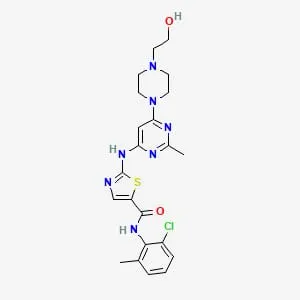
Chemical Structure Of Dasatinib
Dasatinib is classified as a BCS class II drug, characterized by low aqueous solubility and high membrane permeability.[6] It behaves as a weakly basic compound with two basic ionization constants (pKa 3.1 and 6.8) and one weakly acidic pKa of 10.8. The drug is practically insoluble in water, with an aqueous solubility of approximately 0.008 mg/mL at 24 °C[23]Its solubility is highly dependent on the surrounding pH, decreasing markedly from 18.4 mg/mL at pH 2.6 to 0.205 mg/mL at pH 4.28 and to below 0.001 mg/mL at pH 6.99.[19,24] Studies using Caco-2 cell monolayers have demonstrated high apical-to-basolateral permeability, with a reported value of approximately 102 nm/s.[25] As absorption is primarily constrained by dissolution rather than membrane permeation, variations in gastric pH can substantially affect systemic exposure and contribute to clinically relevant interactions with acid-suppressive therapies.[24,26] Dasatinib can also occur in multiple solid-state forms, and the anhydrous form has been investigated as an approach to minimize its dependence on gastrointestinal pH.[19]
3. MECHANISM OF ACTION
3.1 Inhibition of BCR-ABL kinase
The ABL kinase domain exists in a dynamic equilibrium between an active (open) state and an inactive (closed or DFG-out) state. Imatinib preferentially binds to the inactive conformation, making its activity highly dependent on the structural state of the kinase and consequently susceptible to point mutations that modify the binding site or alter conformational equilibrium.[1,27] In contrast, dasatinib is an ATP-competitive tyrosine kinase inhibitor whose co-crystal structure with ABL was determined in the active kinase conformation.[28] It is generally considered capable of interacting with both active and inactive ABL conformations and has less stringent structural requirements for binding than imatinib.[6] Early investigations demonstrated that dasatinib exhibited greater inhibitory potency than imatinib and was effective against 14 of 15 BCR-ABL1 mutants associated with imatinib resistance, with the T315I gatekeeper mutation being the major exception.[7] By binding within the ATP-binding pocket, dasatinib prevents BCR-ABL1 autophosphorylation as well as phosphorylation of downstream signalling proteins, thereby inhibiting the proliferative and anti-apoptotic signalling pathways driven by the oncoprotein (Figure 2).[6]
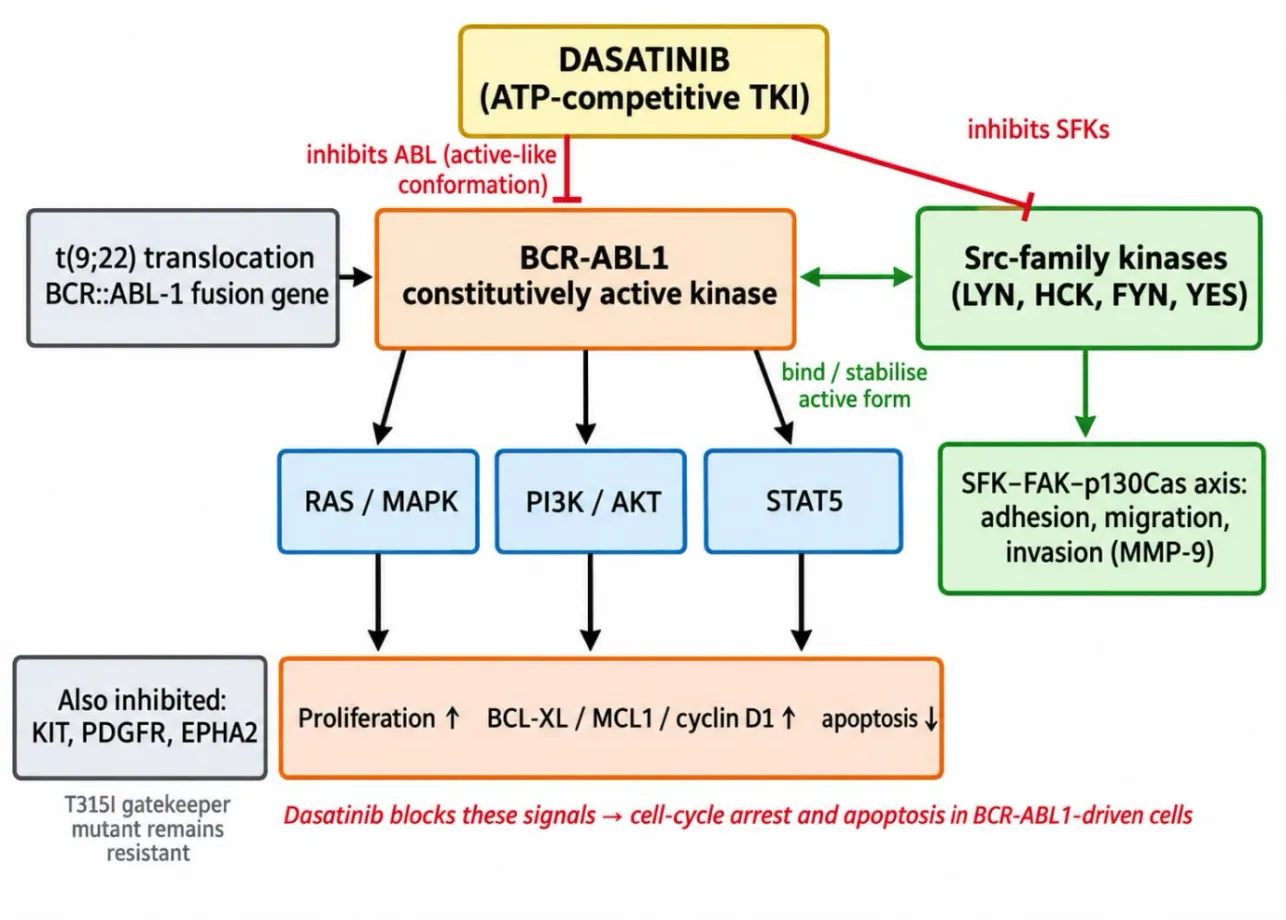
Figure 2: Mechanism of action of dasatinib. Dasatinib inhibits BCR-ABL1 and Src-family kinases (SFKs) and thereby the RAS/MAPK, PI3K/AKT and STAT5 pathways and the SFK–FAK–p130Cas axis
Dasatinib has a relatively brief plasma half-life, resulting in transient BCR-ABL1 inhibition when administered once daily. However, in vitro studies demonstrated that even short-term exposure to a high dasatinib concentration could irreversibly trigger apoptosis in CML cells[29] This finding provides a mechanistic basis for the effectiveness of once-daily dasatinib dosing despite its short duration of systemic exposure.
3.2 Inhibition of Src-family kinases
Dasatinib was initially identified through a drug-discovery programme targeting Src-family kinases (SFKs) and was subsequently characterised as a highly potent inhibitor of ABL kinase activity.[5] It exhibits potent inhibitory activity against multiple SFKs, including SRC, LYN, YES, FYN, and HCK, with low-nanomolar potency; a biochemical IC50 of approximately 0.8 nM has been reported for SRC.[30] SFKs functionally interact with BCR-ABL1, facilitating maintenance of the kinase in an active/open conformation and promoting phosphorylation of regulatory domains. This reciprocal signalling between SFKs and BCR-ABL1 may contribute to mechanisms of imatinib resistance and provides a mechanistic rationale for the concurrent inhibition of both kinase pathways.[1]Inhibition of the SFK/BCR-ABL1 signalling network by dasatinib attenuates downstream STAT5 activation and reduces the expression of key prosurvival and proliferative regulators, including BCL-XL, MCL1, and cyclin D1. Consequently, these molecular alterations promote cell-cycle inhibition and activation of apoptotic pathways.[6] In primitive CML cells, dasatinib effectively suppresses SFK activity and associated downstream signalling; however, quiescent CML stem-cell populations are not completely eradicated, highlighting their relative persistence despite pharmacological kinase inhibition.[31]
3.3 Inhibition of the SFK–FAK–p130Cas axis
In prostate cancer cells, dasatinib selectively inhibits SFK-mediated phosphorylation of focal adhesion kinase (FAK) at Tyr576/577 and Tyr861, as well as phosphorylation of p130Cas at Tyr410, while having no significant effect on FAK autophosphorylation at Tyr397 or on the phosphorylation status of STAT3, ERK1/2, and AKT.[32]At nanomolar concentrations that do not induce apoptosis or compromise cellular viability, dasatinib markedly attenuates cellular adhesion to fibronectin and suppresses migratory and invasive behaviour, accompanied by reduced secretion of matrix metalloproteinase-9 (MMP-9).[32]Thus, whereas dasatinib exerts predominantly cytotoxic and pro-apoptotic effects in BCR-ABL1-driven leukemic cells, its activity in epithelial tumour models is characterised primarily by inhibition of cellular motility, adhesion, and invasive potential.[3]
3.4 Additional targets and immunomodulatory effects
In addition to its activity against BCR-ABL1 and Src-family kinases, dasatinib inhibits other receptor tyrosine kinases, including c-KIT, platelet-derived growth factor receptors (PDGFRs), and EPHA2, at nanomolar concentrations[6,16] This broader kinase-inhibitory profile has provided a rationale for investigating dasatinib in tumours driven by KIT or PDGFR signalling, as well as in EPHA2/SRC-dependent malignancies such as melanoma and glioblastoma.[6] Despite its interaction with multiple kinase targets, dasatinib does not appear to function as a clinically significant inhibitor of P-glycoprotein (P-gp); studies in Caco-2 cells demonstrated only weak inhibition of P-gp-mediated digoxin transport.[25]Treatment with dasatinib has also been associated with expansion of large granular lymphocytes, including clonal T-cell and natural killer (NK)-cell populations, in a subset of patients (Section 6.3).[33]Furthermore, inhibition of SRC signalling by dasatinib can influence the activity and function of both osteoblasts and osteoclasts.[16] More recently, dasatinib has been investigated in combination with quercetin as a senolytic regimen, while preclinical studies have also demonstrated therapeutic activity of dasatinib in experimental models of autoimmune arthritis.[34,35]
4. PHARMACOKINETICS
4.1 Preclinical pharmacokinetics
Preclinical pharmacokinetic studies conducted in mice, rats, dogs, and monkeys demonstrated a high steady-state volume of distribution (>3 L/kg), extensive serum protein binding (>90%), and moderate plasma clearance, with reported values of 62, 26, 25, and 34 mL/min/kg, respectively.[25] Oral bioavailability varied considerably across species, reaching 14% in mice, 27% in rats, 34% in dogs, and 15% in monkeys.[25] In vitro assessment of intrinsic hepatic clearance using hepatocytes and microsomal preparations provided reliable predictions of in vivo clearance, indicating that oxidative hepatic metabolism represents the principal elimination pathway and is mediated predominantly by CYP3A4-type enzymes.[2]Studies in bile-duct-cannulated rats demonstrated that less than 15% of an intravenously administered dose was recovered unchanged in urine, bile, or stomach contents, further supporting extensive metabolic disposition.[25] In rats, the relatively low oral bioavailability of 27% was attributed to incomplete gastrointestinal absorption, with approximately 67% of the administered dose being absorbed, together with substantial first-pass hepatic extraction, resulting in only approximately 40% of the absorbed drug escaping hepatic metabolism. Intestinal first-pass metabolism or efflux may also contribute to the reduced systemic availability.[25] Although dasatinib exhibited some efflux activity, reflected by an efflux ratio of approximately 2.2, comparative studies in P-glycoprotein knockout and wild-type mice showed similar proportions of unabsorbed drug. These findings indicate that P-glycoprotein-mediated efflux is unlikely to be the principal determinant of incomplete oral absorption.[25] Key pharmacokinetic parameters from these preclinical species are compared with corresponding human data in Table 1.
Table 1: Pharmacokinetic parameters of dasatinib in preclinical species and humans
|
Parameter |
Preclinical species (mouse / rat / dog / monkey) |
Human (patients / healthy subjects) |
|
Plasma clearance |
62 / 26 / 25 / 34 mL/min/kg25 |
Apparent oral clearance 363.8 L/h (CV 81%)23 |
|
Volume of distribution |
>3 L/kg in all four species |
Apparent Vd 2505 L (CV 93%)23 |
|
Plasma protein binding |
>90% in all four species |
About 96% (active metabolite 93%)23 |
|
Oral bioavailability |
14 / 27 / 34 / 15% |
Absolute value not established12 |
|
Tmax |
not reported |
0.5–6 h23 |
|
Terminal half-life |
not reported |
3–5 h23 |
|
Food effect |
not reported |
High-fat meal: AUC +14% (not clinically relevant)23 |
|
Food effect |
not reported |
High-fat meal: AUC +14% (not clinically relevant)23 |
4.2 Human absorption, distribution, metabolism and excretion
Absorption: After oral administration dasatinib is absorbed rapidly, with peak plasma concentrations reached between 0.5 and 6 h and a mean terminal half-life of 3–5 h; AUC increases proportionally with dose over 15–240 mg/day.[23] At 100 mg once daily the Cmax and AUC are about 82 ng/mL and 397 ng·h/mL, respectively.[23] A high-fat meal raised AUC by 14%, which is not clinically relevant, so the drug can be taken with or without food.[23]Absolute bioavailability in humans is unknown because no intravenous formulation exists.[12]
Distribution: The apparent volume of distribution is 2505 L (CV 93%), indicating extensive extravascular distribution; binding to plasma proteins is about 96% (93% for the active metabolite).[23]Dasatinib is a P-glycoprotein substrate in vitro and also interacts with BCRP. Efflux at the blood–brain barrier limits, but does not abolish, central nervous system exposure, and CNS-involved Ph+ leukemia has responded to dasatinib.[38]
Metabolism: Dasatinib is extensively metabolised, mainly by CYP3A4, with contributions from flavin-containing monooxygenase-3 and UDP-glucuronosyltransferases.[23] After a radiolabelled dose, unchanged dasatinib accounted for only about 25% of total plasma radioactivity at 2 h; circulating metabolites included hydroxylated (M20, M24), N-dealkylated (M4), N-oxide (M5) and carboxylic-acid (M6) products and glucuronides.[36] The active metabolite (M4) is equipotent with the parent drug but represents only about 5% of the dasatinib AUC, and the metabolites are not expected to contribute meaningfully to in vivo activity.[23,36]In human liver microsomes dasatinib is a time-dependent (mechanism-based)inhibitorofCYP3A4.[23,39]. Elimination:Elimination is mainly faecal: about 85% of a radiolabelled dose was recovered in faeces and less than 4% in urine within 10 days, and unchanged drug accounted for about 19% of the dose in faeces (which may include unabsorbed drug) and less than 1% in urine.[36]The mean apparent oral clearance is 363.8 L/h (CV 81%).[23]
4.3Variabilityand special populations
Exposure varies widely between patients: inter-patient variability has been reported at 70–80% for Cmax and 40–54% for AUC.[13]Age, race and renal impairment do not appear to influence dasatinib pharmacokinetics.[12] In the single case in which it was measured, fetal blood concentration reached about 75% of the maternal level, and dasatinib should be avoided throughout pregnancy.[4,40]
4.4 Drug–drug and drug–food interactions
CYP3A4 modulators: Dasatinib is extensively metabolized by CYP3A4 and is therefore susceptible to clinically significant drug–drug interactions involving CYP3A4 modulators. Co-administration with the potent CYP3A4 inhibitor ketoconazole increased dasatinib exposure substantially, with approximately fourfold and fivefold increases in Cmax and AUC, respectively. Accordingly, concomitant use of strong CYP3A4 inhibitors should be avoided when possible; if unavoidable, a reduction in the dasatinib dose together with close clinical monitoring is recommended.[23]Conversely, co-administration with the potent CYP3A4 inducer rifampin resulted in marked reductions in dasatinib exposure, decreasing Cmax and AUC by approximately 81% and 82%, respectively. Strong CYP3A4 inducers, including rifampin, phenytoin, carbamazepine, and phenobarbital, as well as St John’s wort, should therefore be avoided because of the potential for substantially reduced dasatinib concentrations and consequent loss of therapeutic exposure. When concomitant use cannot be avoided, appropriate dose adjustment and close monitoring are recommended.[23] In addition to being a CYP3A4 substrate, dasatinib exhibits time-dependent inhibition of CYP3A4, indicating the potential for mechanism-based drug–drug interactions with concomitant CYP3A4 substrates. However, dasatinib does not significantly inhibit CYP1A2, CYP2A6, CYP2B6, CYP2C8, CYP2C9, CYP2C19, CYP2D6, or CYP2E1 and has not been shown to induce CYP enzymes.[23]
Acid-reducing agents: The absorption of dasatinib is influenced by gastric pH because its aqueous solubility decreases as pH increases. Consequently, pharmacological suppression or neutralisation of gastric acid can substantially reduce systemic dasatinib exposure. Co-administration with the H2-receptor antagonist famotidine decreased dasatinib AUC and Cmax by approximately 61% and 63%, respectively, while administration of omeprazole 40 mg resulted in reductions of approximately 43% and 42%, respectively. Based on these findings, concomitant use of dasatinib with H2-receptor antagonists and proton-pump inhibitors is not recommended.²³ Antacids produce a similar interaction when administered concurrently. Simultaneous administration of an aluminium/magnesium hydroxide antacid decreased dasatinib AUC and Cmax by approximately 55% and 58%, respectively. However, when the antacid was administered 2 h before dasatinib, no clinically relevant reduction in AUC was observed, while Cmax increased by approximately 26%. Thus, when gastric acid neutralisation is required, antacids are generally preferred over H2-receptor antagonists or proton-pump inhibitors and should be administered with an interval of at least 2 h from dasatinib.[23,24] The interaction with H2-receptor antagonists and proton-pump inhibitors cannot be reliably circumvented by simply separating administration times, as these agents produce prolonged suppression of gastric acid secretion.[26] Despite these recommendations, concomitant use remains relatively common in clinical practice; one prescription-based analysis reported that more than 21% of patients receiving dasatinib were also prescribed a proton-pump inhibitor.[19]
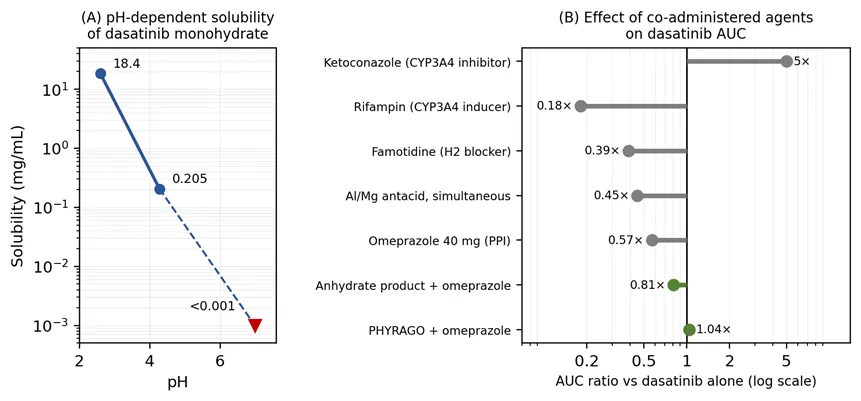
Figure 3: (A) pH-dependent solubility of dasatinib monohydrate. (B) Effect of co-administered agents on dasatinib AUC (ratio to dasatinib alone). Values are taken from the label (ketoconazole, rifampin, famotidine, antacid, omeprazole), from a human study of an anhydrate formulation and from the FDA review of PHYRAGO; they derive from separate studies and are not head-to-head comparisons.
Transporters and dietary factors: Dasatinib is a substrate of the efflux transporters P-glycoprotein (P-gp) and breast cancer resistance protein (BCRP), which may influence its intestinal absorption and systemic disposition[37] In vitro studies have demonstrated that constituents present in fruit juices can inhibit BCRP-mediated efflux of dasatinib, potentially increasing its intestinal availability.[41] Accordingly, grapefruit juice is generally recommended to be avoided during dasatinib therapy because of its potential to alter dasatinib exposure through transporter-mediated interactions.[42]Clinically relevant drug and dietary interactions involving dasatinib are summarised in Table 2.
Table 2: Clinically relevant interactions of dasatinib
|
Co-administered agent |
Effect on dasatinib |
Recommendation |
|
Ketoconazole (strong CYP3A4 inhibitor) |
Cmax ×4; AUC ×523 |
Avoid, or reduce dose and monitor closely |
|
Rifampin (strong CYP3A4 inducer) |
Cmax −81%; AUC −82%23 |
Avoid; if unavoidable consider dose increase with monitoring |
|
Famotidine (H2 blocker) |
Cmax −63%; AUC −61% |
Not recommended |
|
Omeprazole 40 mg (PPI) |
Cmax −42%; AUC −43% |
Not recommended |
|
Aluminium/magnesium hydroxide antacid |
Simultaneous: Cmax −58%, AUC −55%. Given 2 h before: AUC unchanged, Cmax +26% |
Give at least 2 h before or after dasatinib |
|
Fruit juices / grapefruit juice |
BCRP and CYP3A4 inhibition may raise exposure |
Avoid |
|
PHYRAGO (newer tablet formulation) + omeprazole |
AUC0–∞ geometric-mean ratio 1.04 |
No clinically significant interaction reported |
|
Dasatinib anhydrate formulation + omeprazole 40 mg |
AUC about −19% |
Smaller pH effect than the monohydrate tablet
|
4.5 Dose optimisation and therapeutic drug monitoring
A phase 3 dose-optimisation study in imatinib-resistant or -intolerant chronic-phase CML showed that 100 mg once daily preserved efficacy and improved tolerability, notably with less pleural effusion, compared with 70 mg twice daily.[43] Retrospective exposure–response analysis linked major cytogenetic response to average (time-averaged) exposure, whereas pleural effusion correlated more closely with trough concentration.[44] The approved doses are therefore 100 mg once daily for chronic-phase CML and 140 mg once daily for advanced-phase CML and Ph+ ALL.[23] Given the high variability in exposure and the concentration-related toxicity, therapeutic drug monitoring (TDM) has been proposed, although target ranges and routine use are not yet standardised.[13] In a prospective study, reducing the dose from 100 to 50 mg in patients with high plasma concentrations maintained efficacy and reduced pleural effusion compared with patients at therapeutic levels who stayed on 100 mg.[4,20]Frontline 50 mg once daily produced response rates similar to or better than historical 100 mg data with fewer effusions and less myelosuppression, although it has not been tested in a randomised trial.[4,21]ELN 2025 also supports reducing dasatinib to 20–50 mg daily in responding patients who develop toxicity.
5. PHARMACODYNAMICS
5.1 Target inhibition kinetics
In nude mice bearing PC-3 prostate cancer xenografts, single oral doses of dasatinib at 15 or 50 mg/kg produced maximal inhibition of phospho-SRC (Tyr418) in both tumour tissue and peripheral-blood mononuclear cells (PBMCs) approximately 3 h after administration. Phospho-SRC levels subsequently showed partial recovery between 7 and 17 h and returned to baseline by 24 h. Lower doses resulted in less pronounced and shorter-lasting target inhibition.[30] The close correspondence between phospho-SRC inhibition in PBMCs and tumour tissue supports the use of PBMC phospho-SRC as a surrogate pharmacodynamic biomarker of SRC inhibition. In human PBMCs, the in vitro EC50 for phospho-SRC inhibition was approximately 25.8 nM, corresponding to about 12.5 ng/mL.[30]The reversible, concentration-dependent and transient nature of SRC inhibition is consistent with the relatively short elimination half-life of dasatinib. Despite this intermittent target engagement, clinically meaningful efficacy can be achieved with once-daily dosing.[43] This pharmacodynamic profile is consistent with evidence that even transient but potent inhibition of BCR-ABL1 can initiate irreversible cellular processes leading to apoptosis in chronic myeloid leukemia (CML) cells.[29]
5.2 Exposure–response relationships
Dasatinib efficacy appears to correlate more closely with average systemic exposure, whereas the risk of pleural effusion is associated primarily with trough plasma concentrations (Section 5.5).[44] This distinct exposure–response relationship provides a pharmacological rationale for once-daily dosing and supports dose reduction in patients exhibiting elevated trough concentrations. It also underpins the potential clinical utility of therapeutic drug monitoring (TDM) to individualise dasatinib therapy and optimise the balance between therapeutic efficacy and treatment-related toxicity.[13,20]
5.3 Immunological effects
Although dasatinib has been shown to suppress T-cell function in vitro, a proportion of patients receiving dasatinib develop persistent expansion of clonal large granular lymphocytes, comprising T-cell and natural killer (NK) cell populations. This lymphocytic expansion has been associated with favourable clinical responses, suggesting that immunomodulatory effects and immune-mediated mechanisms may contribute to the overall antileukemic activity of dasatinib.[16,33]
6. CLINICAL EFFICACY AND SAFETY
6.1 Chronic myeloid leukemia
In patients with newly diagnosed chronic-phase chronic myeloid leukemia (CML), the DASISION trial demonstrated that dasatinib achieved more rapid and deeper treatment responses than imatinib, with 5-year follow-up further confirming higher response rates with dasatinib. [9,11]Across randomised clinical trials, second-generation tyrosine kinase inhibitors (TKIs) have generally been associated with higher response rates and a lower risk of disease progression compared with imatinib; however, these improvements in disease control have not translated into a demonstrated overall-survival benefit over imatinib.[4] In the randomised JALSG CML212 trial, dasatinib and nilotinib showed broadly comparable outcomes with respect to treatment response, progression-free survival, and overall survival.[4,49] Comparative long-term data for imatinib,nilotinib,[50] and bosutinib,[51]together with evidence from registry studies,[52] provide further context for evaluating the relative clinical outcomes of available TKIs. In patients with imatinib-resistant or imatinib-intolerant CML, dasatinib has demonstrated durable cytogenetic responses, supporting its use as a subsequent-line treatment.[8] Real-world studies have also provided comparative data on dasatinib and nilotinib in the second-line setting.[53]However, following failure of a first-line second-generation TKI, switching to another second-generation TKI generally results in limited rates of molecular response. Consequently, current treatment strategies support consideration of more potent agents, such as ponatinib or asciminib, earlier in the treatment sequence for appropriate patients.[4]
6.2 Paediatric use
Dasatinib has been evaluated in children with chronic-phase CML in a phase 2 trial.[54]
6.3 Philadelphia chromosome-positive ALL
Dasatinib in combination with intensive chemotherapy has been investigated in children and young adults with Philadelphia chromosome-positive acute lymphoblastic leukemia (Ph+ ALL), while a chemotherapy-sparing regimen combining dasatinib with blinatumomab has also been evaluated in adults in a phase II study.[55,56] In the frontline treatment of Ph+ ALL, ponatinib has been compared with imatinib, providing further evidence for the role of potent BCR-ABL1 inhibition in this setting.[57] More recently, a phase I study evaluated dasatinib at a dose of 140 mg once daily in combination with asciminib and prednisone. Complete hematological remission was achieved in 84% of patients with newly diagnosed ALL by day 28 and in all patients by day 84.[58]For patients with blast-phase chronic myeloid leukemia (CML), the 2025 European LeukemiaNet (ELN) recommendations support intensive chemotherapy combined with a TKI, with dasatinib or ponatinib preferred where appropriate, followed by allogeneic hematopoietic stem-cell transplantation in eligible patients.[4]
6.4 Treatment-free remission
In patients who have achieved a sustained deep molecular response, discontinuation of dasatinib or nilotinib results in treatment-free remission (TFR) in approximately half of cases.[4] The long-term feasibility of dasatinib discontinuation has also been supported by the final 5-year follow-up analysis of the DASFREE study.[59]
6.5 Safety
The principal toxicities associated with dasatinib include myelosuppression, pleural effusion, and bleeding, while pulmonary arterial hypertension and QT-interval prolongation occur less frequently.[4,23]These adverse effects are generally managed through dose interruption, reduction, or other appropriate modifications. Pleural effusion represents a characteristic and clinically important adverse event associated with dasatinib therapy.[60] In the QT interval assessment described in the prescribing information, the maximum mean increase in corrected QT interval using Fridericia’s formula (QTcF) was approximately 3–6 ms, indicating a relatively modest effect on cardiac repolarisation.[23] The 2025 European LeukemiaNet (ELN) recommendations advise avoiding dasatinib in patients with pre-existing pulmonary disease because of its potential for pulmonary toxicity.[4] In patients who develop recurrent pleural effusion despite dose reduction, or who develop pulmonary hypertension during treatment, switching to an alternative TKI is recommended.[4]
7. MECHANISMS OF RESISTANCE
Resistance to tyrosine kinase inhibitors (TKIs) is mediated by multiple mechanisms and can broadly be classified into BCR-ABL1-dependent and BCR-ABL1-independent pathways. BCR-ABL1-dependent resistance primarily involves structural or functional alterations in the drug target, whereas BCR-ABL1-independent mechanisms include reduced drug exposure and activation of alternative cellular survival signalling pathways (Figure 4).[1,14,15] In patients exhibiting an inadequate or suboptimal treatment response, poor adherence should be systematically assessed and excluded as a potential contributing factor. Where available, therapeutic drug monitoring (TDM) may further assist in identifying inadequate systemic exposure or pharmacokinetic interactions with concomitant medications.[4]
7.1 BCR-ABL1-dependent mechanisms
Kinase-domain mutations: Single amino-acid substitutions within the ABL1 kinase domain represent the most extensively characterised mechanism of TKI resistance. These mutations can occur across several functionally important regions of the kinase, including the P-loop, C-helix, SH2-interaction region, ATP-binding site, substrate-binding region, and activation loop.[1]The T315I gatekeeper mutation disrupts a critical hydrogen bond involved in inhibitor binding and introduces steric interference within the kinase domain, resulting in resistance to multiple TKIs, including imatinib, dasatinib, nilotinib, and bosutinib.[1,27]Certain mutations are particularly associated with reduced sensitivity to dasatinib. For example, V299L and substitutions at F317 (F317L, F317I, F317V, and F317C), as well as T315A, can substantially impair dasatinib activity and are frequently associated with dasatinib treatment failure. In contrast, mutations involving Y253, E255, and F359 are more commonly associated with resistance to nilotinib while generally retaining sensitivity to dasatinib.[1,4,62] This mutation-specific sensitivity profile provides the pharmacological basis for selecting subsequent TKI therapy according to the identified BCR-ABL1 mutation (Table 3).[4]
Mutation testing : BCR::ABL1 mutation analysis is recommended in patients who exhibit treatment failure or a warning response to TKI therapy, at progression to blast phase, and in cases of relapse following allogeneic transplantation. Conventional Sanger sequencing has limited sensitivity and generally detects mutations only when the mutant clone constitutes approximately 10–20% or more of the analysed population. In contrast, targeted next-generation sequencing (NGS) provides substantially greater analytical sensitivity, enabling earlier identification of emerging resistant clones and more detailed assessment of clonal mutation patterns[4,63,65]
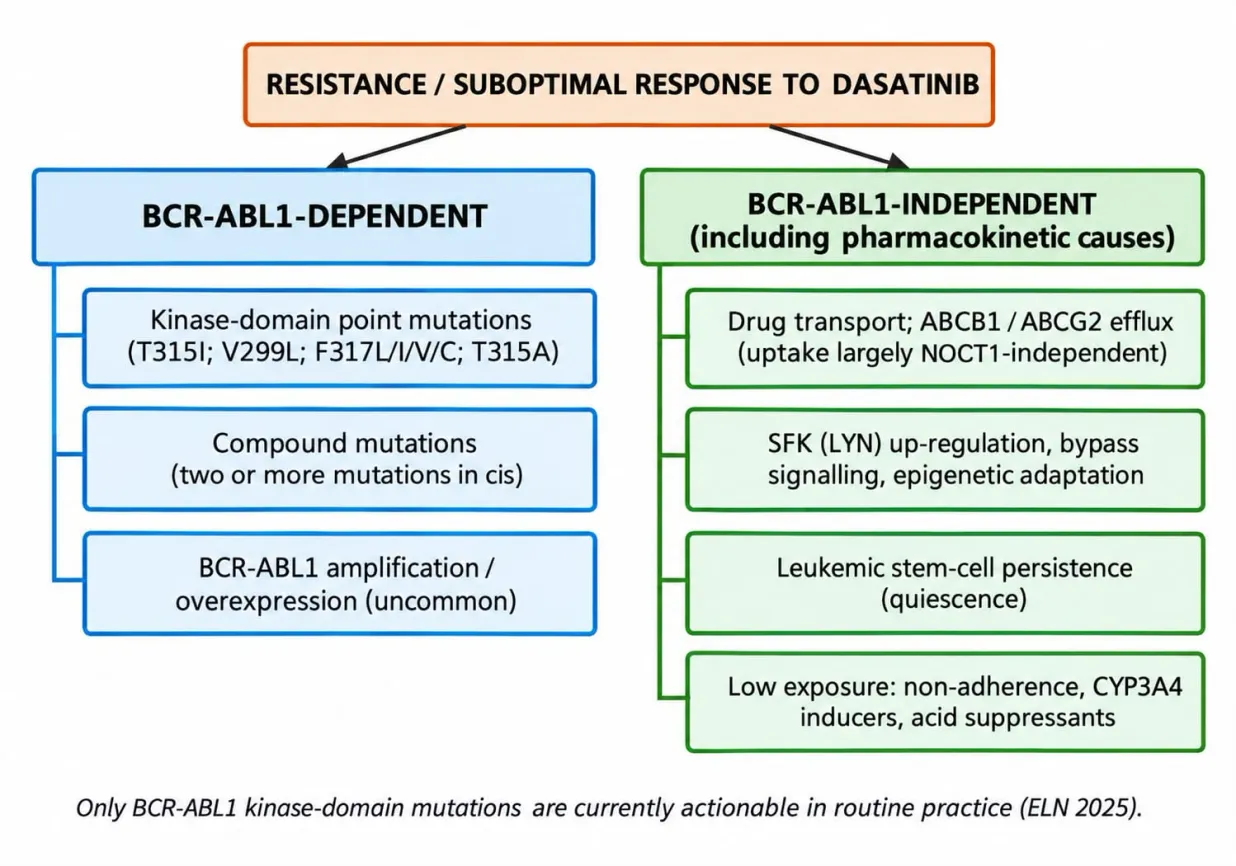
Figure 4: Classification of the mechanisms of resistance or suboptimal response to dasatinib
Table 3: Selected BCR-ABL1 kinase-domain mutations and recommended TKIs (adapted from eln 2025)
|
Mutation |
Region |
Dasatinib activity |
TKIs recommended4 |
|
M244V |
P-loop region |
Active |
Nilotinib, dasatinib, bosutinib, ponatinib |
|
Y253H |
P-loop |
Active |
Dasatinib, bosutinib, ponatinib, asciminib |
|
E255K/V |
P-loop |
Active |
Dasatinib, ponatinib, asciminib |
|
V299L |
ATP-binding region |
Reduced |
Nilotinib, ponatinib, asciminib |
|
T315I |
Gatekeeper |
Resistant |
Ponatinib, asciminib (higher dose); allogeneic transplantation to be considered |
|
F317L/V/I/C; T315A |
ATP-binding region |
Reduced |
Nilotinib, bosutinib, ponatinib, asciminib |
|
F359V/I/C |
Catalytic domain |
Active |
Dasatinib, ponatinib |
Compound mutations: Compound mutations arise when two or more mutations occur in cis on the same BCR::ABL1 molecule and can result in substantial resistance to imatinib and second-generation TKIs. This effect is particularly pronounced when the T315I mutation is present. Importantly, compound mutations containing T315I have also been identified in patients who develop resistance following treatment with ponatinib or asciminib.[4,66,67] Furthermore, the susceptibility of individual kinase-domain mutations to TKIs in vitro may be influenced by the underlying BCR::ABL1 isoform, with differences observed between the p190 and p210 backgrounds.[68]
8.2 BCR-ABL1-independent mechanisms
Drug transport: Intracellular dasatinib exposure is influenced by the balance between cellular uptake and efflux mechanisms. In contrast to imatinib, dasatinib enters cells predominantly through mechanisms that are independent of human organic cation transporter 1 (hOCT1); consequently, reduced hOCT1 activity appears to have a limited impact on dasatinib intracellular exposure.[69,70] However, dasatinib is a substrate for the ATP-binding cassette efflux transporters ABCB1 (P-glycoprotein) and ABCG2 (breast cancer resistance protein, BCRP). Increased expression or activity of these transporters may enhance dasatinib efflux, thereby reducing intracellular drug concentrations and potentially limiting its distribution across the blood–brain barrier.[37,38] The contribution of ABC transporter-mediated efflux to multidrug resistance has been extensively reviewed.
Src-family kinase up-regulation and bypass signalling: Increased expression of the Src-family kinase LYN has been observed in imatinib-resistant leukemic cells and has been associated with BCR::ABL1-independent mechanisms of cell survival, highlighting the potential role of Src-family kinases (SFKs) in maintaining leukemic cell viability.Although dasatinib inhibits SFKs, leukemic cells may develop alternative mechanisms of survival through activation of compensatory signalling pathways, including the JAK/STAT, PI3K/AKT, and MAPK pathways. Additionally, epigenetic alterations and transcriptional reprogramming may contribute to continued leukemic cell survival despite effective kinase inhibition.[14,15]
Exposure-related (pharmacokinetic) resistance. Inadequate systemic exposure to dasatinib may contribute to or mimic treatment resistance. Factors such as poor adherence, concomitant administration of CYP3A4-inducing drugs, acid-suppressive therapy, and interindividual variability in drug absorption can result in subtherapeutic plasma concentrations and reduced pharmacological activity.[4,12,13] Despite the potential impact on dasatinib exposure, concomitant use of proton-pump inhibitors remains relatively common in clinical practice.[19]
8. STRATEGIES TO OVERCOME RESISTANCE AND IMPROVE EXPOSURE
8.1 Mutation-guided sequencing and newer inhibitors
BCR::ABL1 mutations are currently the principal actionable mechanism of TKI resistance. Detection of a clinically relevant mutation generally warrants a change in treatment, with selection of the subsequent TKI guided by the specific mutation and its known sensitivity profile (Table 3).[4] Following resistance to a first-line second-generation TKI, switching to another second-generation TKI has a relatively low likelihood of achieving an adequate response. Therefore, early consideration of more potent agents such as ponatinib or asciminib is recommended in appropriate patients.[4]
Ponatinib and asciminib. Ponatinib retains activity against the BCR::ABL1 T315I mutation. In the OPTIC dose-ranging trial, patients who received a 45 mg starting dose achieved a higher complete cytogenetic response rate at 12 months than those receiving 30 mg or 15 mg (44.1%, 29.0%, and 23.1%, respectively). Accordingly, a 45 mg starting dose is recommended for patients with T315I mutations or BCR::ABL1^IS^ levels >10%.[4]Asciminib represents a distinct therapeutic approach as an allosteric BCR::ABL1 inhibitor that binds to the myristoyl pocket of ABL1 rather than the ATP-binding site. In the ASCEMBL trial, asciminib demonstrated greater efficacy than bosutinib in patients previously treated with at least two TKIs, with complete cytogenetic response rates of 39.8% versus 16.1% and major molecular response (MMR) rates of 37.6% versus 15.8% at week 96.[4] Similarly, the ASC4FIRST study demonstrated higher MMR rates with asciminib than with investigator-selected TKIs in patients with newly diagnosed CML, with MMR achieved in 67.7% versus 49% of patients at week 48 and 74.1% versus 52% at week 96.[4,22] In patients with T315I-mutated disease, higher doses of asciminib, typically 150–200 mg twice daily, have been evaluated.⁴Indirect comparative analyses in patients who had failed second-generation TKIs have suggested differences between ponatinib and asciminib for certain response endpoints, with some analyses favouring ponatinib. Asciminib has consequently emerged as an important treatment option for patients with TKI-resistant or TKI-intolerant CML. Emerging and investigational approaches. Olverembatinib is an ATP-site TKI developed to retain activity against T315I and is approved for CML treatment in China. Clinical studies have demonstrated activity in patients whose disease has progressed despite treatment with ponatinib or asciminib.[4] Switch-control inhibitors, such as DCC-2036, represent another investigational strategy and inhibit T315I by stabilising the kinase in an inactive conformation. Other approaches, including bafetinib, dual Aurora kinase/ABL inhibitors, and the non-kinase agent homoharringtonine, remain investigational and have been discussed in earlier reviews.¹Allogeneic transplantation. Allogeneic hematopoietic stem-cell transplantation remains a potentially curative treatment option for patients with CML who develop resistance to available TKIs. The 2025 European LeukemiaNet (ELN) recommendations advise initiating a donor search when resistance to the first second-generation TKI occurs and considering allogeneic transplantation in appropriate patients following failure of ponatinib or asciminib.[4]
9.2 Combination therapy and dose individualisation
Combination strategies. Combining dasatinib with the allosteric BCR::ABL1 inhibitor asciminib provides a dual-targeting approach in which the two agents bind to distinct sites on the kinase. This strategy may enhance the depth of molecular response and potentially limit the emergence of resistant clones. In a phase I study involving patients with Philadelphia chromosome-positive acute lymphoblastic leukemia (Ph+ ALL), asciminib 80 mg once daily in combination with dasatinib 140 mg once daily and prednisone was established as the recommended phase II regimen. Among patients with newly diagnosed disease, complete hematological remission was achieved in 84% of patients by day 28 and in 100% by day 84.[58]In patients with chronic- or accelerated-phase CML, combinations of asciminib with imatinib, nilotinib, or dasatinib have demonstrated preliminary evidence of antileukemic activity, although combination therapy was associated with an increased incidence of adverse events.[4] Chemotherapy-free combinations of dasatinib and blinatumomab represent another therapeutic approach under investigation in Ph+ ALL.[56] Preclinical studies have also reported enhanced antitumour activity when dasatinib is combined with agents such as histone deacetylase (HDAC) inhibitors, paclitaxel, cetuximab, or bortezomib; however, these combinations require further clinical validation before their therapeutic role can be established.⁶Exposure-guided dose individualisation. Individualising dasatinib therapy according to systemic exposure may provide an additional strategy for balancing efficacy and toxicity. Lower-dose regimens, including doses of approximately 20–50 mg once daily, have demonstrated efficacy in selected responding patients.[4,20,44] This approach is supported by the differential exposure–response relationship in which therapeutic efficacy is associated more closely with average drug exposure, whereas treatment-related toxicity, particularly pleural effusion, is more strongly related to trough concentrations. Thus, exposure-guided dose adjustment may help optimise the therapeutic benefit while limiting concentration-dependent toxicity.
9.3 Formulation strategies
Low and variable systemic exposure to dasatinib, resulting from its pH-dependent solubility and dissolution, extensive first-pass CYP3A4 metabolism, and transporter-mediated efflux, may contribute to interindividual variability in therapeutic response and clinically relevant interactions with acid-suppressive agents. Consequently, optimisation of the drug formulation represents a rational complementary approach to pharmacological strategies aimed at improving and maintaining adequate systemic exposure.
Clinically developed pH-independent products: Several newer dasatinib formulations have been developed to minimise the effects of gastric pH on drug absorption. PHYRAGO (dasatinib) tablets, a formulation approved by the US FDA under NDA 216099, demonstrated no clinically meaningful pharmacokinetic alteration when administered concomitantly with omeprazole, with an AUC₀–∞ geometric mean ratio of 1.04, or with famotidine. Consequently, PHYRAGO can be administered with these acid-reducing agents, although antacid administration should still be separated from dasatinib by at least 2 h.[18] A dasatinib anhydrate formulation containing 110.6 mg was shown to be bioequivalent to the conventional 140 mg dasatinib monohydrate tablet. This formulation also reduced intra-subject and inter-subject variability in AUC by approximately threefold and 1.5-fold, respectively, and exhibited a smaller reduction in AUC (approximately 19%) when administered with omeprazole 40 mg.[19] In addition, a hybrid nanoparticle–amorphous solid dispersion formulation (XS004; Dasynoc) has been reported to reduce pharmacokinetic variability while achieving bioequivalent exposure at lower doses.
Preclinical nanocarriers.: A range of nanoformulated dasatinib delivery systems has been investigated, as summarised in Table 4. However, most of these approaches remain in the formulation-development, in vitro, or early animal-testing stages. Reported improvements in bioavailability are largely based on preclinical pharmacokinetic findings, which may not translate directly to human clinical outcomes.[17] Furthermore, important considerations including manufacturing scale-up, long-term physicochemical stability, safety, and cost-effectiveness have yet to be adequately established. To date, the most clinically validated improvements in dasatinib pharmacokinetics have been achieved through modified oral formulations based on amorphous or anhydrate drug forms rather than nanocarrier-based delivery systems.
Table 4: Reported preclinical dasatinib nanoformulations and delivery systems
|
System |
Main problem addressed |
Key finding as reported |
|
Nanoemulsion and nanocrystals |
Dissolution-limited absorption (BCS II) |
Improved dissolution and oral delivery in a preclinical study |
|
Solid lipid nanoparticles |
Poor solubility; first-pass metabolism |
SLN formulations with sustained release; improved oral bioavailability and cytotoxicity reported |
|
Polymeric micelles |
Poor oral bioavailability |
Optimised micelles improved oral bioavailability in vivo and showed cytotoxicity against Hep G2 cells |
|
Chitosan nanoparticles |
Dissolution rate; cytotoxic potency |
Optimised nanoparticles had entrapment efficiency of 83.12%, size of 96.8 nm and higher in vitro cytotoxicity than pure drug |
|
Self-nanoemulsifying systems (SNEDDS / S-SNEDDS) |
Solubility; possible lymphatic uptake |
Enhanced solubility of dasatinib in a SNEDDS;general principles, excipients and pediatric liquisolid systems reviewed |
|
Mesoporous silica nanoparticles |
Dissolution and stability |
Statistically designed system improved dissolution and drug stability |
|
Co-loaded nanoformulation (dasatinib + hesperidin) |
Combination delivery |
Preclinical evaluation of anticancer activity |
FUTURE PERSPECTIVES
Four key developments are likely to influence the future clinical application of dasatinib. First, therapeutic drug monitoring (TDM) combined with exposure-guided or model-informed dosing may enable more individualised treatment and reduce toxicity while maintaining therapeutic efficacy.[13,20] Second, routine use of next-generation sequencing (NGS) for BCR::ABL1 mutation profiling could facilitate earlier identification of emerging resistance and support more informed selection of subsequent TKIs.[4,64] Third, rational combination strategies involving allosteric BCR::ABL1 inhibitors or immunotherapeutic agents may provide opportunities to achieve deeper responses, particularly in Ph+ ALL and advanced-stage CML.[56,58] Fourth, the development and clinical adoption of pH-independent formulations may minimise pharmacokinetic variability associated with gastric acid suppression and thereby reduce a common source of inadequate drug exposure.[18,19] Other approaches, including repurposing strategies such as combinations with senolytic agents, remain investigational and require confirmation in well-controlled clinical trials.[34] In parallel, treatment affordability and drug availability will continue to influence TKI selection and access to dasatinib-based therapy across different healthcare settings worldwide.[4]
CONCLUSION
Dasatinib remains an important second-generation tyrosine kinase inhibitor (TKI), owing to its dual activity against BCR::ABL1 and Src-family kinases and its ability to retain activity against most imatinib-resistant BCR::ABL1 mutants, with T315I representing a major exception. Its pharmacokinetic and clinical behaviour is influenced by several factors, including pH-dependent absorption, CYP3A4-mediated metabolism, transporter-mediated efflux, and substantial interindividual variability in systemic exposure. Resistance may arise through multiple mechanisms, including kinase-domain mutations, altered drug transport, activation of alternative Src-family or survival pathways, and persistence of leukemic stem-cell populations. Current evidence supports once-daily dasatinib dosing, with dose optimisation or therapeutic drug monitoring considered in patients with excessive exposure or treatment-related toxicity. Management of pharmacokinetic interactions includes avoidance of clinically important acid-suppressive agents and strong CYP3A4 modulators where appropriate. In patients developing resistance, molecular characterisation of BCR::ABL1 mutations can guide selection of subsequent therapy, including agents such as ponatinib or asciminib. Where available, pH-independent formulations may further reduce the impact of gastric pH on dasatinib exposure.Although numerous nanotechnology-based formulations have demonstrated promising pharmacokinetic properties in preclinical studies, most have not yet undergone sufficient clinical evaluation to establish their therapeutic utility. Further well-controlled pharmacokinetic and clinical studies are therefore required before these approaches can be incorporated into routine practice. Overall, an integrated strategy incorporating exposure optimisation, therapeutic drug monitoring, mutation-guided treatment selection, and appropriate formulation technologies may help maximise the therapeutic benefit of dasatinib while limiting treatment-related toxicity.
ACKNOWLEDGMENT
The authors thank the Principal and the Department of Pharmaceutics, Government College of Pharmacy, Karad, for providing library and infrastructure facilities.
CONFLICT OF INTEREST
The authors declare that there is no conflict of interest.
FUNDING
This research received no specific grant from any funding agency in the public, commercial or not-for-profit sectors.
REFERENCES


Nishant Mali, Kratik More, Kiran Sawase, Yogesh Patil, Avinash Hosmani, Dasatinib: Mechanism of Action, Pharmacokinetic–Pharmacodynamic Profile, Resistance and Strategies to Overcome Resistance, Int. J. of Pharm. Sci., 2026, Vol 4, Issue 9, 3882-3904, https://doi.org/10.5281/zenodo.23038060
 10.5281/zenodo.23038060