View Article

  • Formulation and Evaluation of a “Matrisva”- Maternal Nutraceutical Chocolate Bar Enriched with DHA, Vitamin D?, and Natural Folate Sources

  • K R College of Pharmacy, Bengaluru, Karnataka, India.

Abstract

Pregnancy is kind of a critical span in a woman’s life, because the nutritional needs seem to rise a lot, not only for the mother but also because the baby’s growth depends on it. When essential nutrients are not taken in enough, it can lead to maternal deficiencies, and it may bring along unpleasant pregnancy outcomes as well. This work is basically focused on making and then checking a maternal nutraceutical chocolate bar that is fortified with folic acid, Vitamin D3, and DHA, with oats powder being used as the main ingredient. Oats are often described as having dietary fiber, plus a mix of vitamins, minerals, and antioxidants, so they become a solid foundation for this kind of nutraceutical type. Folic acid helps in lowering the risk of neural tube defects, vitamin D3 supports better calcium absorption and it also assists bone development. Meanwhile, DHA has an important role in fetal brain and eye development. The chocolate bar is planned to be a more agreeable, practical alternative when compared with regular tablets or capsules, so patients may actually keep using it longer. After the formulation is prepared, it’s evaluated in terms of appearance, weight variation, texture, sensory acceptance, and storage stability. In general, the proposed chocolate bar could function as a simple nutritious dose form, which may help support maternal nutrition and contribute to healthier fetal development across pregnancy

Keywords

Maternal nutrition, Nutraceutical chocolate bar, Oats powder, Folic acid, Vitamin D3, DHA, Pregnancy

Introduction

× Popup Image
  • Pregnancy is probably one of the most important phases in a woman’s life, because it’s tied to rapid physiological and metabolic changes. During this time, the nutritional needs of the mother rise, so the fetus can grow and develop in a proper manner. When the diet is adequate it really makes a difference for maternal well-being, preventing nutritional gaps, and also ensuring the fetal organs develop in the expected way.
  • Even so, many pregnant women do not consume enough essential nutrients from their usual daily diet, mostly due to poor eating patterns, morning sickness, food aversions, or simply because their food choices are kind of limited. When nutrient intake is low during pregnancy, the likelihood can increase for anemia, low birth weight, neural tube defects, weaker bone development, and sometimes even less favorable cognitive outcomes in babies.
  • Nutraceuticals are essentially food-based products that can provide health benefits that go beyond basic nourishment. They may help prevent nutritional deficiencies, while also promoting general health. Maternal nutraceuticals are getting more attention now, because they offer a comparatively safe and effective route to supply essential nutrients during pregnancy.
  • Chocolate, in particular, is one of the most liked food products. This is mainly because of its pleasant taste and because most people accept it easily. Making a nutraceutical chocolate bar feels like a creative method to deliver key nutrients in an enjoyable format. Compared with tablets and capsules, a chocolate bar is often easier to consume, and it can improve adherence, especially for pregnant women who experience nausea or find swallowing medicines difficult.
  • In the present study, oats powder was selected as the primary ingredient, largely because it carries a high nutritional value. Oats contain complex carbohydrates, dietary fiber, proteins, vitamins, minerals, and antioxidants. They tend to provide longer-lasting energy, support digestive comfort, and contribute to blood glucose regulation.


  • The chocolate bar is fortified with three essential maternal nutrients, namely:
  • Folic Acid – supports DNA synthesis, and it lowers the risk of fetal neural tube defects.
  • Vitamin D3 – supports calcium absorption and promotes healthy bone formation for both mother and fetus.
  • DHA (Docosahexaenoic Acid) – supports the fetus brain, nervous system and eye development.
  • The aim of this study is to create a nutritious, palatable chocolate bar and also check its quality, stability, and how acceptable it is, as a maternal nutraceutical product.

2.Need for Maternal Nutrition

  • Maternal nutrition is sort of a big deal, it messes with pregnancy outcomes in a lot of directions. During pregnancy the body needs more nutrients, not just “because” but to keep fetal growth going, support placental development, handle hormonal shifts and that higher maternal metabolism too. When nutrition is in the right place it helps the mother right away, and it also builds the ground for healthy growth and development of the unborn baby.
  • On the other hand, poor maternal nutrition has a serious public health problem in many developing countries. If a person isn’t getting enough nutrients during pregnancy, complications can show up, maternal anemia gestational hypertension preterm birth, low birth weight, congenital problems, and delayed fetal development. And these things don’t just count in the short run, they can ripple out into long term health later.
  • Folic acid is one of the key vitamins especially early pregnancy. Getting enough folic acid before conception and during the first trimester really lowers the risk of neural tube defects like spina bifida and anencephaly. It also supports red blood cell formation, and DNA synthesis which is pretty central.
  • Vitamin D3 is another essential nutrient needed during pregnancy. It helps with calcium and phosphorus absorption, and it helps maternal bones stay in better shape. It also contributes to how fetal bones and teeth form properly. When vitamin D is low, studies connect it with weaker bone mineralization, and also with worse pregnancy outcomes.
  • Then there’s DHA, an omega 3 fatty acid. DHA supports fetal brain development, retina function, and the nervous system overall. Since fetal DHA demands rise fast during the third trimester, adequate maternal intake matters for cognitive and visual development that actually holds up.
  • Oats bring dietary fiber along with protein, vitamins, minerals, and antioxidants. Together they back digestive health, help create steadier energy, and can support stable blood glucose levels. So, their nutritional profile makes oats a pretty sensible base for building maternal nutraceutical products.
  • Conventional nutritional supplements are usually sold as tablets, or capsules. But a lot of pregnant women deal with nausea, vomiting, or trouble swallowing, so compliance can become weak, really. A chocolate-based nutraceutical can be a more acceptable and enjoyable option, also more practical to use daily.
  •  So, developing a maternal nutraceutical chocolate bar fortified with folic acid, vitamin D3, and DHA is a kind of fresh approach to improving maternal nutrition. It brings essential nutrients and a pleasant taste in the same format, which may make supplementation easier, and possibly helps adherence to nutritional recommendations throughout pregnancy.

3.Aim and Objectives

  • Aim
  •  To create and also evaluate this maternal nutraceutical chocolate bar, it has DHA added plus vitamin D₃ and a few natural, nutrient-dense ingredients, sort of aiming at supporting wellbeing for both mother and baby during pregnancy, like a softer well rounded nutraceutical method.
  • Objectives
  • To try and come up with a nutraceutical chocolate bar that somehow works out for maternal nutrition, you know, in a practical way.  
  • Mix in natural ingredients that are rich with iron, folate, calcium, antioxidant compounds and other essential nutrients, kind of the full package. 
  • Also enrich the blend with DHA, for the fetal brain and eye development, more specifically.  
  • Add vitamin D₃ too, so the body can use calcium better and generally help bone health. 
  • Then check the organoleptic behavior of the final chocolate bar, like taste, aroma, and that overall impression. 
  •  Build a pleasant convenient nutritional aid for pregnant women that is easy to take, not fussy. 
  • And finally, study how chocolate can act as a vehicle, like a carrier for those nutraceutical ingredients, rather than just being “a treat.”

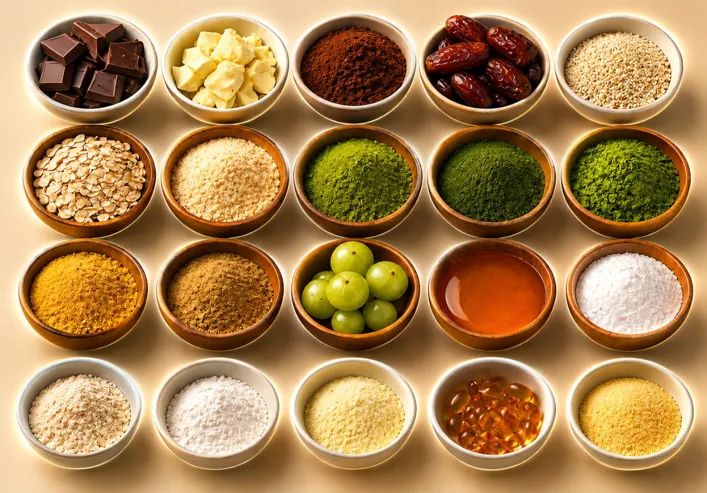
4. Ingredients and their function


Table-1

Ingredient

Function

Dark Chocolate Compound

Forms the chocolate base, provides antioxidants, improves taste, colour, and overall acceptability.

Cocoa Butter

Improves texture, mouthfeel, and melting characteristics of the chocolate.

Oats Powder

Main functional ingredient; rich in dietary fiber, protein, vitamins, minerals, and provides sustained energy.

Date Powder

Natural sweetener; provides carbohydrates, iron, potassium, and antioxidants.

Almond Powder

Rich source of protein, healthy fats, vitamin E, calcium, and magnesium. Supports maternal nutrition.

Moringa Powder

Excellent source of iron, calcium, vitamin A, vitamin C, protein, and antioxidants. Helps improve nutritional status during pregnancy.

Spinach Powder

Rich in iron, folate, calcium, and antioxidants. Supports healthy red blood cell production and maternal health.

Honey Powder

Natural sweetener that enhances flavour and provides quick energy.

Amla Powder

Rich source of vitamin C and antioxidants. Improves immunity and enhances iron absorption.

DHA

Essential omega-3 fatty acid that supports fetal brain, eye, and nervous system development.

Vitamin D3

Enhances calcium absorption and supports healthy bone and teeth development in both mother and fetus.

Gum Acacia

Acts as a natural binder and stabilizer. Improves texture and structural integrity of the chocolate bar.


5. Plant Profile of Herbal Ingredients

Oats

  • Scientific Name: Avena sativa L   
  • Family: Poaceae  
  • Common Name: oats  
  • Part Used: whole grain, seed 
  • Uses: A very rich source of dietary fiber, especially beta-glucan. It also carries protein, along with a mix of vitamins and minerals. People often say it gives sustained energy, and it can support digestive health, while also helping to regulate blood glucose levels. In addition, it may contribute to maternal nutrition during pregnancy, in a more steady kind of way.

Dates

  • Scientific Name: Phoenix dactylifera L. 
  • Family: Arecaceae  
  • Common Name: Date Palm, (Dates)  
  • Part Used: Fruit  
  • Uses: This plant is used as a natural supplier of carbohydrates, dietary fiber iron potassium and antioxidants, it also gives quick energy. it may assist with haemoglobin formation, and it can help with maternal nutrition in a more steadier way. in late pregnancy, it might aid in preparing the body for labor, though it is not the only factor involved.

Almond

  • Scientific Name: Prunus dulcis  
  • Family: Rosaceae 
  • Part Used: Seeds 
  • Uses: The seeds are rich in vitamin E, protein, and also healthy fats they help in a way that is pretty much overall nourishing, ok.

Moringa

  • Scientific Name: Moringa oleifera.  
  • Family: Moringaceae,  
  • Part Used: leaves.  
  • Uses: as a source of iron, calcium, folate and antioxidants, you know the usual kind of nutrients. Also some people talk about it as a kind of green bolster, for overall wellbeing, in a general sense.

 Spinach

  • Scientific Name: Moringa oleifera.  
  • Family: Moringaceae,  
  • Part Used: leaves.  
  • Uses: as a source of iron, calcium, folate and antioxidants, you know the usual kind of nutrients. Also some people talk about it as a kind of green bolster, for overall wellbeing, in a general sense. Scientific Name: Moringa oleifera. 

Amla

  • Scientific Name: Phyllanthus emblica 
  • Family: Phyllanthaceae 
  • Part Used: Fruit, actually the fruit it itself  
  • Uses: Excellent source of vitamin C and antioxidant compounds also works kind of like a protective remedy from inside and out.


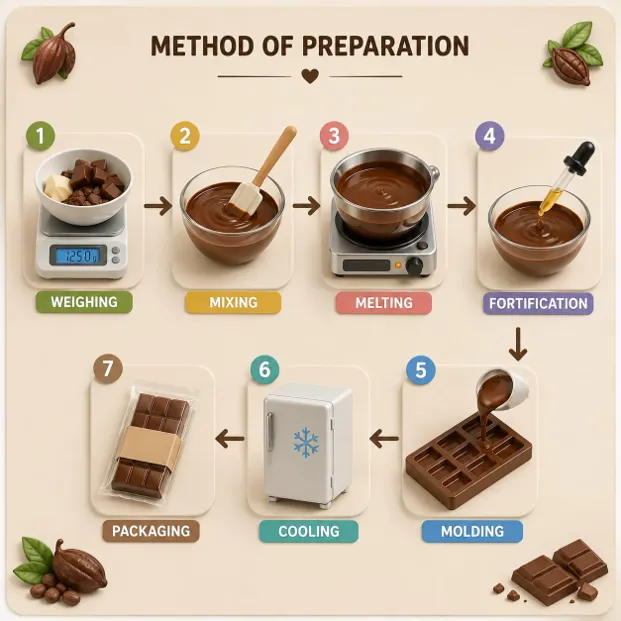
6. Method of Preparation

Step 1: Weighing   

  • All the ingredients were weighed with a digital balance, nothing fancy. 

Step 2: Powder blend setup 

  •  Date powder, Oats powder, almond powder, moringa powder, spinach powder, amla powder, DHA powder, vitamin D₃ powder, and gum acacia were mixed, until the mix seemed evenly blended, like basically uniform. 

Step 3: Melting 

  •  Dark chocolate compound and cocoa butter were melted using a water bath, in the range around 45–50°C. 

 Step 4: Stirring phase   

  • The powder blend was added bit by bit into the melted chocolate, while stirring continuously, so it became smooth and homogeneous, not lumpy. 

Step 5: Moulding 

  •  The final mixture was poured into chocolate moulds, carefully of course. 

 Step 6: Cooling 

  • The moulds were placed in refrigeration at 4–8°C for 30–45 minutes until full solidification took place. 

 Step 7: Packaging 

  • The chocolate bars were removed from the moulds , then wrapped in aluminium foil and stored afterward, ready for later use.


Figure: Method of preparation of chocolate bar


7.  Formulation table (40g)


Table -2

Ingredient

Quantity (g)

Dark Chocolate Compound

17.8

Cocoa Butter

4.0

Date Powder

4.0

Sesame seed powder

2.0

Oats Powder

4.0

Almond Powder

2.5

Moringa Powder

1.5

Spinach Powder

1.0

Honey Powder

2.0

Amla Powder

1.0

DHA Powder (Microencapsulated)

0.2

Gum Acacia

0.3

Vitamin D₃ Fortified Powder

0.005


8. Evaluation Parameters

A. Sensory evaluation  

  1. Appearance 

 The chocolate bar was looked at, mostly for the color , the surface smoothness, and how uniform the whole piece looked. 

  1.  Colour 

The colour of the prepared bar was checked visually, just by staring at it.  


  1. Odor

The aroma was assessed by sensory evaluation, so basically smelling it, then giving a rating to the overall impression.  

  1. Test

The taste evaluation concentrated on how sweet it seemed, the general flavour profile, and if it was easy to enjoy or not.  

  1. Texture 

The texture was checked manually, by touching it, seeing how smooth it felt, and estimating the hardness.  

  1. Mouthfeel

Smooth with a mild, slightly powdery texture.  

  1. Overall Acceptability 

Overall acceptability was decided from a blend of appearance, taste, texture, and aroma, kind of like one merged judgment.  

B. Physicochemical evaluation  

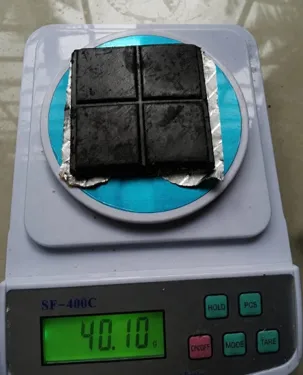
  1. Weight Variation 

 The weight of the chocolate bars was measured to ensure consistency, across the samples. 

  1.  PH 

Measure the acidity and alkalinity of the product. 

  1. Melting Behaviour

 Melting behaviour was observed at room temperature and also at body temperature. 

  1. Moisture content

 Indicates the amount of moisture present in the formulation



Figure: Evaluation tests


9.Result of evaluation test

A. Sensory evaluation parameters:


                   Parameters

                       Result

               Appearance

                  Acceptable

               Taste

              Sweet, chocolatey

               Odour

          Pleasant chocolate aroma

               Texture

         Firm with slight graininess

               Mouthfeel

         Smooth and Acceptable

               Colour

        Dark brown and uniform

               Overall acceptability

                    Acceptable


B. Physicochemical evaluation parameters:


Parameters

Result

Weight variation

40 ± 0.5 g

Melting behaviour

32–35°C

pH

6 ± 0.1

Stability

No cracking/bloom

Moisture content

Approximately 1–3%


10. RESULTS AND DISCUSSION

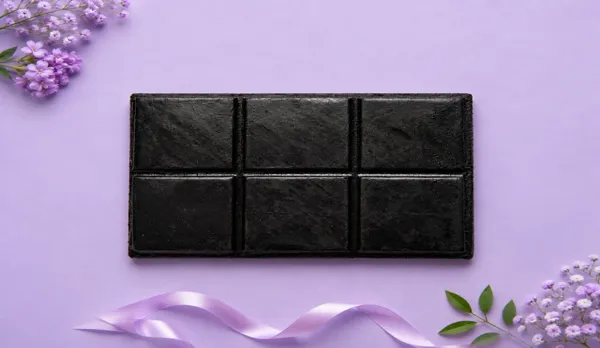
  • The maternal nutraceutical chocolate bar was made successfully, using the molding technique. The final mix looked even, with a surface that was smooth and dark brown, sort of consistent throughout. When we added oats powder, dates powder, moringa powder, spinach powder and amla powder it didn’t really mess up the structural integrity of the chocolate bar, at least not in any obvious way. 
  • Overall, the bar had a nice cocoa aroma, and the sweetness stayed in an acceptable range, mostly because of honey powder and date powder. After cocoa butter was added the texture became better, and the mouthfeel also felt smoother. During storage we didn’t notice any visible cracks, or any kind of phase separation, which was reassuring. 
  • Oats powder added useful nutrients like iron, zinc, magnesium, and protein, so the whole formulation ended up being nutritionally supportive for pregnant women. Moringa powder and spinach powder acted like natural folate sources, while amla powder brought vitamin C, which helps with iron uptake in a more efficient way.  
  • DHA was included to support fetal brain and eye development, and vitamin D₃ was there to back calcium absorption and bone health. So, in the end, the formulation showed decent organoleptic features and nutritional promise too.  
  • This developed chocolate bar can be taken as a practical and enjoyable nutraceutical choice, for helping maternal nutrition during pregnancy, and it’s pretty easy to use as a daily alternative.


Figure: Prepared nutraceutical chocolate bar


11. FUTURE SCOPE

  • In the future scope, it could be useful to run clinical studies, that look at how effective this chocolate bar is, especially in pregnant women. Also, shelf-life studies can be carried out so the product stability is understood and maybe even extended a bit, further. 
  • It might be possible to add extra nutrients like calcium iodine and vitamin B12, in order to make the bar more nutritionally aligned. For a different target group, sugar free formulations could be developed for people with gestational diabetes though outcomes would need careful review. 
  • On top of that, large scale industrial production might be explored to see whether the process works well at volume, and in a repeatable manner. Different flavours may also be introduced because that can boost consumer acceptance sometimes pretty quickly. Finally, nutritional bioavailability studies could be conducted, to confirm how well the body actually absorbs the nutrients in practice.

CONCLUSION

  • The present study, somehow managed to formulate and evaluate a maternal nutraceutical chocolate bar, enriched with DHA, vitamin D₃, and oats powder as well as dates powder, moringa powder, spinach powder, amla powder and a few other nutrient-rich components too. The prepared bar showed pretty satisfactory organoleptic features like acceptable taste, texture, aroma and general appearance, even if it was not perfect, in each and every single panel, you know.
  • The chosen ingredients provided essential nutrients such as iron, folate, calcium, zinc, protein, antioxidants, and omega-3 fatty acids which really do matter during pregnancy. And then, in addition to that, putting DHA next to vitamin D₃ made the whole nutritional profile feel more balanced, rounded, in a way, for the formulation.
  • Overall, the study suggests that the developed nutraceutical chocolate bar might work as a handy, tasty and nutrient-dense functional food. It could help sustain maternal wellbeing and fetal development, in a practical day to day manner.

REFERENCES

  1. Aghajafari, F., Nagulesapillai, T., Ronksley, P. E., Tough, S. C., O'Beirne, M., & Rabi, D. M. (2013). Association between maternal serum 25-hydroxyvitamin D level and pregnancy and neonatal outcomes: A systematic review and meta-analysis. The BMJ, 346, f1169.
  2. Bailey, L. B., & Gregory, J. F. (1999). Folate metabolism and requirements. The Journal of Nutrition, 129(4), 779–782.
  3. Basak, S., Mallick, R., & Duttaroy, A. K. (2020). Maternal docosahexaenoic acid status during pregnancy and its impact on infant neurodevelopment. Nutrients, 12(12), 3615.
  4. Black, R. E., Victora, C. G., Walker, S. P., Bhutta, Z. A., Christian, P., de Onis, M., et al. (2013). Maternal and child undernutrition and overweight in low-income and middle-income countries. The Lancet, 382(9890), 427–451.
  5. Gopalakrishnan, L., Doriya, K., & Kumar, D. S. (2016). Moringa oleifera: A review on nutritive importance and its medicinal application. Food Science and Human Wellness, 5(2), 49–56.
  6. Holick, M. F. (2007). Vitamin D deficiency. The New England Journal of Medicine, 357(3), 266–281.
  7. Leone, A., Spada, A., Battezzati, A., Schiraldi, A., Aristil, J., & Bertoli, S. (2015). Cultivation, genetic, ethnopharmacology, phytochemistry and pharmacology of Moringa oleifera leaves: An overview. International Journal of Molecular Sciences, 16(6), 12791–12835.
  8. Shahidi, F., & Ambigaipalan, P. (2015). Phenolics and polyphenolics in foods, beverages and spices: Antioxidant activity and health effects. Journal of Functional Foods, 18, 820–897.
  9. World Health Organization. (2016). WHO recommendations on antenatal care for a positive pregnancy experience. Geneva: World Health Organization.
  10. World Health Organization. (2020). WHO recommendations on maternal nutrition during pregnancy. Geneva: World Health Organization.

Reference

  1. Aghajafari, F., Nagulesapillai, T., Ronksley, P. E., Tough, S. C., O'Beirne, M., & Rabi, D. M. (2013). Association between maternal serum 25-hydroxyvitamin D level and pregnancy and neonatal outcomes: A systematic review and meta-analysis. The BMJ, 346, f1169.
  2. Bailey, L. B., & Gregory, J. F. (1999). Folate metabolism and requirements. The Journal of Nutrition, 129(4), 779–782.
  3. Basak, S., Mallick, R., & Duttaroy, A. K. (2020). Maternal docosahexaenoic acid status during pregnancy and its impact on infant neurodevelopment. Nutrients, 12(12), 3615.
  4. Black, R. E., Victora, C. G., Walker, S. P., Bhutta, Z. A., Christian, P., de Onis, M., et al. (2013). Maternal and child undernutrition and overweight in low-income and middle-income countries. The Lancet, 382(9890), 427–451.
  5. Gopalakrishnan, L., Doriya, K., & Kumar, D. S. (2016). Moringa oleifera: A review on nutritive importance and its medicinal application. Food Science and Human Wellness, 5(2), 49–56.
  6. Holick, M. F. (2007). Vitamin D deficiency. The New England Journal of Medicine, 357(3), 266–281.
  7. Leone, A., Spada, A., Battezzati, A., Schiraldi, A., Aristil, J., & Bertoli, S. (2015). Cultivation, genetic, ethnopharmacology, phytochemistry and pharmacology of Moringa oleifera leaves: An overview. International Journal of Molecular Sciences, 16(6), 12791–12835.
  8. Shahidi, F., & Ambigaipalan, P. (2015). Phenolics and polyphenolics in foods, beverages and spices: Antioxidant activity and health effects. Journal of Functional Foods, 18, 820–897.
  9. World Health Organization. (2016). WHO recommendations on antenatal care for a positive pregnancy experience. Geneva: World Health Organization.
  10. World Health Organization. (2020). WHO recommendations on maternal nutrition during pregnancy. Geneva: World Health Organization.

Photo
Suprajita Das
Corresponding author

K R College of Pharmacy, Bengaluru, Karnataka, India.

Photo
Anuradha Shyam
Co-author

K R College of Pharmacy, Bengaluru, Karnataka, India.

Photo
Dr. Kavitha PN
Co-author

K R College of Pharmacy, Bengaluru, Karnataka, India.

Suprajita Das, Anuradha Shyam Dr. Kavitha PN, Formulation and Evaluation of a “Matrisva”- Maternal Nutraceutical Chocolate Bar Enriched with DHA, Vitamin D?, and Natural Folate Sources, Int. J. of Pharm. Sci., 2026, Vol 4, Issue 9, 3968-3977, https://doi.org/10.5281/zenodo.23038538

More related articles
Dasatinib: Mechanism of Action, Pharmacokinetic–...
Nishant Mali, Avinash Hosmani, Yogesh Patil, Kiran Sawase, Kratik...
Pharmacological Advances in the Management of Cyst...
CH Vasanthi, K. Gayathri , K. Ashok, D. Nagi Reddy, S. Jyotsna Ra...
Nanotechnology-Based Cosmeceuticals: Recent Advanc...
Satyam Tiwari , Dr. Tarkeshwar Prasad Shukl, Pramod Mishra, Sujee...
Green Tea Niosomal Gel – An Approach For Protection Against Blue Light Induced...
Shubham Singh Panwar , Anju K.P., Sanmitha S., Saranya M., Deepika M., Darakshan Bhat ...
Mucoadhesive Buccal Film Infused with Berberine Hydrochloride for Management of ...
Pallavi A, Navya N, Tejashree K C, Bhuvana, Beny Baby...
Related Articles
Artifical Intelliegence And Machine Learning in Solid Dosage Formulation...
Pratik patel, Nimita Manocha, Rajveer Singh Chouhan, Shivanshu Dwivedi, Zahid Hussain, Preeti Sah...
Transferosome-Based Drug Delivery Systems: Formulation Approaches, Characterizat...
Athira Balachandran, Fasna Nargees N. H., Nimmi Thankam Biju, Athira B. Nair, Praveen Raj R...
Chitosan-Coated Cubosomes for Nose-to-Brain Delivery of Levodopa in Parkinson’...
Krishnapriya E K, Athira B Nair, Nimmi Thankam Biju, Fasna Nargees N H, Gopikrishna S Pai, Preethy C...
Dasatinib: Mechanism of Action, Pharmacokinetic–Pharmacodynamic Profile, Resis...
Nishant Mali, Avinash Hosmani, Yogesh Patil, Kiran Sawase, Kratik More...
More related articles
Dasatinib: Mechanism of Action, Pharmacokinetic–Pharmacodynamic Profile, Resis...
Nishant Mali, Avinash Hosmani, Yogesh Patil, Kiran Sawase, Kratik More...
Pharmacological Advances in the Management of Cystic Fibrosis: Current and Futur...
CH Vasanthi, K. Gayathri , K. Ashok, D. Nagi Reddy, S. Jyotsna Rani...
Nanotechnology-Based Cosmeceuticals: Recent Advances In Skin Delivery Systems An...
Satyam Tiwari , Dr. Tarkeshwar Prasad Shukl, Pramod Mishra, Sujeet Pratap Singh...
Dasatinib: Mechanism of Action, Pharmacokinetic–Pharmacodynamic Profile, Resis...
Nishant Mali, Avinash Hosmani, Yogesh Patil, Kiran Sawase, Kratik More...
Pharmacological Advances in the Management of Cystic Fibrosis: Current and Futur...
CH Vasanthi, K. Gayathri , K. Ashok, D. Nagi Reddy, S. Jyotsna Rani...
Nanotechnology-Based Cosmeceuticals: Recent Advances In Skin Delivery Systems An...
Satyam Tiwari , Dr. Tarkeshwar Prasad Shukl, Pramod Mishra, Sujeet Pratap Singh...