

We use cookies to ensure our website works properly and to personalise your experience. Cookies policy
Ashvin College of Pharmacy Manchi Hill.
Lantana camara (Ghaneri) is an ornamental plant from the family Verbenaceae, that is widespread throughout the tropical and subtropical world. This invasive plant is recognized for its various properties and pharmacological actions, despite being a notorious weed. The plant consists of triterpenoids (lantadene A and lantadene B), flavonoids, alkaloids, and essential oils, which account for its biological and medical value. There are numerous studies demonstrating the antibacterial, anti-inflammatory, antioxidant, and anticancer properties of the plant. Traditionally, this plant is used in the treatment of injuries, skin problems, fever, and respiratory conditions. Nevertheless, despite the great advantages of this plant, there are also disadvantages, such as toxic activity. It was found out that Lantana camara causes hepatotoxicity due to the presence of lantadenes, leading to severe health outcomes in humans and other mammals if not properly utilized. Hence, there is a necessity for further examination of this plant regarding its safety and efficiency. In the recent times, scientists concentrate on isolating the active ingredients of the plant and using them in contemporary drug development processes. (C. K. Kokate, A. P. Purohit, S. B. Gokhale)
Lantana camara, also known by its common name “Ghaneri,” is a perennial flowering shrub that belongs to the family Verbenaceae. This species is found all over the world, mainly in the tropics and subtropics, and is quite prevalent in India, growing wild in forests, wastelands, and roadside areas. Although this species is considered a nuisance because of its fast-growing nature and ability to overtake native plants, it has acquired much significance in pharmaceutical studies.
The species contains a large number of biologically active phytochemicals, like triterpenoids (lantadene A and B), flavonoids, alkaloids, and essential oils. It has numerous pharmacological applications because of the above-mentioned components, including antibacterial, antifungal, anti-inflammatory, and anticancer activities. Traditionally, various parts of the plant are used in folk medicine for treating injuries, skin problems, fever, and respiratory diseases.
Lantana camara is a plant that has been known for many years as having great therapeutic uses but is also toxic to some extent. It has chemicals such as lantadenes which can result in hepatotoxicity among others. It is therefore imperative that thorough scientific studies be conducted on such plants. It Is against this backdrop that an attempt will be made in this paper to analyze the phytochemistry, pharmacology, toxicity, and therapeutics of Lantana camara. (Anjali Singh1, Chhater Singh2,)
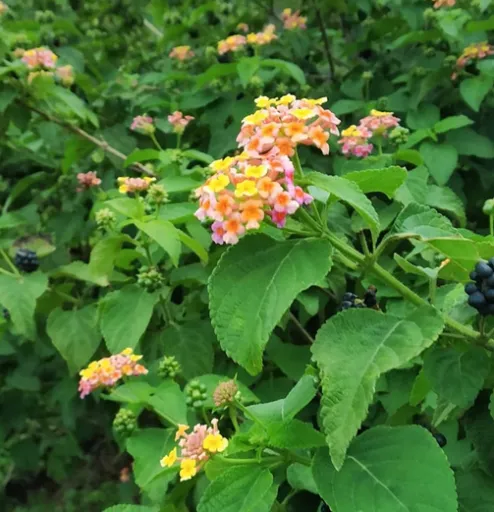
Lantana camara is characterized by a complex and diverse phytochemistry, which forms the basis of the pharmacological and toxicological actions of the plant. Some of the bioactive molecules found in Lantana camara include triterpenoids such as lantadene A and B, which have been noted as the primary molecules. Other bioactive molecules include flavonoids, alkaloids, tannins, and essential oils. These phytochemicals act as mediators of various biological functions, including antimicrobial, anti-inflammatory, and antioxidative actions. These molecules make the plant a candidate for developing drugs; however, at the same time, these molecules may cause toxicity. (Sharma OP, Makkar HPS, Dawra RK)
While it is important to consider that the Lantana camara plant has great medicinal value, it has been proven highly toxic, especially in cases of hepatotoxicity. This kind of toxicity is primarily associated with pentacyclic triterpenoids called lantadenes, as they cause a disturbance in the normal functioning of the liver and are capable of causing extensive damage to the tissue. After ingesting the plant, especially among animals, there have been observed symptoms including loss of appetite, constipation, photosensitivity, and jaundice. Overexposure to the plant could eventually lead to liver failure, with some serious cases leading even to death. (Pass MA.)
Lantana camara is widely studied for its various pharmacological properties as a result of its high phytochemical content. One of the important pharmacological properties is the antibacterial and antifungal activity; extract from leaves and flowers showed inhibitory action on several types of pathogenic bacteria and fungi. These properties confirm its use in the medical application for the treatment of skin infections. Another pharmacological property of Lantana camara is anti-inflammatory action, which helps reduce inflammation, swelling, and pain, which can be helpful in the treatment of arthritis.
Moreover, the species is known for its high antioxidant potential; due to its phytochemicals, including flavonoids and phenols, it is capable of neutralizing free radicals. One more pharmacological property is the anticancer activity of certain plants; some experiments proved that extracts of Lantana camara had cytotoxic effect on cancer cells, and therefore it can be regarded as a potential drug for cancer prevention. The above discussion proves that Lantana camara has many pharmacological properties that may be used in developing new drugs; however, further research is required to investigate its medical properties. (Ghisalberti EL.), (1998, n.d.)
Lantana camara is a very important medicinal plant of family Verbenaceae. The plant has various pharmacological activities such as antimicrobial, antioxidant, anti-inflammatory, antibacterial and antifungal activities. Different parts of the plant such as leaves, flowers, roots and essential oils have exhibited significant inhibitory activity against different pathogenic fungi. The antifungal activity is mainly due to the presence of bioactive phytoconstituents like flavonoids, triterpenoids, alkaloids, tannins, saponins and essential oils. (E.L. Ghisalberti, September 2000), (Klotoe JR, Fanou BA, Agbodjento E, et al.)
The antifungal activity of Lantana camara is due to the presence of several secondary metabolites such as:
These compounds damage fungal cell walls, alter membrane permeability, inhibit spore germination, and interfere with fungal enzyme systems.
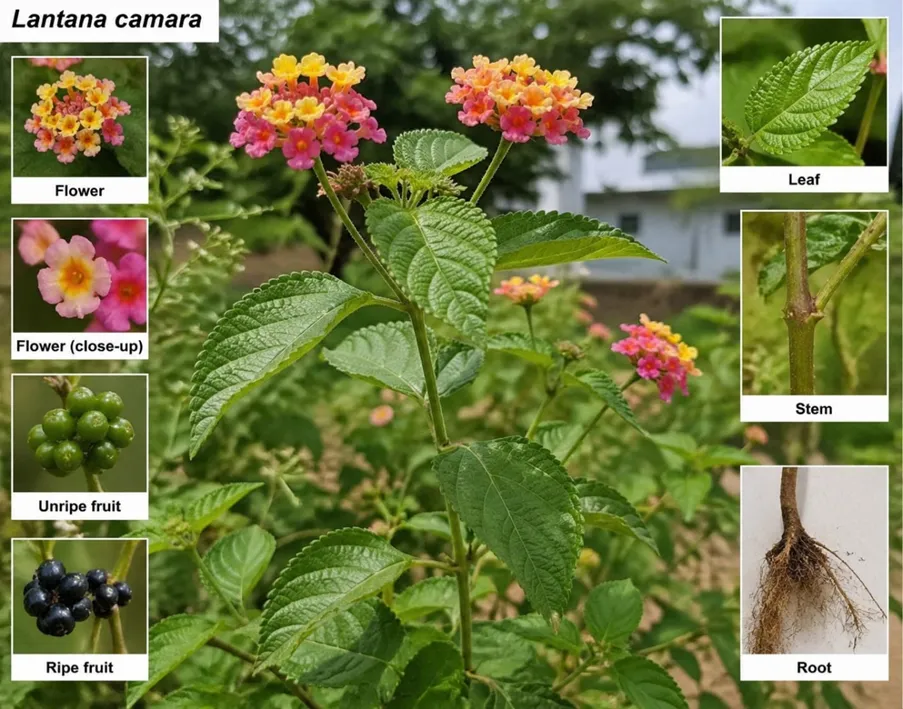
Fig: Parts Of Plants Lantana Camara
|
Sr. No. |
Particulars |
Details |
|
|
Scientific Classification |
Kingdom: Plantae Division: Angiosperms Class: Eudicots Order: Lamiales Family: Verbenaceae Genus: Lantana Species: Lantana camara L. |
|
|
Synonym |
Lantana aculeata L. Wild sage Spanish flag Red sage |
|
|
Vernacular Names |
Hindi: Raimuniya Marathi: Ghaneri English: Wild sage Sanskrit: Vanasurana |
|
|
Geographical Source |
Native to Central and South America
India (throughout tropical and subtropical regions) Africa, Australia, Southeast Asia
Roadsides, forests, wastelands, Agricultural Lands |
|
|
Macroscopic Characteristics |
Shape: Ovate to lanceolate Margin: Serrated Surface: Rough, hairy Color: Dark green Odor: Strong, characteristic (unpleasant)
Quadrangular (young stem) Woody and cylindrical (mature) Covered with prickles
Small, tubular Arranged in clusters (umbels) Colours: Yellow, orange, pink, red (change with age)
Berry type Green when unripe, black when ripe |
|
|
Microscopic Characteristics (Leaf) |
|
|
|
Powder Characteristics |
Greenish powder Presence of: Trichomes Stomatal fragments Calcium oxalate crystals Fibers |
|
|
Chemical Constituents |
Triterpenoids: Lantadene A, Lantadene B Flavonoids: Quercetin, Luteolin Alkaloids: Lantanin Essential oils Phenolic compounds |
|
|
Pharmacological Activity |
Antimicrobial activity Anti-inflammatory activity Antioxidant activity Antipyretic activity Wound healing activity |
|
|
Uses |
|
|
|
Toxicity |
Contains lantadenes (hepatotoxic triterpenes)
Livestock (especially cattle, sheep)
Photosensitization Liver damage Jaundice Caution: Internal use requires strict dosage control |
|
|
Adultrants |
Other species of Lantana Morphologically similar leaves |
|
|
Evaluation Parameter |
Ash values Extractive values Moisture content
Phytochemical screening Chromatographic analysis (TLC, HPLC)
Antimicrobial assays Toxicity studies |
|
|
Cultivation And Collection |
Propagation: Seeds and stem cuttings Soil: Well-drained soil Climate: Tropical and subtropical Collection: Leaves collected during flowering stage |
|
|
Storage |
Store in: Cool, dry place Airtight containers Protect from moisture and sunlight |
(Dr. K. R. Khandelwal), (K.R. Kirtikar and B.D. Basu), (Sharma, O.P. et al., 1988), (Kalita S, Kumar G, Karthik L, Rao KVB.), (Patel J, Qureshi MS, Kumar GS, Kumar D, Kumar KA.), (Battase D, et al.), (Shah M, et al.)
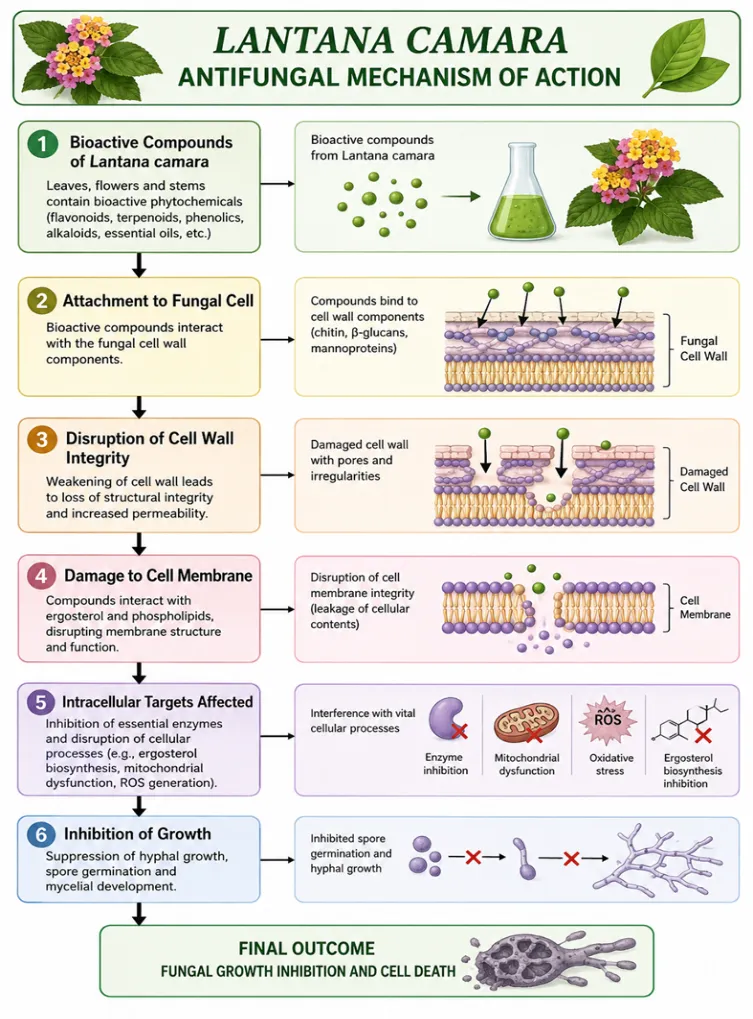
Fig: Antifungal Mechanism of Action
Mechanism of Antifungal Action
The antifungal activity of Lantana camara may occur through:
Phenolic and terpenoid compounds present in the plant are mainly responsible for these mechanisms.
Antifungal Activity Against Different Fungi:
Studies have shown significant activity of Lantana camara extracts against:
|
SR. NO. |
Fungal Organism |
Activity Observed |
|
|
Candida albicans |
Strong Inhibition |
|
|
Aspergillus niger |
Moderate to strong activity |
|
|
Trichophyton mentagrophytes |
Antidermatophytic activity |
|
|
Microsporum gypseum |
Antifungal effect |
|
|
Fusarium species |
Growth suppression |
|
|
Aspergillus flavus |
Growth Inhibition |
Methanolic and ethanolic extracts generally show higher antifungal activity compared to aqueous extracts due to better extraction of active phytoconstituents. (William Charles Evans), (Grover A, Bhandari BS, Rai N, Chandra H.)
Extracts Showing Antifungal Activity
Exhibits strong antifungal activity
Rich in phenolics and flavonoids
Effective against Candida and Aspergillus
Broad-spectrum antifungal effect
Good zone of inhibition against pathogenic fungi
Contains terpenoids and volatile compounds
Disrupts fungal membrane integrity
Shows comparatively mild antifungal activity (Jorge Ramírez 1,*, Chabaco Armijos 1, Nelson Espinosa-Ortega 2, Leydy Nathaly Castillo 1, Giovanni Vidari 3, Feb 2025), (Dua VK, Pandey AC, Raghavendra K, Gupta A, Sharma T, Dash AP.)
Applications:
The antifungal properties of Lantana camara can be useful in:
Advantages of Using Lantana camara as Antifungal Agent:
Limitations:
CONCLUSION
Lantana camara is a plant of great medicinal importance due to the presence of various bioactive phytochemicals such as flavonoids, alkaloids, and triterpenoids. Different studies have demonstrated its antimicrobial, anti-inflammatory, antioxidant, and anticancer activities, highlighting its potential in pharmaceutical and therapeutic applications. Traditionally, the plant has been used in the treatment of wounds, skin diseases, fever, and respiratory disorders. However, despite its medicinal benefits, the plant also possesses toxic effects, mainly because of lantadenes, which can cause hepatotoxicity and other complications. Therefore, proper purification, dosage control, and scientific validation are necessary before its use in modern medicine. Further research and clinical studies are essential to explore its full therapeutic potential and to develop safe and effective herbal formulations from Lantana camara.
REFERENCES



Patil Rajwardhan, Thombare Indranil, Dange Shamali, Khadangale Bhakti, A Review on Dermatological Activities of Lantana camara (Ghaneri): Therapeutic Potential in Skin Disorders, Int. J. of Pharm. Sci., 2026, Vol 4, Issue 5, 7350-7358, https://doi.org/10.5281/zenodo.20410994
 10.5281/zenodo.20410994