

We use cookies to ensure our website works properly and to personalise your experience. Cookies policy
Department of Pharmacology, Sarojini Naidu Vanita Pharmacy Maha Vidyalaya (Co-Ed.), Tarnaka, Hyderabad, Telangana, India 500017.
Helminth infections remain a significant global health concern, affecting both humans and livestock, particularly in tropical and developing regions. Anthelmintic drugs are the primary tools for controlling these infections; however, their effectiveness is increasingly compromised due to the emergence of drug resistance. This review highlights the classification of major anthelmintic drugs, including benzimidazoles, macrocyclic lactones, and imidazothiazoles, along with their mechanisms of action. Commonly used drugs such as albendazole, thiabendazole, and ivermectin are also discussed in detail. The article further explores the concept of anthelmintic resistance, including its definition, types, and current global scenario. Key mechanisms such as genetic mutations in drug targets, increased drug efflux, and enhanced metabolic activity are emphasized. In addition, commonly used in vitro and in vivo methods for evaluating anthelmintic efficacy and detecting resistance, such as egg hatch assays (EHA), larval development tests (LDT), and fecal egg count reduction tests (FECRT), are described. Finally, the review outlines the future scope of anthelmintic drug development, focusing on the need for novel agents with improved efficacy and reduced resistance potential. Continued research and rational drug use are essential to manage and control helminth infections effectively.
Helminth infections remain one of the most commonly reported health concerns in both developed and developing countries. It is estimated that nearly 2 billion people worldwide are infected with intestinal nematodes1–2. Recent studies further suggest that the prevalence of helminthiasis continues to increase steadily, affecting almost half of the global population3.
Anthelmintic drugs play a crucial role in managing parasitic infections caused by helminths. However, there is a growing need for newer and more effective agents, as many currently available synthetic drugs are costly and tend to lose their effectiveness within about two decades due to the development of drug resistance. The eradication of helminth infections remains particularly challenging because of their strong association with poverty and poor living conditions. These infections are often overlooked during their early stages and are typically addressed only after clinical symptoms become evident.
Helminth infections are more prevalent in tropical and subtropical regions, especially in areas with inadequate sanitation, contaminated food and water, and the presence of parasite carriers. However, a good economic situation does not guarantee complete protection, as people from developed countries can acquire these infections when they travel to endemic areas. Most of the 13 diseases classified as neglected tropical diseases (NTDs) by the World Health Organization (WHO) are caused by helminths responsible for ascariasis, hookworm infection and schistosomiasis4.
Anthelmintic medications are widely used to control these parasitic infections1. The last few years have seen a substantial increase in the use of herbal medicines and consequently a surge of interest in the development of plant-based anthelmintic formulations. At present very few plants like Aloe barberi, Trachyspermum ammi and Annona senegalensis are commonly used for their anthelmintic potentials. These are often referred to as vermifuges or vermicides. Additionally, natural substances like tobacco, walnut, clove, garlic, pineapple, and soybeans, when administered with warm water, have been reported to exhibit vermifuges activity3.
Until effective vaccines become available, anthelminthic chemotherapy remains the most practical and economical approach for controlling these infections. Traditionally, two main strategies have been employed in the discovery of new anthelmintic agents: empirical and selective approaches4. The empirical approach involves screening a wide range of structurally unrelated compounds, even those without known anthelmintic activity, in the hope of identifying potential leads. This method is commonly used in large-scale drug development programs5.
In contrast, the selective approach focuses on studying compounds that are structurally similar to known active agents. In this strategy, modifications are made to a parent compound to enhance its efficacy or reduce toxicity1.
2. CLASSIFICATION OF HELMINTHS
|
Sr. No. |
Category |
Representative Species |
|
01 |
Earthworm |
|
|
02 |
Nematodes (Roundworms) |
|
|
03 |
Cestodes (Tapeworms) |
|
|
04 |
Trematodes (Flukes) |
|

Earthworm

Roundworm
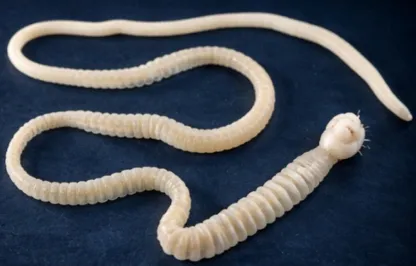
Tapeworm

Fluke
3. CLASSIFICATION OF ANTHELMINTIC DRUGS
Anthelmintic activity has been extensively studied using large parasitic nematodes such as A. suum and C. elegans, which serve as important models for identifying and understanding molecular targets involved in drug action.
3.1 BENZIMIDAZOLES
Benzimidazoles represent one of the most important classes of broad-spectrum anthelmintic drugs. The first compound of this group, thiabendazole, was introduced in 1961, followed by the development of several other derivatives with improved efficacy. The primary mechanism underlying their anthelmintic action involves disruption of the parasite’s cytoskeleton through selective binding to β-tubulin6–7.
Drugs belonging to this class, including thiabendazole, mebendazole, and albendazole, are widely used and are known to undergo extensive metabolism in mammalian systems8. Their mode of action primarily involves inhibition of microtubule formation, which leads to structural disintegration of the parasite. As a result, the parasite loses its motility and structural integrity, ultimately leading to its death.
In addition to affecting microtubules, benzimidazoles also interfere with essential metabolic processes, such as glucose uptake and ATP synthesis, further contributing to the depletion of energy reserves in the parasite1.
3.2 ALBENDAZOLE (ABZ)
Microtubule polymerisation inhibitors have been widely studied for their therapeutic potential, especially for tumours, but also have been reported to be quite effective as antiparasitic agents. Albendazole (ABZ) is a benzimidazole (BZD) methylcarbamate derivative that exhibits broad-spectrum activity against a wide array of helminth parasites. It is effective against lungworms and both adult and larval stages of most gastrointestinal (GI) nematodes, cestodes and trematodes.
Abendazole has been shown to be very effective in clinical trials for single dose treatment of infections with Ascaris lumbricoides, Ancylostoma duodenale, Necator americanus, Trichuris and Enterobius vermicularis. It has also been effective against Strongyloides stercoralis, but to a lesser extent. In the case of cestodes such as Hymenolepis nana and Taenia saginata, the drug exhibits only moderate efficacy.
Albendazole also exhibits ovicidal activity, enabling it to damage or destroy the eggs of parasites such as Ascaris, hookworms, and Trichuris. In addition, it shows effectiveness against the migrating larval stages of N. americanus, which enhances its overall therapeutic usefulness3.
3.3 THIABENDAZOLE
Thiabendazole is a member of the benzimidazole class of anthelmintic drugs, which exert their effect by selectively binding to β-tubulin in parasites such as nematodes, cestodes, and flukes. This interaction inhibits microtubule formation, thereby disrupting essential cellular processes and leading to the death of the parasite.
Clinically, thiabendazole has been used in the treatment of infections such as strongyloidiasis, cutaneous larva migrans, and trichinosis. Its mechanism of action primarily involves interference with microtubular aggregation, which is critical for maintaining cellular structure and function in parasites.
Thiabendazole has been reported to be effective in approximately 75–96% of cases of human strongyloidiasis. However, its clinical use is often limited due to the occurrence of significant side effects. In comparison, albendazole is considered an alternative treatment option, with reported cure rates ranging from 42–100%, depending on the dosage regimen and duration of treatment.
Earlier, there was limited understanding of the mechanism of action of benzimidazoles in conditions such as echinococcosis, and experimental evidence was scarce. At present, thiabendazole and its alternative, albendazole, remain among the few therapeutic options available for the management of human strongyloidiasis. Nevertheless, the frequent adverse effects associated with thiabendazole therapy highlight the need for the development of safer and more effective anthelmintic agents1.
3.4 LEVAMISOLE, BUTAMISOLE, PYRANTEL, MORANTEL, OXANTEL, BEPHENIUM, AND THENIUM
Levamisole and related compounds have been widely used as anthelmintic agents for many years, similar to benzimidazole drugs. However, studies have shown that H. contortus has developed comparatively lower resistance to levamisole than to benzimidazoles, making it an important alternative in helminth control.
This group of anthelmintics includes several classes of compounds such as tetrahydropyrimidines (pyrantel, morantel, and oxantel), imidazothiazoles (levamisole and butamisole), and quaternary ammonium salts (bephenium and thenium), along with other related compounds like methyridine.
The main mode of action of these drugs is the selective activation of nicotinic acetylcholine (nACh) receptors on nematode muscle cells, both at synaptic and extra-synaptic sites. Acting as agonists at these receptors, they induce continuous activation, which leads to sustained muscle contraction. This results in spastic paralysis of the parasite, ultimately causing its expulsion from the host9–10.
The detailed mode of action of these compounds has been extensively studied using body wall muscle preparations of A. suum, particularly at the single-channel level11. Pharmacological studies have further identified three distinct subtypes of nicotinic acetylcholine receptors involved in this process: the N-type, which is preferentially activated by nicotine; the B-type, which responds mainly to bephenium; and the L-type receptor subtype12.
3.5 PYRANTEL AND ITS ANALOGUES
Pyrantel and its analogues exhibit a similar mechanism of action on helminths. When applied to Ascaris muscle, they cause depolarization, increased spike activity, and sustained muscle contraction10. Pyrantel pamoate induces depolarizing (spastic) paralysis in helminths, which results in loss of attachment to the host and eventual expulsion through feces.
3.6 MACROCYCLIC LACTONES AND MILBEMYCINS
3.6.1 AVERMECTIN
The discovery of avermectins in the early 1980s marked a significant advancement offering a valuable alternative class anthelmintic agents with distinct chemical structure. However, resistance has since been reported, particularly in sheep nematodes against ivermectin.
Avermectins are broad spectrum macrocyclic lactone antibiotics that are extensively used for the control of nematode infections in humans and animals. Their mechanism of action is thought to be similar across species1, 13. These compounds act by increasing chloride ion (Cl⁻) permeability in parasite muscle cells, leading to selective paralysis.
They mainly affect neuromuscular activity by increasing opening of glutamate-gated chloride channels causing inhibition of pharyngeal pumping and subsequent paralysis of the parasite. At lower concentrations, avermectins potentiate the effect of glutamate, whereas at higher concentrations they can directly activate these chloride channels1.
3.6.2 IVERMECTIN
Ivermectin is a semisynthetic derivative of (22,23-dihydroavermectin B1), a member of the avermectin A family of macrocyclic lactones, produced by the microorganism Streptomyces avermitilis13. It was initially developed in 1981 for the treatment of internal parasite infections in horses, and then commercialised by Merck in the 1980s as a widely used anthelmintic agent.
This macrocyclic lactone compound exhibits broad-spectrum activity against various parasites, including insects, acarine parasites, and numerous species of nematodes. However, it shows little to no activity against trematodes and cestodes. Initial studies indicated limited evaluation in human gastrointestinal nematode infections.
Ivermectin works by potentiating the effects of gamma-aminobutyric acid (GABA)-mediated neurotransmission in the peripheral nervous system of parasites, which leads to paralysis. It is also a microfilaricide and inhibits embryogenesis in diseases such as onchocerciasis. Ivermectin produces rapid and sustained paralysis of both nematode pharyngeal and body wall muscles14–15.
Ivermectin also interacts with a number of ligand-gated ion channels including nicotinic acetylcholine (nACh) receptors, acetylcholine-gated chloride channels, GABA-gated chloride channels, histamine-gated chloride channels, glycine receptors and P2X4 receptors. However, its potent anthelmintic activity is mainly due to the high affinity of ivermectin for glutamate-gated chloride channels in nematodes, which are important for neuromuscular inhibition.
3.7 OTHER DRUGS
3.7.1 AMINO ACETONITRILE DERIVATIVES AND SPIROINDOLES
Recent progress in veterinary and medical parasitology has introduced novel classes of anthelmintics, such as amino‑acetonitrile derivatives (AADs) and spiroindoles. Among these, monepantel (marketed as Zolvix®) and the fixed combination of derquantel with abamectin (Startect®) stand out as practical examples already in use. These innovations emphasize the continuing demand for reliable parasite control strategies and the importance of using both established and newly developed drugs in a sustainable manner. While additional candidate molecules are being investigated, only a concise overview can be presented here due to the limited scope of this discussion.
3.7.2 NICLOSAMIDE
Niclosamide has been widely recognized as a preferred treatment for tapeworm infections. Its action involves causing irreversible damage to the worm’s anterior segments, which leads to detachment from the intestinal lining and promotes the parasite’s removal from the host body.
3.7.3 DIETHYLCARBAMAZINE
Diethylcarbamazine, a derivative of piperazine, is mainly prescribed for filarial infections. Its mechanism is thought to involve making the parasites more vulnerable to the host’s immune defenses. In addition, it may disrupt the parasite’s arachidonic acid metabolism, further contributing to its therapeutic effect.
3.7.4 OXAMNIQUINE
Oxamniquine is effective against both mature and immature stages of Schistosoma mansoni. Its mechanism of action is thought to involve DNA interaction, possibly through intercalation, and its selectivity may be due to the parasite’s ability to concentrate the drug.
3.7.5 PRAZIQUANTEL
The anthelmintic activity of pyrazinoisoquinoline compounds, such as praziquantel, was first reported in the early 1972 through research conducted by E. Merck in collaboration with Bayer AG. Praziquantel works by increasing calcium ion (Ca²⁺) permeability across the parasite’s membranes, particularly targeting the tegument of trematodes. This disturbance in calcium regulation leads to loss of muscular control, paralysis, and eventual death of the parasite. It is highly effective against schistosomes, though its impact on nematodes remains relatively limited1.
3.7.6 PARAHERQUAMIDE
Paraherquamide and 2-deoxy-paraherquamide, a related derivative, have demonstrated nematode-paralyzing activity. Experimental findings obtained with C. elegans and A. suum suggest that these compounds interfere with cholinergic signalling by competing with acetylcholine at its receptors. Their effects are especially pronounced on receptors that respond to levamisole. The observed shift in the concentration–response relationship, without a significant change in its slope, supports a competitive mode of receptor interaction. Thus, paraherquamide and its derivative may produce paralysis by disrupting normal cholinergic neurotransmission in parasitic nematodes.
3.7.7 EMODEPSIDE
Emodepside is effective against parasite strains that show resistance to other anthelmintic agents. Its mechanism appears to involve stereospecific interaction with specific receptors rather than nonspecific membrane effects. Studies suggest that its action is partly independent of latrophilin receptors and is associated with neuromuscular inhibition, possibly through interaction with the SLO-1 potassium channel.
3.7.8 NITAZOXANIDE
Nitazoxanide exhibits activity against a range of intestinal protozoa and helminths. It significantly inhibits parasite growth during prolonged exposure, although its overall efficacy is considered lower compared to drugs like mebendazole and albendazole. Additionally, it does not significantly affect embryonation or hatching in Heligmosomoides polygyrus, which may limit its effectiveness as an anthelmintic agent3.
4. MECHANISM AND DEVELOPMENT OF ANTHELMINTIC RESISTANCE
4.1 CONCEPT AND DEFINITION OF ANTHELMINTIC RESISTANCE
Anthelmintic resistance (AR) refers to the ability of a parasite population to withstand treatment with an anthelmintic that was previously capable of controlling or eliminating it. As resistance develops, an increasing number of parasites remain viable following administration of a drug at concentrations that would normally suppress susceptible parasites. This reduced drug response is associated with genetic changes that can be passed to the offspring, allowing resistant characteristics to become more prevalent in successive parasite generations and ultimately reducing the effectiveness of anthelmintic therapy16.
Nipane et al,17 described three major forms of anthelmintic resistance: cross-resistance, side-resistance, and multiple resistance. Cross-resistance occurs when parasites that have developed resistance to one anthelmintic also show reduced susceptibility to other drugs, even when those drugs differ in their chemical structure or act through different pharmacological pathways.
Side resistance develops when the use of one anthelmintic promotes reduced susceptibility to another drug that produces its effects through a comparable mechanism. This type of resistance is commonly associated with anthelmintics that share related pharmacological targets, such as members of the benzimidazole group. For example, parasite populations showing resistance to levamisole may also demonstrate decreased responsiveness to morantel because of their related mode of action.
Multiple resistance represents a more advanced resistance pattern in which a parasite population becomes poorly responsive to several anthelmintic agents. The affected drugs may belong to the same pharmacological group or may act through distinct biological pathways. Such resistance can emerge when repeated exposure to different drug classes independently selects resistant parasites, or when resistance to one agent contributes to reduced susceptibility to another through related resistance mechanisms.
4.2 CURRENT SITUATIONS OF ANTHELMINTIC RESISTANCE
Anthelmintic resistance (AR) is now recognized as a growing concern in helminth infections of livestock and other animal hosts worldwide. Reports from different regions have documented reduced drug effectiveness in a range of helminth species18. In Europe, increasing levels of resistance have been observed against several commonly used anthelmintic groups, particularly benzimidazoles (BZ), tetrahydropyrimidines, imidazothiazoles, and macrocyclic lactones (ML).
Mickiewicz et al.¹⁹ investigated anthelmintic efficacy on goat farms in Poland and identified resistance to benzimidazoles (BZ), macrocyclic lactones (ML), and levamisole (LEV). Resistance was particularly prevalent with BZ and ML, whereas the occurrence of LEV resistance was comparatively limited. In a separate investigation, Potârniche et al.²⁰ detected reduced susceptibility to BZ and ML among goats in Romania, providing the first documented evidence of resistance to these drug classes in that region.
Resistance has also been observed against newer anthelmintics, such as monepantel, particularly in Haemonchus contortus21. Notably, resistance can develop rapidly, often within less than 10 years of a drug’s introduction, and in some cases has led to significant economic losses, including closure of livestock farms22. Resistance to several drug classes in sheep has been reported within 3–9 years, and multidrug-resistant nematode populations are becoming increasingly common23, 24.
The burden of anthelmintic resistance is particularly pronounced in tropical and parasite endemic areas, where frequent or inappropriate drug administration can accelerate the selection of resistant parasites and create wider public health concerns.²⁵ Evidence from Ethiopia indicates that several widely used anthelmintic groups, including benzimidazoles, imidazothiazoles, and macrocyclic lactones, have experienced declining efficacy, which has been associated with improper or excessive use of these treatments²⁶. Studies have reported multidrug-resistant nematodes in goats, including Trichostrongylus, Teladorsagia, and Haemonchus species27. Similar high levels of resistance have also been observed in sheep in South Africa28.
4.3 MECHANISM OF ANTHELMINTIC RESISTANCE
Anthelmintic resistance develops when helminths gradually adapt in ways that allow them to survive drug treatment. Understanding these adaptations is important for explaining why some treatments become less effective and for developing better approaches to parasite control. Several mechanisms may contribute to this process. These include the increased removal of drugs from cells through efflux systems, faster breakdown or detoxification of the drug, changes in the drug’s target site that interfere with its binding or action, and reduced production or availability of the receptors through which the drug normally acts. The mechanism involved can differ considerably depending on the helminth species and the particular anthelmintic being used29.
4.3.1 MACROCYCLIC LACTONE RESISTANCE
Macrocyclic lactone (ML) resistance refers to resistance against drugs within this class, such as ivermectin and related compounds. Due to their long-term use, the terms avermectin and milbemycin resistance are often used interchangeably with ML resistance. These drugs primarily target ligand-gated chloride channels in parasites, and mutations in the genes encoding these channels are considered a major factor in resistance development.
Changes in genes encoding glutamate-gated chloride channels (GluClRs) were among the earliest genetic alterations linked to ivermectin resistance. Research has found that certain GluCl subunit gene variants occur at higher frequencies in Haemonchus contortus populations with reduced susceptibility to ivermectin and moxidectin. These findings indicate that variation in GluCl receptor genes may contribute significantly to the development of resistance against macrocyclic lactone anthelmintics³⁰˒³¹.
Another important mechanism involves increased drug efflux mediated by protein transporters such as P-glycoproteins (Pgps). These transporters reduce intracellular drug concentration by actively exporting the drug out of parasite cells, thereby limiting its effectiveness. In H. contortus, PGP-2 has been consistently associated with ivermectin resistance.31
Additionally, enhanced drug metabolism may contribute to resistance. For instance, increased expression of metabolic enzymes such as CYP34/35 has been reported in multidrug-resistant H. contortus isolates compared to susceptible strains, further supporting the role of metabolic adaptation in resistance development32.
4.3.2 RESISTANCE TO BENZIMIDAZOLES
Resistance to benzimidazole (BZ) drugs is closely linked to alterations in β-tubulin, the main molecular target through which these anthelmintics exert their effects. A well-characterized genetic change occurs in the isotype I β-tubulin gene, where the amino acid at codon 200 is altered from phenylalanine to tyrosine, commonly referred to as the F200Y mutation. This modification can interfere with the interaction between BZ compounds and β-tubulin, thereby reducing the drug’s ability to exert its anthelmintic effect33.
Changes in the β-tubulin structure can interfere with the binding of benzimidazole drugs to their molecular target and may allow nematodes to survive treatment. Genetic studies of gastrointestinal nematodes (GINs) have identified three important nonsynonymous SNPs within the isotype I β-tubulin gene. Among these, F200Y is reported most frequently. Other variants include F167Y, which involves replacement of phenylalanine by tyrosine at codon 167, and E198A, in which glutamic acid is replaced by alanine at codon 198. Such alterations in β-tubulin can modify the drug target interaction and are therefore associated with decreased susceptibility to benzimidazole anthelmintics34.
4.3.3 IMIDAZOTHIAZOLES AND TETRAHYDROPYRIMIDINES RESISTANCE
Reduced susceptibility to imidazothiazole and tetrahydropyrimidine anthelmintics has been linked to alterations in nAChR-mediated signalling, especially changes involving the L-type nicotinic acetylcholine receptor. These receptors are the main sites through which drugs such as levamisole and pyrantel exert their effects. Under normal conditions, receptor stimulation promotes neuromuscular depolarization in the parasite, ultimately producing sustained muscle contraction and spastic paralysis. Changes affecting these receptors can therefore reduce the response of parasites to these anthelmintic drugs35.
Changes affecting nicotinic acetylcholine receptors are recognized as an important contributor to resistance among trichostrongylid nematodes. One possible explanation is a decrease in the production of nAChR subunits due to lower transcriptional activity of the corresponding genes. This type of alteration has been reported in resistant populations of Haemonchus contortus and Ancylostoma caninum, where it may reduce the availability of functional receptors required for the action of levamisole and related anthelmintics.
Resistance may also arise from changes in the structure of nicotinic acetylcholine receptor subunits. In resistant nematode populations, shortened versions of receptor subunits, including acr-8b originating from acr-8a and unc-63b derived from unc-63a, have been detected. Such variants have been reported in H. contortus, Trichostrongylus colubriformis, and Teladorsagia circumcincta. The presence of these altered receptor forms may disrupt normal receptor activity and consequently decrease the sensitivity of the parasites to anthelmintic treatment36, 37.
5. IN VITRO METHODS
5.1 PARALYSIS TIME ANALYSIS
Paralysis time refers to the duration required for a substance to cause immobilization in parasitic worms. This parameter is important for evaluating the efficacy of anthelmintic agents, as paralysis disrupts the worm’s ability to maintain its position within the host, ultimately leading to its expulsion or death [38,39,40].
5.2 DEATH TIME ANALYSIS
Death time is defined as the time taken by a compound to completely kill a parasitic worm. It serves as a key indicator of the potency and effectiveness of an anthelmintic drug. A shorter death time generally reflects higher drug efficacy [38,39,40].
5.3 EGG HATCH ASSAY (EHA)
The egg hatch assay is primarily applied to assess the activity of benzimidazole anthelmintics and to identify resistance against this drug group. Benzimidazoles interfere with the development of nematode embryos, thereby preventing normal egg hatching. However, this assay has limited applicability for other anthelmintic classes, including tetrahydropyrimidines, imidazothiazoles, and macrocyclic lactones, because these compounds generally do not exert a direct ovicidal effect on nematode eggs.
In this assay, freshly collected eggs are distributed into wells of a 24-well plate, followed by the addition of different concentrations of benzimidazoles (0.5, 1, 2, 3, and 5 ppm). After incubation at 27°C for 48 hours, the number of unhatched eggs and hatched larvae is recorded, and LD₅₀ values are calculated. This method is widely considered reliable for assessing benzimidazole resistance41.
5.4 LARVAL DEVELOPMENT TEST (LDT)
The larval development test is used to determine how nematode larvae respond to increasing levels of anthelmintic exposure. For this assay, larvae are recovered from freshly collected fecal material, usually pooled from suitable samples, and placed in test wells containing different drug concentrations. Their growth and progression through the larval stages are then observed to determine the inhibitory effect of the treatment and identify possible resistance.
The larval development test evaluates the ability of larvae to survive and develop under different concentrations of anthelmintic drugs. In this method, larvae obtained from pooled fresh fecal samples are exposed to varying drug concentrations, and their development is monitored.
The assay may be performed using either a liquid culture system or a solid medium containing agar. It can be applied to investigate resistance to several important groups of anthelmintic drugs. However, the estimated LD₅₀ can vary under different experimental conditions. For example, when macrocyclic lactones are evaluated, the stage or timing of parasite infection may influence the measured drug response. This method is also routinely used in many veterinary diagnostic laboratories for monitoring anthelmintic resistance42.
5.5 LARVAL MOTILITY TEST (LMT)
In the larval motility assay, third-stage larvae are placed in test solutions containing different concentrations of the anthelmintic and maintained at 25°C for 24 hours under dark conditions. Following incubation, the larvae are briefly illuminated for about 20 minutes to encourage movement among those that remain active. The number of larvae showing no movement is then compared with the total larval count at each concentration, allowing the inhibitory effect of the drug to be determined43.
6. IN VIVO METHODS
6.1 FECAL EGG COUNT REDUCTION TEST (FECRT)
The fecal egg count reduction test (FECRT) is commonly employed to determine how effectively an anthelmintic treatment controls parasitic infections in animals. The procedure is based on assessing changes in the number of helminth eggs detected in fecal material, with samples collected both before administration of the drug and following treatment. The difference between these measurements provides an estimate of the drug’s effectiveness and can also help identify possible anthelmintic resistance.
Based on the commonly applied FECRT interpretation, an anthelmintic is considered to show resistance when the fecal egg count reduction falls below 95% and the lower boundary of the 95% confidence interval is ≤90%. These criteria are used to distinguish adequate drug efficacy from a likely resistant parasite population.
The interval between drug administration and collection of the follow-up fecal sample can influence the reliability of FECRT findings. When benzimidazole anthelmintics are evaluated, the second fecal examination is generally conducted approximately 10–14 days following treatment to assess the reduction in egg shedding. This is important because these drugs may temporarily suppress egg production without eliminating adult worms, which could otherwise lead to overestimation of drug efficacy if samples are collected too early.44
Similarly, the interval between treatment and sampling varies depending on the class of anthelmintic used. For benzimidazoles, sampling is recommended after 7–10 days; for tetrahydropyrimidines and imidazothiazoles, 3–7 days; and for macrocyclic lactones, 14–17 days. In cases where levamisole resistance is suspected, fecal samples should be collected within 7 days of treatment.24
7. FUTURE SCOPE OF ANTHELMINTIC DRUGS
The development of anthelmintic drugs presents unique challenges for pharmaceutical companies, primarily due to economic constraints, as this market is less profitable compared to other therapeutic areas. This is particularly significant in tropical regions, where helminth infections are most prevalent and access to clinical support is often limited. In such settings, anthelmintic drugs used in mass chemotherapy programs must be highly effective, safe, and well tolerated.
In the last two decades, only a few drugs, primarily ivermectin, have been crucial to the control of helminth infections. Ivermectin has been a tremendous success in veterinary and human medicine. However, the most serious problem for the future is the development of resistance to the anthelmintics available now, including ivermectin.
Addressing this issue requires a deeper understanding of drug mechanisms of action and resistance pathways. Experimental models, particularly C. elegans, have been instrumental in studying these mechanisms and may continue to support drug discovery through approaches such as “model-hopping.”
Future efforts to control anthelmintic resistance should prioritize the discovery of compounds that act on previously unexplored biological targets. Modern drug-screening and target-based approaches are increasingly being used to investigate parasite-specific pathways, such as peptidergic signalling systems. Such strategies may help identify treatments with improved efficacy and greater selectivity toward helminths while minimizing effects on the host45.
Overall, continued research and innovation are crucial to combat the growing threat of anthelmintic resistance, which poses significant risks to both human health and livestock productivity.
8. CONCLUSION
Helminthic diseases remain an important concern for both human health and animal production worldwide, with their impact being particularly evident in underserved communities where hygiene infrastructure and medical resources are inadequate. Anthelmintic medicines have been essential for reducing the burden of these parasitic infections. However, frequent and inappropriate administration of these drugs has contributed to the increasing occurrence of resistant helminth populations, making effective parasite control more difficult.
This review provides an overview of the principal groups of anthelmintic agents, along with the ways in which they exert their antiparasitic effects and the increasing problem of drug resistance. Particular attention is given to the biological basis of resistance, including genetic alterations, modifications of drug targets, and enhanced drug efflux, all of which can contribute to reduced treatment effectiveness. In addition, in vitro and in vivo experimental approaches are discussed as important methods for assessing anthelmintic activity and identifying changes in parasite susceptibility.
The growing emergence of parasites with resistance to multiple anthelmintic drugs highlights the need to identify and develop new therapeutic options that act through different biological targets. At the same time, sustainable parasite control requires the responsible use of existing anthelmintic drugs, improved diagnostic techniques for early detection of resistance, and the incorporation of complementary control strategies. Combining these approaches can help preserve drug effectiveness and support long-term management of helminth infections.
Overall, continued research and collaborative efforts are necessary to address the growing threat of anthelmintic resistance and to ensure effective long-term control of helminth infections in both humans and animals.
REFERENCES

Nabila Kulsum Abdul Aleem, Savanth Swetha, Venu Talla, Advances in Experimental Approaches for Assessing Anthelmintic Activity: In Vitro and In Vivo Methods, Int. J. of Pharm. Sci., 2026, Vol 4, Issue 9, 3126-3140. https://doi.org/10.5281/zenodo.22944038
 10.5281/zenodo.22944038