

We use cookies to ensure our website works properly and to personalise your experience. Cookies policy
Pannai College of Pharmacy, Mullipadi, Dindigul (Dt), Tamilnadu
Present study collects the essentials reports and data required to develop and optimize the newer analytical methods for content analysis of Empagliflozin to facilitate future research. The necessity of development of novel and effective analytical procedure is growing for newly approved and manufactured drugs in bulk and in formulation. Empagliflozin, a selective sodium–glucose co-transporter 2 (SGLT2) inhibitor like Dapagliflozin, Canagliflozin, Bexagliflozin. EMPA is widely used in the management of type 2 diabetes mellitus. EMPA actually acts by blocking SGLT2 receptors present in proximal convoluted tubules of the kidney, it reduces renal glucose reabsorption, leading to increased urinary glucose excretion (glucosuria). This lowers plasma glucose and HbA1c levels without directly stimulating insulin release. As there's an increase in its therapeutic importance, the need for reliable, accurate, and sensitive analytical methods for its quantification has grown significantly. This review examines various analytical method development strategies for Empagliflozin, with a focus on analytical techniques such as UV-Visible spectrophotometry, High-Performance Liquid Chromatography (HPLC), High-Performance Thin-Layer Chromatography (HPTLC), Ultra-Performance Liquid Chromatography (UPLC), and Liquid Chromatography–Mass Spectrometry (LC–MS/MS). This study critically compares all these analytical methods based on parameters such as sensitivity, accuracy, robustness, cost-effectiveness, and applicability. Among all these techniques, HPLC remains the most widely used method, either alone or in combination with other drugs whereas LC–MS/MS demonstrates great sensitivity for bioanalytical studies.
Chemically, Empagliflozin (Fig.1) is a C-glucoside derivative with moderate polarity and favorable physicochemical properties, which make it amenable to various analytical techniques. It is widely used as antidiabetic agent and formulated as oral tablets, either as a monotherapy or in combination with other antidiabetic agents such as Metformin and dipeptidyl peptidase-4 (DPP-4) inhibitors such as Sitagliptin, Linagliptin,Saxagliptin, Alogliptin.
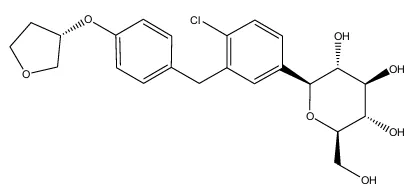
Fig. 1: Chemical Structure of Empagliflozin
Diabetes mellitus is a chronic metabolic disorder characterized by persistent hyperglycaemia due to defects in insulin secretion, insulin action. The incidence of diabetes, especially type 2 diabetes mellitus (T2DM), has risen sharply in recent decades, becoming a major burden on health care systems globally. However, good glycaemic control is still important to prevent the long-term microvascular and macrovascular complications of the disease. Hence, the development of new therapeutic agents with improved efficacy and safety profiles has become a major focus of modern pharmaceutical research [1].
MECHANISM OF ACTION:
Among all the anti-diabetic agents that are currently used in market, Sodium–glucose cotransporter-2 (SGLT2) inhibitors are one of the newer classes of antidiabetic agents that have attracted considerable attention because of their unique insulin-independent mechanism of action. Empagliflozin is a potent and selective SGLT2 inhibitor which prevents renal glucose reabsorption in the proximal convoluted tubules resulting in increased urinary glucose excretion and reduced plasma glucose levels. Therefore, empagliflozin has shown important cardiovascular and renal benefits besides its antihyperglycemic effects as demonstrated in large clinical trials, making it a preferred therapeutic choice in the treatment of T2DM, especially in patients with established cardiovascular disease.
PHARMACOKINETIC DATA:
Absorption: Empagliflozin is rapidly absorbed following oral administration. Maximum plasma concentrations are generally reached approximately 1.33–3.0 hours after administration.
Metabolism: Empagliflozin undergoes metabolism mainly through glucuronidation, involving UGT2B7, UGT1A3, UGT1A8 and UGT1A9. No major circulating metabolites have been identified.
Elimination: Empagliflozin is eliminated through both urine and faeces. Approximately 54.4% of a radiolabelled oral dose was recovered in urine and 41.2% in faeces in pharmacokinetic studies. The terminal half-life is approximately 12.4 hours, supporting once-daily administration[2, 3].
INTRODUCTION TO ANALYTICAL METHODS:
The increasing clinical use of empagliflozin, especially in fixed-dose combinations, necessitates the development of reliable, accurate, and robust analytical methods for its quantification in bulk drugs, pharmaceutical dosage forms, and biological matrices.
In the pharmaceutical industry qualitative and quantitative determination of bulk drugs, Active Pharmaceutical Ingredients, raw materials, dosage forms and biological samples are carried out by various analytical methods such as spectroscopy, chromatography and hyphenated techniques. These methods used to ensure the identity, purity, potency and performance of drugs. Analytical method development plays an important role in the development and manufacture of pharmaceuticals.
Various analytical techniques have been developed and employed for content analysis CT in bulk, finished product & in biological matrics and validated as per ICH guidelines to maintain the quality of drug product. Each and every step of a manufacturing process should be controlled to confirm that the finished product meets all the quality control requirements including specifications [4,5].
SUMMARY OF CONTENT ANALYSIS BY HPLC METHOD:
Donepudi et al developed and validated RP-HPLC–UV method for simultaneous estimation of Linagliptin and Empagliflozin in human plasma. The separation was carried out on a C18 column (250 × 4.6 mm, 5 µm) with an isocratic mobile phase of 0.1% orthophosphoric acid and acetonitrile (68:32 v/v) at a flow rate of 1 mL min⁻¹. Detection was performed at 218 nm. The retention times of empagliflozin, linagliptin and internal standard (telmisartan) were approximately 4.696, 6.421 and 4.074 min respectively with total runtime of 10 min. The method shows good linearity over the concentration range of 0.01–10 µg/mL with high precision, accuracy, specificity with no interference from plasma components and stability [6].
Anas M Hanif et al developed a simple, rapid and validated HPLC method for the quantification of empagliflozin in bulk and pharmaceutical dosage forms. Chromatographic separation was performed on a Thermo Hypersil GOLD C18 column (250 × 4.6 mm, 5 µm) with an isocratic mobile phase consisting of 0.1% Trifluoroacetic acid and acetonitrile (70:30 v/v, pH 4.8) at a flow rate of 0.8 mL/min. The detection was carried out at 224 nm and retention time of 5.47 min. Accuracy (98–100.13%) and precision (% RSD < 2%) confirmed the reliability of the method. The method was specific, robust and stability indicating without any interference of excipients. The assay values were within acceptable limits (97-101%) indicating suitability for routine pharmaceutical analysis[7].
Razaan A Ahmad et al developed a simple and rapid RP-HPLC method for simultaneous estimation of Empagliflozin, Pioglitazone and Metformin in pharmaceutical formulations. Separation was performed on an ACE C18 (250 mm × 4.6 mm, 5 µm) column using isocratic elution with buffer:acetonitrile (30:70 v/v, pH 2.7) at a flow rate of 0.5 mL/min and detection at 230 nm. The retention times of Metformin, Pioglitazone and Empagliflozin were 2.0 min, 2.6 min and 3.2 min, respectively with a total run time of 7 min. The method showed good linearity (R2> 0.999), accuracy (98–102% recovery) and precision (% RSD < 2%) as per ICH guidelines [8].
Vinay Kumar D et al developed a simple, precise, and stability-indicating RP-HPLC method for simultaneous estimation of Metformin hydrochloride and Empagliflozin in tablet dosage forms. Separations were carried out on Kromasil C18 column (250 mm × 4.6 mm, 5 µm) with mobile phase of acetonitrile and 0.1% orthophosphoric acid (50:50 v/v) at a flow rate of 1.0 mL/min and detection at 260 nm. The retention times of Metformin and Empagliflozin were 2.192 and 3.200 min respectively and the total run time was 6 min. The method showed a high linearity (R2 = 0.999), high accuracy (~100% recovery) and good precision (%RSD < 2%) as per ICH guidelines [9].
Shirisha V et al developed a simple, rapid, stability indicating RP-HPLC method for estimation of Empagliflozin in bulk and pharmaceutical dosage forms. The chromatographic separation was performed on a Develosil ODS HG-5 C18 column (150 mm × 4.6 mm, 5 µm) with a mobile phase consisting of phosphate buffer and acetonitrile (45:55, pH 2.8) at a flow rate of 1.0 mL/min and UV detection at 228 nm. The method showed good linearity in the concentration range of 0-50 µg/mL with acceptable accuracy (98-102% recovery). The limit of detection (LOD) and limit of quantification (LOQ) were found to be 0.07 µg/mL and 0.21 µg/mL respectively. The method was validated as per ICH guidelines and further applied for forced degradation studies showing its suitability as a stability indicating method for the routine analysis of Empagliflozin [10].
Bahia Abbas Moussa et al developed a robust and optimized RP-HPLC method for simultaneous determination of Canagliflozin, Empagliflozin, Linagliptin and Metformin in combined pharmaceutical formulations. The mobile phase was composed of dipotassium hydrogen phosphate buffer (0.05 M, adjusted to pH 6 using o-phosphoric acid) : acetonitrile : methanol (50:25:25, v/v/v) at a flow rate of 1.5 mL/min. The method showed excellent linearity (R2≈0.999) along with high precision (RSD values < 2%), greater accuracy (~100% recovery) with no interference from excipients. Robustness studies, System suitability parameters including resolution (>2), tailing factor (<2) and adequate theoretical plates shows chromatographic performance [11].
Sharif S et al developed a new stability indicating RP-HPLC–DAD method for simultaneous determination of Empagliflozin, Dapagliflozin and Canagliflozin in pharmaceutical formulations. The chromatographic separation was carried out using Hypercil™ C18 column (250 mm × 4.6 mm, 5 μm) with acetonitrile and 0.1% formic acid buffer (pH 3.7) (60:40 v/v) as mobile phase at a flow rate of 1.0 mL/min. The method showed the retention time of 3.44 min, 4.43 min and 6.31 min for Empagliflozin, Dapagliflozin And Canagliflozin, respectively. Validation results showed excellent linearity (R2 ≥ 0.997), accuracy (recovery 98.0-101.7%) and precision (%RSD < 1.5%) according to ICH guidelines. The method was found to be robust to small variations in chromatographic conditions with good stability [12].
Bulduk İ et al developed a new validated, eco-friendly RP-HPLC method for the determination of Empagliflozin in pharmaceutical formulations using ethanol as organic modifier. Separation was performed on a C18 Agilent column (250 mm × 4.6 mm, 5 µm) using isocratic elution with 0.1% formic acid in water:ethanol (55:45 v/v) at a flow rate of 1.0 mL/min and detection at 223 nm. The method retention time was around 3.7 min with good peak symmetry and efficiency. The validation results demonstrated good linearity (R2 ≈ 0.999), accuracy (99.49–99.72% recovery) and precision (%RSD < 1%) as per ICH guidelines. The approach was also robust to minor variations in the chromatographic conditions and had higher greenness scores (AGREE: 0.73) than the conventional approach [13].
SUMMARY OF CONTENT ANALYSIS BY UPLC METHOD:
Mokhtar M Mabrouk et al developed a simple, rapid, and sensitive UPLC-DAD method for the simultaneous determination of Empagliflozin and its three related using Dapagliflozin as internal standard. Chromatographic separation was performed on an Acquity UPLC® BEH C18 column (50 mm × 2.1 mm, 1.7 µm) using an isocratic mobile phase of 0.1% of trifluoroacetic acid (pH 2.5):acetonitrile (60:40, v/v) at a flow rate of 0.5 mL/min with detection at 210 nm. The retention time of Empagliflozin were found to be 1.2 min and thus reducing time and solvent consumption for analysis considerably. The method exhibited excellent linearity (r2 = 0.9994–0.9999), good accuracy (≥96.97% recovery) and acceptable precision (%RSD < 15%) according to the ICH bioanalytical validation guidelines. [14].
Ebrahim A El-Desouky et al developed a simple and rapid UPLC method for the simultaneous determination of Linagliptin and Empagliflozin in bulk drug and tablet dosage forms, supported by a Lean Six Sigma approach. Chromatographic separation on a Zorbax Eclipse plus C18 column (100 mm × 4.6 mm, 3.5 µm) using isocratic elution of phosphate buffer (pH 4): acetonitrile (65:35, v/v) at a flow rate of 1.5 mL/min and detection at 220 nm. The retention time of Empagliflozin was 1.417 min and for Linagliptin was 2.453 min. The complete separation was achieved in less than 3 min. The method exhibited good linearity (R2 = 0.9996-0.9997), excellent accuracy (97.83-100.51% recovery) and high precision (%RSD < 2%) as per ICH guidelines. It was also found to be robust, selective and suitable for routine quality control analysis of the combined dosage form [15].
M.N. Abou-Omar et al. developed a fast, sensitive, and validated UPLC–MS/MS method for the simultaneous estimation of metformin and empagliflozin in human plasma using a novel freezing lipid precipitation approach for sample preparation. Chromatographic separation was performed using an Acquity UPLC BEH C18 column (50 mm × 2.1 mm, 1.7 µm) with isocratic elution of 0.01% formic acid:acetonitrile (70:30, v/v) at a flow rate of 0.3 mL/min with positive ESI-MRM detection. The retention times of metformin and empagliflozin were 0.48 and 2.23 min, respectively, and the running time was 3 min. The method exhibited excellent linearity (R2 = 0.9999 for metformin and 0.9997 for empagliflozin), high accuracy (90.38–105.50%) and good precision (%CV < 7%) as per US FDA bioanalytical validation guidelines. It also demonstrated good recovery and good stability, which makes it suitable for routine pharmacokinetics studies of metformin and empagliflozin in human plasma [16].
Joanna W Manoel et al. developed a fast UHPLC-QTOF-MS method for the determination of Empagliflozin with its impurities and degradation products. Chromatographic separation was performed on a Zorbax Eclipse Plus C18 column (2.1 × 50 mm, 1.8 µm) with acetonitrile:water as the mobile phase. The injection volume was 5 µL and the temperature of the column was 35 °C. The method showed a good linearity (100-1000 ng/mL) with acceptable precision and accuracy. Obtained values for LOD and LOQ are 3:1 and 10:1 respectively. Successful identification of both forced degradation tests under UVC (24 h) and alkaline conditions (2 M NaOH, 48 h) was obtained. The method was validated according to ICH guidelines and was found to be suitable for stability and impurity profiling studies [17].
SUMMARY OF CONTENT ANALYSIS BY HPTLC METHOD:
Ritesh P Bhole et al developed a simple and stability indicating HPTLC-MS method for estimation of Empagliflozin in pharmaceutical dosage form. Separation was carried out on silica gel 60 F254 plates. Mobile phase of toluene: methanol (7:3 v/v) gave a compact band with Rf value of 0.65 and detection at 228 nm. The method showed good linearity over the concentration range 0.5–5.0 µg/band with correlation coefficient of 0.992. The LOD and LOQ were 0.171µg/band and 0.521µg/band, respectively. The method shows higher accuracy (99.66% recovery) while precision shows %RSD>1 which confirms the good repeatability. Forced degradation studies under acidic, alkaline, oxidative, thermal and photolytic conditions showed that the drug is liable to degradation. The degraded product was further characterized by IR and MS-MS. Thus, the method is simple, sensitive, and economic [18].
Osama I Abdel Sattar et al. developed a new, sensitive HPLC-DAD and HPTLC-densitometric methods for simultaneous determination of Metformin, Empagliflozin and Linagliptin in human plasma for pharmacokinetic studies. Extraction was performed using simple protein precipitation with acetonitrile/methanol/trichloroacetic acid (50:49:1 v/v) and efficient chromatographic separation with acceptable system suitability parameters including (theoretical plates >2000, resolution >2, % RSD <2%). The methods were found to be stable and showed good recovery (~92–96%) and high precision (%RSD < 2%) complying the EMA guidelines. The pharmacokinetic evaluation showed reliable results (e.g. t-max of Empagliflozin 1.5 h, C-max 576 ng/mL) according to literature values, confirming the applicability of the method in clinical studies. Moreover, the methods were highly green with low solvent consumption (~1.3 mL for HPLC, <1 mL for HPTLC), short run times (6–7 min) and high AGREE scores (~0.9), thus being environmentally friendly and applicable for routine bioanalytical and pharmacokinetic applications [19].
SUMMARY OF CONTENT ANALYSIS BY LC-MS/MS AND GC-MS METHOD:
Van der Aart-van der Beek A.B. et al.developed a simple, fast and robust LC–MS/MS method for the simultaneous quantification of Canagliflozin, Dapagliflozin and Empagliflozin in human plasma. Chromatographic separation was performed with gradient elution using mobile phase composition from 75:25 to 5:95 (A:B) at a constant flow rate of 0.8 mL/min and total run time of 1.0 min. The retention times for Canagliflozin, Dapagliflozin and Empagliflozin were 0.86 min, 0.74 min and 0.66 min, respectively. The method was linear for Empagliflozin in the concentration range of 2–1000 µg/L with correlation coefficient of 0.9979. The calibration consisted of eight levels of concentration and the bias in accuracy ranged from −5.8% to 7.1%. The method showed high selectivity with interference signals <0.2% and peak height interference <8% at LLOQ. The method was proved to be precise, accurate, selective and suitable for high-throughput pharmacokinetic analysis [20].
Maha F Abdel-Ghany et al developed a new, simple, selective and sensitive LC-UV methods for simultaneous determination of Linagliptin, Empagliflozin (HPLC-1) and Alogliptin, Pioglitazone (HPLC-2) in bulk and pharmaceutical dosage forms. The chromatographic separation for HPLC-1 was achieved on an XTERRA® C18 column (250 mm × 4.6 mm, 5 µm) with isocratic elution of 0.1% aqueous formic acid:methanol:acetonitrile (40:20:40 v/v/v, pH 3.6) at a flow rate of 2.0 mL/min and detection at 226 nm. The chromatographic separation for HPLC-2 was performed using 50% methanol (pH 2.7 adjusted with orthophosphoric acid) at a flow rate of 0.8 mL/min and detection at 270 nm. The retention times were found to be 1.5 min and 3.0 min for Linagliptin and Empagliflozin respectively and 3.2 min and 5.2 min for Alogliptin and Pioglitazone respectively. The methods showed good linearity in the range of 2-50 µg/mL for LNG, 4-100 µg/mL for EMG, 0.5-25 µg/mL for ALG, and 1-25 µg/mL for PGN with correlation coefficients of 0.9998, 0.9999, 0.9999, and 0.9999, respectively. The LOD values were 0.49, 0.79, 0.15 and 0.22 µg/mL; LOQ values were 1.50, 2.40, 0.47 and 0.68 µg/mL for LNG, EMG, ALG and PGN, respectively. The methods were highly accurate with mean recoveries of about 100% for all drugs and precise with % RSD < 2% for intra-day and inter-day studies. The methods were found to be robust, specific and applicable to routine quality control analysis [21].
Singh et al Established and validated a derivatization-GC-HS/GC-MS method for analysis of residual acetic acid in Empagliflozin bulk drug. Unknown impurity observed in analysis was acetic acid, which is considered as a geno toxic residual solvent as per ICH guidelines. Since acetic acid is non-UV active and hardly detectable by HPLC, derivatization using BSTFA was employed to obtain a more detectable species. Various chromatographic conditions were tried to develop optimal method whereDB-624 column using nitrogen as a carrier gas has afforded good separation of acetic acid and dimethyl formamide at 9.0 min and 11.6 min respectively. The developed method was validated for specificity, accuracy and linearity; with an excellent precision(%RSD<2%), recovery values (94.10-96.31%)and acceptable linearity and also shows good sensitivity with limit of detection(LOD)and limit of quantitation(LOQ) of 25 ppm and 76 ppm, respectively. The impurity was also confirmed using GC-MS,IR and NMR methods. Thus, the proposed method is sensitive, precise, accurate and is capable of routine quality control analysis of acetic acid in Empagliflozin bulk drug [22].
SUMMARY OF CONTENT ANALYSIS BY UV-VISIBLE SPECTROMETRY METHOD:
Shaik BB et al developed a simple, sensitive, and rapid UV spectrophotometric method for the estimation of Empagliflozin in rat plasma for pharmacokinetic applications. Ethanol and water were used as solvents with detection at 223 nm, and dichloromethane was used for liquid-liquid extraction of Empagliflozin from rat plasma. The method showed good linearity in the concentration range of 1–30 µg/mL (R2 = 0.9986) with excellent accuracy (99.46–99.78% recovery), precision (CV = 0.28% intra-day and 0.45% inter-day), and high sensitivity (LOD = 0.10 µg/mL; LOQ = 0.33 µg/mL) as per ICH guidelines. It was also found to be rugged, stable, and reproducible making it suitable for routine bioanalytical and pharmacokinetic studies of Empagliflozin [23].
Prachi Dwivedi et al developed and validated a simple, rapid and, economical RP-HPLC and UV spectrophotometric method for the estimation of Empagliflozin in pharmaceutical dosage forms. RP-HPLC separation was performed using Shimadzu Shim-Pack GIST C18 column (250 × 4.6 mm, 5 mm) with an optimized mobile phase consisting of acetonitrile: methanol: 1% orthophosphoric acid (50:20:30, v/v) at flow rate of 1.0 mL/min and detection at 223 nm. The UV method was performed using phosphate buffer (pH 7.4) as the solvent and detection at 223 nm. The retention time of Empagliflozin was found to be 3.38 min with a good linearity (R2 = 0.9966 for RP-HPLC and 0.9930 for UV), good accuracy (recovery of 99.99% for RP-HPLC and 98.52–99.80% for UV), and precision (%RSD < 2%) as per ICH guidelines. The RP-HPLC method showed good robustness, sensitivity, and stability under forced degradation studies, making it suitable for routine quality control and stability analysis of Empagliflozin in pharmaceutical formulations [24].
Shaik Bima Benazir et al. developed a simple, rapid, and economical UV spectrophotometric method for the estimation of Empagliflozin in bulk and pharmaceutical dosage forms. The method used ethanol and water as solvents, with detection at 223 nm. The calibration curve was linear in the range of 1-30 µg/mL (R2 = 0.9988) with excellent accuracy (99.20-99.49% recovery), precision (%RSD= 0.29% intra-day and 0.39% inter-day) and high sensitivity (LOD = 0.10 µg/mL; LOQ = 0.33 µg/mL) in accordance with ICH guidelines. The method was also found to be robust (RSD% = 0.20), rugged (RSD% = 0.03) and gave an assay value of 99.87% making it suitable for routine quality control analysis of Empagliflozin in bulk and pharmaceutical dosage forms [25].
Priyanka Patil et al developed and validated a simple, rapid and green UV spectrophotometric Q-absorbance ratio (QARM) method for simultaneous estimation of Empagliflozin and Metoprolol succinate in combined pharmaceutical dosage forms. The method used methanol as solvent with measurements at isoabsorptive point (214 nm) and 224 nm (λmax of empagliflozin). The method showed good linearity in the concentration ranges of 4.8-7.2 µg/mL for Empagliflozin and 12-18 µg/mL for Metoprolol succinate (R2 = 0.999) with high accuracy (99.25-100.74 % recovery for Empagliflozin and 99.38-100.67 % for Metoprolol succinate), precision (%RSD < 2%) and good sensitivity as per ICH Q2 (R2) guidelines. The method shows good specificity, robustness, eco-friendly, with an Analytical Eco-Scale score of 84 and an AGREE score of 0.72, making it suitable for routine quality control analysis of combined pharmaceutical formulations [26].
REFERENCES

R. Revathi, C. S. Kandhasamy, R. Jeya Prakash, P. Mohammed Rizwan, S. Pearline, D. Sivabalan, P. Vishalakshi, An Overview of Analyticalmethods on Content Analysis of Empagliflozin in Pharmaceutical Products, Int. J. of Pharm. Sci., 2026, Vol 4, Issue 10, 1703-1712, https://doi.org/10.5281/zenodo.23333432
 10.5281/zenodo.23333432