
View Article

  • Anticancer activity of Oxazole Derivatives: Current Progress and Future Perspectives

  • Department of Chemistry, Vasantrao Naik Mahavidyalaya Chh. Sambhajinagar

Abstract

Cancer is one of the world's deadliest disease. Eventhough the availability of numer of treatments, researchers are focusing on the synthesizing of novel drugs with no resistance and toxicity issues. Many newly growing drugs fail to reach clinical trials due to poor pharmacokinetic properties. Therefore, there is an imperative requisite to expand novel anticancer agents with in vivo efficacy. This review gave idea about synthesis , Modern strategies used for the inclusion of oxazole moiety, mechanistic targets, along with thorough SAR studies to give perspective into the rational design of highly effective oxazole-based anticancer drugs. According to the recent study by the Indian Council of Medical Research (ICMR), published in The Journal of the American Medical Association (JAMA), India is usually great attention at 1.56 million new cancer cases and 874,404 deaths was found in year 2024.Cancer incidence in India varies significantly across different regions. The North-Eastern (NE) region has the highest cancer burden, particularly for cancers of the stomach, liver, gallbladder, esophagus, nasopharynx, cervix, lung, and breast. Lower survival rates in this region are mainly due to inadequate healthcare infrastructure and limited access to specialized cancer treatment. Regional differences in cancer incidence are largely influenced by variations in lifestyle, environmental factors, and socio-cultural practices.

Keywords

Oxazole derivatives, Pharmacological Activity, Drug Discovery, Anticancer activity Structure-Activity Relationship

Introduction

× Popup Image

Oxazole ring containing oxygen  and nitrogen atoms at1 and 3 position respectively  is considered as prime scaffold for the drug discovery. This unique structure nature of oxazole moiety endows its derivatives diverse weak interactions such as hydrogen bonds, coordination bonds, ion-dipole, π-π stacking, hydrophobic effect, van der Waals force and so on, and thus oxazole-based compounds display extensively potential applications [1]
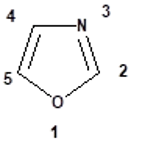
Oxazole -structure

Among five-membered heterocyclic compounds containing two different heteroatoms, oxazole derivatives have gained significant attention due to their broad spectrum of biological activities and their extensive applications in medicinal chemistry as well as the agricultural sector.oxazole compounds could readily bind with a variety of enzymes and receptors in biological systems and show broad biological activities [2] like antibacterial, antifungal, antiviral, antitubercular, anticancer, anti-inflammatory and so on. Up to now, a large number of oxazole-based medicinal drugs have been extensively used in clinic,. Recently, numerous researchers have been devoting to oxazole compounds as medicinal agents and hopefully discover novel chemical scaffold compounds with broad spectrum, high bioactivity, low toxicity and excellent pharmacokinetic property [3],[4],[5]. No literature has systematically reported on the current situation in the developments of oxazole-based scaffold. In view of this, combining with authors' research and referring other work from literature, this review gives a comprehensive overview in current developments of oxazole-based derivatives including oxazole, isoxazole, oxadiazole, oxazolidone and benzoxazole compounds in the whole range of medicinal chemistry as antibacterial, antifungal, antiviral, antitubercular, anticancer, anti-inflammatory, antidiabetic, antiparasitic, anti-obesitic, anti-neuropathic, antioxidative properties etc[.6-10] The successful strategies and structure–activity relationships are discussed. The perspectives of the foreseeable future in the new trend of oxazoles in medicinal chemistry are also referred. Five-membered heteroaromatic ring oxazole and its derivatives are ubiquitous and privileged scaffolds in drug design as linkers for their rigid structure, which enable the substituent groups on the stretching to the appropriate orientation to exert biological activities

Anticancer Activity

The anticancer potential of oxazole derivatives has attracted considerable research interest owing to their broad-spectrum activity against various cancer cell lines through diverse mechanisms of action. Their structural versatility enables interactions with multiple biological targets, making oxazole an important scaffold in anticancer drug discovery. One of the most extensively studied mechanisms is the inhibition of tubulin polymerization, where oxazole derivatives bind to the colchicine-binding site of tubulin, disrupting microtubule assembly and causing cell cycle arrest at the M phase. Structure–activity relationship (SAR) studies have demonstrated that substitutions at the C-2, C-4, and C-5 positions of the oxazole ring significantly influence tubulin-binding affinity and cytotoxic activity, with electron-withdrawing substituents generally enhancing anticancer potency.[14] In addition, numerous oxazole derivatives exert anticancer effects by inducing apoptosis through intrinsic mitochondrial pathways or extrinsic death receptor-mediated signaling. These compounds activate caspase-dependent pathways, including caspase-3, resulting in programmed cell death. Their ability to selectively trigger apoptosis in malignant cells while minimizing toxicity toward normal cells highlights their potential as promising candidates for the development of safer and more effective anticancer agents.[15] Another important mechanism involves kinase inhibition, particularly targeting the epidermal growth factor receptor (EGFR). Oxazole-based EGFR inhibitors have shown promising therapeutic potential against non-small cell lung cancer and other EGFR-dependent malignancies. In these molecules, the oxazole ring functions as a hydrogen bond acceptor, facilitating interactions with critical amino acid residues within the kinase active site. The advancement of several oxazole-derived kinase inhibitors into clinical development underscores the significance of this scaffold in targeted cancer therapy.[16] The  researcher designed and synthesized novel oxazole derivatives and screened them for their anticancer activity using both experimental  and computational methods. Molecular docking studies were performed to identify possible targets based on literature and the interaction of these molecules with anticancer targets like c-Kit tyrosine kinase (TRK) and Murine double minute 2 homolog (MDM2). The compounds were tested using the MTT assay on a cancer cell lines, MCF-7, to evaluate their potential effectiveness.[17] 4-cyano-N-(4-cyano-1,3-oxazol-5-yl)-N-alkyl-1,3-oxazole-5-sulfonylamides derivatives have been synthesized. The synthesized compounds were evaluated against the National Cancer Institute (NCI)-60 human tumor cell line panel. The compounds demonstrated the most potent antiproliferative activity, as indicated by total growth inhibition (TGI), and cytotoxic activity, as reflected by LC₅₀ values, particularly against leukemia, non-small-cell lung cancer, melanoma, and colon cancer cell lines.[18] A series of novel benzo[d]oxazole-functionalized [1,2,4]triazolo[3,4-b][1,3,4]thiadiazine and [1,2,4]triazolo[3,4-b][1,3,4]thiadiazole derivatives were synthesized using a conventional synthetic approach. The target compounds were obtained through the condensation of intermediate with bromo-substituted acetophenones and isothiocyanates, respectively. The structure–activity relationship (SAR) analysis of the synthesized compounds was consistent with the molecular docking and density functional theory (DFT) studies. These investigations revealed that the enhanced anticancer activity of the 1,2,4-triazole hybrids is primarily attributed to the presence of lipophilic and heterocyclic substituents on the benzo[d]oxazole moiety.[19]

Other Biological Activities

Oxazole derivatives have shown various applications in drug chemistry.Oxazole containing Scaffolds are attracted towards the synthesis due to their biological activities like antimicrobial, antifungal, anti-inflammatory, antidiabetic that merit attention.[20-25]

Structure–Activity Relationship (SAR) of Oxazole Derivatives

The pharmacological activity of oxazole scaffold is strongly influenced by the nature and position of substituents on the oxazole ring. In general, electron-withdrawing groups (e.g., –F, –Cl, –Br, –NO₂, –CF₃) often gave anticancer, antimicrobial, and anti-inflammatory activities by improving target binding affinity. Electron-donating groups (e.g., –OCH₃,CH3) can also increase activity in some derivatives by enhancing lipophilicity and membrane permeability. Substitutions at the C-2, C-4, and C-5 positions are particularly important, as they significantly affect potency, selectivity, and pharmacokinetic properties. Furthermore, the incorporation of additional heterocyclic moieties such as  pyrazole, thiophene, triazole, benzimidazole, or benzoxazole often improves biological activity through synergistic interactions with target molecule. These SAR findings provide valuable guidance for the rational design and optimization of novel oxazole-based therapeutic agents.[26-31]

CONCLUSION

Oxazole derivatives represent a versatile and valuable class of heterocyclic compounds with demonstrated therapeutic potential across multiple pharmacological domains. The breadth of biological activities exhibited by these compounds—including antimicrobial, anti-inflammatory, anticancer, and antiviral effects reflects the fundamental importance of the oxazole scaffold in modern medicinal chemistry. The success of oxazole-containing drugs in clinical use validates the continued exploration of this scaffold for drug discovery. The structure-activity relationships elucidated through systematic research provide a foundation for the rational design of new oxazole derivatives with optimized properties. Advances in synthetic methodologies continue to expand the accessible chemical space, enabling the exploration of increasingly complex oxazole architectures. Furthermore, the integration of computational methods, including molecular modeling and machine learning approaches, is accelerating the identification of promising candidates and reducing the time and cost associated with drug discovery. Despite the significant progress made in oxazole research, several challenges remain. The optimization of pharmacokinetic properties, including absorption, distribution, metabolism, and excretion characteristics, continues to be important for clinical success. Additionally, addressing potential toxicity concerns and understanding mechanism-based side effects requires careful attention throughout the drug development process. In conclusion, oxazole derivatives remain at the forefront of drug discovery research, with ongoing studies likely to yield new therapeutic agents for the treatment of infectious diseases, inflammatory conditions, cancer, and other disorders. The combination of fundamental chemical understanding, advances in synthetic methodology, and sophisticated drug design strategies positions oxazole derivatives to make continued substantial contributions to human health.

REFERENCES

  1. Anshuman singh*, Umashankar maurya, A Comprehensive Review on the Biological Activity of Oxazole Derivatives: Therapeutic Potential and Future Perspectives, Int. J. of Pharm. Sci., 2026, Vol 4, Issue 5, https://doi.org/10.5281/zenodo.20167198 3055-3062.
  2. Yadav, P.; Shah, K. (2025) Recent Advancements in the Synthetic Chemistry of Oxazole Derivatives and their Significant Medicinal Applications Current Pharmaceutical Design, 21(9), 956–968 (2025).DOI: 10.2174/0115734064361520250115090651
  3. Li, S.; Mei, Y.; Jiang, L.; Yang, X.; Zeng, W.; Du, Y. (2025) Oxazole and Isoxazole-Containing Pharmaceuticals: Targets, Pharmacological Activities, and their SAR Studies RSC Medicinal Chemistry, 16, 1879–1890 (2025).DOI: 10.1039/D4MD00777H
  4. Singh, A.;Maurya, U. (2026) A Comprehensive Review on the Biological Activity of Oxazole Derivatives: Therapeutic Potential and Future Perspectives International Journal of Pharmaceutical Sciences (IJPS) (2026).
  5. Neha, K.; Wakode, S. (2026) Oxazole-Based Molecules: Recent Advances on Biological Activities Current Topics in Medicinal Chemistry, 26(6), 613–634 (2026). DOI: 10.2174/0115680266419594251103103459
  6. Atif, A.; Ait Sir, H. (2025) Synthetic Approaches for Oxazole Derivatives: A Review Journal of Heterocyclic Chemistry, 62(11), 1808–1833 (2025).DOI: 10.1002/jhet.70071
  7. Hodyna, D.; Kachaeva, M.; Shulha, Y.; et al. (2026) Antibacterial Activity and Cytotoxicity Evaluation of 5-Amino-4-cyano-1,3-oxazole Derivatives: Synthesis, In Silico, and In Vitro Studies Chemistry & Biodiversity, 23(5), e03788 (2026).DOI: 10.1002/cbdv.202503788
  8. Kumar,L.;Binish,C.J.A Comprehensive Review of One-Pot Multicomponent Strategies for Oxazole Synthesis Chemistry Select,2025,10,01172.DOI: 10.1002/slct.202501172
  9. Nainwal, P.; Srivastava, V. Visible light-mediated photocatalyzed synthesis of oxazole via intermolecular C–N and C–O bond formation. Journal of Heterocyclic Chemistry (2024). DOI: 10.1002/jhet.4766
  10. Singagari, S.; Sundararajan, R. (2025)Novel Pyrazole Substituted Oxazole Derivatives: Design, In Silico Studies, Synthesis & Biological Activities Journal of Research in Pharmacy, 26(3), 2025.
  11. Elgubbi, A. S.; El-Helw, E. A. E.; Alzahrani, A. Y.; Ramadan, S. K. (2024) Synthesis, computational chemical study, antiproliferative activity screening, and molecular docking ofsome thiophene-based oxadiazole, triazole, and thiazolidinone derivatives RSC Advances, 2024, 14, 5926–5940.DOI: 10.1039/D3RA07048D
  12. Avuthu, V. S. R.; Allaka, T. R.; Kushwaha, N.; Kishore, P. V. V. N. (2025) Efficient Synthesis, Anticancer Evaluation of Triazole Thiadiazole/Benzo[d]Oxazole Scaffolds, and Investigation of Their Reactivity Properties Using Density-Functional Theory Calculations and In Silico Docking Chemistry & Biodiversity, 2025. DOI:10.1002/cbdv.202402470
  13. Velihina Y, Gesese R, Zhirnov V, Kobzar O, Bui B, Pilyo S, Vovk A, Shen HY, Brovarets V. Design, synthesis and evaluation of the anti-breast cancer activity of 1,3-oxazolo[4,5- d]pyrimidine and 1,3-oxazolo[5,4- d]pyrimidine derivatives RSC Med Chem. 2023 Feb 16;14(4):692-699. doi: 10.1039/d2md00377e.
  14. S. H. Kim, J. H. Park, and C. M. Lee, "Tubulin polymerization inhibitors based on oxazole scaffold," Journal of Medicinal Chemistry, vol. 63, no. 9, pp. 4583-4602, 2020.
  15. I. W. Davies, R. D. Larsen, and J. F., "Photochemical approaches to oxazole synthesis," Organic Letters, vol. 21, no. 12, pp. 4667-4671, 2019.
  16. N. K. Gupta, P. R. Shukla, and V. K. Tiwari, "Oxazole derivatives in diabetes management," European Journal of Pharmacology, vol. 872, pp. 172961-172978, 2020.
  17. Ghodgaonkar S, Jadhav P, Jadhav T, Jain B, Jogi A, Sanap M, Shaikh MAS. Exploring Novel Oxazole Derivatives for Cancer Therapy: Design, Synthesis, and Mechanistic Insights. Curr Drug Discov Technol. 2026;23(1):e15701638370100. doi: 10.2174/0115701638370100250527073704. PMID: 40511644.
  18. Kachaeva M, Pilyo S, Hodyna D, Shulha Y, Brovarets V. Synthesis and Anticancer Activity Study of New Bis-1,3-Oxazole-5-Sulfonylamides. Chem Med Chem. 2026 Feb 25;21(4):e202500921. doi: 10.1002/cmdc.202500921. Epub 2025 Dec 3. PMID: 41337652.
  19. Avuthu VSR, Allaka TR, Kushwaha N, Kishore PVVN. Efficient Synthesis, Anticancer Evaluation of Triazole-Thiadiazole/Benzo[d]Oxazole Scaffolds, and Investigation of Their Reactivity Properties Using Density-Functional Theory Calculations and In Silico Docking. Chem Biodivers. 2025 Jul;22(7):e202402470. doi: 10.1002/cbdv.202402470. Epub 2025 Mar 11. PMID: 39972950.
  20. Zhang, H.-Z., Zhao, Z.-L., & Zhou, C.-H. "Recent advance in  oxazole-based medicinal chemistry." European Journal of Medicinal Chemistry, 2018, 144, 444–492. https://doi.org/10.1016/j.ejmech.2017.12.044
  21. Yan X, Wen J, Zhou L, Fan L, Wang X, Xu Z. Current Scenario of 1,3-oxazole Derivatives for Anticancer Activity. Curr Top Med Chem. 2020;20(21):1916-1937. doi: 10.2174/1568026620666200624161151. PMID: 32579505.
  22. Kakkar, S., & Narasimhan, B. (2019). A comprehensive review on biological activities of oxazole derivatives. BMC Chemistry, 13(1), 16. https://doi.org/10.1186/s13065-019-0531-9
  23. Shah, K., & Yadav, P. (2025). Recent advancements in the synthetic chemistry of oxazole derivatives and their significant medicinal applications. Current Organic Chemistry, 21(9), 956–968. https://doi.org/10.2174/0115734064361520250115090651
  24. R. Gujjarappa et al., “An Overview on Biological Activities of Oxazole, Isoxazoles and 1,2,4-Oxadiazoles Derivatives,” in Materials Horizons: From Nature to Nanomaterials, Springer Nature,2022, pp. 379–400. doi: 10.1007/978-981-16-8399-2_10.
  25. Elamina M., Uppal Z., A. Al-Badr, Antimicrobial Agents Chemotherapy.1981, 19, 29-32.
  26. Ram Prasad S., Saraswathy T., Niraimathi V.,Indumathi B., Int. J. Pharm. Pham. Sci, 2012, Vol 4, Suppl 5 : 285-287
  27. Siddiqui N., Arshad M. F., Khan S. A., Acta Pol. Pharm. 2009, 66: 161-167
  28. Preeti Raval, Mukul Jain, Amitgiri Goswami, Sujay Basu, Archana Gite, Atul Godha,Harikishore Pingali, Saurin Raval, Suresh Giri, Dinesh Suthar, Maanan Shah, Pankaj Patel, Bioorg. Med Chem Letters 2011, 21: 3103–3109
  29. Joseph Salamoun, Shelby Anderson, James C. Burnett, Rick Gussio, Peter Wipf, Org. Lett. 2014, 16: 2034−2037
  30. Jagdish Kumar, Mymoona Akhtar, Chanda Ranjan, Gita Chawla, Int J Pharm Chem Analysis, 2015, 2(2):74-83
  31. Pervin Unal Civcir, Gulbin Kurtay, Kubra Sarikavak, Struct Chem, 2017, 28 (3): 773–790 DOI 10.1007/s11224-016-0863-1

Reference

  1. Anshuman singh*, Umashankar maurya, A Comprehensive Review on the Biological Activity of Oxazole Derivatives: Therapeutic Potential and Future Perspectives, Int. J. of Pharm. Sci., 2026, Vol 4, Issue 5, https://doi.org/10.5281/zenodo.20167198 3055-3062.
  2. Yadav, P.; Shah, K. (2025) Recent Advancements in the Synthetic Chemistry of Oxazole Derivatives and their Significant Medicinal Applications Current Pharmaceutical Design, 21(9), 956–968 (2025).DOI: 10.2174/0115734064361520250115090651
  3. Li, S.; Mei, Y.; Jiang, L.; Yang, X.; Zeng, W.; Du, Y. (2025) Oxazole and Isoxazole-Containing Pharmaceuticals: Targets, Pharmacological Activities, and their SAR Studies RSC Medicinal Chemistry, 16, 1879–1890 (2025).DOI: 10.1039/D4MD00777H
  4. Singh, A.;Maurya, U. (2026) A Comprehensive Review on the Biological Activity of Oxazole Derivatives: Therapeutic Potential and Future Perspectives International Journal of Pharmaceutical Sciences (IJPS) (2026).
  5. Neha, K.; Wakode, S. (2026) Oxazole-Based Molecules: Recent Advances on Biological Activities Current Topics in Medicinal Chemistry, 26(6), 613–634 (2026). DOI: 10.2174/0115680266419594251103103459
  6. Atif, A.; Ait Sir, H. (2025) Synthetic Approaches for Oxazole Derivatives: A Review Journal of Heterocyclic Chemistry, 62(11), 1808–1833 (2025).DOI: 10.1002/jhet.70071
  7. Hodyna, D.; Kachaeva, M.; Shulha, Y.; et al. (2026) Antibacterial Activity and Cytotoxicity Evaluation of 5-Amino-4-cyano-1,3-oxazole Derivatives: Synthesis, In Silico, and In Vitro Studies Chemistry & Biodiversity, 23(5), e03788 (2026).DOI: 10.1002/cbdv.202503788
  8. Kumar,L.;Binish,C.J.A Comprehensive Review of One-Pot Multicomponent Strategies for Oxazole Synthesis Chemistry Select,2025,10,01172.DOI: 10.1002/slct.202501172
  9. Nainwal, P.; Srivastava, V. Visible light-mediated photocatalyzed synthesis of oxazole via intermolecular C–N and C–O bond formation. Journal of Heterocyclic Chemistry (2024). DOI: 10.1002/jhet.4766
  10. Singagari, S.; Sundararajan, R. (2025)Novel Pyrazole Substituted Oxazole Derivatives: Design, In Silico Studies, Synthesis & Biological Activities Journal of Research in Pharmacy, 26(3), 2025.
  11. Elgubbi, A. S.; El-Helw, E. A. E.; Alzahrani, A. Y.; Ramadan, S. K. (2024) Synthesis, computational chemical study, antiproliferative activity screening, and molecular docking ofsome thiophene-based oxadiazole, triazole, and thiazolidinone derivatives RSC Advances, 2024, 14, 5926–5940.DOI: 10.1039/D3RA07048D
  12. Avuthu, V. S. R.; Allaka, T. R.; Kushwaha, N.; Kishore, P. V. V. N. (2025) Efficient Synthesis, Anticancer Evaluation of Triazole Thiadiazole/Benzo[d]Oxazole Scaffolds, and Investigation of Their Reactivity Properties Using Density-Functional Theory Calculations and In Silico Docking Chemistry & Biodiversity, 2025. DOI:10.1002/cbdv.202402470
  13. Velihina Y, Gesese R, Zhirnov V, Kobzar O, Bui B, Pilyo S, Vovk A, Shen HY, Brovarets V. Design, synthesis and evaluation of the anti-breast cancer activity of 1,3-oxazolo[4,5- d]pyrimidine and 1,3-oxazolo[5,4- d]pyrimidine derivatives RSC Med Chem. 2023 Feb 16;14(4):692-699. doi: 10.1039/d2md00377e.
  14. S. H. Kim, J. H. Park, and C. M. Lee, "Tubulin polymerization inhibitors based on oxazole scaffold," Journal of Medicinal Chemistry, vol. 63, no. 9, pp. 4583-4602, 2020.
  15. I. W. Davies, R. D. Larsen, and J. F., "Photochemical approaches to oxazole synthesis," Organic Letters, vol. 21, no. 12, pp. 4667-4671, 2019.
  16. N. K. Gupta, P. R. Shukla, and V. K. Tiwari, "Oxazole derivatives in diabetes management," European Journal of Pharmacology, vol. 872, pp. 172961-172978, 2020.
  17. Ghodgaonkar S, Jadhav P, Jadhav T, Jain B, Jogi A, Sanap M, Shaikh MAS. Exploring Novel Oxazole Derivatives for Cancer Therapy: Design, Synthesis, and Mechanistic Insights. Curr Drug Discov Technol. 2026;23(1):e15701638370100. doi: 10.2174/0115701638370100250527073704. PMID: 40511644.
  18. Kachaeva M, Pilyo S, Hodyna D, Shulha Y, Brovarets V. Synthesis and Anticancer Activity Study of New Bis-1,3-Oxazole-5-Sulfonylamides. Chem Med Chem. 2026 Feb 25;21(4):e202500921. doi: 10.1002/cmdc.202500921. Epub 2025 Dec 3. PMID: 41337652.
  19. Avuthu VSR, Allaka TR, Kushwaha N, Kishore PVVN. Efficient Synthesis, Anticancer Evaluation of Triazole-Thiadiazole/Benzo[d]Oxazole Scaffolds, and Investigation of Their Reactivity Properties Using Density-Functional Theory Calculations and In Silico Docking. Chem Biodivers. 2025 Jul;22(7):e202402470. doi: 10.1002/cbdv.202402470. Epub 2025 Mar 11. PMID: 39972950.
  20. Zhang, H.-Z., Zhao, Z.-L., & Zhou, C.-H. "Recent advance in  oxazole-based medicinal chemistry." European Journal of Medicinal Chemistry, 2018, 144, 444–492. https://doi.org/10.1016/j.ejmech.2017.12.044
  21. Yan X, Wen J, Zhou L, Fan L, Wang X, Xu Z. Current Scenario of 1,3-oxazole Derivatives for Anticancer Activity. Curr Top Med Chem. 2020;20(21):1916-1937. doi: 10.2174/1568026620666200624161151. PMID: 32579505.
  22. Kakkar, S., & Narasimhan, B. (2019). A comprehensive review on biological activities of oxazole derivatives. BMC Chemistry, 13(1), 16. https://doi.org/10.1186/s13065-019-0531-9
  23. Shah, K., & Yadav, P. (2025). Recent advancements in the synthetic chemistry of oxazole derivatives and their significant medicinal applications. Current Organic Chemistry, 21(9), 956–968. https://doi.org/10.2174/0115734064361520250115090651
  24. R. Gujjarappa et al., “An Overview on Biological Activities of Oxazole, Isoxazoles and 1,2,4-Oxadiazoles Derivatives,” in Materials Horizons: From Nature to Nanomaterials, Springer Nature,2022, pp. 379–400. doi: 10.1007/978-981-16-8399-2_10.
  25. Elamina M., Uppal Z., A. Al-Badr, Antimicrobial Agents Chemotherapy.1981, 19, 29-32.
  26. Ram Prasad S., Saraswathy T., Niraimathi V.,Indumathi B., Int. J. Pharm. Pham. Sci, 2012, Vol 4, Suppl 5 : 285-287
  27. Siddiqui N., Arshad M. F., Khan S. A., Acta Pol. Pharm. 2009, 66: 161-167
  28. Preeti Raval, Mukul Jain, Amitgiri Goswami, Sujay Basu, Archana Gite, Atul Godha,Harikishore Pingali, Saurin Raval, Suresh Giri, Dinesh Suthar, Maanan Shah, Pankaj Patel, Bioorg. Med Chem Letters 2011, 21: 3103–3109
  29. Joseph Salamoun, Shelby Anderson, James C. Burnett, Rick Gussio, Peter Wipf, Org. Lett. 2014, 16: 2034−2037
  30. Jagdish Kumar, Mymoona Akhtar, Chanda Ranjan, Gita Chawla, Int J Pharm Chem Analysis, 2015, 2(2):74-83
  31. Pervin Unal Civcir, Gulbin Kurtay, Kubra Sarikavak, Struct Chem, 2017, 28 (3): 773–790 DOI 10.1007/s11224-016-0863-1

Photo
Mohini Pagar
Corresponding author

Department of Chemistry, Vasantrao Naik Mahavidyalaya Chh. Sambhajinagar

Photo
Balaji Madje
Co-author

Department of Chemistry, Vasantrao Naik Mahavidyalaya Chh. Sambhajinagar

Mohini Pagar, Balaji Madje, Anticancer activity of Oxazole Derivatives: Current Progress and Future Perspectives, Int. J. of Pharm. Sci., 2026, Vol 4, Issue 7, 4834-4839. https://doi.org/10.5281/zenodo.21558067

More related articles
Formulation and Evaluation of Herbal Nail Lacquer ...
Varsha Bhoje, Heena Patil, Girish Udgave , Gouri Sutar, Diksha Ro...
Chlorhexidine in Dentistry: A Comprehensive Review...
Romit Limbachiya, Dr. C. N. Patel, Dr. Khushbu Patel, Dip Patel...
A Review on Medicinal Plant with Antioxidant Prope...
Hippale Sakshi, Karad Shrinivas, Chaure Anita...
Related Articles
Formulation And Evaluation of Herbal Sunscreen Cream...
Shraddha patle , Nitin Indurwade, Sneha Gorde , Praju Mangar...
Formulation and Evaluation of a Sustainable Herbal Face Scrub Utilising Agro-Ind...
Tushar Morankar, Tejaswini Koshti, Archit Joshi, Aniket Shinde, Yashodeep Adagale, Virendra Zine...
Significant Role of Lipid-Based Nanocarriers for Improved Biopharmaceutical Perf...
Rahul Solunke, Saurabh Tapade, Sumedh Sonkamble, Amrata Suryawanshi, Jyotiraditya More...
Formulation and Evaluation of Herbal Nail Lacquer for Treatment of Onychomycosis...
Varsha Bhoje, Heena Patil, Girish Udgave , Gouri Sutar, Diksha Rokade, Dhaval Aldar...
More related articles
Formulation and Evaluation of Herbal Nail Lacquer for Treatment of Onychomycosis...
Varsha Bhoje, Heena Patil, Girish Udgave , Gouri Sutar, Diksha Rokade, Dhaval Aldar...
Chlorhexidine in Dentistry: A Comprehensive Review of Clinical Applications, Che...
Romit Limbachiya, Dr. C. N. Patel, Dr. Khushbu Patel, Dip Patel...
A Review on Medicinal Plant with Antioxidant Properties...
Hippale Sakshi, Karad Shrinivas, Chaure Anita...
Formulation and Evaluation of Herbal Nail Lacquer for Treatment of Onychomycosis...
Varsha Bhoje, Heena Patil, Girish Udgave , Gouri Sutar, Diksha Rokade, Dhaval Aldar...
Chlorhexidine in Dentistry: A Comprehensive Review of Clinical Applications, Che...
Romit Limbachiya, Dr. C. N. Patel, Dr. Khushbu Patel, Dip Patel...
A Review on Medicinal Plant with Antioxidant Properties...
Hippale Sakshi, Karad Shrinivas, Chaure Anita...
