

We use cookies to ensure our website works properly and to personalise your experience. Cookies policy
Womens College of Pharmacy, Peth Vadgaon, Kolhapur, Maharashtra, India.
Artificial Intelligence(AI) has emerged as a revolutionary in drug development, significantly transforming traditional pharmaceutical research processes. Conventional drug discovery is time consuming, costly and associated with high failure rates, often requiring more than a decade for successful drug approval. AI technologies such as Machine Learning(ML), Deep Learning(DL) and Natural Language Processing(NLP) provide advanced computational tools that accelerates drug discovery, improve prediction accuracy and enhance decision making throughout the development pipeline. AI application include target identification, biomarker discovery, drug design, toxicity prediction, drug purposing and optimization of clinical trials. In preclinical studies, AI assists in predicting toxicity, analyzing biomedical data and improving pharmacokinetic and pharmacodynamic modeling. During clinical trials, AI supports patient selection, adherence monitoring, endpoint detection and trial optimization, thereby reducing time and cost.AI also enables personalized medicine through the analysis of genomics, proteomics and clinical data. Despite its numerous advantages, challenges such as data privacy, lack of standardized regulations, interpretability of AI models and shortage of skilled professionals remain significant barrier to implementation. Neverthless, ongoing advancements in AI and increasing integration of healthcare data are expected to further enhance pharmaceutical research and healthcare outcomes. Overall, AI has the potential to revolutionize drug development by improving efficiency, reducing costs and increasing the success rate of discovering safe and effective medicines.
Artificial intelligence (AI) has emerged as a transformative technology in the filled of drug development ,addressing many challenges associated with the traditional drug discovery process, which is time consuming, costly and has a high failure rate. Every facet of life is always changing, and one of humanity's primary goals is to manage these changes for our own advantage. This is particularly true in the fields of pharmaceuticals and medicine. These fields concentrate on the synthesis or discovery of chemical compounds and mixtures and their application to alleviate psychological and physical distress. A regulatory framework that protects the quality of finished goods through testing of raw materials, in-process materials, end-product characteristics, batch-based operations, and fixed process conditions has governed the production of pharmaceutical products for many decades. Despite the lack of a universally recognized definition, artificial intelligence (AI) is commonly used as a broad phrase to refer to any techniques utilized by the pharmaceutical industry, including computer or machine vision, natural language processing, and machine learning, including deep learning. Despite being classified as AI, each of these advancements represents a different analytical methodology. AI is defined as "an entity (or collective set of cooperative entities), able to receive inputs from the environment, interpret and learn from such inputs, and exhibit related and flexible behaviors and actions that help the entity achieve a particular goal or objective over a period of time." It represents machines or systems that are capable of making decisions on their own.
AI techniques are currently being used by some businesses to repurpose medications and discover new applications for already-approved medications or late-stage medicinal prospects. Phenotypic drug discovery, "where compounds are screened in cells or animal models for compounds able to cause a desirable change, without any knowledge of the biological target," is another application of AI platforms.AI offers powerful computational tools to accelerate this process and improve decision making at every stage of drug development pipeline. Drug-target interactions and efficacy are linked to pharmacodynamic characteristics; acceptable pharmacokinetics include drug safety, absorption, distribution, metabolism, excretion, and toxicity (ADMET); and clinical outcomes include the therapeutic goal, as specified in the list of medication indications and off-label applications, as well as undesirable consequences such adverse drug reactions or side effects. Diseases, targets, and therapeutic methods are therefore the three cornerstones of a successful drug discovery launch. Targeted protein degradation, antibodies, gene therapy, oligonucleotide, and vaccine design are only a few of the therapeutic modalities that AI affects. One of the primary needs for AI in pharmaceutical research is to reduce time and cost. Traditional drug discovery can take over a decade and require enormous financial investment.AI is also essential to handle big and complex data. Another important need for AI is to improve success rate and reduce failure.AI supports precision and personalized medicine, also needed to optimize clinical trials . There are now four primary applications of AI in the pharmaceutical sector. The first is in determining the degree of illness and forecasting the effectiveness of a particular patient's treatment, even before it is administered. Second, it is employed to avoid or resolve treatment-related issues. Its third primary application is as an assistive technology for patients undergoing procedures or treatments. Finally, it is utilized to ascertain the rationale for the use of specific tools or chemicals during treatment, as well as to create or extrapolate new applications for tools or chemicals to enhance efficacy and safety. Additionally, AI plays a broader role in large data administration and analysis. In this study, we provide a brief historical overview of the development of AI in medicine (AIM) during the past 10 years. century prior to its use in endoscopy and gastroenterology (Table 1).
Table 1. Development of AI in medicine during the past 10 years century prior to its use in endoscopy and gastroenterology.
|
Year |
AI in Medicine Development |
AI & Gastroenterology/ Endoscopy |
|
2010-2014 |
Machine learning and deep learning refine medical image analysis; growing research in clinical AI tools. |
Foundational computer vision research paves way for GI endoscopy AI models. |
|
2015 |
Major deep learning breakthroughs (e.g, AlexNet, CNNs) influence medical AI; rise in research applying DL models to X-ray, pathology and diagnostics. |
Early research applying neural nets to GI imaging begins. |
|
2017 |
FDA approves first cloud-based deep learning diagnostic tools; clinical AI expands. |
Growth in pilot studies using AI for polyp detection and lesion classification. |
|
2018-2020 |
AI becomes integrated in many specialties - radiology, pathology, cardiology. |
Several clinical trials and research in AI-assisted GI endoscopy published; focus on detection accuracy and speed. |
|
2021-2023 |
Large language models & bigger datasets accelerate AI adoption healthcare workflows. |
AI models begin assisting real world endoscopy interpretation. |
|
2024-2025 |
AI mainstream in diagnostics, prognosis, clinical decision support across disciplines. |
Ai tools widely used for GI lesion detection, automated reporting, predictive analysis in endoscopy labs. |
2. OVERVIEW OF ARTIFICIAL INTELLIGENCE:
The definition of artificial intelligence (AI) is "a field of science and engineering concerned with the computational understanding of what is commonly called intelligent, behaviour as well as through the production of products that display such behaviour.
Types of AI:
1. Machine Learning (ML).
2. Deep Learning (DL).
3. Natural Language Processing (NLP).
Machine learning (ML) is an area of AI that uses statistical methods to learn, whether or not it is intended to do so.[8] Deep learning (DL) is a subsection of ML that uses artificial neural networks that adapt and learn from a lot of experimental data [9]. Natural Language Processing (NLP) is a field of artificial intelligence that enables to computer to understand, process, and generate human language in meaningful and useful way.
Algorithms used in AI:
1. Machine learning algorithms:
a) Supervised Learning: Used when labeled data are available.
b) Unsupervised Learning: Used to find hidden patterns in data.
2. Deep Learning Algorithms
3. Natural Language Processing (NLP) Algorithm: Used to analyze biomedical text and literature.
3. CONVENTIONAL DRUG DEVELOPMENT PROCESS :
Drug discovery is one of the many areas of the pharmaceutical industry where machine learning is being used more and more, allowing for advancements in the sector overall. They said that big pharmaceutical companies have also looked into using machine learning techniques for drug research and development. Drug research and development procedures could be reformed with the help of increased processing power and the creation of novel AI tools. The pharmaceutical business is dealing with declining medication improvement program efficiency and concurrently rising R&D expenses at the time of this literature review. The pharmaceutical sector has seen a dramatic increase in the digitisation of information in recent years; one of the major challenges is effectively acquiring, analysing, and using this information to address complicated clinical situations. With improved computing, AI can handle massive amounts of data.
1. Predicting the 3D structure of the target protein.
2. Predicting drug-protein interaction.
3. AI in de-novo drug design.
1. Prediction of physicochemical properties.
2. Prediction of bioactivity.
3. Prediction of toxicity.
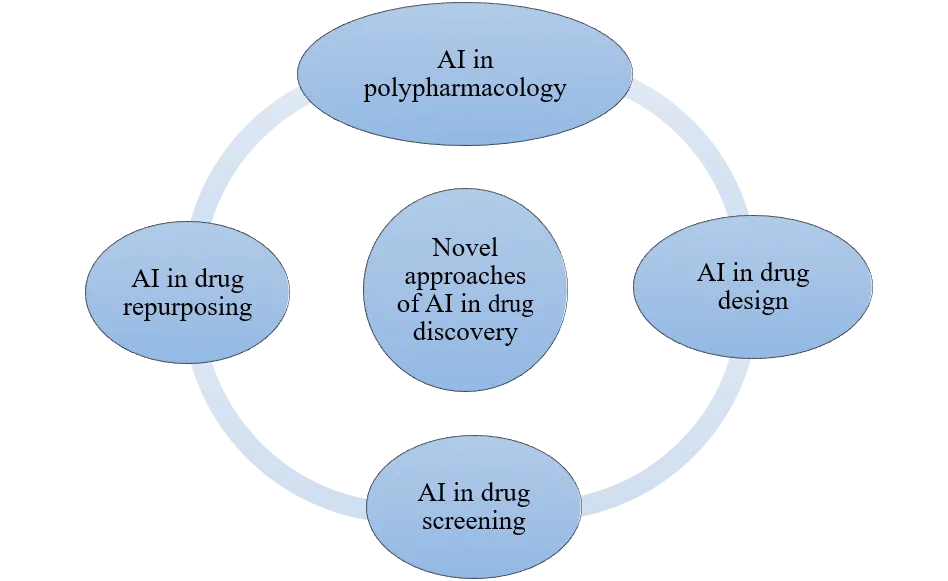
Fig.1.Application of AI In Drug Discovery.
4. ROLE OF ARTIFICIAL INTELLIGENCE IN DRUG DEVELOPMENT
Finding effective new medications is a challenging task and, for the most part, the most challenging aspect of drug development. The reason for this is the enormous extent of what is referred to as chemical space, which is thought to be around 106 molecules. Artificial intelligence (AI)-based technologies have evolved into multipurpose instruments that may be used widely in many phases of drug development, including target identification and validation, new drug design, drug repurposing, and increasing R&D efficiency and recruiting patients for clinical trials by evaluating biomedical data and improving the decision-making procedure. These possible applications of AI offer the chance to reduce bias and human interaction in the process while addressing the inefficiencies and risks that come with traditional drug development methodologies. Reduce bias and human interaction in the process while addressing the inefficiencies and risks that come with traditional drug development methodologies.
Table 2.Overview of AI-Based Biomarker Identification Techniques and Applications
|
Aspect |
Discription |
Example |
|
Definition |
Use of AI technique to identify biological indicator (biomarker) for disease. |
Detecting cancer-specific gene mutation. |
|
Data Handling |
All processes large datasets (genomics, proteomics, metabolomics ). |
DNA sequencing data analysis. |
|
Pattern Recognition |
Identifies hidden patterns in biological data. |
Finding disease-specific gene expression patterns. |
|
Feature Selection |
Selects important biomarkers from large database. |
Selecting key proteins linked to diabetes. |
|
Predictive Modeling |
Builds models to predict disease or treatment response. |
Predicting cancer progression . |
|
Multi-Omics Integration |
Combines data from multiple biological sources. |
Genomics + clinical data analysis. |
|
Image Analysis |
Uses deep learning to detect biomarkers from image. |
Tumor detection in MRI/CT scans. |
|
Technique Used |
ML, Deep learning , Neural networks, NPL. |
CNN for image analysis. |
|
Application |
Disease diagnosis, prognosis, drug development. |
Alzheimer’s biomarker detection. |
|
Advantages |
Data quality, interpretability, validation issue. |
Early disease detection. |
AI –Based Biomarker Identification flowchart
Data collection (Genomics, Proteomics, Clinical data, Image)
↓
Data processing (Cleaning, Normalization, Missing value handling)
↓
Feature Extraction (Gene expression, Protein level, Image feature, etc.)
↓
AI Model Training (Machine Learning/Deep Learning)
↓
Pattern Recognition (Identify disease-related signals)
↓
Biomarker Identification (Select significant biomarkers)
↓
Validation (Clinical trials /Lab testing)
↓
Clinical Application (Diagnosis, Prognosis, Personalized Treatment)
5. APPLICATION OF AI IN PRECLINICAL STUDIES:
Toxicity Prediction:
The undesirable or negative effects of substances are measured by their toxicity. One of the most important stages in the drug development process is toxicity evaluation, which looks for compounds that are dangerous to people. However, the in vivo test raises the expense of drug discovery because it necessitates animal testing. The benefits of computational approaches include their great efficiency and low cost in predicting a chemical's toxicity. As a result, a number of AI-based techniques have been created to forecast chemical toxicity.
The scientific community created the "Toxicology in the 21st Century (Tox21)" challenge to evaluate the effectiveness of various computer techniques for forecasting chemical toxicity. Over 500 million people worldwide suffer from stroke, a common and prevalent illness. It ranks fifth in North America and is the top cause of mortality in China. Stroke has resulted in medical costs of over US$689 billion worldwide, placing a significant strain on nations and families. Some of the pertinent AI methods in the three primary domains of stroke care early disease prediction and diagnosis, therapy, and outcome prediction and prognosis evaluation are summarised below.
1. Early detection and diagnosis:
Cerebral infarction, a thrombus in the vessel, is the cause of stroke in 85% of cases. However, only a small number of patients were able to receive prompt treatment due to a lack of judgement regarding early stroke symptoms. A movement-detecting tool for early stroke prediction was created by Villar et al. Both a human activity recognition step and a stroke-onset detection stage were part of the detection process. In a similar vein, Maninini et al. suggested a wearable gadget for gathering information on normal and pathological gaits in order to anticipate strokes. Hidden Markov models and SVM would be used to extract and model the data, and the algorithm could accurately assign 90.5% of the subjects to the appropriate group.
2. Treatment :
Additionally, ML has been used to forecast and evaluate the effectiveness of stroke therapy. The outcome of intravenous thrombolysis (tPA), a crucial emergency measure, is strongly correlated with the prognosis and survival rate. Bentley et al. employed SVM to predict, via CT scan, whether patients receiving tPA treatment will experience symptomatic cerebral haemorrhage. They employed whole-brain scans as the SVM's input, which outperformed traditional radiology-based techniques. Love et al. developed a stroke therapy model by using Bayesian belief networks to assess practice guidelines, meta-analyses, and clinical trials in order to enhance the clinical decision-making process of tPA treatment.
3. Outcome prediction:
Zhang et al. proposed a model for predicting 3-month treatment outcome by assessing physiological indicators 48 hours after stroke using logistic regression in order to better support the clinical decision-making process.107 individuals with acute anterior or posterior circulation stroke who had intra-arterial treatment were included in a database created by Asadi et al. Siegel et al. employed multitask learning and ridge regression to predict cognitive deficits following stroke after extracting functional connectivity from MRI and functional MRI data. Hope et al. used a Gaussian process regression model to examine the connection between lesions taken from MRI scans and the course of treatment.
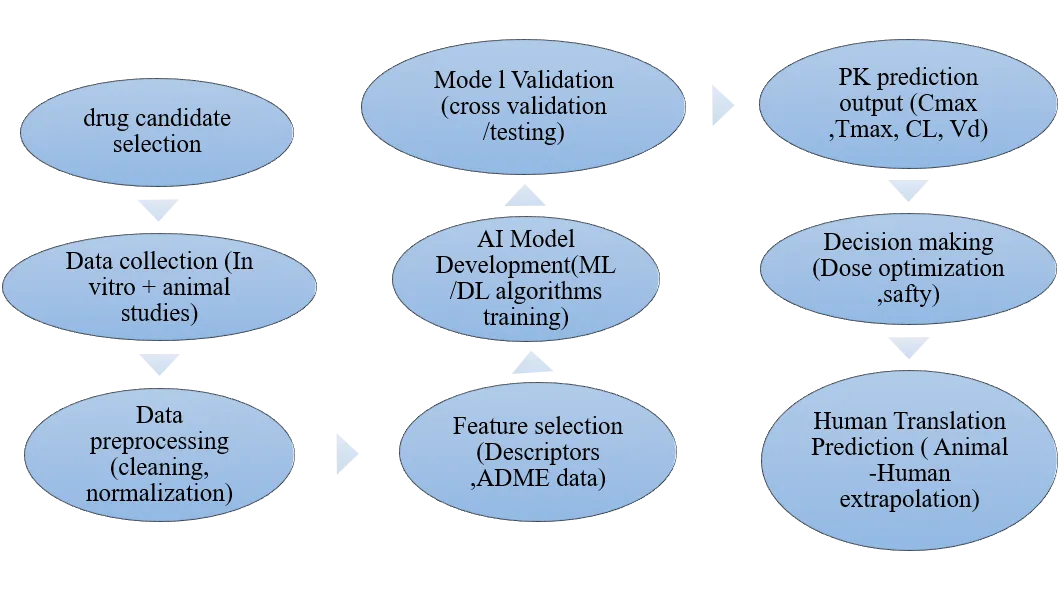
Fig.2. Pharmacokinetic Modeling of AI In Preclinical Studies
6. ARTIFICIAL INTELLIGENCE IN CLINICAL TRIALS
Patient selection:
Patients must meet specific standards for eligibility, suitability, motivation, and empowerment in order to participate in any clinical research. A patient may not be qualified due to their medical history. An eligible patient may not be at the stage of the illness or fit into a certain sub-phenotype that the medication being tested is intended to treat, rendering them ineligible.
Patients who are appropriate and eligible may not be adequately motivated to take part, and even if they are, they may not be aware of a matching study or find the recruitment process too difficult to understand. Trial delays are mostly caused by the difficulty of getting enough patients through these bottlenecks under strict recruitment deadline.
Patient Adherence Control, Endpoint Detection, and Retention:
Patients must maintain thorough records of their medication intake as well as a number of other data points pertaining to their daily routines, bodily functions, and response to medicine in order to meet adherence requirements. After 150 days into a clinical trial, an average of 40% of patients become non-adherent due to this difficult and time-consuming duty. AI is also crucial for image-based endpoint detection, which is currently done by hand at reading centers.
ML technologies for screening applications for the quick identification of disorders from medical photos have been proposed and recently approved. By avoiding manual processing, combining this with algorithms that quantify pathological states will lower the cost of image-based research.
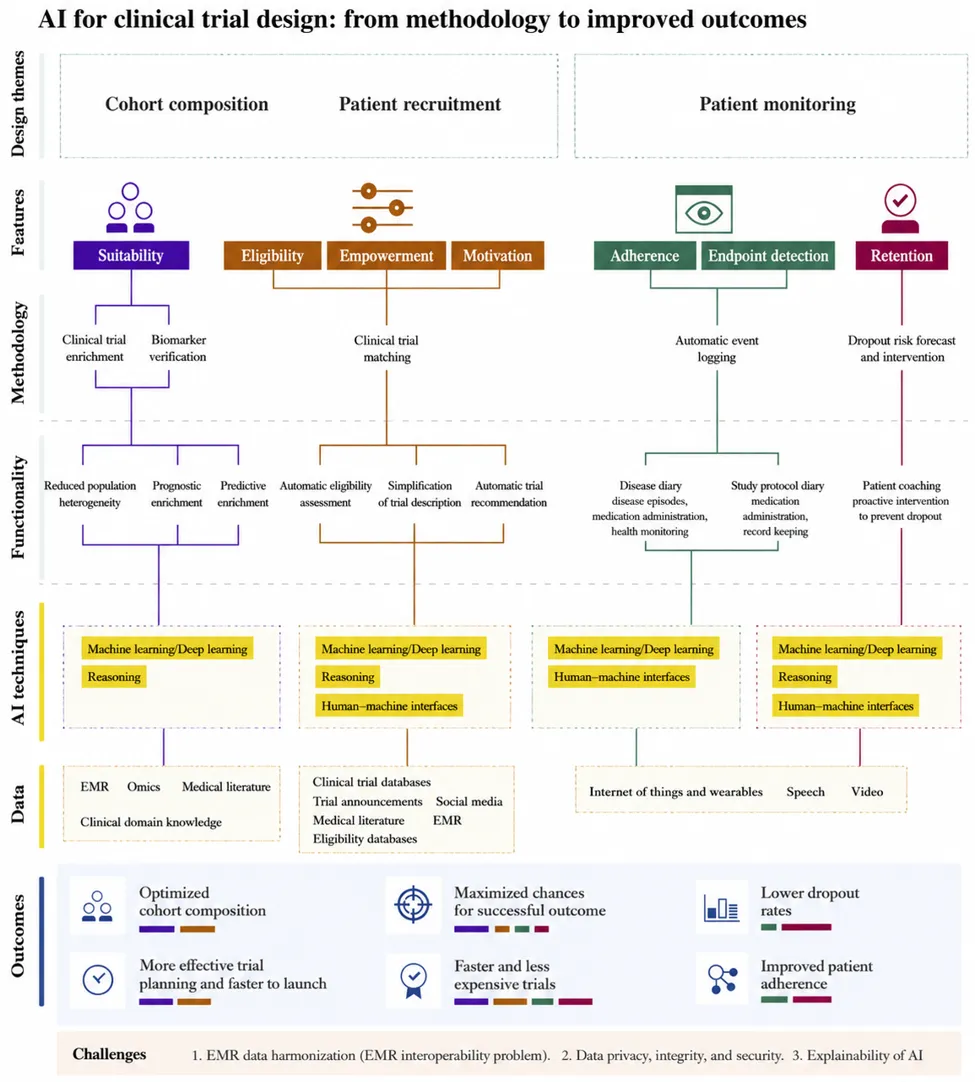
Fig.3.AI For Clinical Trial Design
7. CHALLENGES AND LIMITATIONS
The applications of causal inference utilising RWD may benefit greatly from the usage of causal modeling tools in AI, like as causal diagrams. The interpretability and flexibility of AI models in these drug development investigations can also be enhanced by causal modeling. This idea of causal AI has been effectively used in public health studies, including the prediction of diarrhoea incidence in children and the identification of occupational risk factors. It may also be applied in future drug development studies, such as the "target trial". Occupational and skill set immobility is another issue: a large number of individuals now employed in the pharmaceutical sector lack the training or credentials required to operate AI systems. Few people possess the necessary combination of abilities to apply AI in a pharmaceutical setting, despite the fact that many are skilled in data science and others in molecular chemistry and biology.To create suitable algorithms, one must understand the underlying chemistry, and vice versa. The digitalization and accessibility of EMR data, which AI techniques heavily rely on, are difficult tasks. Both tasks are difficult for opposing reasons: on the one hand, EMR formats vary greatly, are incompatible with one another or are not digital at all, and live in a decentralized ecosystem without established data exchange or access gateways due to a lack of regulatory frameworks on data collection. However, a highly controlled legal framework makes it impossible for patients to access their own data and severely restricts third parties' access to patient data. Governments and healthcare organizations are investing heavily to overcome the so called "EMR interoperability dilemma," which is acknowledged as a significant obstacle to improving the efficiency of healthcare systems. Search keywords like "Artificial Intelligence" OR "AI" AND "Healthcare" may be very broad and leave out relevant research. Furthermore, even though we examined 288 peer-reviewed scientific publications, the examination of conference presentations may yield intriguing findings for upcoming scholars due to the novel nature of the subject. Furthermore, because this field of study is still in its infancy, the analysis will frequently become outdated as new studies are released. Finally, although bibliometric analysis has limited the subjectivity of the analysis.
8. FUTURE PERSPECTIVES OF AI
AI’s primary potential in the pharmaceutical sector is to lower costs and boost productivity. Clinical trial simulation (CTS) studies, for instance, typically use computerized simulation methods on virtual populations to test various trial designs before resources are invested in conducting the actual clinical trial. CTS that incorporates RWD can simulate its virtual populations more realistically. Additionally, recent developments in the "target trial" framework, emulating hypothetical trials with RWD, enable us to identify unbiased initiation of exposures and reach an unbiased estimation of the casual relationships. Medication should advance as a result of better analysis of huge and complicated datasets brought about by the coordinated growth of mechanization and innovations arising from combining technology. The ultimate goal of using AI in this context is to shorten medication development cycles, lower costs, and increase success rates. Modern AI approaches have matured over the last five years to the point that they may be used in real-world scenarios to support human decision-makers in computer vision, navigation, and, in certain situations, medical and healthcare settings. However, the pharmaceutical and healthcare sectors continue to be among the most regulated and risk-averse. Any AI proposal that attempts to address every problem at once is destined for failure, even if AI has the capacity to influence many stages of clinical trial design, from planning to execution.
9. CONCLUSION
AI has emerged as a transformative technology in the field of drug development by improving the speed. One of the most important technologies in our economy today is artificial intelligence. It will bring about changes akin to the invention of electricity or the steam engine. But worries about a possible loss of control in the interaction between humans and AI are becoming more prevalent. There are currently no limits to the potential uses of AI in GI disease. These include enhancing endoscopy diagnostic capabilities, streamlining endoscopy workflow, and even assisting in the more precise risk assessment of patients with common GI disorders like GI bleeding and neoplasia. The restrictions present the first obstacle. There are currently no standards in place to evaluate the effectiveness and safety of AI systems.
To conquer the challenge, the US FDA made the initial effort to offer recommendations for evaluating AI systems. The first FDA-approved deep learning platform was Arterys' medical imaging technology shortly after these guidelines were made public. Clinical platform that aids in the diagnosis of heart conditions by cardiologists.
REFERENCES

Shruti Patil, Srushti Devkule, Vaishnavi Mane, Lija Mujawar, Artificial Intelligence in Drug Development, Int. J. of Pharm. Sci., 2026, Vol 4, Issue 6, 3378-3389. https://doi.org/10.5281/zenodo.20689844
 10.5281/zenodo.20689844