

We use cookies to ensure our website works properly and to personalise your experience. Cookies policy
Department of Pharmacy Practice, The Erode College of Pharmacy, Erode.
Early detection of postpartum breast cancer (PPBC) is clinically challenging due to lactation-induced physiological changes, such as increased breast density and involution, which reduce the efficacy of traditional mammography and ultrasound. This review evaluates the integration of Artificial Intelligence (AI) with breast milk-derived liquid biopsy as a transformative diagnostic framework. By applying machine learning and computer vision to high-dimensional data—including single-cell genomics, microRNA (miRNA) profiles, and tumor-associated circulating transcripts (TACTs)—AI can identify rare oncogenic mutations and malignant markers invisible to conventional imaging. Current evidence demonstrates that AI-driven models, such as deep convolutional neural networks (DCNN) and support-vector machines (SVM), achieve superior diagnostic precision. Specifically, DCNNs have outperformed pathologists in cytologic analysis with 95% sensitivity, while TACT assays yield 90.2% sensitivity, far exceeding traditional protein markers. Advanced techniques like Raman and infrared spectroscopy provide "molecular fingerprints" that allow AI to classify Stage Ia subtypes with up to 100% sensitivity. Furthermore, longitudinal data suggests that AI-normalized "liquid transcriptomes" can signal oncogenesis decades before clinical manifestation. Despite obstacles like low ctDNA abundance and slide quality variability, emerging "priming agents" and automated quality-control models are enhancing detection limits. Bibliometric trends identify the AI-liquid biopsy nexus as the fastest-growing frontier in oncology. Implementing AI-integrated models like "OncoCheck" offers a cost-effective, scalable solution for resource-limited settings. Ultimately, AI-driven breast milk analysis represents a high-specificity frontier for early PPBC screening, facilitating personalized intervention and significantly improving maternal survival rates.
Breast cancer remains the most frequently diagnosed malignancy among women worldwide and is a leading cause of cancer-related mortality despite significant advances in screening and treatment strategies. Early detection is crucial because survival rates are substantially higher when breast cancer is identified at an early stage. Conventional diagnostic approaches, including mammography, ultrasound, magnetic resonance imaging (MRI), and tissue biopsy, have improved disease management; however, these methods possess several limitations such as reduced sensitivity in young women with dense breast tissue, invasiveness, high cost, radiation exposure, and difficulty in detecting biologically aggressive tumors during pregnancy and the postpartum period.[1][13]
Postpartum breast cancer (PPBC), defined as breast cancer diagnosed during pregnancy or within several years after childbirth, represents a clinically challenging subtype associated with delayed diagnosis, increased metastatic potential, and poorer prognosis compared with non-pregnancy-associated breast cancers.[35] Physiological breast remodeling during lactation and postpartum involution often masks tumor-related changes, making conventional imaging less effective and contributing to diagnostic delays. Consequently, there is an urgent need for minimally invasive, sensitive, and reliable diagnostic strategies capable of identifying malignant transformations during the postpartum period.[2][14]
Liquid biopsy has emerged as a promising alternative to traditional tissue biopsy for cancer detection and monitoring (Figure 1). Unlike conventional biopsies, liquid biopsy involves the analysis of tumor-derived biomarkers from body fluids such as blood, saliva, urine, nipple aspirate fluid, tears, and breast milk. These biomarkers include circulating tumor cells (CTCs), circulating tumor DNA (ctDNA), cell-free nucleic acids, extracellular vesicles, exosomes, proteins, and microRNAs. Liquid biopsy offers several advantages, including minimal invasiveness, real-time monitoring, repeatability, and the ability to capture tumor heterogeneity. Recent evidence suggests that breast milk is a particularly valuable biofluid for postpartum breast cancer screening because it is in direct contact with mammary epithelial cells and may contain tumor-specific genetic and molecular alterations at earlier stages than peripheral blood.[3][15]
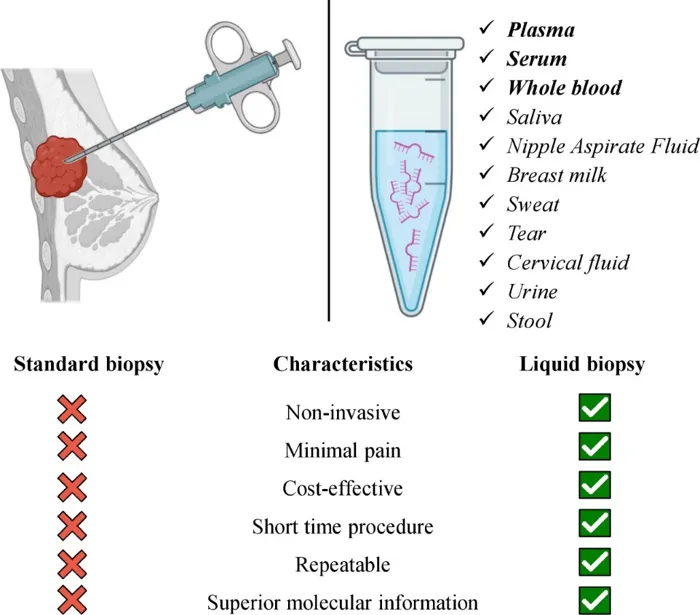
Figure 1: Comparison of standard tissue biopsy versus liquid biopsy characteristics and available bio fluids.
Recent groundbreaking studies have demonstrated the feasibility of detecting tumor-derived ctDNA in breast milk from women with early-stage breast cancer. Saura and colleagues reported that breast milk contains higher quantities and better-quality cell-free DNA than plasma, enabling the successful identification of patient-specific tumor mutations using droplet digital polymerase chain reaction (ddPCR). Importantly, ctDNA was predominantly detected in milk obtained from the affected breast, highlighting the potential of breast milk as a localized and sensitive diagnostic medium for early-stage disease detection. These findings have opened new avenues for developing non-invasive screening tools specifically targeted toward postpartum women.[4][16]
Simultaneously, artificial intelligence (AI) has transformed modern healthcare by enabling the rapid analysis of large-scale biomedical datasets with high accuracy and predictive capability. AI techniques, including machine learning (ML), deep learning (DL), and explainable artificial intelligence (XAI), have shown remarkable success in breast cancer diagnosis, risk prediction, histopathological image analysis, radiomics, and genomic profiling.[21] AI-driven systems can identify complex patterns within multidimensional datasets that may not be detectable through conventional statistical approaches. In the context of liquid biopsy, AI can facilitate biomarker discovery, optimize molecular classification, improve predictive modeling, and enhance diagnostic sensitivity and specificity by integrating genomic, transcriptomic, proteomic, and metabolomic information (Figure 2).[5][20]
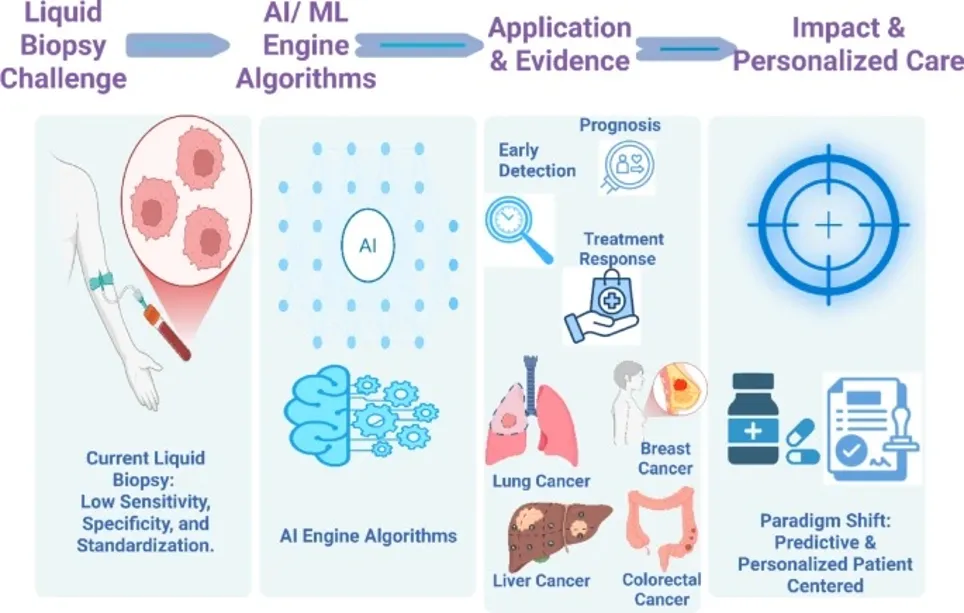
Figure 2: Workflow of AI-integrated liquid biopsy from technical challenges to personalized clinical impact.
The integration of AI with breast milk liquid biopsy represents a novel and transformative approach for early detection of postpartum breast cancer. AI algorithms can process highly complex molecular signatures obtained from breast milk samples, enabling automated identification of cancer-associated biomarkers and improving diagnostic precision.[22] Moreover, explainable AI models may enhance clinical trust by providing interpretable decision-making pathways for healthcare professionals. Such advancements hold significant promise for personalized screening strategies, early intervention, improved maternal outcomes, and reduced healthcare burden.[6]
Postpartum breast cancer (PPBC) represents a distinct and often aggressive clinical entity, characterized by a significant diagnostic void that directly impacts patient survival rates. A primary clinical gap exists because conventional radiological screening, such as mammography and ultrasound, faces severe limitations during lactation. The physiological changes in the breast—specifically increased milk production and heightened parenchymal density—drastically reduce the sensitivity and specificity of these standard imaging techniques.[23] Consequently, many cases of PPBC are diagnosed at an advanced stage, as symptoms are frequently dismissed as benign lactation-related issues like mastitis, allowing the malignancy to progress unchecked during a window of high biological vulnerability.
A transformative innovation in bridging this gap is the paradigm introduced by the Bhat-Nakshatri research, which identifies breast milk as a highly specialized medium for liquid biopsy. Unlike blood-based biopsies that track circulating tumor DNA (ctDNA) or circulating tumor cells (CTCs) often at low concentrations, breast milk offers a direct "molecular window" into the mammary microenvironment. The innovation lies in the discovery that breast milk contains actual, viable epithelial cells shed from the ductal lining. These cells can be isolated and "grown" in vitro, providing a robust biological substrate to study early oncogenic transformations that traditional imaging simply cannot see.[24]
However, the sheer complexity of this biological data creates an immediate necessity for Artificial Intelligence (AI). The transition from standard biopsy to milk-based molecular analysis generates massive, high-dimensional datasets—ranging from Whole Genome Sequencing (WGS) that maps millions of base pairs to automated microscopy that captures thousands of high-resolution cellular images. Human interpretation is insufficient to detect the subtle, non-linear patterns within this "big data". AI and Machine Learning (ML) algorithms are required to serve as the analytical engine, filtering through this vast molecular noise to identify precise biomarkers of early-stage PPBC.[25] By integrating AI, we can move beyond current liquid biopsy hurdles like low specificity and standardization, ultimately establishing a predictive, personalized, and non-invasive diagnostic pipeline that begins with a simple sample of breast milk.
2. BIOLOGICAL FOUNDATIONS:
2.1 Breast milk as a diagnostic tool:
The biological efficacy of breast milk as a diagnostic medium lies in its role as a rich reservoir of cellular and molecular information directly derived from the mammary microenvironment. This "raw material" provides a high-fidelity snapshot of the breast’s health, serving as the essential input for sophisticated AI-driven analysis.
Postpartum breast cancer (PPBC) presents a significant clinical challenge due to its aggressive nature and the limitations of traditional radiological screening during lactation, which often leads to late-stage diagnosis. Current liquid biopsy methods using plasma frequently fail to detect early oncogenic signals, showing a lack of sensitivity compared to breast milk, where cell-free tumor DNA (ctDNA) has been detected in 87% of patients—including cases identified up to 18 months before a standard diagnosis.[26] This establishes breast milk as a superior diagnostic medium, containing not only ctDNA but also viable primary epithelial cells and rare Cancer Stem-like Cells (CSCs) characterized by markers such as CD49f, EpCAM, and CD271.[7]
Genomic profiling of these milk-derived cells reveals critical driver mutations in genes such as HDAC6, MORF4L1, and SMARCC2, which not only serve as biomarkers but also suggest specific therapeutic sensitivities to HDAC6 or EZH2 inhibitors. Notably, this method acts as a "silent warning" system, identifying high-risk mutations in NF1 and KMT2D in clinically healthy donors, alongside copy-number variations in PTEN and REL. To manage the massive datasets generated by such deep genomic and cellular analysis, the integration of Artificial Intelligence (AI) and machine learning is essential. AI overcomes current liquid biopsy barriers—specifically low sensitivity and lack of standardization—to transform raw biological data into a predictive, standardized, and patient-centered tool for early PPBC detection and personalized care.[8] [9]
2.2 Rare Cell Identification: The Cellular Mosaic
Breast milk is a dynamic biological matrix far exceeding its role as a nutritional fluid; it contains a heterogenous population of primary mammary epithelial cells shed directly from the ductal lining.
Within the biological matrix of breast milk, a complex "pathological mixture" exists where healthy mammary epithelial cells are interspersed with rare, highly aggressive Cancer Stem-like Cells (CSCs). These CSCs hold immense clinical significance as they are fundamental to tumor initiation and often serve as the earliest biological indicators of disease progression. However, identifying these cells presents a formidable "needle in a haystack" challenge; because they constitute only a minute fraction of the total cellular population, their detection requires high-precision analytical tools—such as AI-driven algorithms—capable of distinguishing subtle malignant signatures from a vast sea of healthy biological data.[10][19]
2.3 Molecular "ID Cards": Specific Protein Markers
To achieve precise identification of these rare malignant signals, specific surface proteins function as biochemical "ID cards," enabling the high-throughput, automated sorting necessary for AI-driven classification. For instance, markers such as CD49f and EpCAM are utilized to isolate and enrich for cells of epithelial origin from the complex biological matrix of the milk sample.[30] Furthermore, the protein CD271 serves as a critical indicator of stem-like properties, acting as a primary marker for CSC enrichment and a vital "red flag" for potential malignancy in the lactating breast. Recent research indicates that milk from breasts affected by cancer is specifically enriched for the CD44+/CD24- phenotype alongside CD49f+/EpCAM- signatures, providing a robust molecular profile for early detection.[10][18]
2.4 Genomic Foundations: Mutations and Gene Errors
Deep sequencing of isolated milk-derived cells reveals distinct genomic "errors" that serve as high-fidelity biomarkers for postpartum breast cancer (PPBC). The research by Bhat-Nakshatri et al. identifies specific mutations that signal early oncogenic transformation: [10]
2.5 The "Healthy" Warning: Why AI is Mandatory
The most profound clinical implication of this research lies in the detection of "silent" genomic signals within individuals who remain asymptomatic and clinically healthy. The study identified specific "silent carriers"—notably donors M2 and M10—who, despite having no clinical history of breast cancer, possessed milk-derived cells significantly enriched for the cancer stem-like cell (CSC) phenotype and harbored mutations in NF1 or KMT2D, which are genes frequently associated with breast cancer development. These early warning signs are often part of a complex signal detection challenge, as they are frequently coupled with copy-number variations in other critical genes such as CDKN2C, PTEN, and REL.[33] Because these early-stage oncogenic signals are extremely faint and buried within massive, multi-dimensional datasets—ranging from Whole Genome Sequencing (WGS) to thousands of high-resolution microscopy images—they remain beyond the scope of manual human interpretation. Consequently, the integration of Artificial Intelligence (AI) and deep learning networks is a necessity to "amplify" these signals and detect non-linear patterns, potentially identifying malignancy years before it becomes detectable via traditional radiological techniques.[27]
3. AI FRAMEWORKS IN LIQUID BIOPSY:
The technical infrastructure of an AI-driven liquid biopsy framework relies on the synergistic application of machine learning (ML), deep learning (DL), and advanced bioinformatics to process multifaceted biological data from breast milk. A primary application is the automation of cell sorting and characterization, where ML algorithms enhance traditional flow cytometry by recognizing specific protein patterns, such as CD49f, EpCAM, and CD271, with superior precision and speed. This automation ensures that rare Cancer Stem-like Cells (CSCs) are isolated from millions of healthy cells, effectively overcoming the "needle in a haystack" challenge inherent in early-stage detection.[28]
Beyond cellular sorting, Deep Learning—specifically Convolutional Neural Networks (CNNs)—plays a transformative role in analyzing the morphology of "mammospheres," which are complex cell clusters that indicate oncogenic potential. CNNs can scan thousands of high-resolution microscopy images to identify subtle abnormalities in cell shape and cluster architecture that may be imperceptible to the human eye, providing a standardized clinical assessment.[29]
Finally, the framework integrates Bioinformatics AI to interpret massive Whole Genome Sequencing (WGS) datasets. Algorithms like Random Forest or XGBoost scan DNA sequences to pinpoint high-fidelity biomarkers such as HDAC6, MORF4L1, or SMARCC2 mutations.[31] These models not only identify errors but also correlate genomic signatures with therapeutic vulnerabilities, predicting patient sensitivity to targeted drugs like HDAC6 or EZH2 inhibitors. By combining these modalities, the liquid biopsy pipeline transitions into a predictive, personalized diagnostic engine capable of detecting malignancy years before traditional radiology.
4. DISCUSSION:
4.1 Predictive Diagnostics: Pre-Symptomatic Detection
The most profound clinical potential of this framework lies in its capacity for predictive diagnostics, moving beyond reactive "lump-based" detection. The landmark study by Bhat-Nakshatri et al. demonstrated that breast milk can reveal "silent" genomic signatures in women who are clinically asymptomatic and radiologically clear. Specifically, the identification of NF1 and KMT2D mutations in donors who appeared healthy (M2 and M10) suggests that AI can detect oncogenic drivers years before a physical tumor manifests.[32] By training AI to recognize these subtle "healthy" warnings—often accompanied by copy-number variations in CDKN2C, PTEN, and REL—clinicians can initiate high-risk surveillance long before standard screening would flag an abnormality.[34]
4.2 Therapeutic Matching: Precision Oncology
AI frameworks transition breast milk analysis from a purely diagnostic tool to a platform for therapeutic matching. By identifying specific genomic "errors" and cellular profiles, AI can predict individual drug sensitivities. For example, the presence of mutations in the cytoplasmic retention domain of HDAC6 or deletions in the SWI/SNF complex component SMARCC2 can be used by predictive algorithms to forecast a patient's response to targeted therapies. AI can specifically identify when a patient’s milk-derived cancer stem-like cells (CSCs) are likely to be sensitive to HDAC6 inhibitors, BET bromodomain inhibitors, or EZH2 inhibitors. This allows for the design of individualized therapeutic strategies that maximize efficacy while minimizing unnecessary toxicity.[11]
4.3 Overcoming the "Black Box": The Role of Explainable AI (XAI)
Despite the immense predictive power of these algorithms, their clinical adoption is often hindered by the "black box" problem, where the internal logic of a diagnosis remains opaque to the practitioner. To ensure trust and clinical utility, there is an urgent need for Explainable AI (XAI) in liquid biopsy. XAI frameworks are designed to provide "human-interpretable" justifications for their predictions—for instance, highlighting which specific genomic mutation or cellular morphology led to a high-risk classification. Ensuring that doctors understand the biological "why" behind an AI's diagnosis is essential for ethical decision-making, patient communication, and the eventual standardization of milk-based liquid biopsy in routine clinical practice.[11]
CONCLUSION:
The integration of Artificial Intelligence (AI) with breast milk-derived liquid biopsy marks a transformative shift in the management of postpartum breast cancer (PPBC), moving the clinical focus from "detecting a tumor" through traditional radiology to "detecting a cell" through molecular and computational precision. While the physiological density of the lactating breast often hinders conventional imaging, breast milk offers a direct, non-invasive molecular window into the mammary microenvironment, containing high-quality cell-free tumor DNA (ctDNA), primary epithelial cells, and rare Cancer Stem-like Cells (CSCs). The complexity of these multi-dimensional datasets-ranging from Whole Genome Sequencing (WGS) to high-resolution morphology-requires AI frameworks like Convolutional Neural Networks (CNNs) and Random Forest to identify subtle oncogenic patterns such as HDAC6, NF1, and KMT2D mutations that are invisible to the human eye. By identifying these "silent" genomic signals in asymptomatic women, AI-driven analysis can flag malignancy years before physical, symptoms manifest, enabling a transition toward truly preventative oncology.
Furthermore, this framework facilitates therapeutic matching, allowing clinicians to predict sensitivity to targeted inhibitors, such as HDAC6 or EZH2 inhibitors, based on the specific genomic errors identified within milk-derived cells. Implementing a routine, scalable "Milk Screen" for high-risk mothers could overcome diagnostic delays and significantly reduce the high metastatic risk associated with PPBC. Ultimately, overcoming the "black box" through Explainable AI (XAI) will be essential to establish clinical trust and standardize this technology, effectively leveraging the synergistic power of liquid transcriptomics and AI to preserve maternal health and transform the standard of care for postpartum women.
REFERENCES

S. Navaneethakrishnan, V. Akash, K. Hemavathi, A. Santhiya, Artificial Intelligence in Liquid Biopsy: Transforming Breast Milk Analysis for Early Detection of Postpartum Breast Cancer, Int. J. of Pharm. Sci., 2026, Vol 4, Issue 6, 3112-3121. https://doi.org/10.5281/zenodo.20660845
 10.5281/zenodo.20660845