

We use cookies to ensure our website works properly and to personalise your experience. Cookies policy
Shantha College of Pharmacy, Peresandra, Chikkaballapur-562104, Karnataka, India.
In this review of ethnopharmacological importance of Indian medicinal plant I,e ceropegia bulbosa, belongs to the family panacea (dog bone family). Ceropegia bulbosa mainly grown during monsoon season (June –September) under tropically & semi tropical and semi-arid habitats includes sandy plains and sand dunes, at temperature of about 20 -30 C (optimal growth). It grows naturally in the dry region about 30-100 cm in length, majorly found at Rajasthan, Gujarat, Punjab and Pakistan [1,2,16,40]. The plant has long been utilized in traditional medicine by indigenous and rural communities for the management of various ailments, including gastrointestinal disorders, general weakness, inflammation, and nutritional deficiencies. Its underground tubers are also consumed as a supplementary food source during periods of scarcity, highlighting its ethnobotanical and nutritional significance [1,10,11,13,16,17,18,31,32]. recent scientific investigations have revealed that ceropegia bulbosa contains a diverse range of bioactive phytochemicals, including g flavonoids, phenolic compounds, alkaloids, which may contribute to its therapeutic properties. preliminary pharmacological studies have demonstrated antioxidant, antimicrobial, anti-inflammatory, and cytoprotective activities, supporting several of its traditional uses [1,4,5,9,19,20,36]. Furthermore, the presence of potent antioxidant applications in the prevention and management of oxidative stress- related disorders, including neuro degenerative and metabolic diseases 5,19,20,36. despite its medicinal importance, research on ceropegia bulbosa remains limited compared with other medicinal plants, and many aspects of its phytochemistry, pharmacological mechanisms, toxicity profile and clinical efficacy remain unexplored 1,3,11. additionally, increasing habitat degradation and overexploitation threaten natural populations, emphasizing the need for conversation and sustainable utilization strategies [6,7,8,10,21,23,26,27,29,37,38,39,40]. This review aims to comprehensively summarise the current knowledge on the ethnobotany, traditional uses, phytochemical composition, pharmacological activities & future therapeutic prospects of ceropegia bulbosa, white highlighting existing research gaps and potential directions for drug discovery, translational research and conversation efforts
Ceropegia bulbosa, commonly called as desert ceropegia bulbosa, butamben. These species occurred from natural products obtained from medicinal plants. And it plays a fundamental role in health in health care systems & discovery of novel therapeutic actions/ agents [1,2,16,17,18,40]. It has increasing prevalence of chronic disease, anti-microbial, antioxidant & inflammatory resistance and adverse effects associated with synthetic drugs, ceropegia bulbosa has interest in plant-based medicine as potent, sources of safe, effective & therapeutic compounds. The efforts have been directed toward the exploration of traditionally medicinal plants & the scientific validation of their pharmacological properties [1,3,5,11]. The genus ceropegia bulbosa, family apocynaceae; comprises over 200 species distributed across tropical & subtropical regions of Africa, Asia & Australia. Ceropegia bulbosa is a perennial tuberous herb widely distributed in the arid and semi-arid regions of India. Preliminary pharmacological studies have anti-inflammatory, antioxidant, anti-diabetic, and hepatoprotective & cytotoxic activities [4,5,9,19,20,36].
MEDICINAL PLANTS AS SOURCES OF THERAPEUTIC AGENTS: medicinal plants are more importance for their therapeutic agents due to presence of bioactive compounds that prevent or manage the various diseases. Provides natural compounds, it serves as a raw material for pharmaceutical drugs & offers health care activities, [1,11,17,24,33] majorly therapeutic compounds from plants like alkaloids, glycosides, flavonoids, tannins & terpenoids [1,17,19,20,36]. Few of these examples are cinchona, digitalis purpose, curcuma longa & azedarach indica[ 17,24,33].
ADVANTAGES
• rich chemical diversity
• multiple therapeutic effects
• natural source of medicines
• cost effective
• renewable resource
• wild availability[ 17,24,33].
OVERVIEW OF THE GENUS CEROPEGIA: Ceropegia is a large genus of tuberous, predominantly twining herbs comprising approximately 200 – 244 species distributed across the warmer regions of the old worlds, with a major centre of diversity in peninsular India [1,12,22,25,26,27,34,40]. Where roughly 55 – 62 species occur and a high proportion are endemic. The genus is currently placed within apocynaceae (subfamily Asclepiadaceae, tribe ceropegia) following the merger of the traditional Asclepiadaceae into apocynaceae, although much of the older taxonomic and phytochemical literatures still refers to it as Asclepiadaceae 1,22,23,34,40. ceropegia species are xerophytic, surviving the hot dry season as dormant underground tubers, and are characterised by distinctive, often cage – like or lantern – shaped corolla tubes that function as temporary fly – traps for pollination [1,16,22,34,35,40]. The genus is pharmacologically notable for the pyridine, alkaloid ceropegia, first isolated from c. juncea, together with a range of steroids, triterpenoids, flavonoids, coumarins, and fatty acids reported across multiple species [1,3,19,20].
INTRODUCTION TO CEROPEGIA BULBOSA: Ceropegia bulbosa rob, is one of the more widely utilised members of the genus in Indian folk medicine. Two varieties are commonly recognised in the literature, var. bulbosa and var. Lushi (Grah) hook’s., the latter being a narrow endemic of the thar desert[ 1,2,14,16,22,40]. the species produces a globose to irregularly tuberous underground rootstock from which slender, herbaceous, twining stems arise ; [1,4,16,22,40]. the tubers are widely consumed as a famine or supplementary food after boiling to remove bitterness, and are simultaneously valued as folk remedy for digestive and urinary complaints.[1,2,11,13,16,17,18,31,32] despite this long history of use, dedicated, species – specific pharmacological and toxicological data on ceropegia bulbosa remain comparatively sparse, and much of the available evidence is drawn from preliminary phytochemical screening GC-MS profiting or work on dovely related congeners[ 1,3,4,6,7,9,11,19,20.]
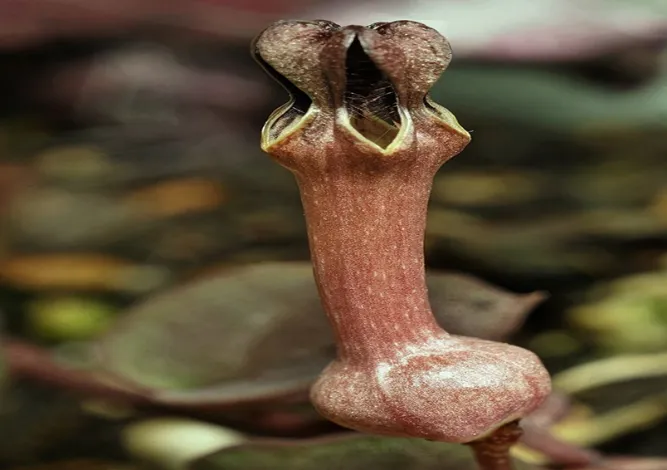
Fig.No.1:Ceropegia Bulbosa
SIGNIFICANCE AND OBJECTIVES OF THE REVIEW: Given the dual significance of ceropegia bulbosa as subsistence food resource and a folk medicinal plant, and given its increasingly precarious conservation status, there is a clear need to consolidate the scattered literature [1,2,10,11,14,21,26,27,29,37,39,40]. on its botany, traditional uses, phytochemistry, and pharmacology. This review aims to
(i)summarise the taxonomic and morphological identity of ceropegia bulbosa;[ 1,16,22,34,40]
(ii)document its ethnobotanical and nutritional uses; [1,11,13,16,17,31,32]
(iii)collate available phytochemical data; [1,4,19,20]
(iv)critically appraise the pharmacological evidence, distinguishing species – specific findings from enus – level extrapolations; [1,3,5,9,11,19,20]
(v) asses toxicological and safety data; [ 11,17,24]
(vi) examine its conservation status and propagation strategies; [6,7,8,10,21,23,26,27,29,37,39,40]
(vii)identify research gaps and future therapeutic prospects that could support its rational and sustainable development as a nutraceutical or pharmaceutical resource.[1,3,9,11,20]
TAXONOMY AND BOTANICAL DESCRIPTION
TAXONOMIC CLASSIFICATION
Kingdom: Plantae [ 22,34,40]
Division: Magnoliophyte [ 22,34]
Class: Magnoliopsida [ 22,34]
Order: Gentianales [22,34,40]
Family: Apocynaceae [ 1,22,34,40]
Genus: Ceropegia [1,22,34]
Species: Ceropegia bulbosa Roxb [1,16,40]
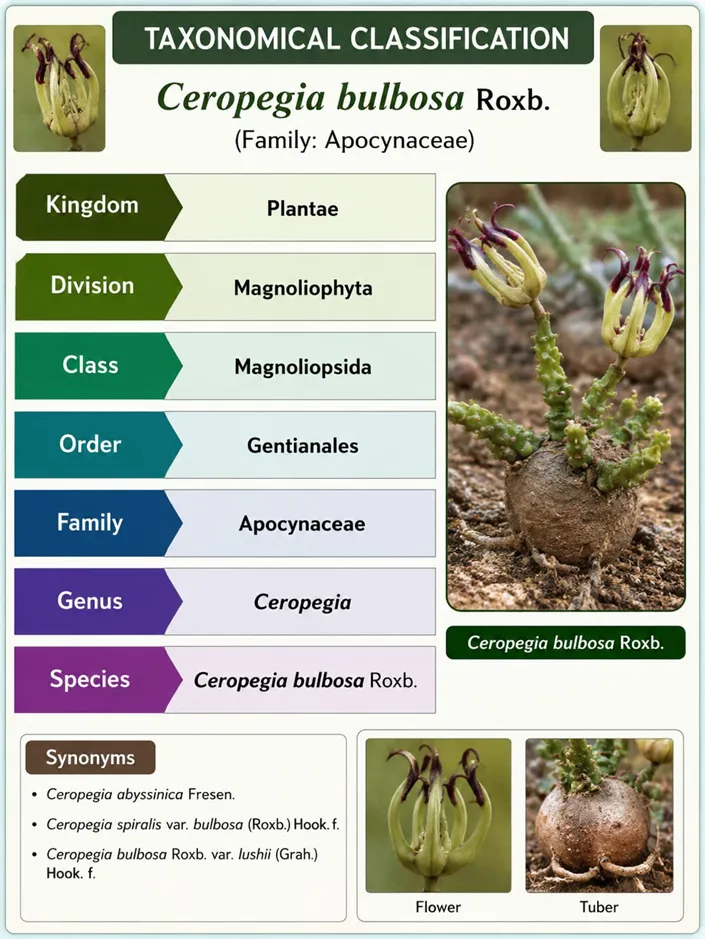
Fig.No.2: Taxonomical Classification
Botanical Descriptions: Ceropegia bulbosa is a perennial, herbaceous climber arising from fleshy, irregularly globose underground tuber. Slender, globose trail along the ground or twine around adjacent vegetation for support, leaves are opposite, fleshy, lanceolate to ovate, and often deciduous during the dry dormant season, leaving the tuber as the principal perennating organ [1,4,16,22,40].
Nomenclature & Synonymy: The name ceropegia bulbosa recognized synonyms include ceropegia acuminata, ceropegia brosima, ceropegia edulis decne, ceropegia esculents edges, ceropegia humilis, ceropegia lushii graham and ceropegia vignaldiana A, rich. Common names are khapper – kaddu, bhuu -tumba, paataal – tumbi, gilothi, galot, gilodya and utkla in Sanskrit language [ 1,16,17,18,31,32].
Habitat & Ecology: This plant thrives in typical xeric (dry) conditions, as documented from the Indian thar desert of Rajasthan, it grows in dry deciduous, scrublands, rocky hillsides and open grassland with well drained soils. its tuberous underground organs are a classic adaptation to seasonal drought [1,2,8,14,16,22,25,40].
MORPHOLOGICAL CHARACTERISTICS: The inflorescences are axillary, umbellate cymes bearing the genus characteristic urn- or cage- shaped flowers, with a tubular corolla that is typically constricted at the throat and expanded basally, the lobes often fused apically into a cage like structure that temporarily trapes small files, which act as pollinators.[ 1,22,34,35,40]. before being released. floral colouration ranges from greenish – yellowish to purplish – brown with darker mottling, varying between there recognised varieties. fruits are typically paired slender follicles containing numerous compose (plumed) seeds adapted for wind dispersal [1,16,22,34,40], a feature broadly conversed across apocynaceae.
IT INCLUDES:
Underground Parts: this plant bears conspicuous tuberous bulbs (the defining character of the species) that are fleshy, rounded to pyriform and serve as organs of perennation and food storage, the tubers contain approximately 42.52% starch and possesses refrigerant properties [1,4,8,18].
Stems: slender, twining, herbaceous, climbing or trilling, capable of supporting itself on adjacent vegetation or structures [1,16,22,40].
Leaves: heart- shaped (cordate) to ovate, opposite, petiolate, with entire margins and acute apices; texture somewhat fleshy in xeric ecotypes [1,16,22,40].
Fruit: follicles (paired), slender, elongated – typical of asclepiadoidene [1,22,34,40].
DISRUBUTION AND HABITAT: Ceropegia bulbosa is distributed across drier tracts of India, with var. Lushi being a narrow endemic of the thar desert of Rajasthan and var. bulbosa occurring more widely across rocky, gravelly, and lateritic substrates in Gujarat, Maharashtra & other semi – arid regions of peninsular India. The spaces typically grow at open, sun – exposed, rocky / sandy habitats [1,2,10,14,16,22,25,40], often associated with scrub vegetation, and is adapted to survive prolonged dry periods through its underground tuber.
GLOBAL DISTRIBUTION: it has a remarkably wide intercontinental range spanning three major biogeographic regions. Its native range extends across Bangladesh, Cameroon [ 16,21,22,40], Chad, Eritrea, Ethiopia, India, Kenya, Oman, Pakistan, Saudi, Arabia, Somalia, and Yemen. This disjunct pattern reflects the broader paleotropical distribution as a whole is distributed from the Spanish Canary Islands in the west, across and central, southern, northern Africa through Madagascar and Arabia, to India, southeast Asia & northern Australia. It has distributed within the India like Rajasthan, Tamil Nadu.
Habitat Characteristics: It occupies notably broad ecological amplitude, tolerating xeric, sub – humid, and even coastal saline conditions [1,8,14,16,22], it includes types:
Arid and Semi-Arid Scrublands: In Rajasthan, the species occurs under average annual rainfall showing a gradient of 200 mm in the west (Jaisalmer) to 550 mm in the east (Sironi) with erratic and uneven precipitation (coefficient of variability exceeding 55%). Extremes of temperature – 50C in summer and -2C in winter- combined with high wind speed (20-40 km /hr), high evapotranspiration (1,500-2,000mm/ year), poor soil fertility, and low water retention capacity. its occurrence is linked to hilly areas in higher rainfall pockets within this arid matrix.
Dry Hilly Scrub and Rocky Terrain: In the western ghats, ceropegia bulbosa is mainly associated with drier hilly regions among spiny and thorny bushes, favouring shallow, well drained, rocky or gravelly soils on hillsides and rocky outcrops.
PHENOLOGY
Vegetative growth and flowering are closely tied to the monsoon period flowering has been documented during monsoon and early post monsoon months June to October, with which annual parts senesce and the plant retreats to tuber dormancy [1,6,8,14,16,40] through the dry season. It includes
Dormancy and tuber perennation (November – June)
Sprouting and leaf initiation (June – July)
Vegetative growth (July – august)
Flowering (august – October)
Fruiting and seed maturation (October – November)
Seed dispersal (November – December)
Dormancy and Tuber Perennation: ceropegia bulbosa is a geophyte that survives the long dry season as an underground bulbosa tuber, during the hot, arid inter -monsoon period (approximately November to June), all aerial vegetative parts senesce and the plant plant persists entirely through its perennating tuber, the tuber stores starch reserves – the tuber contains approximately 42.52% starch [ 1,4,8,16].
Sprouting and Leaf Initation: within the onset of southwest monsoon (June – July) soil moisture triggers the breaking of tuber dormancy and the initiation of above – ground growth, it is under controlled ex- situ conditions revealed precise timings. leaf initiation occurred on 12th day reaching its peak in the month of September [6,8,14].
Vegetative Growth: the plant attains vegetative growth during the monsoon season from July to august during which the twining stems elongate and clamber over neighbouring scrub vegetation, leaf development proceeds rapidly through august. growth parameters – leaf number, stem height, and overall biomass – increase steeply over this period, laying the nutritional foundation for reproductive effort [ 6,8,16].
ETHNOBOTANICAL IMPORTANCE
Traditional Uses: across its range of ceropegia bulbosa tubers are used in folk medicines for digestive complaints, diarrhoea and dysentery and urinary ailments including kidney stones and are considered a general health tonic, tuber paste its traditionally applied topically for skin inflammation, while a tuber decoction is taken orally to relieve urinary bladder [1,2,11,13,16,17,18,31,32].
MEDICINAL USES BY AILMENT CATEGORTY:
o Urolithiasis (kidney stones)
o Gastrointestinal disorders
o Deafness and ear disorders
o Fertility and vitality
o Analgesic and antipyretic uses
o Diuretic and urinary tract disorders
o Immunomodulation and nutritional support.
Tribal and Folk Medicinal Applications: tribal and rural communities across Rajasthan, Gujarat and Maharashtra (including groups such as the Pawar tribe of Nandurbar district have documented uses of ceropegia bulbosa and allied species for an array of ailments. Reported applications include the seed paste instilled in the ear to treat deafness, and use of leaves for digestive complaints and as a remedy for dysentery and diarrhoea, uses that are also recorded historically for the wider genus in classical Indian material medica compilations [11,13,17,18,31,32].
Nutritional and Edible Uses: the tubers of ceropegia bulbosa, particularly Var, Lushi are an importance wild/famine food in the thar desert and other dry regions, traditionally boiled prior to consumption to remove their inherent bittiness, tubers and to a lesser extent young leaves and flowers, are consumed as a vegetable during periods of scarcity, contributing to local food and nutritional security [1,2,11,16,17,18].
Cultural and Socioeconomic Significance: beyond subsistence and medicine, ceropegia bulbosa holds local cultural value as part of indigenous ethnobotanical knowledge systems passed down through generations of tribal and rural communities. The unregulated and increasing commercial collection of tubers from the wild for medicinal and food markets, however, has socioeconomic implications for both the sustainability of the resource [6,7,10,14,21,26,27,29,37,39] and the livelihoods that depend on it, underscoring the need for cultivation – based alternatives discussed in section 8.
PHYTOCHEMICALS OF CEROPEGIA BULBOSA
Primary Metabolites
As with most succulent geophytes, the tubers of ceropegia bulbosa are rich in storage carbohydrates, together with proteins, free amino acids and various organic acids; physiochemical analyses of related ceropegia tubers report high dry– matter content and notable water-soluble extractive values, consistent with substantial carbohydrate and mineral reserves. Aqueous tuber extracts of ceropegia bulbosa have also been reported to contain steroids, polyphenols, sugars and potassium [1,4,8,16,20].
Carbohydrates like starch, reducing sugars & total sugars, crude fibre.
Proteins like crude protein and amino acids
Lipids like crude fat and fatty acids (gc – ms identified)
Moisture & ash content
Mineral elements [4,6,20].
SECONDARY METABOLITIES
Qualitative and quantitative phytochemicals secondary of ceropegia bulbosa and congeneric species consistently reveals a broad spectrum of secondary metabolite classes, summarised by subclasses below:
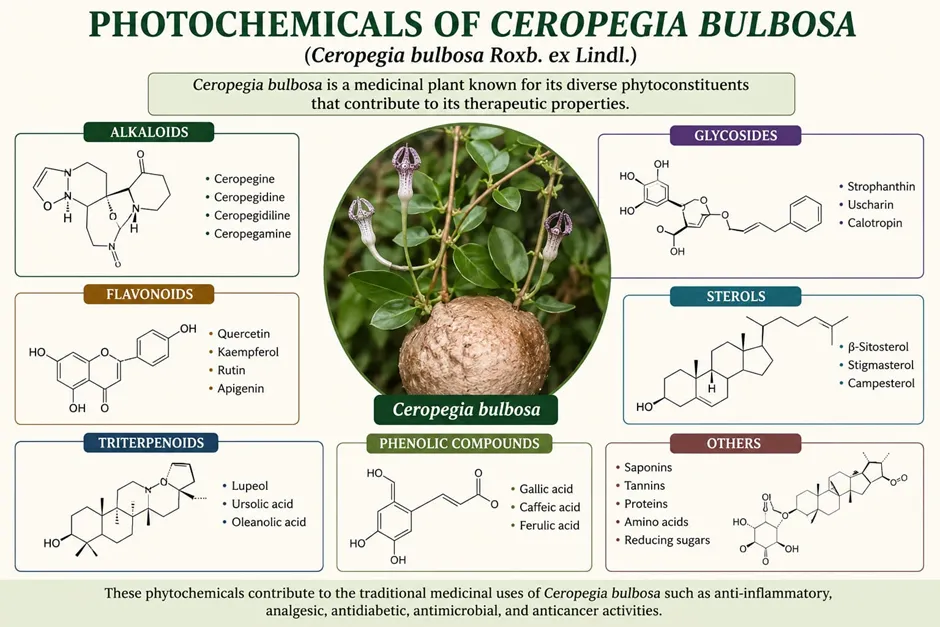
Fig.No.3: Phytochemicals of Ceropegia Bulbosa
Alkaloids: the genius ceropegia is chemotaxonomically notable for ceropegia, a pyridine – type alkaloid first isolated from ceropegia juncea and structurally characterised as 3,4- dioxo-1,1,5 – trimethyl – 1,3,4,5-tetrahydrofuro [3,4-c] pyridine. Alkaloids have been detected qualitatively in ceropegia bulbosa extracts, and ceropegia and related alkaloids constituents are considered key contributors to the genus’s reported antimicrobial and other bioactivities, although quantitative isolation of ceropegia specifically from ceropegia bulbosa tubers requires further confirmation [1,3,19,20].
Flavonoids: flavonoid constituents have been reported in qualitative phytochemical screens of ceropegia bulbosa and closely related species, consistent with broader pattern across the genus where flavonoids contribute to antioxidant and anti-inflammatory activity profiles [1,19,20,36].
Phenolic compounds: phenolic compounds are consistently detected in ceropegia tuber, stem, and leaf extracts and are generally regarded as principal contributors to anti-oxidant capacity, comparative studies in the congener ceropegia Thwaites, for instance, report substantial total phenolic content and strong correlation with radical scavenging activity, a pattern plausibly extendable to ceropegia bulbosa [1,19,20,36] pending dedicated quantification.
Tannins: tannins have been identified in qualitative phytochemicals assays od ceropegia tuber extracts including. Bulbosa and may contribute to the traditionally reported astringent, antidiarrheal and wound healing applications of the plant [1,4,19].
NUTRITIONAL COMPOSITION
Limited proximate and elemental analysis of ceropegia tubers (drawing partly on data for the congener ceropegia spiralis) indicate high dry – matter content, appreciable water – soluble extractives, and detectable levels of essential macro – micro elements including nitrogen and zinc, alongside other trace minerals relevant to human nutrition [1,4,8,16,20]. comprehensive nutritional composition data (proximate analysis of protein, fat, ash and full mineral & vitamin profiling) specifically for ceropegia bulbosa tubers remain an important research gap [1,20].
REPORTED BIAOACTIVE COMPOUNDS
Gc -ms based metabolite profiling of ceropegia bulbosa extracts (whole plant, tuber, and floral tissue) has identified a range of bioactive compounds including tetra decanoic (myristic) acid, pentadecanoic acid, heptadecanoic (margaric) acid, octadecanoic (stearic) acid, ergots -5-en-3-ol, stigmas -5-3-ol, tetracontane, squalene. Floral extracts have additionally shown 24-nourursa-3,12-diene and hexadecenoic and 2-hydroxy-1–(hydroxymethyl ester (a monoacylglycerol pf palmitic acid) [1,5,9,20]. as major constituents. These fatty acids, triterperpenoids and phytosterols are consistent with known anti -inflammatory, antioxidant, anti-microbial and hypolipidemic activates reported for similar compound classes in other plants.
PHARMACOLOGICAL ACTIVITIES
It is important to note at the outset of this section that direct, species – specific pharmacological data on ceropegia bulbosa are limited relative to many other medicinal plants; several of the activities discussed below are supported chiefly by preliminary in vitro screening by nano particle – medicated studies, or by extrapolation from pharmacological characterised congeners [1,3,5,9,11,19,20] e,g Thwaites, c. Spiralis, c, juncea that share overlapping phytochemicals profiles. This distinction is flagged throughout and revisited in section 10.
IT INCLUDES:
I. antioxidant activity
II. Antimicrobial activity
III. anti-inflammatory activity
IV. Antidiabetic activity
V. Hepatoprotective activity
VI. Cytotoxic and anti-cancer potential
VII. Immunomodulatory activity
VIII. Other biological activities
Anti-inflammatory Activities: the presence of phytosterols, triterpenoids and fatty acids in ceropegia bulbosa extracts provides plausible mechanistic grounds for inflammatory activity, consistent with anti- inflammatory effects reported for these compound classes generally and for related ceropegia species specifically; dedicated in vivo or enzyme – inhibition (e,g , cox/lox) in ceropegia bulbosa itself have not been extensively reported and constitute a research gap [1,5,19,20,36].
Immunomodulatory Activity: no species – specific immunomodulatory studies on ceropegia were identified. Polysaccharide, saponin and flavonoid fractions of related medicinal apocatastases species are known to modulate immune response in other contexts, suggesting a hypothesis – generating direction for future research [1,11,19] rather than an established finding for this species.
Hepatoprotective Activity: no dedicated hepatoprotective studies on ceropegia bulbosa were identified in the available literature. given the presence of phenolics, flavonoids and phytosterols known to exert hepatoprotective effects in other plant systems, this represents a plausible but currently untested area for future pharmacological investigation [1,19,20].
Anti-diabetic Activity: in vitro anti diabetic activity has been demonstrated for related ceropegia species such as ceropegia Thwaites, supporting the plausibility or similar effects in ceropegia bulbosa, consistent with its traditional use as a general health tonic, however, direct experimental evidence of antidiabetic activity of ceropegia bulbosa specifically is currently lacking and warrants targeted investigation [1,19,20].
Anti-oxidant Activity: phenolic and flavonoid rich extracts across the genus ceropegia , including ceropegia bulbosa are reported to possess radical scavenging capacity in standard assays such as dpph and superoxide radical scavenging , with closely related species such as c. Thwaites demonstrating strong , dose – dependent anti-oxidant activity correlated with phenolic content , the fatty acid , sterol and triterpenoid constituents identified in c. Bulbosa (section 4.4 )are also consistent with secondary , membrane stabilising anti-oxidant contributions, though dedicated quantitative anti-oxidant assays (dpph/abts ic50 determinations )specific to ceropegia bulbosa extracts remain sparse in the published literature and represent a clear research opportunity[1,5,9,19,20].
Other Biological Activities: traditional and limited experimental evidence also points to analgesic and diuretic activity associated with roots of ceropegia bulbosa, consistent with its folk uses for urinary stone disease, alongside reported coquinoidal and photocatalytic (dye– degradation) activity of c, bulbosa derived selenium nanoparticles, which, while primarily of environment / biotechnological interest, further illustrate the breadth of bioactivity associated with its species phytochemical profile [5,9].
NUTRACEUTICAL AND THERAPEUTIC POTENTIAL
Functional Food Applications
The long standing use of ceropegia bulbosa tubers as a famine and supplementary food, combined with their reported phenolic, sterol, and fatty acid content, positions the species as a candidate for functional food development, particularly in arid zone food security and nutraceutical contents [1,4,11,16,17,20] .however, this would require resolving residual bitterness / toxically considerations and confirming safe consumption thresholds (section 7 ).
Pharmaceutical Applications
Pending more rigorous pharmacological validation, c. Bulbosa extracts and isolated constituents (ceropegia– type alkaloids, phytosterols, phenolics) could in principle be developed toward standardised antimicrobial, anti-oxidant or anti-inflammatory pharmaceutical preparations; the use of the tuber extract as a green reducing agent for selenium nanoparticle synthesis with demonstrated anti-microbial and cytotoxic activity is a particularly tangible current pharmaceutical relevant application [1,5,9,19,20].
Potential Role In Drug Discovery And Development
As a chemotaxonomically distinctive source of the ceropegia alkaloid scaffold and a range of triterpenoids and sterols, c. Bulbosa and the broader genus ceropegia represent an underexplored reservoir for natural product drug discovery; synthetic and retro synthetic interest in ceropegia itself, motivated by its reported biological activities, underscores the broader pharmaceutical relevance of this chemical class even where c. Bulbosa specific data are still emerging[1,3,9,19,20].
TOXICOLOGICAL EVALUATION AND SAFETY PROFILE
Acute Toxicity Studies
Formal acute toxicity (ld50) studies specific to c, bulbosa extracts were not identified in the available literature. The traditional practice of boiling tubers prior to consumption to remove bitterness is suggestive of the presence of mildly irritant or unpalatable (and potentially toxic) constituents in the raw tuber that are reduced by thermal processing, but this has not been formally quantified [1,11,16,17].
Subacute and Chronic Toxicity Studies
No subacute or chronic toxicity data specific to c. Bulbosa were identified. This is a significant gap are given the species dual use as both a food and a medicinal source and should be prioritised before any standardised extract or isolated constituent advances toward pharmaceutical or nutraceutical development [1,11].
Safety Considerations
In the absence of formal toxicological data, safety considerations for c, bulbosa rest largely on its long history of traditional dietary use following the customary boiling /processing step, which should be regarded as a precautionary rather than a validated safety measure. Caution is warranted regarding raw tuber consumption, extract dosing in any prospective clinical use, and harvest seasons [1,11,17].
CONVERSATION STATUS AND SUSTAINABLE UTILIZATION
CONVERSATION STRATEGIES
In situ Conversation
In situ conversation approaches for c. Bulbosa include protection of known populations within existing protected areas and wildlife sanctuaries, community – based sustainable harvesting agreements with tribal and rural collectors, and continued distribution mapping (using gis/ remote sensing) to inform habitat protection priorities [10,14,21,23,26,27,29,37,38,39,40].
Ex situ Conversation
Ex situ strategies reported for c. Bulbosa include in vitro micropropagation and tissue culture. - based conversation, encapsulations of axillary meristems (synthetic seed technology) for storage and genetic fidelity preservation and miniatous of germ palm in botanical gardens or research institution collections [6,7,8,21,28,29].
Cultivation and Propagation
Multiple in vitro regeneration protocols have been developed for c. Bulbosa, including nodal explant culture on Morishige and Skoog (ms) medium supplemented with cytokinin’s such as 6- benzyl adenine (ba) for axillary shoot induction, direct and in direct organogenesis from transverse thin cell layer (ttcl) explants, and efficient in vitro regeneration with ex vitro routing protocols, several reporting high shoot induction frequencies (in excess of 80% response in optimised media), these biotechnological approaches offer a pathway to reduce pressure on wild populations by enabling cultivated or tissue – culture – derived material to supply both food / medicinal use and future pharmacological research[6,7,8,28].
FUTURE THERAPEUTIC PROSPECTS
Identification Of Novel Bioactive Molecules
future bioassay – guided fractionation and structural elucidation (lc- ms /nmr – based) on c. Bulbosa tuber, stem, leaf and floral extracts is needed to more beyond preliminary gc-ms metabolite lists toward confirmed isolation and characterisation of specific bioactive principles, including confirmation of ceropegia and related alkaloids in this species [1,3,5,9,19,20].
Molecular and Mechanistic Studies
mechanistic studies addressing molecular targets and pathways underlying the antioxidant, anti-microbial, antidiabetic and cytotoxic activities suggested by preliminary and genus level data are needed, including enzyme inhibition assays, cell signalling pathway analysis, and where appropriate, in silico molecular docking studies against relevant pharmacological targets [1,3,5,9,19,20].
Nanotechnology – Based Herbal Formulations
the demonstrated success of green synthesised selenium nano particles using c. Bulbosa tuber extract, exhibiting cytotoxic, anti-microbial, coquinoidal and photocatalytic activity, illustrates a promising direction for nanotechnology- enabled herbal formulations, extension to other metal /metal – oxide nanoparticle systems and to nanocarrier – based delivery of isolated c. Bulbosa phytoconstituents represents a tractable near – term research avenue [ 9].
Clinical Research Opportunities
no clinical (human) studies on c. Bulbosa were identified in the available literature. Given the substantial gap between traditional use, preliminary in vitro data and clinical evidence, well – designed preclinical (in vivo) studies should precede any clinical investigation, with priority given to confirming efficacy and establishing safety margins for traditionally used preparations (e.g. tuber decoctions) before any translational clinical words is contemplated [1,11,17].
RESEARCH GAPS AND RECOMMENDATIONS
synthesising the preceding sections, several clear research gaps emerge for c . Bulbosa specifically (as distinct from the genus ceropegia more broadly)
Quantitative phytochemicals profiling: most published data are qualitative (presence and saponin content, together with confirmed isolation of ceropegia and related alkaloids is needed [1,3,19,20].
Dedicated pharmacological testing: many activities (antidiabetic, anti-inflammatory, hepatoprotective, immunomodulatory) are currently inferred from congeneric species rather than demonstrated directly in c . Bulbosa [1,3,5,11,19,20].
Toxicological characterisation: no cute, subacute, or chronic toxicity data specific to c. Bulbosa were identified; this is essential given its dual dietary and medicinal use [1,11,17].
Standardised nutritional composition data: comprehensive proximate, mineral and vitamin analysis of the edible tuber is lacking [4,16,20].
In vivo and clinical studies: virtually all pharmacological evidence is in vitro; in vivo efficacy /safety studies and eventually, clinical research are needed to validate traditional uses [1,11,17].
Conversation – linked supply: scaling up tissue – culture /cultivated material to meet research and potential commercial demand without further depleting wild populations [6,7,8,21,26,27,28,29].
Addressing these gaps through coordinated species – specific (rather than purely genus – level extrapolated) research would substantially strengthen the evidence base needed to responsibly develop ceropegia bulbosa ‘s nutraceutical and pharmaceutical potential.
CONCLUSION
Ceropegia bulbosa occupies a notable position at the intersection of subsistence ethnobotany and emerging pharmacological interest, valued traditionally as both a famine food and a folk remedy for digestive, urinary and dermatological aliments across arid and semi – arid India. preliminary phytochemical and pharmacological evidence, encompassing fatty acids, phytosterols, triterpenoids, and the genus – characteristic alkaloid Cerpegin, alongside encouraging nanoparticle – medicated antimicrobial and cytotoxic findings, supports the plausibility of its traditional uses and points toward nutraceutical and pharmaceutical potential. However, the evidence base specific of its species remains preliminary, and the plants conversation status, particularly for the thar desert endemic var. Lushi, is precarious. coordinated efforts combining rigorous species- specific pharmacological and toxicological research with sustainable cultivation and conversation strategies will be essential to responsibly realise the therapeutic promise of this ethnobotanically important but still under studied species.
REFERENCES





Dr. Praveen Kumar R Biradar, Sharanya S, Shaik Sanjeeda, Neela Madhav S, Dr. E Gopinath, Ceropegiabulbosa: Ethnobotancy, Phytochemistry, Pharmacological Activities and Future Therapeutic Prospects –A Comprehensive Review, Int. J. of Pharm. Sci., 2026, Vol 4, Issue 7, 2267-2280, https://doi.org/10.5281/zenodo.21305739
 10.5281/zenodo.21305739