

We use cookies to ensure our website works properly and to personalise your experience. Cookies policy
Pioneer Pharmacy College, Sayajipura, Vadodara, Gujarat
The glioblastoma (GBM) cancer has been regarded as among the most aggressive brain tumours. This is because the tumour is highly invasive; it is heterogeneous; there is also a problem of the blood-brain barrier. The conventional treatment procedures such as chemotherapy and radiotherapy have shown to be quite ineffective, with a significant possibility of causing serious side effects on other body parts. Nanorobotics provides new opportunities for solving this problem by allowing targeted, controlled and possibly multi-functional drug delivery. Nanorobots and other nanomotor-based systems can be designed to facilitate the penetration of the BBB, detect cancer markers, deliver the nanorobots to the tumour site, and administer the drugs in a controlled fashion. The recent developments in nanorobotics include biomimetic nanocarriers, stimuli-responsive nanocarriers, magnetic and chemically driven nanomotors and multi-functional theranostic systems. However, the issues of navigational accuracy, self-propulsion, energy supply, biological compatibility, immune system reactions, biodegradability, heterogeneity of the tumour, production of nanorobots, and their further clinical application should be solved to turn nanorobots into an effective tool for treating GBM.
The glioblastoma (GBM) is the most prevalent and malignant type of brain tumours in adults, which is distinguished by fast multiplication, invasive tumour progression, high molecular diversity, and extremely poor survival prognosis in spite of recent diagnostic and therapeutic achievements [1]. Currently, the use of maximal safe excision of the tumour along with radiotherapy and temozolomide chemotherapy is employed to treat glioblastoma; however, the efficacy of such therapy is restricted by the very nature of the tumour and its resistance to treatment [2]. One of the reasons for the difficulty in treatment of GBM is the blood-brain barrier that impedes the transfer of medication into brain tissue [3]. Recently, due to progress in nanotechnology, it became possible to develop multifunctional nanoparticles that can penetrate the BBB, deliver drugs to the tumour in a targeted way and minimize toxic side effects of the treatment [1]. The present literature review highlights the main achievements in the development of nanorobots for glioblastoma therapy [2].
A brain tumour can be regarded as a collection of tumours growing within the brain or other components of the central nervous system (CNS). Brain tumours include both benign and malignant tumours, having varied biological and clinical characteristics. [4]. The recent WHO (CNS5) classification of brain tumours in 2021 utilizes histology and molecular criteria to classify brain tumours. This classification has helped to improve the accuracy in diagnosis, prognosis, and treatment of brain tumours. [5]. A systemic review carried out across the globe established that brain tumours form 70.9% of primary CNS tumours whereas gliomas form the highest percentage of brain tumours (42.8%), meningiomas (24.1%), and astrocytoma’s (20.3%) [4]. Glioblastoma multiforme (GBM) is one of the subtypes of diffuse gliomas which have rapid progression, significant molecular heterogeneity, and poor outcomes even after multiple modalities of treatment [6].
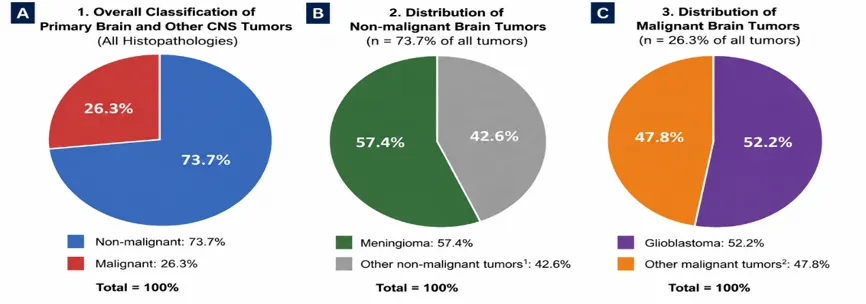
Figure. Classification of primary brain and other central nervous system (CNS) tumours based on the CBTRUS Statistical Report 2025 (2018–2022). [7]
Glioblastoma (GBM), which is IDH-wildtype, WHO grade 4, is the most frequent and aggressive type of primary brain cancer in adults, representing approximately 15% of all primary brain tumours and about 50% of malignant gliomas [8]. It is common among people aged between 45 to 75 years old, and the median survival period is only 12-15 months following maximal tumour removal and treatment with radiation and chemotherapy [9].
Glioblastoma is characterized histologically by cellular and molecular heterogeneity, diffuse invasion of brain parenchyma, pseudo palisading necrosis, increased microvascular proliferation, increased number of mitoses, and nuclear pleomorphism [10]. Abnormal tumour vascularization, hypoxia, changes in extracellular matrix, and suppression of the immune system are among additional factors facilitating the aggressive behaviour of GBM [8].
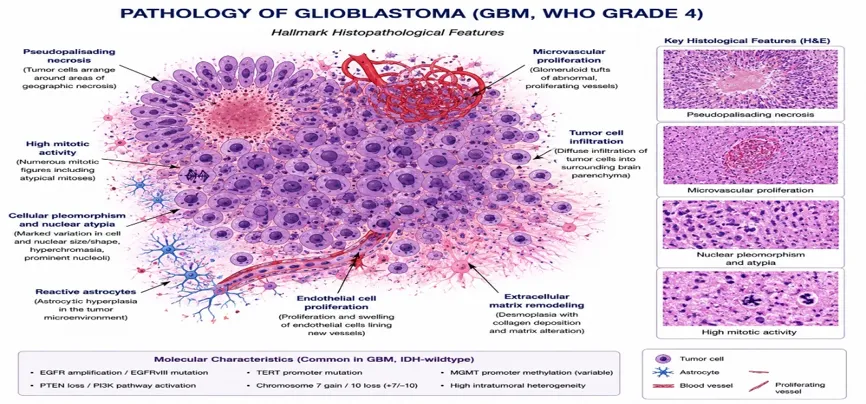
FIGURE 2: Histopathology schematic diagram representing features of glioblastoma multiforme (GBM; WHO grade IV).
Histopathologic features of GBM include diffuse infiltration by tumour cells into brain parenchyma, pleomorphism and cellular atypia, increase in mitotic activity, pseudo palisading necrosis formation, and endothelial cell proliferation. Tumour microenvironment also shows reactive gliosis, hypoxia, remodelling of extracellular matrix, and aberrant angiogenesis – all of which help facilitate tumour aggressiveness, drug resistance, and recurrence. Above are the typical histology of H&E stain in IDH wild-type GBM, as well as the molecular aberrations of the same.
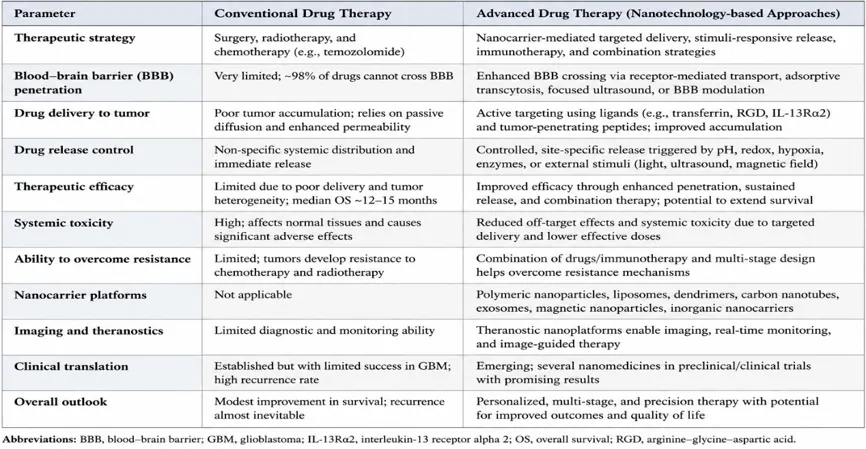
The limitations of conventional glioblastoma therapy have accelerated the development of advanced nanotechnology-based approaches that improve targeted drug delivery, blood–brain barrier penetration, therapeutic efficacy, and treatment safety. The comparison is shown below in Table 1.
TABLE 1: Comparison between Conventional and Advanced drug therapy approaches for Glioblastoma treatment.
2. GLIOBLASTOMA AND BLOOD-BRAIN BARRIER (BBB)
2.1 Structure and Function of Blood-Brain Barrier
Blood-brain barrier (BBB) is a selective interface with high specialization which keeps blood flowing through the central nervous system from the brain and provides the brain with homeostasis by protecting it from harmful substances [11,12]. Structure-wise, BBB comprises brain microvascular endothelial cells joined by tight junctions and the basement membrane along with pericytes, astrocyte end-feet, and microglia that form neurovascular unit [11,13].
Regarding the functionality, the BBB regulates the selective transfer of such vital molecules as nutrients, ions, gases, and other biomolecules using transport systems while eliminating xenobiotics via ATP-driven efflux pumps [11]. Although the BBB is critical for the protection of neurons, most medications cannot pass through BBB and, together with the blood-brain tumour barrier (BBTB), form one of the major barriers in glioblastoma therapy [12,14].
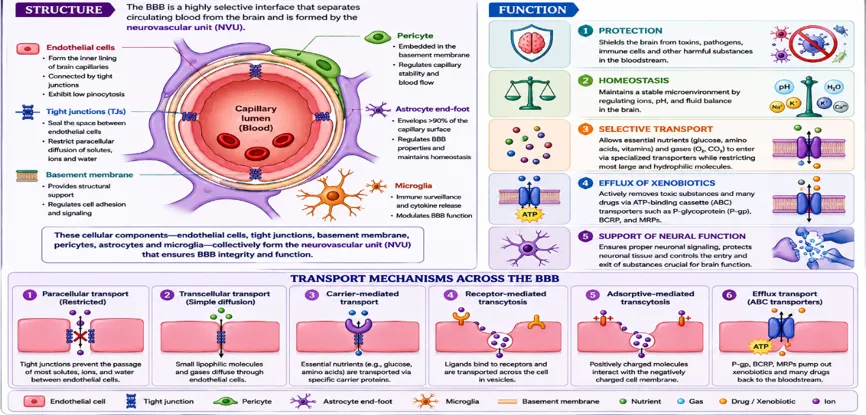
Figure 3. Structure and function of the blood–brain barrier (BBB).
The BBB is formed by brain microvascular endothelial cells interconnected by tight junctions and supported by pericytes, astrocytic end-feet, basement membrane, and microglia, collectively constituting the neurovascular unit (NVU). This specialized barrier maintains central nervous system homeostasis by regulating selective transport of nutrients and ions, preventing the entry of toxins and pathogens, and facilitating the efflux of xenobiotics through ATP-dependent transporters. In glioblastoma, the BBB represents a major obstacle to therapeutic drug delivery, highlighting the need for advanced nanomedicine-based strategies to enhance brain targeting.
2.2 Challenges in Glioblastoma Treatment
Top of Form
GBM management is one of the most difficult jobs due to the highly invasive nature and heterogeneity of the tumour, which makes it highly prone to recurrence in spite of the best surgery, radiotherapy, and chemotherapy using temozolomide [15]. Presence of BBB and heterogeneous BTB makes drug delivery to the affected area extremely difficult [16]. Furthermore, glioma stem cells, resistance to therapy, molecular evolution, and immunosuppressive tumour environment are factors that contribute to the development of the disease and unfavourable prognosis [15]. In this regard, it is important to develop targeted therapies and nanomedicine delivery systems that will be able to overcome various biological barriers and increase survival rates [16].
2.3 Limitations of Chemotherapy and Radiotherapy
Despite the fact that chemoradiotherapy is regarded as the optimal treatment for glioblastomas, this method only brings slight survival benefits to patients because of the diffuse tumour formation that cannot be fully eradicated and causes a recurrence [17]. Temozolomide, the primary chemical compound used in treatment, can be inactivated by MGMT gene, can possess some degree of chemoresistance, and may have difficulties penetrating through the blood-brain barrier [17]. Likewise, radiotherapy is hampered by the presence of radioresistant glioma stem cells, low oxygen concentration in glioblastomas, and limitations in the amount of radiation applied to avoid damaging adjacent normal tissues [18].
3. FUNDAMENTALS OF NANOROBOTICS
3.1 Definition and Principles of Nanorobotics
Nanorobotics refers to the designing of nanorobots to carry out some controlled functions like sensing, navigating, targeting, and drug delivery in biological environments [19]. Unlike the conventional passive nanoparticles, nanorobots possess sensing, actuation and targeting capabilities, and this implies that the nanorobots will be able to sense their surroundings and perform certain functions either on a cellular or molecular scale [20]. The basic concept behind nanorobots is that of energy transformation from external or local source into the movement and locomotion of nanorobots in order for them to move through biological fluids and reach their target destination [19]. There are different propulsion mechanisms such as magnetic, optical, electrical, ultrasonic, chemical, and biological used depending upon the biological environment and desired function of the nanorobots for treating brain cancers, nanorobots can deliver drug loads actively, target brain tissues, cross the blood-brain barrier, and locally deliver drugs [19,20].
3.2 Components of Medical Nanorobots
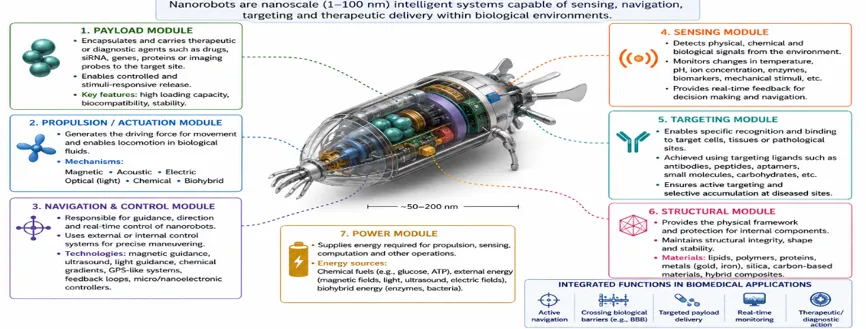
Figure 4. Components and functional architecture of nanorobots for biomedical applications.
The schematic illustrates the major functional modules—payload, propulsion/actuation, navigation and control, sensing, targeting, structural framework, and power supply—and their coordinated roles in active navigation, biological-barrier crossing, targeted payload delivery, monitoring, and therapeutic action. [21,22,23]
3.3 Classification of Nanorobots
Medical nanorobots may be categorized based on their method of propulsion, structure, and function in biomedical application. There have been various designs of these medical nanorobots designed to navigate, target, deliver medicine, sense, and perform treatments [23,24]. Depending on how they move, some of the common types of nanorobots include those that are actuated externally, self-propelled, programmed, biomimetic, and hybrid [23,24]. In terms of design, these nanorobots can be made up of sensors, actuators, controllers, and therapeutics [23].
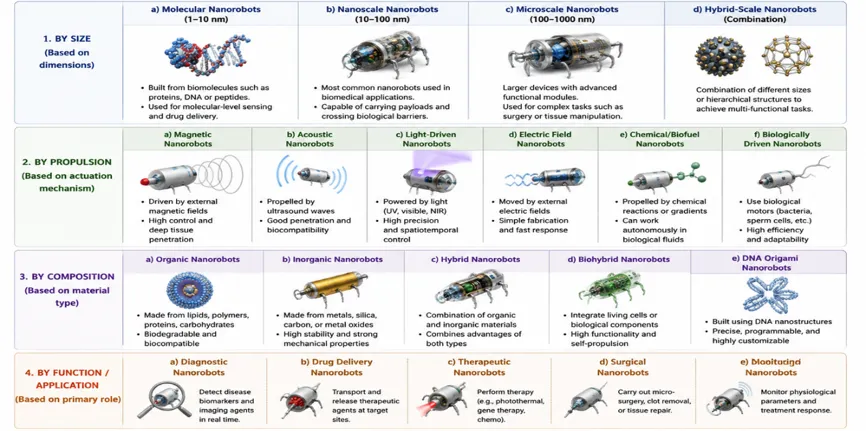
Figure 5. Classification of medical nanorobots based on propulsion mechanism, structural design, and mode of operation, highlighting externally actuated, self-propelled, programmable, biomimetic, and hybrid nanorobotic systems and their potential biomedical applications.
4. NANOROBOTIC STRATEGIES FOR GLIOBLASTOMA TREATMENT
4.1 Mechanism of BBB Crossing
Nanorobots can cross the BBB through receptor-mediated transcytosis, active transport, or temporary disruption of the barrier, facilitating delivery into brain tissue. [12] Surface ligands can interact with endothelial receptors, while active propulsion and biological targeting mechanisms enhance BBB traversal and tumour localization. [12,25] Neutrophil-based nanorobots can sense inflammatory signals associated with malignant glioma, cross the BBB under magnetic guidance, and deliver therapeutic drugs at the tumour site.[25]
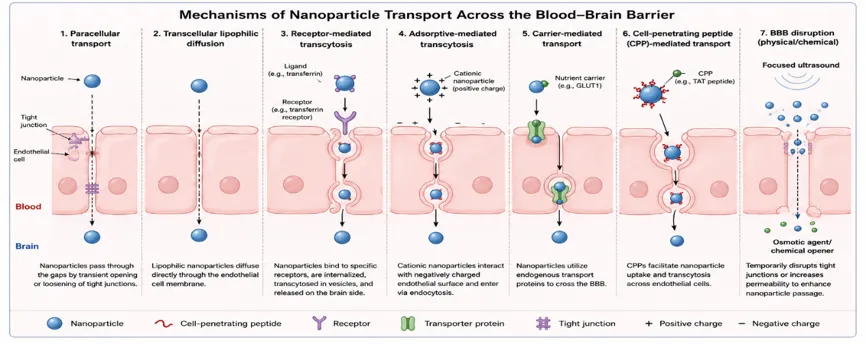
Figure 6. Mechanism of blood–brain barrier (BBB) crossing by nanorobots.
Nanorobots employ receptor-mediated transport, active propulsion, and biological targeting mechanisms to traverse the BBB, enhance tumour localization, and deliver therapeutic payloads to glioblastoma tissue.
4.2 Targeted Drug Delivery
Selective accumulation of drugs within the glioblastoma mass and exclusion of healthy brain tissue is one of the key targets of targeted drug delivery. [26] Nanorobotics appears as a very promising strategy due to the ability of these drug carriers to actively navigate and deliver drug cargo through biological barriers to hard-to-reach locations. [26] Functionalization of nanorobots with specific ligands will allow for improved receptor-mediated uptake and recognition of the glioblastoma cells, and physicochemical modification will improve the penetration of the barrier and internalization into tumour cells. [27] Designing of stimuli-responsive drug delivery systems, which may trigger the release of the drug cargo through internal stimuli (pH, redox, hypoxia, enzymes) and external stimuli (light, ultrasonic, magnetic and temperature), will allow us to have an efficient drug delivery system to the target site. [28] Modern nano-delivery systems will potentially incorporate BBB crossing, active targeting to tumours, stimuli-controlled drug release, and multimodal treatment. [29] However, tumour heterogeneity and biological barriers are still a problem for efficient drug delivery. [26,29]
4.3 Stimuli-Responsive Nanorobots
Nanorobotic systems that are responsive to specific stimuli can combine the benefits of targeted transport with stimulus-triggered drug release, improving the delivery of drugs to glioblastoma while limiting nonspecific exposure of the drugs to healthy tissue. [30] These nanorobotic systems can be triggered to release their payloads in response to either endogenous stimuli (such as acidic pH and other tumour-associated conditions) or external stimuli (such as light) after localization of the nanorobots at the tumour site. [31]
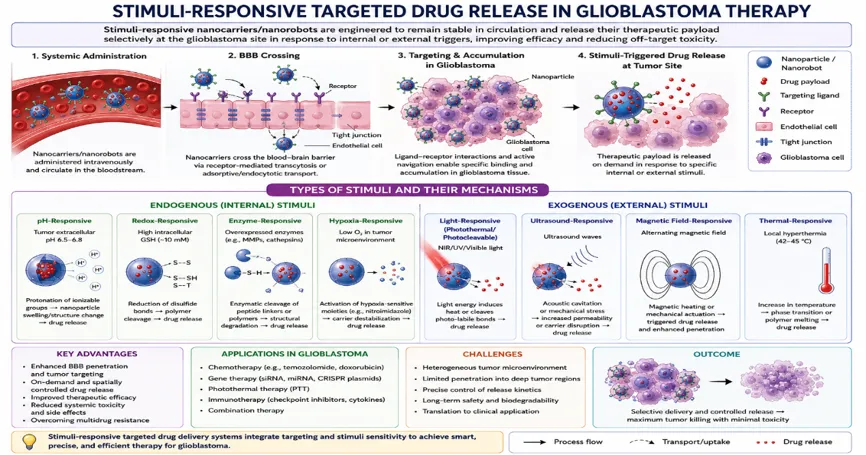
Figure 7. Stimuli-responsive targeted drug delivery for glioblastoma therapy.
The schematic illustrates systemic administration, BBB crossing, tumour-specific targeting, and controlled drug release through endogenous stimuli, including pH, redox conditions, enzymes, and hypoxia, and exogenous stimuli such as light, ultrasound, magnetic fields, and temperature.
5. RECENT ADVANCES AND REPRESENTATIVE STUDIES
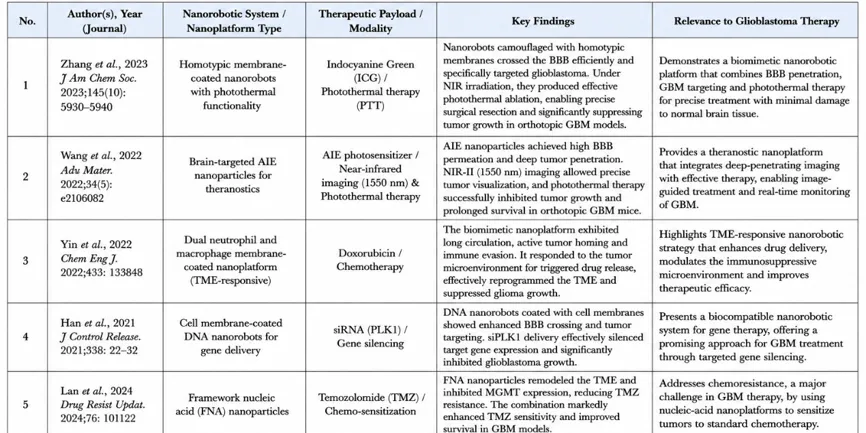
The recent progress in nanorobotics has created effective methods to solve the main challenges of glioblastoma treatment, especially in relation to the blood–brain barrier (BBB), tumour variation, and insufficient delivery of medication to the tumour site. Table 2 presents representative studies which demonstrate the evolution of biomimetic nanoplatforms and targeted nanocarriers and self-propelled nanomotors and photothermal systems and nucleic-acid-based approaches. These platforms have shown improvements in BBB penetration, tumour targeting, controlled therapeutic delivery, and treatment efficacy in preclinical glioblastoma models.
Table 2. Recent advances and representative studies in nanorobotics for glioblastoma therapy.
6. LIMITATIONS AND CHALLENGES
Although the idea of the application of nanorobotics is attractive, there are some considerable limitations to this technology’s use. The heterogeneity of the BBB and BTB may hinder uniform distribution and penetration of the therapeutic nanorobots in the glioblastoma tissues. [37]. The issue of propulsion and navigation also becomes a key point, which should ensure the possibility of controlled movement and high targeting efficiency of the nanorobot within the highly complex microenvironment, without reducing its therapeutic efficiency. [38] At the same time, the topic of biocompatibility and biodegradability, as well as possible immunological interactions with the human body, should also be validated [39]. Manufacturing reproducibility, scalability, sterilization, and standardized characterization remain important barriers to regulatory approval and clinical implementation. [40] In addition, currently, most of the described systems have been tested only at the preclinical level, thus requiring extensive research and trials to confirm their clinical efficacy and safety in humans [37,39]. The solution of these biological, engineering, and regulatory questions will ensure the possibility of successful translation of nanorobotic systems into clinical practice and their reliable application in fighting glioblastoma. [38,40].
7. FUTURE OUTLOOK
Nanorobotics is expected to advance through collaboration among medicine, biology, chemistry, physics, materials science, and engineering. Future systems may enable precise drug and gene delivery, early disease detection, molecular imaging, and minimally invasive cellular-level interventions. Programmable nanorobots could potentially recognize pathological signals, adjust therapeutic delivery, and operate at cellular and molecular scales. Development of self-sustaining systems and improved actuation may further expand their biomedical applications. However, achieving reliable in-vivo operation will require overcoming biological uncertainty, immune activation, energy requirements, biocompatibility, biodegradation, self-navigation, and controlled drug release. Continued interdisciplinary research and technological development will therefore be important for moving nanorobotics from mainly preclinical research toward practical applications in precision medicine.[41]
8. CONCLUSION
Nanorobotic technology provides a potential approach for solving the significant problems of therapy associated with the poor drug penetration, heterogeneity of the tumour, and limited access caused by the presence of the blood-brain barrier. [1] The use of nanomaterials for creating drug delivery systems could improve drug delivery, increase the efficacy of therapy, and allow using various treatment approaches in combination with each other, minimizing systemic toxicity at the same time. [1] Targeting of the treatment via specific receptors can help achieve better selectivity in the delivery of drugs to the glioblastoma cells. [43] However, on the contrary, the complex nature of the biology of the tumours as well as the differences in the receptors makes it hard to achieve constant results. [43]
REFERENCES


Prapti Shah, Hitesha Thakur, Mahek Shah, Yagnesh Modi, Sapna Desai, D. B. Meshram, Nanorobotics in Glioblastoma: Navigating the Blood-Brain Barrier for Precision Therapy, Int. J. of Pharm. Sci., 2026, Vol 4, Issue 8, 3404-3415. https://doi.org/10.5281/zenodo.22046373
 10.5281/zenodo.22046373