

We use cookies to ensure our website works properly and to personalise your experience. Cookies policy
Department of Pharmaceutics, Bharathi College of Pharmacy, Bharathinagara, Maddur, Mandya, Karnataka, India 571422
A study was conducted to evaluate the analgesic potential of Willow bark in the formulation of a herbal analgesic cream containing natural ingredients such as methyl salicylate, camphor, menthol, eucalyptus oil, coconut oil, bees wax, cetyl alcohol, liquid paraffin, and paraffin wax. The cream was prepared by using the emulsion method by separately heating the oil and aqueous phases and mixing them with continuous stirring. The prepared formulations were evaluated for appearance, homogeneity, pH, spreadability, washability and stability. The results showed that all formulations were physically stable and suitable for topical application. The study concluded that the Willow bark herbal analgesic cream is a safe, stable, and effective topical formulation with promising analgesic activity and may serve as a natural alternative to synthetic pain-relieving cream with fewer side effects.
Analgesics are substances that relieve pain without causing loss of consciousness. The term analgesic is derived from the Greek word, an (without) and algos or algesis (pain). Pain is defined by the international association for the study of pain (IASP) as “an unpleasant sensory and emotional experience associated with, actual or potential tissue damage [1].
Analgesics exert their effects by inhibiting pain transmission or altering pain perception within the central nervous system and are widely used for the management of acute and chronic pain. Topical analgesic formulations have gained increasing attention because they provide localized pain relief, and improve patient compliance. Herbal analgesic cream containing medicinal plant extract offer a promising natural alternative to synthesis preparations due to their analgesic, anti-inflammatory, and antioxidant properties [2]
Pain manifests as a complex physiological and psychological phenomenon, serving as an essential protective mechanism in human biology. The pain experience involves intricate interaction between peripheral nociceptors, neural pathways, and central processing centers. [3]
Acute pain presents as an immediate response to tissue injury or pathological processes, characterized by;
Chronic pain extends beyond normal tissue healing timeframes, exhibiting;
2.1 Active botanical constituents
Willow bark (Salix alba L.) represent a significant botanical in traditional medicine system, belonging to the Salicaceae family. The plant pharmacological profile includes salicin, flavonoids, polyphenols, procyanidins. Clinical studies have shown its analgesic and anti-inflammatory properties, attributed to the presence of these compounds that modulate pain pathways and inflammatory mediators. [4]
2.2 Essential oil and natural analgesic
Methyl salicylate, derived from wintergreen plants, functions as a natural counterirritant and analgesic agent. Its mechanism of action involves local vasodilatation and sensory nerve stimulantion, providing both warming sensation and pain relief [5].
Eucalyptus oil contains 1,8-cineole as its primary active constituent, demonstrating significant anti-inflammatory and analgesic properties through the inhibition of pro-inflammatory cytokines[6]
Major Active Constituents and Their Pharmacological Activity in Selected Medicinal Plants Used in Analgesic Cream Formulation
|
Plant Source |
Major Active Constituents |
Primary Pharmacological Activities |
|
Willow bark |
Salicin, Salicortin, Tremulacin, fragilin |
Anti-inflammatory, analgesic, antioxidant |
|
Eucalyptus globulus |
1,8-cineole, Limonene |
Local anesthetics, anti-inflammatory, anti-microbial |
|
Gaultheria procumbens |
Methyl salicylate, gaultherin |
Analgesic, counter irritant, anti-inflammatory |
|
Mentha piperita |
Menthol, menthone, menthyl acetate |
Cooling effect, local anesthetic, antipruritic |
|
Cinnamomum camphora |
Camphor, borneol, cineole |
Counter irritant, local anesthetic, antimicrobial |
2.3 Base Components and Excipients
Emollient and Moisturizing Agent
Liquid paraffin serves as a primary emollient, forming an occlusive layer that prevents transepidermal water loss and enhances skin hydration. The incorporation of glycerin as a humectants creates a synergistic moisturizing effect by attracting and retaining moisture within the stratum corneum [7].
Formulation Base Components and Their Functions
|
Component Category |
Examples |
Concentration Range (%) |
Function |
|
Emollients |
Liquid paraffin, Glycerin |
10-20 |
Skin conditioning |
|
Emulsifiers |
Cetostearylalcohol,Tween-80 |
2-5 |
Stabilization |
|
Thickness |
Carbomer, beeswax |
3-8 |
Consistency |
|
Preservatives |
Natural preservatives, Parabens |
0.1-0.5 |
Microbial control |
|
Active botanicals |
Plant extracts, Essential oils |
5-15 |
Therapeutic effect |
2.4 Structural and stabilizing components
Bees wax and paraffin wax contribute to the structural integrity of cream formulations while providing protective and emollient properties. The addition of borax enhances emulsion stability through its buffering capacity and interaction with bees wax to form a stable soap-like complex [8].
2.5 Natural cooling and soothing agent
Camphor and menthol incorporation provides therapeutic cooling effects through activation of TRPM8 receptors, contributing to pain relief and reduction of pruritus. These compounds also demonstrate mild local anesthetic properties, enhancing the overall analgesic effect of the formulation [9]
3.1 Extraction Methodology
The preparation of herbal extracts involves standardized protocols utilizing appropriate solvents based on the polarity of target compounds. Sequential extraction procedures often employ a gradient of solvents, from non-polar to polar, maximizing the yield of bioactive constituents [10].
3.2 Base Formulation
The development of cream base requires careful consideration of phase composition and processing parameters:
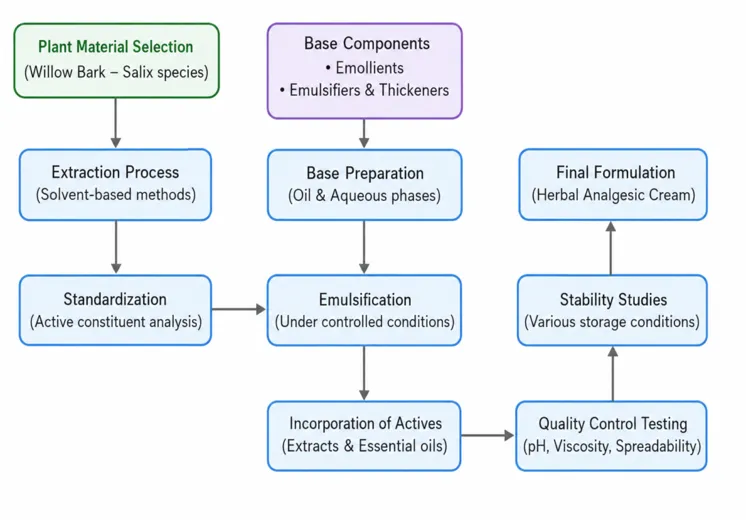
Figure1. Formulation Process of Herbal Analgesic Creams
3.3 Quality Parameters and Standardization:
The evaluation parameters include assessment of:
Table-3. Quality Control Parameters of Herbal Analgesic Cream Formulations
|
Parameter |
Acceptable Range |
Significance |
|
pH |
5.5-7.0 |
Skin compatibility and stability |
|
Viscosity (cPs) |
3000-8000 |
Spreadability and application properties |
|
Spreadability (g.cm/sec) |
5-7 |
Ease of application |
|
Homogeneity |
Uniform, No grittiness |
Physical stability and patient acceptance |
|
Extrudability |
>90% |
Product dispensing efficiency |
3.4. Stability:
Long-term stability studies evaluate:
Table-4. Stability Testing Criteria for Herbal Analgesic Creams
|
Storage Condition |
Testing Period |
Parameters Monitored |
Acceptance Criteria |
|
Room Temperature (25°C ±2°C) |
12months |
Physical appearance, pH, viscosity |
No significant change |
|
Accelerated (40°C±2°C/ 75%RH±5%) |
6months |
Phase separation, active content |
< 5% degradation |
|
Cold Storage (4°C±1°C) |
3months |
Emulsion stability, microbial count |
No growth/ separation |
|
Thermal Cycling |
6cycles |
Physical stability |
No phase separation |
4. THERAPEUTIC APPLICATIONS:
The therapeutic potential of herbal analgesic creams extends across various pain conditions and musculoskeletal disorders, representing a comprehensive approach to topical pain management that has gained significant recognition in contemporary pharmaceutical practice. The multi-targeted approach of these formulations stems from the diverse pharmacological actions of their constituents, which work through complementary pathways to achieve superior therapeutic outcomes compared to single-component preparations. The analgesic effects manifest through multiple mechanisms, including the modulation of inflammatory mediators such as prostaglandins and leukotrienes, interference with pain signal transmission through peripheral and central pathways, and local vasodilator effects that enhance tissue perfusion and facilitate the removal of pain-inducing metabolites [11].
4.1. Musculoskeletal Disorders
Musculoskeletal disorders are among the most common conditions treated with topical herbal analgesic formulations. These disorders include osteoarthritis, rheumatoid arthritis, muscle strains, sprains, tendinitis, sports injuries, and chronic low back pain. Willow bark (Salix alba L.) has gained considerable attention as a natural therapeutic agent because of its rich content of salicin, flavonoids, polyphenols, and tannins, which exhibit significant analgesic and anti-inflammatory activities. Salicin is metabolized in the body to salicylic acid, which contributes to pain relief by reducing prostaglandin synthesis through cyclooxygenase (COX) inhibition, thereby decreasing inflammation and pain in affected musculoskeletal tissues [12].
4.2. Inflammatory Conditions
Willow bark (Salix alba L.) has long been used in traditional medicine for the management of inflammatory disorders due to its rich content of salicin, flavonoids, polyphenols, and tannins. Salicin is metabolized in the body to salicylic acid, which inhibits cyclooxygenase (COX) enzymes and reduces the synthesis of pro-inflammatory prostaglandins responsible for pain, swelling, and inflammation. In addition to salicin, the flavonoids and polyphenolic compounds present in willow bark exert antioxidant effects by scavenging reactive oxygen species and suppressing inflammatory mediators such as tumor necrosis factor-alpha (TNF-α), interleukin-1β (IL-1β), interleukin-6 (IL-6), and prostaglandin E2 (PGE2). These combined mechanisms contribute to reduced tissue inflammation, improved joint mobility, and symptomatic relief in inflammatory conditions affecting the musculoskeletal system and skin. When incorporated into topical formulations, willow bark acts synergistically with essential oils such as eucalyptus and menthol to provide enhanced anti-inflammatory and analgesic effects through improved skin penetration and local action [13].
4.3. Dermatological Applications
Topical formulations containing willow bark have shown potential in the management of inflammatory skin disorders, including eczema, dermatitis, acne, and minor wounds. The anti-inflammatory and antioxidant constituents help reduce erythema, irritation, and tissue swelling while promoting skin barrier repair. Natural polyphenols and tannins exhibit mild antimicrobial activity against several pathogenic microorganisms, thereby reducing the risk of secondary skin infections. Furthermore, willow bark extract assists in regulating excessive keratinization and promotes healthy skin regeneration, making it a valuable ingredient in herbal dermatological preparations. The combination of analgesic, anti-inflammatory, antioxidant, and antimicrobial activities enhances wound healing and provides symptomatic relief from painful skin conditions [14].
4.4. Neuropathic Pain Management
Willow bark demonstrates promising potential in the management of neuropathic pain through its anti-inflammatory and antioxidant properties. Persistent neuro inflammation and oxidative stress play significant roles in the development of neuropathic pain, and the bioactive constituents of willow bark help reduce these decrease pathological processes. Salicin-derived metabolites inflammatory mediator production, while flavonoids protect neuronal tissues from oxidative damage and improve nerve function. Topical application of willow bark formulations provides localized pain relief with minimal systemic adverse effects, making them suitable for chronic musculoskeletal and neuropathic pain conditions. In combination with cooling agents such as menthol and eucalyptus oil, willow bark enhances pain modulation by reducing peripheral sensitization and improving patient comfort [15].
5. SAFETY
The safety profile of herbal analgesic creams requires careful evaluation of individual components and their interactions. While natural origins suggest improved tolerability, systematic assessment of potential adverse effects remains crucial. The incorporation of botanical extracts necessitates standardization of active constituent concentrations to ensure consistent therapeutic effects while maintaining safety margins [16].
Dermal compatibility represents a primary consideration in formulation development. The selection of base components and natural emollients aims to minimize the risk of skin irritation or sensitization. Regular monitoring of pH levels and careful selection of preservative systems help maintain skin barrier integrity while ensuring product stability. Drug-herb interactions, though minimal with topical applications, warrant consideration in specific patient populations. The potential for systemic absorption, while generally limited, requires evaluation particularly in cases of extensive application or compromised skin barrier function. Documentation of contraindications and special precautions ensures appropriate patient counseling and safe product use [17].
Herbal analgesic creams can be of valuable use in topical pain management, combining traditional botanical knowledge with modern pharmaceutical principles. The use of carefully selected medicinal plants and natural compounds yields formulations capable of providing effective pain relief while maintaining favorable safety profiles. The multi-component nature of these preparations offers advantages through synergistic effects and multiple mechanisms of action. The standardization of extraction procedures and formulation processes ensure consistent product quality and therapeutic efficacy. Physical and chemical characterization parameters provide objective measures for quality control, while stability studies support the development of products with reliable shelf life. The incorporation of natural emollients and skin-conditioning agents enhances patient acceptability and compliance. These preparations show particular efficacy in managing musculoskeletal pain and inflammatory conditions. The localized action minimizes systemic exposure, offering advantages over oral analgesic preparations. Continued research and technological advancement in this field hold promise for developing increasingly effective formulations, establishing herbal analgesic creams as valuable therapeutic options in pain management.
REFERENCES


Krishna K R, M Jaishankar, Shaheerkhan N, Koushik Raje Urs., A Review on Formulation and Evaluation of Willow Bark Based Herbal Analgesic Cream, Int. J. of Pharm. Sci., 2026, Vol 4, Issue 8, 3471-3478. https://doi.org/10.5281/zenodo.22050050
 10.5281/zenodo.22050050