

We use cookies to ensure our website works properly and to personalise your experience. Cookies policy
Shri Ganpati Institute of Pharmaceutical Sciences and Research, Tembhurni
Helminth infections are a common health problem, especially in developing countries, and can lead to malnutrition, anemia, and poor growth. Although drugs such as albendazole are effective, concerns about side effects and drug resistance have increased interest in plant-based treatments. Carica papaya (papaya) seeds are traditionally used to treat worm infections because they contain beneficial compounds such as alkaloids, flavonoids, saponins, and glycosides. In this study, hydroalcoholic extracts of papaya seeds prepared using 50:50 and 80:20 ethanol-water ratios were evaluated for anthelmintic activity against Pheretima posthuma earthworms. The results showed that both extracts were effective, but the 80:20 extract performed better, producing a higher extraction yield (24%) and faster paralysis and death of worms. These findings suggest that Carica papaya seeds have promising anthelmintic properties and may serve as a natural alternative for managing helminth infections.
Helminth infections are among the most common parasitic diseases affecting humans and animals worldwide. These infections are caused by parasitic worms including nematodes, cestodes, and trematodes. According to the World Health Organization, billions of people are at risk of helminth infections, especially in tropical and subtropical regions where poor sanitation and hygiene contribute significantly to disease transmission. Helminthiasis is associated with numerous health complications such as malnutrition, anemia, abdominal discomfort, intestinal obstruction, impaired growth, and reduced cognitive performance, particularly among children
For many decades, synthetic anthelmintic drugs such as albendazole, mebendazole, levamisole, and pyrantel pamoate have been widely used for the treatment and control of worm infestations. Although these drugs are effective, their extensive use has led to concerns regarding the development of drug resistance. Furthermore, some synthetic medications may produce undesirable side effects including nausea, vomiting, headache, abdominal pain, and gastrointestinal disturbances. These limitations have encouraged researchers to search for safer, cost-effective, and naturally derived alternatives.
Medicinal plants have been an integral part of traditional healthcare systems for centuries. They contain diverse bioactive compounds that exhibit a wide range of pharmacological activities. Herbal medicines are generally considered safer and more affordable than synthetic drugs and are often readily available in rural communities. As a result, medicinal plants have become an important area of research in the development of alternative therapeutic agents.
Carica papaya L., commonly known as papaya, belongs to the family Caricaceae and is cultivated extensively throughout tropical and subtropical regions of the world. The plant is valued not only for its nutritional benefits but also for its medicinal properties. Various parts of the plant, including the leaves, fruits, roots, latex, and seeds, have been used traditionally to treat several diseases and disorders.
Papaya seeds are particularly rich in phytochemicals and have attracted considerable scientific interest because of their antiparasitic, antimicrobial, antioxidant, and anti-inflammatory activities. The seeds contain alkaloids, flavonoids, glycosides, saponins, proteins, fixed oils, and proteolytic enzymes such as papain and chymopapain. These constituents are believed to contribute to the anthelmintic activity of the seeds by affecting the metabolism, neuromuscular system, and protective cuticle of parasitic worms.
The extraction process plays a crucial role in obtaining biologically active compounds from medicinal plants. Different solvent systems extract different classes of phytochemicals depending on their polarity. Hydroalcoholic solvents containing ethanol and water are commonly used because they can efficiently extract both polar and semi-polar constituents. Therefore, evaluating different ethanol-water ratios is important for optimizing extraction efficiency and biological activity.
The present study was undertaken to compare the anthelmintic activity of hydroalcoholic extracts of Carica papaya seeds prepared using 50:50 and 80:20 ethanol-water solvent systems. The study also aimed to investigate the phytochemical profile and extraction yield of the prepared extracts. The earthworm Pheretima posthuma was selected as the experimental model because of its physiological similarity to human intestinal helminths. infections are among the most common parasitic diseases and are responsible for significant morbidity worldwide. These infections can lead to malnutrition, anemia, weakness, and impaired growth, especially in children. Although synthetic drugs such as albendazole are effective, long-term use has contributed to drug resistance and adverse effects.
Medicinal plants have emerged as valuable sources of bioactive compounds. Carica papaya is widely recognized for its nutritional and therapeutic importance. Papaya seeds contain alkaloids, flavonoids, saponins, glycosides, proteins, and proteolytic enzymes that contribute to their medicinal value. Traditional systems of medicine have long utilized papaya seeds to treat intestinal worm infestations.
This research focuses on comparing two hydroalcoholic extraction systems to identify the most efficient solvent ratio for extracting active constituents responsible for anthelmintic activity.
MECHANISM OF ACTION
The anthelmintic activity of Carica papaya seeds is due to the combined action of several naturally occurring phytochemicals. Each compound acts in a different way to weaken and eliminate parasitic worms.
Together, these phytochemicals act synergistically by paralyzing the worms, disrupting their metabolism, damaging their protective structures, and eventually causing their death. This combined effect contributes to the significant anthelmintic activity of Carica papaya seeds.
ADVANTAGES
1. Utilizes a natural and easily available medicinal plant.
2. Provides a cost-effective alternative to synthetic anthelmintic drugs.
3. Demonstrates the importance of solvent selection in extraction efficiency.
4. Supports traditional medicinal use of papaya seeds.
5. Identifies potential herbal sources for future drug development.
6. Uses a simple and reproducible extraction method.
7. Shows concentration-dependent biological activity.
8. Encourages research into plant-based therapies for parasitic diseases.
LIMITATIONS
1. The study was conducted only in vitro using earthworms.
2. Human clinical studies were not performed.
3. The active compounds responsible for activity were not isolated.
4. Long-term toxicity studies were not conducted.
5. Standardization of extract composition remains necessary.
6. Results may vary with geographical source and quality of plant material.
7. Further pharmacological and pharmacokinetic studies are required.
NEED OF THE STUDY
Helminth infections continue to affect millions of people, especially in developing countries where poor sanitation and limited healthcare facilities increase the risk of parasitic worm infestations. These infections can cause various health problems, including malnutrition, anemia, weakness, and impaired growth in children. Although synthetic anthelmintic drugs are commonly used for treatment, their prolonged use may lead to drug resistance and unwanted side effects.
Medicinal plants have gained attention as safer, cost-effective, and easily available alternatives. Carica papaya seeds have been traditionally used in folk medicine for treating intestinal worms and are known to contain several bioactive compounds with potential anthelmintic properties. However, scientific evidence regarding the effect of different extraction solvents on their activity is limited.
Therefore, this study was undertaken to evaluate and compare the anthelmintic activity of hydroalcoholic extracts of Carica papaya seeds prepared using different solvent ratios. The findings may help identify an effective natural source for the development of herbal anthelmintic formulations and contribute to the search for safer alternatives to conventional drugs.
MATERIALS AND METHODS
1) Collection of Plant Material
Mature seeds of Carica papaya were collected, washed thoroughly with water, and shade dried for several days. The dried seeds were pulverized into coarse powder and stored in airtight containers until further use
2) Preparation of Hydroalcoholic Extracts
Two hydroalcoholic solvent systems were prepared:
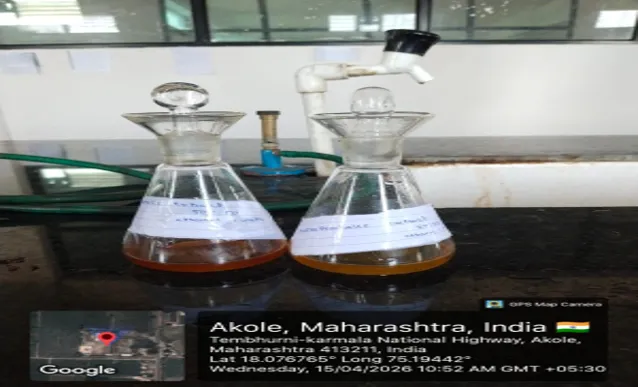
The powdered seed material was subjected to maceration with each solvent system for 72 hours with intermittent shaking using an orbital shaker. The extracts were filtered through Whatman filter paper and concentrated using a water bath. The concentrated extracts were weighed to determine percentage yield
3) Determination of Percentage Yield
Percentage yield was calculated using the formula:
Yield (%) = (Weight of Extract / Weight of Powdered Drug) × 100
4) Preliminary Phytochemical Screening
The extracts were screened for:
Using standard pharmacognostic procedures.
5) Anthelmintic Activity
Experimental Model:
Pheretima posthuma earthworms were used because of their anatomical and physiological similarity to intestinal helminths.
Test Solutions:
Concentrations Tested:
The time required for paralysis and death of worms was recorded.
RESULTS
Table 1. Percentage Yield of Hydroalcoholic Extracts
|
Sr. No. |
Solvent Ratio |
% Yield |
|
1 |
50:50 |
17.4% |
|
2 |
80:20 |
24% |
The 80:20 ethanol-water extract produced a higher percentage yield, suggesting more efficient extraction of bioactive constituents.
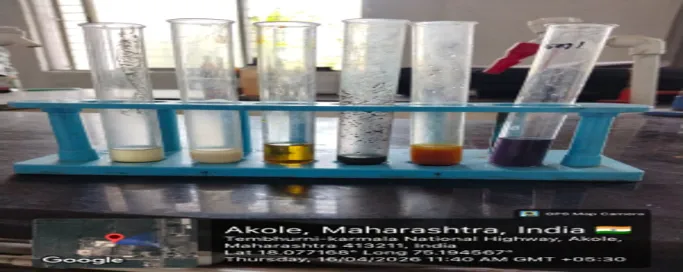
Table 2. Phytochemical Screening
|
Sr. No. |
Constituent |
50:50 |
80:20 |
|
1 |
Alkaloids |
Present |
Present |
|
2 |
Saponins |
Present |
Present |
|
3 |
Tannins |
Absent |
Absent |
|
4 |
Glycosides |
Present |
Present |
|
5 |
Flavonoids |
Present |
Present |
|
6 |
Proteins |
Present |
Present |
Both extracts showed similar phytochemical profiles, indicating that differences in activity are likely related to extraction efficiency rather than the presence or absence of constituents
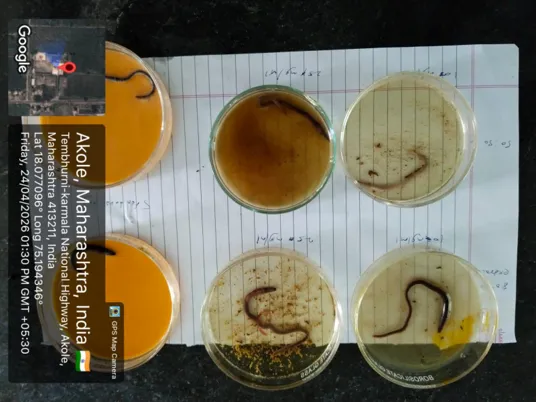
Table 3. Anthelmintic Activity
|
Test Solution |
Ratio |
Conc. mg/mL |
Paralysis Time |
Death Time |
|
Albendazole |
- |
10 |
21 min 40 sec |
39 min 19 sec |
|
Albendazole |
- |
25 |
17 min 11 sec |
32 min 33 sec |
|
Extract |
50:50 |
10 |
23 min 48 sec |
49 min 12 sec |
|
Extract |
50:50 |
25 |
22 min 12 sec |
42 min 01 sec |
|
Extract |
80:20 |
10 |
22 min 20 sec |
45 min 57 sec |
|
Extract |
80:20 |
25 |
18 min 40 sec |
37 min 44 sec |
DISCUSSION
The results demonstrate a clear concentration-dependent anthelmintic effect. Increasing extract concentration reduced both paralysis and death times. The 80:20 extract consistently performed better than the 50:50 extract and produced results close to albendazole
The improved activity of the 80:20 extract may be attributed to enhanced extraction of alkaloids and flavonoids, which are known to affect parasite metabolism and neuromuscular function. The synergistic action of multiple phytochemicals likely contributes to the observed biological activity.
CONCLUSION
The present study demonstrated that hydroalcoholic extracts of Carica papaya seeds possess significant anthelmintic activity against Pheretima posthuma. Among the two solvent systems evaluated, the 80:20 ethanol-water extract exhibited a higher extraction yield (24%) compared to the 50:50 extract (17.4%), indicating superior extraction efficiency.
Preliminary phytochemical screening confirmed the presence of important bioactive compounds including alkaloids, flavonoids, saponins, glycosides, and proteins in both extracts. These phytochemicals are known to contribute to anthelmintic activity through paralysis and destruction of worms.
Both extracts showed concentration-dependent activity, with the 25 mg/mL concentration producing better results than the 10 mg/mL concentration. The 80:20 extract demonstrated stronger anthelmintic activity and produced paralysis and death times that were closer to those of the standard drug albendazole.
Therefore, it can be concluded that Carica papaya seed extract, particularly the 80:20 hydroalcoholic extract, represents a promising natural source of anthelmintic agents and may have potential for the development of herbal formulations for the treatment of helminth infections.
The study confirms that Carica papaya seed extracts possess significant anthelmintic activity. Among the tested solvent systems, the 80:20 ethanol-water extract showed superior extraction yield and stronger biological activity. These findings support the traditional use of papaya seeds and highlight their potential as a natural, affordable alternative for the management of helminth infections.
REFERENCES




Aniket Raje Ghadage, Ajinkya Shelmkar, Aditya Thorat, Dr. Prashant Misal, Dr. R. R. Bendgude, Comparative Evaluation of Anthelmintic Activity of Hydroalcoholic Extracts of Carica papaya Seeds in Different Solvent Ratio, Int. J. of Pharm. Sci., 2026, Vol 4, Issue 6, 5546-5552. https://doi.org/10.5281/zenodo.20790945
 10.5281/zenodo.20790945