

We use cookies to ensure our website works properly and to personalise your experience. Cookies policy
1Department of pharmacy practice, Hillside college of pharmacy and research centre, Bengaluru, karnataka – 560062
2Department of pharmacy practice, Hillside college of pharmacy and research centre, Bengaluru, karnataka - 560062
3Department of pharmacy practice, Hillside college of pharmacy and research centre, Bengaluru, karnataka - 560062
4Department of pharmacy practice, Hillside college of pharmacy and research centre, Bengaluru, karnataka - 560062
5Department of pharmacy practice, Hillside college of pharmacy and research centre, Bengaluru, karnataka - 560062
6Department of pharmacology, Hillside college of pharmacy and research centre, Bengaluru, karnataka - 560062
7Department of pharmacy practice, Hillside college of pharmacy and research centre, Bengaluru, karnataka – 560062
Background: Drug-related problems (DRPs) are common and preventable concerns among hospitalized patients, particularly those undergoing elective surgery. Multiple medications and complex perioperative regimens can increase the risk of drug-drug interactions, adverse drug reactions, medication errors, and other complications affecting patient outcomes. Aim: To assess the prevalence of DRPs and their impact on clinical outcomes among elective surgical patients. Methodology: A six-month prospective observational study was conducted in the Department of General Surgery at BGS Global Institute of Medical Sciences, Bengaluru. A total of 178 adult elective surgical patients meeting the inclusion criteria were enrolled. Data were collected from medical records and patient interviews. DRPs were identified and classified using the Pharmaceutical Care Network Europe (PCNE) classification system. Statistical analysis was performed to assess associations between DRPs, patient-related factors, and clinical outcomes. Results: Out of 178 patients, 131 (73.6%) experienced at least one DRP. Drug-drug interactions were the most common DRP (53.37%), followed by adverse drug reactions (29.78%) and unnecessary medication use (19.10%). Prescription errors were the most frequently identified medication error (58.43%). Polypharmacy was observed in 74.72% of patients and was significantly associated with DRPs (p < 0.001). DRPs were also significantly associated with increased postoperative medication use and poorer recovery (p < 0.001). Adverse drug reactions were significantly associated with prolonged hospital stay (p = 0.009). Conclusion: DRPs were highly prevalent and associated with polypharmacy, increased postoperative medication use, prolonged hospital stay, and delayed recovery. Clinical pharmacist involvement in early identification and management of DRPs may improve medication safety and patient outcomes.
A drug-related problem (DRP) is defined by the Pharmaceutical Care Network Europe (PCNE) as “an event or circumstance involving drug therapy that actually or potentially interferes with desired health outcomes”[1]. DRPs can occur in several forms, including adverse drug reactions, drug–drug interactions, medication errors, and inappropriate drug therapy. They are an important cause of preventable morbidity and can place a considerable burden on both patients and healthcare systems. The likelihood of DRPs increases in patients receiving multiple medications and those with comorbidities. Preventable DRPs have been reported to contribute to nearly 15% of emergency department admissions, with elderly patients and those receiving polypharmacy being particularly vulnerable[1].
Surgical patients are especially susceptible to DRPs because medication management during the perioperative period can be complex. Around half of patients undergoing surgery are already taking regular medications, with an average of 2.1 drugs per patient being used for various comorbid conditions. This medication burden has been associated with an approximately threefold increase in the risk of postoperative complications[2]. During the perioperative period, chronic medications may need to be continued, modified, or temporarily withheld depending on the patient's clinical condition and the type of surgery[2,3]. At the same time, medicines such as anaesthetic agents, analgesics, antimicrobials, and other supportive drugs are introduced, further increasing the overall medication burden. This can increase the likelihood of polypharmacy, drug–drug interactions, medication errors, and adverse drug reactions[3].
The classification proposed by Robert J. Cipolle provides a structured approach for identifying and categorizing DRPs. It includes seven major categories: unnecessary drug therapy, need for additional drug therapy, ineffective drug therapy, dosage too low, adverse drug reactions, dosage too high, and non-compliance[2]. If not identified and managed appropriately, these problems may lead to therapeutic failure, adverse drug reactions, prolonged hospitalization, hospital readmission, increased morbidity and mortality, and higher healthcare costs[1,4,5]. In surgical patients, DRPs may additionally interfere with postoperative recovery, wound healing, and mobilization, thereby increasing the physical, psychological, and financial burden on patients and their families[5].
Clinical pharmacists have an important role in preventing and managing DRPs as part of the multidisciplinary perioperative healthcare team. Their involvement includes medication reconciliation during admission and discharge, reviewing prescriptions, identifying potential drug–drug interactions and medication errors, monitoring for adverse drug reactions, providing patient counselling, and communicating medication-related concerns with physicians, surgeons, anaesthesiologists, and nurses[4]. By identifying and resolving DRPs at an early stage, clinical pharmacists can promote rational medication use, improve medication safety, and contribute to better therapeutic outcomes. Therefore, integrating clinical pharmacy services into surgical care may help improve patient safety, reduce healthcare expenditure, and enhance the overall quality of perioperative care[6].
Although DRPs have been extensively investigated among hospitalized and elderly patients, information regarding their prevalence, patterns, and clinical impact in elective surgical patients remains relatively limited, particularly in Indian tertiary care settings[1,2]. The changes in medication therapy that occur during the preoperative, intraoperative, and postoperative periods further highlight the importance of studying DRPs specifically in surgical patients. Identifying patient- and treatment-related factors associated with DRPs may help healthcare professionals recognize patients who are at greater risk and implement appropriate preventive measures[7]. Such evidence may also contribute to the development of standardized institutional protocols for the systematic identification, monitoring, and management of drug therapy problems among surgical patients[8,9].
2. MATERIALS AND METHODS
2.1 Study Design
A prospective observational study was conducted to identify drug-related problems (DRPs) and assess their association with clinical outcomes among elective surgical patients.
2.2 Study Duration
The study was carried out over a period of six months.
2.3 Study Setting
The study was conducted in the Department of General Surgery, Tertiary care and teaching hospital, Bengaluru.
2.4 Sources of Data
Relevant patient information was collected from medical records, case sheets, medication charts, and patient interviews using a structured data collection form. DRPs were identified and classified using the Pharmaceutical Care Network Europe (PCNE) classification system.
2.5 Eligibility Criteria
Inclusion criteria:
Exclusion criteria:
2.6 Sample Size
The sample size was calculated using the standard formula based on the prevalence reported in a previous study. The calculated sample size was 165 patients, and the study ultimately included 178 eligible patients.
2.7 Study Procedure
Written informed consent was obtained from each eligible patient before data collection. Demographic, clinical, and medication-related information was collected using a structured data collection form. Relevant medical records and medication charts were reviewed, and patients were interviewed when required. Identified DRPs were documented and classified according to the PCNE classification system. Patients were followed during their hospital stay to assess relevant clinical outcomes.
2.8 Statistical Analysis
The collected data were entered into Microsoft Excel and analysed using SPSS version 23 statistical tool. Associations between DRPs, patient-related factors, and clinical outcomes were assessed using suitable statistical tests. A p-value < 0.05 was considered statistically significant.
3. RESULTS
A minimum sample size of 165 patients was calculated for the study. A total of 178 eligible elective surgical patients were subsequently enrolled from the Department of General Surgery at Tertiary care and teaching hospital, Bengaluru, and were included in the final analysis.
Among the 178 elective surgical patients, the 50–60 years age group was most represented (38; 21.35%), reflecting a greater proportion of middle-aged patients undergoing elective surgical procedures (Table:1). Males predominated (113; 63.48%), with a male-to-female ratio of 1.7:1, indicating higher male representation in the study population (Table:1). Normal BMI was most common (82; 46.07%), followed by overweight (54; 30.34%) and obesity (28; 15.73%), suggesting that most patients had a BMI within or above the normal range.(Table:1)
Table 1: Distribution of study participants according to demographic characteristics (N = 178)
|
Variable |
Category |
Total |
|
Age group (years) |
10–20 |
6 |
|
20–30 |
25 |
|
|
30–40 |
32 |
|
|
40–50 |
30 |
|
|
50–60 |
38 |
|
|
60–70 |
31 |
|
|
70–80 |
12 |
|
|
80–90 |
4 |
|
|
Gender |
Female |
65 |
|
Male |
113 |
|
|
BMI group |
Normal weight |
82 |
|
Obesity |
28 |
|
|
Overweight |
54 |
|
|
Underweight |
14 |
Employees formed the largest occupational group (94; 52.81%), followed by homemakers (38; 21.35%) and students (31; 17.42%). Most patients (66.29%) reported no history of alcohol, smoking, or tobacco use. Among those with a positive social history, combined smoking and alcohol use was the most common (28; 15.73%), followed by alcohol consumption alone (11; 6.18%) and smoking alone (10; 5.62%).
Among the 178 elective surgical patients, hernia was the most frequently observed diagnosis (46; 25.84%), followed by cholelithiasis (21; 11.80%) and appendicitis (10; 5.62%). Renal and ureteric calculi were each reported in 9 patients (5.06%). BPH and varicose veins were observed in 8 patients (4.49%) each, while cholecystitis accounted for 7 patients (3.93%). Other diagnoses included diabetic foot ulcer, cellulitis, haemorrhoids, and various urological and gastrointestinal conditions. Hernioplasty was the most commonly performed procedure (33; 18.54%), followed by laparoscopic cholecystectomy (25; 14.04%). Appendectomy and ureterorenoscopic lithotripsy were performed in 10 patients (5.62%) each, while other procedures included DJ stenting, drainage and debridement, TURP, cystoscopy, and various other elective surgical procedures. The complete distribution of diagnoses and surgical procedures is presented in. (Table: 2)
Table No. 2: Distribution based on type of elective surgery
|
Elective Surgery Class |
Count (n) |
Percentage (%) |
|
Hernioplasty |
33 |
18.54 |
|
Laparoscopic cholecystectomy |
25 |
14.04 |
|
Appendectomy |
10 |
5.62 |
|
URSL |
10 |
5.62 |
|
DJ Stenting |
9 |
5.06 |
|
Drainage & Debridement |
9 |
5.06 |
|
TURP |
7 |
3.93 |
|
Cystoscopy |
6 |
3.37 |
|
Trendelenburg Procedure |
6 |
3.37 |
|
Haemorrhoidectomy |
4 |
2.25 |
|
Hernia Mesh Repair |
4 |
2.25 |
|
Amputation |
3 |
1.69 |
|
Fasciotomy |
2 |
1.12 |
|
Nephrolithotomy |
2 |
1.12 |
|
Varicocelectomy |
2 |
1.12 |
|
TURBT |
1 |
0.56 |
|
Others |
45 |
25.22 |
|
Total |
178 |
100.00 |
Medication use differed across the three surgical phases based on the clinical needs of each stage. Preoperatively, antiemetics were the most commonly used (168), followed by antibiotics (149), IV fluids (142), tetanus toxoid (127), and local anaesthetics (115). Intraoperatively, fentanyl was most frequently administered (112), followed by sedatives (109), local anaesthetics (100), anticholinergics (88), and corticosteroids (76), along with other agents used for anaesthesia and perioperative management. Postoperatively, analgesics were most frequently prescribed (168), followed by antiemetics (161), IV fluids (152), and antibiotics (147), with other medications prescribed according to individual clinical requirements.(Figure: 1).
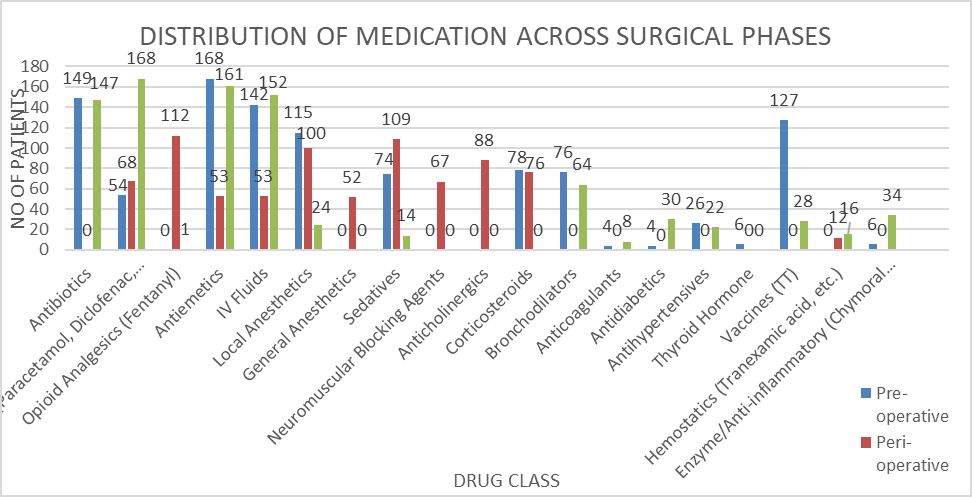
Figure No 1: Graphical representation of the distribution based on medication
The number of medications prescribed varied across the three surgical phases. Preoperatively, most patients received 5–10 medications (159; 89.33%), while 15 patients (8.43%) received less than five medications. Intraoperatively, 5–10 medications were prescribed in 89 patients (50.00%), while 81 (45.51%) received less than five medications. Postoperatively, 5–10 medications remained most common (135; 75.84%), while 32 patients (17.98%) received 10–20 medications. Overall, polypharmacy was observed in 133 patients (74.72%), whereas 45 patients (25.28%) were classified as non-polypharmacy. (Figure 2)
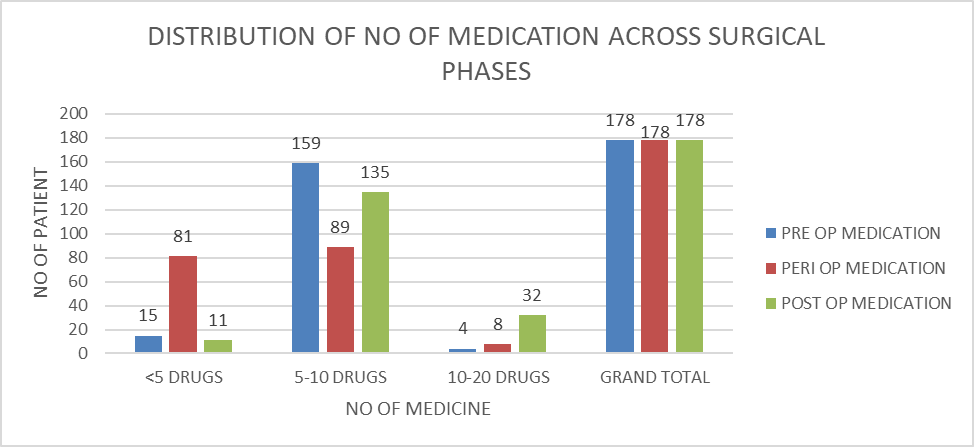
Figure No 2: Graphical representation of the distribution based on no of medication across surgical phases
At least one drug-related problem (DRP) was identified in 131 patients (73.60%), while 47 (26.40%) had no documented DRP. Drug–drug interactions were the most commonly identified DRP (95; 53.37%), followed by adverse drug reactions (53; 29.78%) and unnecessary medication use (34; 19.10%). Dose-related problems were observed in 6 patients (3.37%), whereas medication non-adherence and adverse drug events were reported in 4 (2.25%) and 3 (1.69%) patients, respectively. Among medication errors, prescription errors were the most frequent (104; 58.43%), followed by administration errors (14; 7.87%) (Figure 3).
(Figure 4 )illustrates the distribution of patients according to the number of DRPs identified per patient, showing patients with one or more DRPs during hospitalization.
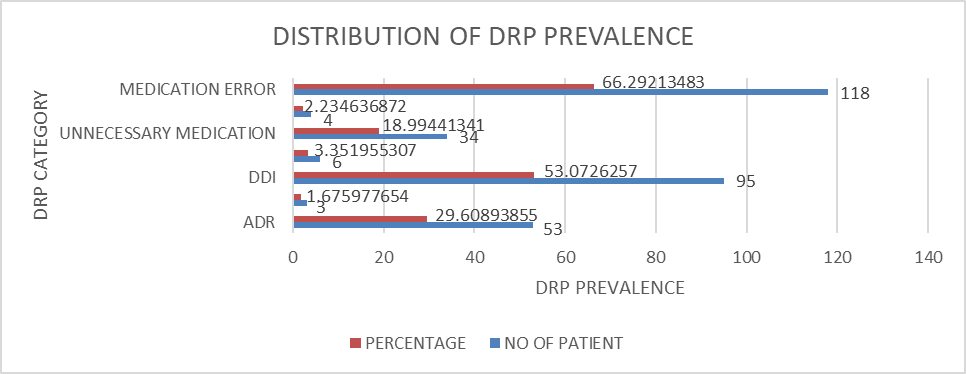
Figure No 3: Graphical representation of the distribution based on DRP prevalence
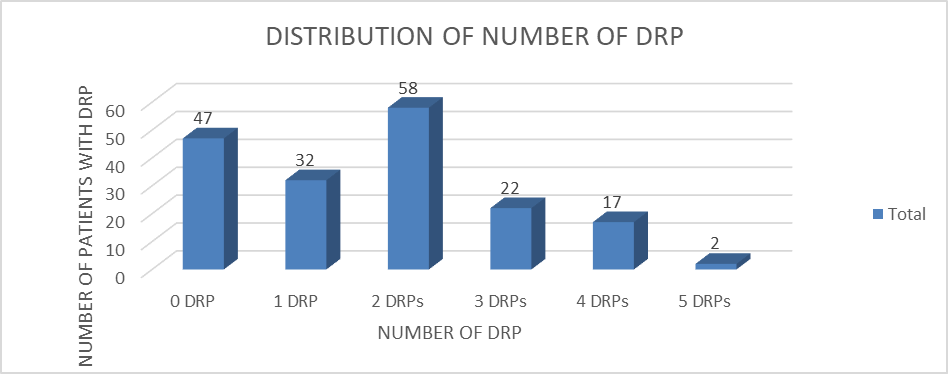
Figure No 4: Graphical representation of the distribution based on number of DRP
Drug–drug interactions (DDIs) were the most commonly identified drug-related problem, occurring in 95 of 178 patients (53.37%). The frequently observed interactions included fentanyl–midazolam, midazolam–propofol, amikacin–diclofenac, amikacin–furosemide, telmisartan–diclofenac, diclofenac–aceclofenac, ondansetron–ciprofloxacin, metronidazole–ondansetron, and dexamethasone–vecuronium. Based on their potential clinical significance, major or severe interactions were mainly associated with opioid–sedative combinations, which could lead to excessive sedation and respiratory depression, while QT-prolonging combinations may increase the risk of cardiac arrhythmias. Amikacin-containing combinations also had the potential to contribute to renal impairment. Moderate interactions included NSAID duplication, telmisartan–diclofenac, and corticosteroid–neuromuscular blocker combinations, with possible gastrointestinal or renal toxicity, reduced antihypertensive effect, or delayed recovery. Other interactions were considered minor or requiring monitoring and could generally be managed through routine clinical observation.
Adverse drug reactions were identified in 53 of the 178 elective surgical patients (29.78%). The commonly observed reactions included diarrhoea, nausea, hypotension, headache, nephrotoxicity, dizziness, drowsiness, gastric irritation, abdominal pain, hypoglycaemia, skin rashes, QT prolongation, electrolyte disturbances, elevated liver enzymes, dry mouth, injection-site pain, peripheral oedema, palpitations, bradycardia, and sedation. These reactions were observed in association with several medication classes, including antibiotics, NSAIDs, proton pump inhibitors, antiemetics, antihypertensive agents, antidiabetic drugs, opioids, aminoglycosides, local anaesthetics, and diuretics.
Other identified DRPs included unnecessary medication use in 34 patients (19.10%), dose abnormalities in 6 patients (3.37%), medication non-adherence in 4 patients (2.25%), and adverse drug events in 3 patients (1.69%). Among medication errors, prescription errors were the most frequently reported, occurring in 104 patients (58.43%). These findings demonstrate that, in addition to DDIs and ADRs, inappropriate medication use and prescribing-related problems represented important components of the overall DRP burden.
Postoperative complications and hospital stay were assessed among the 178 elective surgical patients. “Other” complications were the most commonly reported postoperative events, occurring in 30 patients. Among the specific complications, delayed wound healing was frequently observed, followed by bleeding with delayed wound healing and infection associated with delayed wound healing (Table: 3). In terms of length of hospital stay, 91 patients (51.12%) remained hospitalized for 6–10 days, while 62 patients (34.83%) were discharged within 0–5 days. A smaller proportion of patients had a hospital stay of 11–20 days (22; 12.36%), and only 3 patients (1.69%) remained hospitalized for 21–30 days. Overall, 153 patients (85.95%) were discharged within 10 days.(Table: 3)
Table No. 3: Association of DRP with the variables
|
Variable |
Category |
DRP – No, n |
DRP – Yes, n |
Total, n |
p-value |
|
Age group (years) |
10–20 |
0 |
6 |
6 |
0.936 |
|
20–30 |
8 |
17 |
25 |
||
|
30–40 |
12 |
20 |
32 |
||
|
40–50 |
7 |
23 |
30 |
||
|
50–60 |
9 |
29 |
38 |
||
|
60–70 |
7 |
24 |
31 |
||
|
70–80 |
2 |
10 |
12 |
||
|
80–90 |
2 |
2 |
4 |
||
|
Gender |
Female |
17 |
48 |
65 |
0.068 |
|
Male |
30 |
83 |
113 |
||
|
BMI group |
Normal weight |
24 |
58 |
82 |
0.534 |
|
Obesity |
7 |
21 |
28 |
||
|
Overweight |
13 |
41 |
54 |
||
|
Underweight |
3 |
11 |
14 |
||
|
Pre-operative medication |
<5 drugs |
5 |
10 |
15 |
0.440 |
|
5–10 drugs |
40 |
119 |
159 |
||
|
10–20 drugs |
2 |
2 |
4 |
||
|
Intra-operative medication |
<5 drugs |
23 |
58 |
81 |
0.859 |
|
5–10 drugs |
22 |
67 |
89 |
||
|
10–20 drugs |
2 |
6 |
8 |
||
|
Post-operative medication |
<5 drugs |
8 |
3 |
11 |
0.002* |
|
5–10 drugs |
31 |
104 |
135 |
||
|
10–20 drugs |
8 |
24 |
32 |
||
|
Polypharmacy |
No |
26 |
19 |
45 |
0.001* |
|
Yes |
21 |
113 |
133 |
||
|
Post-operative complications (POC) |
No |
20 |
47 |
67 |
0.418 |
|
Yes |
27 |
84 |
111 |
||
|
Length of hospital stay (LOS) |
0–5 days |
20 |
42 |
62 |
0.198 |
|
6–10 days |
20 |
71 |
91 |
||
|
11–20 days |
5 |
17 |
22 |
||
|
21–30 days |
2 |
1 |
3 |
The association between DRPs and selected demographic, clinical, and treatment-related variables was assessed using SPSS version 23 statistical tool. The correlation of the categorical variables done by Chi square test, Mann Whitney U test with p < 0.05 considered statistically significant. Polypharmacy was significantly associated with DRP occurrence (p < 0.001), as was the number of postoperative medications (p < 0.001). Additionally, ADR occurrence was significantly associated with length of hospital stay (p< 0.009). (Table: 3)
No statistically significant associations were observed between DRP occurrence and age group (p = 0.936), gender (p = 0.068), BMI group (p = 0.534), number of preoperative medications (p = 0.393), perioperative medications (p = 0.177), postoperative complications (p = 0.161), or length of hospital stay (p = 0.322). Overall, polypharmacy and postoperative medication burden were significantly associated with DRP occurrence, while the demographic and other clinical variables assessed did not show statistically significant associations. (Table: 3)
4. DISCUSSION
Drug-related problems (DRPs) are an important medication-safety concern in elective surgical care, where patients are often exposed to several medications during the perioperative period. In this prospective observational study of 178 elective surgical patients, DRPs were identified in 131 patients (73.6%), demonstrating a considerable medication-related burden. This prevalence is comparable with previous reports among surgical inpatients, including those by Mohammed M et al. and Meng et al., and highlights the importance of systematic medication review throughout hospitalization[2,10].
The high medication burden observed may partly explain the frequency of DRPs. Polypharmacy was present in 133 patients (74.72%), and medication use increased during the postoperative period compared with the preoperative and perioperative phases. Polypharmacy was significantly associated with DRP occurrence (p < 0.001), as was the number of postoperative medications (p < 0.001). Similar observations have been reported by Kaufmann et al. and Rabba et al., who identified increasing medication burden as an important factor associated with medication-related problems[11,12]. The addition of analgesics, antibiotics, antiemetics, supportive therapies, and medications for chronic conditions during postoperative care may further increase the possibility of interactions, inappropriate prescribing, and adverse drug events.
DDIs were the most frequently identified DRP, occurring in 95 patients (53.37%), followed by ADRs in 53 patients (29.78%) and unnecessary medication use in 34 patients (19.10%). The identified DDIs included those associated with central nervous system depression, nephrotoxicity, QT prolongation, therapeutic duplication, electrolyte disturbances, and altered therapeutic effects. Commonly observed combinations included fentanyl with midazolam, tramadol with ondansetron, amikacin with diclofenac or piperacillin, telmisartan with diclofenac, and diclofenac with aceclofenac. Most interactions were classified as moderate and required clinical monitoring or therapeutic modification. Similar observations have been reported by Rabba et al. and Simon et al., who identified DDIs as an important component of DRPs among hospitalized surgical patients[12,1]. These findings emphasize the value of medication reconciliation and interaction screening when multiple perioperative medications are prescribed.
ADRs were identified in 53 patients (29.78%). Commonly observed manifestations included gastrointestinal symptoms, hypotension, dizziness, drowsiness, nephrotoxicity, hypoglycaemia, skin reactions, electrolyte disturbances, and sedation. These reactions were associated with commonly used perioperative drug classes, including antibiotics, NSAIDs, antiemetics, antihypertensives, antidiabetic agents, and opioids. ADR occurrence was significantly associated with length of hospital stay (p = 0.009), indicating an important relationship between adverse medication-related events and hospitalization. Early recognition, monitoring, and pharmacovigilance may therefore be particularly important in the perioperative setting.
Medication errors also contributed substantially to the overall DRP burden. Prescription errors were identified in 104 patients (58.43%), while administration errors occurred in 14 patients (7.87%). Therapeutic duplication, inappropriate dosing, unnecessary medication use, and inappropriate continuation of therapy were among the problems observed. In addition, unnecessary medication use was identified in 34 patients (19.10%), dose abnormalities in 6 patients (3.37%), medication non-adherence in 4 patients (2.25%), and ADEs in 3 patients (1.69%). Similar medication-related concerns have been reported by Sagua et al. and Paranaguá et al., particularly in relation to prescribing and administration errors[13,14]. These observations reinforce the need for rational prescribing, medication reconciliation, and appropriate verification of medication administration during surgical care.
The association analysis showed that medication-related factors were more closely associated with DRP occurrence than the demographic and clinical variables assessed. Significant associations were observed with polypharmacy (p < 0.001) and the number of postoperative medications (p < 0.001). In contrast, no significant associations were observed with age (p = 0.936), gender (p = 0.068), BMI (p = 0.534), preoperative medications (p = 0.393), perioperative medications (p = 0.177), postoperative complications (p = 0.161), or overall length of hospital stay (p = 0.322). Thus, within this study population, medication burden appeared to be more closely associated with DRP occurrence than the demographic characteristics evaluated. The absence of significant associations with several variables should, however, be interpreted in the context of the study design and sample size.
The high frequency of DDIs, ADRs, and medication errors, together with the significant association of DRPs with polypharmacy and postoperative medication burden, highlights medication complexity as an important area for intervention. Structured medication review, interaction screening, rational prescribing, and active ADR monitoring may help identify and address potentially preventable DRPs during different stages of surgical care. Previous studies by Boeker et al. and Blix et al. have similarly emphasized the importance of systematic identification and management of DRPs for improving medication safety[8.9].
Overall, DRPs were common among the elective surgical patients studied, with 73.6% experiencing at least one DRP. DDIs, ADRs, and medication errors accounted for a substantial proportion of the identified problems, while polypharmacy and postoperative medication burden showed significant associations with DRP occurrence. These findings support the involvement of clinical pharmacists in multidisciplinary surgical teams, particularly in medication reconciliation, interaction screening, ADR monitoring, and rationalization of therapy, to strengthen medication safety during perioperative care.
5. CONCLUSION
In this prospective observational study of 178 elective surgical patients, we set out to determine how often drug-related problems (DRPs) occurred, what factors were driving them, and how they affected patient care. DRPs turned out to be common, affecting 131 patients — nearly three in four (73.6%) of those studied.
Drug–drug interactions were the leading type of DRP encountered (53.37%), followed by adverse drug reactions (29.78%) and unnecessary medication use (19.10%). Among medication errors specifically, prescription errors were by far the most frequent (58.43%). Polypharmacy was also widespread, present in 74.72% of patients, and it showed a significant association with DRP occurrence (p < 0.001) — a finding that positions it as a key driver of medication-related problems in this setting.
The clinical relevance of these problems was borne out in the data as well. DRPs were significantly associated with a higher number of postoperative medications (p < 0.001), and adverse drug reactions in particular were linked to longer hospital stays (p = 0.009). We also examined how DRPs related to postoperative complications, and the pattern that emerged reinforces just how much medication-related problems can shape a patient's course during the perioperative period.
Altogether, these results make a strong case for routine medication review and earlier identification of DRPs, especially in patients on multiple drugs. Bringing clinical pharmacists into the surgical team as active participants — not an afterthought — could go a long way toward improving medication safety and cutting down on complications that are, in many cases, preventable.
6. LIMITATIONS
This study was conducted at a single tertiary care hospital and involved 178 elective surgical patients, which may limit how widely the findings can be applied to other hospitals or patient populations. Since the study was observational, it was possible to identify associations between DRPs and clinical outcomes, but a definite cause-and-effect relationship could not be established. The study included only elective surgical patients, so the findings may not necessarily apply to emergency, trauma, or critically ill surgical patients. In addition, the six-month study period may not have captured variations in patient characteristics and prescribing practices that could occur over a longer period.
The identification of DRPs was based on the information available in patients’ medical records. Therefore, incomplete or missing documentation may have resulted in some DRPs or adverse drug reactions being overlooked. The lack of long-term follow-up also limited the assessment of delayed adverse reactions, readmissions, and other long-term outcomes. Furthermore, factors such as disease severity, comorbidities, and the complexity of surgery may have influenced both the occurrence of DRPs and clinical outcomes, making it difficult to determine the independent effect of medication-related problems.
7. FUTURE DIRECTIONS OF THE STUDY
Future research should include larger, multicentre studies with longer follow-up periods to provide more representative findings and to better understand the long-term effects of DRPs on readmissions, postoperative complications, mortality, and other patient outcomes. Developing standardized protocols for identifying, classifying, reporting, and managing DRPs would also help ensure a more consistent approach to medication safety across different healthcare settings.
Further studies should evaluate the effectiveness of clinical pharmacist-led interventions in preventing and resolving DRPs and improving medication safety among surgical patients. Research should also give greater attention to antimicrobial stewardship and patient-centred outcomes, such as treatment satisfaction and medication-related quality of life. Including these aspects in future studies could provide a more complete picture of how DRPs affect both clinical outcomes and patients' overall experience of care.
CONFLICT OF INTEREST
The authors declare no conflicts of interest regarding this investigation.
ACKNOWLEDGMENTS
We thank our clinical guide Dr. Madan M, Professor and HOD of General surgery Department, BGS Hospital, Bengaluru, for his support and guidance throughout this study.
REFERENCES


Poorvi U.1*, Md Saddam Hossain, Nazir Uddin Ahmed, Manisha M, Dr. Saba Farooqui5, Mohammad Vazir, Dr. Jesindha Beyatricks, Mapping Drug-Related Problems Across the Perioperative Continuum: A Prospective Observational Study in Elective Surgery, Int. J. of Pharm. Sci., 2026, Vol 4, Issue 8, 3479-3492. https://doi.org/10.5281/zenodo.22050558
 10.5281/zenodo.22050558