

We use cookies to ensure our website works properly and to personalise your experience. Cookies policy
G. P. Pharmacy College, Vaniyambadi Main Road, Mandalavadi, Jolarpettai, Tirupattur 635851
Breast cancer is one of the most prevalent malignancies worldwide and remains a major public health concern. The development of effective therapeutic strategies is essential for improving patient outcomes. Computer-aided drug design (CADD) has emerged as a valuable approach in modern drug discovery by enabling the prediction of drug–target interactions and optimization of pharmacological properties. This review focuses on the application of computational techniques in the development of aromatase inhibitors for breast cancer therapy. Molecular docking, ADMET prediction, and drug-likeness evaluation are widely used to assess the efficacy and safety of potential drug candidates. Aromatase inhibitors such as Exemestane play a crucial role in hormone-dependent breast cancer by suppressing estrogen synthesis. Despite significant advancements, challenges such as limited predictive accuracy and biological complexity remain. Future developments integrating artificial intelligence and machine learning are expected to enhance the efficiency and precision of drug discovery.
Cancer is a complicated illness with a wide range of potential causes, and a number of factors can affect how it develops and spreads. Tumor cells can develop from normal cells as a result of interactions between genetic and environmental variables. These cells can then proliferate, infiltrate nearby tissues, and spread to other organs [1]. Due to variations in lifestyle, environmental variables, and access to healthcare, the incidence of cancer varies greatly between different parts of the world. It is anticipated that the prevalence of cancer will continue to increase in the years to come, underscoring the need of creating novel and efficient treatments to lessen the disease's effects [2 &3]
Numerous therapeutic approaches, including radiation and chemotherapy, have been developed over time to reduce the incidence of cancer. Some tumors have been successfully treated with these medicines, although they have drawbacks such poor efficacy, toxicity, and drug resistance. Furthermore, a lot of cancer treatments are not tailored to each patient's unique needs, which results in less-than-ideal results [4]. Concern over the emergence of resistance to existing cancer treatments is growing. The capacity of cancer cells to change and become resistant to chemotherapy is what causes this resistance. Therefore, in order to overcome medication resistance, novel treatments that target alternative pathways and employ distinct mechanisms of action are required.
Innovative methods for avoiding carcinogenesis and lowering tumor burden have been made possible by the identification of various therapeutic targets in recent years [5]. Traditional drug discovery has been utilized to create medications that can kill cancer cells with little damage to healthy cells in order to give cancer patients with effective treatments. Target identification, chemical compound synthesis, preclinical testing in vitro and animal models, and toxicity assessment are all part of this procedure. In order to assess their safety and efficacy in the intended patient group, successful drugs are subsequently put through human clinical trials, which might take several years to finish [6]. Even while this strategy has been successful in creating potent anticancer medications, it is a costly, time-consuming, and arduous procedure that can take years and millions of dollars to finish. In order to speed up and streamline the search for new anticancer medications, computational methods have been developed as a result of current technological and methodological developments.
In the development of novel anti-cancer medications, computational techniques such as computer-aided drug design (CADD)have grown in significance. In order to find compounds that may be useful treatment candidates against a variety of diseases, including cancer, researchers employ computational tools and methodologies to simulate and predict the interactions between possible drug molecules and biological targets [7]
The FDA – Food and drug administration approved anticancer drugs were developed using computational tools. Crizotinib, a drug used in the management of lung, esophageal, and certain lymphomas, was discovered through a structure?guided design approach. Axitinib, approved by FDA in 2012 to treat advanced renal cell carcinoma patients, was also identified using structure-based drug design computational tools [8]
Recently, a ligand?oriented strategy has been employed to develop tubulin blockers that interfere with tubulin assembly, a process crucial for cell cycle regulation and mitotic division [9]. Furthermore, a human aromatase (HA) inhibitor has been developed, utilizing ligand-based approaches, to treat estrogen receptor-positive (ER+) breast cancer [10]
1. 1 THE TRIPLE “D” (D3):
1.1.1 Drug design:
"Drug designing" refers to the process of creating novel medications using computational techniques and bioinformatics tools. To forecast how possible therapeutic compounds would interact with target proteins, it combines a number of academic fields, including biology, chemistry, and computer science. This approach dramatically lowers expenses while accelerating medication discovery [11]. It is the rational process in which preparing susceptible structure which locks perfectly in the biological protein (receptor, enzyme, binding site)
1.1.1.1 Types of drug design:
In general, there are two categories of drug design:
Structure-Based Drug Design (SBDD)
Ligand-Based Drug Design (LBDD)
1.1.2 Drug development:
Drug development is the lengthy, complex journey of discovering a potential medicine, testing its safety and effectiveness through preclinical (lab/animal) and clinical (human) trials, getting regulatory approval (like from the FDA), and launching it for patient use, involving science, medicine, and business to bring a new therapy from an idea to a marketable product [12]
Stages of drug development include:
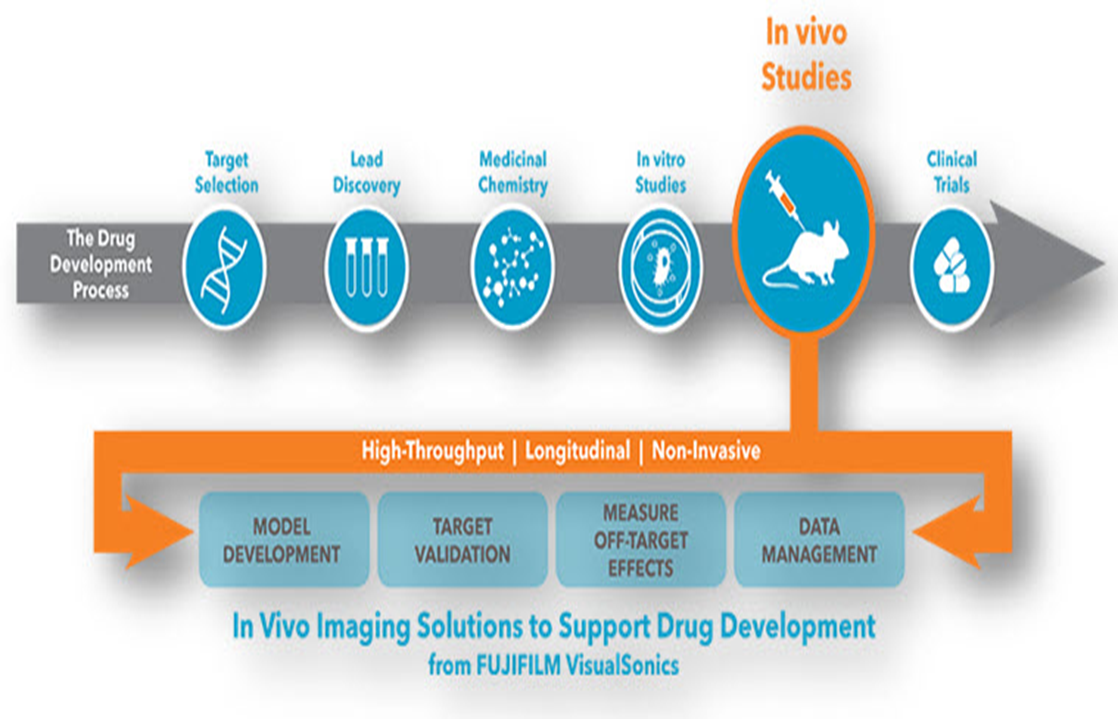
Fig 1: Stages of drug discovery and development process
1.1.3 Drug delivery:
Drug delivery is the process and technology used to administer pharmaceuticals to achieve a therapeutic effect. It focuses on delivering the right amount of medication to the right part of the body in a safe and effective manner, controlling release, reducing side effects, and enhancingpatient convenience through a variety of routes (oral, injection, transdermal) and sophisticated systems (nanoparticles, liposomes) [14]
Some of the drug delivery routes and dosage forms are:
1. 2 OBJECTIVES OF DRUG DESIGNING:
To identity how to relate chemical structure to biological activity.
To understand how to conduct a structure activity analysis.
Identify at least one molecule with improved action in over an existing drug with same target.
Find & select the target disease in the human body.
Identify and select the most promising drug candidate.
Conduct computerized drug design simulation. Enhance the efficacy and characteristics of the lead compound.
To improve the binding interaction between a drug & its target, this will increase the activity & also reduce the side-effects [13]
1. 3 COMPUTER AIDED DRUG DESIGN (CADD):
Computer-Aided Drug Design (CADD) refers to the use of computational, theoretical, and mathematical tools to model, design, and predict interactions between drug candidates and biological targets, significantly accelerating the drug discovery and design process while reducing cost and experimental burden. CADD includes structure-based and ligand-based approaches such as molecular docking, virtual screening, pharmacophore modeling, QSAR, 3D QSAR, Molecular dynamics simulation, ADMET Prediction all these are enabling the identification and optimization of lead compounds before laboratory validation [15]
1.4 OVERVIEW OF STUDY
Computer-aided drug design (CADD) has become an essential tool in modern pharmaceutical research for identifying and optimizing potential drug candidates. Various Chemical information databases are critical in modern drug discovery because they provide complete data on the chemical structures, biological activities, and pharmacological properties of compounds. Databases like PubChem allow researchers to retrieve precise information about tiny compounds, such as molecular structure, physicochemical properties, and biological experiment results. These sites aid ligand identification and computational analysis in drug discovery research. Furthermore, computational tools for analysing pharmacokinetic features such as absorption, distribution, metabolism, excretion, and toxicity are commonly employed to analyse prospective compounds' drug-likeness and safety profiles. ADMET scoring and predictive models aid in the prioritisation of compounds with favourable pharmacological properties, reducing the likelihood of failure in the later phases of drug development.As a result, such computational evaluations are critical in the early stages of pharmaceutical research, where they aid in the optimisation of drug candidates prior to experimental validation.[24-26]
Recent advances in computational drug discovery have offered various prediction tools for determining the safety and efficacy of new therapeutic candidates. Machine learning and deep learning techniques are increasingly being used to forecast toxicity, allowing researchers to detect potentially dangerous molecules early in the medication development process. Predicting toxicity via computer models enhances safety assessment while reducing the need for extensive experimental testing. Furthermore, drug permeability influences the absorption and bioavailability of pharmacological substances, especially in the gastrointestinal system.
Pharmacophore modelling is another essential computational tool for identifying the critical structural characteristics that control biological activity and ligand-target interactions. It aids in screening and creating novel compounds with the appropriate pharmacological characteristics. Furthermore, protein-ligand binding site prediction and molecular docking studies provide useful information about ligand-target protein interactions. Molecular docking is a popular technique in structure-based drug design for predicting the binding orientation, interaction patterns, and binding affinity of medicinal molecules with biological targets. These computational tools help to identify and optimise promising medicinal molecules in modern drug discovery research. [27-34]
Computational approaches, such as virtual screening and molecular modelling, have emerged as effective tools for drug discovery and lead optimisation. [34] The combination of current technologies and computational methodologies has dramatically changed the medication development process. Understanding the fundamental biological properties of cancer is critical for designing successful anticancer treatments. [35]
Computer-Aided Drug Design (CADD) plays a pivotal role in contemporary pharmaceutical research by enabling efficient and rational drug discovery. The application of computational techniques allows researchers to predict molecular behavior and drug–target interactions at early stages, thereby improving research productivity
2.1Acceleration of Drug Discovery Process
CADD significantly shortens the drug discovery timeline by enabling rapid in silico screening of large chemical libraries. This reduces dependency on time-intensive experimental screening methods and enhances early-stage decision-making [16]
2.2 Cost-Effective Drug Development
The high cost associated with traditional drug discovery can be minimized through CADD by eliminating unsuitable compounds at early stages. Virtual screening and predictive modeling reduce unnecessary synthesis and biological testing, leading to substantial cost savings [16]
2.3 Enhanced Target-Based Drug Design
By utilizing structural information of biological targets, CADD facilitates the design of molecules with improved binding affinity and specificity. Structure-based and ligand-based approaches help in achieving better therapeutic selectivity and reduced adverse effects [17]
2.4 Optimization of Lead Compounds
CADD supports systematic lead optimization through structure–activity relationship (SAR) and QSAR studies. These tools assist in improving pharmacological activity, physicochemical properties, and overall drug-likeness of lead candidates [18]
2.5 Early Prediction of Pharmacokinetics and Toxicity (ADMET Prediction)
In silico ADME and toxicity prediction models enable early identification of pharmacokinetic limitations and safety concerns. This early risk assessment reduces late-stage clinical failures and enhances success rates [19]
2.6 Contribution to Drug Delivery Design
CADD is increasingly employed in the design of advanced drug delivery systems by modeling drug–carrier interactions and predicting stability, release patterns, and bioavailability, supporting the development of targeted and controlled delivery strategies [20]
All investigational studies in this work were carried out on an AMD Pro based system with Windows 10. Ligand’s structure preparation involves 3D Optimization, Energy minimization was performed using Avogadro, Molegro Molecular Viewer, and Structural modeling and analysis were performed using Chemdraw, Biovia Discovery Studio. Receptor preparations were carried out on Biovia Discovery Studio, Molegro Molecular Viewer. The Pharmacokinetic parameters (ADME) were predicted using ADMET Lab 3.0 and Swiss ADME, toxicity studies were performed by StopTox, Protox. The phospholipid bilayers permeation was performed by PerMM server. The active site or pocket atom of receptor was predicted by CASTp, and the Pharmacophore Modeling was performed by ZINC Pharmer, whereas docking studies were carried out by using Swiss Dock, Autodock. The 3D Structures of Human Aromatase and Exemestane were retrieved from Protein Data Bank RCSB PDB (PDB id: 3S7S) and Pubchem. Chain C of the 3S7S protein was used in this study.
3.1 Experimental
3.1.1 Protein Selection
In this study, I selected the protein called Human aromatase (PDB id: 3S7S). Human aromatase, a cytochrome P450 enzyme (CYP19A1), acts as the rate-limiting step in estrogen biosynthesis by aromatizing androgens into estrogens. It catalyzes the conversion of androstenedione to estrone and testosterone to estradiol via a three-step oxidation process. This crucial enzyme is expressed in ovaries, adipose tissue, brain, and bone, regulating estrogen levels. [21] Increased production of estrogen leads to promotion of division and proliferation of breast cells and cells in breast grow out of control which further leads to formation of tumour (lump) in the milk producing ducts and glands
The Human aromatase is retrieved from Protein Data Bank RCSB PDB.The RCSB Protein Data Bank (PDB) is a publicly accessible, open-access biological database that stores three-dimensional (3D) structural data of biological macromolecules. It is one of the most important resources in structural biology, bioinformatics, and computer-aided drug design (CADD). [21 & 22]
3.1.2 Ligand Selection
The ligand i.e.: Exemestane an anti-cancer drug particularly breast cancer drug which is referred as Type I aromatase inhibitor also known as irreversible inhibitor, suicide or mechanism based inactivator. Exemestane binds to the aromatase enzyme and blocks the conversation of androgens to estrogen so that over production of estrogen is stopped and the distribution of estrogen to breast also reduced, Therefore Hormone positive breast cancer is managed i.e: New cancer cells and lumps are not formed [23]
Exemestane is retrieved from Pubchem database which provides the Physiochemical, Spectroscopic, bioactive studies; etc PubChem is a widely used chemistry information source for biomedical research communities in a variety of fields, such as drug discovery, cheminformatics, chemical biology, and medicinal chemistry. Crucially, PubChem is also a source of big data in chemistry, which is utilized in numerous data science and machine learning initiatives for computing toxicology, drug repurposing, virtual screening, and other applications. [24]
IUPAC NAME: (8R,9S,10R,13S,14S)-10,13-dimethyl-6-methylidene-7,8,9,11,12,14,15,16-octahydrocyclopenta[a]phenanthrene-3,17-dione
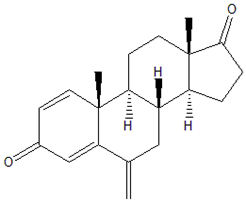
Fig.2: Structure of Exemestane; Source: ChemDraw Pro 8.0
3.1.3 ADMET Prediction
Drug development and discovery is an extremely difficult and expensive process that involves preclinical and clinical studies, target identification and validation, lead finding and optimization, and disease selection [25]. In now a day’s drug discovery and development have wider knowledge among research aspirants.
However, many drug candidates fail to become medications. The absorption, distribution, metabolism, excretion, and toxicity (ADMET) characteristics of chemicals are crucial at every stage of drug discovery and development since the two main reasons for medication failure are ineffectiveness and safety. Finding effective compounds with improved ADMET characteristics is therefore essential [25] to avoid the drug failure the ADMET of that particular ligand was pre predicted using computational tools.
In this study the tool used for predict ADME is Admetlab 3.0[26] & Swiss ADME.
3.1.4 Toxicity prediction
Toxicity prediction aims to estimate the adverse effects of chemicals and drug candidates using computational approaches, reducing reliance on traditional in vitro and in vivo experiments. These traditional methods are costly, time-consuming, and constrained by ethical issues, especially in large-scale screening of chemicals for safety assessment [27].This toxicity prediction may helpful to identify the pharmacophores and toxicophores
In this study the tools used for predict the toxicity is StopTox and ProTox
3.1.5 Permeability Prediction
Membrane permeability is a central parameter in drug discovery, as it governs how efficiently a compound passes through biological barriers such as the intestinal epithelium or blood–brain barrier to reach its target site. Permeability affects pharmacokinetics and bioavailability, making it a critical factor in determining drug efficacy and safety. Both experimental assays (such as Caco-2 and PAMPA) and computational prediction models, including QSAR and machine learning approaches, are extensively applied to estimate permeability early in the drug development process [28]
In this study the tool used for permeability prediction is PerMM
3.1.6 Pharmacophore Modelling
Pharmacophore modelling is an important computational technique in drug discovery that identifies the essential three-dimensional arrangement of chemical features required for a molecule to interact with a specific biological target. These features commonly include hydrogen bond donors and acceptors, hydrophobic regions, aromatic rings, and ionizable groups, whose spatial orientation determines biological activity. Pharmacophore models may be generated using either ligand-based approaches, which rely on known active compounds, or structure-based methods derived from target protein structures. This strategy is widely applied in virtual screening, lead optimization, and scaffold hopping to accelerate the identification of promising drug candidates [29]
Pharmit is the tool used in this study.
3.1.7 Target Prediction
Active site prediction is an essential task in structure-based drug design aimed at identifying the specific regions of a protein where small molecules or substrates are most likely to bind. Accurate detection of these binding pockets helps researchers understand protein function, assess draggability, and guide downstream processes such as molecular docking and virtual screening. Computational approaches for predicting active sites include geometry-based cavity detection, evolutionary conservation analysis, and machine learning techniques that integrate structural and physicochemical features. Geometry-based tools scan the three-dimensional protein surface to locate cavities and pockets, while conservation-based methods highlight residues that are preserved across homologous sequences, often indicating functional importance. More recently, deep learning methods have further enhanced prediction accuracy by learning complex patterns from structural data, making active site prediction a key component of modern in silico drug discovery workflows. [30]
3.1.8 Molecular Docking
Molecular docking is a widely used computational technique in drug discovery that predicts the preferred orientation of a small molecule when bound to the active site of a target protein and estimates the strength of the interaction. By simulating ligandreceptor binding, docking helps researchers understand binding modes, assess key interactions such as hydrogen bonds and hydrophobic contacts, and prioritize compounds with favorable affinity before experimental testing. Docking methods typically involve two main components: a sampling algorithm that explores possible ligand conformations within the binding site and a scoring function that evaluates and ranks poses based on estimated binding free energy. Advances in algorithms and scoring functions, together with integration into high-throughput virtual screening workflows, have made molecular docking an indispensable tool for hit identification, lead optimization, and structure-based drug design [31 & 32]
Table.1 Techniques and Tools used in CADD
|
Sr. No |
TECHNIQUES |
TOOLS |
|
1. |
Protein Selection |
RCSB PDB |
|
2. |
Ligand Selection |
Pubchem |
|
3. |
Drawing/Editing |
ChemDraw, ChemSketch |
|
4. |
ADMET Prediction |
ADMET Lab 3.0 & 2.0, Swiss ADME |
|
5. |
Toxicity Prediction |
ProTox, StopTox |
|
6. |
Pharmacophore Modelling |
ZINC Pharmer |
|
7. |
Molecular dynamics simulation |
GROMACS, LAMMPS, OpenMM |
|
8. |
Molecular docking |
AutoDock, AutoDock Vina, Chimera, SwissDock |
|
9. |
QSAR, 3D - QSAR |
3DQSAR.Com, Open3DQSAR |
|
10. |
Visualization |
Bioviadiscoverystudio, Molegro Molecular Viewer, PyMOL |
There are several of techniques; tools and software are used in anti cancer (breast) drug discovery. Not only anti caner, all the newer structures are had to pass these computational experiments for clinical or non-clinicalstudies so here some of the tools and techniques are discussed which are basically used in anti cancer drug discovery
5.1 ADMET Prediction
Ligand used: Exemestane
Smiles:C[C@]12CC[C@H]3[C@H]([C@@H]1CCC2=O)CC(=C)C4=CC(=O)C=C[C@]34C
Parameters used:
Table.2 Parameters used in ADMET Prediction
|
ADMET Category |
Parameter |
Optimal / Acceptable Value |
|
Absorption |
Human Intestinal Absorption (HIA) |
High (>70%) |
|
Caco-2 permeability (logPapp, cm/s) |
> −5.15 (High permeability) |
|
|
Oral bioavailability (F%) |
≥ 30% (Good), ≥ 50% (Excellent) |
|
|
Water solubility (LogS) |
> −6 (Adequate solubility) |
|
|
P-gp substrate |
No (Preferred) |
|
|
P-gp inhibitor |
No (Preferred) |
|
|
Distribution |
Blood–Brain Barrier (BBB, logBB) |
> 0.3 (Penetrates BBB), < −1 (non-penetrating, safer for non-CNS drugs) |
|
Plasma Protein Binding (PPB) |
< 90% (Good), > 90% highly bound |
|
|
Volume of Distribution (VD) |
0.04 – 20 L/kg |
|
|
Fraction unbound (Fu) |
Higher value preferred (> 0.1 acceptable) |
|
|
Metabolism |
CYP3A4 inhibition |
No (Preferred) |
|
CYP2D6 inhibition |
No (Preferred) |
|
|
CYP2C9 inhibition |
No (Preferred) |
|
|
Excretion |
Clearance (CL) |
Moderate (5–15 mL/min/kg) |
|
Half-life (T½) |
1 – 12 hours (Optimal range) |
|
|
Toxicity |
Hepatotoxicity |
No |
|
hERG inhibition |
No (non-cardiotoxic) |
|
|
Carcinogenicity |
No |
|
|
Drug-likeness |
Molecular Weight (MW) |
150 – 500 g/mol |
|
LogP |
−0.4 to 5.0 |
|
|
Lipinski Rule of Five |
≤ 1 violation (0 violations ideal) |
5.1.1 ADMETLab 3.0
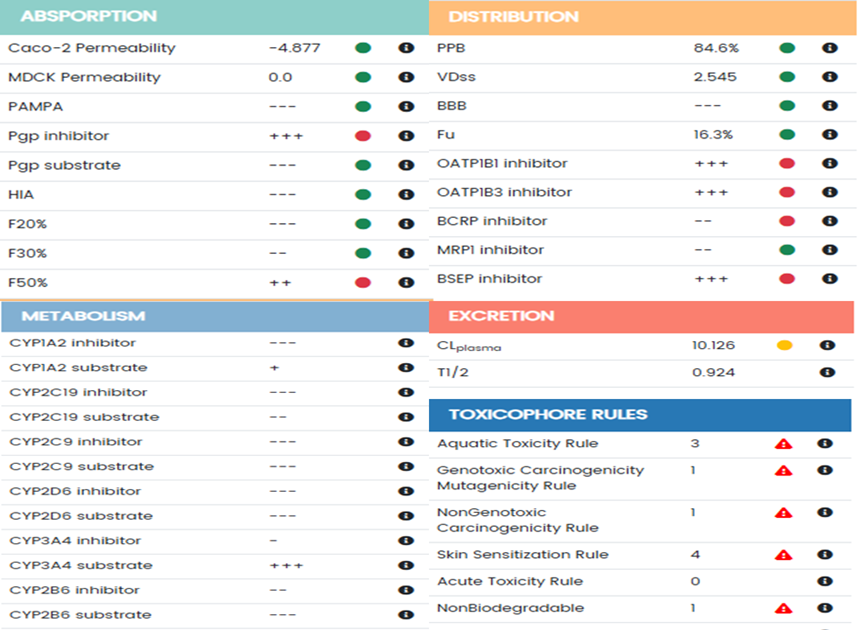
Fig.3 ADMET Result fromADMETLab 3.0
5.1.2 Swiss ADME
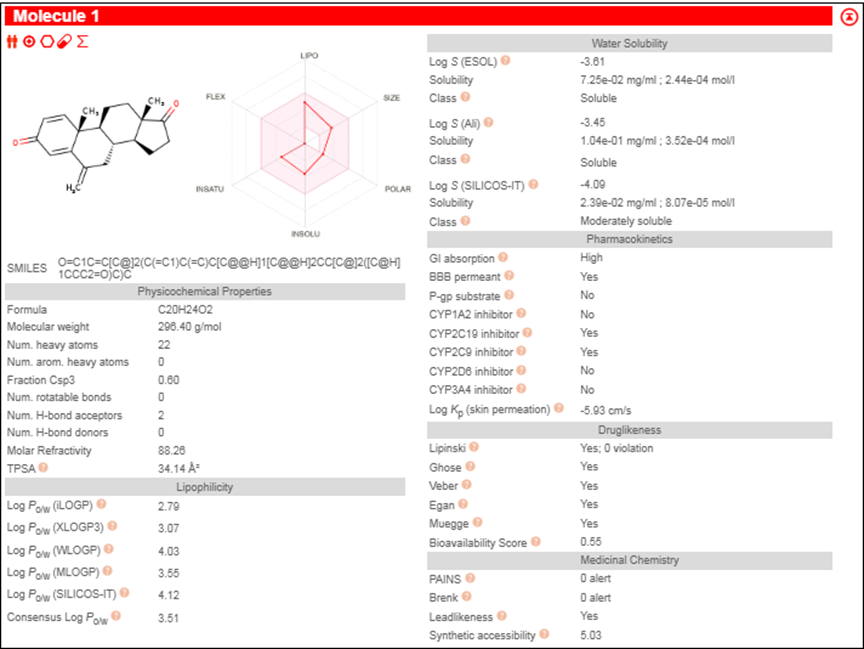
Fig.4 ADMET Results from Swiss ADME
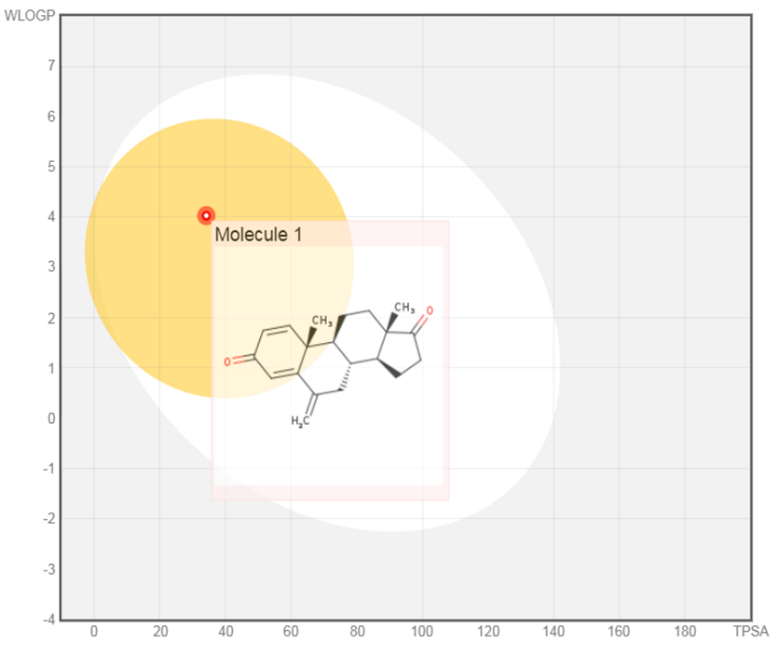
Fig.5 Boiled egg formula from Swiss ADME (Molecule 1: Exemestane)
5.2 Toxicity Prediction
Ligand used: Exemestane
Purpose: To identify Toxicophores
Servers used: StopTox, ProTox
5.2.1 StopTox
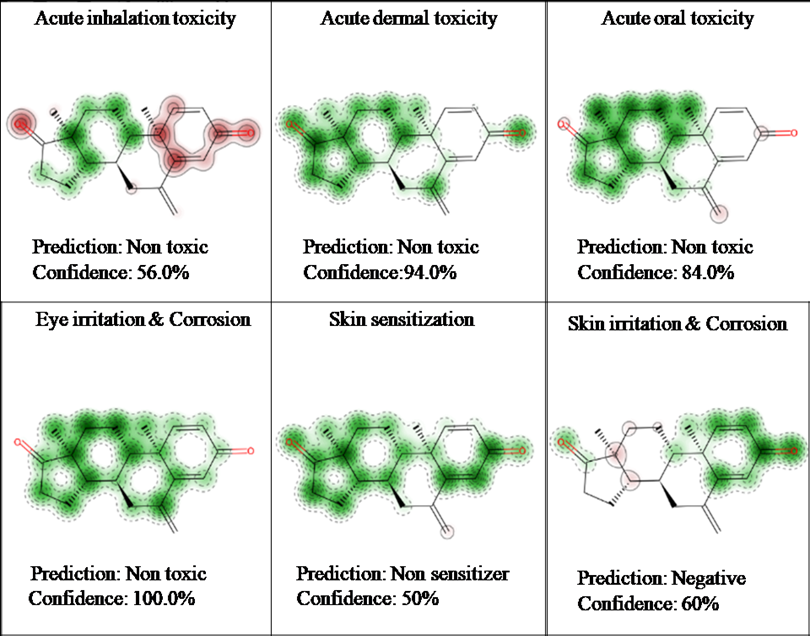
Fig.6 Toxicity results of Exemestane from StopTox server
5.2.2 ProTox
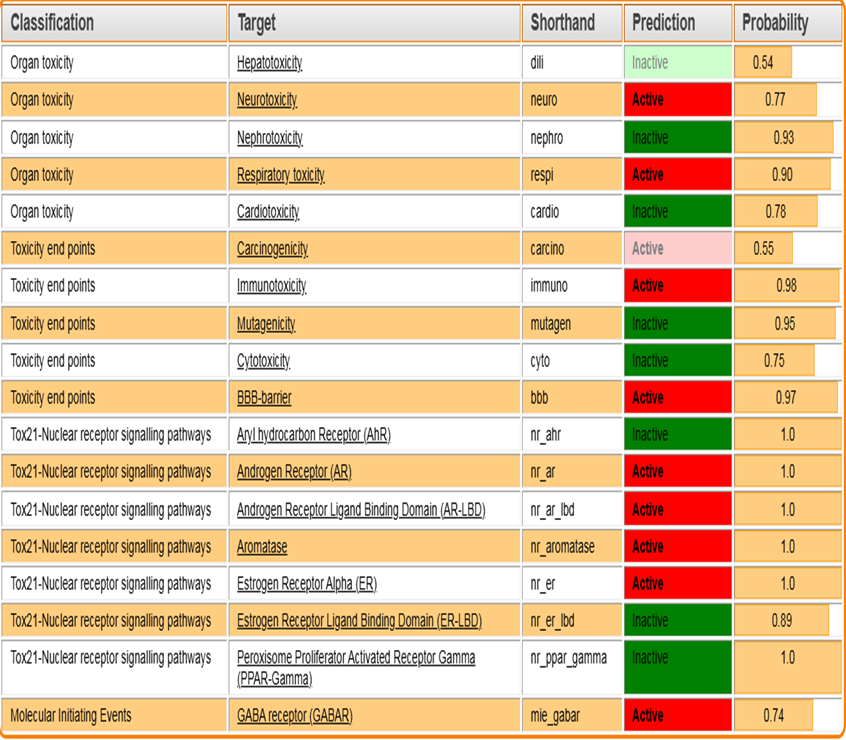
Fig.7 Toxicological results of Exemestane using ProTox server
5.3 Permeability Prediction
Ligand Used: Exemestane
Purpose: To predict the permeation of drugs
Server used:PerMM
5.3.1 PerMM
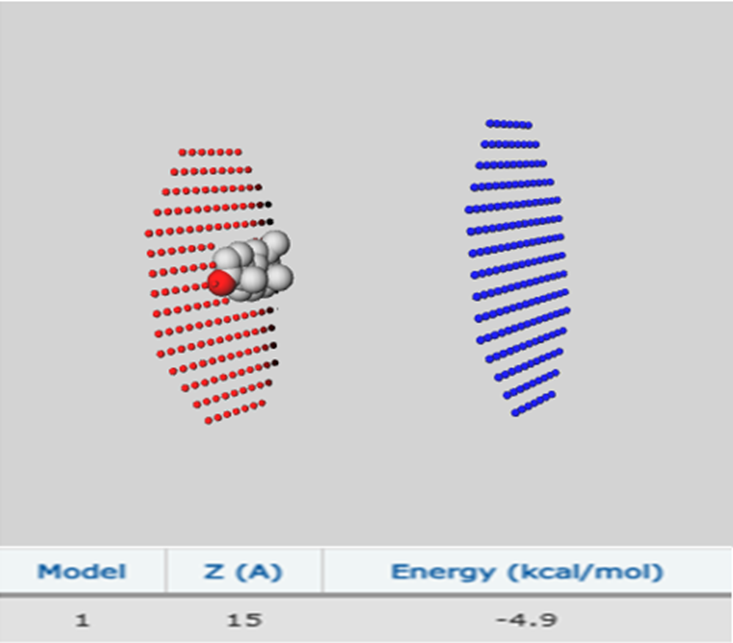
Fig.8 Free energy binding of Exemestane across lipid bilayer with -4.9kcal/mol
5.4 Pharmacophore Modeling
Ligand used: Exemestane
Protein used: Human aromatase (PDB id: 3S7S)
Purpose: To identify and design Pharmacophores
Server used:Pharmit
5.4.1 Pharmit
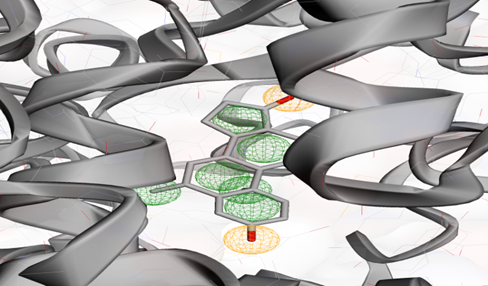
Fig.9 Exemestane complexed with Human aromatase enzyme, Source: Pharmit
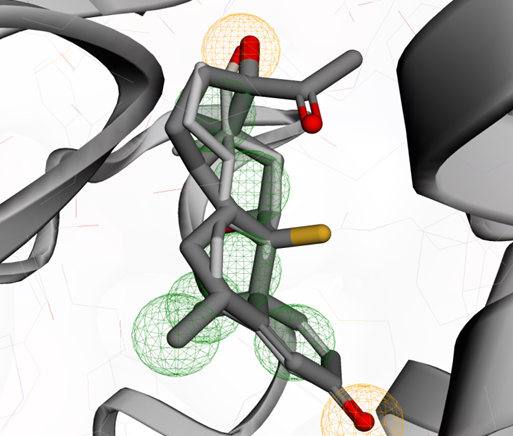
Fig. 10 Modification on exemestane complexed with human aromatase by Pubchem database, Source: Pharmit
5.5 Target Prediction
Ligand used: Exemestane
Protein used: Human aromatase (PDB id: 3S7S)
Purpose: To predict the active site or pocket atom in Target receptor
Servers used:CASTp, SwissTargetPrediction
5.5.1 CASTp
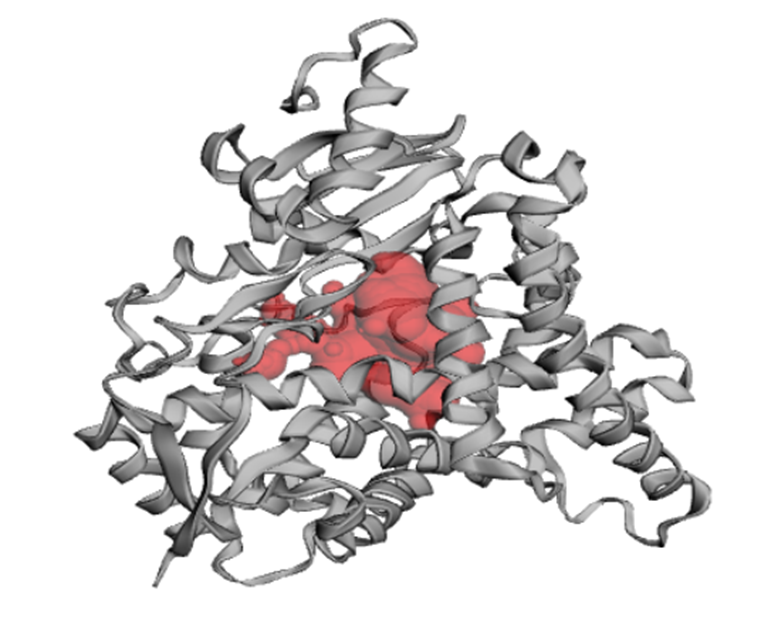
Fig.11 Active site of Human aromatase PDB id: 3S7S, Source: CASTp
5.5.2 SwissTargetPrediction
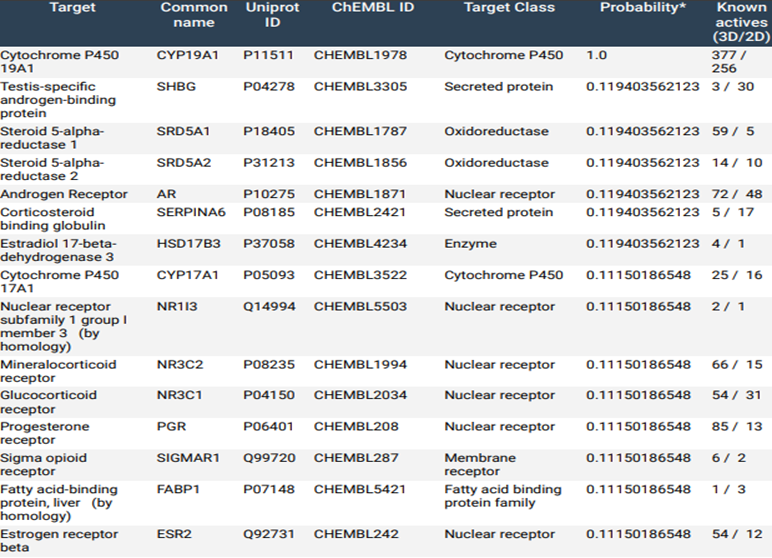
Fig.12 Active target prediction of Exemestane, Source: SwisTargetPrediction
5.6 Molecular Docking
Ligand used: Exemestane
Protein used: Human aromatase (PDB id: 3S7S)
Purpose:To predict a ligand's preferred orientation and binding affinity for a receptor protein in order to create a stable complex
Software & Server used: Autodock, SwissDock web server
5.6.1 Autodock
Steps performed in molecular docking through autodock are:
The three-dimensional structure of the target protein (PDB id: 3S7S) was obtained from the Protein Data Bank (PDB). Water molecules, co-crystallized ligands, and other heteroatoms that did not participate in binding were eliminated. Missing hydrogen atoms were added, and Kollman charges were applied. The constructed protein structure was saved in the PDBQT format.
The chemical structure of the ligand (exemestane) was obtained from pubchem database. A stable conformation was obtained using energy minimization. Then Gasteiger charges were introduced, rotatable bonds were defined, and the ligand was recorded as PDBQT format.
A grid box was constructed around the protein's active region to limit the search space for docking. The grid dimensions (x, y, and z coordinates, as well as spacing) were changed to properly cover the binding pocket region.
Docking simulations were performed using the Lamarckian Genetic Algorithm (LGA). The number of runs, population size, maximum number of energy evaluations, and other parameters were configured in accordance with typical docking techniques.
AutoDock was used for docking. Multiple ligand conformations were created inside the defined grid region.
The docked conformations were graded according to binding energy (kcal/mol). The optimal binding pose was chosen based on its low binding energy and beneficial interactions. Hydrogen bonds, hydrophobic interactions, and other molecular interactions were investigated using molecular visualization software (Biovia discovery studio)
Docking reliability was evaluated by examining RMSD values and interaction consistency at the active site.
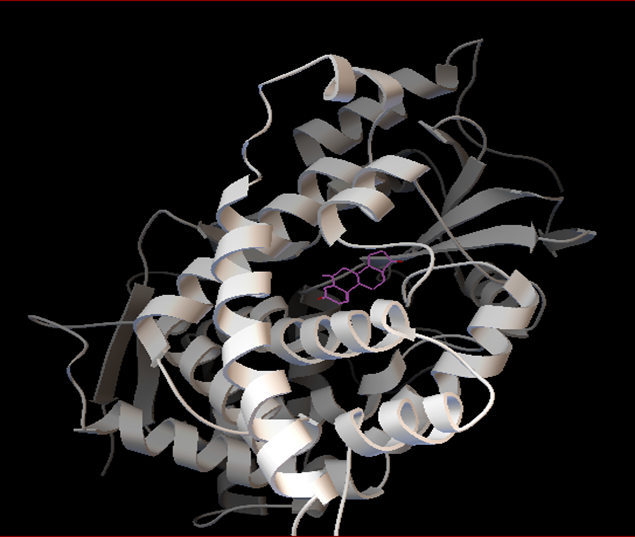
Fig.13 Protein – drug complex of Human aromatase and Exemestane, Source: Autodock
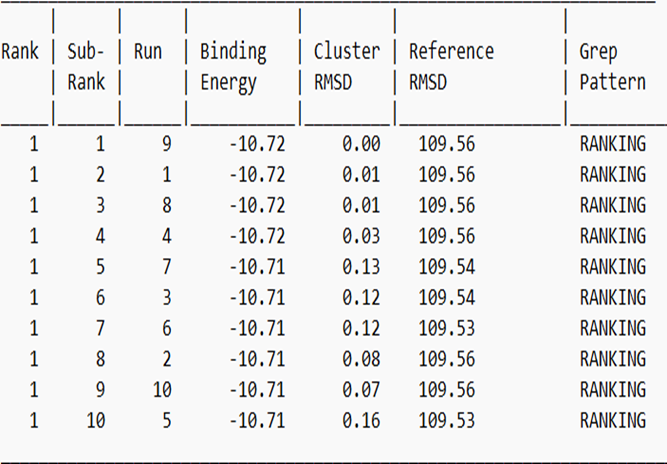
Fig.14 RMSD Table of Docking studies on Human aromatase and exemestane
5.6.2 SwissDock
SwissDock is the online tool used to perform molecular docking. SwissDock is the free online server that used to perform docking automatically; we just have to include the SMILES and protein PDB ID, and set the parameters. Compared to other docking software, SwissDock is less time-consuming and minimizes the work, but the disadvantage is SwissDock is mainly used for blind docking only—we cannot select any amino acids to set the grid box exactly to the binding pocket.
Steps involved in swissdock:
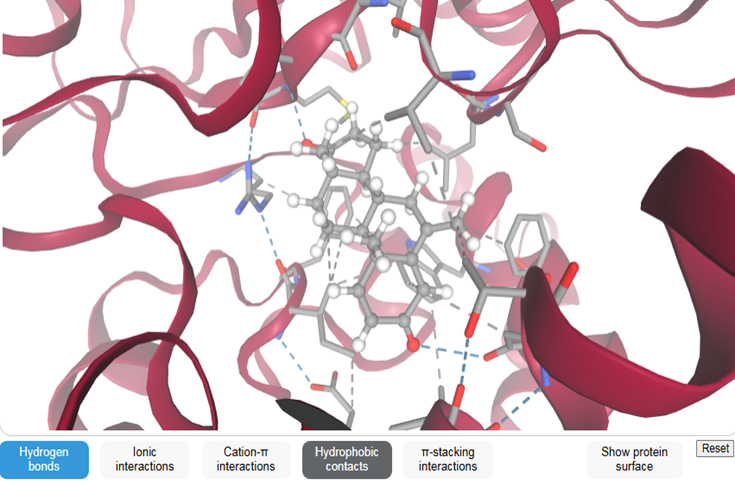
Fig.14 3D attracting cavities result of exemestane and aromatase enzyme
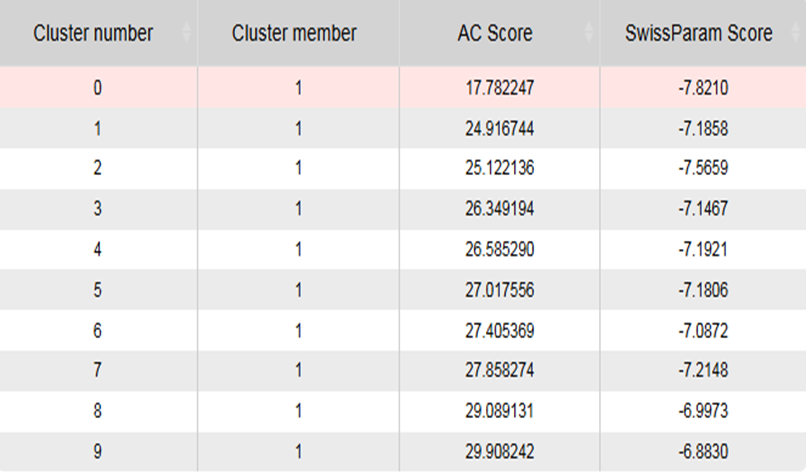
Fig.15 Table of Attracting score (Exemestane and Human aromatase)
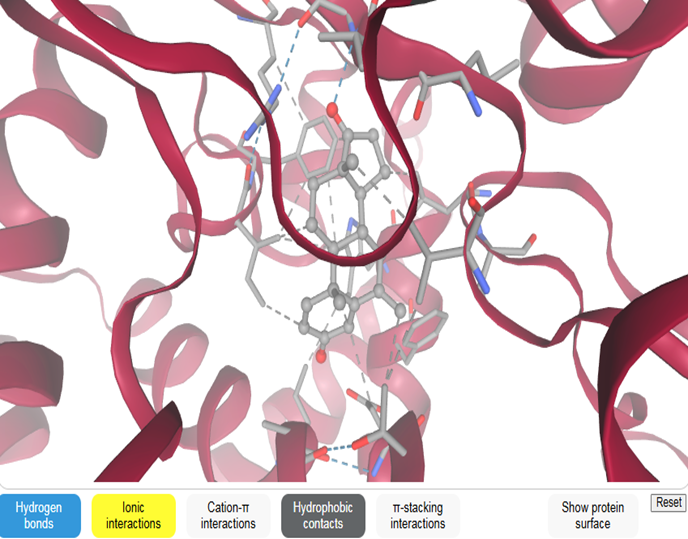
Fig.16 3D interaction of exemestane and aromatase using Autodock vina algorithm, Source: SwissDock
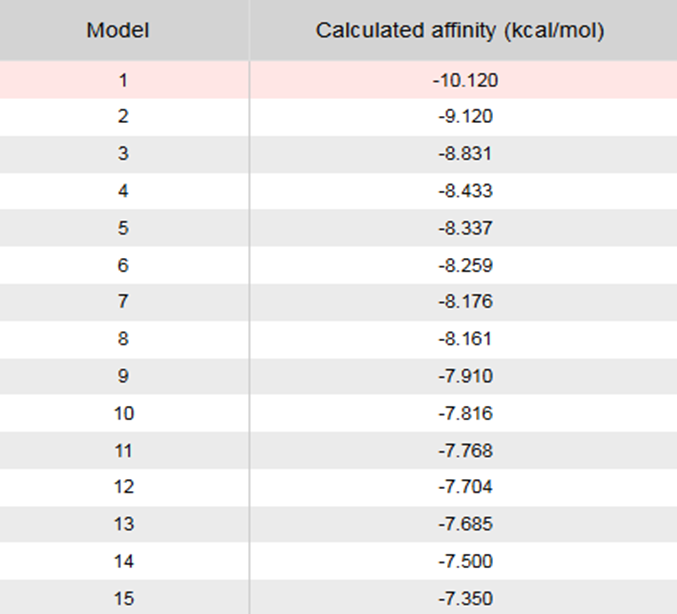
Fig.17 Table of Binding affinity of Exemestane and aromatase, Source: SwissDock
5.7 Visualization
Molecular visualisation is a critical stage in computer-aided drug design for analysing the interactions between the ligand and target protein. Following molecular docking, visualisation techniques are used to detect binding orientation, hydrogen bonds, hydrophobic interactions, and other noncovalent interactions within the protein's active region.PyMol,Molegro Molecular Viewer and BioviaDiscovery Studio Visualiser are popular tools for creating 2D and 3D interaction diagrams, which assist researchers comprehend ligand-receptor binding patterns and validate docking results.[33]
In this study the tools used for visualization is, Molegro Molecular Viewer, Biovia Discovery Studio.
5.7.1 Biovia Discovery Studio
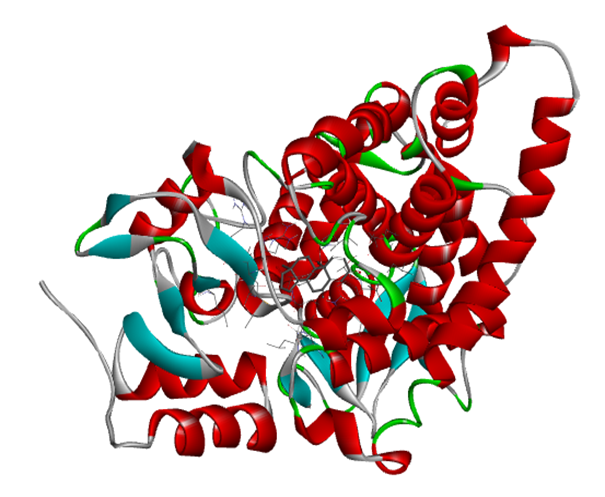
Fig.18 3D interactions of Human aromatase and Exemestane, Source: Discovery studio.
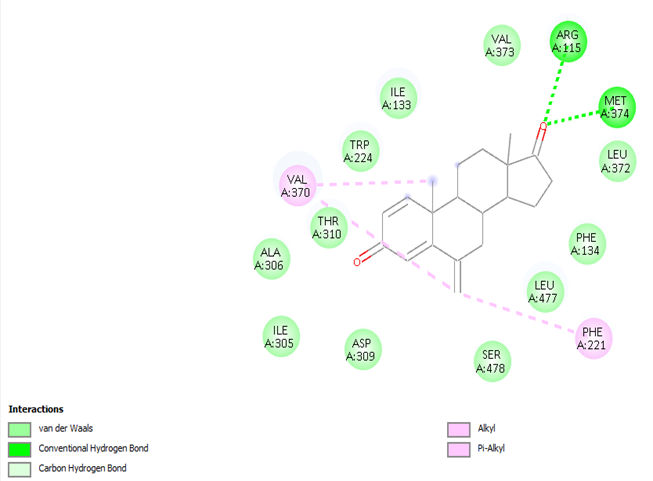
Fig.19 2D interactions of Human aromatase and Exemestane, Source: Discovery studio.
5.7.2 Molegro Molecular Viewer
The target protein structure was obtained from the RCSB Protein Data Bank (Pdb id: 3S7S) and processed for molecular docking analysis.The ligand molecules were collected from appropriate chemical databases and optimised prior to further research includes Drug optimization, Energy Minimization, and Geometric setup using Avogadro, Molegro Molecular viewer and Chemdraw. The ADMET properties of the chosen drugs were predicted using ADMETlab 3.0 and SwissADME both this server gives same results i.e: Molecular weight, Lipinsiki rule of five, Absorption(CaCo2, PAMPA, HIA,etc) to assess their pharmacokinetic features and the findings revealed that the majority of the compounds exhibited favourable drug-like features, including acceptable absorption, distribution, metabolism, and excretion rates. Furthermore, permeability and toxicity projections indicated that the compounds had appropriate pharmacological profiles with minimal anticipated toxicity like acute inhalation toxicity, skin sensitizer, etc
Further evaluation was performed utilising molecular docking to determine the ligands' binding affinity with the target protein using Autodock 1.5.7 and Swissdock. The docking results showed that the selected drugs had good binding interactions within the protein's active region (i.e: -10 as docking score) The docked complexes were visualised using BIOVIA Discovery Studio Visualiser and Molegro Molecular Viewer, which highlighted critical interactions such as hydrogen bonds, hydrophobic interactions, and van der Waals forces with essential amino acid residues. These interactions suggest that the compounds may form stable ligand-protein complexes, making them attractive candidates for additional experimental confirmation.
This is how a novel anti-cancer drug is discovered, not only anti-cancer all the drugs are discovered initially in this computational manner. By this computational approach we predict the Pharmacokinetic factor and binding affinity of ligand/Novel compound.
Overall, the combined computational study suggests that these compounds are interesting candidates for additional experimental and pharmacological studies (in vitro or in vivo)
Computer-aided drug design (CADD) is constantly evolving in tandem with the advancement of modern computational technology. The integration of artificial intelligence (AI) and machine learning (ML) approaches is projected to dramatically improve drug discovery efficiency by allowing more precise drug-target interaction prediction, virtual screening, and lead optimisation. These tools enable researchers to analyse massive biological information and uncover new therapeutic candidates faster than traditional experimental methods. Furthermore, the availability of structural databases, such as the RCSB Protein Data Bank, has significantly aided structure-based drug design by providing comprehensive three-dimensional structures of biological macromolecules.
Another interesting innovation in CADD is the use of deep learning and generative models in de novo drug creation, which allows novel chemical structures to be computationally produced with desired pharmacological properties. This technique broadens the research of chemical space and aids in the discovery of new medicinal compounds. Furthermore, new modelling approaches like molecular dynamics and free-energy simulations are advancing our understanding of ligand-protein interactions and binding stability. The combination of these methodologies and high-performance computing is projected to improve the accuracy and dependability of computational forecasts.
Future CADD platforms are projected to merge computational modelling with automated laboratory techniques, allowing for quick validation of predicted drug candidates. Such integration will speed up the drug discovery pipeline while lowering development costs and time. Overall, advances in computer algorithms, massive biological data, and artificial intelligence will make CADD an indispensable tool for the discovery and development of safer and more effective therapeutics. [34 & 35]
Future anticancer drug development is predicted to focus on targeted therapy, immunotherapy, and personalised medicine in order to improve therapeutic efficacy while minimising negative effects. Advances in computational techniques and structural databases, such as the RCSB Protein Data Bank, are hastening the development of new anticancer drugs. [35]
This study focuses on the use of computer-aided drug design (CADD) in the creation of anti-breast cancer medications. The target protein Human Aromatase (CYP19A1) was chosen for molecular docking studies with the recognised anticancer medication Exemestane to better understand the ligand-protein binding interactions. ADMETlab 3.0, SwissADME, and BIOVIA Discovery Studio Visualiser were used to execute a variety of computational techniques, including pharmacophore modelling, molecular docking, ADMET analysis, permeability prediction, and toxicity prediction. The acquired data revealed favourable pharmacokinetic features and stable binding interactions between the ligand and the target protein. Overall, this work highlights the importance of CADD approaches in identifying and optimising prospective therapeutic molecules for breast cancer treatment, as well as accelerating the drug discovery process.
REFERENCES

Kamalesh Iniyanathan, Computer-Aided Drug Design in Breast Cancer Therapy: Advances in Aromatase Targeting and Therapeutic Optimization, Int. J. of Pharm. Sci., 2026, Vol 4, Issue 4, 217-243. https://doi.org/10.5281/zenodo.19383875
 10.5281/zenodo.19383875