

We use cookies to ensure our website works properly and to personalise your experience. Cookies policy
Department of Pharmaceutics, Sarojini Naidu Vanita Pharmacy Maha Vidyalaya, Affiliated to Osmania University, Hyderabad, Telangana, India
Oral drug delivery is the most widely preferred route of drug administration due to its convenience, patient acceptability, safety, and cost-effectiveness. However, conventional immediate-release dosage forms may require frequent administration and can produce fluctuations in plasma drug concentration, which may affect therapeutic efficacy and patient compliance. Controlled-release drug delivery systems have therefore gained considerable attention for providing prolonged and predictable drug release. Among these systems, controlled porosity osmotic pump (CPOP) tablets represent a promising approach for achieving controlled oral drug delivery through the principle of osmotic pressure. CPOP systems consist of a drug-containing core surrounded by a semipermeable membrane incorporating water-soluble pore-forming agents. Upon exposure to an aqueous environment, water penetrates through the membrane, pore-forming agents leach out to generate micropores, and the resulting osmotic pressure facilitates controlled drug release without the requirement of a preformed delivery orifice. This review provides a comprehensive overview of the principles, mechanism, components, advantages, limitations, and formulation considerations of controlled porosity osmotic pump tablets. The major formulation components, including the drug, osmogen, semipermeable membrane, coating solvents, plasticizers, pore-forming agents, and other functional excipients, are discussed. Factors influencing drug release, such as drug solubility, osmotic pressure, membrane composition, membrane thickness, and plasticizer concentration, are also described. In addition, various precompression, post-compression, and in vitro drug-release evaluation parameters used for assessing CPOP tablets are reviewed. Overall, CPOP technology offers a promising strategy for achieving prolonged and controlled drug release, reducing dosing frequency, minimizing fluctuations in drug concentration, and potentially improving patient compliance and therapeutic effectiveness.
Oral drug administration is one of the most commonly used routes for delivering drugs systemically through pharmaceutical dosage forms. It is widely preferred because it is convenient, safe, economical, and generally well accepted by patients. In addition, oral dosage forms are relatively easy and cost-effective to manufacture. Most pharmaceutical products intended for oral administration are formulated as immediate-release or conventional drug delivery systems, which are designed to release the drug rapidly so that it can be absorbed into the systemic circulation. [1,2]
However, conventional immediate-release dosage forms have several limitations:
Fluctuations in plasma drug concentration can be especially problematic when the drug has a narrow therapeutic index, since even a slight increase in its concentration may produce toxic or undesirable effects. Therefore, an effective drug delivery system should be capable of maintaining the drug concentration within the desired therapeutic range for a prolonged period.
In the management of chronic diseases, conventional dosage forms often require repeated administration over an extended period. Such frequent dosing can be associated with several limitations, including poor patient compliance and considerable variation in drug concentration.[3] Controlled-release (CR) tablet formulations have therefore gained considerable attention for long-term therapy. These formulations can help maintain relatively consistent drug levels in the body, reduce the frequency and amount of dosing, minimize dose-related adverse effects, and improve the safety profile of highly potent drugs.[4,5]
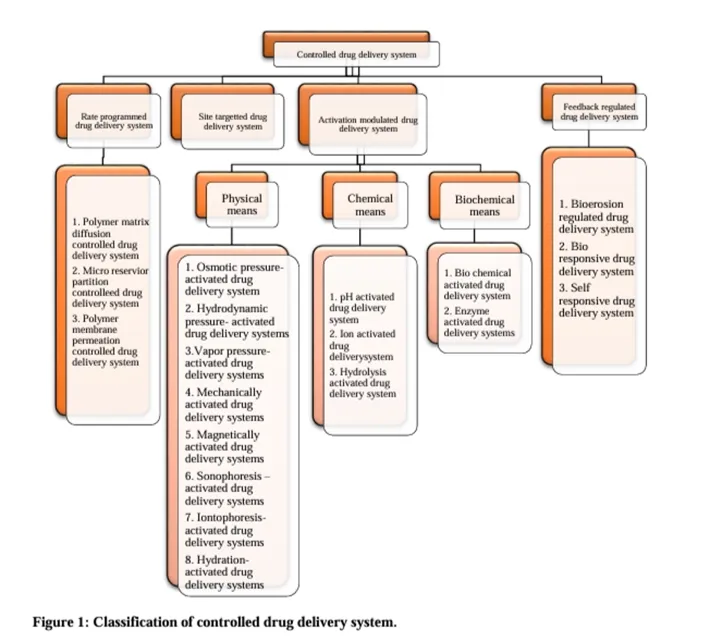
Over the years, several innovative approaches have been developed to achieve controlled and sustained drug release, as illustrated in Figure1.[6–9] Among the various techniques available, the controlled-porosity osmotic pump tablet is considered a promising approach for designing controlled-release oral dosage forms. This system provides controlled drug delivery over an extended period and can be particularly useful when maintaining a more uniform drug concentration is required.
2. Osmotic Drug Delivery Systems
Osmotically controlled drug delivery systems are considered among the most reliable approaches for achieving controlled drug release and are widely applicable to oral drug delivery. In these systems, osmotic pressure acts as the primary driving force responsible for regulating the release of the drug over a predetermined period. Various Osmotic drug delivery systems are classified as mentioned in Figure 2
A controlled-porosity osmotic pump tablet, as illustrated in Figure 3, is generally prepared by coating a tablet core with a semipermeable membrane that contains water-soluble or leachable pore-forming agents. Unlike conventional osmotic pump systems, this type of device does not require a preformed delivery orifice. Instead, drug release occurs through pores that develop within the semipermeable membrane during operation. These pores are generated in situ when the pore-forming components dissolve after coming into contact with the aqueous environment. Following administration, water penetrates into the tablet core through the semipermeable membrane. The drug present within the core dissolves, and the resulting osmotic activity produces hydrostatic pressure inside the system. As the pressure increases, the dissolved drug is driven outward through the pores formed in the membrane, allowing controlled drug release. The pressure responsible for drug delivery may be generated by an osmotic agent incorporated into the formulation, by the drug itself, or by other components of the tablet after water enters through the semipermeable membrane.[10,11]
Osmosis refers to the spontaneous movement of a solvent from a region containing a lower concentration of dissolved solutes toward a region with a higher solute concentration through a semipermeable membrane. The membrane selectively permits the passage of solvent molecules while restricting the movement of solute molecules.[12] Osmosis is an important natural phenomenon and plays a significant role in biological systems, including the regulation of water balance in cells and plants.
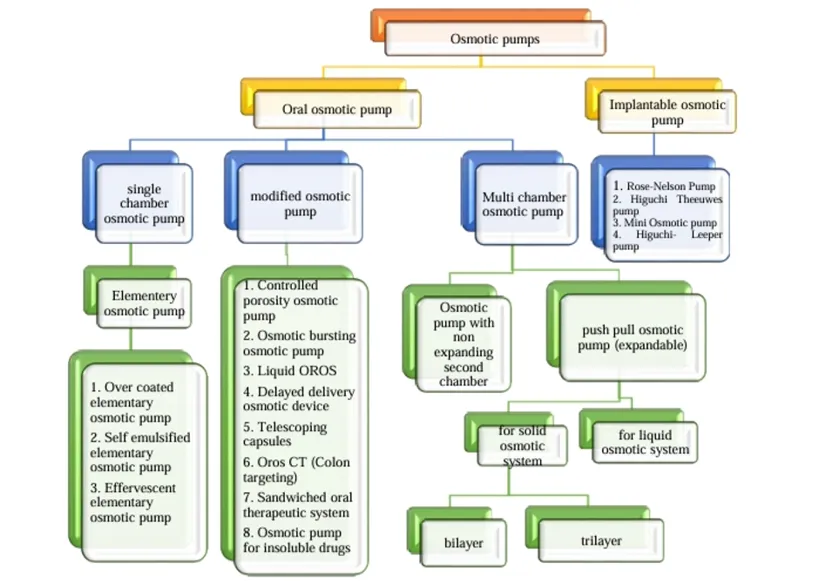
Figure 2: Classification of Osmotic Drug Delivery Systems
When two solutions with different solute concentrations are separated by a semipermeable membrane, solvent molecules move across the membrane while the solute is retained. This
movement results in an osmotic flow directed from the solution having a lower solute concentration toward the solution with a higher solute concentration. In terms of chemical potential, the solvent moves from a region of higher chemical potential, corresponding to lower solute concentration, toward a region of lower chemical potential, corresponding to higher solute concentration. This movement continues until the osmotic driving force is balanced by opposing forces within the system.
Drug delivery through osmotic systems is generally less influenced by physiological variations such as gastrointestinal pH and hydrodynamic conditions. These systems can also provide comparatively higher and more predictable drug release rates than many conventional diffusion-controlled delivery systems. Owing to their ability to provide controlled and sustained drug release, different types of osmotic pump systems have been developed for the delivery of various therapeutic agents.
Recent advances in pharmaceutical research have led to the development of several innovative drug delivery technologies. The primary objective of these newly developed systems is to improve therapeutic effectiveness while providing additional advantages, such as:
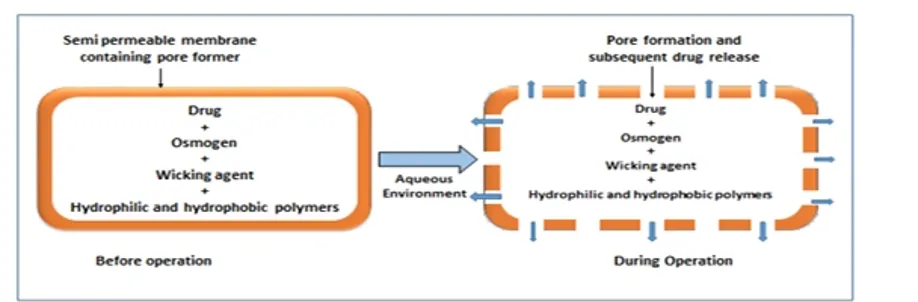
Figure 3: Drug release mechanism of controlled porosity osmotic pimp tablet
3. Principle of Osmosis
The phenomenon of osmosis was first reported by Abbenollet, while the first quantitative investigation of osmotic pressure was carried out by Pfeffer in 1877. In his experiment, Pfeffer separated a sugar solution from pure water using a semipermeable membrane that allowed water molecules to pass through but prevented the movement of sugar molecules.[14] As a result, water moved across the membrane into the sugar solution. This movement continued until an external pressure, represented by π, was applied to the sugar solution to counteract the osmotic flow.
Pfeffer demonstrated that the osmotic pressure of a sugar solution is directly related to both the concentration of the solution and its absolute temperature. A few years later, van’t Hoff established a relationship between osmotic pressure and the ideal gas law and expressed it mathematically as:
π = Ø cRT
Where:
Osmotic pressure is a colligative property, meaning that it depends primarily on the number of solute particles present relative to the number of solvent molecules rather than on the chemical identity of the solute. Therefore, solutions containing different concentrations but consisting of the same solute–solvent system exhibit osmotic pressures that vary directly with solute concentration. This principle is important in osmotic drug delivery systems because it can be utilized to generate and maintain a relatively constant osmotic driving force, thereby facilitating controlled and predictable drug release. Maintaining a constant osmotic pressure can provide a relatively consistent influx of water into the delivery system, which in turn helps achieve a controlled and approximately zero-order rate of drug release. In controlled-release formulations, the osmotic pressure generated by the formulation may vary considerably, ranging from approximately 30 atm for sodium phosphate to nearly 500 atm for a lactose–fructose mixture.
The rate of osmotic water transport through a semipermeable membrane can be expressed by the following equation:
dvdt = (AQΔπ) L
Where:
 = Rate of water flow across the membrane
The above relationship indicates that the osmotic agent or solute responsible for generating osmotic pressure should be retained within the system and should not readily permeate through the semipermeable membrane. In contrast, the membrane must allow water molecules to pass through it. The movement of water across the membrane, driven by the osmotic pressure difference, is therefore a fundamental mechanism responsible for controlled drug release from osmotic delivery systems.[15]
4. Controlled Porosity Osmotic Pump Tablets
A controlled-porosity osmotic pump (CPOP) is an osmotic drug delivery system in which the semipermeable membrane incorporates water-soluble, leachable pore-forming agents. The membrane is applied over the tablet core using an appropriate coating technique. Depending on the intended drug delivery requirements, the system can be designed as either a single-compartment or a multi-compartment dosage form. In general, the delivery device consists of a drug-containing core surrounded by a membrane that may possess an asymmetric structure, with a porous supporting substructure.[16]
The membrane is selectively permeable, allowing water molecules to enter the system while restricting the passage of dissolved drug and other solutes. Water-soluble pore-forming materials are uniformly distributed throughout the polymeric membrane. Unlike conventional osmotic pumps, CPOP systems do not require a preformed delivery orifice. Instead, drug release takes place through pores that develop within the membrane during operation.
When the CPOP system comes into contact with an aqueous environment, water penetrates through the semipermeable membrane and causes the water-soluble pore-forming components incorporated within the membrane to dissolve and leach out. The removal of these components produces interconnected pores within the membrane. These newly formed pores provide pathways through which the dissolved drug can subsequently diffuse or be transported out of the system in a controlled manner. Thus, the formation of pores during operation is a key feature responsible for drug release from controlled-porosity osmotic pumps.
In a controlled-porosity osmotic pump, the drug first dissolves within the tablet core and is subsequently released through the microporous semipermeable membrane. The drug is driven outward primarily by the hydrostatic pressure generated within the system and moves through the pores formed in the membrane. The hydrostatic pressure develops when water enters the tablet through the semipermeable membrane and may originate from an osmotic agent, the drug itself, or other components present in the tablet core.[17]
The drug-release rate from the system is influenced by several formulation and membrane characteristics, including the water permeability of the semipermeable membrane, the osmotic pressure generated by the core formulation, the thickness of the coating, and the total surface area of the coated tablet.[18] These parameters can be adjusted during formulation development to achieve the desired drug-release profile. Once the system is properly designed, its release characteristics are relatively less affected by physiological variations encountered in the gastrointestinal tract. The rate at which water enters the osmotic delivery system can be described by the following relationship:
ⅆvⅆt  = Akh
= Akh (Δπ − ΔP)
Where:
This equation indicates that water influx is governed by the membrane's permeability, its surface area and thickness, and the difference between the osmotic pressure and hydrostatic pressure across the membrane.
5. Advantages of Controlled Porosity Osmotic Pump Tablets
Controlled-porosity osmotic pump tablets offer several advantages over conventional drug delivery systems:
6. Disadvantages of Controlled Porosity Osmotic Pump Tablets
7. Basic Components of Controlled Porosity Osmotic Pump tabets
7.1 Drug
The suitability of a drug for incorporation into an osmotic delivery system depends on its physicochemical and pharmacokinetic characteristics. Drugs with relatively short biological half-lives, typically in the range of 2–6 hours, are particularly suitable because controlled release can help maintain their therapeutic effect for a longer duration. Such systems are also useful for drugs intended for prolonged therapy and for highly potent drugs that require precise control over their release. Examples of drugs that have been investigated for osmotic delivery include nifedipine and glipizide. [29,30]
7.2 Osmogen
Osmotic agents, also known as osmogens, play an important role in maintaining the concentration gradient across the semipermeable membrane, which is essential for the proper functioning of osmotic drug delivery systems. When gastrointestinal fluid enters the controlled-porosity osmotic pump (CPOP) through the semipermeable membrane, the osmotic agents present within the formulation dissolve and increase the osmotic pressure inside the system. This pressure promotes the movement of the dissolved drug through the pores of the membrane and thereby facilitates controlled drug release.
Osmogens provide the driving force required for water uptake into the dosage form and help maintain a uniform hydrated state within the drug-containing core. They are commonly incorporated into osmotically controlled drug delivery systems and modified osmotic devices intended for the controlled delivery of drugs with relatively poor water solubility. Polymeric osmogens are frequently employed in the development of controlled-porosity osmotic pump systems. Depending on their nature and concentration, osmotic agents can generate osmotic pressures ranging from approximately 8 atm to 500 atm. The resulting osmotic pressure creates a significant driving force for water transport across the semipermeable membrane. The rate of water movement through the membrane can be expressed by the following relationship:
dv/dt = AKΔπ/h
Where:
Thus, the osmotic agent is an important component of the CPOP formulation because it generates the osmotic pressure required for water influx and contributes to the controlled and consistent release of the drug. [31,32]
Table 1 : Classification of Osmogens
|
Type of Osmogen |
Description |
|
1. Water-soluble salts of inorganic acids |
: These osmogens are water-soluble inorganic salts that generate osmotic pressure. Common examples include magnesium chloride, magnesium sulphate, sodium chloride, sodium sulphate, potassium chloride, sodium bicarbonate, sodium hydrogen phosphate, and potassium hydrogen phosphate. |
|
2. Organic polymeric osmogens |
These are polymeric substances that can act as osmogens and contribute to the osmotic pressure of the system. Examples include sodium carboxymethylcellulose, hydroxypropyl methylcellulose, hydroxymethylcellulose, methylcellulose, polyethylene oxide, polyvinylpyrrolidone, polyacrylamides, and carbopols. |
|
3. Carbohydrates |
Various carbohydrates can also be used as osmogens because of their ability to generate osmotic pressure. Examples include arabinose, ribose, xylose, glucose, fructose, galactose, mannose, sucrose, maltose, lactose, and raffinose. |
|
4. Water-Soluble Amino Acids |
Water-soluble amino acids are used as osmogens in osmotic drug-delivery systems. Commonly employed amino acids include glycine, leucine, alanine, and methionine, among others. |
|
5. Water-Soluble Salts of Organic Acids |
Water-soluble salts of organic acids are also used as osmogens in osmotic drug-delivery systems. Examples include sodium acetate, potassium acetate, magnesium succinate, sodium benzoate, sodium citrate, and sodium ascorbate, etc. [33] |
7.3 Semipermeable Membrane
The semipermeable membrane (SPM) is also referred to as a selectively permeable, partially permeable, or differentially permeable membrane. It permits the passage of solvents and selected molecules or ions through diffusion or facilitated diffusion. In a controlled porosity osmotic pump (CPOP), the SPM forms the outer layer of the device and controls the movement of water into the system. The membrane is impermeable to the drug and other formulation components present within the compartments. It should be chemically inert, maintain its dimensional integrity, and sustain a constant osmotic pressure during drug delivery. In addition, the membrane should be biocompatible with the other components of the formulation.47
Cellulose acetate is one of the most widely used polymers for designing CPOP tablets. The SPM can be prepared using cellulosic polymers, including cellulose ethers, cellulose esters, and cellulose ester-ethers. These polymers generally possess a degree of substitution ranging from 0 to 3 per anhydroglucose unit. The degree of substitution refers to the number of hydroxyl groups in the anhydroglucose unit that are replaced by substituent groups. Examples of such polymers include cellulose acylate, cellulose diacylate, cellulose triacylate, cellulose acetate, and cellulose diacetate. Other polymers used for the formation of semipermeable membranes include acetaldehyde dimethyl cellulose acetate, cellulose acetate ethyl carbamate, cellulose dimethylamino acetate, polyamides, and polyurethanes. The semipermeable membrane is generally maintained at a thickness of approximately 200–300 µm to withstand the internal pressure generated within the osmotic device. [34, 35]
7.4 Coating Solvents
Coating solvents are used to prepare polymeric solutions required for the formation of the membrane or wall of osmotic drug-delivery systems. These solvents may include suitable inert organic and inorganic solvents. Commonly used coating solvents include methylene chloride, acetone, methanol, ethanol, isopropyl alcohol, butyl alcohol, ethyl acetate, cyclohexane, carbon tetrachloride, and water.
Different combinations of solvents may also be employed to obtain appropriate polymeric coating solutions. Examples of commonly used solvent mixtures include acetone–methanol (80:20), acetone–ethanol (80:20), acetone–water (90:10), methylene chloride–methanol (79:21), and methylene chloride–methanol–water (75:22:3).[36, 37]
7.5 Emulsifying Agents
Emulsifying agents are incorporated into wall-forming materials to produce a uniform and integral composition suitable for the formation of the osmotic device wall. They regulate the surface energy of the materials, thereby improving their blending[38] within the composite thereby maintaining the integrity of the membrane throughout the drug-release process. Commonly used emulsifying agents include polyoxyethoxylated glyceryl ricinoleate, polyoxyethoxylated castor oil containing ethylene oxide, glyceryl laurates, and sorbitan esters such as sorbitan oleate, sorbitan stearate, and sorbitan laurate.
7.6 Flux-Regulating Agents
Flux-regulating agents, also referred to as flux-enhancing or flux-decreasing agents, are incorporated into wall-forming materials to control the permeability and flux of fluid through the membrane. Depending on the desired drug-release characteristics, these agents can either increase or decrease the liquid flux across the membrane. Flux-regulating agents are broadly classified into hydrophilic and hydrophobic substances. Hydrophilic substances, such as polyethylene glycols, polyhydric alcohols, and polyalkylene glycols, generally enhance the flux, whereas hydrophobic substances, such as alkyl- or alkoxy-substituted phthalates, including diethyl phthalate and dimethoxyethyl phthalate, reduce the flux. [39]
7.7 Wicking Agents
Wicking agents are substances capable of drawing water into the porous network of an osmotic drug-delivery system. They may be either swellable or nonswellable in nature and possess the ability to undergo physisorption with water. Physisorption refers to a form of adsorption in which solvent molecules are loosely attached to the surface of the wicking agent through weak van der Waals interactions between the surface and the adsorbed molecules. The primary function of wicking agents is to facilitate the transport of water to the internal surfaces of the device core, thereby forming channels or a network with an increased surface area. Common examples of wicking agents include colloidal silicon dioxide, kaolin, titanium dioxide, alumina, niacinamide, polyvinylpyrrolidone, bentonite, and sodium lauryl sulphate. [40]
7.8 Plasticizers
Plasticizers are incorporated into wall-forming materials to reduce the phase-transition temperature of the membrane and improve its workability, flexibility, and fluid permeability. Plasticizers, either individually or in combination, are typically incorporated in concentrations ranging from 0.01 to 50 parts per 100 parts of the wall-forming material.[41] Suitable plasticizers should possess a high degree of solvent compatibility with the wall-forming materials and remain compatible throughout the processing and operating temperature ranges. Their incorporation into the membrane imparts the required flexibility and improves the mechanical properties of the wall. Commonly used plasticizers include phthalates such as dibenzyl phthalate, dihexyl phthalate, butyl phthalate, and octyl phthalate; triacetin; epoxidized tallate; triisooctyl trimellitate; alkyl adipates; citrates; acetates; propionates; glycolates; myristates; benzoates; and halogenated phenyl compounds.
7.9 Pore Formers
Pore-forming agents are incorporated into semipermeable membranes to generate a microporous structure through the leaching of these agents during operation of the osmotic drug-delivery system. They are particularly useful in the development of osmotic systems intended for poorly water-soluble drugs, as the formation of pores can enhance membrane permeability. Pores may also be generated within the membrane before operation through gas formation, volatilization of membrane components, or chemical reactions occurring within the polymeric solution. Pore-forming agents may be either inorganic or organic in nature. [42, 43] Common examples include alkali metal salts, such as sodium chloride, sodium bromide, potassium chloride, potassium sulphate, and potassium phosphate; alkaline earth metal salts, such as calcium chloride and calcium nitrate; and carbohydrates, including sucrose, glucose, fructose, mannose, lactose, sorbitol, and mannitol. Other pore-forming agents include diols and polyols.
7.10 Barrier Layer Formers
Barrier layer formers are incorporated into osmotic drug-delivery systems to restrict the entry of water into specific regions of the device and to provide physical separation between the drug layer and the osmotic layer. These materials help maintain the desired functional separation of different components within the delivery system. Common examples of barrier layer-forming materials include high-density polyethylene, waxes, and rubber.[44]
8. Factors Affecting Drug Release from CPOP Tablets
Several factors influence the rate of drug release from controlled porosity osmotic pump (CPOP) tablets. The major factors include drug solubility, osmotic pressure, delivery orifice, and membrane characteristics.
8.1 Solubility
Drug solubility is one of the most important factors governing drug release from osmotic drug-delivery systems, as the kinetics of osmotic drug release are directly dependent on the solubility of the drug within the core. The fraction of drug released according to zero-order kinetics can be expressed as:
F (z) = 1 – S/ Р
Where,
F (z) = fraction release by zero order
S = drug solubility, expressed in g/cm³
P = density of core tablet.
Drug with density of unity and solubility less than 0.05 g / cm3 would release greater than or equals to 95 % by zero order kinetics. Drugs with a density greater than 0.3 g/cm³ and higher aqueous solubility may exhibit enhanced drug release, with release profiles demonstrating more than 70% drug release following zero-order kinetics.
8.2 Osmotic Pressure
Osmotic pressure is another important factor controlling drug release from osmotic drug-delivery systems. The osmotic pressure gradient between the internal compartment of the system and the surrounding external environment determines the rate at which water enters the device and, consequently, influences drug release. The drug-release rate is generally directly proportional to the osmotic pressure generated within the core.
The simplest and most predictable approach for maintaining a constant osmotic pressure is to maintain a saturated solution of the osmotic agent within the compartment. When the saturated drug solution alone does not generate sufficient osmotic pressure, an additional osmotic agent can be incorporated into the core formulation. The addition of carbonate or bicarbonate salts may provide an additional advantage because their effervescent action helps prevent precipitated drug particles from obstructing the delivery orifice of the tablet.
8.3 Delivery Orifice
Most osmotic drug-delivery systems contain at least one delivery orifice, which may be either preformed or generated in situ within the membrane, through which the drug is released. The size of the delivery orifice must be carefully optimized to achieve the desired drug-release rate. The cross-sectional area of the orifice should be smaller than the maximum permissible area (Smax) to minimize drug transport by diffusion through the orifice. At the same time, the orifice should be sufficiently large, exceeding the minimum required area (Smin), to prevent excessive accumulation of hydrostatic pressure within the system. If the orifice is too small, the resulting hydrostatic pressure may damage or rupture the membrane and consequently interfere with the desired zero-order drug-release profile. Therefore, the cross-sectional area of the delivery orifice should be maintained within the range between Smin and Smax.
8.4 Membrane Type
The characteristics of the membrane play an important role in determining the performance and drug-release behaviour of oral osmotic drug-delivery systems. Important membrane-related variables include the type and nature of the polymer, membrane thickness, and the type and concentration of plasticizer.
8.5 Type and Nature of Polymer
The polymer selected for the semipermeable membrane should possess adequate permeability to water while remaining relatively impermeable to the solute or drug. The nature and properties of the polymer directly influence water transport and, consequently, the drug-release rate. Polymers commonly used for this purpose include hydroxyethyl cellulose, carboxymethyl cellulose, and hydroxypropyl methylcellulose.
8.6 Membrane Thickness
Membrane thickness has a significant influence on the drug-release rate from osmotic systems. Generally, the drug-release rate is inversely related to membrane thickness; therefore, an increase in membrane thickness results in a reduction in water permeability and drug-release rate, whereas a thinner membrane generally facilitates a higher release rate.
8.7 Type and Amount of Plasticizer
Plasticizers or low-molecular-weight diluents are commonly incorporated into pharmaceutical coating formulations to modify the physical properties and film-forming characteristics of polymers. They can significantly alter the viscoelastic behaviour of polymeric membranes by converting hard and brittle polymers into softer and more flexible materials, thereby improving their resistance to mechanical stress. These modifications can also influence the permeability of polymer films and consequently affect the drug-release characteristics of osmotic systems.[45]
9. Precompression Evaluation of Powder Blend
9.1 Angle of Repose
The angle of repose is an important parameter used to evaluate the flow properties of powders and is highly dependent on the method employed to form the powder heap. It can be determined by measuring the geometric characteristics of the powder pile formed under standardized conditions. In the classical method, the diameter and height of the powder heap are measured, and the angle of repose is calculated using the following equation:
tan ѳ=2h/d
where
θ= angle of repose,
h=height of heap in cm
d=diameter of the circular support in cm.
The angle of repose can be determined accurately by placing an initialization tube, having an internal diameter equal to that of the cylindrical support, on the support surface. The tube is manually filled with the powder sample and then raised vertically at a constant rate of 5 mm/s, allowing the powder to flow onto the cylindrical support and form a conical heap. During this process, the support rotates slowly around its axis to facilitate uniform distribution of the powder. The angle of repose (θ) is defined as the angle of the isosceles triangle having a surface area equivalent to that of the powder heap. This isosceles triangle represents the idealized geometry of the powder heap.[46, 47]
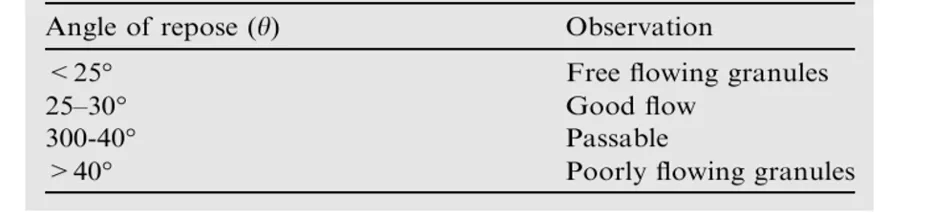
Table 2: Angle of Repose and its observations
9.2 Bulk Density
Bulk density is determined by carefully transferring the granules into a graduated cylinder without applying any additional compaction. The bulk volume (Vb) occupied by the granules and their corresponding mass (m) are recorded. The bulk density is then calculated using the following formula.[48]
Bulk density (ρb) =Mass of granules(m)/Bulk volume of granules (Vb)
9.3 Tapped Density
The measuring cylinder containing a known mass of the granule blend is subjected to 1000 taps for a specified period under standardized conditions. Following tapping, the minimum volume occupied by the granules (Vt) and their corresponding mass (m) are recorded. The tapped density is subsequently calculated using the following formula.[49]
Tapped density (ρt) =Mass of granules (m)/Tapped volume of granules (Vb)
9.4 Carr's Index
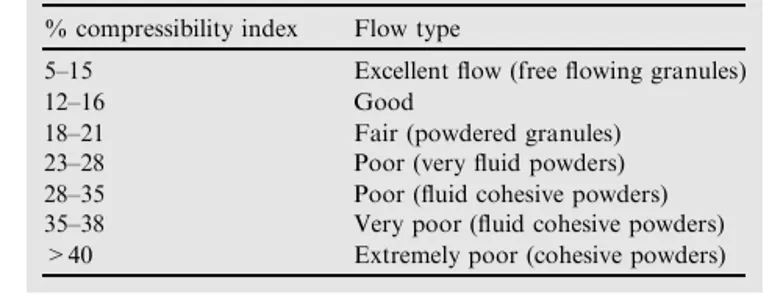
The compressibility index, also known as Carr’s Index, is a widely used parameter for evaluating the flow characteristics of granules. It provides an indirect indication of the powder’s tendency to form an arch and its degree of stability during handling. The percentage compressibility reflects the difference between the bulk and tapped densities of the granules and can be calculated using the following formula.[50]
% Carr’s index = ρt-ρbρt  × 100
× 100
where
ρt = tapped density of granules.
ρb = bulk density of granules.
Table 3: Relationship between powder flowability and % compressibility range
9.5 Hausner Ratio
Hausner’s ratio is an important parameter used to evaluate the flow properties of granules. It is determined from the relationship between the tapped density and bulk density of the granules. The Hausner’s ratio can be calculated using the following formula.[51]
10. Post Compression Evaluation of Controlled Porosity Osmotic Pump tablets
10.1 Thickness
The thickness of individual tablets is measured using a vernier calliper, which provides an accurate determination of tablet thickness. This parameter is useful for assessing variations in thickness among osmotic pump tablets and ensuring uniformity of the dosage form. Tablet thickness is generally expressed in millimetres (mm). The permissible limit for thickness variation is typically ±5%.[52]
10.2 Hardness
Tablet hardness is an important mechanical property that indicates the ability of tablets to withstand mechanical stress during handling, packaging, and transportation. The hardness of the tablets can be determined using a Monsanto hardness tester and is generally expressed in kg/cm².[53]
10.3 Weight Variation
The weight variation test is performed by individually weighing 20 tablets, determining their average weight, and comparing the weight of each individual tablet with the calculated average weight. The percentage deviation in tablet weight is then calculated and compared with the limits specified by the United States Pharmacopeia (USP). The tablets comply with the USP requirements when not more than two tablets deviate beyond the specified percentage limit and no individual tablet deviates by more than twice the prescribed percentage limit.[55]
The weight variation of nth tablet =
w-wnw×100%
Where
Weight of tablets are w1, w2, w3,...wn...,w20
Average weight of the tablets = w
10.4 Friability
The friability of the tablets was evaluated using a Roche friabilator. Ten tablets were accurately weighed together to obtain the initial weight (W₀) and were then placed in the friabilator chamber. The apparatus was operated for 100 revolutions, during which the tablets were subjected to combined abrasion and mechanical shock. With each revolution, the plastic chamber carrying the tablets allows them to fall from a height of approximately six inches, thereby simulating the mechanical stresses encountered during handling. After completion of the test, the tablets were removed, carefully dedusted, and reweighed (W). The percentage friability was calculated using the following equation.[56]
%Friability=F= 1-w0w×100
where W₀ and W represent the weights of the tablets before and after the test, respectively. The limit for percentage of friability is between 0.5% and 1%.
10.5 Drug Content Uniformity
Drug content uniformity is evaluated according to the USP method, in which 10 dosage units are individually assayed for their drug content using the procedure specified in the respective individual monograph. Unless otherwise stated, the requirements for content uniformity are considered to be met when the amount of active pharmaceutical ingredient in each dosage unit is within 85–115% of the labelled claim and the standard deviation is less than 6%. If one or more dosage units fail to meet these specified criteria, additional testing is performed as prescribed by the USP.[57]
10.6 In Vitro Drug Release Studies
The in vitro drug-release study is performed using a USP Type I dissolution apparatus (basket type). The tablet is placed in 900 mL of dissolution medium, such as phosphate buffer of pH 7.4, 0.1 N hydrochloric acid, or simulated gastric fluid. The dissolution medium is maintained at 37 ± 0.5°C, while the basket is rotated at a predetermined speed (rpm). At specified time intervals, 5 mL samples are withdrawn from the dissolution medium and immediately replaced with an equal volume of fresh dissolution medium to maintain a constant volume. The collected samples are analysed using a UV–Visible spectrophotometer to determine the drug concentration at the appropriate wavelength, using a suitable blank solution. The cumulative percentage of drug released and the drug-release rate are subsequently calculated using an appropriate equation.[58]
CONCLUSION
Controlled porosity osmotic pump (CPOP) tablets are an advanced drug delivery system that utilizes osmotic pressure to achieve controlled and predictable drug release. Drug release from the CPOP system is largely independent of physiological variations within the gastrointestinal tract, thereby providing consistent drug delivery. The release profile can be precisely modulated by optimizing key formulation parameters, including the solubility of the drug, the osmotic pressure generated by the core components, and the composition and characteristics of the rate-controlling membrane. With appropriate optimization, CPOP tablets can provide a controlled release pattern that approaches zero-order kinetics, maintaining a relatively constant drug release rate over an extended period. This controlled and predictable delivery may offer advantages over conventional dosage forms by reducing fluctuations in drug concentration and potentially improving therapeutic efficacy and safety.
REFERENCES

Syeda Sana Ilsa, Lattupally Prashanthi Reddy, P. M Sameera, Controlled Porosity Osmotic Pump Tablets: An Advanced Approach to Controlled Drug Delivery, Int. J. of Pharm. Sci., 2026, Vol 4, Issue 10, 1174-1192. https://doi.org/10.5281/zenodo.23234953
 10.5281/zenodo.23234953