

We use cookies to ensure our website works properly and to personalise your experience. Cookies policy
Department of Pharmacy, St. Soldier Institute Of Pharmacy, Lidhran Campus, Behind Nit(R.E.C), Jalandhar-Amritsar Bypass, Nh-1, Jalandhar-144011, Punjab, India.
Chronic Obstructive Pulmonary Disease (COPD) is a progressive respiratory disorder characterized by persistent airflow limitation, chronic inflammation, and structural changes in the airways and lung parenchyma. The primary risk factor for COPD is tobacco smoking, although exposure to biomass fuels, occupational pollutants, environmental toxins, and genetic predisposition also contribute to disease development[1]. Pathophysiological mechanisms involve chronic inflammatory responses, oxidative stress, protease-antiprotease imbalance, and accelerated lung aging, leading to emphysema and chronic bronchitis (Barnes, 2016).Recent advances in COPD management emphasize early diagnosis through spirometry, risk assessment, and individualized treatment strategies. Pharmacological interventions, including bronchodilators, inhaled corticosteroids, and combination therapies, remain the cornerstone of symptom control and exacerbation prevention (Global Initiative for Chronic Obstructive Lung Disease [GOLD], 2025). Non-pharmacological approaches such as smoking cessation, pulmonary rehabilitation, vaccination, and long-term oxygen therapy are equally important in improving patient outcomes[2].
Chronic Obstructive Pulmonary Disease (COPD) is a progressive and heterogeneous respiratory disorder characterized by persistent airflow limitation, chronic respiratory symptoms, and structural abnormalities of the airways and lung parenchyma. It encompasses conditions such as chronic bronchitis and emphysema, which contribute to impaired lung function and reduced quality of life. COPD is largely preventable and treatable; however, it remains a major public health challenge worldwide due to its increasing prevalence, high morbidity, and substantial mortality burden. According to the World Health Organization, COPD is among the leading causes of death globally and is responsible for millions of deaths annually. The disease imposes significant socioeconomic costs through frequent hospitalizations, loss of productivity, and long-term healthcare utilization. Cigarette smoking remains the primary risk factor for COPD, but exposure to biomass fuel smoke, ambient air pollution, occupational dust, chemical irritants, and genetic susceptibility also contribute significantly to disease development and progression .
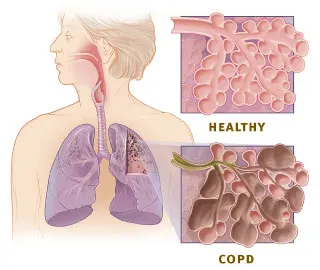
Figure 1: Difference between healthy and copd[12]
The pathophysiology of COPD involves chronic inflammation of the airways, oxidative stress, protease-antiprotease imbalance, mucus hypersecretion, and destruction of alveolar structures. These pathological processes result in airflow obstruction, impaired gas exchange, and progressive decline in pulmonary function. Patients commonly present with symptoms such as chronic cough, sputum production, wheezing, and exertional dyspnea, often accompanied by exacerbations that accelerate disease progression and worsen prognosis.Recent advances in understanding the molecular mechanisms of COPD have facilitated the development of targeted therapeutic approaches. Current management strategies emphasize early diagnosis through spirometry, smoking cessation, pharmacological treatment, pulmonary rehabilitation, vaccination, and personalized care plans[3]. This review aims to provide a comprehensive overview of the epidemiology, risk factors, pathogenesis, clinical manifestations, diagnostic approaches, and contemporary management strategies of COPD, while highlighting emerging therapies and future research directions.
Historical Perspective and Evolution of COPD Concepts:
The understanding of Chronic Obstructive Pulmonary Disease (COPD) has evolved considerably over the past two centuries. Early descriptions of chronic respiratory disorders appeared in the 17th and 18th centuries, with physicians recognizing symptoms such as chronic cough, breathlessness, and excessive mucus production. In the 19th century, emphysema and chronic bronchitis were identified as distinct pathological entities through advances in clinical examination and autopsy studies. During the mid-20th century, improvements in pulmonary function testing led to the recognition of airflow limitation as a defining feature of obstructive lung diseases[4]. The term “Chronic Obstructive Pulmonary Disease” emerged in the 1960s to encompass chronic bronchitis, emphysema, and varying degrees of airflow obstruction within a single clinical framework. Subsequent research highlighted the central role of cigarette smoking and environmental exposures in disease pathogenesis.In recent decades, COPD has been redefined as a heterogeneous and systemic disease characterized by chronic inflammation, structural lung changes, and extrapulmonary manifestations. The development of international guidelines, particularly those from the Global Initiative for Chronic Obstructive Lung Disease (GOLD), has standardized diagnosis and management strategies. Current concepts emphasize personalized medicine, early detection, and targeted therapies aimed at improving long-term outcomes[5].
Epidemiology of COPD:
Chronic Obstructive Pulmonary Disease (COPD) is one of the most prevalent non-communicable respiratory diseases worldwide and represents a major public health challenge. According to recent estimates, more than 390 million people are affected globally, with prevalence increasing due to population aging, continued tobacco use, and exposure to environmental pollutants. COPD is currently among the leading causes of death worldwide and is projected to remain a significant contributor to global disease burden in the coming decades[6].The prevalence of COPD varies across regions, age groups, and socioeconomic settings. Higher rates are observed in individuals over 40 years of age, smokers, and populations exposed to biomass fuel smoke and occupational dusts. Although historically more common in men, the prevalence among women has increased because of changing smoking patterns and environmental exposures. Low- and middle-income countries account for the majority of COPD-related morbidity and mortality, largely due to underdiagnosis, limited healthcare access, and high exposure to indoor and outdoor air pollution[7]. The disease imposes a substantial economic burden through healthcare expenditures, hospitalizations, and loss of productivity, emphasizing the need for effective prevention, early diagnosis, and management strategies worldwide.
Risk Factors and Etiology:
Chronic Obstructive Pulmonary Disease (COPD) develops through a complex interaction between genetic susceptibility and environmental exposures. Cigarette smoking remains the most important risk factor, accounting for the majority of COPD cases worldwide. Both active and passive smoking contribute to chronic airway inflammation, oxidative stress, and progressive lung damage (Foreman et al., 2018).In many low- and middle-income countries, long-term exposure to biomass fuel smoke from cooking and heating is a major cause of COPD, particularly among women. Occupational exposure to dust, fumes, chemicals, and vapors also significantly increases disease risk[8]. Ambient air pollution, including particulate matter and toxic gases, has emerged as an additional contributor to COPD development and exacerbations. Genetic factors play an important role, with alpha-1 antitrypsin deficiency being the best-established hereditary risk factor. Deficiency of this protease inhibitor accelerates lung tissue destruction and predisposes individuals to early-onset emphysema. Other contributing factors include recurrent respiratory infections during childhood, impaired lung growth, asthma, aging, and low socioeconomic status. Together, these factors influence the onset, progression, and severity of COPD, highlighting the multifactorial nature of the disease[9].
Pathophysiology of COPD:
The pathophysiology of Chronic Obstructive Pulmonary Disease (COPD) is characterized by persistent airway inflammation, structural remodeling, and progressive airflow limitation. Exposure to noxious particles and gases, particularly cigarette smoke, activates inflammatory cells such as neutrophils, macrophages, and CD8+ T lymphocytes, leading to chronic inflammation of the airways and lung parenchyma[10]. Oxidative stress plays a central role in disease progression by enhancing inflammatory responses and causing direct tissue injury. An imbalance between proteases and antiproteases promotes the destruction of alveolar walls, resulting in emphysema and loss of elastic recoil. Simultaneously, chronic inflammation induces goblet cell hyperplasia, mucus hypersecretion, and fibrosis of small airways, contributing to airway narrowing and obstruction.These pathological changes lead to airflow limitation, air trapping, and lung hyperinflation, which impair gas exchange and increase the work of breathing[11]. In advanced stages, ventilation-perfusion mismatch may cause hypoxemia and hypercapnia. Furthermore, COPD is associated with systemic inflammation, contributing to extrapulmonary manifestations such as cardiovascular disease, skeletal muscle dysfunction, and metabolic abnormalities. The interplay of these mechanisms underlies the progressive nature and clinical complexity of COPD.
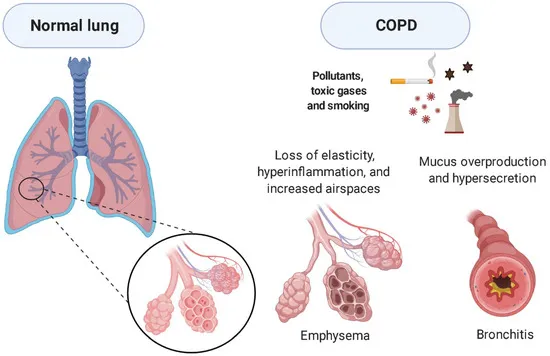
Figure 2: Pathophysiology of COPD[13]
Clinical Manifestations:
The clinical manifestations of Chronic Obstructive Pulmonary Disease (COPD) are diverse and progressive, reflecting the severity of airflow limitation and systemic involvement. The cardinal symptoms include chronic dyspnea, persistent cough, and sputum production. Dyspnea is typically the most disabling symptom, initially occurring during exertion and gradually progressing to affect daily activities and quality of life. Chronic cough, which may be intermittent or persistent, often precedes airflow limitation and is commonly accompanied by mucus hypersecretion. Wheezing, chest tightness, fatigue, and reduced exercise tolerance are also frequently reported[14]. As the disease progresses, patients may experience recurrent exacerbations characterized by acute worsening of respiratory symptoms, often triggered by respiratory infections or environmental pollutants. Physical examination findings may include prolonged expiration, decreased breath sounds, use of accessory respiratory muscles, and signs of hyperinflation such as a barrel-shaped chest. In advanced stages, patients may develop cyanosis, peripheral edema, and weight loss due to chronic hypoxemia and systemic effects of the disease. Beyond pulmonary symptoms, COPD is associated with several extrapulmonary manifestations, including skeletal muscle dysfunction, cardiovascular disease, anxiety, depression, and osteoporosis[15]. These comorbidities significantly contribute to disease burden and adversely affect prognosis and overall patient outcomes.
Diagnosis:
The diagnosis of Chronic Obstructive Pulmonary Disease (COPD) requires a comprehensive evaluation of clinical symptoms, risk factor exposure, and objective evidence of persistent airflow limitation. COPD should be considered in individuals presenting with chronic dyspnea, persistent cough, sputum production, recurrent lower respiratory tract infections, and a history of exposure to cigarette smoke, biomass fuels, occupational dust, or environmental pollutants (Celli & Wedzicha, 2019). Spirometry is the cornerstone of COPD diagnosis and remains the gold standard for confirming airflow obstruction. A post-bronchodilator forced expiratory volume in one second (FEV₁) to forced vital capacity (FVC) ratio of less than 0.70 confirms persistent airflow limitation consistent with COPD[16]. The severity of airflow obstruction is further classified according to post-bronchodilator FEV₁ values, which assist in disease staging and prognosis. In addition to spirometry, imaging studies such as chest radiography and high-resolution computed tomography (HRCT) can help identify emphysema, airway abnormalities, and complications while excluding alternative diagnoses. Laboratory investigations, including arterial blood gas analysis and pulse oximetry, are valuable in assessing oxygenation status, particularly in advanced disease. Symptom burden and exacerbation risk should be evaluated using validated tools such as the COPD Assessment Test (CAT) and the Modified Medical Research Council (mMRC) Dyspnea Scale. Furthermore, assessment of comorbidities including cardiovascular disease, osteoporosis, anxiety, and depression is essential for comprehensive patient management. Early and accurate diagnosis facilitates timely intervention, slows disease progression, and improves long-term clinical outcomes[17].
Classification and Severity Assessment:
The classification and severity assessment of Chronic Obstructive Pulmonary Disease (COPD) are essential for determining prognosis, guiding treatment decisions, and monitoring disease progression. Traditionally, COPD severity has been classified based on the degree of airflow limitation measured by spirometry. According to the Global Initiative for Chronic Obstructive Lung Disease (GOLD), airflow obstruction is confirmed when the post-bronchodilator forced expiratory volume in one second (FEV₁)/forced vital capacity (FVC) ratio is less than 0.70 (GOLD, 2025). The GOLD spirometric classification categorizes COPD into four grades based on post-bronchodilator FEV₁ values: GOLD 1 (mild, FEV₁ ≥80% predicted), GOLD 2 (moderate, FEV₁ 50–79% predicted), GOLD 3 (severe, FEV₁ 30–49% predicted), and GOLD 4 (very severe, FEV₁ <30% predicted) (Vogelmeier et al., 2017)[18]. However, spirometric impairment alone does not adequately reflect symptom burden or disease impact. Current assessment strategies incorporate symptom evaluation and exacerbation history. Symptom severity is commonly assessed using validated instruments such as the COPD Assessment Test (CAT) and the Modified Medical Research Council (mMRC) Dyspnea Scale. Patients with higher CAT scores or greater dyspnea are considered more symptomatic and may require intensified treatment. Recent GOLD recommendations emphasize a multidimensional approach that combines symptom burden and exacerbation risk to categorize patients into groups that better reflect clinical outcomes and therapeutic needs. Frequent exacerbations, defined as two or more moderate exacerbations or one hospitalization per year, are associated with increased mortality, accelerated lung function decline, and poorer quality of life. In addition to pulmonary assessment, evaluation of comorbidities such as cardiovascular disease, osteoporosis, anxiety, depression, and metabolic disorders is crucial because these conditions significantly influence prognosis and treatment outcomes. Comprehensive severity assessment therefore extends beyond spirometric measurements and incorporates clinical symptoms, exacerbation risk, functional status, and associated comorbidities to facilitate personalized COPD management.
Comorbidities Associated with COPD:
Comorbidities Associated with COPD
Chronic Obstructive Pulmonary Disease (COPD) is increasingly recognized as a systemic disorder that frequently coexists with multiple comorbidities, significantly influencing disease progression, quality of life, healthcare utilization, and mortality. These comorbid conditions arise from shared risk factors, chronic systemic inflammation, aging, and lifestyle-related factors. Cardiovascular diseases are among the most common and clinically significant comorbidities in COPD. Conditions such as coronary artery disease, heart failure, hypertension, and arrhythmias occur at higher rates in COPD patients and are major contributors to morbidity and mortality (Sin & Man, 2003). Chronic systemic inflammation and oxidative stress are believed to play key roles in this association. Metabolic disorders, including diabetes mellitus, metabolic syndrome, and obesity, are also frequently observed in COPD patients. These conditions can worsen respiratory symptoms, reduce exercise capacity, and complicate disease management[20]. Conversely, advanced COPD may be associated with cachexia and skeletal muscle dysfunction, which contribute to physical disability and poor prognosis. Osteoporosis is another prevalent comorbidity, particularly in patients with severe disease and those receiving long-term corticosteroid therapy. Reduced physical activity, nutritional deficiencies, and systemic inflammation further increase fracture risk. Psychological disorders such as anxiety and depression are common but often underdiagnosed in COPD. These conditions negatively affect treatment adherence, symptom perception, and overall health-related quality of life. Additionally, COPD is associated with an increased risk of lung cancer, obstructive sleep apnea, gastroesophageal reflux disease (GERD), and chronic kidney disease. Given the substantial impact of comorbidities on clinical outcomes, comprehensive assessment and multidisciplinary management are essential components of COPD care[21]. Early identification and treatment of associated conditions can improve symptom control, reduce hospitalizations, and enhance survival and quality of life.
Management Strategies:
The management of Chronic Obstructive Pulmonary Disease (COPD) focuses on relieving symptoms, improving exercise capacity and quality of life, reducing the frequency and severity of exacerbations, slowing disease progression, and decreasing mortality. Effective management requires a comprehensive and individualized approach that integrates pharmacological and non-pharmacological interventions according to disease severity, symptom burden, and exacerbation risk. Smoking cessation is the most effective intervention for preventing disease progression and improving long-term outcomes. It slows the decline in lung function and reduces the risk of exacerbations and mortality. A combination of behavioral counseling, nicotine replacement therapy, and pharmacological agents such as varenicline and bupropion has been shown to increase smoking cessation success rates[22].
Pharmacological therapy is the cornerstone of COPD treatment. Bronchodilators, including long-acting β2-agonists (LABAs) and long-acting muscarinic antagonists (LAMAs), are recommended as first-line maintenance therapies because they improve airflow, reduce dyspnea, and enhance exercise tolerance. For patients with persistent symptoms or frequent exacerbations, combination therapy with LABA and LAMA may provide greater clinical benefits. Inhaled corticosteroids (ICS) are indicated for selected patients, particularly those with frequent exacerbations and elevated blood eosinophil counts. Triple therapy combining LABA, LAMA, and ICS has demonstrated significant improvements in lung function, symptom control, and exacerbation reduction. Non-pharmacological interventions are essential components of COPD management. Pulmonary rehabilitation programs, which include exercise training, nutritional support, education, and psychosocial counseling, improve exercise capacity, reduce dyspnea, and enhance health-related quality of life. Vaccination against influenza, pneumococcal disease, COVID-19, and respiratory syncytial virus (RSV) is recommended to reduce respiratory infections and COPD exacerbations. Long-term oxygen therapy (LTOT) is indicated for patients with severe chronic hypoxemia and has been shown to improve survival and quality of life. Non-invasive ventilation may benefit selected patients with chronic hypercapnic respiratory failure[23].
In advanced cases, surgical and interventional approaches such as lung volume reduction surgery, bronchoscopic lung volume reduction using endobronchial valves, bullectomy, and lung transplantation may be considered to improve respiratory function and survival.Regular follow-up, self-management education, inhaler technique assessment, and treatment of comorbidities such as cardiovascular disease, osteoporosis, anxiety, and depression are crucial for optimizing outcomes. Emerging therapies, including biologics, regenerative medicine, and precision medicine approaches, offer promising future directions for individualized COPD treatment and improved patient care[24].
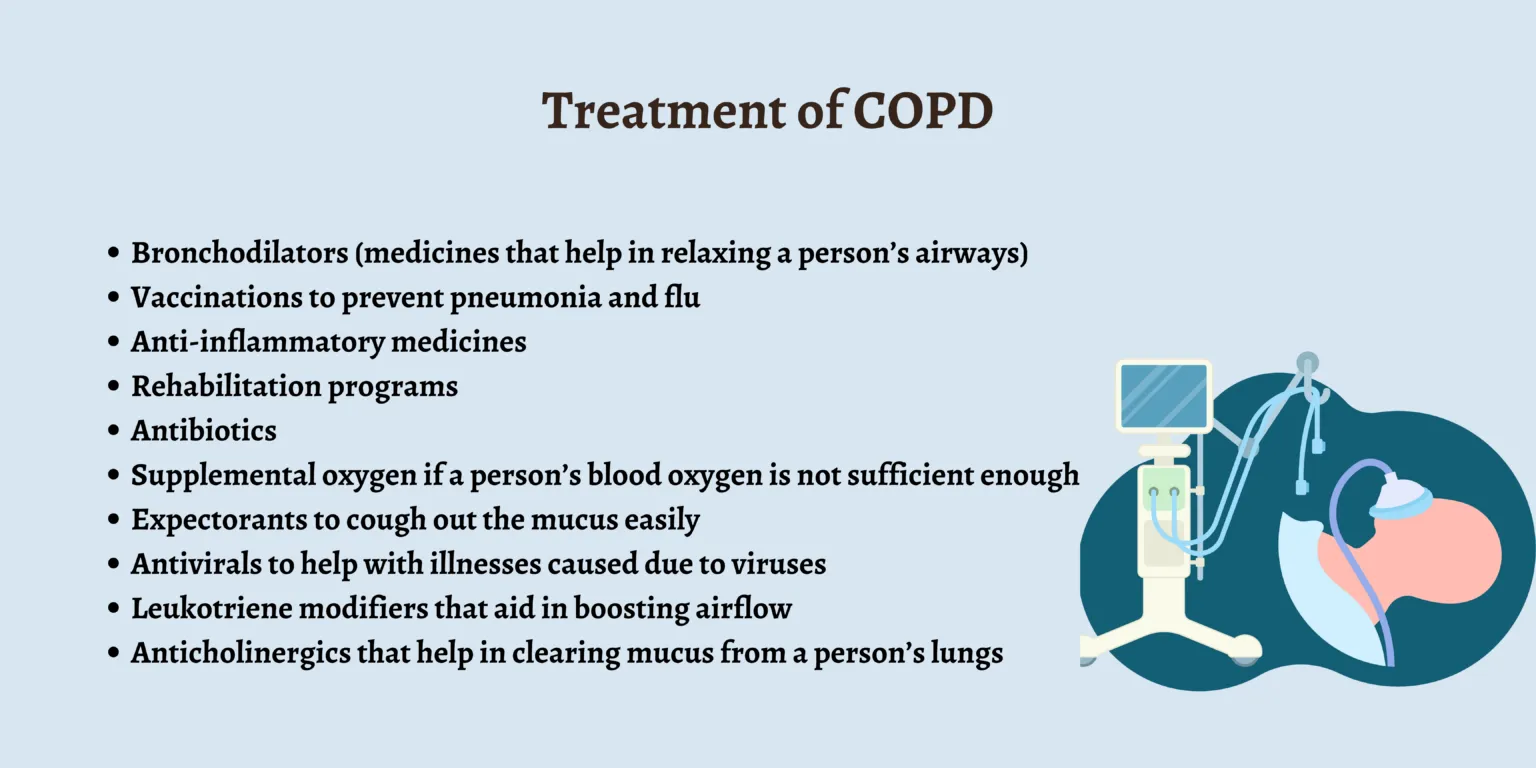
Figure 3: Treatment of COPD[25]
Prevention and Public Health Strategies:
Prevention of Chronic Obstructive Pulmonary Disease (COPD) is a critical public health priority aimed at reducing disease incidence, morbidity, mortality, and healthcare costs. Since COPD is largely preventable, effective public health strategies focus on minimizing exposure to modifiable risk factors and promoting early detection and intervention . Tobacco control remains the cornerstone of COPD prevention. Comprehensive measures such as smoking cessation programs, taxation of tobacco products, public smoking bans, health warnings, and educational campaigns have significantly reduced smoking prevalence and COPD-related disease burden in many countries . Smoking cessation is the single most effective intervention for preventing COPD and slowing disease progression among affected individuals. Reducing exposure to indoor and outdoor air pollution is another important preventive strategy. In low- and middle-income countries, the use of clean cooking fuels and improved household ventilation can substantially decrease exposure to biomass smoke, a major risk factor for COPD[26]. Policies aimed at controlling industrial emissions, vehicle exhaust, and occupational dust and chemical exposures also contribute to respiratory health protection . Early diagnosis through targeted screening and spirometry in high-risk populations, particularly smokers and individuals with chronic respiratory symptoms, facilitates timely intervention and improved outcomes. Public awareness campaigns can enhance recognition of COPD symptoms and encourage healthcare-seeking behavior . Vaccination against influenza, pneumococcal disease, COVID-19, and other respiratory infections reduces the risk of exacerbations and disease complications. Additionally, promoting physical activity, healthy nutrition, and pulmonary rehabilitation programs supports lung health and improves quality of life among individuals at risk or living with COPD. Successful COPD prevention requires collaboration among healthcare professionals, policymakers, public health agencies, and communities. Integrating tobacco control, environmental protection, occupational safety, health education, and early detection initiatives can significantly reduce the global burden of COPD and improve population respiratory health[27].
CHALLENGES AND FUTURE DIRECTIONS
Despite significant advances in the understanding and management of Chronic Obstructive Pulmonary Disease (COPD), numerous challenges continue to hinder optimal disease prevention, diagnosis, and treatment. COPD remains underdiagnosed and undertreated worldwide, particularly in low- and middle-income countries where access to healthcare services, diagnostic facilities, and essential medications is often limited. Many patients are diagnosed at advanced stages of the disease, reducing the effectiveness of therapeutic interventions and contributing to poor clinical outcomes. A major challenge in COPD management is the heterogeneity of the disease. Patients exhibit diverse clinical presentations, disease trajectories, inflammatory profiles, and responses to treatment. Current classification systems do not fully capture this complexity, highlighting the need for more precise phenotyping and endotyping approaches to facilitate individualized care. Another important challenge is the high prevalence of comorbidities, including cardiovascular disease, diabetes, osteoporosis, anxiety, depression, and lung cancer[28]. These conditions complicate disease management, increase healthcare utilization, and adversely affect survival and quality of life. Effective integration of multidisciplinary care remains an ongoing priority.
Exacerbations continue to represent a major cause of hospitalization, accelerated lung function decline, and mortality. Although current therapies reduce exacerbation frequency, many patients continue to experience recurrent episodes. Furthermore, smoking cessation rates remain suboptimal, and exposure to environmental pollutants and biomass fuel smoke continues to contribute substantially to the global COPD burden. Future research is increasingly focused on precision medicine and the identification of reliable biomarkers for early diagnosis, disease monitoring, and treatment selection. Advances in genomics, proteomics, metabolomics, and artificial intelligence are expected to improve understanding of disease mechanisms and facilitate personalized therapeutic strategies. Novel biological therapies targeting specific inflammatory pathways, particularly eosinophilic inflammation, are currently under investigation and may offer new treatment options for selected patient populations. Emerging regenerative therapies, including stem cell-based interventions and tissue repair strategies, hold promise for reversing lung damage and restoring pulmonary function[29]. Additionally, digital health technologies, telemedicine, remote monitoring systems, and wearable devices are expected to enhance disease surveillance, patient engagement, and long-term management. In conclusion, overcoming current challenges in COPD requires improved early detection, greater access to healthcare resources, enhanced public health initiatives, and continued investment in translational research. Future advances in personalized medicine, innovative therapeutics, and digital healthcare solutions have the potential to transform COPD management and significantly reduce the global burden of this chronic respiratory disease[30].
CONCLUSION
Chronic Obstructive Pulmonary Disease (COPD) remains a major global health challenge and is a leading cause of morbidity, mortality, and healthcare utilization worldwide. The disease is characterized by persistent airflow limitation, chronic inflammation, and progressive deterioration of lung function, resulting from a complex interaction between genetic susceptibility and environmental exposures, particularly tobacco smoke and air pollutants. Despite being largely preventable and treatable, COPD continues to impose a substantial socioeconomic burden, especially in low- and middle-income countries where underdiagnosis and limited access to healthcare services remain significant concerns. Advances in understanding the pathophysiological mechanisms of COPD have improved diagnostic approaches and facilitated the development of more effective therapeutic strategies. Comprehensive disease management now incorporates pharmacological therapies, smoking cessation, pulmonary rehabilitation, vaccination, oxygen therapy, and management of associated comorbidities, all of which contribute to improved patient outcomes and quality of life[31]. Furthermore, multidimensional assessment tools have enabled a more personalized approach to treatment and disease monitoring.However, important challenges persist, including disease heterogeneity, frequent exacerbations, high comorbidity burden, and the lack of curative therapies. Continued efforts are needed to enhance early detection, increase public awareness, strengthen preventive measures, and reduce exposure to modifiable risk factors. Emerging research in precision medicine, biomarker discovery, regenerative therapies, and digital healthcare technologies offers promising opportunities for transforming future COPD care.
In conclusion, a multidisciplinary and patient-centered approach is essential for effective COPD management. Ongoing research, improved public health policies, and equitable access to healthcare resources will be critical for reducing the global burden of COPD and improving long-term outcomes for affected individuals[32].
REFERENCES



Ranvijay Kumar Singh, Parul Verma, Dr.Ajeet Pal Singh, Dr. Amar Pal Singh, COPD: A Review, Int. J. of Pharm. Sci., 2026, Vol 4, Issue 7, 5750-5761, https://doi.org/10.5281/zenodo.21698591
 10.5281/zenodo.21698591