Pharmaceutical therapy is still based on conventional dosage forms such tablets, capsules, creams, and injections; however, many medications have poor water solubility, low bioavailability, limited permeability, and stability problems that lower therapeutic efficacy. Deep Eutectic Solvents (DESs) and eutectogels have emerged as novel and sustainable pharmaceutical systems to overcome these constraints. Hydrogen bond donors and acceptors are combined to create DESs, which are liquids with special physicochemical characteristics that improve drug solubility, stability, and formulation flexibility. DESs are less expensive, simpler to manufacture, and frequently more environmentally better than traditional organic solvents. The benefits of both DESs and conventional gels are combined in eutectogels, which are created by integrating DESs into a three-dimensional gel network. Better drug loading, regulated drug release, increased penetration, and higher mechanical stability are all provided by these methods. As a result, eutectogels have drawn a lot of interest for applications involving topical, transdermal, and controlled drug administration. Additionally, by lowering the reliance on dangerous solvents in pharmaceutical production, DES-based formulations are consistent with green chemistry principles which demonstrates the potential of DESs and eutectogels as next-generation drug delivery vehicles, despite obstacles like toxicity assessment, regulatory approval, and large-scale production still existing. This review dives into the properties, preparation, applications of DESs and eutectogels.
Keywords
Eutectogels, Green solvents, Novel controlled, Transdermal drug delivery, Hydrogen Bond Donor, Hydrogen Bond Acceptor
Introduction
×
Deep Eutectic Solvents (DESs) are a potential class of green solvents because of their superior solubilizing capacity, simplicity in manufacture and adjustable physicochemical characteristics. Most pharmaceutical DESs and eutectogels are designed with biodegradable components and low toxicity, which reduces the risk of soil contamination and the potential environmental impact compared to conventional solvents. Recently, eutectogels have been developed by incorporating DESs into gel matrices, combining the structural advantages of gels and DESs. These systems are attractive for pharmaceutical applications because of the higher drug loading, higher permeability and controlled drug release. This paper which discusses the principles, preparation methods, applications and possible future developments of DESs and eutectogels in drug delivery.
2. DEEP EUTECTIC SOLVENTS (DESs)
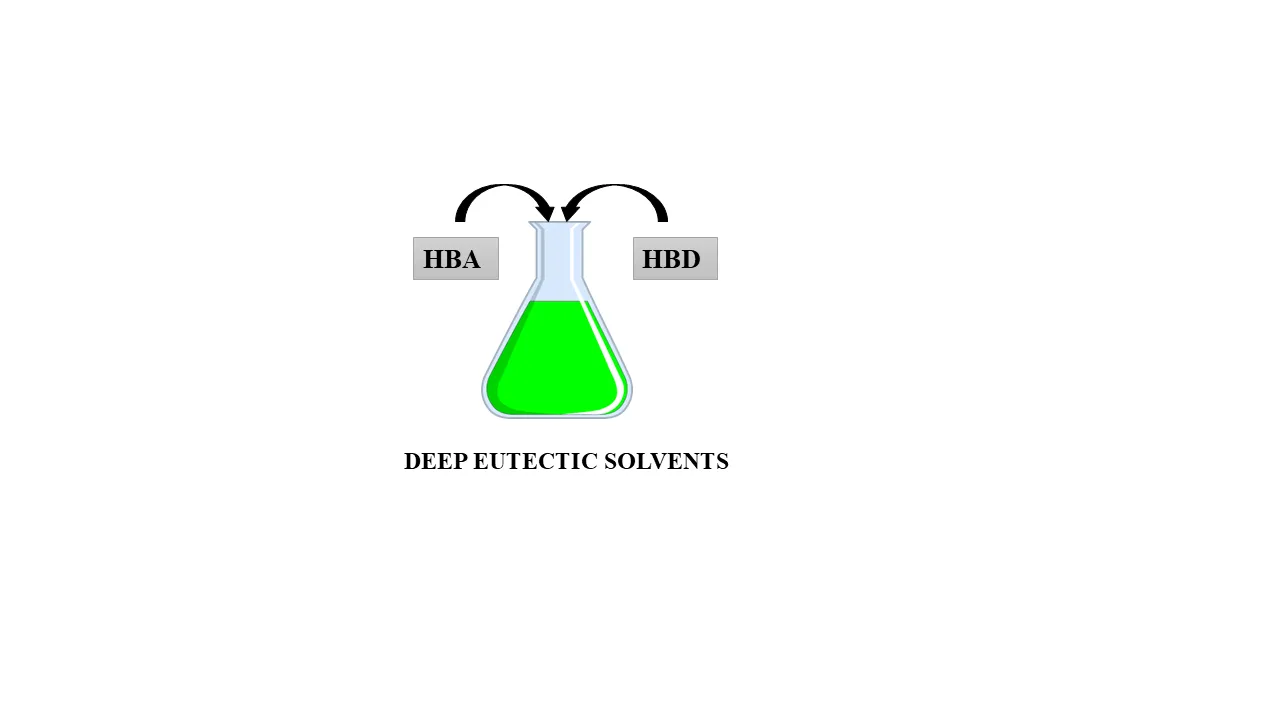
A liquid produced by combining two solid ingredients is called a deep eutectic solvent (DES) which is illustrated in Figure 1. Due of the significant melting point drop brought on by combining hydrogen bond donor (HBD) and hydrogen bond acceptor (HBA) molecules, DES research is gathering a lot of attention, especially in DESs that are liquids over a broad temperature range [1,2].
Figure 1. Deep Eutectic Solvent
2.1 Green Solvents
Deep eutectic solvents (DESs) are considered as a new generation of green solvents due to their unique properties such as simple synthesis, low cost, environmentally friendly, low volatility, high dissolution power, high biodegradability and feasibility of structural design.
2.2 Components Of Deep Eutectic Solvents
A hydrogen-bond donor (HBD) and a hydrogen-bond acceptor (HBA) are two of the components that combine to make the new and developing family of green solvents known as deep eutectic solvents (DESs). Table 1 lists a number of DES components. These components have high hydrogen-bond interactions when combined in specific molar or mass ratios, which significantly lowers the mixture's melting point relative to the separate components. As a result, a liquid phase that is much below the melting temperatures of the constituent parts is created.
Table 1. Commonly used HBD and HBA.
Hydrogen Bond Acceptors
Hydrogen Bond Donors
Choline chloride
Betine
Glycine
Proline
Nicotinic acid
Zinc chloride
Urea
Acetamide
Oxalic acid
Glucose
Lactic acid
Ethylene glycol
2.3 Types Of DESs
Based on the characteristics of HBD and HBA components, DESs have been divided into five categories [3-6] and is listed in Table 2.
Table 2. Types of DESs and examples
Types
Expression
(HBD + HBA)
Components
Examples
Type I
Cat+X− + MXy
Quaternary ammonium salt (Cat+X−) and anhydrous metal halides (MXy).
Choline chloride and aluminium chloride/ zinc chloride.
Type II
Cat+X− + MXy. nH2O
Quaternary ammonium salt (Cat+X−) and hydrated metal halides (MXy. nH2O).
Choline chloride and Chromium chloride hexahydrate.
Type III
(pharmaceutical use)
Cat+X− + RZ
Quaternary ammonium salt (Cat+X−) and molecular hydrogen bond donors (RZ).
Choline chloride and urea, glycerol, sugars or organic acids.
Type IV
MXy + RZ
Metal halides (MXy) and organic hydrogen bond donors (RZ).
Only Types III and V of the five categorized types of deep eutectic solvents have become widely used in pharmaceutical applications; Types I, II, and IV continue to play a minor role in pharmaceutical development. Active pharmaceutical ingredients (APIs) have been dissolved using Type III and V DESs [7-12]. Drug delivery has also made use of these kinds of DESs [13-17]. DESs have also been used in drug formulation as environmentally friendly solvents to dissolve APIs that are poorly soluble in water, as well as vehicles for the extraction of phytochemicals and the creation of medicinal products. Natural deep eutectic solvents (NADES) made from food-grade or metabolite components, like choline chloride mixed with sugars, polyols, or organic acids, have shown a remarkable ability to solubilize pharmaceutical ingredients and bioactive compounds while maintaining low cytotoxicity and good biocompatibility, making them appropriate as excipients in oral and transdermal formulations [18-22].
2.4 Natural Deep Eutectic Solvents (NADES)
NADES are biocompatible deep eutectic solvents solely composed of natural metabolites and are sustainable alternatives to the conventional solvents.
2.5 Therapeutic Deep Eutectic Solvents (Thedes)
THEDES are deep eutectic solvents where at least one of the components is an Active Pharmaceutical Ingredient (API) or a therapeutically active compound that forms a eutectic mixture with improved pharmaceutical properties, such as solubility, permeability, stability and bioavailability. Example: Lidocaine + Menthol → Lidocaine is the API.
2.6 Methods Of Preparation [22-24]
Thermal mixing method (Traditional heating): HBA and HBD are stirred and heated (50-100°C) until a clear homogeneous liquid is formed. Easy, no solvent method but not for thermolabile compounds.
Method of Vacuum Evaporation: Components are dissolved in a volatile solvent, and the solvent is removed under reduced pressure. Good for volatile or heat sensitive materials. Moisture control is important.
Solvent-Assisted (Co-solvent) Method: A little water or ethanol is added to help in solubility and mixing of components. Then the solvent is evaporated to get a homogeneous DES.
Ultrasound assisted method: Ultrasonic waves promote the molecular diffusion and hydrogen-bond interactions. Offers faster and more efficient DES formation than conventional mixing.
Mechanochemical method (Ball milling/Grinding): DES are obtained by mechanical grinding of HBA and HBD in the absence of solvent. Eco-friendly, suitable for moisture-sensitive compounds.
Microwave-Assisted Synthesis: Microwave irradiation enables rapid and homogeneous heating of DES components.
Reduces reaction preparation time and improves synthesis efficiency.
2.7 Characteristics Of DESs
Phase Diagram: Phase diagrams are used to determine the eutectic point (EP) which is the point with the minimum melting temperature of the mixture for example, Choline Chloride: urea (1:2) forms a DES with an EP of 12 °C [25].
Melting point: DESs have melting points much lower than their individual components due to strong hydrogen-bond interactions. For example,Choline Chloride: phenol (1:3) has an EP of −20 °C [26].
Density: The density of DESs is usually higher than water and it decreases with the increase of temperature depending on the nature of HBAs and HBDs [27].
Viscosity: Most DESs have high viscosities compared to ILs because of extensive hydrogen-bond networks, but some systems like Choline Chloride: Ethylene Glycol have low viscosity.
Conductivity: DESs have lower electrical conductivity compared to ILs. This is because the non-conductive HBD components dilute the ionic species.
2.8 Routes Of Delivery
Intravenous (IV) Drug Delivery: THEDES can enhance the stability, solubility, and bioavailability of drugs used in IV infusion. They enable rapid and efficient delivery of poorly soluble drugs into the bloodstream [28].
Implantable Drug Delivery Systems: THEDES can be incorporated into implants to improve sustained drug release and therapeutic efficacy. They help maintain prolonged drug action for long-term treatment [29,30].
Intramuscular (IM) Drug Delivery: THEDES-based injectable formulations can improve drug stability, solubility, and controlled release. They provide prolonged therapeutic effects through sustained drug absorption [31].
Subcutaneous (SC) Drug Delivery: THEDES can enhance the solubility, stability, and prolonged release of drugs administered subcutaneously. They support improved absorption of drugs delivered beneath the skin [32-34].
Eye Drug Delivery: THEDES may enhance drug retention, penetration and sustained-release in ocular tissues. They can enhance ocular bioavailability and reduce the frequency of administration [35-37].
Vaginal Delivery of Drugs: A THEDES with metronidazole has been developed for intravaginal use in the treatment of bacterial vaginosis. PCL (polycaprolactone) matrix showed better onset of action and controlled drug release up to 7 days showing advantages over oral therapy [55].
2.9 Pharmaceutical Applications
Tuberculosis: Encapsulation of L-arginine-based THEDES matrices in lipidic structures such as glycerol monostearate using green supercritical CO2 fluid technology. These micro-sized formulations prepared by Particle from Gas Saturated Solution (PGSS) methods exhibit high encapsulation efficiency and faster drug release profiles [39,40].
Cancer: THEDES are used to create anticancer nano-systems by combining lipids, synthetic polymers or natural terpenes (menthol) with drugs. These strategic combinations result in synergistic antiproliferative effects and low toxicity compared with conventional therapies [41,42].
Microbial Infections: Combining known antimicrobial agents like benzalkonium chloride with acrylic or methacrylic acids in deep eutectic solvents results in enhanced overall pathogen inhibition. This unique eutectic formulation efficiently manages and optimizes the drug release characteristics, offering novel approaches for antimicrobial treatment [43,44].
Hepatotoxicity: To get over significant biopharmaceutical restrictions, silymarin is synthesized into solid dispersion eutectic combinations using poly-vinylpyrrolidone K30 (PVP K30). The anti-inflammatory and hepatoprotective properties of the active component are enhanced by this architecture, which effectively produces a significant five-fold increase in drug solubility [45].
3. EUTECTOGELS
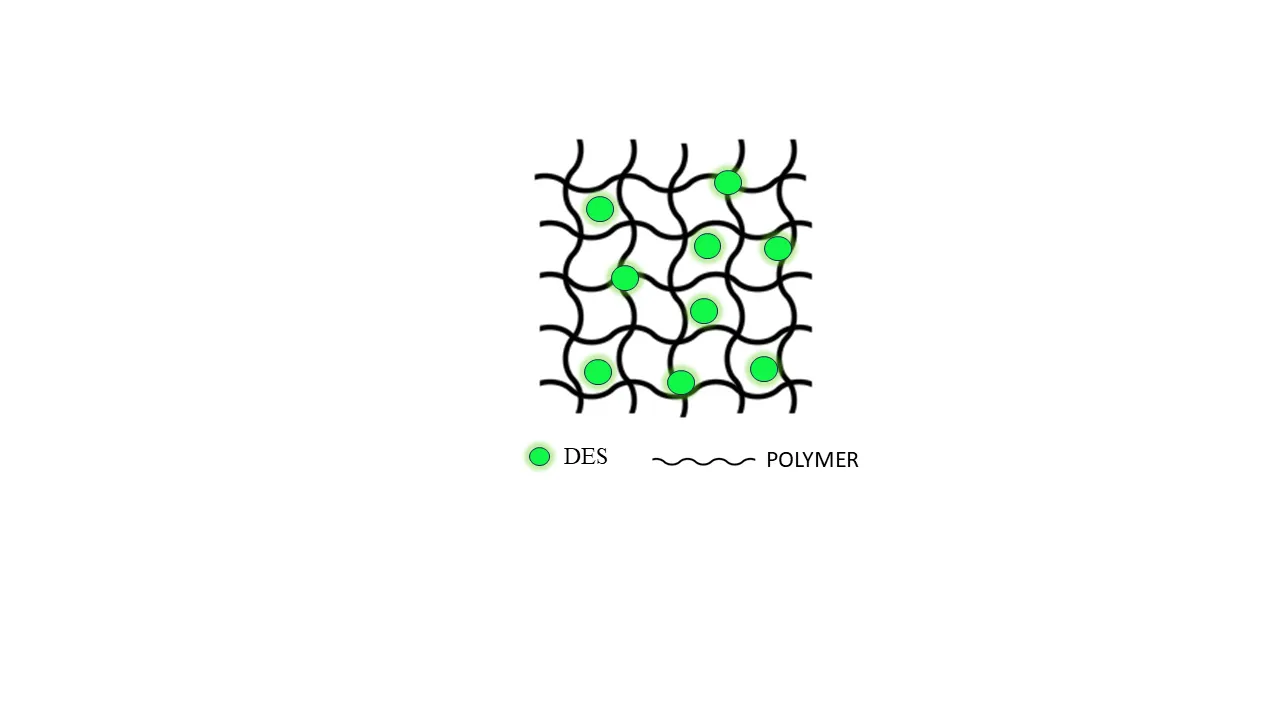
Eutectogels are something new that is being talked about as a type of soft material that is made out of eutectic solvents and polymeric gel network. Eutectogels are defined as gels in which the liquid phase is composed of deep eutectic systems (DESs) or natural deep eutectic systems (NADESs). These materials have unique properties because of their eutectic components, hydrogen bond acceptors and donors that are mixed together. The resulting gels take the benefits of DESs like; low volatility, biodegradable, soluble to a wide variety of chemicals, and possibly biocompatible [46]. Eutectogel 3D network is illustrated in Figure 2 [47].
Figure 2. Eutectogel 3D Network
3.1 Types Of Eutectogels
It can be categorized as polymeric eutectogels, supramolecular eutectogels and biopolymer-based eutectogels depending on the network forming material. Polymeric eutectogels are made from synthetic polymers as gel matrix [48,49], supramolecular eutectogels are made by self-assembly driven by non-covalent interactions and biopolymer-based eutectogels are made from natural polymers such as chitosan, alginate, cellulose, starch, gelatin, agarose, dextran and silk fibroin [50]. According to the crosslinking mechanism, eutectogels can be divided into chemically crosslinked eutectogels including permanent covalent networks endowing them with high stability and mechanical strength, and physically crosslinked eutectogels stabilized through hydrogen bonding, electrostatic interactions or other supramolecular forces [51]. Eutectogels can be homogeneous with uniform network structure and ionic distribution, or heterogeneous with phase-separated or templated architectures and compartmentalized properties, depending on their structure. Based on the function of the deep eutectic solvent (DES), the eutectogels are divided into solvent-type eutectogels, in which the DES is merely the solvent in the gel network, and monomer-derived eutectogels, in which the DES acts as both solvent and reactive monomer in the process of gel formation.
3.2 Characteristics Of Eutectogels
High mechanical strength, toughness, flexibility, and stretchability [52,53].
Excellent moisture absorption and water-retention properties [54].
Good ionic and electrical conductivity suitable for biosensors and drug delivery systems [55,56].
Anti-freezing behavior and stability at sub-zero temperatures [54].
Biocompatibility, low cytotoxicity, particularly when prepared using NADES [57].
Self-healing capability due to reversible hydrogen-bond interactions [52].
3.3 Development Of Eutectogels Using Various Polymers
Synthetic Polymers
Polyvinyl alcohol (PVA) [58]
Polyacrylic acid (PAA/AA) [59]
Polyacrylamide (PAM) [60]
Natural Polymers
Sodium alginate (SA) [54]
Cellulose and bacterial cellulose [61,62]
Chitosan [63]
Gelatin [57]
Xanthum gum [64]
3.4 Methods Of Preparation
Free Radical Polymerization: DES, monomers, and initiators are mixed and polymerized using UV light or heat to create eutectogels [58,59].
Solvent exchange method: hydrogels are made first and then soaked in DES to substitute water [65,66].
Ion exchange method: Crosslinking is done by ion substitution where Ca²⁺ typically replaces Na⁺ in alginate systems [54,67].
One-Pot Preparation: Addition of everything in one pot and transform it in eutectogels [53,68,69].
Freeze Thaw Method: both freezing and thawing in repeated cycles produce eutectogels [70,71].
3.5 Pharmaceutical Applications Of Eutectogels
Topical and Transdermal Drug Delivery: Improve drug solubility, skin penetration, and prolonged release of active pharmaceutical ingredients [72,73].
Wound Healing and Tissue Repair: Keep the area moist, promote tissue regeneration, and preserve bioactive molecules [74,75].
Oral and Buccal Mucoadhesive Drug: Delivery Enhance drug solubility, mucoadhesion, and bioavailability at mucosal surfaces [76].
Nanomedicine and Targeted Drug Delivery: Enhance drug encapsulation, stability, and controlled release using nanogel systems [77,78].
3.6 Key Challenges Of Eutectogels [79]
Low Conductivity: Eutectogels display low conductivity compared to DESs in the liquid state, restricting their widespread applications.
Weak Mechanical Properties: Most synthesized eutectogels exhibit low mechanical strength (in the kPa range), necessitating the need for more robust materials.
Moisture Susceptibility: The hygroscopic nature of DESs due to extensive hydrogen bonding makes them vulnerable to moisture, affecting weatherability and performance.
Small Voltage Window: Moisture absorption in eutectogels adversely affects their electrochemical properties, reducing their voltage window.
Necessity of Greener Polymers: There is an urgent need to replace harmful polymers (polyacrylic acid and polyacrylamide) with green polymers (polylactic acid and polyvinyl alcohol).
Restrictive Variety of HBAs: Most eutectogels rely on the use of ChCl as the hydrogen bond acceptor, and other types of HBAs have not been explored much.
Inadequate Research on Metal Salt Eutectogels: The use of different metal salts (LiCl, ZnCl₂, FeCl₃, and others) as HBAs to synthesize eutectogels that can provide improved conductivity needs more attention.
FUTURE OUTLOOK
DESs and eutectogels can be considered prospective green platforms for pharmaceutical development in the future due to their excellent biocompatibility, versatile properties, and capacity to increase drug solubility and delivery. The main objectives of future studies may involve the investigation of the long-term safety of these substances and further enhancement of formulation approaches as well as application in targeted delivery, nanomedicine, regenerative medicine, and other sophisticated areas.
CONCLUSION
Deep eutectic solvents and eutectogels are new generations of eco-friendly pharmaceutical compounds. The exceptional properties of these substances that consist in the ability to increase drug solubility, stability, permeation, and release make them promising materials for modern pharmaceutical practice. Further efforts can be devoted to the overcoming of the existing limitations in terms of toxicity, scalability, and regulatory acceptance of these materials.
Declaration Of Competing Interest
The authors declare that they have no known competing financial interests or personal relationships that could have appeared to influence the work reported in this paper.
Acknowledgements
The authors sincerely thank all contributors who supported this work.
REFERENCES
M. Fronduti, T. Del Giacco, E. Rossi, M. Tiecco, R. Germani, Insights into the structural features of deep eutectic solvents: the eutectic point as an unicum in their physical properties and the surface tension as a method for its determination, J. Mol. Liq. 379 (2023) 121679, https://doi.org/10.1016/j. molliq.2023.121679.
D.O. Abranches, J.A.P. Coutinho, Type V deep eutectic solvents: Design and applications, Curr. Opin. Green. Sustain Chem. 35 (2022) 100612, https://doi.org/10.1016/j.cogsc.2022.100612.
O.-E. Plastiras, E. Andreasidou, V. Samanidou, Microextraction Techniques with Deep Eutectic Solvents, Molecules 25 (2020) 6026, https://doi.org/10.3390/ molecules25246026.
O.-E. Plastiras, V. Samanidou, Applications of Deep Eutectic Solvents in Sample Preparation and Extraction of Organic Molecules, Molecules 27 (2022) 7699, https://doi.org/10.3390/molecules27227699.
A.P. Abbott, G. Capper, D.L. Davies, R.K. Rasheed, V. Tambyrajah, Novel solvent properties of choline chloride/urea mixtures Electronic supplementary information (ESI) available: spectroscopic data (See), Chem. Commun. (2003), https://doi.org/10.1039/b210714g, 〈http://www.rsc.org/suppdata/cc/b2/b2 10714g/
K.A. Omar, R. Sadeghi, Database of deep eutectic solvents and their physical properties: A review, J. Mol. Liq. 384 (2023) 121899, https://doi.org/10.1016/j. molliq.2023.121899.
C. Lu, J. Cao, N. Wang, E. Su, Significantly improving the solubility of nonsteroidal anti-inflammatory drugs in deep eutectic solvents for potential nonaqueous liquid administration, Medchemcomm 7 (2016) 955–959, https://doi.org/10.1039/C5MD00551E.
A. Sharma, Y.R. Park, A. Garg, B.-S. Lee, Deep Eutectic Solvents Enhancing Drug Solubility and Its Delivery, J. Med Chem. 67 (2024) 14807–14819, https://orcid.org/0000-0003-0080-671X.
Z. Li, P.I. Lee, Investigation on drug solubility enhancement using deep eutectic solvents and their derivatives, Int J. Pharm. 505 (2016) 283–288, https://doi.org/10.1016/j.ijpharm.2016.04.018.
M.-A. Nica, V. Anuța, C.A. Nicolae, L. Popa, M.V. Ghica, F.-I. Cocoș, et al., Exploring Deep Eutectic Solvents as Pharmaceutical Excipients: Enhancing the Solubility of Ibuprofen and Mefenamic Acid, Pharmaceuticals 17 (2024) 1316, https://doi.org/10.3390/ph17101316.
T. Jelinski, ´ M. Przybyłek, P. Cysewski, Natural Deep Eutectic Solvents as Agents for Improving Solubility, Stability and Delivery of Curcumin, Pharm. Res 36 (2019) 116, https://doi.org/10.1007/s11095-019-2643-2.
D.V. Bhalani, B. Nutan, A. Kumar, A.K. Singh Chandel, Bioavailability Enhancement Techniques for Poorly Aqueous Soluble Drugs and Therapeutics, Biomedicines 10 (2022) 2055, https://doi.org/10.3390/biomedicines10092055.
S. Javed, B. Mangla, M.H. Sultan, Y. Almoshari, D. Sivadasan, S.S. Alqahtani, et al., pharmaceutical applications of therapeutic deep eutectic systems (THEDES) in maximising drug delivery, Heliyon 10 (2024) e29783, https://doi.org/ 10.1016/j.heliyon.2024.e29783.
S.N. Pedro, M.G. Freire, C.S.R. Freire, A.J.D. Silvestre, Deep eutectic solvents comprising active pharmaceutical ingredients in the development of drug delivery systems, Expert Opin. Drug Deliv. 16 (2019) 497–506, https://doi.org/ 10.1080/17425247.2019.160468.
S. Trombino, C. Siciliano, D. Procopio, F. Curcio, A.S. Lagana, M.L. Di Gioia, et al., Deep Eutectic Solvents for Improving the Solubilization and Delivery of Dapsone, Pharmaceutics 14 (2022) 333, https://doi.org/10.3390/ pharmaceutics14020333.
J. Wang, M. Li, L. Duan, Y. Lin, X. Cui, Y. Yang, et al., Deep Eutectic Systems as Novel Vehicles for Assisting Drug Transdermal Delivery, Pharmaceutics 14 (2022) 2265, https://doi.org/10.3390/pharmaceutics14112265.
M.H. Zainal-Abidin, M. Hayyan, G.C. Ngoh, W.F. Wong, C.Y. Looi, Emerging frontiers of deep eutectic solvents in drug discovery and drug delivery systems, J. Control. Release 316 (2019) 168–195, https://doi.org/10.1016/j. jconrel.2019.09.019.
N.P.E. Hikmawanti, D. Ramadon, I. Jantan, A. Mun’im, Natural Deep Eutectic Solvents (NADES): Phytochemical Extraction Performance Enhancer for Pharmaceutical and Nutraceutical Product Development, Plants 10 (2021) 2091, https://doi.org/10.3390/plants10102091.
A. Paiva, R. Craveiro, I. Aroso, M. Martins, R.L. Reis, A.R.C. Duarte, Natural Deep Eutectic Solvents – Solvents for the 21st Century, ACS Sustain Chem. Eng. 2 (2014) 1063–1071, https://doi.org/10.1021/sc500096j.
M. Li, C. Rao, X. Ye, M. Wang, B. Yang, C. Wang, et al., Applications for natural deep eutectic solvents in Chinese herbal medicines, Front Pharm. (2023) 13, https://doi.org/10.3389/fphar.2022.1104096.
H. Li, K. Yang, Y. Yang, L. Ding, X. Li, Natural deep eutectic solvents (NADES) in drug delivery systems: Characteristics, applications, and future perspectives, Int J. Pharm. 675 (2025) 125509, https://doi.org/10.1016/j.ijpharm.2025.125509.
X. Zhang, P. Zhu, Q. Li, H. Xia, Recent Advances in the Catalytic Conversion of Biomass to Furfural in Deep Eutectic Solvents, Front Chem. (2022) 10, https://doi.org/10.3389/fchem.2022.911674
B.B. Hansen, S. Spittle, B. Chen, D. Poe, Y. Zhang, J.M. Klein, et al., Deep Eutectic Solvents: A Review of Fundamentals and Applications, Chem. Rev. 121 (2021) 1232–1285, https://doi.org/10.1021/acs.chemrev.0c00385.
T. Negi, A. Kumar, S.K. Sharma, N. Rawat, D. Saini, R. Sirohi, et al., Deep eutectic solvents: Preparation, properties, and food applications, Heliyon 10 (2024) e28784, https://doi.org/10.1016/j.heliyon.2024.e28784.
Abbott, A. P.; Boothby, D.; Capper, G.; Davies, D. L.; Rasheed, R. K. J. Am. Chem. Soc. 2004, 126 (29), 9142. https://doi: 10.1021/ja048266j.
Guo, W. J.; Hou, Y. C.; Ren, S. H.; Tian, S. D.; Wu, W. Z. J. Chem. Eng. Data 2013, 58, 866. https://doi: 10.1021/je300997v.
Abbott, A. P.; Harris, R. C.; Ryder, K. S.; D'Agostino, C.; Gladden, L. F.; Mantle, M. D. Green Chem. 2011, 13, 82. https://doi: 10.1039/C0GC00395F.
R.A. Peterfreund, J.H. Philip, Critical parameters in drug delivery by intravenous infusion, Expet Opin. Drug Deliv. 10 (8) (2013) 1095–1108, https://doi.org/ 10.1517/17425247.2013.785519.
T.C. Ezike, U.S. Okpala, U.L. Onoja, C.P. Nwike, E.C. Ezeako, O.J. Okpara, C.C. Okoroafor, S.C. Eze, O.L. Kalu, E.C. Odoh, U.G. Nwadike, J.O. Ogbodo, B. U. Umeh, E.C. Ossai, B.C. Nwanguma, Advances in drug delivery systems, challenges and future directions, Heliyon 9 (6) (2023) e17488, https://doi.org/ 10.1016/j.heliyon.2023.e17488.
S.A. Stewart, J. Domínguez-Robles, R.F. Donnelly, E. Larraneta, ˜ Implantable polymeric drug delivery devices: Classification, manufacture, materials, and clinical applications, Polymers 10 (12) (2018) 1379, https://doi.org/10.3390/polym10121379.
J. Wang, M. Li, L. Duan, Y. Lin, X. Cui, Y. Yang, C. Wang, Deep eutectic systems as novel vehicles for assisting drug transdermal delivery, Pharmaceutics 14 (11) (2022) 2265, https://doi.org/10.3390/pharmaceutics14112265.
S.N. Pedro, M.G. Freire, C.S.R. Freire, A.J.D. Silvestre, Deep eutectic solvents comprising active pharmaceutical ingredients in the development of drug delivery systems, Expet Opin. Drug Deliv. 16 (5) (2019) 497–506, https://doi.org/10.1080/17425247.2019.1604680.
E.E.L. Tanner, K.N. Ibsen, S. Mitragotri, Transdermal insulin delivery using choline-based ionic liquids (CAGE), J Control Release 286 (2018) 137–144, https://doi.org/10.1016/j.jconrel.2018.07.029.
M. Hayyan, Versatile applications of deep eutectic solvents in drug discovery and drug delivery systems: perspectives and opportunities, Asian J. Pharm. Sci. 18 (2) (2023) 100780, https://doi.org/10.1016/j.ajps.2023.100780.
N.R. Mustafa, V.S. Spelbos, G.J. Witkamp, R. Verpoorte, Y.H. Choi, Solubility and stability of some pharmaceuticals in natural deep eutectic solvents-based formulations, Molecules 26 (9) (2021) 2645, https://doi.org/10.3390/molecules26092645.
G.M. Martínez, G.G. Townley, R.M. Martínez-Espinosa, Controversy on the toxic nature of deep eutectic solvents and their potential contribution to environmental pollution, Heliyon 8 (12) (2022) e12567, https://doi.org/10.1016/j.heliyon.2022.e12567.
L. Manyoni, G. Redhi, Separation potential of 1,5-pentanediol-based deep eutectic solvent: Infinite dilution activity coefficients and excess thermodynamic data, Heliyon 9 (11) (2023) e21516, https://doi.org/10.1016/j.heliyon.2023.e21516.
S. Li, A. Culkin, D.S. Jones, G.P. Andrews, Development of Polycaprolactone-Based metronidazole matrices for intravaginal extended drug delivery using a mechanochemically prepared therapeutic deep eutectic system, Int. J. Pharm. 593 (2021) 120071, https://doi.org/10.1016/j.ijpharm.2020.120071.
S.H. Hong, L. Dinh, S.M. Abuzar, E.S. Lee, S.J. Hwang, Synthesis of celecoxib-eutectic mixture particles via supercritical CO2 process and celecoxib immediate release tablet formulation by quality by design approach, Pharmaceutics 14 (8) (2022) 1549, https://doi.org/10.3390/pharmaceutics14081549.
F. Santos, S. P, M.I. Leitao, ˜ A.R. C Duarte, Properties of therapeutic deep eutectic solvents of l-arginine and ethambutol for tuberculosis treatment, Molecules 24 (1) (2018) 55, https://doi.org/10.3390/molecules24010055.
E. Silva, F. Oliveira, J.M. Silva, A. Matias, R.L. Reis, A.R.C. Duarte, Optimal design of THEDES based on perillyl alcohol and ibuprofen, Pharmaceutics 12 (11) (2020) 1121, https://doi.org/10.3390/pharmaceutics12111121.
C.V. Pereira, J.M. Silva, L. Rodrigues, R.L. Reis, A. Paiva, A.R.C. Duarte, A. Matias, Unveil the anticancer potential of Limomene based therapeutic deep eutectic solvents, Sci. Rep. 9 (1) (2019) 14926, https://doi.org/10.1038/s41598-019-51472-7.
J. Wang, J. Xue, X. Dong, Q. Yu, S.N. Baker, M. Wang, H. Huang, Antimicrobial properties of benzalkonium chloride derived polymerizable deep eutectic solvent, Int. J. Pharm. 575 (2020) 119005, https://doi.org/10.1016/j.ijpharm.2019.119005.
M.T. França, T. Martins Marcos, P.F.A. Costa, G.C. Bazzo, R. Nicolay Pereira, A.P. Gerola, H.K. Stulzer, Eutectic mixture and amorphous solid dispersion: two different supersaturating drug delivery system strategies to improve griseofulvin release using saccharin, Int. J. Pharm. 615 (2022) 121498, https://doi.org/ 10.1016/j.ijpharm.2022.121498.
A. Sherikar, M.U.M. Siddique, M. More, S.N. Goyal, M. Milivojevic, S. Alkahtani, S. Alarifi, M.S. Hasnain, A.K. Nayak, Preparation and evaluation of silymarinloaded solid eutectic for enhanced anti-inflammatory, hepatoprotective effect: in vitro-in vivo Prospect, Oxid. Med. Cell. Longev. 2021 (2021) 1818538, https://doi.org/10.1155/2021/1818538.
L. Fiorillo, G.L. Romano, Gels in Medicine and Surgery: Current Trends and Future Perspectives. Gels 2020, 6, 48.
L. Meneses, A.R. Jesus, Eutectogels: Recent Advances, Design Strategies, and Emerging Applications in Biotechnology. Gels 2025, 11, 1013. https://doi.org/10.3390/ gels11121013.
A. Nicolau, A.L. Mutch, S.C. Thickett, Applications of Functional Polymeric Eutectogels, Macromol. Rapid Commun. 45 (2024) 2400405.
B. Joos, J. Volders, R.R. Da Cruz, E. Baeten, M. Safari, M.K. Van Bael, A.T. Hardy, Polymeric Backbone Eutectogels as a New Generation of Hybrid Solid-State Electrolytes, Chem. Mater. 32 (2020) 3783–3793.
C. Florindo, L.G. Celia-Silva, L.F.G. Martins, L.C. Branco, I.M. Marrucho, Supramolecular Hydrogel Based on a Sodium Deep Eutectic Solvent, Chem. Commun. 54 (2018) 7527–7530.
M.J. Panzer, Holding It Together: Noncovalent Cross-Linking Strategies for Ionogels and Eutectogels, Mater. Adv. 3 (2022) 7709–7725.
Y. Liang, K. Wang, J. Li, H. Wang, X.-Q. Xie, Y. Cui, Y. Zhang, M. Wang, C.-S. Liu, Low-molecular-weight supramolecular-polymer double-network eutectogels for self-adhesive and bidirectional sensors, Adv. Funct. Mater. 31 (2021) 2104963.
J. Yang, Y. Feng, B. Wang, J. Miao, S. Wei, H. Li, L. Mo, Z. Qin, Tough, multifunctional, and green double-network binary solvent eutectogel with in-situ generation of lignin nanoparticles based on one-step dual phase separations for wearable flexible strain sensors, Chem. Eng. J. 474 (2023) 145544.
Y. Tian, D.-W. Sun, L. Xu, T.-H. Fan, Z. Zhu, Bio-inspired eutectogels enabled by binary natural deep eutectic solvents (NADESs): Interfacial anti-frosting, freezing-tolerance, and mechanisms, Food Hydrocoll. 128 (2022) 107568.
C. Gu, Y. Peng, J. Li, H. Wang, X.-Q. Xie, X. Cao, C.-S. Liu, Supramolecular G4 eutectogels of guanosine with solvent-induced chiral inversion and excellent electrochromic activity, Angew. Chem. Int. Ed. 59 (2020) 18768–18773.
J. Ruiz-Olles, P. Slavik, N.K. Whitelaw, D.K. Smith, Self-assembled gels formed in deep eutectic solvents: Supramolecular eutectogels with high ionic conductivity, Angew. Chem. Int. Ed. 58 (2019) 4173–4178.
M.L. Picchio, M.S. Orellano, M.A. Motta, C. Huck-Iriart, D. Sanchez-deAlcazar, R. Lopez-Domene, B. Martin-Garcia, A. Larranaga, A. Beloqui, D. Mecerreyes, M. Calderon, Elastomeric protein bioactive eutectogels for topical drug delivery, Adv. Funct. Mater. (2024) 2313747.
Y. Wang, J. Wang, Z. Ma, L. Yan, A highly conductive, self-recoverable, and strong eutectogel of a deep eutectic solvent with polymer crystalline domain regulation, ACS Appl. Mater. Interfaces 13 (2021) 54409–54416.
Y. Zhang, C. Liu, S. Zhang, J. Li, P. Quan, Y. Song, J. Liu, L. Fang, Multiple dynamic interaction-enabled eutectogel with strong tissue adhesion, mechanical strength and temperature tolerance for transdermal drug delivery: Double monodentate coordination and π-π interaction, Chem. Eng. J. 476 (2023) 146583.
W. Chen, J. Ma, D. Yu, N. Li, X. Ji, Transparent, super stretchable, freezing-tolerant, self-healing ionic conductive cellulose based eutectogel for multi-functional sensors, Int. J. Biol. Macromol. 266 (Pt 2) (2024) 131129.
Z.L. Shaw, M.N. Awad, S. Gharehgozlo, T.L. Greaves, H. Haidari, Z. Kopecki, G. Bryant, P.T. Spicer, S. Walia, A. Elbourne, S.J. Bryant, Deep eutectic solvent eutectogels for delivery of broad-spectrum antimicrobials, ACS Appl. Bio Mater. 7 (2024) 1429–1434.
S. Carrasco-Saavedra, N.R. Tanguy, I. Garcia-Nieto, R. Pimentel-Dominguez, M.J. Panzer, J.D. Mota-Morales, Transient dual-response iontronic strain sensor based on gelatin and cellulose nanocrystals eutectogel nanocomposites, Adv. Mater. Interfaces 11 (2024) 2300536.
E. Jakubowska, M. Gierszewska, J. Nowaczyk, E. Olewnik-Kruszkowska, Physicochemical and storage properties of chitosan-based films plasticized with deep eutectic solvent, Food Hydrocoll. 108 (2020) 106007.
H. Xia, M. Ren, Y. Zou, S. Qin, C. Zeng, Novel Biocompatible Polysaccharide-Based Eutectogels with Tunable Rheological, Thermal, and Mechanical Properties: The Role of Water, Molecules 25 (2020) 3314.
H. Zhang, N. Tang, X. Yu, M.-H. Li, J. Hu, Strong and tough physical eutectogels regulated by the spatiotemporal expression of non-covalent interactions, Adv. Funct. Mater. 32 (2022) 2206305.
N. Tang, Y. Jiang, K. Wei, Z. Zheng, H. Zhang, J. Hu, Evolutionary reinforcement of polymer networks: A stepwise-enhanced strategy for ultrarobust eutectogels, Adv. Mater. 36 (2024) 2309576.
Z. Asghari, H. Sereshti, S. Soltani, M. Taghizadeh, S. Karami, M.E. Bidhendi, S. Rezania, An alginate-based eutectogel impregnated with polyvinylpyrrolidone/benzoic acid deep eutectic solvent and magnetic carboxylated multiwalled carbon nanotubes: Evaluated as sorbent in green microextraction of pesticides, J. Chromatogr. B 1229 (2023) 123865.
T.H. Vo, P.K. Lam, T.-F. Hsiao, C.-J.M. Chin, Y.-J. Sheng, H.-K. Tsao, One-step fabrication of physical eutectogel with recyclability: Crystalline domain regulation induced by microgels, J. Colloid Interface Sci. 659 (2024) 495–502.
C. Zeng, H. Zhao, Z. Wan, Q. Xiao, H. Xia, S. Guo, Highly biodegradable, thermostable eutectogels prepared by gelation of natural deep eutectic solvents using xanthan gum: Preparation and characterization, RSC Adv. 10 (2020) 28376–28382.
H. Zhai, C. Yue, Z. Li, L. Ma, T. Wang, H. Zhang, J. Wang, S. Yang, MXene/silk fibroin strengthened PVA-based eutectogel with excellent self-healing ability and environmental adaptability: Design, synthesis, and sensing application, Chem. Asian J. (2024) e202400055.
M. Sang, J. Wang, D. Zuo, J. Xu, H. Zhang, H. Li, Eutectogel with (NH4)2SO4-based deep eutectic solvent for ammonium-ion supercapacitors, ACS Sustain. Chem. Eng. 12 (2024) 2455–2464.
S.N. Pedro, et al., DES formulations with alginate hydrogels for transdermal anti-inflammatory drugs, Pharmaceutics 14 (2022) 827.
N. Parsana, et al., Supramolecular eutectogel based on THDESs for skin delivery of curcumin, J. Mater. Chem. B 13 (2025) 14454–14469.
K. Šafářová, et al., Xylan–chitosan films with DES for wound healing, Int. J. Biol. Macromol. 320 (2025) 145482.
K. Shanmugapriya, H.W. Kang, NADES–based chitosan hydrogel for photoimmunomodulation of wounds, Int. J. Biol. Macromol. 242 (2025) 128945.
I.M. Aroso, et al., Dissolution enhancement of oral drugs using therapeutic DES, Int. J. Pharm. 528 (2017) 703–709.
M.H. Zainal-Abidin, M. Hayyan, A. Hayyan, N.S. Jayakumar, Drug delivery using deep eutectic solvents: A review, J. Control. Release 288 (2017) 227–253.
X. Li, S. Chen, R. Fan, Y. Liu, M. Zhao, DES-based nanogels for drug encapsulation and sustained release, Colloids Surf. B Biointerfaces 200 (2021) 111568.
J. Wang, S. Zhang, Z. Ma, L. Yan, Deep eutectic solvents eutectogels: progress and challenges, Green Chem. Eng. 2 (4) (2021) 359–367. https://doi.org/10.1016/j.gce.2021.06.001.
Reference
M. Fronduti, T. Del Giacco, E. Rossi, M. Tiecco, R. Germani, Insights into the structural features of deep eutectic solvents: the eutectic point as an unicum in their physical properties and the surface tension as a method for its determination, J. Mol. Liq. 379 (2023) 121679, https://doi.org/10.1016/j. molliq.2023.121679.
D.O. Abranches, J.A.P. Coutinho, Type V deep eutectic solvents: Design and applications, Curr. Opin. Green. Sustain Chem. 35 (2022) 100612, https://doi.org/10.1016/j.cogsc.2022.100612.
O.-E. Plastiras, E. Andreasidou, V. Samanidou, Microextraction Techniques with Deep Eutectic Solvents, Molecules 25 (2020) 6026, https://doi.org/10.3390/ molecules25246026.
O.-E. Plastiras, V. Samanidou, Applications of Deep Eutectic Solvents in Sample Preparation and Extraction of Organic Molecules, Molecules 27 (2022) 7699, https://doi.org/10.3390/molecules27227699.
A.P. Abbott, G. Capper, D.L. Davies, R.K. Rasheed, V. Tambyrajah, Novel solvent properties of choline chloride/urea mixtures Electronic supplementary information (ESI) available: spectroscopic data (See), Chem. Commun. (2003), https://doi.org/10.1039/b210714g, ?http://www.rsc.org/suppdata/cc/b2/b2 10714g/
K.A. Omar, R. Sadeghi, Database of deep eutectic solvents and their physical properties: A review, J. Mol. Liq. 384 (2023) 121899, https://doi.org/10.1016/j. molliq.2023.121899.
C. Lu, J. Cao, N. Wang, E. Su, Significantly improving the solubility of nonsteroidal anti-inflammatory drugs in deep eutectic solvents for potential nonaqueous liquid administration, Medchemcomm 7 (2016) 955–959, https://doi.org/10.1039/C5MD00551E.
A. Sharma, Y.R. Park, A. Garg, B.-S. Lee, Deep Eutectic Solvents Enhancing Drug Solubility and Its Delivery, J. Med Chem. 67 (2024) 14807–14819, https://orcid.org/0000-0003-0080-671X.
Z. Li, P.I. Lee, Investigation on drug solubility enhancement using deep eutectic solvents and their derivatives, Int J. Pharm. 505 (2016) 283–288, https://doi.org/10.1016/j.ijpharm.2016.04.018.
M.-A. Nica, V. Anu?a, C.A. Nicolae, L. Popa, M.V. Ghica, F.-I. Coco?, et al., Exploring Deep Eutectic Solvents as Pharmaceutical Excipients: Enhancing the Solubility of Ibuprofen and Mefenamic Acid, Pharmaceuticals 17 (2024) 1316, https://doi.org/10.3390/ph17101316.
T. Jelinski, ´ M. Przyby?ek, P. Cysewski, Natural Deep Eutectic Solvents as Agents for Improving Solubility, Stability and Delivery of Curcumin, Pharm. Res 36 (2019) 116, https://doi.org/10.1007/s11095-019-2643-2.
D.V. Bhalani, B. Nutan, A. Kumar, A.K. Singh Chandel, Bioavailability Enhancement Techniques for Poorly Aqueous Soluble Drugs and Therapeutics, Biomedicines 10 (2022) 2055, https://doi.org/10.3390/biomedicines10092055.
S. Javed, B. Mangla, M.H. Sultan, Y. Almoshari, D. Sivadasan, S.S. Alqahtani, et al., pharmaceutical applications of therapeutic deep eutectic systems (THEDES) in maximising drug delivery, Heliyon 10 (2024) e29783, https://doi.org/ 10.1016/j.heliyon.2024.e29783.
S.N. Pedro, M.G. Freire, C.S.R. Freire, A.J.D. Silvestre, Deep eutectic solvents comprising active pharmaceutical ingredients in the development of drug delivery systems, Expert Opin. Drug Deliv. 16 (2019) 497–506, https://doi.org/ 10.1080/17425247.2019.160468.
S. Trombino, C. Siciliano, D. Procopio, F. Curcio, A.S. Lagana, M.L. Di Gioia, et al., Deep Eutectic Solvents for Improving the Solubilization and Delivery of Dapsone, Pharmaceutics 14 (2022) 333, https://doi.org/10.3390/ pharmaceutics14020333.
J. Wang, M. Li, L. Duan, Y. Lin, X. Cui, Y. Yang, et al., Deep Eutectic Systems as Novel Vehicles for Assisting Drug Transdermal Delivery, Pharmaceutics 14 (2022) 2265, https://doi.org/10.3390/pharmaceutics14112265.
M.H. Zainal-Abidin, M. Hayyan, G.C. Ngoh, W.F. Wong, C.Y. Looi, Emerging frontiers of deep eutectic solvents in drug discovery and drug delivery systems, J. Control. Release 316 (2019) 168–195, https://doi.org/10.1016/j. jconrel.2019.09.019.
N.P.E. Hikmawanti, D. Ramadon, I. Jantan, A. Mun’im, Natural Deep Eutectic Solvents (NADES): Phytochemical Extraction Performance Enhancer for Pharmaceutical and Nutraceutical Product Development, Plants 10 (2021) 2091, https://doi.org/10.3390/plants10102091.
A. Paiva, R. Craveiro, I. Aroso, M. Martins, R.L. Reis, A.R.C. Duarte, Natural Deep Eutectic Solvents – Solvents for the 21st Century, ACS Sustain Chem. Eng. 2 (2014) 1063–1071, https://doi.org/10.1021/sc500096j.
M. Li, C. Rao, X. Ye, M. Wang, B. Yang, C. Wang, et al., Applications for natural deep eutectic solvents in Chinese herbal medicines, Front Pharm. (2023) 13, https://doi.org/10.3389/fphar.2022.1104096.
H. Li, K. Yang, Y. Yang, L. Ding, X. Li, Natural deep eutectic solvents (NADES) in drug delivery systems: Characteristics, applications, and future perspectives, Int J. Pharm. 675 (2025) 125509, https://doi.org/10.1016/j.ijpharm.2025.125509.
X. Zhang, P. Zhu, Q. Li, H. Xia, Recent Advances in the Catalytic Conversion of Biomass to Furfural in Deep Eutectic Solvents, Front Chem. (2022) 10, https://doi.org/10.3389/fchem.2022.911674
B.B. Hansen, S. Spittle, B. Chen, D. Poe, Y. Zhang, J.M. Klein, et al., Deep Eutectic Solvents: A Review of Fundamentals and Applications, Chem. Rev. 121 (2021) 1232–1285, https://doi.org/10.1021/acs.chemrev.0c00385.
T. Negi, A. Kumar, S.K. Sharma, N. Rawat, D. Saini, R. Sirohi, et al., Deep eutectic solvents: Preparation, properties, and food applications, Heliyon 10 (2024) e28784, https://doi.org/10.1016/j.heliyon.2024.e28784.
Abbott, A. P.; Boothby, D.; Capper, G.; Davies, D. L.; Rasheed, R. K. J. Am. Chem. Soc. 2004, 126 (29), 9142. https://doi: 10.1021/ja048266j.
Guo, W. J.; Hou, Y. C.; Ren, S. H.; Tian, S. D.; Wu, W. Z. J. Chem. Eng. Data 2013, 58, 866. https://doi: 10.1021/je300997v.
Abbott, A. P.; Harris, R. C.; Ryder, K. S.; D'Agostino, C.; Gladden, L. F.; Mantle, M. D. Green Chem. 2011, 13, 82. https://doi: 10.1039/C0GC00395F.
R.A. Peterfreund, J.H. Philip, Critical parameters in drug delivery by intravenous infusion, Expet Opin. Drug Deliv. 10 (8) (2013) 1095–1108, https://doi.org/ 10.1517/17425247.2013.785519.
T.C. Ezike, U.S. Okpala, U.L. Onoja, C.P. Nwike, E.C. Ezeako, O.J. Okpara, C.C. Okoroafor, S.C. Eze, O.L. Kalu, E.C. Odoh, U.G. Nwadike, J.O. Ogbodo, B. U. Umeh, E.C. Ossai, B.C. Nwanguma, Advances in drug delivery systems, challenges and future directions, Heliyon 9 (6) (2023) e17488, https://doi.org/ 10.1016/j.heliyon.2023.e17488.
S.A. Stewart, J. Domínguez-Robles, R.F. Donnelly, E. Larraneta, ˜ Implantable polymeric drug delivery devices: Classification, manufacture, materials, and clinical applications, Polymers 10 (12) (2018) 1379, https://doi.org/10.3390/polym10121379.
J. Wang, M. Li, L. Duan, Y. Lin, X. Cui, Y. Yang, C. Wang, Deep eutectic systems as novel vehicles for assisting drug transdermal delivery, Pharmaceutics 14 (11) (2022) 2265, https://doi.org/10.3390/pharmaceutics14112265.
S.N. Pedro, M.G. Freire, C.S.R. Freire, A.J.D. Silvestre, Deep eutectic solvents comprising active pharmaceutical ingredients in the development of drug delivery systems, Expet Opin. Drug Deliv. 16 (5) (2019) 497–506, https://doi.org/10.1080/17425247.2019.1604680.
E.E.L. Tanner, K.N. Ibsen, S. Mitragotri, Transdermal insulin delivery using choline-based ionic liquids (CAGE), J Control Release 286 (2018) 137–144, https://doi.org/10.1016/j.jconrel.2018.07.029.
M. Hayyan, Versatile applications of deep eutectic solvents in drug discovery and drug delivery systems: perspectives and opportunities, Asian J. Pharm. Sci. 18 (2) (2023) 100780, https://doi.org/10.1016/j.ajps.2023.100780.
N.R. Mustafa, V.S. Spelbos, G.J. Witkamp, R. Verpoorte, Y.H. Choi, Solubility and stability of some pharmaceuticals in natural deep eutectic solvents-based formulations, Molecules 26 (9) (2021) 2645, https://doi.org/10.3390/molecules26092645.
G.M. Martínez, G.G. Townley, R.M. Martínez-Espinosa, Controversy on the toxic nature of deep eutectic solvents and their potential contribution to environmental pollution, Heliyon 8 (12) (2022) e12567, https://doi.org/10.1016/j.heliyon.2022.e12567.
L. Manyoni, G. Redhi, Separation potential of 1,5-pentanediol-based deep eutectic solvent: Infinite dilution activity coefficients and excess thermodynamic data, Heliyon 9 (11) (2023) e21516, https://doi.org/10.1016/j.heliyon.2023.e21516.
S. Li, A. Culkin, D.S. Jones, G.P. Andrews, Development of Polycaprolactone-Based metronidazole matrices for intravaginal extended drug delivery using a mechanochemically prepared therapeutic deep eutectic system, Int. J. Pharm. 593 (2021) 120071, https://doi.org/10.1016/j.ijpharm.2020.120071.
S.H. Hong, L. Dinh, S.M. Abuzar, E.S. Lee, S.J. Hwang, Synthesis of celecoxib-eutectic mixture particles via supercritical CO2 process and celecoxib immediate release tablet formulation by quality by design approach, Pharmaceutics 14 (8) (2022) 1549, https://doi.org/10.3390/pharmaceutics14081549.
F. Santos, S. P, M.I. Leitao, ˜ A.R. C Duarte, Properties of therapeutic deep eutectic solvents of l-arginine and ethambutol for tuberculosis treatment, Molecules 24 (1) (2018) 55, https://doi.org/10.3390/molecules24010055.
E. Silva, F. Oliveira, J.M. Silva, A. Matias, R.L. Reis, A.R.C. Duarte, Optimal design of THEDES based on perillyl alcohol and ibuprofen, Pharmaceutics 12 (11) (2020) 1121, https://doi.org/10.3390/pharmaceutics12111121.
C.V. Pereira, J.M. Silva, L. Rodrigues, R.L. Reis, A. Paiva, A.R.C. Duarte, A. Matias, Unveil the anticancer potential of Limomene based therapeutic deep eutectic solvents, Sci. Rep. 9 (1) (2019) 14926, https://doi.org/10.1038/s41598-019-51472-7.
J. Wang, J. Xue, X. Dong, Q. Yu, S.N. Baker, M. Wang, H. Huang, Antimicrobial properties of benzalkonium chloride derived polymerizable deep eutectic solvent, Int. J. Pharm. 575 (2020) 119005, https://doi.org/10.1016/j.ijpharm.2019.119005.
M.T. França, T. Martins Marcos, P.F.A. Costa, G.C. Bazzo, R. Nicolay Pereira, A.P. Gerola, H.K. Stulzer, Eutectic mixture and amorphous solid dispersion: two different supersaturating drug delivery system strategies to improve griseofulvin release using saccharin, Int. J. Pharm. 615 (2022) 121498, https://doi.org/ 10.1016/j.ijpharm.2022.121498.
A. Sherikar, M.U.M. Siddique, M. More, S.N. Goyal, M. Milivojevic, S. Alkahtani, S. Alarifi, M.S. Hasnain, A.K. Nayak, Preparation and evaluation of silymarinloaded solid eutectic for enhanced anti-inflammatory, hepatoprotective effect: in vitro-in vivo Prospect, Oxid. Med. Cell. Longev. 2021 (2021) 1818538, https://doi.org/10.1155/2021/1818538.
L. Fiorillo, G.L. Romano, Gels in Medicine and Surgery: Current Trends and Future Perspectives. Gels 2020, 6, 48.
L. Meneses, A.R. Jesus, Eutectogels: Recent Advances, Design Strategies, and Emerging Applications in Biotechnology. Gels 2025, 11, 1013. https://doi.org/10.3390/ gels11121013.
A. Nicolau, A.L. Mutch, S.C. Thickett, Applications of Functional Polymeric Eutectogels, Macromol. Rapid Commun. 45 (2024) 2400405.
B. Joos, J. Volders, R.R. Da Cruz, E. Baeten, M. Safari, M.K. Van Bael, A.T. Hardy, Polymeric Backbone Eutectogels as a New Generation of Hybrid Solid-State Electrolytes, Chem. Mater. 32 (2020) 3783–3793.
C. Florindo, L.G. Celia-Silva, L.F.G. Martins, L.C. Branco, I.M. Marrucho, Supramolecular Hydrogel Based on a Sodium Deep Eutectic Solvent, Chem. Commun. 54 (2018) 7527–7530.
M.J. Panzer, Holding It Together: Noncovalent Cross-Linking Strategies for Ionogels and Eutectogels, Mater. Adv. 3 (2022) 7709–7725.
Y. Liang, K. Wang, J. Li, H. Wang, X.-Q. Xie, Y. Cui, Y. Zhang, M. Wang, C.-S. Liu, Low-molecular-weight supramolecular-polymer double-network eutectogels for self-adhesive and bidirectional sensors, Adv. Funct. Mater. 31 (2021) 2104963.
J. Yang, Y. Feng, B. Wang, J. Miao, S. Wei, H. Li, L. Mo, Z. Qin, Tough, multifunctional, and green double-network binary solvent eutectogel with in-situ generation of lignin nanoparticles based on one-step dual phase separations for wearable flexible strain sensors, Chem. Eng. J. 474 (2023) 145544.
Y. Tian, D.-W. Sun, L. Xu, T.-H. Fan, Z. Zhu, Bio-inspired eutectogels enabled by binary natural deep eutectic solvents (NADESs): Interfacial anti-frosting, freezing-tolerance, and mechanisms, Food Hydrocoll. 128 (2022) 107568.
C. Gu, Y. Peng, J. Li, H. Wang, X.-Q. Xie, X. Cao, C.-S. Liu, Supramolecular G4 eutectogels of guanosine with solvent-induced chiral inversion and excellent electrochromic activity, Angew. Chem. Int. Ed. 59 (2020) 18768–18773.
J. Ruiz-Olles, P. Slavik, N.K. Whitelaw, D.K. Smith, Self-assembled gels formed in deep eutectic solvents: Supramolecular eutectogels with high ionic conductivity, Angew. Chem. Int. Ed. 58 (2019) 4173–4178.
M.L. Picchio, M.S. Orellano, M.A. Motta, C. Huck-Iriart, D. Sanchez-deAlcazar, R. Lopez-Domene, B. Martin-Garcia, A. Larranaga, A. Beloqui, D. Mecerreyes, M. Calderon, Elastomeric protein bioactive eutectogels for topical drug delivery, Adv. Funct. Mater. (2024) 2313747.
Y. Wang, J. Wang, Z. Ma, L. Yan, A highly conductive, self-recoverable, and strong eutectogel of a deep eutectic solvent with polymer crystalline domain regulation, ACS Appl. Mater. Interfaces 13 (2021) 54409–54416.
Y. Zhang, C. Liu, S. Zhang, J. Li, P. Quan, Y. Song, J. Liu, L. Fang, Multiple dynamic interaction-enabled eutectogel with strong tissue adhesion, mechanical strength and temperature tolerance for transdermal drug delivery: Double monodentate coordination and π-π interaction, Chem. Eng. J. 476 (2023) 146583.
W. Chen, J. Ma, D. Yu, N. Li, X. Ji, Transparent, super stretchable, freezing-tolerant, self-healing ionic conductive cellulose based eutectogel for multi-functional sensors, Int. J. Biol. Macromol. 266 (Pt 2) (2024) 131129.
Z.L. Shaw, M.N. Awad, S. Gharehgozlo, T.L. Greaves, H. Haidari, Z. Kopecki, G. Bryant, P.T. Spicer, S. Walia, A. Elbourne, S.J. Bryant, Deep eutectic solvent eutectogels for delivery of broad-spectrum antimicrobials, ACS Appl. Bio Mater. 7 (2024) 1429–1434.
S. Carrasco-Saavedra, N.R. Tanguy, I. Garcia-Nieto, R. Pimentel-Dominguez, M.J. Panzer, J.D. Mota-Morales, Transient dual-response iontronic strain sensor based on gelatin and cellulose nanocrystals eutectogel nanocomposites, Adv. Mater. Interfaces 11 (2024) 2300536.
E. Jakubowska, M. Gierszewska, J. Nowaczyk, E. Olewnik-Kruszkowska, Physicochemical and storage properties of chitosan-based films plasticized with deep eutectic solvent, Food Hydrocoll. 108 (2020) 106007.
H. Xia, M. Ren, Y. Zou, S. Qin, C. Zeng, Novel Biocompatible Polysaccharide-Based Eutectogels with Tunable Rheological, Thermal, and Mechanical Properties: The Role of Water, Molecules 25 (2020) 3314.
H. Zhang, N. Tang, X. Yu, M.-H. Li, J. Hu, Strong and tough physical eutectogels regulated by the spatiotemporal expression of non-covalent interactions, Adv. Funct. Mater. 32 (2022) 2206305.
N. Tang, Y. Jiang, K. Wei, Z. Zheng, H. Zhang, J. Hu, Evolutionary reinforcement of polymer networks: A stepwise-enhanced strategy for ultrarobust eutectogels, Adv. Mater. 36 (2024) 2309576.
Z. Asghari, H. Sereshti, S. Soltani, M. Taghizadeh, S. Karami, M.E. Bidhendi, S. Rezania, An alginate-based eutectogel impregnated with polyvinylpyrrolidone/benzoic acid deep eutectic solvent and magnetic carboxylated multiwalled carbon nanotubes: Evaluated as sorbent in green microextraction of pesticides, J. Chromatogr. B 1229 (2023) 123865.
T.H. Vo, P.K. Lam, T.-F. Hsiao, C.-J.M. Chin, Y.-J. Sheng, H.-K. Tsao, One-step fabrication of physical eutectogel with recyclability: Crystalline domain regulation induced by microgels, J. Colloid Interface Sci. 659 (2024) 495–502.
C. Zeng, H. Zhao, Z. Wan, Q. Xiao, H. Xia, S. Guo, Highly biodegradable, thermostable eutectogels prepared by gelation of natural deep eutectic solvents using xanthan gum: Preparation and characterization, RSC Adv. 10 (2020) 28376–28382.
H. Zhai, C. Yue, Z. Li, L. Ma, T. Wang, H. Zhang, J. Wang, S. Yang, MXene/silk fibroin strengthened PVA-based eutectogel with excellent self-healing ability and environmental adaptability: Design, synthesis, and sensing application, Chem. Asian J. (2024) e202400055.
M. Sang, J. Wang, D. Zuo, J. Xu, H. Zhang, H. Li, Eutectogel with (NH4)2SO4-based deep eutectic solvent for ammonium-ion supercapacitors, ACS Sustain. Chem. Eng. 12 (2024) 2455–2464.
S.N. Pedro, et al., DES formulations with alginate hydrogels for transdermal anti-inflammatory drugs, Pharmaceutics 14 (2022) 827.
N. Parsana, et al., Supramolecular eutectogel based on THDESs for skin delivery of curcumin, J. Mater. Chem. B 13 (2025) 14454–14469.
K. Šafá?ová, et al., Xylan–chitosan films with DES for wound healing, Int. J. Biol. Macromol. 320 (2025) 145482.
K. Shanmugapriya, H.W. Kang, NADES–based chitosan hydrogel for photoimmunomodulation of wounds, Int. J. Biol. Macromol. 242 (2025) 128945.
I.M. Aroso, et al., Dissolution enhancement of oral drugs using therapeutic DES, Int. J. Pharm. 528 (2017) 703–709.
M.H. Zainal-Abidin, M. Hayyan, A. Hayyan, N.S. Jayakumar, Drug delivery using deep eutectic solvents: A review, J. Control. Release 288 (2017) 227–253.
X. Li, S. Chen, R. Fan, Y. Liu, M. Zhao, DES-based nanogels for drug encapsulation and sustained release, Colloids Surf. B Biointerfaces 200 (2021) 111568.
J. Wang, S. Zhang, Z. Ma, L. Yan, Deep eutectic solvents eutectogels: progress and challenges, Green Chem. Eng. 2 (4) (2021) 359–367. https://doi.org/10.1016/j.gce.2021.06.001.
Senthil Prabhu R
Corresponding author
DEPARTMENT OF PHARMACEUTICS, COLLEGE OF PHARMACY, MADURAI MEDICAL COLLEGE,MADURAI-625020.
Varshini K
Co-author
DEPARTMENT OF PHARMACEUTICS, COLLEGE OF PHARMACY, MADURAI MEDICAL COLLEGE,MADURAI-625020.
Yogashruthi S
Co-author
K. M. COLLEGE OF PHARMACY MADURAI
Senthil Prabhu R, Varshini K, Yogashruthi S, Deep Eutectic Solvents And Eutectogels: Emerging Green Platforms For Pharmaceutical Applications, Int. J. of Pharm. Sci., 2026, Vol 4, Issue 9, 914-926, https://doi.org/10.5281/zenodo.22673205



 10.5281/zenodo.22673205