

We use cookies to ensure our website works properly and to personalise your experience. Cookies policy
Centre for Pharmaceutical Sciences, UCESTH, JNTUH, Kukatpally, Hyderabad.
Many heterocyclic compounds containing nitrogen have been used as flexible scaffolds in the development of pharmaceuticals. Benzimidazole is one heterocyclic compound with remarkable pharmacological activity. Benzimidazole was shown to process biological functions, including antiviral, anticancer, anthelmintic, anti-inflammatory, analgesic, antihistaminic, antiparasitic, anticonvulsant, antiulcer, antihypertensive, antifungal, proton pump inhibitory, and anticoagulant qualities. Because of its potential biological activity, it has substantial pharmaceutical importance. The increasing prevalence of antibiotic resistance necessitates the development of novel antibacterial agents with improved therapeutic efficacy. The current study developed, synthesized, and assessed the antibacterial activity of a number of new benzimidazole derivatives (2a–2e). A two-step standard synthetic process was used to create the target compounds, which were then purified by recrystallization with methanol. Fourier-transform infrared (FT-IR) spectroscopy, thin-layer chromatography (TLC), melting point determination, mass spectrometry, 1H NMR, and 13C NMR spectroscopy were used to characterize the synthesized derivatives. SwissADME, OSIRIS Property Explorer, Molsoft Property Explorer, Lipinski's Rule of Five, PASS prediction, and molecular docking studies were used to evaluate the compounds in silico. The synthetic compounds' antibacterial activity was evaluated against the Staphylococcus aureus and Bacillus subtilis are gram-positive bacterial strains. Compounds 2c and 2d demonstrated the strongest antibacterial activity among the produced derivatives, outperforming ciprofloxacin, the reference medication. The experimental results were further corroborated by molecular docking investigations, which showed that the active compounds had good binding interactions with the bacterial target protein dihydrofolate reductase (DHFR, PDB ID: 3FYV). All things considered, the produced benzimidazole derivatives showed encouraging antibacterial qualities and might be used as lead compounds to create novel antibacterial drugs.
The goal of the field of medicinal chemistry is to find and create novel therapeutic agents. The majority of this work is focused on novel organic compounds, either synthetic or natural (3). Organic chemical development has advanced beyond conventional synthetic techniques. Many molecules of biological or pharmacological importance have heterocycles at their core. Biological functions such as anti-tumor, anti-oxidant, anti-inflammatory, antimicrobial, antiviral, etc. have been demonstrated to be profoundly impacted by heterocyclic compounds (2). Many of the physiologically active chemicals have a variety of heterocyclic groups that contain nitrogen. A benzene ring and an imidazole ring fuse to generate benzimidazole, a bicyclic nitrogen-containing heteroaromatic scaffold. Due to its unique structural characteristics and favorable pharmacological profile, benzimidazole has attracted considerable attention as a versatile lead scaffold for drug discovery. A wide variety of benzimidazole derivatives have been reported to exhibit diverse biological activities, such as anticancer, antimicrobial, anti-inflammatory, antiviral, antihypertensive, antihistaminic, antitubercular, antiulcer, analgesic, anthelmintic, antiprotozoal, antiamoebic, anticonvulsant, and antiparasitic properties. These multifaceted pharmacological effects have established benzimidazole as an important structural framework for the development of novel therapeutic agents(1).
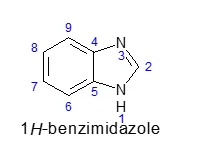
Fig:1
Materials and Methods
Chemical used for synthetic work were 3,4-Diaminobenzoic acid, 4-Chlorobenzaldehyde, Methanol, Glacial acetic acid, Potassium carbonate, DMF, 4-Methoxy benzyl chloride, 4-(Trifluoromethyl) benzyl chloride, 4-Flurobenzyl chloride, 4-Cyanobenzyl chloride, 4-Bromobenzyl chloride.
All of the reactions were carried out in conical flasks, round-bottomed flasks, and dried borosil glass beakers.
For TLC, precoated silica gel plates were utilized to track the reaction's development. The capillary method was used to estimate the uncorrected melting points of compounds. Spots in TLC were detected using a JASCO UV chamber. The BRUKER FTIR spectrometer was used to record the IR spectra. Using DMSO as the solvent, 1H NMR spectra were captured using the BRUKER-400MHZ spectrometer. Values in ppm relative to TMS were used to express the chemical shift data. A Shimadzu 70eV GC-MS was used to record the mass spectra.
Experimental
In Silico Screening
Lipinski’s rule of 5 filtration
The files were inserted using the *.pdb, *.mol, *.mol2, *.xyz, *.sdf, or smile formats. We took care to avoid using whitespace in the input file name. The files were uploaded in the aforementioned formats when the window opened. As needed, the pH was changed from 0 to 14. Results were obtained after submission [Lipinski 2004].
OSIRIS Property Explorer (version 2)
A Java-based computational program called OSIRIS Property Explorer version 2 was used to forecast the toxicity profiles of the proposed compounds. The molecular structures were imported in SMILES format or simply drawn in the software interface. Using a color-coded display, the program automatically produced toxicity predictions. Green suggested a low probability of toxicity, while red indicated a possible hazardous consequence.
Prediction of Activity Spectra for Substances (PASS):
Online PASS software was used to predict the biological activities of molecules that had been screened using the Lipinski rule. The values of Pa and Pi range from 0.000 to 1.000. to provide the cutoff point for choosing the kind of action that will be anticipated.
Molsoft Property Explorer
The Molsoft Property Explorer was used to assess the synthetic compounds' physicochemical characteristics. Molecular structures were imported in MOL, InChI, or SMILES formats, or they were drawn directly within the program interface. Key molecular descriptors, such as MlogP (octanol/water partition coefficient) and MlogS (aqueous solubility), were automatically computed by the software and utilized to evaluate the physicochemical properties and drug-likeness of the created compounds.
Docking (Version 4.0)
AutoDock is a simulation program for modeling molecules. It works particularly well for protein-ligand docking. Auto Dock 4.0 and Vina are its two versions. An improved version is called Vina [Rarey 1996].
Scheme:
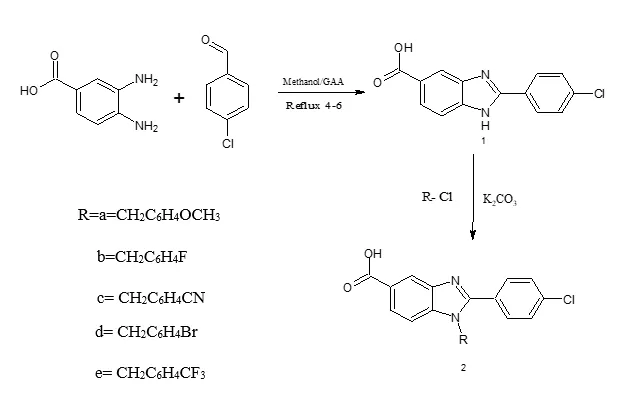
Chemistry
Synthesis of 2-(4-chlorophenyl)-1H-benzimidazole-5-carboxylic acid
In a round-bottom flask with a magnetic stirrer, 1.08 grams of 3,4-diaminobenzoic acid were dissolved in 20–25 mL of methanol. 1.54 grams of 4-chlorobenzaldehyde were gradually added to this mixture while being constantly stirred. As a catalyst, a few drops of glacial acetic acid were applied. Thin-layer chromatography (TLC) was used to track the reaction's progress while the reaction mixture was refluxed for 4-6 hours. The liquid was placed into ice-cold water when the reaction was finished and allowed to cool to room temperature. Immediately, a yellow precipitate separated. After filtering the precipitated solid under vacuum, it was repeatedly cleaned with cold distilled water until it became neutral. Pure 2-(4-chlorophenyl)-1H-benzimidazole-5-carboxylic acid was obtained by drying and recrystallizing the crude product from methanol [Bahaa G. M. Youssif 2024].
Synthesis of N(2-(4-chlorophenyl)-1H-benzimidazole-5-carboxylic acid) derivatives (a-e)
The synthesized benzimidazole intermediate (2.73gm) was dissolved in dry DMF (15 mL), followed by the addition of potassium carbonate (2.07gm). The appropriate substituted alkyl or benzyl chloride (0.01 mol) was added dropwise, and the reaction mixture was stirred under reflux for 6–8 h. Completion of the reaction was confirmed by TLC.After completion, the reaction mixture was cooled and poured into ice-cold water. The resulting precipitate was filtered, washed repeatedly with distilled water to remove residual impurities, and recrystallized from ethanol. The purified derivatives (a-e) were obtained as crystalline solids in good yields and subjected to spectral characterization
Evaluation of Antibacterial Activity:
Using the agar well diffusion method on Mueller–Hinton agar (HiMedia) plates, the antibacterial activity of the produced compounds was assessed against the Gram-positive bacterial strains Bacillus subtilis and Staphylococcus aureus. The reference standard was ciprofloxacin, and the test compounds were screened at a concentration of 50 µg/mL. The diameter of the zones of inhibition (mm) was used to measure the antibacterial activity after the plates were incubated at 37 °C for 24 hours following inoculation.
Results and Discussion
In Silico Screening
Lipinski’s rule of 5 filtration
All the synthesized benzimidazole derivatives obey the Lipinski rule of 5 (Table 1)
Table No-1: Results of Lipinski’s Filtration.
|
Compound |
Molecular weight (Daltons) |
Hydrogen bond donors |
Hydrogen bond acceptors |
Log P |
Molar refractivity |
|
2a |
392.83 |
1 |
4 |
4.30 |
109.38 |
|
2b |
380.80 |
1 |
4 |
4.75 |
102.85 |
|
2c |
387.82 |
1 |
4 |
4.12 |
107.60 |
|
2d |
441.71 |
1 |
3 |
5.06 |
110.59 |
|
2e |
430.81 |
1 |
6 |
5.54 |
107.89 |
|
Standard (Ciprofloxacin) |
331.34 |
2 |
7 |
1.32 |
87.03 |
Prediction of Activity Spectra for substances (PASS)
The Pa values for all the synthesized compounds were found greater than 0.3. Compound d exhibits the highest Pa value amongst the series. However, it was found to be less than the standard Ciprofloxacin (Table 2)
Table No-2: Results of PASS prediction.
|
Compound |
Antibacterial activity |
|
|
|
Pa |
Pi |
|
2a |
0.748 |
0.012 |
|
2b |
0.803 |
0.006 |
|
2c |
0.769 |
0.009 |
|
2d |
0.826 |
0.004 |
|
2e |
0.791 |
0.007 |
|
Standard (Ciprofloxacin) |
0.971 |
0.001 |
Pa = Probability to be active
Pi = Probability to be inactive
OSIRIS Molecular Property Explorer
OSIRIS Molecular Property explorer revealed that the standard drug and synthesized molecules were safe (Table 3).
Table No-3: OSIRIS Molecular Property explorer
|
Compound |
Toxicity |
ClogP |
Solubility |
Molweight (grams) |
TPSA |
Drug Likeness |
Drug Score |
|
2a |
NO |
4.24 |
-5.19 |
392.83 |
64.35 |
3.18 |
0.53 |
|
2b |
NO |
4.41 |
-5-49 |
380.80 |
38.80 |
2.19 |
0.49 |
|
2c |
NO |
4.15 |
-5.90 |
387.82 |
78.91 |
-5.68 |
0.25 |
|
2d |
NO |
5.04 |
-6.01 |
441.71 |
55.12 |
-0.91 |
0.34 |
|
2e |
NO |
5.16 |
-5.96 |
430.81 |
55.12 |
-4.57 |
0.20 |
|
Standard (Ciprofloxacin) |
NO |
1.53 |
-3.32 |
331.34 |
72.88 |
2.07 |
0.82 |
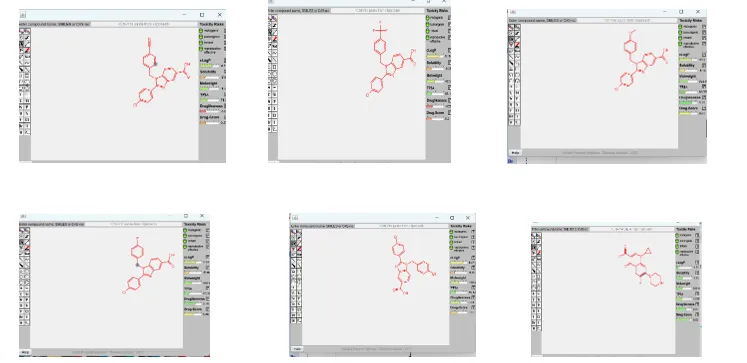
Fig No-2: Results of OSIRIS Molecular Property explorer 2a, 2b, 2c. 2d, 2e and standard
Molsoft Property Explorer
All the synthesized molecules have shown significant Molsoft values (Table 4).
Table No-4:Results of Molsoft molecular property explorer:
|
Compound |
Mol. formula |
Mol.wt (grams) |
HBA |
HBD |
MlogP |
MlogS |
Mol PSA |
Mol volume (m3/mol) |
|
2a |
C₂₂H₁₇ClN₂O₃ |
392.09 |
4 |
1 |
5.92 |
-5.62 |
45.85 |
359.65 |
|
2b |
C₂₁H₁₄ClFN₂O₂ |
380.80 |
3 |
1 |
6.03 |
-5.72 |
38.30 |
333.72 |
|
2c |
C₂₂H₁₄ClN₃O₂ |
387.82 |
4 |
1 |
5.56 |
-5.37 |
55.36 |
361.79 |
|
2d |
C₂₁H₁₄BrClN₂O₂ |
441.71 |
3 |
1 |
6.80 |
-6.02 |
38.30 |
349.66 |
|
2e |
C₂₂H₁₄ClF₃N₂O₂ |
430.81 |
3 |
1 |
6.90 |
-6.10 |
38.30 |
364.73 |
Docking Analysis
Docking is utilized to determine the precise orientation and binding conformation of the ligand molecule into the protein's active site. Using Auto-Dock Tool 4.0, an automated docking tool, the five synthesized benzimidazole compounds and the reference (Ciprofloxacin) were docked against dihydrofolate reductase (DHFR).
To find the best conformers, the Lamarckian genetic algorithm has been employed. The maximum number of energy evaluations was set at 2,500,000, and the initial population size of 150 people and 10 generations was chosen at random for each genetic algorithm run. In order to accommodate every active site residue found in stiff macromolecules, the grid box size was chosen. The grid box was centered at 8.671 Å x -8.036 Å x 0.67 Å, and its dimensions were set to 40, 40, 40 (X, Y, Z coordinates) in order to accommodate all of the residues from the active site.
All of the ligands selected for analysis had the lowest binding affinity with the target protein, dihydrofolate reductase, according to docking studies. The number of hydrogen bonds established with active site residues and the minimum binding energy (Kcal/mol) were used to analyze the protein-ligand interactions. Using the Chimera 1.13.1 viewer, the docking contacts between the six ligands and the protein dihydrofolate reductase were seen and displayed in Fig.3. The final docking confirmation achieved for the different ligands based on the binding energy, number of hydrogen bonds produced, bond distance and the interacting residues were shown in Table 5. 2d and Ciprofloxacin show a least binding energy with the docking score of -9.40Kcal/mol (forms two hydrogen bonds with LEU and SER) and -6.76Kcal/mol (forms two hydrogen bonds with THR and SER), respectively, when docked against dihydrofolate reductase.
Table No-5: Docking results of all synthesized compounds & standard.
|
Compound |
Key Residues |
Distance (Ao) |
No.of hydrogens |
Docking Score (Kcal/Mol) |
|
2a |
ALA |
2.997 |
1 |
-7.77 |
|
2b |
- |
- |
0 |
-7.70 |
|
2c |
- |
- |
0 |
-8.58 |
|
2d |
LEU SER |
3.081 3.017 |
2 |
-9.40 |
|
2e |
LEU SER |
2.819 3.168 |
2 |
-9.03 |
|
Standard (Ciprofloxacin) |
SER THR |
2.656 2.152 |
2 |
-6.76 |
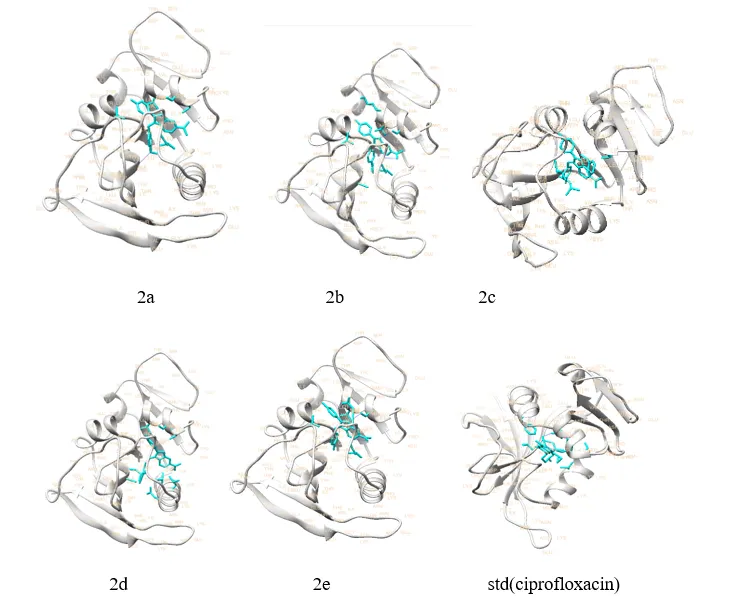
Fig.3. Docking results of 2a, 2b, 2c. 2d, 2e and standard
Physicochemical parameters
Table No- 6: Physicochemical parameters
|
Comp code |
Chemical structure |
Molecular formula |
Molecular weight (grams) |
Melting point |
Rf value |
% Yield |
|
2a |
|
C₂₂H₁₇ClN₂O₃
|
392.83 |
220-2250C |
0.52 |
58% |
|
2b |
|
C₂₁H₁₄ClFN₂O₂ |
380.80 |
220-2240C |
0.58 |
59% |
|
2c |
|
C₂₂H₁₄ClN₃O₂ |
387.82 |
244-2480C |
0.43 |
53% |
|
2d |
|
C₂₁H₁₄BrClN₂O₂ |
441.71 |
235-2400C |
0.60 |
62% |
|
2e |
|
C₂₂H₁₄ClF₃N₂O₂ |
430.81 |
232-2380C |
0.68 |
60% |
All the newer benzimidazole derivatives were produced by different chemical reagents. Compound 2d and 2e were obtained in good yields. All the produced compounds were recrystallized from methanol or ethanol. Compound 2d was purified by column chromatography and studied by FTIR, 1H NMR & mass spectroscopic methods.
N-[2-(4-chlorophenyl)-1-(4-methoxybenzyl)-1H-benzimidazole-5-carboxylicacid(2a):
FTIR (KBr, cm⁻¹): 3410 (O–H, str); 3050 (Ar–C–H, str); 1705 (C=O, str); 1610 (C=N, str); 1580 (C=C, str); 1505 (C–N, str); 1275 (C–O, str); 1170 (C–O, str); 1030 (O–CH₃, str); 830 (Ar–C–H, bend); 750 (C–Cl, str). ¹H NMR (δ ppm, CDCl₃): 3.88 (s, 3H, OCH₃); 5.40 (s, 2H, CH₂); 7.10–8.50 (m, 11H, Ar–H); 12.88 (br s, 1H, COOH). ESI-MS: m/z 393 (M+H)⁺. Analysis: Calculated for C₂₂H₁₇ClN₂O₃: C, 67.27; H, 4.36; N, 7.13; O, 12.22; Cl, 9.02. Found: C, 67.30; H, 4.34; N, 7.16; O, 12.18; Cl, 9.05.
N-[2-(4-chlorophenyl)-1-(4-fluorobenzyl)-1H-benzimidazole-5-carboxylic acid(2b):
FTIR (KBr, cm⁻¹): 3410 (O–H, str); 3050 (Ar–C–H, str); 1705 (C=O, str); 1610 (C=N, str); 1580 (C=C, str); 1505 (C–N, str); 1275 (C–O, str); 1170 (C–O, str); 1030 (C–F, str); 830 (Ar–C–H, bend); 750 (C–Cl, str). ¹H NMR (δ ppm, CDCl₃): 5.40 (s, 2H, CH₂); 7.10–8.50 (m, 11H, Ar–H); 12.88 (br s, 1H, COOH). ESI-MS: m/z 381 (M+H)⁺. Analysis: Calculated for C₂₁H₁₄ClFN₂O₂: C, 66.24; H, 3.71; N, 7.36; O, 8.41; Cl, 9.31; F, 4.99. Found: C, 66.20; H, 3.74; N, 7.39; O, 8.39; Cl, 9.34; F, 5.01.
N-[2-(4-Chlorophenyl)-1-(4-cyanobenzyl)-1H-benzimidazole-5-carboxylic acid (2c): FTIR (KBr, cm⁻¹): 3410 (O–H, str); 3050 (Ar–C–H, str); 2230 (C≡N, str); 1705 (C=O, str); 1610 (C=N, str); 1580 (C=C, str); 1505 (C–N, str); 1275 (C–O, str); 1170 (C–O, str); 830 (Ar–C–H, bend); 750 (C–Cl, str). ¹H NMR (δ ppm, CDCl₃): 5.40 (s, 2H, CH₂); 7.10–8.50 (m, 11H, Ar–H); 12.88 (br s, 1H, COOH). ESI-MS: m/z 387 (M+H)⁺. Analysis: Calculated for C₂₂H₁₄ClN₃O₂: C, 65.43; H, 3.49; N, 10.41; O, 7.92; Cl, 8.78. Found: C, 65.40; H, 3.51; N, 10.38; O, 7.95; Cl, 8.76.
N-[1-(4-Bromobenzyl)-2-(4-chlorophenyl)-1H-benzimidazole-5-carboxylic acid (2d): FTIR (KBr, cm⁻¹): 3410 (O–H, str); 3050 (Ar–C–H, str); 1705 (C=O, str); 1610 (C=N, str); 1580 (C=C, str); 1505 (C–N, str); 1275 (C–O, str); 1170 (C–O, str); 1090 (C–Br, str); 830 (Ar–C–H, bend); 750 (C–Cl, str). ¹H NMR (δ ppm, CDCl₃): 5.40 (s, 2H, CH₂); 7.10–8.50 (m, 11H, Ar–H); 12.88 (br s, 1H, COOH). ESI-MS: m/z 441 (M+H)⁺. Analysis: Calculated for C₂₁H₁₄BrClN₂O₂: C, 57.10; H, 3.20; N, 6.34; O, 7.25; Br, 18.10; Cl, 8.03. Found: C, 57.08; H, 3.23; N, 6.31; O, 7.28; Br, 18.06; Cl, 8.06.
N-[2-(4-Chlorophenyl)-1-[4-(trifluoromethyl)benzyl]-1H-benzimidazole-5-carboxylic acid (2e): FTIR (KBr, cm⁻¹): 3410 (O–H, str); 3050 (Ar–C–H, str); 1705 (C=O, str); 1610 (C=N, str); 1580 (C=C, str); 1505 (C–N, str); 1325 and 1165 (C–F, str, CF₃); 1275 (C–O, str); 830 (Ar–C–H, bend); 750 (C–Cl, str). ¹H NMR (δ ppm, CDCl₃): 5.40 (s, 2H, CH₂); 7.10–8.50 (m, 11H, Ar–H); 12.88 (br s, 1H, COOH). ESI-MS: m/z 431 (M+H)⁺. Analysis: Calculated for C₂₂H₁₄ClF₃N₂O₂: C, 61.34; H, 3.28; N, 6.50; O, 7.43; Cl, 8.23; F, 13.23. Found: C, 61.30; H, 3.31; N, 6.47; O, 7.45; Cl, 8.26; F, 13.20.
Evaluation of Antibacterial activity
All the synthesized benzimidazole derivatives demonstrated considerable antibacterial activity against Staphylococcus aureus and Bacillus subtilis (Table 7 ). Among the tested compounds, 2d exhibited the greatest antibacterial potency, as indicated by the largest zones of inhibition and the lowest MIC values. These findings suggest that compound 2d possesses superior antibacterial efficacy compared to the standard drug, Ciprofloxacin
Table 7: Antibacterial activity
Table No-7: Zone Of Inhibition (mm) at 50 µg/mL
|
Compound |
25𝝁𝒈ml-1
|
S. aureus
50 𝝁𝒈ml-1 |
100 𝝁𝒈ml-1 |
25 𝝁𝒈ml-1 |
B. subtilis
50 𝝁𝒈ml-1 |
100 𝝁𝒈ml-1 |
|
2a |
8.22 ±0.38 |
12.3 ± 0.15 |
15.87 ±0.46 |
8.87±0.12 |
18.9 ± 0.16 |
15.57±0.47 |
|
2b |
7.54 ±0.23 |
17.1 ± 0.18 |
14.82 ±0.37 |
7.43±0.16 |
17.6 ± 0.16 |
14.72±0.27 |
|
2c |
9.54 ±0.19 |
20.3 ± 0.17 |
15.02 ±0.4 |
8.46±0.19 |
21.4 ± 0.19 |
15.53±0.34 |
|
2d |
10.24 ±0.28 |
22.8 ± 0.14 |
15.98 ±0.43 |
10.28±0.23 |
23.6 ± 0.17 |
17.22±0.14 |
|
2e |
8.11 ±0.14 |
14.8 ± 0.16 |
14.57 ±0.41 |
8.42±0.21 |
15.6 ± 0.20 |
15.28±0.17 |
|
Standard (Ciprofloxacin |
- |
18.9 ± 0.16 |
- |
- |
19.8 ± 0.18 |
- |
|
DMSO |
- |
- |
- |
- |
- |
- |
Table No-8: Minimum Inhibitory Concentration (MIC, µg/mL)
|
Compound (Derivatives) |
S. aureus (µg/mL) |
B. subtilis (µg/mL) |
|
2a |
64 |
32 |
|
2b |
16 |
16 |
|
2c |
8 |
4 |
|
2d |
4 |
2 |
|
2e |
32 |
64 |
|
Standard (Ciprofloxacin) |
4 |
4 |
|
DMSO |
- |
- |
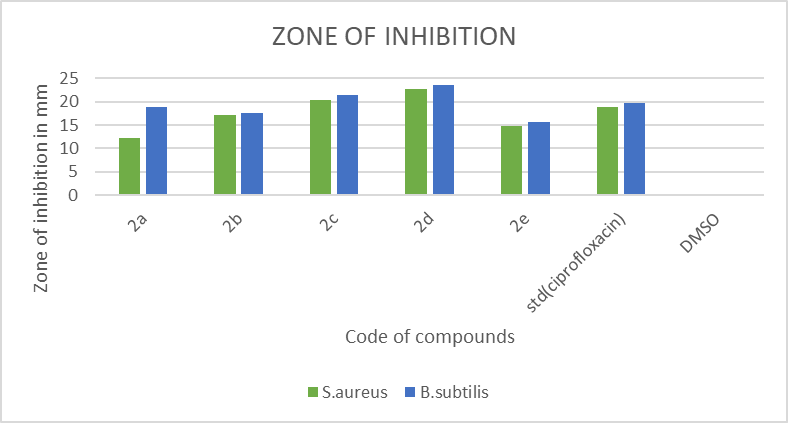
Fig.4. ZOI results of 2a, 2b, 2c. 2d, 2e and standard
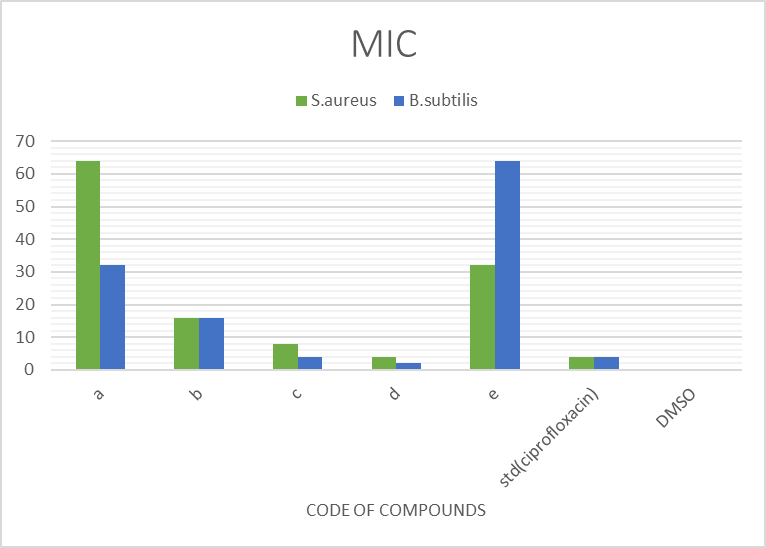
Fig.5. MIC results of 2a, 2b, 2c. 2d, 2e and standard
CONCLUSION:
A series of novel benzimidazole derivatives (2a–2e) were successfully designed and synthesized following the proposed synthetic scheme. The synthesized compounds were initially evaluated for their physicochemical and drug-likeness properties using various computational tools. Compounds that satisfied the drug-likeness criteria and exhibited favorable toxicity profiles were further subjected to molecular docking studies and biological evaluation. Docking analysis revealed that the synthesized benzimidazole derivatives displayed stronger binding affinities toward the bacterial target enzyme dihydrofolate reductase (DHFR, PDB ID: 3FYV) than the reference drug, ciprofloxacin. Furthermore, in vitro antibacterial screening against Staphylococcus aureus and Bacillus subtilis demonstrated that compounds 2c and 2d exhibited the highest antibacterial activity at concentrations of 25, 50, and 100 µg/mL, at 50 µg/mL showing greater potency than ciprofloxacin. These findings suggest that the newly synthesized benzimidazole derivatives represent promising lead molecules for the development of novel antibacterial agents targeting drug-resistant Gram-positive bacterial pathogens.
Acknowledgment:
The authors are greatful to the Guide and Staff of the Centre for Pharmaceutical Sciences, UCESTH, JNTUH, Kukatpally, Hyderabad, India for providing the necessary research facilities.
REFERENCES



Ramadevi Ambati, Dr. S. Shobha Rani*, Design, Synthesis And Insilco Studies Of Novel Benzimidazole Derivatives For Targeting Gram Positive Microorganism., Int. J. of Pharm. Sci., 2026, Vol 4, Issue 8, 2260-2273. https://doi.org/10.5281/zenodo.21924725
 10.5281/zenodo.21924725