

We use cookies to ensure our website works properly and to personalise your experience. Cookies policy
Vidya Bharti College Of Pharmacy Amravati.
Acne, a common skin issue among teens, is a bacterial condition that affects many teenagers. Natural remedies are part of traditional herbal systems. They are used for various skin problems, such as eczema, contact dermatitis, psoriasis, leprosy, and other skin conditions. Acne vulgaris is a common skin problem that nearly everyone experiences at some point. It often shows up with features like pimples, blackheads, scars, and nodules. This condition has an impact on social and mental health. While traditional acne treatments are available, they have side effects, are costly, and can lead to antibiotic resistance. Acne vulgaris is a common skin condition that affects both teens and adults. Complications and resistance linked to synthetic treatments have raised interest in herbal solutions. This study aims to create and test a herbal acne treatment gel containing aloe vera, papaya extract, neem extract, and turmeric. These natural ingredients have properties that fight bacteria, reduce inflammation, and provide antioxidants. The gel was made using a substance like Carbopol and tested for physical and chemical properties such as pH, texture, and antibacterial effects. The results showed good consistency, skin-friendly properties, and strong antibacterial effects against bacteria like Staphylococcus aureus
The skin is the body's largest organ, making up about 16% of total body weight and covering an area of around 1.8 square meters. It has three main layers: the epidermis, the dermis, and the subcutis. The epidermis is the outermost layer and acts as a protective barrier against physical and chemical threats from the outside world. Underneath the epidermis is the dermis, which gives the skin its structure and strength. Below the dermis is the subcutis, also known as the hypodermis, which is mainly made up of fat and helps to insulate the body. The skin's natural pH level typically ranges between 4 and 5.6. Acne vulgaris is a long-lasting inflammatory condition that affects the pilosebaceous units, which are the hair follicles and sebaceous glands.
It is most common during adolescence, a time when there are major changes in both physical and emotional development. Although acne can occur at any age, it is most frequently seen between the ages of 12 and 24, affecting an estimated 85% of people. A better understanding of how acne develops has led to more effective and logical treatment options. Acne lesions are grouped into three main types: scars, inflamed lesions, and non-inflamed lesions. Common types of acne include pustules, inflamed papules, and comedones. In more severe cases, larger and deeper lesions such as cysts and nodules can develop, which may cause emotional stress and lead to scarring.[1,2]
Acne happens when the sebaceous glands, which are connected to hair follicles, become more active during puberty because there are higher levels of androgens.
This leads to more sebum being produced. Sebum is a natural oil that helps keep the skin moisturized and protected. When there's too much sebum, it changes how skin cells mature, making the hair follicles more likely to get blocked. As the blocked follicle grows, it creates a small, raised bump. If the wall of the follicle breaks, bacteria and other irritants that are usually on the surface of the skin can get deeper into the skin, causing inflammation.[3]
Such actions as money transfers, payments, and account setup can all be conducted through a mobile application.[4]
Mild acne is usually treated with benzoyl peroxide, azelaic acid, and topical retinoids like tretinoin and adapalene.
For moderate acne, other treatment options include topical antibiotics such as clindamycin and erythromycin, oral antibiotics like erythromycin and tetracycline, isotretinoin, and hormonal treatments such as estrogen and birth control pills that contain estrogen.
Severe acne is often treated with isotretinoin.
However, these medicines can sometimes cause side effects like slight irritation, dryness, contact dermatitis, nausea, diarrhea, sore eyes, itchy skin, and bacterial resistance, especially when antibiotics are used.[5]
More and more people are turning to natural medicines from plants instead of man-made drugs, because they offer several benefits like fewer unwanted effects, better acceptance by patients, lower costs, and a long history of use.[6]
Objectives :
Acne is marked by various types of lesions, such as inflammatory papules, pustules, nodules, and cysts, which can lead to scarring and changes in skin color. It can also develop due to changes in hormone levels in the body. Acne vulgaris is a common inflammatory skin condition. About 90% of teenagers experience acne, and half of them continue to have symptoms into adulthood. By the time people reach 40, 1% of men and 5% of women still have acne. Recent studies show that acne is becoming more common in children, which may be connected to the start of puberty.
The study aimed to create a polyherbal gel that includes aloe vera and turmeric, along with other ingredients. Aloe vera is a plant from the Liliaceae family, often called "the healing plant." It has been used in traditional medicine for a long time and has properties that help the immune system and promote growth. Aloe vera is effective in treating many skin problems and has very few side effects or toxic effects. The gel made from this plant can be applied directly to the skin to support traditional healing methods.
Turmeric, scientifically known as Curcuma longa, is a spice from the ginger family.[8]
It has attracted attention from both medical and food industries. Turmeric is a type of rhizomatous herbaceous plant that has been used for medicinal purposes for thousands of years. However, the exact ways it works and the active components within it are still not fully understood.[9] Curcumin,[10] the main polyphenol found in the rhizome of Curcuma longa and other related species, has been traditionally used as a medicinal herb in Asian countries.
Properties :
1] Antioxidants
2] Anti-inflammatory [11]
3] Antimutagenic
4] Antimicrobial [12]
5] Wound Healing
6] Anticancer [13]
Aloe vera and turmeric extract herbal gel, containing different levels of gelling agents, is studied to evaluate how applying it topically influences the healing of acne. The research also looks into the physical and chemical properties of the gel that influence its effectiveness. Acne vulgaris, often referred to as acne, is a skin condition that affects a large number of people and is something that almost everyone experiences at some point in their lives.[14] It usually comes up in people during their teenage years and early adulthood, and it's caused by male hormones made by the adrenal glands in both men and women.
It most commonly shows up on the face, chest, and back.
Symptoms :
1] Pain
2] Pustules
3] Papules
4] Tenderness
5] Erythema
6] Loss Of Function [15]
One organization that can implement Enterprise Architecture is a university.[16,17,18]
People with lighter skin tones are more likely to develop post-inflammatory hyperpigmentation, especially if they have a family history of it.
Scars tend to fade over time, although this idea is often debated [19]. Acne accounted for 5.3 percent of all skin conditions in a recent study and is commonly considered the second most common skin issue.[20]
During puberty, more boys than girls tend to get acne.But when people reach adulthood, more women than men experience acne.
Acne can be linked to several factors:
1] what someone eats [21,22]
2] their body weight
3] family history or genetics
4] changes in hormones
5] stress or anxiety levels[23,24,25]
Medicinal plants are known for being well-tolerated by patients and widely accepted [26]. They are also valued for providing nutrients and minerals that help improve skin health. Acne accounts for 5.3% of all reported skin issues, with acne vulgaris being the second most common skin condition among different genders [27,28]. People who have acne often look for quick remedies to boost their confidence. This study looks at creating and testing an active anticancer gel that is effective against P. aeruginosa and Staph. epidermidis, and it shows a strong combined effect against other types of bacteria [29-35]. Although synthetic treatments like antibiotics and retinoids are commonly used, they can cause problems such as irritation, dryness, and even antibiotic resistance. Because of these issues, there is growing interest in herbal treatments because they are safer, more affordable, and have fewer side effects.
The herbs used in this formulation include:
1] Aloe vera, which helps soothe, reduce inflammation, and support skin healing
2] Neem (Azadirachta indica), which has strong antibacterial properties against acne-causing bacteria
3] Turmeric (Curcuma longa), which has anti-inflammatory and antioxidant qualities
4] Papaya (Carica papaya), which contains enzymes like papain that help remove dead skin cells and promote skin renewal.
These herbs work together in a way that increases their antimicrobial and antioxidant effects, making them more effective in treating acne when used together.
Acne
Acne comes from the Greek word "Akme," meaning peak or highest point.
It is a condition that can be passed down through families or develop later in life, affecting the hair follicles and oil glands. It is the most common skin problem among teenagers, usually between the ages of 18 and 25. Acne vulgaris is a skin condition that affects the oil glands and hair follicles. It involves oily skin, blackheads and whiteheads, red and swollen bumps, and the presence of bacteria like Propionibacterium acnes, Staphylococcus epidermidis, and Staphylococcus aureus inside the hair follicles and oil deposits. This condition is very common, affecting people of all races. About 95% of boys and 83% of girls experience it [36]. Acne vulgaris is a very common skin condition that affects the hair follicles and oil glands, and almost everyone experiences it at least once in their lifetime. [37]
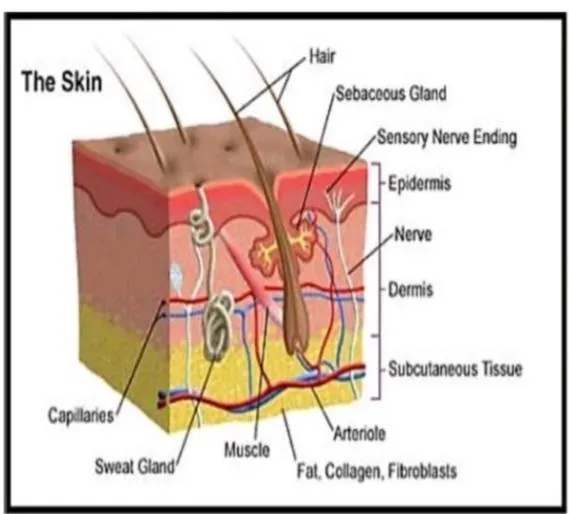
Fig.no 1: Anatomy Of Skin
Types Of Acne
Acne is classified into distinct types, which include
1] Acne Conglobata
2] Acne Rosacea
3] Acne Fulminans
4] Acne Cosmetica
5] Acne Excoriate (picker's acne) [38]
Acne vulgaris represents the most common form of acne, accounting for 99% of all occurrence It is characterized by two main types of skin lesions:non-inflammatory lesions, which consist of
1] Whiteheads
These develop when a pore is fully blocked, trapping oil, germs, and dead skin cells, resulting in a white bump on the skin's exterior. They are frequently treated with over-the-counter acne remedies.
2] Blackheads
These arise when a pore is only partially blocked, allowing the trapped germs, oil, and dead skin to gradually reach the surface of the skin.[39]
3] Papules
When healthy skin reacts to bacteria, excessive oil production, and increased androgen activity, it becomes inflamed, displaying signs such as swelling, warmth, redness, and discomfort.
4] Pustules
Pustules are small, inflamed bumps that emerge when pores become blocked with surplus oil and dead skin cells. They typically appear as white pustules surrounded by red, irritated skin.
5]Nodules
Acne nodules are a severe type of inflammatory acne that occur when pores become obstructed with germs, excess oil, and dead skin cells
6] Cysts
Cystic acne is a serious form of inflammatory acne that develops beneath the skin due to blocked pores filled with a buildup of bacteria, dead skin cells, and oil.
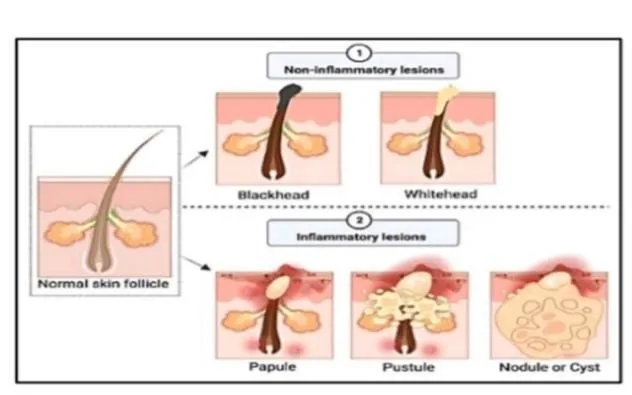
Fig.no 2 : Types Of Acne
Acne Causes
The following are several factors that can affect the development of acne.
1] Hormonal changes, such as those experienced during puberty or pregnancy, can cause acne.
2] Certain medications, such as birth control pills or corticosteroids, may contribute to acne.
3] A diet high in processed sugars and carbohydrates, like burgers and chips, may increase the risk of acne.
4] Adolescents are more prone to developing acne during puberty due to significant hormonal changes.[41]
Gels
Gels are semi-solid frameworks in which the movement of liquid is restricted by a network formed through the interaction of particles in three dimensions or by large compounds dissolving in the liquid.[42] The specific characteristics of the final output, along with the kind of oil that assists in binding the network, determine the arrangement of the gel.[43]
Topical Drug Delivery System
The technique of administering prescription drugs directly onto the dermis for the remedy of skin disorders is referred to as a topical medication delivery system. Topical gels are semi-solid preparations that encompass a liquid enclosed within a three-dimensional polymer framework, which can be sourced from natural or partially synthetic origins, interconnected either physically or chemically. Clinical studies demonstrate that topical gels offer a secure and efficient method of controlling skin ailments, particularly for localized therapy, thereby reducing the side effects linked with traditional medications.[44]
Advantages
1] Simple and straightforward to employ
2] Facilitates focused delivery of medication to particular areas.
3] Avoids complications related to medication interactions or degradation within the digestive tract.[45]
Disadvantages
1] Certain medications do not penetrate the dermis effectively.
2] Larger particle drugs may struggle to be absorbed through the skin's layers.
3] There is a chance of developing skin allergies [46]
Anti-acne Gel
In recent years, formulations of anti-acne gels have attracted considerable attention due to their potential to treat acne efficiently, possibly without the adverse side effects typically associated with synthetic drugs. Researchers have been examining various plant extracts and natural components for their acne-fighting characteristics, and preliminary studies on their formulations and efficacy have provided promising results. Generally, topical treatments are considered safer, with minor skin reactions being the most frequent side effects.[47]
Need of Study
The examination into the formulation of anti-acne gels is vital for several significant reasons:
1] Addressing a prevalent skin issue
Acne vulgaris is a common dermatological problem that impacts a large portion of the population, especially teenagers and young adults. Effective and accessible solutions like anti-acne gels are crucial for managing this issue.
2] Customizing treatments to skin types
Various skin types may respond differently to various formulations. Research can concentrate on creating specific gel formulations tailored to oily, dry, or sensitive skin, thereby maximizing efficacy and reducing discomfort for each category.
3] Cost-efficiency
Optimizing formulations can result in more cost-effective products, making effective treatments more available to a wider audience. 4] Responding to market needs
The demand for effective and well-regarded topical acne treatments is steadily rising. Research in this area promotes innovation and the development of new and advanced products to meet consumer requirements.
Mechanism Of Action
1] Turmeric : (Curcuma longa)
Mechanism : Curcumin obstructs inflammatory mediators, leading to a decrease in redness and swelling. Antibacterial action: It obstructs acne-causing bacteria (Cutibacterium acnes). Antioxidant effect : This encourages skin healing.
2] Neem : (Azadirachta indica)
Mechanism : It disrupts the bacterial cell wall, effectively eliminating acne-causing bacteria. It decreases sebum production, which assists in preventing pore blockage. Additionally, it has anti-inflammatory characteristics that diminish pimples and irritation.
3] Papaya : (Carica papaya)
Mechanism : The papain enzyme exfoliates dead skin cells, thereby unclogging pores. It encourages cell turnover, which helps avoid acne formation. It also shows mild antibacterial action.
4] Aloe vera : (Aloe vera)
Mechanism : Acemannan fosters wound healing, aiding in the repair of acne lesions. It has an anti-inflammatory influence that soothes irritated skin. Its moisturizing action prevents dryness without obstructing pores. It also possesses mild antibacterial activity.
Effect:
Antibacterial : It eliminates acne bacteria. Anti-inflammatory : It diminishes swelling. Exfoliation : It clears pores. Healing: It restores skin.
Herbal Plants And Their Properties
1] Aloe Vera
Functions as a hydrating substance that alleviates inflammation, calms irritation, and assists in wound healing. It serves as a foundational component that moisturizes dry skin and diminishes acne-related swelling. Anti-inflammatory : Mitigates redness and swelling
Antimicrobial : Suppresses acne-inducing microorganisms (Propionibacterium acnes)
Wound healing : Encourages skin repair and regeneration
Moisturizing (humectant) : Hydrates skin without obstructing pores
Cooling & soothing : Eases irritation
2] Neem
Exhibits strong antibacterial and antifungal traits to combat Staphylococcus bacteria. It reduces red spots, acne scars, pigmentation, and manages itching.
Strong antibacterial : Eliminates acne-causing microbes
Antifungal : Averts skin infections
Anti-inflammatory : Lessens swelling and pimples
Antioxidant : Shields skin from harm
Sebum control : Lowers excess oil generation
3] Turmeric
Contains curcumin, which is notably antibacterial and anti-inflammatory, aiding in the treatment of existing pimples and the prevention of future breakouts. It is also recognized for its capacity to reduce acne scars and enhance skin radiance. Potent anti-inflammatory agent (Inhibit NF-kB Pathway)
Antibacterial action against acne-causing microorganisms Strong antioxidant activity, scavenging free radicals. Facilitates wound healing and scar reduction
4] Papaya
Houses enzyme action, primarily papain, which acts as a natural exfoliant to eliminate dead skin cells and clear obstructed pores. It functions as a natural bleaching agent to lighten dark spots and acne marks, thereby enhancing skin tone. Proteolytic (exfoliating) activity due to papain enzyme.
Antioxidant and anti-inflammatory properties : Aids in the removal of dead skin cells and unclogging pores, Enhances skin renewal and texture improvement
Application
1] Pharmaceutical Applications
Therapeutic Use in Acne Management: The specially crafted polyherbal gel is primarily employed for the remedy and management of acne vulgaris, addressing key pathogenic elements:
•Microbial inhibition : Neem and turmeric show efficacy against Cutibacterium acnes and Staphylococcus aureus.
•Anti-inflammatory action : Aloe vera and turmeric reduce swelling, erythema, and irritation.
•Reduction of sebum production : Neem helps in regulating excessive oil secretion.
•Prevention of comedone formation : Papaya aids in enzymatic exfoliation, thereby minimizing follicular obstruction.
•Topical Drug Delivery System: Serves as a topical delivery medium for herbal activities. Enhances percutaneous absorption thanks to the gel base (Carbopol/Aloe vera base). Provides localized action with minimal systemic side effects.
•Drug Delivery : Functions as a topical delivery system for bioactive plant compounds (phenols, alkaloids) directly applied to the skin.
•Antimicrobial & Antiseptic Use : Effective in preventing secondary skin infections. Can be utilized for minor wounds, cuts, and skin irritations due to its healing characteristics. •Wound Healing & Skin Repair : Aloe vera and turmeric stimulate collagen production and tissue regeneration, proving beneficial in the healing of post-acne lesions and scar reduction.
2] Cosmeceutical Applications
•Skin Care & Beauty Enhancement : This formulation integrates cosmetics and pharmaceuticals (cosmeceuticals) by enhancing both skin health and appearance.
•Anti-Acne & Oil Control Product : Used as a daily anti-acne gel for oily and acne-prone skin, it regulates excess sebum and reduces shine while preventing the return of pimples.
•Skin Brightening and Even Tone : Turmeric and papaya assist in reducing hyperpigmentation and acne marks, promoting a radiant and uniform skin toner
•Moisturizing & Soothing Agent : Aloe vera provides non-greasy hydration, making it suitable for sensitive skin due to its soothing effect.
•Natural Exfoliating Product : Papaya enzymes function as mild exfoliants, eliminating dead cells and enhancing skin texture and smoothness.
• Herbal Natural Cosmetic Product : Promoted as free from chemicals, this herbal skincare formulation is experiencing a growing consumer interest in plant-based cosmetics.
• Skin Health Enhancement : Enhances the appearance of the skin by reducing the visibility of scars, unclogging pores, and providing a non-greasy, pleasant texture.
• Proactive Skincare : Used to manage oiliness due to its astringent properties and to prevent future acne breakouts.
Advantages Of Herbal Anti-acne Gel
1] Reduced Side Effects : Compared to man-made acne treatments like benzoyl peroxide, herbal options are seen as safer and gentler on the skin, leading to less redness, dryness, or flaking.
2] Strong Antimicrobial Power : Ingredients such as Neem, Tea Tree Oil, and Eucalyptus oil have powerful abilities to fight bacteria that cause acne, like Propionibacterium acnes and Staphylococcus epidermidis.
3] Anti-inflammatory and Soothing : These products include natural elements that help reduce redness, puffiness, and itchiness caused by inflamed pimples.
4] Lightweight and Non-Greasy : They typically come in a light, non-sticky gel form that dries quickly and doesn’t clog pores.
5] Long-term Benefits : Many herbal gels contain antioxidants that help repair skin damage, fade acne marks, and reduce scarring.
6] Helps Avoid Bacterial Resistance : The natural ingredients in these products are less likely to lead to bacterial resistance, which is a problem with some synthetic antibiotic treatments.
Disadvantages Of Herbal Anti-acne Gel
1] Slower Results : Herbal remedies usually take longer, need to be used regularly, and require consistent application to show noticeable effects, which is different from strong, fast-acting synthetic drugs.
2] Potential for Allergic Reactions : Even though natural ingredients are often seen as safer, they can still cause allergic reactions or skin sensitivities in some people.
3] Stability Issues : Herbal gels might have problems staying stable over time, like ingredients separating or breaking down, which can reduce how long they last.
4] Limited Clinical Evidence : Unlike traditional skin treatments, there is often not enough standardized clinical research to back up the long-term effectiveness of many herbal products.
5] Odor and Color : Natural plant extracts can sometimes give off a strong herbal smell or change the color of the product, which might not be appealing to everyone.
Aim And Objective
Aim : To develop and evaluate a polyherbal anti-acne gel utilizing natural plant extracts from Aloe vera, Neem, Turmeric, and Papaya, aiming to create a safe, efficient, and stable topical formulation for treating acne vulgaris.
•To Create a Safe Herbal Substitute : The primary aim is to formulate a polyherbal anti-acne gel that is efficient, safe, and stable, using natural plant extracts (Neem, Turmeric, Aloe Vera, and Papaya) as a preferable substitute for synthetic anti-acne products.
•To Enhance Synergy of Herbal Actives : To integrate the antibacterial, anti-inflammatory, and antioxidant characteristics of the selected herbs to establish a synergistic effect against acne-causing bacteria and inflammatory lesions. •To Increase Patient Compliance : To offer a non-greasy, easily washable, and visually attractive gel formulation that improves user experience in comparison to ointments or thick creams.
Objective :
1] Formulation & Preparation
•Extract Preparation : To create alcoholic or aqueous extracts from Neem leaves, Turmeric rhizomes, Aloe vera flesh, and Papaya fruit through methods such as maceration or Soxhlet extraction
•Active Incorporation : To systematically blend the extracts into the gel matrix to ensure a uniform, stable, and effective product.
2] Phytochemical Utilization : To harness the medicinal properties of chosen herbs:
Aloe vera - known for its hydrating and healing properties.
Neem - recognized for its antibacterial actions and sebum regulation.
Turmeric - valued for its anti-inflammatory and antioxidant traits.
Papaya - effective in exfoliating and revitalizing the skin.
3] Evaluate the formulation for its ability to : Mitigate acne-causing bacteria (Cutibacterium acnes), Reduce inflammation and redness, Prevent the occurrence of new pimples.
4] Physicochemical Evaluations : To examine vital parameters of the gel including: pH, Viscosity, Spreadability, Homogeneity, Stability.
5] Safety and Compatibility : To confirm that the formulation is: Non-irritating to the skin, Suitable for topical use, Lacking significant side effects.
6] Cosmeceutical Effectiveness : To investigate further benefits such as: Enhancement of skin texture and appearance, Diminution of acne marks and pigmentation, Improvement in skin moisture.
7] Anti-inflammatory and Skin Soothing Evaluation : To evaluate the gel's capability to relieve inflammation and redness, leveraging the established benefits of turmeric and aloe vera. 8] Stability Study : To assess the physical and chemical stability of the formulation under various storage environments.
MATERIAL AND METHOD
Step 1: Gel Base Preparation
Carbopol 940 (0.2 grams) was carefully measured and slowly mixed into distilled water (10 to 12 milliliters) while stirring continuously.
The mixture was left to sit for 30 to 45 minutes to allow it to fully hydrate, resulting in a smooth and lump-free gel base.
Step 2: Preservative Solution Preparation
Methyl paraben (0.04 grams) and propyl paraben (0.02 grams) were dissolved in a small amount of warm propylene glycol (pack 1 gram) with cnstant stirring until a clear solution was formed.
Step 3: Herbal Phase Preparation
In another beaker, the following ingredients were combined:
Aloe vera gel (12 grams)
Papaya extract (2 grams)
Neem extract (2 grams)
Turmeric powder (0.4 grams) was slowly added while stirring continuously to avoid lumps.
Glycerin (1 gram) was then added as a humectant and mixed thoroughly to make a uniform herbal blend.
Step 4: Phases Mixing
The preservative solution was added to the herbal mixture and stirred continuously to ensure even distribution.
Step 5: Gel Base Incorporation
The hydrated Carbopol gel was slowly added to the mixture while stirring gently to create a smooth and consistent dispersion.
Step 6: Neutralization
Triethanolamine (TEA) was added drop by drop with continuous stirring until the gel became clear and had the desired consistency.
The pH was adjusted to between 5.5 and 6.0.
Step 7: Final Volume Adjustment
Distilled water was added to reach a total weight of 20 grams, and the gel was mixed thoroughly to ensure everything was evenly combined.
Step 8: Packaging
The final gel was transferred into a clean, dry container, labeled, and stored in a cool place.
Table No.1 Ingredients And Herbal Plant Information
|
Ingredients |
Quantity |
|
Aloe Vera |
12 g |
|
Papaya Extract |
2 g |
|
Neem Extract |
2 g |
|
Turmeric Powder |
0.2 g |
|
Carbopol 940 |
0.2 g |
|
Glycerine |
1 g |
|
Propylene Glycol |
1 g |
|
Methyl Paraben |
0.04 g |
|
Propyl Paraben |
0.02 g |
|
Triethanolamine |
0.02 g |
|
Distilled Water |
q.s |
|
Content |
Biological Source |
Chemical Constituents |
|
Aloe Vera |
Aloe Vera Consists Of The dried juice or fresh gel obtained from the leaves of aloe vera |
Latex:Aloin,Aloe-emodin Gel:Polysaccharides , Vitamins, Enzyme, Minerals |
|
Papaya |
Fruit Of Carica Papaya |
Papain,Chymopapain, Vitamin A,C, Flavonoids |
|
Neem |
Leaves Of Azadirachta indica |
Azadirachtin,Nimbin,Nimbidin,Flavonoids |
|
Turmeric |
Rhizome Of Curcuma Longa |
Curcumin , Volatile Oil (Turmerone) |
Evaluation Parameters
1] Physical Appearance
The gel is smooth and free from any lumps.
It was noted to be soft and not gritty, which makes it easy to apply on the skin.
There were no air bubbles, lumps, or coarse particles in the gel, showing that the mixing and formulation process was well done. The gel has a clear, translucent look and does not show any separation of layers, which means it is stable in form.
2] Viscosity
Higher Viscosity
The gel's thickness was tested using a Brookfield viscometer at a specific speed and temperature to understand how it flows.
Viscosity Determination using Brookfield Viscometer The gel's thickness was measured with a Brookfield viscometer. A suitable spindle was placed into the gel, and readings were recorded at a constant speed. The gel has the right thickness, which gives it good consistency, makes it easy to apply, and helps it spread well on the skin. This thickness also helps the gel stay on the skin longer, improving the effectiveness of the herbal anti-acne product.
3] Spreadability
The gel spreads easily on the skin.
To check how well it spreads, a small amount of gel was placed between two glass slides, and some weight was added on top.
The time it took for the gel to spread was noted and calculated using the formula:
S = M × L / T
Where:
S = Spreadability
M = Weight applied
L = Distance the glass slide moved
T = Time taken
4] Washability
The gel is easily washed off with water.
The gel was applied to the skin and then rinsed off with water to see how easily it could be removed.
5] Skin Irritation Test
The gel does not irritate the skin.
A small area of skin was tested with the formulation, and it was watched for any signs of redness, itching, or irritation.
6] Organoleptic Evaluation
Color - Yellow
Odor - Pleasant
Texture - Smooth
7] pH
The pH of the gel is 5.5, which is slightly acidic and suitable for skin products.
The gel's pH was checked using a calibrated digital pH meter.
A small amount of gel was mixed with distilled water, and the electrode was placed into the solution to measure the pH.
8] Grittiness Test
The gel has a smooth and even feel with no rough bits. The grittiness test was done to check if there were any big particles in the herbal anti-acne gel. A little bit of gel was placed on a glass slide and checked for smoothness. The result showed there were no rough parts, meaning the ingredients were well mixed and the product is of good quality.
9] Water Separation Test
We kept the gel for 24 hours and didn’t see any water separating, which shows the gel is stable.
During the observation time, there was no visible water or liquid separating from the gel, proving that it stayed stable and maintained its consistent texture.
10] Antimicrobial Activity
The antimicrobial power of the herbal anti-acne gel was tested using the agar well diffusion method against bacteria that cause acne, like Staphylococcus aureus and E. coli.
The gel was placed in holes on agar plates that had bacteria grown on them, and then the plates were kept at 37°C for 24 hours. A clear ring around the holes showed that the gel is effective against these bacteria.
Inference : On The Basis Of Antimicrobial Testing Performed The Given Test Compounds Are Having Good Antimicrobial Activity Against E.Coil.
RESULT AND DISCUSSION
The current study focused on creating and testing a polyherbal anti-acne gel made from extracts of Aloe vera, neem, turmeric, and papaya. The final product had good physical and chemical properties, such as a smooth feel, easy spreading, right thickness, and a skin-friendly pH of 5.5, making it suitable for use on the skin. The gel showed strong antimicrobial effects against bacteria like Staphylococcus aureus and E. coli, which are commonly linked to acne. This may be because the different herbal ingredients work together well. Neem has strong antibacterial properties because of compounds like azadirachtin and nimbidin, which stop bacteria from growing. Turmeric contains curcumin, which is known for its anti-inflammatory and antioxidant properties, helping to reduce redness and swelling from acne. Aloe vera helps calm and hydrate the skin and also promotes healing because of a substance called acemannan. Papaya extract has an enzyme called papain that helps remove dead skin cells and exfoliate, which can prevent pores from getting clogged. The combined effect of these ingredients makes the gel more effective. The gel remained stable during the study, with no separation of layers or changes in appearance. It also did not cause irritation, which confirms its safety for use on the skin.
In summary, the results show that this polyherbal anti-acne gel is both effective and safe, offering a good alternative to chemical-based acne treatments, which often have harmful side effects.
CONCLUSION
Natural remedies exhibit considerable potential in the management of ailments, and there is a prominent surge in the global requirement for herbal preparations. Many individuals believe that herbal medicines offer a safer choice compared to allopathic medications. In a particular study, various formulations were thoroughly optimized by assessing factors such as physical appearance, washability, pH, spreadability, homogeneity, and phase separation, leading to the creation of a polyherbal gel for anti-acne treatment utilizing extracts of Aloe vera and Curcuma longa in an aqueous gel system. The microbial enumeration studies performed on all formulations revealed enhanced microbial activity against a variety of microorganisms, demonstrating competitiveness with the standard formulation. The polyherbal anti-acne gel, which contains Aloe vera, neem, turmeric, and papaya, displays promising antimicrobial and anti-inflammatory characteristics. It serves as a safe, natural alternative to synthetic anti-acne goods.
FUTURE SCOPE
The current research sets the stage for making a good herbal anti-acne gel, but more studies are needed to make it even better. Future work might include clinical trials with real people to check how safe and effective the product is in everyday use. It's also important to test how well the product holds up over time under different conditions like heat and moisture to know how long it will stay good.
The formula could be improved by adding other natural ingredients like tea tree oil or sandalwood extract to make it more effective at fighting bacteria and reducing inflammation.
New ways to deliver the medicine, such as nano-gels or liposomal gels, could also be explored to help the active ingredients get deeper into the skin and work better.
Comparing this herbal gel with other anti-acne products can show if it's just as good or better.
Finding out exactly which parts of the herbs are active and making sure they are consistent can help improve the quality and reliability of the product.
With more research and development, this polyherbal anti-acne gel could become a popular and trusted treatment in dermatology.
Using nanotechnology, like nanoemulsions, liposomes, or niosomes, could help make the herbal ingredients more stable and easier for the skin to absorb.
Combining different herbs, such as Aloe vera for its calming effect, Neem for its antibacterial action, and Turmeric for its anti-inflammatory properties, could tackle multiple causes of acne at once.
Improving the way current gel bases like Carbopol work on the skin can also help fight bacteria that cause acne more effectively.
Carrying out large-scale clinical trials with people can prove the safety and effectiveness of herbal treatments, helping them move from traditional use to being part of modern skin care.
Expanding the product line to include other items like cleansers, toners, and serums can offer a complete range of herbal skin care options, not just a single gel.
REFERENCES



Vedant Chimote, Vidya Karhale, Unnati Nathe, Dr. Sandeep Atram Development And Evaluation Of Herbal Anti-acne Gel Formulation, Int. J. of Pharm. Sci., 2026, Vol 4, Issue 5, 7545-7559, https://doi.org/10.5281/zenodo.20423450
 10.5281/zenodo.20423450