

We use cookies to ensure our website works properly and to personalise your experience. Cookies policy
1 Assistant Professor, Maa Saraswati Paramedical Institute, Ghazipur, U.P
2 Assistant Professor, Maa Saraswati Paramedical Institute, Ghazipur, U.P
3 Assistant Professor, Harish Chandra Pharmacy College Jaunpur, U.P.
The goal of the current study was to create a solid lipid nanoparticle (SLN) gel for topical application of sweet potato ethanolic extract in order to improve its penetration by employing tea tree oil as a permeation enhancer. The high-speed homogenisation method was used to create the suggested sweet potato ethanolic extract gel filled with solid lipid nanoparticles. Particle size, zeta potential, drug entrapment and release, drug excipient interactions, and thermal behaviour were all assessed in relation to varying lipid strengths. An in-vitro gelling test was used to test the final gel formulations, which were created by adding tea tree oil as a permeability enhancer and carbopol as a gelling agent. The prepared gel's viscosity, pH, and in-vitro permeation characteristics were assessed. The maximum drug release was 90.55% for over a period of 24 hours. Conclusion: In this study sweet potato extracts were successfully encapsulated within the SLNs and when applied topically the SLNs could reside on the surface of the skin for localized action as evident from the drug release study. The zeta potential obtained for the SLNs was approximately within the limit of –24mV that yields a formulation with fairly good physical stability.
Benefits of SLN
SLN's drawbacks
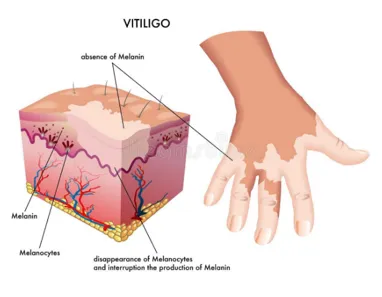
Fig.1 Diagrammatic illustration of skin layers indicating how melanocytes vanish in vitiligo-affected regions, resulting in depigmentation
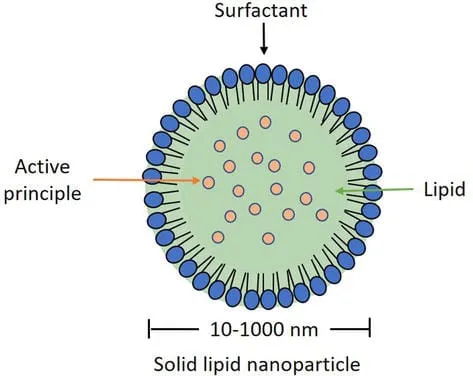
Fig.2 General Diagram Of The Solid Lipid
Kingdom: Plantae Division: Tracheophyta Subdivision: Spermatophyta Class: Magnoliopsida Order: Solanales Family: Convolvulaceae Genus: Ipomoea Species: batatas (L.) Lam[6]
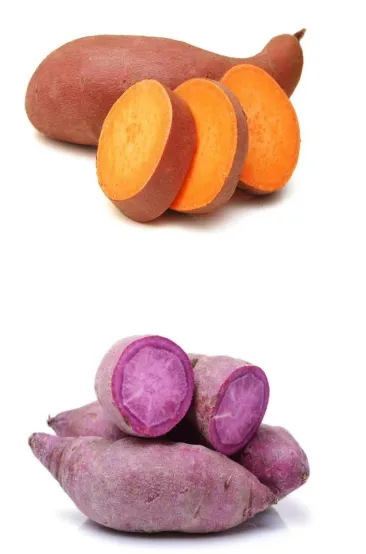
Fig.3 The Beta Carotene Rich Orange Fleshed Sweet Potato
Chemical Constituent-
Sweet potatoes with orange flesh are primarily high in phenolic acid, carbohydrate, and dietary fibre. beta-carotene, phoshorus, and sponamins.[10]
Beta-carotene- With its strong antiradical activity and capacity to neutralise singlet oxygen, β-carotene is a powerful antioxidant. As a result, it can prevent sun damage and slow down the ageing process of the skin [11]. β-carotene, an orange pigment that is converted to vitamin A in living tissues and is frequently found in food supplements and cosmetics, is one of the active substances with demonstrated excellent antioxidative qualities[12]. It lowers the chance of getting skin cancer and shields the immune system from the harmful effects of UVA radiation [11].
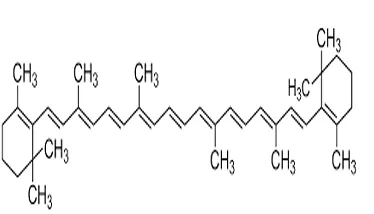
Fig.4 β- Carotene
Kingdom Plantae Subkingdom Tracheobionta Family Rutaceae Genus Citrus Species C. sinensis,
Binomial name Citrus sinensis.[13]
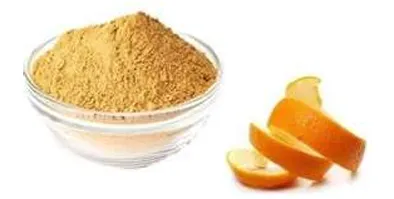
Fig.5 Orange Peel And It’s Powder
Glyceryl Monostearate, Tween 80 & Soy Lecithin, Carbapol, were used as Lipid, Surfactant, Co-surfactant, Gelling agent independently. All reagents and ingredient used Analytical grade.
Table.1. - Excipient Profile
|
S.No. |
Excipient |
Properties |
|
|
Glyceryl Monostearate |
Used as Lipid |
|
|
Tween 80 |
Surfactant |
|
|
Soy Lecithin |
Co- Surfactant |
|
|
Carbapol |
Gelling Agent |
|
|
Glycerine |
Humectant |
|
|
Water |
Solvent / Vehicle |
|
|
Triethanolamine |
Ph adjuster |
|
|
Tea Tree oil |
Permeation Enhancer |
A free sample of sweet potato extract powder was obtained from Panacea Phytoextracts in Gujarat, India. We bought carbopol 934 from BRM Chemical. We bought glycerol monostearate from BRM Chemical. Bennet Pharmaceutical in Baddi, India, provided a free sample of soy lecithin, while Loba Chemicals Pvt. Ltd. provided Tween 80. The remaining solvents and reagents were all of analytical reagent grade.
The composition of different batches is shown in Table-2 and quantity is in mg .
Table-2 Composition Of Sln Formulation
|
Ingredient/ Excipient |
FI |
F2 |
F3 |
F4 |
|
Drug |
15 |
15 |
15 |
15 |
|
GMS |
100 |
100 |
200 |
400 |
|
Tween 80 |
400 |
400 |
400 |
400 |
|
Soy Lecithin |
50 |
100 |
200 |
400 |
|
Ethanol |
2.5 ml |
2.5 ml |
2.5 ml |
2.5 ml |
|
Distilled Water |
25 ml |
25 ml |
25 ml |
25 ml |
Entrapment efficiency (%) = (Initial amount of drug – amount of free drug) / (Initial amount of drug) × 100. [19]
Table.3 Composition Of Gel Formulation
|
Ingredient/ Excipient |
FI |
F2 |
F3 |
F4 |
|
Carbapol |
1% |
1.5% |
2% |
3% |
|
SLN |
0.10% |
0.10% |
0.10% |
0.10% |
|
Tea Tree oil |
1.5% |
1.5% |
1.5% |
1.5% |
|
Triethanolamine |
q.s |
q.s |
q.s |
q.s |
|
Glycerin |
2 ml |
2 ml |
2 ml |
2 ml |
|
Distilled Water |
q.s |
q.s |
q.s |
q.s |
Evaluation Of Sln Gel-
S=MxLT

Where S is spreadibility, M is weight tied on upper slide. L is the length of glass slide, t is time taken.
RESULTS AND DISCUSSION:-
Size of Particles: Particle Size: According to an analysis of the data, the range of particle sizes was between 190 and 500 nm. The formulation containing 100 mg of fat (F2) produced the smallest particle size, 191.09 nm. Formulation F4 had the highest particle size, measuring 499.91 nm at 400 mg of fat. The particle size was found to be closely correlated with the amount of lipid used. The concentration of the surfactant was crucial in keeping the particle size within the nanoscale range. Particle size is dependent on surfactant concentration in addition to the amount of lipid utilised; at optimal concentrations, submicron particle size was attained with a low particle size dispersion. In given table 4.-
Zeta Potential: Zeta potential measurement provides information on particle charge and, consequently, the dispersion's stability. Zeta potential should generally be high; for a dispersion to be stable, it should have a value between -24.4 mV and +24 mV. Because of electrical repulsion, charged particles are less likely to aggregate inside this region. Table 4 below provides the zeta potential for various formulations
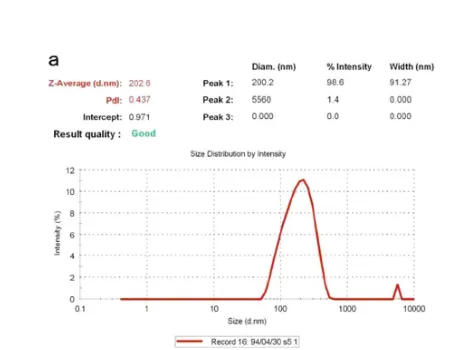
FIG.5: Particle size distribution graph of SLN-F2.
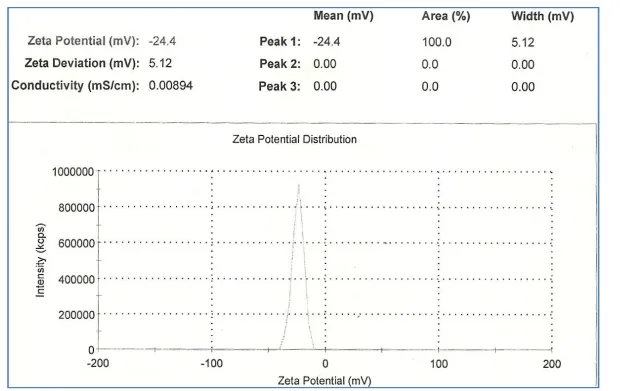
FIG. 6: Zeta potential of SLN-F2 Dispersion
Transmission Electron Microscopy (TEM)- The optimised formulation was examined morphologically using transmission electron microscopy (TEM). SLNs may be seen using TEM following freeze substitution and freeze fracturing. The size of SLNs was determined by TEM examinations to be 100 nm.
Drug Content: Using UV spectroscopy at 239 nm, the drug content of the freeze-dried SLN formulations was ascertained. It was discovered that the optimised formulation of SLN had a drug content of 90.60%.
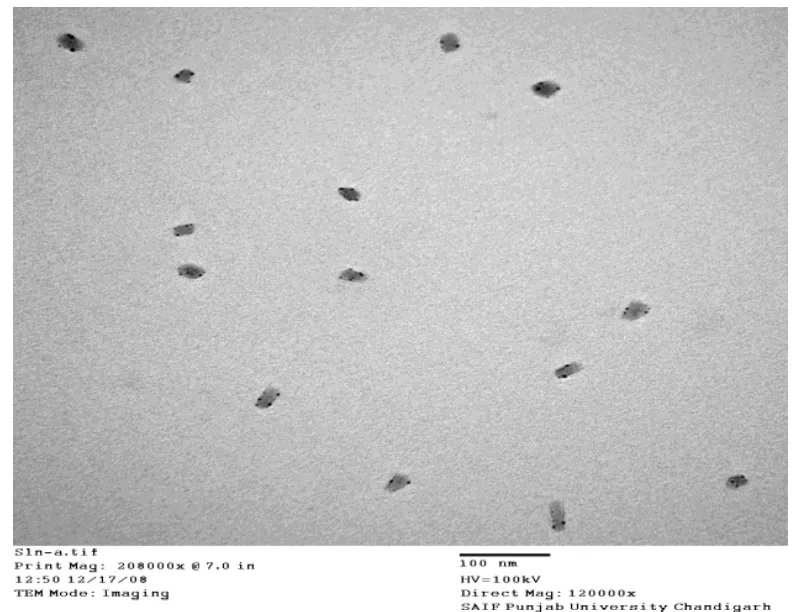
FIG. 7: TEM image of SLN-F2 Dispersion
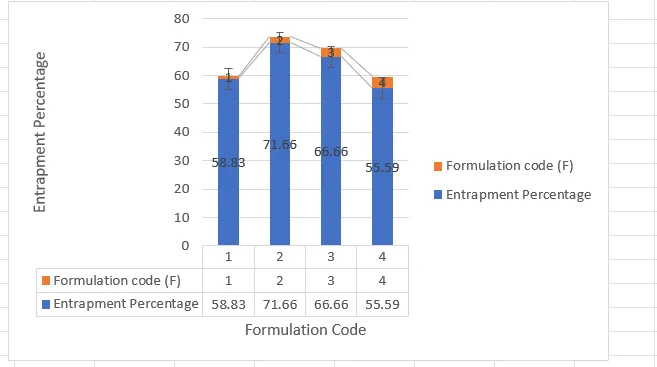
FIG. 8: %DEE of SLN formulation
Drug Entrapment Efficiency: According to the data shown in Table 4, formulation SLN-F2, which contains a high lipid content, has a greater entrapment than other formulations. SLN-F1 and SLN-F3 exhibit entrapment rates of 58.83% and 66.66%, respectively, compared to 71.66% for the SLN-F2 dispersion. Similar to what is observed in SLN-F4. In Fig 8
FTIR Spectra- The FTIR spectra of the SLN formulation and pure extract powder. The FTIR examination showed no clear physical or distinctive extract powder peaks in the SLN formulation, suggesting little interaction, while a few peaks were absent, which may indicate that the drug was well entrapped inside the lipid matrix. Shown in fig 9.A & fig9.B
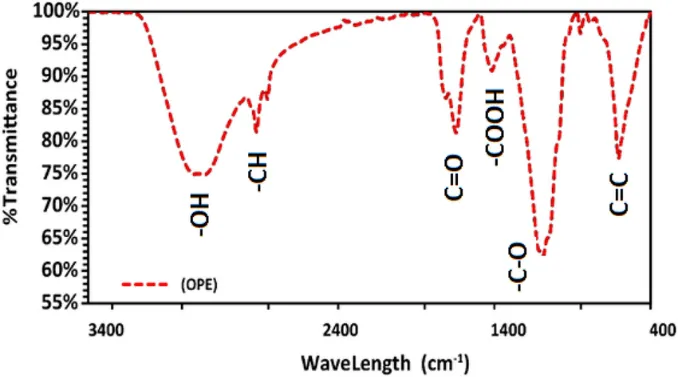
Fig. 9.A- FTIR Spectra Of Pure Extract Powder Of Sweet Potato
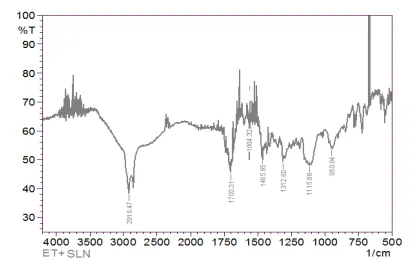
Fig. 9.B- FTIR Spectra of Pure Extract Powder loaded SLN
Differential Scanning Calorimeter Analysis (DSC)- SLN formulation and extract powder thermogram. With a melting temperature of 89.1 °C and a distinct endothermic peak beginning at 81.3 °C, the pure extract's thermogram demonstrates its crystalline form. Additionally, the SLN formulation maintained the endothermic peak of lipid between 50 and 60 °C. Figure 10 displays the thermogram for the SLN formulation, which begins at 150 °C and has a melting point of 165.60 °C. , 10.A and 10.B
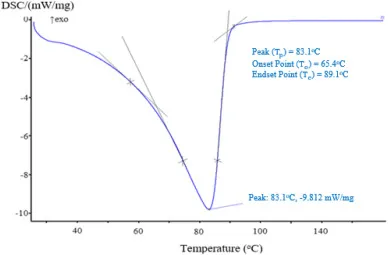
FIG 10.A DSC Thermogram Of Extract
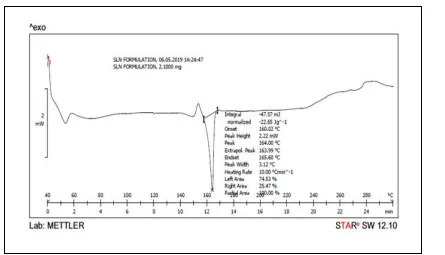
Fig 10.B DSC Thermogram Of Sln
In- Vitro Drug Release- The optimal topical formulation should exhibit a release or diffusion for a long enough duration to prevent repeated application and improve patient compliance, according to the in vitro investigation of tea tree oil-based loaded SLN gel. SLN-loaded gel demonstrated regulated drug release of up to 90% at 24 hours. The drug release experiments were conducted using the USP XXII paddle type dissolving test apparatus. The dissolution experiment was performed in 900 ml of dissolution medium (PBS pH 7.4) that was stirred at 100 rpm and maintained at 370.2°C. Samples were taken at different time intervals and replaced with the same volume of fresh dissolving medium. The collected samples were analyzed spectrophotometrically at 274nm using a UV visible spectrophotometer which show in table 4.
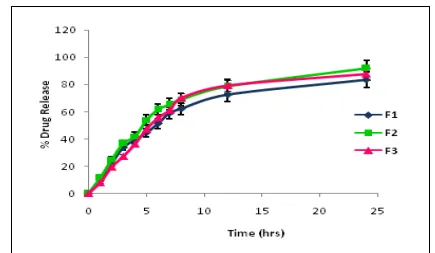
Fig.11 In-Vitro Drug Release Study
Physical Characteristics of SLN gel- The physical properties of tea tree oil influenced by powdered sweet potato extract. Loaded SLN Gel: Among various tea tree oil batches, drug uniformity results were found to be satisfactory, based on powdered sweet potato extract. SLN Gel that is infused which shown in table 5
Table.4 Result for particle size, Zeta Potential, Drug content and entrapment efficiency & In-Vitro release drug loaded SLNs
|
Formulation Code |
Particle size (nm) |
Zeta Potential |
Drug content (%) |
% Entrapment efficiency |
In-Vitro release drug |
|
F-1 |
195.33 |
-19.29 |
87.89 |
58.33 |
79.58%±1.38 |
|
F-2 |
191.07 |
-24.40 |
90.60 |
71.66 |
90.55%±0.25 |
|
F-3 |
299.45 |
-32.49 |
80.45 |
66.66 |
74.38%±1.55 |
|
F-4 |
499.09 |
-28.31 |
74.65 |
59.59 |
80.20%±0.36 |
Table.5 Result For Characteristics Of Tea Tree Oil Orange Peel Ipomoea batatas Extract Loaded SLN Gel
|
Evaluation Parameter |
F-1 |
F-2 |
F-3 |
F-4 |
|
pH |
5.9±0.2 |
6.0±0.4 |
5.8±0.6 |
5.4±0.8 |
|
Viscosity |
4.8 cps |
5.5cps |
5.2cps |
4.9cps |
|
Spreadbility (g.cm/sec) |
204.970 ± 10.520 |
208.155±15.01 |
203.250±28.66 |
199.180±10.12 |
|
Homogeneity |
++ |
+++ |
++ |
+ |
|
Drug Content |
87.89 |
90.60 |
80.45 |
74.65 |
+ = Smoothness
CONCLUSION- Utilizing the high-speed homogenization technique, this study successfully produced sweet potato extract powder containing SLNs. Several characteristic evaluations were conducted on the created SLNs. The amount of lipid and surfactant significantly affects the particle size, drug content, entrapment efficiency, and in vitro release of the SLN formulation, based on evaluation criteria. SLN formulation F2 proved to be the most effective due to its optimal particle size, excellent entrapment efficiency, and improved release characteristics. Increased concentrations of GMS resulted in higher entrapment, whereas larger amounts of Tween 80 led to smaller particle sizes being observed. The in-vitro permeability study indicated uncovere Continuous release of Drug from the SLN gel and sustained drug levels over an extended duration.
ACKNOWLEDGEMENT: I would like to take the opportunity to express my warmest gratitude, all my colleague and batchmates and junior who has supported us throughout our research work for excellent support, felicitous advice and valuable suggestion during the studies. And I also thank full to Manager of Panacea Phytoextracts & Bennet Pharmaceutical who help in my research paper
Future Scope
Further studies including long-term stability assessments can be conducted to establish its commercial feasibility and patient compliance.
REFERENCES



Shashank Gupta*, Varsha Kumari, Divya Tiwari, Development And Topical Characterization Of Solid Lipid Nanoparticle (SLN) Gels Enriched With Orange Peel Ipomoea Batatas Extract And Essential Oils For Enhanced Vitiligo Therapy, Int. J. of Pharm. Sci., 2026, Vol 4, Issue 7, 5665-5679. https://doi.org/10.5281/zenodo.21672002
 10.5281/zenodo.21672002