

We use cookies to ensure our website works properly and to personalise your experience. Cookies policy
Department of Pharmacy, Dr Rajendra Gode College of Pharmacy, Amravati, Maharashtra, Affiliated to Dr. Babasaheb Ambedkar Technological University, Lonere, Raigad, India
Among gastro-retentive drug delivery systems, floating drug delivery systems (FDDS) have emerged as one of the more established approaches to addressing the variable gastric emptying and short residence time that limit conventional oral dosage forms. By relying on gas generation or polymer swelling to stay buoyant in gastric fluid, FDDS can sustain drug release over a longer period and improve absorption of drugs with a narrow absorption window, while also enabling targeted release for local gastric disorders. A wide range of formulation strategies, polymers, and manufacturing methods makes it possible to tailor these systems to individual drug and therapeutic needs. Even so, moving FDDS from the laboratory to routine clinical use is not straightforward: patient-to-patient variation in gastric physiology, the influence of food intake, and the lack of standardized in vitro-in vivo correlation and regulatory frameworks all continue to limit their translation. Ongoing work on stimuli-responsive polymers, nanotechnology-based formulations, and multi-mechanism gastro-retentive platforms is likely to close some of these gaps, and with further progress in predictive modeling and regulatory guidance, FDDS remain a strong candidate for reliable, patient-friendly oral controlled-release delivery.
Oral administration continues to be the preferred route for delivering most drugs, largely because it is convenient, non-invasive, and generally well accepted by patients. Conventional oral dosage forms, however, come with a set of recurring problems: gastric emptying that varies from patient to patient, a short window of residence in the stomach, and absorption that is often incomplete. These issues are especially pronounced for drugs absorbed mainly in the upper gastrointestinal tract, drugs that break down in the alkaline environment of the intestine, or those with a narrow absorption window. This has driven interest in delivery approaches capable of keeping the dosage form in the stomach longer and, in turn, improving bioavailability 1.
Gastro-retentive drug delivery systems (GRDDS) were developed in response to these limitations, with the goal of keeping the dosage form in the stomach for longer than a conventional tablet or capsule would stay. Of the different GRDDS approaches explored so far, Floating Drug Delivery Systems (FDDS) have drawn the most research interest. These are low-density, hydrodynamically controlled formulations designed to stay buoyant in gastric fluid, which extends gastric residence time without substantially disrupting normal gastric motility. While retained in the stomach, the drug is released in a controlled fashion, which can translate into more consistent absorption and better therapeutic outcomes 2.
FDDS are especially suited to drugs used for gastric and duodenal ulcers, Helicobacter pylori infections, and other conditions confined to the stomach, since prolonged residence allows the drug to be released close to its site of action. The combination of extended residence and sustained release can improve bioavailability, allow less frequent dosing, and reduce dose-related side effects, all of which support better patient compliance. It is this combination of benefits that has kept FDDS an active area of both academic research and pharmaceutical development as an oral controlled-release strategy 1,2.
GASTRIC PHYSIOLOGY AND GASTRIC RETENTION
Because the stomach's anatomy and physiology directly influence how gastroretentive drug delivery systems (GRDDS) perform, a working knowledge of its structure and function is essential when designing an effective gastroretentive dosage form. The stomach can be divided broadly into a proximal region, the fundus and body, and a distal region made up of the antrum and pylorus, as shown in Figure 1.
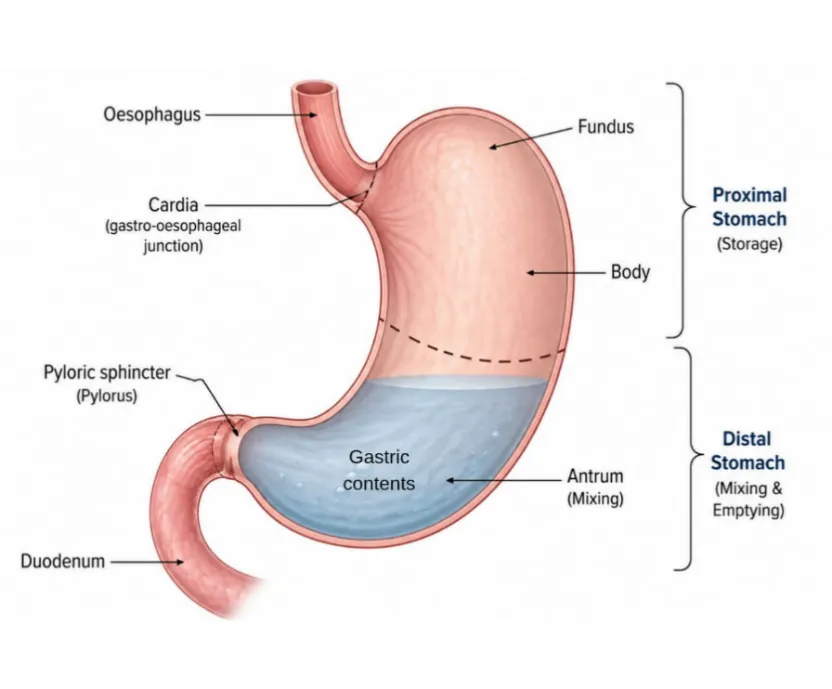
Figure 1. Schematic representation of the anatomy of the stomach.
The stomach carries out several functions relevant here: it temporarily stores ingested food, breaks it down mechanically, and regulates how gastric contents pass into the duodenum 3. The fundus and body act mainly as a reservoir for undigested food, while the antrum works as a gastric pump, driving emptying through propulsive contractions 3,4. Underlying this is a recurring motility pattern called the migrating myoelectric complex (MMC), made up of the distinct phases summarized in Table 1.
Table 1. Four phases of migrating myoelectric complex 3,4.
|
Phase |
Characteristics |
Approximate duration |
|
Phase 1 |
Quiescent period with minimal motor activity
|
30-60 min |
|
Phase 2 |
Intermittent contractions with progressively increasing intensity
|
20-40 min |
|
Phase 3 |
Strong and regular contractions facilitating gastric clearance |
10-20 min |
|
Phase 4 |
Short transitional phase before the next cycle
|
0-5 min |
The pattern of gastric emptying differs depending on whether the stomach is in a fasted or fed state. In the fasted state, the stomach and small intestine go through a recurring cycle of electrical and motor activity, the interdigestive motility pattern, roughly every 90-120 min 3. During this cycle, the pyloric opening can widen to about 19 mm, letting particles smaller than this diameter pass into the duodenum 5. Once food is ingested, gastric motor activity typically resumes within 5-10 min and continues for as long as food remains in the stomach; this fed-state activity tends to slow gastric emptying, which in turn affects how long an orally administered dosage form stays in the stomach 5,6.
APPROACHES TO GASTRIC RETENTION
A number of strategies have been explored to extend gastric retention, including floating, high-density, expandable or unfolding, mucoadhesive, superporous hydrogel, magnetic, raft-forming, and colloidal gel barrier systems. Floating Drug Delivery Systems (FDDS) remain among the most extensively studied of these, working by keeping the dosage form buoyant in gastric fluid so that it stays in the stomach for longer. This extended retention can be valuable for drugs with a narrow absorption window in the upper gastrointestinal tract, or for those intended to act locally in the stomach. That said, patient-to-patient differences in gastric motility and emptying can still affect how well a floating device performs in practice 7.
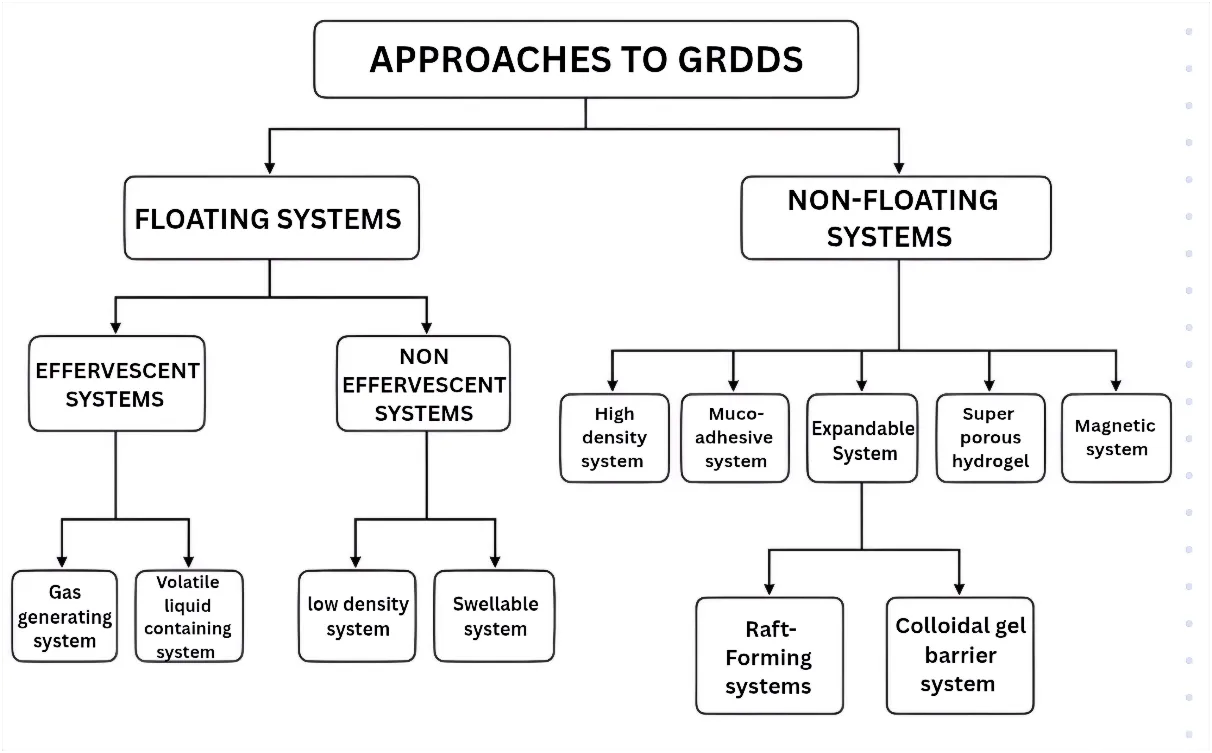
Figure 2. Classification of gastroretentive drug delivery approaches with major categories of floating drug delivery systems.
FLOATING DRUG DELIVERY SYSTEMS
Floating Drug Delivery Systems (FDDS) are gastroretentive devices designed to stay buoyant in the stomach for an extended period. Since their density is lower than that of gastric fluid, they float above the stomach contents without seriously disrupting normal gastric emptying. This buoyancy, combined with regulated and sustained drug release, allows the pharmacological effect to be prolonged. For drugs that are absorbed better from the stomach or the upper small intestine, the longer gastric residence associated with FDDS can improve absorption, which in turn can translate into better therapeutic efficacy and bioavailability, fewer daily doses, and improved patient compliance 8.
Principle of Floating Drug Delivery Systems
The underlying principle of FDDS is straightforward: keep the density of the dosage form below that of gastric fluid so that it stays afloat. Two mechanisms are commonly used to achieve this on contact with stomach fluid:
1. Gas generation: The dosage form produces gas, which becomes trapped in the formulation and lowers its total density, allowing it to float.
2. Swelling and gel formation: After absorbing stomach contents, the dosage form swells to create a low-density, gel-like structure that keeps it buoyant.
Both mechanisms support controlled drug release over an extended period and help prolong the dosage form's residence in the stomach 9-12.
CLASSIFICATION OF FLOATING DRUG DELIVERY SYSTEMS
Based on how buoyancy is achieved, FDDS are broadly grouped into effervescent and non-effervescent systems.
Effervescent FDDS achieve buoyancy by generating gas, mainly carbon dioxide, within the dosage form, which lowers its overall density. This is typically achieved using sodium bicarbonate combined with an acidic agent such as citric or tartaric acid.
Mechanism
On contact with gastric fluid, the acidic and basic components react to release CO2, which becomes trapped within the polymeric matrix. This reduces the dosage form's density and keeps it floating in the gastric contents.
Types
Crucial elements
Non-effervescent FDDS do not rely on gas generation at all; instead, buoyancy comes from low-density polymeric structures, gel formation, or swelling on contact with gastric fluid.
Mechanism
Here, hydrophilic polymers absorb gastric fluid and swell to form a gel barrier around the dosage form, keeping the hydrated system buoyant and less dense than the surrounding fluid.
Types
Crucial elements
FORMULATION AND MANUFACTURING TECHNIQUES OF FDDS
Direct compression is one of the simplest manufacturing approaches: the drug and other formulation components are compressed directly into tablets without altering their physical form. Successful compression depends on excipients with good flow and compressibility, properties that can be improved through slugging, spray drying, or crystallization; tricalcium phosphate and dicalcium phosphate trihydrate are commonly used carriers for this purpose. Since it avoids moisture-related processing steps, direct compression works particularly well for floating effervescent tablets and for drugs that are moisture-sensitive 13,14.
Wet granulation remains one of the most widely used tablet-manufacturing techniques. In floating effervescent formulations, the acidic and carbonate components can be granulated separately or together using granulating solutions such as water, ethanol, hydroalcoholic mixtures, or isopropanol. Because water-based granulating fluids can trigger a premature effervescent reaction between the acid and carbonate, granulation conditions need to be controlled carefully; vacuum processing can help manage both the effervescent reaction and the subsequent drying step 14.
Dry granulation produces compression-ready granules by first compacting the powder blend into larger masses or slugs, which are then milled down to size. Because no granulating liquid is involved, this method suits formulations containing moisture-sensitive drugs. Granules of the required size are typically obtained by roller compaction or slugging on heavy-duty tableting equipment, followed by a size-reduction step 15.
Hot-melt extrusion produces a homogeneous formulation by dispersing the drug within a polymeric or wax-based carrier. The required amount of beeswax is melted first, followed by the addition of a geometrically blended mixture of polymers, diluents, and the active pharmaceutical ingredient (API). Once thoroughly mixed, the blend is cooled into a cohesive mass and passed through sieves to obtain granules and remove fines. These granules are then combined with suitable lubricants and glidants and compressed into floating tablets on a rotary tablet press 16.
Solvent evaporation is a common choice for preparing floating multiparticulate systems, particularly floating microspheres and hollow microparticles. The drug and polymer are dissolved or dispersed in a suitable organic solvent, and this organic phase is then emulsified into an aqueous phase containing a stabilizer such as polyvinyl alcohol (PVA). Continuous stirring and/or controlled temperature drive off the organic solvent; as it is removed, the polymer deposits around the dispersed droplets, sometimes leaving internal cavities that give the particles a porous, low-density structure with good floating characteristics. The resulting particles are then collected, washed, and dried before evaluation. This technique has been applied to floating microparticles prepared from polymers such as polymethyl methacrylate, Eudragit, and ethyl cellulose 17.
Ionotropic gelation is a bead-forming technique based on the interaction between oppositely charged polyelectrolytes and counter-ions. A drug-loaded polymer solution is added dropwise into an aqueous solution containing polyvalent ions, triggering ionic cross-linking and forming hydrogel beads. Polymers commonly used for this include gellan gum, chitosan, alginate, and carboxymethyl cellulose (CMC). Because the process is carried out under mild conditions, it helps preserve the structural integrity of the beads and makes it easier to incorporate fragile biomolecules 17.
POLYMERS & EXCIPIENTS IN FDDS FORMULATION
Polymers and excipients play an important role in the development of floating drug delivery systems by influencing buoyancy, matrix integrity, drug-release behaviour, and stability of the dosage form. The selection of suitable materials depends on properties such as swelling, gel-forming ability, viscosity, density, drug compatibility, and their interaction with the gastric environment. Based on their origin, polymers used in FDDS. They can broadly be classified as natural, semi-synthetic, and synthetic polymers 18,19.
Table 2. Polymers and Excipients Used in Floating Drug Delivery Systems 19,20
|
Category |
Polymer/Excipient |
Major role in FDDS |
Typical application |
|
Natural polymers |
Sodium alginate |
Gel formation and swelling |
Floating beads |
|
Chitosan |
Swelling, matrix formation and mucoadhesion |
Floating beads and mucoadhesive system |
|
|
Pectin |
Gel formation and release modulation |
Gastroretentive formulations |
|
|
Guar gum |
Swelling and viscosity enhancement |
Floating matrix system |
|
|
Xanthan gum |
Gel formation and matrix structuring |
Sustained-release matrix system |
|
|
carrageenan |
Swelling and release modulation |
Floating formulations |
|
|
Semi- synthetic polymers |
HPMC |
Swelling, gel formation and release control |
Floating tablets |
|
HPC |
Matrix formation and controlled drug release |
Floating matrix system |
|
|
HEC |
Swelling and release modulation |
Floating Microspheres |
|
|
Sodium CMC |
Swelling and viscosity enhancement |
Floating multiparticulates |
|
|
Ethyl cellulose |
Matrix formation and release retardatin |
Floating microspheres |
|
|
Synthetic polymers |
Eudragit RL/RS/NE |
Matrix formation and release-rate modulation |
Floating multiparticulates |
|
PVA |
Particle stabilization and film formation |
Floating microspheres |
|
|
PEO |
Swelling and gel formation |
Hydrophilic floating matrices |
|
|
PVP |
Polymer/ excipient support in formulation |
Floating dosage forms |
|
|
PLA/PLGA |
Structural matrix formation and controlled degradation |
Advanced floating system |
|
|
Gas generating excipient |
Sodium bicarbonate |
Generates co2 to produce buoyancy |
Effervescent floating tablets |
|
Acidifying agent |
Citric acid/ Tartaric acid |
Reacts with bicarbonate to promote co2 generation |
Effervescent system |
The selection of polymers and excipients influences the buoyancy, swelling behaviour, matrix integrity, and drug-release characteristics of FDDS.
FACTORS AFFECTING THE FLOATING PERFORMANCE AND GASTRIC RETENTION OF FLOATING DRUG DELIVERY SYSTEM
The physiological and patient-specific conditions within the gastrointestinal tract, along with formulation features, determine how efficient gastroretentive drug delivery system (GRDDS), especially floating system, are. These variables affect medication release and absorption by determining a dose form's capacity to stay in the stomach for the desired amount of time. Physiological variables, patient-related factors, and pharmaceutical/formulation factors can be used to categorize the main determinants.
A gastroretentive formulation's stomach retention and floating behavior are significantly influenced by its composition and physicochemical properties. Therefore, the mechanism intended to generate stomach retention should be the basis for selecting appropriate polymers and excipients 21. For instance, expandable system benefit from polymers that may significantly swell, while mucoadhesive formulations need polymers with sufficient adhesive qualities, such as carbopol and hydroxypropyl methylcellulose (HPMC) 21. Molecular weight, viscosity, and other physicochemical features of polymers might further alter the dosage form's behavior. Gas-generating components are especially crucial in floating formulations because the creation and entrapment of gas can lower the system's effective density and increase buoyancy.
Other factors that affect stomach retention are dosage-form size and geometry. A dosage form's size affects its capacity to pass through the pyloric opening; hence, a larger dosage form may favor gastric retention 22,23. Smaller particles in the approximate range of 1-2 mm can enter the small intestine 24, while the pyloric sphincter's reported mean diameter is about 12.8 ± 7 mm 23. Its residence behavior can also be altered by the dosage form's shape. It has been claimed that devices shaped like rings and tetrahedrons offer higher gastric residency than a number of other geometries 25,26.
Gastric retention is also affected by the difference between single-unit and multiparticulate system. A strong stomach contraction may cause the complete dosage form to be evacuated in single-unit system, a phenomenon known as "all-or-none" gastric emptying. In contrast, multiparticulate system relies less on a single gastric emptying event because they are made up of several separate units that can disperse across the stomach contents 27. This feature might offer more consistent stomach residence. Density is a crucial formulation parameter for floating drug delivery system (FDDS). The density of a dosage form meant to float should be less than that of stomach fluid, which is roughly 1.004 g/cm³ 28,29.
Such a system may escape direct exposure to the propulsive activity taking place close to the pylorus by remaining at the surface or inside the top part of the stomach contents. Longer gastric retention may therefore result from increasing the length and consistency of buoyancy. However, as the dose form's hydrodynamic equilibrium shifts over time, floating performance could deteriorate 30. Using in-vivo imaging methods, the connection between buoyancy and size has been studied. Using gamma scintigraphy, Timmermans and associates assessed floating and non-floating capsules of various sizes, including around 4.8, 7.5, and 9.9 mm diameter units 31. While non-floating units settled in the antral region and were more immediately exposed to propulsive and retropulsive contractions, floating system stayed connected to the stomach contents. For small and medium-sized system in particular, floating units demonstrated a retention advantage; however, this difference was not statistically significant for the largest units 31. These findings suggest that size, shape, density, and buoyancy all work together to influence stomach retention rather than floating ability acting independently of dosage-form dimensions.A distinct mechanism is used by high-density gastroretentive system. In order to keep the dose form in the lower part of the stomach rather than floating, their density is intended to be higher than that of gastric contents. In such system, it has been found that a density greater than about 2.500 g/cm³ favors extended gastric residence 32.
The effectiveness of floating and other gastroretentive system can be significantly impacted by the physiological milieu of the stomach. Meal composition and caloric density, meal viscosity, volume of fluid consumed, stomach pH, meal frequency, posture, and gastrointestinal motility are all significant factors 33,22,34,1. One of the most significant factors influencing stomach residence is the state of feeding or fasting. The migrating motor complex (MMC), which happens cyclically at intervals of roughly 90 to 120 minutes, is followed by stomach motility during fasting 3. The MMC helps remove indigestible and leftover material from the stomach. As a result, rapid stomach emptying and a shorter residence duration may occur when a dosage form near a strong MMC phase is administered 3. The MMC helps remove indigestible and leftover material from the stomach. As a result, rapid stomach emptying and a shorter residence duration may occur when a dosage form near a strong MMC phase is administered 3. A gastroretentive formulation can typically stay in the stomach for a longer amount of time because food inhibits or disrupts the fasting MMC pattern and delays the strong housekeeping contractions 3. Gastric emptying is also influenced by meal features. The viscosity, volume, and caloric density of the meal all affect gastric residence 34,35. While the relative contribution of protein, carbohydrate, or fat is less significant when meals offer similar caloric loads, increasing caloric density typically slows stomach emptying and can thereby prolong GRT 35. Gastric emptying may also be delayed by increased food viscosity 36,37. Slower stomach emptying has also been linked to higher acidity and caloric value.
Drug dissolving and dosage-form behavior may be impacted by changes in the stomach environment brought about by gastric pH and fluid administration. When fasting, the stomach pH is typically between 1.5 and 2.0, and after eating, it is between 2.0- 6.0. Gastric pH can be momentarily raised by administering a sizable amount of water orally; reported values range from 6.0 to 9.0. This temporary shift might be especially important for medications whose disintegration is very pH-dependent.
When it comes to floating dosage forms, posture is particularly important. A buoyant formulation can lessen its exposure to propulsive contractions by staying inside the upper stomach contents and away from the pyloric outlet while upright 38. In contrast, a non-floating system might settle in the antral region and encounter larger propulsive forces, which would cause the stomach to empty more quickly 38. In the supine position, however, the advantage of buoyancy may not always be preserved. A floating system's retention advantage may wane under supine settings, while non-floating system may occasionally exhibit extended residency 39,40. According to experimental findings, size rather than buoyancy may be the primary factor influencing longer retention in the supine position. The number and timing of meals can alter floating system' retention even more. A buoyant dose form can stay in the stomach for a longer amount of time when subsequent meals are eaten before the preceding digestion phase has finished. Food consumption can therefore directly affect both the timing of the motor events that remove the dosage form and gastric emptying.
Individual differences can have a substantial impact on stomach retention and, in turn, the effectiveness of GRDDS in vivo. Age, gender, body mass index, medical issues, and psychological or emotional state are all significant patient-related factors. Gastric motility and intragastric circumstances have been found to differ according on gender. It has been observed that female subjects empty their stomachs more slowly than male subjects, which could explain variations in GRT 41. One cause for this discrepancy has been suggested to be hormonal. There have also been reports of variations in stomach acid output; one study found that males secreted more acid 42. Gastric motility can also be influenced by age. Elderly people tend to empty their stomachs more slowly than younger subjects, which could lead to an increase in the residence of oral dose forms 43. Even more variety may result from illness or compromised gastrointestinal function. Parkinson's disease patients may have extended GRT and delayed stomach emptying, sometimes in conjunction with constipation 44. Due to reports that people with diabetes have a 30–50% reduction in stomach emptying 45, diabetes is another clinically significant disease.
Lastly, gastrointestinal motility can be altered by psychological and emotional factors. Depression has been linked to decreased stomach emptying, while anxiety and stress have been found to raise stomach emptying rates 22,46. These differences emphasize how crucial it is to take patient-specific physiological variables into account when estimating a floating dose form's stomach residence.
EVALUATION OF FLOATING DOSAGE FORMS
It is crucial to assess floating tablets in order to ascertain their mechanical strength, density, swelling capacity, floating behavior, and physical characteristics. The evaluation criteria that are frequently employed are explained below.
To find variations in tablet weight, twenty tablets were chosen at random from each formulation batch and weighed separately. After calculating the average weight of the tablets, the % departure from the average weight was found. A slight variation in tablet weight is permissible, according to the United States Pharmacopeia (USP). A maximum weight variation of 5% was deemed acceptable because all formulations' tablet weights were more than 324 mg 47.
The ability of a tablet to endure mechanical stress during handling, packing, and transit is indicated by its hardness. A Monsanto hardness tester was used to determine the tablets' hardness, which was then expressed in kg/cm². The test was conducted using five tablets from each formulation, and the average hardness value was calculated.
Friability quantifies the propensity of tablets to break or lose weight as a result of mechanical abrasion during handling. After any loose powder was removed, 26 pills were weighed for the test and put in a Roche friabilator. In accordance with the Indian Pharmacopeia (IP), the friabilator was rotated at 25 rpm for four minutes. The tablets were taken out, dusted, and weighed once more once the test was finished. To calculate the percentage of friability, the following formula was applied: The percentage of friability is determined by dividing the pills' original weight by their final weight. 100 For tablets, a friability value of less than 1% is typically regarded as acceptable 47.
To assess the dosage form's floating behavior, in vitro buoyancy research is conducted. Total Floating Time (TFT) and Floating Lag Time (FLT) are two crucial characteristics that are typically calculated. The amount of time needed for the dosage form to rise to the dissolving medium's surface after being added is known as the Floating Lag Time (FLT) or Buoyancy Lag Time (BLT). The amount of time the dose form stays buoyant on the medium's surface is known as Total Floating Time, or TFT.A USP dissolution apparatus Type II (paddle) operating at 50 rpm with 900 mL of simulated gastric fluid (SGF) kept at 37 ± 0.5°C for up to 12 hours can be used to assess the floating behavior. The physiological milieu of the stomach is replicated under these circumstances 47.
One popular technique for assessing floating and gastro-retentive dose forms is X-ray imaging. In addition to offering details on stomach retention and gastrointestinal transit, it aids in locating the dose form within the gastrointestinal tract (GIT). A radio-opaque material may be added to the dose form for X-ray visualization. X-ray imaging can then be used to track the dose form's movement and location inside the GIT 48.
The swelling behavior of floating pills is evaluated using the swelling index. It is especially crucial for formulations with polymers that, when the dissolution media is present, expand and create a gel layer.
After weighing the tablet, it is put in a dissolution media (pH 6.8 phosphate buffer, for example) that is kept at 37 ± 0.5°C. At prearranged intervals, the tablet is taken out, any extra medium is taken out, and the tablet is weighed once again. The change in pill weight is then used to compute the swelling index. Usually, the test is run in triplicate 48.
A calibrated Vernier caliper is used to measure the tablets' diameter and thickness. From each formulation, three tablets are chosen at random, and each tablet's diameter and thickness are measured separately. Next, the average values are determined 49.
Tablet density is a crucial factor for floating tablets since it affects the tablet's capacity to stay buoyant. A tablet's density must typically be less than that of stomach fluid, which is roughly 1.004 g/cm³, in order for it to float in the fluid.
Tablet density can be calculated using the formulas below:
πr²h = V
m/V = d
When:
V is the tablet's volume (cm³).
-r = The tablet's radius (cm)
h = Tablet thickness (in centimeters)
d = The tablet's density (g/cm³)
m = The tablet's mass (g)
Longer buoyancy of the dose form in the stomach fluid is facilitated by a decreased tablet density 50,51-52
THERAPEUTIC APPLICATIONS OF FDDS
Floating drug delivery systems (FDDS) are increasingly used in pharmaceutical research, largely because of their ability to extend gastric residence time and improve therapeutic efficacy. They are particularly useful for drugs that need improved bioavailability, local action within the stomach, or site-specific absorption.
Furosemide, riboflavin, and levodopa are examples of drugs with a narrow absorption window; by delaying their passage into the lower GI tract, floating systems can improve their bioavailability.
For example, floating formulations combining antacids and antibiotics may offer better therapeutic efficacy against gastrointestinal infections, owing to their extended gastric residence 46.
FDDS formulated with natural mucilage are especially useful in this regard, since their ability to swell and form a gel layer helps regulate drug release and can further improve bioavailability 47.
ADVANTAGES OF FDDS
LIMITATIONS OF FDDS
Conventional vs. Floating Drug Delivery Systems 53
Table 3: Comparative Analysis-
|
Relative Parameter |
Conventional Drug Delivery Systems |
Floating Drug Delivery Systems |
|
Toxicity risk |
Comparatively higher |
Comparatively lower |
|
Patient compliance |
Poor |
Better |
|
Drugs with narrow absorption window (poor solubility, high pH) |
Not suitable-drug leaves the absorption site before adequate uptake |
Suitable-extended residence allows better absorption in the upper GI region |
|
Locally acting gastric drugs |
Limited benefit, especially for rapidly absorbed drugs |
Highly beneficial for prolonged local action in the stomach |
|
Dose dumping risk |
Minimal |
Comparatively higher, needs to be controlled during formulation |
RECENT ADVANCEMENTS IN FLOATING DRUG DELIVERY SYSTEMS
Recent studies show floating drug delivery systems (FDDS) continuing to evolve. Metformin hydrochloride-containing floating hollow microspheres, created in 2016, were shown to provide prolonged medication release while remaining buoyant in the stomach for over 12 hours.
In 2017, ofloxacin was used to study a hydrodynamically balanced system based on HPMC. The formulation made it possible for the medication to be released in a controlled way and enhanced stomach retention.
In 2018, more advances were recorded. Metformin-containing floating alginate beads demonstrated high buoyancy and sustained release, but propranolol hydrochloride-containing floating microspheres reduced dosage dumping and offered a more consistent release pattern. Strong raft formation was found to be advantageous when raft-forming systems incorporating antacid medications were investigated for the treatment of GERD in 2019.
Famotidine-containing floating, non-effervescent tablets have also been shown to increase bioavailability while lowering dosage frequency.
Metformin-containing floating microballoons showed enhanced gastrointestinal residence in 2020. Clarithromycin was also used to study a dual-mechanism FDDS that combined floating and bioadhesive qualities. This method produced anti-H. pylori action and improved gastric retention.
In 2021, research was focused on enhancing therapeutic performance as well as retention. Glipizide-containing floating microspheres enhanced the antidiabetic impact and offered regulated medication release. Levodopa-containing non-effervescent floating tablets provided improved drug absorption and extended stomach retention
Curcumin-containing floating nanoparticles were created in 2022 to improve stomach retention and address issues related to curcumin's limited solubility. Domperidone-containing floating microspheres offered increased bioavailability. With 3D-printed floating tablets containing baclofen, which enable customized tablet geometry, extended buoyancy, and zero-order drug release, 3D printing was also introduced into the field of floating medication delivery.
More recently, in 2023, it was shown that tablet shape and infill density could be modified to regulate drug release and enhance bioavailability using a 3D-printed gastro-floating system containing verapamil hydrochloride.
In 2024, floating microspheres prepared using natural polymers were studied with amoxicillin to improve gastric residence during H. pylori therapy. Another advancement was the development of a smart floating system designed to respond to pH changes.
Taken together, these developments show floating drug delivery systems progressing from relatively simple buoyant formulations to more sophisticated systems involving bioadhesion, raft formation, nanoparticles, hollow structures, 3D printing, and pH-responsive mechanisms. The underlying goal across these approaches has stayed consistent: to increase gastric residence time, control drug release, improve drug absorption or bioavailability, and enhance therapeutic effectiveness 54,55.
CHALLENGES IN CLINICAL TRANSLATION OF FDDS
One of the biggest obstacles in taking FDDS from the lab to the clinic is the sheer variability in stomach physiology, not just between patients, but within the same patient at different times. Gastric motility, pH, fluid volume, and emptying rate are all shaped by factors such as age, gender, underlying conditions (gastroparesis, H. pylori infection, gastric ulcers), concurrent medications (opioids, prokinetics, anticholinergics), and diet. Elderly patients, for instance, often show altered motor activity and reduced acid output, making FDDS performance harder to predict. Likewise, patients with diabetic gastroparesis or a history of GI surgery may retain a dosage form in the stomach for longer than expected even without a floating mechanism, which complicates both dose adjustment and safety assessment.
Whether a patient is fed or fasting has a major bearing on how well an FDDS performs. Eating tends to prolong gastric retention by disrupting Phase III of the migrating motor complex, but it also increases gastric fluid volume and alters its pH and viscosity, all of which can affect buoyancy and drug-release behavior. This makes food effects an important consideration during formulation development; physiologically based pharmacokinetic (PBPK) modeling is one approach that can help simulate different prandial conditions and predict performance more accurately 56.
Choosing the right polymer is a balancing act, since it needs to support appropriate drug release, good floating behavior, adequate swelling, drug compatibility, and ease of manufacture all at once. Drug-polymer interactions, often picked up through techniques like DSC and FTIR, can alter a drug's solubility, crystal structure, or release pattern in ways that are not always easy to predict. Getting regulatory approval for novel or less common excipient polymers remains a further obstacle to commercializing these systems 56.
Scaling up an FDDS formulation from small experimental batches to pilot or commercial production is rarely straightforward. Even minor batch-to-batch variation in polymer viscosity, compressibility, or moisture content can noticeably affect tablet hardness, floating lag time, and drug release. Because effervescent floating tablets are particularly sensitive to humidity during both manufacturing and storage, keeping relative humidity below 40% throughout production is important. To manage this more effectively, manufacturers are increasingly turning to process analytical technologies such as Raman and near-infrared (NIR) spectroscopy, which allow real-time monitoring of critical quality parameters 56.
Regulatory agencies such as the FDA, EMA, and PMDA typically require a comprehensive biopharmaceutical review for FDDS products, covering in vitro-in vivo correlation (IVIVC), food-effect studies, pharmacokinetic comparisons, and stability testing across different conditions. Establishing a meaningful IVIVC is particularly difficult for FDDS, given how formulation variables interact with the constantly changing gastric environment. While the FDA's updated 2020 guidance on modified-release oral dosage forms offers a basic regulatory framework, in vitro testing requirements specific to floating systems are still largely absent 56.
FUTURE PROSPECTIVES AND EMERGING TRENDS IN FLOATING DRUG DELIVERY SYSTEMS (FDDS)
Floating drug delivery systems continue to be an active area of research within oral controlled drug administration, offering real benefits for drugs that need site-specific delivery in the upper GI tract, have a short biological half-life, or a narrow absorption window. As material science, formulation methods, and processing techniques continue to advance, FDDS are likely to play a growing role in future pharmaceutical development. One promising direction is the development of “smart”, stimulus-responsive systems built from advanced polymers that respond to changes in gastric pH, temperature, ion concentration, or motility, helping maintain floating behavior and regulated drug release even as physiological conditions shift.
Combining FDDS with nanotechnology is another area worth watching. Incorporating nanospheres and nanoemulsions into floating systems could improve the solubility and bioavailability of poorly soluble drugs, making nanotechnology-based FDDS particularly useful for the oral delivery of water-insoluble medications 57.
Advances in formulation and manufacturing technology should also allow tighter control over the shape, porosity, density, and drug distribution of floating dosage forms, supporting the development of more specialized delivery systems and, potentially, personalized medicine, where drug dosages and release profiles are tailored to individual patients.
Future research is also expected to explore multi-mechanism gastro-retentive systems that combine floating with bioadhesion, swelling, expandable designs, mucoadhesion, or other retention techniques. Compared with systems relying on a single retention mechanism, these integrated approaches may offer more reliable and longer-lasting gastric retention.
The use of natural, biodegradable, and biocompatible polymers is another important direction, since these materials can reduce toxicity concerns, improve the safety profile of FDDS, and support more environmentally sustainable manufacturing, while also making long-term therapy more acceptable to patients. Alongside this, progress in imaging techniques, predictive modeling, and in vitro-in vivo correlation (IVIVC) is expected to strengthen the link between laboratory findings and actual in vivo performance, which would in turn support future formulation development, regulatory assessment, and commercialization of floating dosage forms 57.
CONCLUSION
Floating drug delivery systems have matured into one of the most thoroughly studied gastro-retentive approaches, offering a practical way to address the variability in gastric emptying and short residence time that limit conventional oral dosage forms. Whether through gas-generating or swelling-based mechanisms, these systems extend gastric residence and support sustained, controlled drug release, benefiting drugs with a narrow absorption window as well as those intended for local action in the stomach. The range of formulation strategies, polymers, and manufacturing techniques now available means FDDS can be adapted to a wide variety of drugs and therapeutic goals. What continues to hold this technology back from routine clinical use is largely physiological: variability between patients, the influence of food, and the absence of standardized in vitro-in vivo correlation and regulatory frameworks specific to floating systems. Progress in stimuli-responsive polymers, nanotechnology-based formulations, and multi-mechanism gastro-retentive platforms is likely to narrow this gap over time, and as predictive modeling and regulatory guidance mature alongside the science, FDDS should continue to move closer to being a dependable, patient-friendly platform for oral controlled-release therapy.
REFERENCES


Gauri Palkhade*, Atharv Rane, Floating Drug Delivery Systems: Formulation Strategies, Evaluation, And Emerging Perspectives For Improved Gastric Retention And Bioavailability, Int. J. of Pharm. Sci., 2026, Vol 4, Issue 10, 1206-1225. https://doi.org/10.5281/zenodo.23237892
 10.5281/zenodo.23237892