

We use cookies to ensure our website works properly and to personalise your experience. Cookies policy
S.C.S.M.S.S. Institute of Pharmacy Maregaon, Dist. Yavatmal- 445303, Maharashtra, India, Dr. Babasaheb Ambedkar Technological University , Lonere , Raigad (M.S.) 402103
Anxiety and stress are becoming increasingly common among children due to academic pressure, family expectations, lifestyle changes, and excessive use of digital devices. Long-term use of conventional anti-anxiety medications may cause side effects such as sedation, dependency, and cognitive impairment. Therefore, there is a need for safer and natural alternatives. The present study focuses on the formulation and development of a herbal syrup containing Ashwagandha (Withania somnifera) and Brahmi (Bacopa monnieri) for anxiety and stress management in children. The syrup was prepared using aqueous extracts of selected herbs and evaluated for physicochemical parameters including pH, viscosity, specific gravity, organoleptic properties, and stability. The formulation showed satisfactory results and may serve as a safe herbal alternative for pediatric mental wellness
Mental health disorders have emerged as a significant public health concern among children worldwide. Among these, Anxiety Disorders and stress are the most commonly observed psychological conditions affecting pediatric populations. Modern lifestyle factors such as increasing academic burden, social expectations, competitive environments, and excessive use of electronic devices have significantly contributed to emotional and psychological disturbances in children [1,7,8].
Anxiety is a natural physiological response to stressful situations; however, excessive and persistent anxiety can adversely affect emotional development, concentration, memory, learning ability, sleep quality, and overall well-being. If left untreated, anxiety disorders may interfere with academic performance, social interactions, and psychological growth. Therefore, early intervention and safe management strategies are essential for maintaining mental health in children [8,9].
Conventional pharmacological therapies such as Benzodiazepines and Antidepressants are frequently used for anxiety management. Although these medications are effective, prolonged use is often associated with adverse effects including sedation, dependence, withdrawal symptoms, dizziness, and cognitive impairment. Such limitations have encouraged researchers to explore safer and more natural therapeutic alternatives [3,7].
Herbal medicine has been utilized for centuries in traditional healthcare systems, particularly Ayurveda. Medicinal plants contain a wide variety of bioactive phytoconstituents such as alkaloids, flavonoids, glycosides, saponins, and tannins, which contribute to therapeutic activities with comparatively fewer adverse effects. Among the numerous medicinal herbs used for neurological and psychological disorders, Withania somnifera and Bacopa monnieri are considered highly valuable due to their adaptogenic, neuroprotective, and anxiolytic properties [2,4,5].
Ashwagandha (Withania somnifera), commonly referred to as Indian Ginseng or Winter Cherry, belongs to the family Solanaceae. It contains major bioactive constituents such as withanolides, alkaloids, and steroidal lactones. Scientific studies have demonstrated its ability to reduce stress, regulate cortisol levels, improve sleep quality, and enhance resistance to physical and mental fatigue [2,13].
Brahmi (Bacopa monnieri) is another well-established medicinal herb traditionally used as a brain tonic. It is known for improving memory, learning capacity, concentration, and cognitive performance. The principal bioactive compounds present in Brahmi are bacosides, which contribute to its neuroprotective and cognitive-enhancing activities. Additionally, Brahmi exhibits antioxidant and anxiolytic effects that support mental wellness [4,15,16].
For pediatric administration, liquid dosage forms such as syrups are generally preferred because of their ease of swallowing, improved palatability, accurate dosing, and better patient compliance. Herbal syrups provide an effective means of delivering plant-derived active constituents while maintaining patient acceptability [6].
Therefore, the present study focuses on the formulation and evaluation of a herbal syrup containing Ashwagandha and Brahmi intended for the management of stress and anxiety in children. The formulation was developed and assessed for various physicochemical parameters to determine its suitability, stability, and acceptability for pediatric use.
2. DRUG PROFILE
2.1 Ashwagandha (Withania somnifera)
Ashwagandha belongs to the family Solanaceae and is commonly known as Indian Ginseng. It contains active constituents such as withanolides, alkaloids, and steroidal lactones. The herb is widely used for stress reduction, anxiety management, immune enhancement, and neuroprotection. It acts by regulating the hypothalamic-pituitary-adrenal (HPA) axis and reducing cortisol levels, thereby improving the body's response to stress.

Common Name: Ashwagandha, Indian Ginseng, Winter Cherry
Scientific Name: Withania somnifera
Family: Solanaceae
Primary Active Compounds: Withanolides, Alkaloids, Fatty Acids
Traditional Use: Adaptogen, Stress relief, Energy booster
Pharmacological Activities
2.2 Brahmi (Bacopa monnieri)
Brahmi belongs to the family Plantaginaceae and is traditionally known as a brain tonic. Its major active constituents include bacosides, alkaloids, flavonoids, and saponins. Brahmi enhances memory, concentration, learning ability, and exhibits anxiolytic and antioxidant activities. It improves neurotransmitter function and protects neurons against oxidative stress.

Common Name: Brahmi, Water Hyssop
Scientific Name: Bacopa monnieri
Family: Plantaginaceae
Primary Active Compounds: Bacosides, Alkaloids, Saponins
Traditional Use: Cognitive enhancer, Anti-stress, Memory booster
Pharmacological Activities
5. MATERIALS AND METHODS
Materials Used
The roots of Ashwagandha and whole plant of Brahmi were collected from local herbal suppliers and authenticated by Dr. V. N. Chavhan (Botanist), Arts, Commerce and Science College, Maregaon.
List Of Materials
|
Sr No |
Ingredients |
Category |
|
1 |
Ashwagandha extract |
Herbal Drug |
|
2 |
Brahmi extract |
Herbal Drug |
|
3 |
Honey |
Sweetning agent |
|
4 |
Sugar syrup base |
Preservative |
|
5 |
Sodium benzoate |
Stabilizer |
|
6 |
Lemon flavor |
Flavoring agent |
|
7 |
Purified water |
Vehicle |
Explanation:
Ashwagandha and Brahmi extracts were selected due to their anti-stress and anxiolytic properties. Honey and sugar syrup were used to improve palatability and acceptability in children. Sodium benzoate was used as a preservative to increase shelf life of the formulation.
Method of Preparation
Preparation of Herbal Extracts
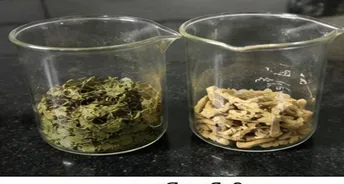
(The dried Ashwagandha roots and Brahmi leaves were collected, cleaned, shade dried, and powdered separately. The powdered materials were extracted using purified water by heating method. The extracts were filtered and concentrated)
↓
Preparation of Syrup Base

Required quantity of sugar was dissolved in purified water with continuous heating to prepare syrup base. Honey was added to improve taste and acceptability.
↓
Mixing of Herbal Extracts

Measured quantities of Ashwagandha extract and Brahmi extract were slowly added into the syrup base with continuous stirring to obtain uniform mixing.
↓
Addition of Preservative and Flavor

Sodium benzoate was added as preservative and lemon flavor was added to improve palatability.
↓
Filtration

The prepared syrup was filtered using muslin cloth to remove unwanted particles and obtain a clear solution.
↓
Filling and Storage

The final syrup was transferred into amber colored bottles and stored at room temperature for further evaluation studies.
6. FORMULATION
Optimized Formulation (F3)
|
Ingredient |
Quantity |
|
Ashwagandha Extract |
500 mg |
|
Brahmi Extract |
300 mg |
|
Honey |
10 ml |
|
Sugar Syrup |
50 ml |
|
Sodium Benzoate |
0.2 g |
|
Lemon Flavor |
q.s |
|
Purified Water |
Up to 100 ml |
F3 batch demonstrated superior physicochemical characteristics and was selected as the optimized formulation.
7. EVALUATION PARAMETERS
The prepared herbal syrup was evaluated for various physicochemical and organoleptic parameters to ensure the quality, stability, and acceptability of the formulation.
Organoleptic Evaluation
The prepared herbal syrup was evaluated visually for color, odor, taste, and appearance.
Table 5.1 Organoleptic Evaluation
|
Parameter |
Observation |
|
Color |
Brown |
|
Odor |
Characteristic |
|
Taste |
Sweet |
|
Appearance |
Clear and smooth |
Determination of pH
The pH of the herbal syrup was determined using a digital pH meter at room temperature. The pH meter was calibrated before use using standard buffer solutions.
|
Formulation |
pH |
|
F1 |
5.6 |
|
F2 |
5.8 |
|
F3 |
6.0 |
Viscosity Determination
The viscosity of the syrup was measured using a Brookfield viscometer at room temperature.
Table. Viscosity Determination
|
Formulation |
Viscosity (cps) |
|
F1 |
820 |
|
F2 |
845 |
|
F3 |
860 |
Specific Gravity
Specific gravity of the prepared syrup was determined using a specific gravity bottle.
Table 5.4 Specific Gravity
|
Formulation |
Specific Gravity |
|
F1 |
1.18 |
|
F2 |
1.20 |
|
F3 |
1.22 |
Stability Study
The prepared herbal syrup was subjected to stability studies at room temperature and refrigerated conditions for a period of one month.
Table. Stability Study
|
Storage Condition |
Observation |
|
Room Temperature |
Stable |
|
Refrigerated Condition |
No precipitation observed |
RESULTS AND DISCUSSION
The herbal syrup prepared using Ashwagandha and Brahmi extracts showed satisfactory physicochemical properties. The syrup possessed acceptable color, odor, and sweet taste which makes it suitable for pediatric administration.
The pH of the formulation was found within the acceptable range for oral herbal preparations, indicating good stability and compatibility. The viscosity of the syrup was adequate, ensuring easy pouring and administration. No precipitation or microbial growth was observed during the stability study, indicating good physical stability of the formulation.
Ashwagandha and Brahmi are well-known Ayurvedic herbs possessing adaptogenic, anxiolytic, neuroprotective, and antioxidant properties. Their incorporation into syrup formulation may help support relaxation, reduce stress, and improve cognitive function in children.
Overall, the prepared herbal syrup was found to be stable, palatable, and suitable for pediatric use.
CONCLUSION
The present study successfully formulated and developed a herbal syrup containing Ashwagandha and Brahmi for anxiety and stress management in children. The prepared formulation showed satisfactory physicochemical properties such as acceptable pH, viscosity, appearance, and stability.
The syrup was found to be palatable and suitable for pediatric administration. The herbal ingredients used in the formulation possess significant adaptogenic and calming properties which may help in reducing stress and anxiety naturally.
Therefore, the developed herbal syrup can be considered as a safe and effective herbal formulation for supporting mental wellness in children.
REFERENCES




Rameshwar Danave, Vaibhav Zotting, Gaurav Meshram, Dr. Nilesh Chachda, Formulation And Development of Herbal Syrup for Anxiety and Stress in Children, Int. J. of Pharm. Sci., 2026, Vol 4, Issue 7, 1081-1087, https://doi.org/10.5281/zenodo.21217463
 10.5281/zenodo.21217463