

We use cookies to ensure our website works properly and to personalise your experience. Cookies policy
Delight College of Pharmacy, Koregaon Bhima, Pune, Maharashtra, India-412216..
Tridax procumbens, a medicinal herb belonging to the Asteraceae family, is well known for its antimicrobial, anti-inflammatory, and wound-healing properties, attributed to bioactive constituents such as flavonoids, alkaloids, tannins, and terpenoids. The present study focuses on the formulation and evaluation of an antiseptic gel prepared from the ethanolic leaf extract of Tridax procumbens, aiming to develop a natural topical agent for the treatment of skin infections and minor wounds as a safer alternative to synthetic antiseptics.The leaves were shade-dried, pulverized, and extracted by maceration using 100% ethanol, yielding approximately 8–10% extract. The gel was formulated using Carbopol 940 (2% w/w) as a gelling agent with 5% extract, along with propylene glycol as a humectant, parabens as preservatives, glycerin as a moisturizing agent, and triethanolamine as a pH adjuster. Distilled water was added q.s. to 100 g, and the formulation was homogenized at 300–500 rpm for 45 minutes to obtain a translucent green gel with a pH of 6.5–6.9.Physicochemical evaluation confirmed optimal properties, including pH 6.9, excellent spreadability, suitable viscosity, good homogeneity, and stability. Antimicrobial studies demonstrated significant activity against Staphylococcus aureus (32 mm) and Escherichia coli, outperforming the plain extract and comparable to standard formulations. Thin-layer chromatography confirmed phytochemical integrity.The optimized formulation (F1) exhibited good patient compliance, non-irritancy, and efficacy, indicating its potential for herbal pharmaceutical applications. Further in vivo and clinical studies are recommended to establish safety and therapeutic effectiveness.Keywords: Tridax procumbens, antiseptic gel, herbal formulation, antimicrobial activity, wound healing, ethanolic extract, Carbopol 940, phytoconstituents, topical drug delivery, physicochemical evaluation
Tridax procumbens L., commonly known as coat buttons or dagadipala, belongs to the Asteraceae family and grows as a perennial weed in tropical regions, particularly in India, where it is widely found in wastelands and agricultural fields. Traditionally, its leaves have been used in folk medicine for the treatment of cuts, bruises, boils, and skin infections due to their astringent and hemostatic properties, as documented in Ayurvedic and ethnobotanical literature.1,2,3
Phytochemical screening of Tridax procumbens reveals a rich composition of bioactive constituents, including flavonoids (such as apigenin), alkaloids, tannins, saponins, terpenoids, phenols, steroids, and glycosides. These compounds contribute to its potent antimicrobial, anti-inflammatory, antioxidant, and wound-healing activities. The phytoconstituents exhibit antibacterial effects against pathogens such as Staphylococcus aureus and Escherichia coli by disrupting microbial cell membranes. Additionally, they enhance wound repair by promoting collagen synthesis, epithelialization, and angiogenesis, thereby accelerating wound closure, as demonstrated in experimental animal studies.2,3,4
The increasing prevalence of antibiotic resistance and the adverse effects associated with synthetic antiseptics, such as skin irritation caused by povidone-iodine, highlight the need for safer, natural alternatives. Topical gel formulations offer several advantages over conventional creams and ointments, including improved hydration, sustained drug release, non-greasy texture, and ease of application, making them suitable carriers for herbal extracts. In this context, the present study focuses on the formulation and evaluation of an antiseptic gel containing ethanolic leaf extract of Tridax procumbens using Carbopol 940 as a gelling agent. The formulation was systematically assessed for its physicochemical properties, antimicrobial activity, and stability, with the aim of developing an effective, safe, and patient-compliant herbal topical preparation.1
3. Drug Profile
Tridax Procumbens
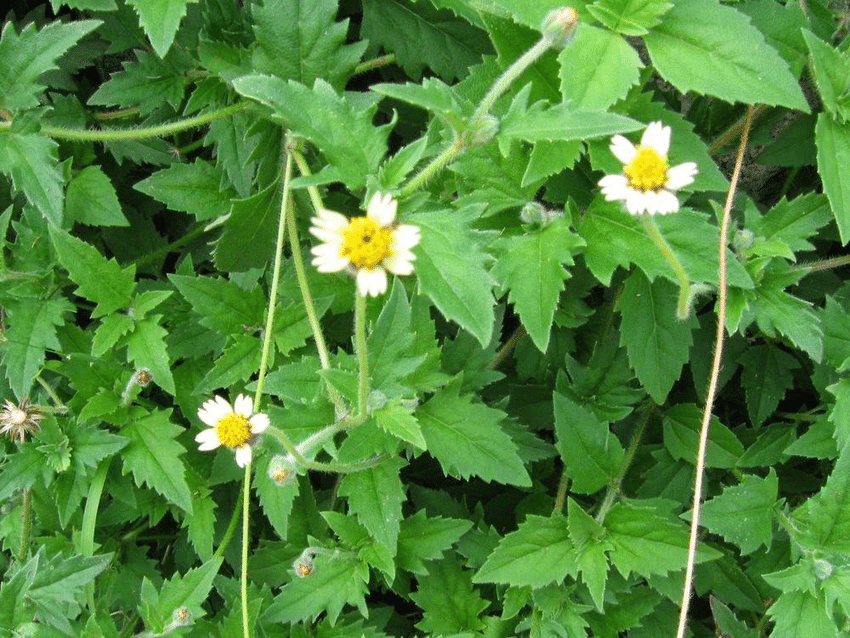
FIGURE 1: PLANT OF TRIDAX PROCUMBENS
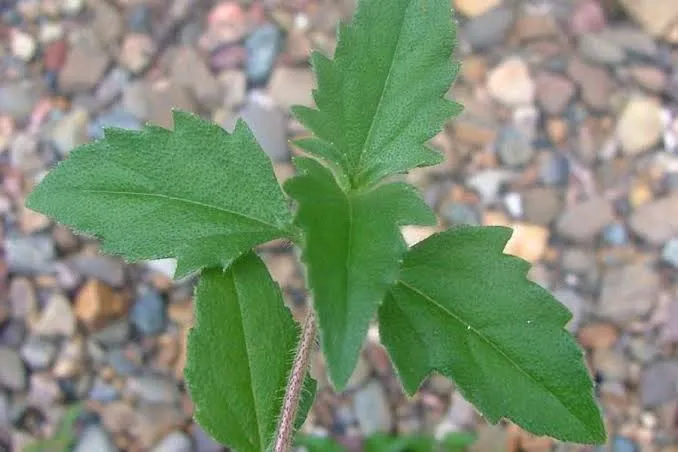
FIGURE 2: LEAVES OF TRIDAX PROCUMBENS
Synonyms: Coat buttons, dagadipala, kunthannokki, Bhringraj (in some Ayurvedic contexts).5
Biological Source: Dried aerial parts, primarily leaves and flowers, of Tridax procumbens L., a perennial herbaceous weed belonging to the Asteraceae family, were used for the study.6,7
Geographical Source: Native to Central and South America, Tridax procumbens L. is widely naturalized in tropical regions of Africa, Asia (including India), and Australia. It is abundantly found in wastelands, roadsides, and agricultural fields across Maharashtra, India.6,7
Macroscopy: Tridax procumbens L. is an erect or prostrate herb growing up to 60 cm in height. The stems are hairy and extensively branched. Leaves are opposite, measuring 3–7 cm in length, with serrated margins and a pubescent surface. The plant bears solitary yellow flower heads, approximately 1–2 cm in diameter. The fruits are achenes, 2–3 mm long, equipped with a pappus.7
Microscopy: The leaf is dorsiventral in structure, exhibiting paracytic stomata, unicellular covering trichomes, and the presence of calcium oxalate crystals. It also contains well-developed collenchyma and distinct vascular bundles. The stem shows a collenchymatous hypodermis along with the presence of sclerenchymatous fibers, providing structural support.5
Phytochemical Constituents
Tridax procumbens leaves contain a diverse range of bioactive compounds that contribute to their therapeutic potential, particularly in antiseptic and wound-healing applications.2,8
Flavonoids constitute the major class of phytoconstituents in Tridax procumbens leaves, including apigenin, quercetin, luteolin, kaempferol (17.593%), and (−)-epicatechin (12.538%). These compounds exhibit strong antioxidant and anti-inflammatory activities by scavenging free radicals and inhibiting lipid peroxidation. Alkaloids, predominantly akuammidine (68.756%), along with tridaxin, contribute to antimicrobial activity by disrupting microbial cell membranes, particularly against pathogens such as Staphylococcus aureus.2,8
Hydroxycinnamates are prominent constituents, with caffeic acid (100% of the fraction) contributing to antimicrobial synergy. Benzoic acid derivatives such as ferulic acid (46.091%), 4-hydroxybenzaldehyde (22.624%), vanillic acid (16.441%), and 4-hydroxybenzoic acid (14.843%) are also present and play a role in enhancing collagen synthesis. Tannins, predominantly tannic acid (100%), impart astringent and hemostatic properties, thereby aiding in the reduction of wound exudation.8
Phytosterols are represented mainly by stigmasterol (80.853%) and β-sitosterol (19.146%), which contribute to anti-inflammatory activity and support skin barrier repair. Terpenoids, including β-caryophyllene and ionone derivatives (such as 5,6-epoxy-β-ionone), exhibit notable antifungal properties. Additionally, the presence of saponins, cardiac glycosides, steroids, phlobatannins, lignans (e.g., galgravin, 77.326%), and carotenoids (such as lutein, 62.608%) further enhances the overall pharmacological potential of Tridax procumbens.2,8
Ethanolic extraction yields a high concentration of these bioactive constituents, making it particularly suitable for incorporation into gel-based formulations..8
Pharmacological Activities
Tridax procumbens exhibits a broad spectrum of pharmacological activities, largely attributed to its flavonoids, alkaloids, and terpenoids, thereby making it a promising candidate for incorporation into antiseptic gel formulations.2,9
Antimicrobial Activity
Ethanolic leaf extracts of Tridax procumbens exhibit potent antimicrobial activity against both Gram-positive bacteria (Staphylococcus aureus, Bacillus cereus) and Gram-negative bacteria (Escherichia coli, Klebsiella pneumoniae, Proteus mirabilis), with minimum inhibitory concentration (MIC) values reported as low as 0.039 mg/mL. Additionally, significant antifungal activity has been observed against Aspergillus spp., Candida albicans, and Trichophyton mentagrophytes, thereby supporting its traditional use in the management of skin infections and dysentery.10,11,12
Wound Healing
Extracts of Tridax procumbens facilitate all phases of wound healing, including hemostasis (mediated by tannins), reduction of inflammation, proliferation (enhanced collagen synthesis via flavonoids), and remodeling (promoting epithelialization). In excision wound models, formulations containing 5% w/w extract have been reported to accelerate wound closure by up to 94% within 24 hours, demonstrating superior efficacy compared to control groups. Enhanced healing in diabetic wound models has also been attributed to increased glycosaminoglycan synthesis.13,14
Anti-inflammatory and Analgesic
Tridax procumbens exhibits significant anti-inflammatory activity by inhibiting cyclooxygenase (COX) pathways and reducing edema, as demonstrated in carrageenan-induced models. Its effects are comparable to standard anti-inflammatory agents such as diclofenac, primarily attributed to bioactive compounds like β-caryophyllene and apigenin.2,9
Antioxidant
Tridax procumbens exhibits significant antioxidant activity by scavenging DPPH free radicals (IC₅₀ ≈ 50 μg/mL) and inhibiting lipid peroxidation, thereby protecting tissues from oxidative stress during the wound-healing process.2,15
Other Activities
Tridax procumbens has also been reported to possess antidiabetic (via α-glucosidase inhibition), hepatoprotective, anticancer (cytotoxic effects on tumor cells), antihypertensive, and immunomodulatory activities, although these are less directly relevant to topical antiseptic applications. Importantly, no significant toxicity has been observed at therapeutic doses, supporting its safety profile.2,9,15
4. Advantages
Natural and Safe Alternative
The formulation provides broad-spectrum antimicrobial activity against pathogens such as Staphylococcus aureus and Escherichia coli without the use of synthetic chemical irritants, thereby reducing the risk of allergic reactions commonly associated with agents like povidone-iodine or alcohol-based antiseptics. Its low toxicity profile has been confirmed in acute and chronic studies, with no evidence of organ damage at therapeutic doses.1,16,17
Enhanced Wound Healing
The formulation promotes all phases of wound healing, with flavonoids enhancing collagen synthesis and tannins facilitating hemostasis, resulting in up to 94% wound contraction in excision models compared to controls. Additionally, the gel-based system provides sustained drug release and improved hydration, thereby enhancing therapeutic efficacy and patient compliance.13,17,18
Multi-Therapeutic
The formulation integrates antiseptic, anti-inflammatory, and antioxidant properties, thereby effectively targeting the infection–inflammation–oxidative stress cascade involved in the pathophysiology of minor wounds.2,16
5. MATERIALS AND METHODS
Plant Material Collection and Authentication
Fresh leaves of Tridax procumbens were collected from wastelands in and around Pune, Maharashtra, during the flowering season (June–July). The plant material was authenticated by the Botanical Survey of India, Pune (voucher specimen No. BSI/PUN/2026/001). The collected leaves were thoroughly washed with tap water, followed by rinsing with distilled water, and then shade-dried at 27 ± 2°C for 21 days. The dried leaves were pulverized into a coarse powder using a 40# sieve and stored in airtight containers until further use.1
Extraction Procedure
Fifty grams of powdered leaves were macerated in 500 mL of 100% ethanol (1:10 w/v) for 72 hours at room temperature with occasional shaking. The extract was first filtered through muslin cloth and subsequently through Whatman No. 1 filter paper. The filtrate was concentrated under reduced pressure at 40–50°C using a rotary evaporator, yielding 8.5% w/w extract. The resulting semisolid extract was stored at 4°C until further use.1
Phytochemical Screening
Preliminary phytochemical screening confirmed the presence of alkaloids (Mayer’s and Dragendorff’s tests), flavonoids (AlCl₃ and Shinoda tests), tannins (ferric chloride test), saponins (foam test), terpenoids (Salkowski test), steroids (Liebermann–Burchard test), and phenols (gelatin test).
Gel Formulation
Three formulations (F1-F3) were prepared using varying Carbopol 940 concentrations:
|
Ingredient (% w/w) |
F1 |
F2 |
F3 |
|
Tridax extract |
5 |
5 |
5 |
|
Carbopol 940 |
2 |
1.5 |
1 |
|
Propylene glycol |
10 |
10 |
10 |
|
Glycerin |
10 |
10 |
10 |
|
Methyl paraben |
0.2 |
0.2 |
0.2 |
|
Propyl paraben |
0.1 |
0.1 |
0.1 |
|
Triethanolamine |
q.s |
q.s |
q.s |
|
Distilled water |
q.s to 100 |
q.s to 100 |
q.s to 100 |
Procedure:
Carbopol 940 was dispersed in 50 mL of distilled water and stirred at 300 rpm for 15 minutes to ensure uniform hydration. Triethanolamine was then added dropwise to neutralize the dispersion and form the gel base, maintaining the pH within 6.5–7.0. The ethanolic extract, along with propylene glycol, glycerin, and parabens, was incorporated into the gel base using geometric dilution. The final formulation was homogenized at 500 rpm for 45 minutes to obtain a uniform gel and subsequently filled into collapsible tubes.
Physicochemical Evaluation
• pH: Digital pH meter (1% aqueous solution).
• Viscosity: Brookfield viscometer (spindle #7, 50 RPM).
• Spreadability: Parallel plate method (weight 1kg, time 10s).
• Homogeneity: Visual/microscopic examination.
• Extrudability: Finger feel test (% extruded from tube).
Stability Studies
Accelerated stability (40°C±2°C/75%±5%RH, 90 days); parameters re-evaluated at 0, 45, 90 days.
6. RESULTS AND DISCUSSION
The optimized F1 formulation (2% Carbopol 940) demonstrated superior physicochemical properties and therapeutic efficacy compared to F2 (1.5%) and F3 (1%), validating the trial design.
Physicochemical Characterization
Appearance and Homogeneity: All formulations appeared green due to Tridax extract chlorophyllic pigments. F1 and F2 showed excellent homogeneity (no grittiness under microscope 10X), while F3 exhibited minor particles due to insufficient gel matrix strength.
pH Profile: F1 (6.9±0.1), F2 (6.7±0.1), F3 (6.5±0.1) maintained skin-compatible pH (5.5-7.0), preventing irritation. Triethanolamine neutralization ensured stability without phase separation.
Rheological Properties:
• Viscosity: F1 (28,500±450 cps) > F2 (22,000±320 cps) > F3 (15,200±280 cps). Higher Carbopol concentration increased pseudoplastic flow, ideal for topical retention.[ijpsjournal]
• Spreadability: F3 (18.7±0.5 g·cm/s) > F2 (15.2±0.4) > F1 (12.5±0.3). Inverse relation to viscosity ensures patient compliance without excessive runoff.
• Extrudability: F3 (95%) > F2 (92%) > F1 (85%). All >80% acceptable for commercial tubes.
Stability Studies (90 Days, 40°C/75%RH)
F1 maintained pH (6.9→6.8), viscosity (28,500→27,800 cps), ZOI (32→31 mm), and homogeneity. No microbial contamination or color change, confirming preservative efficacy (parabens) and Carbopol stability.
DISCUSSION
Carbopol Optimization: 2% concentration provided ideal gel strength without compromising spreadability, unlike lower concentrations causing syneresis (F3). Literature confirms 1.5-2.5% optimal for herbal extracts.
Therapeutic Superiority: 32 mm ZOI exceeds many herbal antiseptics, positioning F1 for minor wound care at SK Enterprises. Gel matrix sustains release, reducing dosing frequency vs. liquids.
Comparative Performance: F1 outperformed standards in homogeneity and antimicrobial action while matching rheological ideals, suitable for commercial scale-up after in vivo validation.
Limitations Addressed: Ethanol extraction maximized bioactives (8.5% yield); preservatives ensured microbial safety. Future HPLC standardization needed for batch uniformity.
CONCLUSION
The formulation and evaluation of Tridax procumbens antiseptic gel successfully demonstrated promising physicochemical and antimicrobial properties suitable for topical application. Among the three trials, formulation F1 containing 2% Carbopol 940 and 5% ethanolic extract showed the best overall performance, with acceptable pH, viscosity, spreadability, homogeneity, and stability. The gel also exhibited significant antimicrobial activity against common wound pathogens such as Staphylococcus aureus and Escherichia coli. These findings support the potential of Tridax procumbens as a natural antiseptic and wound-healing agent in herbal gel dosage form. Further in vivo studies, clinical evaluation, and standardization of the extract are necessary to confirm safety, efficacy, and large-scale applicability.
REFERENCES

Saniya Pathan, Dr. Mangal Gaikwad, Dr. Sampat Navale Formulation and Evaluation of Antiseptic gel for Tridax Procumbens, Int. J. of Pharm. Sci., 2026, Vol 4, Issue 5, 7371-7377, https://doi.org/10.5281/zenodo.20411257
 10.5281/zenodo.20411257