View Article

Abstract

Diclofenac sodium is a popular non-steroidal anti-inflammatory drug (NSAID) which is used to treat inflammation and pain. The current study focuses on the formulation and evaluation of diclofenac sodium gel for topical drug delivery in order to minimize systemic side effects associated with oral administration. Physical and chemical parameters such as appearance, pH, viscosity, spreadability, homogeneity were evaluated for a number of formulations prepared with suitable gelling agents like Carbopol. The results demonstrated that the optimized gel formulation had good stability, uniformity, and drug release profile. The results of the study show that diclofenac sodium gel is a topical delivery system that has potential for the treatment of localized pain and inflammation

Keywords

NSAIDs, topical gel, carbopol, diclofenac sodium, drug delivery system, spreadability, in vitro drug release, and anti-inflammatory

Introduction

× Popup Image

Topical drug delivery systems are widely considered an effective alternative administration route for by passing the limitations of other methods. Gel formulations stand out as particularly advantageous; they are easy to apply, non-greasy, promote patient compliance, and deliver medication directly to the target area. Furthermore, topical gels improve the drug's safety profile by avoiding first-pass metabolism and reducing systemic side effects.1

Numerous studies have focused on developing and evaluating diclofenac sodium gels, incorporating various natural and synthetic polymers. Synthetic options like Carbopol 934 and 940 are popular for their superior gelling capabilities, stability, and controlled release properties, while natural polymers are explored for their biocompatibility and eco-friendly attributes. Ultimately, the selection of the polymer and other formulation components significantly determines key characteristics such as the gel's viscosity, spreadability, homogeneity, drug content, and stability.2

Rheumatoid arthritis is a chronic inflammatory disease that primarily affects joints. The result often is warm, swollen and painful joints. Pain and soreness often worsen after rest. The wrists and hands are typically involved, and the same joints are often involved on both sides of the body. 

The disease can affect blood and nerves, but also skin, eyes, lungs and heart. This can lead to low red blood cell counts, inflammation around the heart and lungs, and other complications. Other symptoms include fever and loss of energy.  Symptoms in many cases develop gradually over weeks or months.3

A frequently used non-steroidal anti-inflammatory medication belonging to the phenylacetic acid category, diclofenac sodium is recognized for its potent pain-relieving, fever-reducing, and anti-inflammatory characteristics. It is widely used to treat pain and inflammation brought on by musculoskeletal conditions like osteoarthritis, rheumatoid arthritis, and soft tissue injuries. Oral diclofenac sodium administration is often linked to side effects like gastrointestinal irritation, ulceration,

In topical delivery methods has been to improve medication penetration into the skin. Transdermal gels, two-phase gel systems, and the use of permeation enhancers have all demonstrated encouraging outcomes in terms of increasing medication bioavailability and therapeutic efficacy. Drug release and skin penetration investigations, among other in vitro and ex vivo evaluation studies, are essential for evaluating these formulations' effectiveness.4

In order to provide a topical administration method that is safe, efficient, and patient-friendly, diclofenac sodium gel formulation and evaluation continue to be crucial areas of pharmaceutical research. In order to maximize the physicochemical characteristics and therapeutic efficacy of diclofenac sodium gel, this work focuses on its creation and assessment utilizing appropriate polymers.3

Non-steroidal anti-inflammatory medications (NSAIDs) are one of the most commonly prescribed analgesics, with analgesic, anti-inflammatory, and antipyretic properties. Patients with nociceptive pain from a variety of ailments, such as osteoarthritis, rheumatoid arthritis, or even menstrual cramps, benefit from NSAIDs. The two isoforms of the cyclooxygenase enzyme (COX), cyclooxygenase-1 (COX-1) and cyclooxygenase-2 (COX-2), were the main targets of the NSAIDs' inhibitory effects. Under physiological conditions, COX-1 may be mostly found in human organisms, while inflammatory stimuli often affect COX-2 expression. Additionally, one of the factors employed to classify NSAIDs is their ability to selectively inhibit different COX isoforms.5

Prostaglandins (PG), prostacyclin (PGI), and thromboxane (TXA), which are important for the healthy operation of the human body, are produced by COX. For instance, PG contribute to swelling, discomfort, and increased vascular permeability during the development of the inflammatory process, while PGI control blood flow and platelet activity. Additionally, the digestive system, kidneys, and platelets all benefit from PG, which is mostly produced by COX-1. Therefore, COX-1 inhibition is associated with the majority of NSAID adverse effects. Not only does the length of therapy raise the incidence of NSAID adverse effects, but also among individuals who have been diagnosed with other illnesses that call for medication. The most frequent adverse effects of NSAIDs are associated with kidney or cardiovascular or gastrointestinal system malfunction. Patients may experience symptoms such as dyspepsia, nausea, stomach ulcers, acute or chronic renal failure, or hypertension while using NSAIDs.5

2.1 Advantages of Diclofenac Sodium Gel:

  • Diclofenac sodium gel provides rapid pain relief at the site of application.
  • It reduces joint and muscle swelling and inflammation.
  • The gel deals with the specific area of pain because it acts locally.
  • Compared to oral medications, it has less adverse effects.8
  • The gel distributes uniformly over the skin and is simple to apply.
  • After application, it doesn't feel oily or sticky.
  • It is safer and can be used for a longer period of time.6
  • It helps treat ailments like muscle soreness, sprains, and arthritis.
  • It relieves pain without requiring the swallowing of tablets.
  • By reducing pain and stiffness, it enhances mobility as well as flexibility.9

2.2 Disadvantages of Diclofenac Sodium Gel:

  • In cases of severe pain, diclofenac sodium gel could not offer any relief.
  • Usually, its effect is specific to the region in which it is used.
  • For optimal effects, it must be administered several times a day.
  • Some people may get little redness or irritation of the skin.15
  • Skin which is injured or damaged should not be treated with it.
  • Compared to oral medications, the gel could take longer to start working.
  • Sensitive people might suffer from an allergic reaction.
  • In some cases, it might not penetrate deeply.16

2.3 Importance of Diclofenac sodium gel:

  1. Provide Fast Pain Relief:

Diclofenac sodium gel is mainly used to reduce pain in conditions like join pain, muscle pain, back pain, arthritis. Since is applied directly to the skin, it starts working at the affected area and gives quicker relief compared to oral medicines.11

  1. Reduces Inflammation and Swelling:

This gel is decreasing swelling, redness and stiffness in the affected part of the body. It is very useful in injuries like sprains, strains, sports related pain and inflammation in the major problem.

  1. Localized Action at the Site:

One the biggest advantage of diclofenac gel is that it works only at where it applied. It does not spread much throughout the body, so the drug concentration remains higher at the painful area, making it more affective.12

  1. Fewer Side Effects than Tablets:
    Oral diclofenac may cause stomach irritation and other side effects, but the gel form reduces these risks because it acts locally and avoids first-pass metabolism.13
  2. Good Skin Penetration:
    Diclofenac sodium can penetrate through the skin and reach deeper tissues like muscles and joints, providing effective relief.10
  3. Easy to Use and Comfortable:
    The gel is smooth, non-greasy, and easy to apply. It spreads easily and provides a cooling effect, which improves patient comfort.
  4. Improves Patient Compliance:
    Because it is easy to use and has fewer side effects, patients prefer using diclofenac gel regularly, which improves treatment outcomes.13

REVIEW OF LITERATUE

  1. Ahuja et al, (2008) developed Diclofenac sodium topical gel using natural polymers as gelling agents. They were assessed for pH, viscosity, spreadability, uniformity and drug content and the formulations were suitable for application on skin. In-vitro release studies showed a controlled and sufficient dispersion of Drug. Natural polymers can be a safe alternative over synthetic polymer for formulation of diclofenac sodium gel.
  2. Abrar et al, (2012) The topical gel formulations of NSAIDs were developed and characterized for their in-vitro performance also. Physicochemical parameters like pH, viscosity, spreadability, homogeneity and drug content were measured for the formulated gels and found to be within limits. In vitro drug release studies showed good diffusion profile of NSAID gels which suggests them for effective topical delivery.
  3. Bhanja et al, (2013) Created and assessed a diclofenac transdermal gel. Physicochemical parameters including pH, viscosity, spreadability, homogeneity, and drug content were evaluated for the formulation, and the findings were satisfactory. Diclofenac transdermal gel is a potential approach for localized anti-inflammatory therapy, according to in vitro diffusion tests that showed efficient drug release.
  4. Goci et al, (2014) Developed a topical diclofenac sodium gel and assessed it’s in vitro efficacy. Physicochemical characteristics of the produced formulations, including pH, viscosity, spreadability, homogeneity, and medication content, which were determined to be suitable for topical use. Diclofenac sodium diffused from the gel satisfactorily, according to in vitro drug release experiments. Diclofenac sodium gel is an appropriate and successful topical dose form for localized anti-inflammatory action, according to the study's findings.
  5. Shamira et al, (2018) Formulated and evaluated diclofenac sodium gel using Carbopol as a gelling agent. The developed formulation was evaluated for physicochemical parameters such as pH, viscosity, spreadability, homogeneity, and drug content, which were found to be within acceptable limits. In-vitro drug release studies showed satisfactory diffusion, indicating that Carbopol-based diclofenac sodium gel is effective and suitable for topical application.
  6. Julie Pradal et al, (2019) The formulation of topical diclofenac has a significant impact on its efficacy, as modifications in the base and other chemicals can influence the drug's ability to penetrate the skin, where some formulations may be less efficient while others can enhance absorption and produce superior outcomes, highlighting the importance of selecting an appropriate formulation for improved clinical results.
  7. Rajalakshmi et al, (2022) Using Carbopol 934 and Carbopol 940 as gelling agents, prepared and assessed diclofenac sodium gel. Physicochemical characteristics of the produced gels, including pH, viscosity, spreadability, homogeneity, and drug content, were evaluated and determined to be within permissible bounds. Both Carbopol grades are appropriate for creating topical diclofenac sodium gel formulations, according to in-vitro drug release experiments that showed adequate diffusion.
  8. Zinjad et al, (2022) Used Carbopol 934 as a gelling agent to create and assess diclofenac sodium gel. Physicochemical characteristics of the gel, such as pH, viscosity, spreadability, homogeneity, and drug content, were evaluated and found to be within acceptable bounds. Carbopol 934 is an appropriate polymer for stable and effective topical diclofenac gel formulations, according to in vitro drug release experiments that showed effctive diffusion.
  9. Manian et al, (2022) Diclofenac sodium-containing topical dermatological products were developed and assessed by Manian order to examine their in vitro efficacy. The formulations' physicochemical properties and in vitro drug release behavior were evaluated. The study concluded that tailored topical formulations can increase the effectiveness of diclofenac sodium for dermatological applications because formulation composition has a substantial impact on drug release and perfrmance.
  10. Kasparaviciene et al, (2024) To improve topical distribution, created and assessed two-phase gel formulations with camphor and sodium diclofenac. The gels demonstrated enhanced dispersion and efficacy when evaluated for physicochemical characteristics and in-vitro drug release. The study found that diclofenac and other active chemicals can be effectively delivered via the skin using two-phase gels.
  11. Ekka et al, (2024) Created and assessed a topical pain-relieving gel comprising aceclofenac and diclofenac. Physicochemical characteristics of the formulations, including pH, viscosity, spreadability, homogeneity, and drug content, were evaluated and determined to be within acceptable bounds. The combination gel formulation is appropriate for topical pain relief, according to in-vitro drug release 6 experiments that showed efficient diffusion of both medications.
  12. Todmal et al, (2024) Conducted research on the formulation and evaluation of diclofenac sodium gel using Carbopol 940 as a gelling agent. The prepared gel was evaluated for parameters such as pH, viscosity, spreadability, homogeneity, and drug content and showed acceptable results. In-vitro drug release studies indicated satisfactory diffusion, concluding that Carbopol 940 is a suitable polymer for developing stable and effective diclofenac sodium topical gel formulations.
  13. Kokare and Shinde et al, (2025) Created and assessed a topical diclofenac gel. physicochemical properties and performance in vitro. The formulation's pH, homogeneity, spreadability, viscosity, medication content, and skin irritation were all evaluated and determined to be within acceptable bounds. The gel's efficacy for topical anti-inflammatory therapy was demonstrated by the high percentage of drug release observed in in vitro diffusion experiments.
  14. Adamiak Giera et al, (2025) Diclofenac sodium from Pentravan® transdermal formulations and Celugel hydrogel were tested for in vitro skin penetration using human skin. Diclofenac sodium effectively penetrated the skin, according to the study, which evaluated permeation characteristics and drug diffusion behavior. The results demonstrated that sophisticated transdermal bases and hydrogels can greatly impact medication penetration and improve diclofenac sodium topical delivery.
  15. Amal Ouamrouche et al, (2025) In the Hungarian Journal of Industry and Chemistry, prepared a diclofenac sodium gel and observed that it had a proper pH, smooth consistency, and spread easily on the skin, making it user-friendly. The gel remained stable and released the drug effectively, showing that it can be helpful in reducing pain and inflammation when applied topically.
  16. Naresh Kumar S. et al, (2026) In the World Journal of Pharmaceutical Research, reported that the diclofenac sodium gel had an appropriate pH, smooth consistency, and good spreadability, which made it comfortable and easy to apply. The formulation remained stable with uniform distribution of the drug. It also showed effective drug release, supporting its role in relieving pain and inflammation. Additionally, the gel was found to be safe and non-irritating for skin use.

4. NEED OF STUDY:

Topical gels are the most widely used because to their consistent drug distribution, non-greasy texture, simplicity of use, and high patient compliance. Diclofenac sodium gel is widely used to treat arthritis, sprains, soft tissue injuries, and muscle soreness. Choosing the right gelling ingredient is crucial to creating a topical gel that works. Because of their superior gelling qualities, stability, viscosity control, and skin friendliness, Carbopol 934 and Carbopol 940 are frequently used polymers. Diclofenac sodium gels made with Carbopol have been shown in earlier experiments to have improved drug release and acceptable physicochemical characteristics. In order to provide a stable, efficient, and patient-friendly topical preparation, the current study intends to create and assess a diclofenac sodium gel employing Carbopol as a gelling agent.

Major clinical signs of a number of illnesses, including arthritis, musculoskeletal disorders, sports injuries, and post-surgical ailments, include pain and inflammation. Joint pain, swelling, stiffness, and decreased mobility are the hallmarks of arthritis, a chronic inflammatory disease that can seriously lower quality of life and everyday functioning. In order to enhance patient comfort and stop the progression of the disease, effective management of inflammation and pain is crucial.

Non-steroidal anti-inflammatory drugs, or NSAIDs, are commonly used to relieve pain and inflammation. Diclofenac sodium is a popular NSAID due to its potent analgesic, anti-inflammatory, and antipyretic qualities. By inhibiting cyclooxygenase enzymes, the drug decreases prostaglandin synthesis, which is linked to inflammatory responses. Despite its effectiveness, long-term oral diclofenac sodium treatment is associated with adverse effects such as gastrointestinal irritation, renal toxicity, and cardiovascular issues, necessitating the development of safer delivery modalities.

5. AIM:

To provide an efficient, stable, and secure topical medication delivery system for the treatment of pain and inflammation by formulating and assessing diclofenac sodium gel utilizing appropriate polymers.

5.1 Objectives of study:

    • To make diclofenac sodium gel with the appropriate gelling agents (For example: Carbopol 934/940).
    • To choose and refine excipients in order to create a stable gel.
    • To assess the gel's uniformity and physical appearance.
    • To ascertain the formulation's pH in order to assess skin compatibility.
    • To check the gel's spreadability and viscosity.
    • To evaluate the consistency of medication composition.
    • To assess the formulation's stability under appropriate circumstances.

6. PLAN OF WORK:

•      Review of the literature: First, books and research papers are used to get data regarding Diclofenac sodium and gel formulations.

•      Pre-formulation research: The drug's fundamental characteristics, such as compatibility and solubility, are examined.

•      Choice of ingredients: To create the gel, appropriate polymers, solvents, and other components are used.

•      Gel formulation: The medication and gel base are combined, and the pH is adjusted to create the gel.

•      Assessment (pH, spreadability, viscosity, medication content):  The medicine and gel base are combined, and the pH is adjusted, to create the gel. Drug release research in vitro

•      Drug release research in vitro: In a lab setting, the drug's release from the gel is monitored.

•      Stability analysis: To test the gel's stability, it is kept in various circumstances.

•      Outcome and conclusion: Ultimately, depending on all of the findings, the optimal formulation is chosen.

7. MATERIALS AND METHODS:  

7.1 Drug profile:


Table no 1. Drug Category and Uses

Sr.no

Drug

Category/ Uses

1


Diclofenac Sodium

Active Pharmaceutical Ingredient Used for analgesic and anti-inflammatory activity.

2

Carbopol 940

Gelling Agents

polymers provide gel structure

3

Ethanol

Solvents

Enhances drug solubility and penetration

4

Propylene Glycol

Penetration Enhancers

Improves skin penetration and acts as humectant

5

Glycerin

Penetration Enhancers

6

Methyl Parabean

Preservatives

Increases shelf life

7

Water

Vehicles

Provide proper consistency to gel


7.2 Drug Profile:

    Diclofenac Sodium: Diclofenac is a nonsteroidal anti-inflammatory medicine (NSAID) that is used to treat mild-to-moderate pain and relieves joint discomfort, inflammation, edema, and stiffness associated with arthritis (such as osteoarthritis or rheumatoid arthritis).
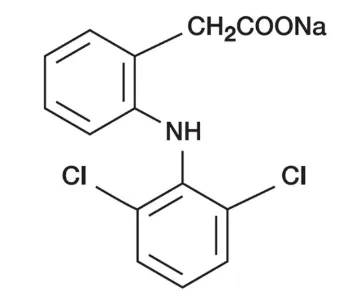


Structure of Diclofenac Sodium1

Synonym(s): 2-[(2,6-Dichlorophenyl) amino] benzeneacetic acid sodium salt, Diclofenac Sodium.

Molecular weight: 318.13g/mol.

Empirical Formula: C14H10Cl2NNaO2

Structure: It consists of phenylacetic acid group and phenyl ring with two chlorine atoms, enhancing its potency

Characteristics: It is a sodium salt form of diclofenac, allowing for high lipid solubility and enabling it to cross the blood brain barrier.9

    Carbopol 940:


Structure of Carbopol 940

Synonym(s): Carbomer 940

Molecular weight: 72.06g/mol

Empirical Formula: (C3H4O2) n

Characteristics: short-flow (non-drip) characteristics, excellent thickening, and suspending capabilities,

    Ethanol:


Structure of Ethanol

Synonym(s): Methylcarbinol, Ethyl hydroxide

Molecular weight: 46.07 g/mol

Empirical Formula:  C₂H₅OH or C₂H₆O

Characteristics: is a clear, colorless, volatile liquid with a characteristic vinous odor. It is a primary alcohol known for being highly flammable, water-soluble, and toxic in large quantities.

    Propylene glycol:


Structure of Propylene glycol

Synonym: 1,2-Propanediol

Molecular weight: 76.09 g/mol

Empirical Formula: C3H8O2

Characteristics: is a synthetic, colourless, odourless, and viscous liquid used primarily as a humectant, solvent, and preservative.

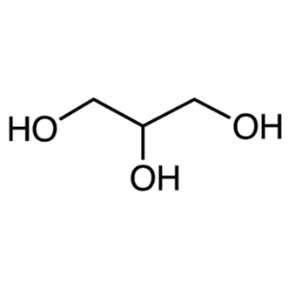
    Glycerine:


Structure of Glycerine

Synonym(s): Propane-1,2,3-triol or Glycerol

Molecular weight: 92.09 g/mol

Empirical Formula: C₃H₈O₃

Characteristics: Glycerine is a colorless, odorless, sweet, viscous, hygroscopic liquid that is used as a solvent, humectant, and emollient. It is miscible with both alcohol and water.

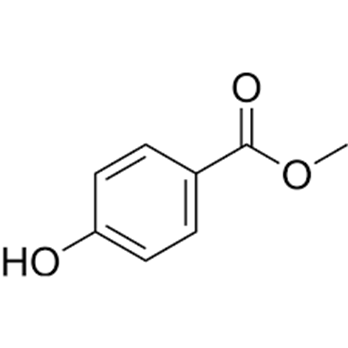
    Methyl Parabean:


Structure of Methyl parabean

Synonym(s): Methyl parahydroxybenzoate, Nipagin

Molecular weight: 152.15 g/mol

Empirical Formula: C₈H₈O₃

Characteristics: White crystalline powder, odorless, slightly soluble in water, freely soluble in alcohol, and used as an antimicrobial preservative in pharmaceutical and cosmetic formulations.

FORMULATION:


Sr.no

Drug

Quantity

F1

F2

1

Diclofenac Sodium

1g


1g


2

Carbopol 940

1g

2g

3

Ethanol

5ml

5ml

4

Propylene Glycol

10ml

10ml

5

Glycerin

5ml

5ml

6

Methyl Parabean

0.02g

0.02g

7

Triethanolamine

0.30ml

0.30ml

8

Water

45ml

45ml


8. METHODOLOGY:                                    


Add 45 ml of filtered water to a beaker containing 1 g of Carbopol 940, stirring constantly.


Let the liquid swell until a consistent gel base forms, about 30 minutes.


In a beaker, dissolve 1 g of diclofenac sodium in 5 ml of ethanol.


Next, add 10 ml of propylene glycol and 5ml of glycerin. Stir thoroughly until the mixture turns clear.


In a little quantity of warm water, dissolve 0.02 g of methyl paraben and stir thoroughly after adding this solution to the medication combination.


Add the drug solution to the swelling gel base gradually. Use a mechanical stirrer to continuously stir.

Blend until a homogenous mixture is created.


Gently mix in the triethanolamine (TEA) dropwise.


The Carbopol will neutralize and turn into a transparent gel. Set the pH to between 5.5 and 7, which is ideal for skin application.


If necessary, add a tiny amount of menthol for a cooling effect.


For scent, add a few drops of perfume.


Stir gently to obtain a smooth, homogeneous Diclofenac gel.6
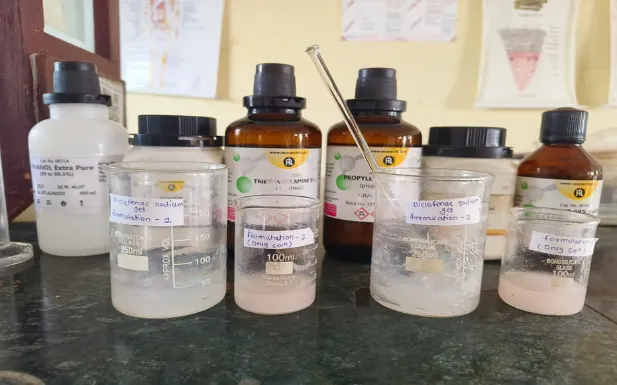


Gel Formulation: F1, F2


9. EVALIUATION TESTS:

  • Physical appearance: To make sure the gel is smooth, consistent, and lump-free, it is visually inspected for color, odor, consistency, and general look.
  • pH determination: To make sure the gel is skin-friendly (often between 5.5 and 7) and does not irritate skin, its pH is checked using a digital pH meter.
  • Homogeneity: Visual inspection is used to ensure that the medicine is distributed uniformly and that there are no aggregates.
  • Viscosity: A viscometer is used to measure viscosity, which determines the gel's thickness and flow characteristics that impact application and spreadability.
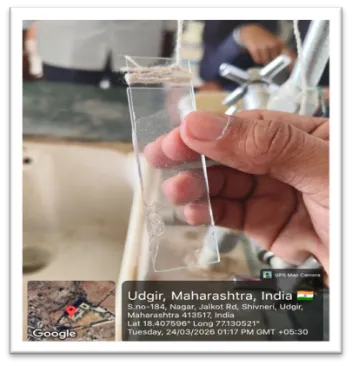
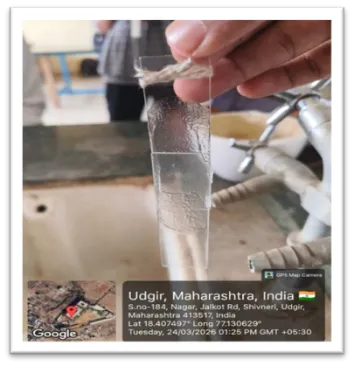
  • Spreadability: This test assesses the gel's skin-spreading ease. It is calculated by timing how long it takes for two glass slides to separate underweight.
  • Skin irritation test: To check for any irritation, redness, or allergic reaction, the gel is applied to skin (animal or human volunteer studies in accordance with recommendations).

1. Physical Evaluation:

The physical assessment includes the following examinations:

  • Colour
  • Odour
  • Consistency
  • Appearance.1

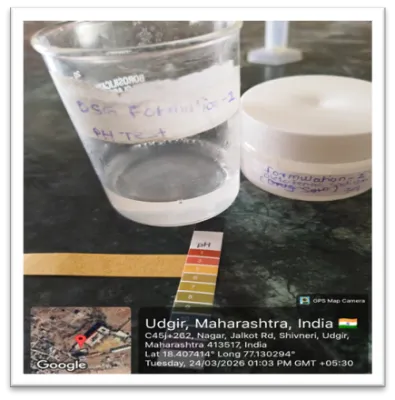
2. pH determination:

The pH is determined by dispersing 2.5 g of gel in 25 ml of purified water and determining the pH. measured with a pH paper.12
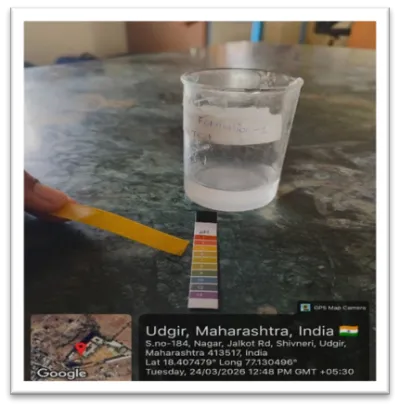


pH. Test F1                                               pH. Test F2


3. Skin irritation test: 

The irritation test was conducted on human participants. For each gel, five volunteers were selected, and 1.0g of the produced gel was placed over a 2 square inch area on the back of each hand. The subjects were examined for sores or discomfort.4

4. Homogeneity:

All developed gels (F1-F2) showed good results. Homogeneity, absence of lumps. Developed the preparation was very clear and transparent.10
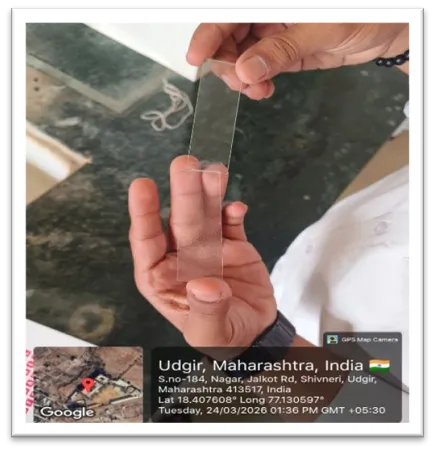


Homogeneity (F 1)                                      Homogeneity (F 2)


5. Viscosity:

A Brookfield viscometer with spindle number 7 was used to measure the gel compositions' viscosity at 100 rpm while keeping the temperature at 25°C. To improve accuracy, each sample was tested three times, and the average result was calculated. This assessment aids in determining the gel's flow and spreading ease, which is crucial for stable application.9


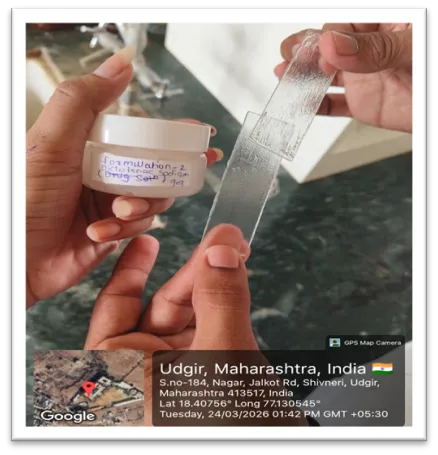
6. Spreadability:

Prevalence is expressed in time in seconds. Slide and place the gel with the two blades. between the slides under the guidance of weight, very short separation time Two slides, better distribution. Calculation method using formulas.3

S=ML/T

Where

M = weight attached to the top thread.

L = slide length.

T = time required to separate the slides.


Formulation 1: M = 2g, L = 7.5cm, T = 10sec

              Calculation:  S=2×7.510=1.5gcm/sec


              Result: 1.5 g·cm/sec

Formulation 2: M = 2 g, L = 7.5 cm, T = 20 sec

                          Calculation:S=2×7.520=0.75g⋅cm/sec


                          Result: 0.75 g·cm/sec


Spreadability   F1.            Spreadability   F2.


9.1 OBSERVATION TABLE:


Test

F1

F2

Colour

Slightly cloudy

Slightly cloudy

Odour

Mild and pleasant odour

Pleasant odour

Consistency

Uniform and semi-solid

Uniform and semi-solid

Appearance

Clear

Clear

pH

5.6

5.9

Irritancy

-

-

Homogeneity

Excellent

Satisfactory

Viscosity

-

-

Spreadability

High

Low


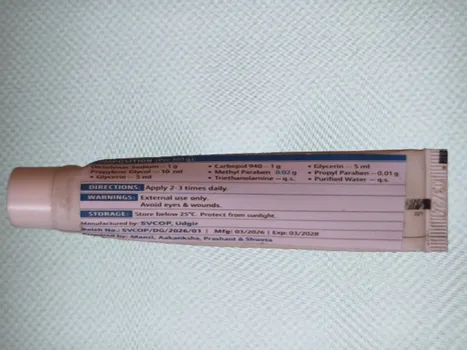
9.2 Marketed Product: Diclofenac Sodium Gel

Diclofenac sodium gel is used to relieve pain and swelling in muscles and jointsIt is applied directly to the affected area, thus it works where the pain is. It is easy to use, absorbs quickly, and helps reduce discomfort with fewer side effects than tablets.
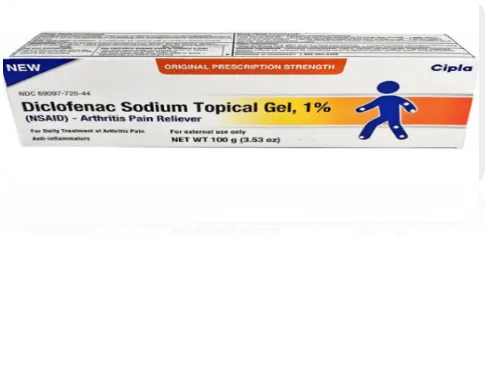
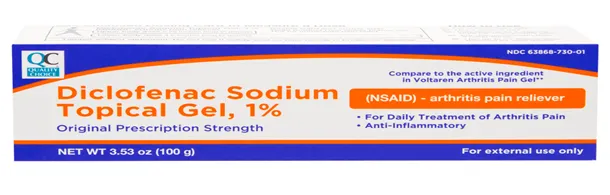


Marketed product
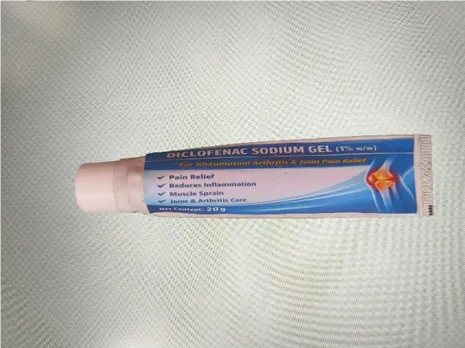


Formulated product

10. RESULT & DISCUSSION:

Test

F1

F2

Colour

Slightly cloudy

Slightly cloudy

Odour

Mild and pleasant odour

Pleasant odour

Consistency

Uniform and semi-solid

Uniform and semi-solid

Appearance

Clear

Clear

pH

5.6

5.9

Irritancy

-

-

Homogeneity

Excellent

Satisfactory

Viscosity

-

-

Spreadability

           High

Low


CONCLUSION

To minimise side effects associated with oral administration, diclofenac sodium was formulated as a topical gel. The optimised formulation (F1) exhibited a smooth, uniform texture and was easy to apply to the skin. Due to the polymer's hydrophilic nature, the gel could be easily removed with water, improving patient convenience. The anti-inflammatory activity of diclofenac sodium may be attributed to its ability to inhibit protein denaturation, thereby reducing pain and swelling.Although both formulations showed satisfactory performance, the one with a higher polymer concentration exhibited increased viscosity and reduced spreadability. In contrast, the formulation with lower polymer content was easier to apply and showed better spreadability. Both formulations maintained suitable pH and consistency and were non-irritant to the skin. Drug release was adequate in both cases; however, the formulation with improved spreadability is more practical for topical use.Carbopol 940, a high-molecular-weight polymer, is considered safe for topical application as it does not penetrate the skin. The gel prepared using this polymer exhibited desirable characteristics such as uniformity, smooth texture, and ease of application. Its water-soluble nature also allows easy removal, making it suitable for topical drug delivery systems.

REFERENCES

  1. Ahuja N, Saini V, Bishnoi VK, Garg A, Hisoria M, Sharma J, Nepali K. Formulation and evaluation of diclofenac sodium gel by using natural polymer. Rasayan J Chem. 2008 Jan 1;1(3):564-6.
  2. Abrar B, Anis S, Tanu B, Singh S. Formulation and in-vitro evaluation of NSAID’s gel. Int J Curr Pharm Res. 2012 May;4(3):56-8.
  3. Bhanja S, Kishore P, kumar Das A, Pradesh A. Formulation and evaluation of Diclofenac transdermal gel. Journal of Advanced Pharmacy Education & Research Jul-Sept. 2013;3(3).
  4. Goci E, Haloci E, Xhulaj S, Malaj L. Formulation and in vitro evaluation of diclofenac sodium gel. Int. J. Pharm. Pharm. Sci. 2014;6(6):259-61.
  5. Shamira P, Bhavana C, Gadhave M, Jadhav S, Gaikwad D. Formulation and evaluation of Diclofenac sodium gel by using Carbopol. International Research Journal of Science & Engineering. 2018 Jan 19:65-8.
  6. Pradal J, Vallet CM, Frappin G, Bariguian F, Lombardi MS. Importance of the formulation in the skin delivery of topical diclofenac: not all topical diclofenac formulations are the same. J Pain Res. 2019 Apr 12; 12:1149-1154. doi: 10.2147/JPR.S191300. PMID: 31114298; PMCID: PMC6489664.
  7. Rajalakshmi P, Sakthivel M, Halith SM, Saranya Devi R, Rasiga R, Suriya P, et al. Formulation and evaluation of diclofenac sodium gel using Carbopol 934 and 940. Int J Pharm Res Appl. 2022 Mar–Apr;7(2):1051–8.
  8. Zinjad SJ, Chaugule AM, Lokhande R. Formulation and evaluation of diclofenac sodium gel by using Carbopol 934. Int J Sci Res Sci Technol. 2022 May– Jun;9(3):449–54.
  9. Manian M, Jain P, Vora D, Banga AK. Formulation and evaluation of the in vitro performance of topical dermatological products containing diclofenac sodium. Pharmaceutics. 2022 Sep 7;14(9):1892.
  10. Kasparaviciene G, Maslii Y, Herbina N, Kazlauskiene D, Marksa M, Bernatoniene J. Development and evaluation of two-phase gel formulations for enhanced delivery of active ingredients: Sodium diclofenac and camphor. Pharmaceutics. 2024 Mar 5;16(3):366.
  11. Ekka P, Dewangan N, Patel D, Kushwaha K, Sao C, Yadavand R, Chakradhari GP. Preparation and evaluation of Diclofenac & Aceclofenac pain relieving gel. World J Biol Pharm Health Sci. 2024;18(2):227-38.
  12. Todmal B. Research on formulation and evaluation of diclofenac sodium gel by using Carbopol 940. World J Pharm Res. 2024;13(10):578–592.
  13. Kokare B, Shinde P. Formulation and Evalution of Diclofenac Gel. International Journal of Scientific Research and Technology. 2025 May 31.
  14. Adamiak-Giera U, Gackowski M, Szostak J, Osmałek T, Malinowski D, Nowak A, Machoy-Mokrzyńska A, Miernik M, Halczak M, Romanowski M, Czerkawska A. Evaluation of the In Vitro Permeation Parameters of Topical Diclofenac Sodium from Transdermal Pentravan® Products and Hydrogel Celugel Through Human Skin. Pharmaceuticals. 2025 May 28;18(6):810.
  15. Ouamrouche A, Benmounah A, Benyounes K. Preliminary Evaluation of Diclofenac Gel and Emulgel Formulated using Bentonite as a Gelling Agent. Hungarian Journal of Industry and Chemistry. 2025 Jun 20;53(1):67-72.
  16. Kumar N, Yokeshwaran S, Dhanapriya S, Sneha R, Sankar C. Nanostructured lipid carrier based topical gel of iguratimod for the management of rheumatoid arthritis: formulation strategies, evaluation, and therapeutic perspectives. Pharmaceutical Research.;15(5):1486-96.

Reference

  1. Ahuja N, Saini V, Bishnoi VK, Garg A, Hisoria M, Sharma J, Nepali K. Formulation and evaluation of diclofenac sodium gel by using natural polymer. Rasayan J Chem. 2008 Jan 1;1(3):564-6.
  2. Abrar B, Anis S, Tanu B, Singh S. Formulation and in-vitro evaluation of NSAID’s gel. Int J Curr Pharm Res. 2012 May;4(3):56-8.
  3. Bhanja S, Kishore P, kumar Das A, Pradesh A. Formulation and evaluation of Diclofenac transdermal gel. Journal of Advanced Pharmacy Education & Research Jul-Sept. 2013;3(3).
  4. Goci E, Haloci E, Xhulaj S, Malaj L. Formulation and in vitro evaluation of diclofenac sodium gel. Int. J. Pharm. Pharm. Sci. 2014;6(6):259-61.
  5. Shamira P, Bhavana C, Gadhave M, Jadhav S, Gaikwad D. Formulation and evaluation of Diclofenac sodium gel by using Carbopol. International Research Journal of Science & Engineering. 2018 Jan 19:65-8.
  6. Pradal J, Vallet CM, Frappin G, Bariguian F, Lombardi MS. Importance of the formulation in the skin delivery of topical diclofenac: not all topical diclofenac formulations are the same. J Pain Res. 2019 Apr 12; 12:1149-1154. doi: 10.2147/JPR.S191300. PMID: 31114298; PMCID: PMC6489664.
  7. Rajalakshmi P, Sakthivel M, Halith SM, Saranya Devi R, Rasiga R, Suriya P, et al. Formulation and evaluation of diclofenac sodium gel using Carbopol 934 and 940. Int J Pharm Res Appl. 2022 Mar–Apr;7(2):1051–8.
  8. Zinjad SJ, Chaugule AM, Lokhande R. Formulation and evaluation of diclofenac sodium gel by using Carbopol 934. Int J Sci Res Sci Technol. 2022 May– Jun;9(3):449–54.
  9. Manian M, Jain P, Vora D, Banga AK. Formulation and evaluation of the in vitro performance of topical dermatological products containing diclofenac sodium. Pharmaceutics. 2022 Sep 7;14(9):1892.
  10. Kasparaviciene G, Maslii Y, Herbina N, Kazlauskiene D, Marksa M, Bernatoniene J. Development and evaluation of two-phase gel formulations for enhanced delivery of active ingredients: Sodium diclofenac and camphor. Pharmaceutics. 2024 Mar 5;16(3):366.
  11. Ekka P, Dewangan N, Patel D, Kushwaha K, Sao C, Yadavand R, Chakradhari GP. Preparation and evaluation of Diclofenac & Aceclofenac pain relieving gel. World J Biol Pharm Health Sci. 2024;18(2):227-38.
  12. Todmal B. Research on formulation and evaluation of diclofenac sodium gel by using Carbopol 940. World J Pharm Res. 2024;13(10):578–592.
  13. Kokare B, Shinde P. Formulation and Evalution of Diclofenac Gel. International Journal of Scientific Research and Technology. 2025 May 31.
  14. Adamiak-Giera U, Gackowski M, Szostak J, Osma?ek T, Malinowski D, Nowak A, Machoy-Mokrzy?ska A, Miernik M, Halczak M, Romanowski M, Czerkawska A. Evaluation of the In Vitro Permeation Parameters of Topical Diclofenac Sodium from Transdermal Pentravan® Products and Hydrogel Celugel Through Human Skin. Pharmaceuticals. 2025 May 28;18(6):810.
  15. Ouamrouche A, Benmounah A, Benyounes K. Preliminary Evaluation of Diclofenac Gel and Emulgel Formulated using Bentonite as a Gelling Agent. Hungarian Journal of Industry and Chemistry. 2025 Jun 20;53(1):67-72.
  16. Kumar N, Yokeshwaran S, Dhanapriya S, Sneha R, Sankar C. Nanostructured lipid carrier based topical gel of iguratimod for the management of rheumatoid arthritis: formulation strategies, evaluation, and therapeutic perspectives. Pharmaceutical Research.;15(5):1486-96.

Photo
Shweta Namange
Corresponding author

Swami Vivekanand college of pharmacy,udgir

Photo
Dr.Ganesh tolsarwad
Co-author

Swami Vivekanand college of pharmacy , udgir

Photo
Holkunde R.C
Co-author

Swami Vivekanand college of pharmacy , udgir

Photo
Mutthe Prashant
Co-author

Swami Vivekanand college of pharmacy , udgir

Photo
More mansi
Co-author

Swami Vivekanand college of pharmacy , udgir

Photo
Mundhe Aakansha
Co-author

Swami Vivekanand college of pharmacy , udgir

Shweta Namange, Dr Sushma, Dr.Ganesh tolsarwad, Holkunde R.C, Mutthe Prashant, More mansi, Aakahsha Mundhe, Formulation And Evaluation of Diclofenac Sodium Gel for Treatment of Rheumatoid Arthritis, Int. J. of Pharm. Sci., 2026, Vol 4, Issue 5, 6777-6791,https://doi.org/10.5281/zenodo.20392031

More related articles
Integrative Understanding of Arka On Kushta: A Con...
Dr R Hiremath , Dr Varsha Malagi , Dr Yukta Gawas, Dr Sushma Kaly...
An Integrative Review on Khadira in Twak vikara wi...
Dr R. Hiremath, Dr Yukta Gawas, Dr Sushma Kalyani, Dr Varsha Mala...
Foundation Models in Cancer Medicine: Revolutioniz...
Dr. Benjamin Walker, Dr. Christopher Nolan, Dr. Eleanor Hayes...
A Compendious Review on Phytopharmacology of Pearl Millet...
Dr. Anant Deshpande, Ikrama Pathan, Vaishnavi Pinjare, Amar Fulsundar, Vishal Kumbhar, Hendge Hanuma...
Formulation And Evaluation of Moringa-Based Herbal Tea Powder for Stress Managem...
Sonali Toge , Tejaswini Bhilare , Omkar Suryawanshi , swaradnyee Jadhav, Avantika Biradar , Neeraj S...
Related Articles
Formulation and Evaluation of Rice Starch Face Cream...
Nivedita Dhokane, Mangesh Pawar, Kunal Rewale, Kalyani Tambe, Dr.Jyoti Wagh...
Development and Evaluation of a Polyherbal Topical Gel Containing Azadirachta in...
Bijoy Ghosh, Sameer Passi, Navneet Kaur, Manjay Mandal...
Integrative Understanding of Arka On Kushta: A Conceptional Review...
Dr R Hiremath , Dr Varsha Malagi , Dr Yukta Gawas, Dr Sushma Kalyani...
More related articles
Integrative Understanding of Arka On Kushta: A Conceptional Review...
Dr R Hiremath , Dr Varsha Malagi , Dr Yukta Gawas, Dr Sushma Kalyani...
An Integrative Review on Khadira in Twak vikara with Special Reference to Brihat...
Dr R. Hiremath, Dr Yukta Gawas, Dr Sushma Kalyani, Dr Varsha Malagi...
Foundation Models in Cancer Medicine: Revolutionizing Precision Diagnostics and ...
Dr. Benjamin Walker, Dr. Christopher Nolan, Dr. Eleanor Hayes...
Integrative Understanding of Arka On Kushta: A Conceptional Review...
Dr R Hiremath , Dr Varsha Malagi , Dr Yukta Gawas, Dr Sushma Kalyani...
An Integrative Review on Khadira in Twak vikara with Special Reference to Brihat...
Dr R. Hiremath, Dr Yukta Gawas, Dr Sushma Kalyani, Dr Varsha Malagi...
Foundation Models in Cancer Medicine: Revolutionizing Precision Diagnostics and ...
Dr. Benjamin Walker, Dr. Christopher Nolan, Dr. Eleanor Hayes...