

We use cookies to ensure our website works properly and to personalise your experience. Cookies policy
Department of Pharmacutics, M.A.B.D Institute of Pharmacutical Education and Research, Babhulgaon, Yeola.
Dandruff is a common, recurrent scalp condition characterized by visible flaking and may be accompanied by itching and irritation. Its development is multifactorial and is associated with Malassezia yeasts, scalp sebum, epidermalbarrier function, and individual susceptibility. Herbal anti-dandruff shampoos have attracted interest because botanical extracts and essential oils may provide antifungal, anti-inflammatory, soothing, and conditioning activities alongside cleansing. This review summarizes the basic pathophysiology of dandruff, the role of shampoo as a topical cleansing dosage form, and the evidence supporting selected herbal ingredients such as neem (Azadirachta indica), tea tree (Melaleuca alternifolia), aloe vera (Aloe barbadensis), hibiscus (Hibiscus rosa-sinensis), amla (Phyllanthus emblica), tulsi (Ocimum tenuiflorum), and fenugreek (Trigonella foenum-graecum). The review also discusses extract preparation, excipient selection, a proposed formulation-development workflow, and physicochemical, microbiological, stability, and safety evaluation. Published evidence is uneven: tea tree oil has clinical trial evidence in dandruff, while many multi-herb shampoo reports mainly describe laboratory formulation attributes and in-vitro antimicrobial screening. A herbal label alone does not establish superiority, clinical efficacy, or freedom from irritation. Therefore, a rational formulation should be standardized, use appropriate controls, and be assessed with validated methods. This paper is a review and proposed development framework; it does not report newly performed experiments or claim experimental results.
Shampoo is a liquid or semisolid cleansing preparation designed to remove excess sebum, sweat, dirt, environmental particles, and residues from the scalp and hair. An anti-dandruff shampoo adds an ingredient or combination intended to reduce flaking and related scalp symptoms. A successful product must balance cleansing performance, scalp tolerability, physical stability, acceptable sensory characteristics, and delivery of its active ingredients.
Dandruff is generally described as scalp scaling with variable itch and usually without the marked inflammation that may occur in seborrhoeic dermatitis. The two conditions are often considered part of a clinical spectrum, but severe, persistent, painful, or inflamed scalp symptoms may need assessment by a healthcare professional. The role of Malassezia species is important, although dandruff is not simply a contagious fungal infection; host susceptibility, sebum composition, and barrier responses also contribute [1–3].
Botanical materials have a long history in hair and scalp care. Neem, tea tree oil, aloe vera, hibiscus, amla, tulsi, and other herbs are commonly discussed in herbal shampoo research.
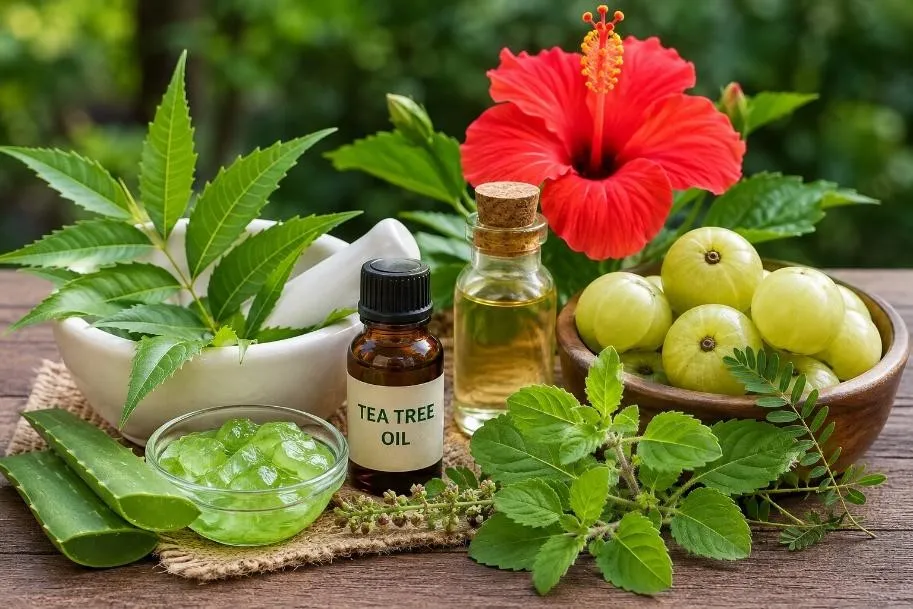
Figure None: Natural Ingredients Used for the Formulation of Herbal Anti-Dandruff Shampoo
Their potential functions differ: some are investigated for antimicrobial activity, others for soothing, antioxidant, conditioning, or cleansing support. Evidence from an isolated extract cannot automatically be generalized to a finished shampoo because solvent, concentration, processing, surfactants, pH, and contact time affect
performance. [5,6,7,9,10]
The purpose of this review is to connect the biological rationale for dandruff management with practical formulation science and a transparent evaluation plan.
AIM AND OBJECTIVES
Aim: To review the scientific basis, herbal ingredients, formulation considerations, and evaluation methods relevant to the development of a herbal anti-dandruff shampoo.
Scope: This is a narrative review and formulation-development framework. Exact ingredient concentrations should be selected only after compatibility, tolerability, and preliminary efficacy studies. A laboratory formulation should not be described as clinically effective unless supported by suitable clinical evidence.
DANDRUFF: DEFINITION AND CLINICAL FEATURES
Dandruff is characterized by shedding of visible flakes from the scalp. Flakes may be white or yellowish and may be more noticeable on dark clothing. Itching can occur, but its severity varies. Scalp scaling may fluctuate with weather, washing practices, stress, and individual skin characteristics. Dandruff is common and tends to recur, so management often focuses on symptom control rather than a permanent cure.
Dandruff should be distinguished from psoriasis, tinea capitis, allergic or irritant contact dermatitis, and more inflammatory seborrhoeic dermatitis. Thick plaques, marked redness, pain, oozing, patchy hair loss, or symptoms that do not improve with routine care should not be assumed to be ordinary dandruff. A clinician can help establish the diagnosis and advise on appropriate treatment.
Dandruff can affect confidence and social comfort even when the physical condition is mild. A shampoo therefore needs not only activity against relevant biological factors but also acceptable smell, texture, rinseability, and ease of use. Excessively harsh cleansing can cause dryness or irritation and may reduce user adherence.
| Feature | Typical observation | Formulation relevance |
|---|---|---|
| Scaling | Visible flakes | Assess anti-flaking performance |
| Pruritus | Variable itch | Consider tolerability and soothing support |
| Sebum | Often contributes to scalp environment | Balance cleansing and dryness |
| Recurrence | Symptoms may return | Assess repeat-use suitability |
| Differential diagnosis | Other scalp disorders can resemble dandruff | Avoid unsupported disease claims |
PATHOPHYSIOLOGY AND ROLE OF MALASSEZIA
Dandruff is understood as a multifactorial disorder involving interactions among Malassezia yeasts, sebum, scalp barrier function, and host susceptibility. Malassezia organisms are normal members of the skin microbiota in many people. In susceptible scalps, their lipid metabolism and interactions with the skin may contribute to irritation, altered barrier function, and increased shedding [1–3]. [1–3,11]
Species such as Malassezia globosa and Malassezia restricta have frequently been discussed in dandruff research. These lipid-associated yeasts can metabolize sebum lipids. The resulting lipid products may affect the stratum corneum in susceptible individuals. However, microbial presence alone does not fully explain why some people develop dandruff while others do not.
This biology explains why anti-dandruff strategies commonly target fungal activity while also supporting scalp tolerability. A shampoo must deliver the active ingredient during a limited contact period, disperse across the scalp, and rinse without leaving unacceptable residue. In-vitro inhibition is useful for screening but does not directly predict real-world benefit because the scalp environment, product dilution, contact time, and ingredient availability differ from laboratory conditions. [1·4, 11, 25]
| Contributing factor | Possible role | Research implication |
|---|---|---|
| Malassezia | Lipid metabolism and interaction with scalp | Use a relevant validated antifungal assay |
| Sebum | Provides a lipid-rich environment | Consider cleansing and formulation compatibility |
| Barrier function | Influences sensitivity and scaling | Monitor irritation and scalp comfort |
| Host susceptibility | May modify inflammatory response | Avoid claiming one mechanism explains all cases |
CONVENTIONAL MANAGEMENT AND RATIONALE FOR HERBAL PRODUCTS
Established anti-dandruff products may contain active agents such as ketoconazole, selenium sulfide, or other locally permitted ingredients. The choice depends on the product label, local regulation, symptoms, and professional advice where required. A botanical product should not be assumed to be more effective or safer merely because its ingredients are plant-derived.
Interest in herbal shampoos is driven by consumer preference for botanical ingredients, traditional hair-care practices, and the possibility of combining cleansing with conditioning or soothing functions. Plant extracts may contain complex mixtures of phenolics, terpenoids, flavonoids, saponins, or other constituents. These classes can provide useful leads for laboratory investigation, but composition varies with species, plant part, season, location, extraction solvent, and storage.
A useful comparison evaluates the finished products rather than making a general natural-versus-synthetic claim. Relevant endpoints include reduction in scaling, itch scores, tolerability, microbial activity where justified, product stability, and user acceptability. Clinical claims require well-designed studies with suitable comparators and defined outcomes. [4, 14·16, 19, 21·25]
The rationale for this review is therefore not that herbal products are automatically superior, but that a standardized and scientifically tested herbal formulation may be worth investigating as a complementary productdevelopment approach.
OVERVIEW OF HERBAL ANTI-DANDRUFF SHAMPOO
An herbal anti-dandruff shampoo is a cleansing preparation containing one or more botanical extracts, essential oils, or derived ingredients selected for a defined purpose. The formula generally includes a surfactant system, water, a viscosity modifier, a pH-adjusting agent, a preservative system, and optional conditioning or fragrance ingredients. Botanicals may be supplied as aqueous or hydroalcoholic extracts, powders, gels, or essential oils, depending on the material and compatibility requirements.
Plant extracts are chemically complex. The formulation scientist must consider solubility, colour, odour, residual solvent, pH, compatibility with surfactants, potential precipitation, preservative efficacy, and the possibility of irritation or sensitization. Essential oils can be difficult to disperse in water and may require a compatible solubilizer; increasing their concentration without safety justification is not an appropriate optimization strategy.
A finished shampoo should have consistent appearance and odour, suitable viscosity, acceptable pH, good cleansing and rinseability, and microbiological quality appropriate for a water-containing cosmetic. Foam volume may influence consumer perception but is not a direct measure of dandruff control or cleansing efficacy. [5·10, 15·17,
22]
| Component | Typical function | Key consideration |
|---|---|---|
| Botanical extract | Potential active/conditioning component | Identity and marker standardization |
| Surfactant | Cleansing and soil removal | Mildness and compatibility |
| Thickener | Controls flow and texture | Electrolyte and extract compatibility |
| Humectant/con ditioner | Improves sensory feel | Avoid excessive residue |
| Preservative | Controls microbial growth | Compatibility and challenge testing |
| pH adjuster | Sets target pH | Measure in a defined dilution |
| Purified water | Continuous phase | Microbiological quality |
HERBAL INGREDIENT: NEEM
Neem (Azadirachta indica A. Juss.) is widely used in traditional personal-care preparations. Neem leaves, bark, seedderived materials, and oils have different chemical profiles; therefore, the plant part and extract type should be stated clearly. Neem is often selected in herbal shampoo research because laboratory studies have investigated antimicrobial properties of some preparations.
For formulation development, neem extract should be authenticated and prepared using a reproducible method. Extraction solvent, plant-to-solvent ratio, time, temperature, filtration, concentration, and yield should be recorded. The extract should be checked for appearance, odour, pH, microbial quality, and chemical consistency. The presence of a plant-derived material does not guarantee that it is non-irritating or suitable for every scalp.
Neem may contribute to a multi-ingredient formula, but its specific anti-dandruff contribution must be demonstrated in the finished product. A useful study compares the base shampoo, shampoo containing neem, and the complete combination, where practical. This helps separate the effect of neem from surfactant cleansing or the activity of other ingredients. [23, 24]
Research gap: many student-level reports describe neem as an antifungal herb without providing a validated marker profile or a strong clinical outcome. Future work should use standardized raw material and a relevant test organism, and should report concentration, controls, replicate numbers, and uncertainty.
HERBAL INGREDIENT: TEA TREE OIL
Tea tree oil is the essential oil of Melaleuca alternifolia. Unlike many crude plant extracts, it is a volatile oil whose composition depends on source material, processing, storage, and oxidation. It must be properly dispersed in a shampoo and protected from avoidable degradation. Oxidized essential oils can pose a sensitization concern, so storage, packaging, and safety evaluation are important.
A randomized, single-blind study of 126 participants evaluated a shampoo containing 5% tea tree oil for mildtomoderate dandruff over four weeks. The tea tree oil group showed a 41% improvement in the study's dandruff severity score compared with 11% for placebo, and the report described improvements in several symptoms [4].
This is useful clinical evidence for tea tree oil shampoo, but it does not prove that every herbal blend or concentration will have the same outcome.
The study should be interpreted within its design, product concentration, population, duration, and endpoints. A student formulation should not copy a clinical concentration without considering local rules, sensitization risk, and formulation compatibility. Essential oil identity, quality, solubilization, and concentration should be documented. Tea tree oil is a potential candidate ingredient when its safety and compatibility are addressed. A finished product requires testing rather than relying solely on published evidence for a different product. [4, 14, 18]
HERBAL INGREDIENT: ALOE VERA
Aloe vera (Aloe barbadensis Mill.) is widely used in personal-care products. The inner leaf gel contains water and polysaccharide-rich material, while whole-leaf and latex-containing preparations differ substantially. For cosmetic formulation, the source and processing method must be defined because raw gel can vary in composition and microbial quality.
Aloe vera is commonly included in shampoo concepts for its conditioning and soothing profile. These properties may support product acceptability, but they should not be treated as proof of direct antifungal efficacy against
Malassezia. Any claim about anti-dandruff activity should be supported by testing of the specific ingredient or finished formula. [5,8,9]
Aloe-containing formulas can present challenges such as viscosity variation, microbial contamination, colour change, and interactions with preservatives. A standardized commercial-grade ingredient may improve reproducibility compared with unprocessed fresh gel, although supplier specifications and quality documentation still need review.
Useful evaluation includes ingredient identity, microbial limits, compatibility with surfactants, pH, viscosity, stability, and user tolerability. If fresh plant material is used in a laboratory project, careful handling and microbial quality assessment are essential. [8, 9, 22]
HERBAL INGREDIENT: HIBISCUS
Hibiscus (Hibiscus rosa-sinensis L.) is used in traditional hair-care practices and is frequently included in herbal shampoo studies. Leaves and flowers may differ in mucilage, pigments, phenolics, and other constituents. The plant part should therefore be reported rather than referring to the material simply as hibiscus.
Hibiscus extracts may contribute to conditioning, texture, and botanical appeal. Depending on the extraction method, pigments and plant solids can affect colour, odour, clarity, and sedimentation. These are important product-quality considerations because a formulation that separates or changes markedly during storage is unlikely to be acceptable.
The evidence base for hibiscus as a stand-alone anti-dandruff active is less definitive than the clinical evidence reported for some other ingredients. In a multi-herbal shampoo, its contribution should be assessed by comparing formulations with and without the extract where feasible. This approach avoids attributing the whole formulation's activity to a single herb.
A suitable study should authenticate the plant, standardize the extract, record extraction yield, check compatibility, and include relevant microbiological testing. Any scalp-related benefit should be expressed cautiously unless validated clinical evidence is available. [9, 10, 22]
HERBAL INGREDIENT: AMLA
Amla (Phyllanthus emblica L.), also known as Indian gooseberry, is used in traditional hair and personal-care preparations. Its fruit contains a range of polyphenolic compounds and other constituents, with composition influenced by maturity, drying, storage, and extraction method. Amla is often discussed for antioxidant and conditioning properties.
For a shampoo, amla extract may influence colour, odour, pH, and solids content. Extract standardization should include botanical authentication, processing details, yield, and an appropriate chemical measure when available. Amla's antioxidant potential should not automatically be interpreted as clinically meaningful anti-dandruff activity.
In a polyherbal formulation, amla may be combined with ingredients selected for other functions. The overall formulation should be optimized so that the ingredients remain dispersed, the product is not excessively acidic, and the preservative system remains effective. Stability testing should look for colour change, precipitation, odour changes, and pH drift.
Future research should distinguish antioxidant screening from antifungal testing and clinical outcomes. Amla's contribution to a finished shampoo should be assessed with appropriate controls rather than inferred from
traditional use alone. [8, 9, 22]
HERBAL INGREDIENT: TULSI AND OTHER BOTANICALS
Tulsi (Ocimum tenuiflorum L., also known as Ocimum sanctum) is commonly cited in herbal-care literature. Extracts may contain phenolic and volatile constituents, but the profile depends on plant part and extraction process. Laboratory reports have investigated tulsi in multi-herbal shampoo preparations, including studies that assess physical characteristics and antifungal activity. [6–10]
Other ingredients discussed in the literature include fenugreek (Trigonella foenum-graecum), reetha/soapnut
(Sapindus species), shikakai (Acacia concinna and related nomenclature in older literature), curry leaves (Murraya koenigii), and rosemary (Salvia rosmarinus, formerly Rosmarinus officinalis). Their roles may include cleansing support, conditioning, fragrance, or exploratory biological activity.
Traditional use and preliminary in-vitro findings are useful for selecting candidates but are not interchangeable with clinical proof. Botanical nomenclature can change, and common names may refer to more than one species. Reports should include the accepted scientific name, plant part, authentication details, supplier or collection source, and extraction method.
A focused formulation is often easier to standardize than a very large mixture of herbs. Too many extracts can increase colour and odour variability, compatibility problems, preservation demands, and difficulty determining which ingredient contributes to a measured effect. [5–10] [5·10, 15, 22]
BOTANICAL AUTHENTICATION AND RAW-MATERIAL QUALITY
Reproducible herbal formulation begins with correct identification of the raw material. The scientific name, family, plant part, collection location or supplier, collection date or batch, and authentication method should be recorded. A voucher specimen is useful for research traceability when plant material is collected directly. [13]
Raw materials should be inspected for foreign matter, visible mould, abnormal odour, infestation, and signs of poor storage. Drying conditions should reduce excess moisture while limiting degradation of relevant constituents. Dried material should be stored in clean, moisture-resistant containers away from excessive heat and light.
Quality checks may include foreign matter, loss on drying, ash values, extractive values, microbial quality, and a chromatographic fingerprint such as TLC or HPTLC where suitable. The exact tests depend on the plant material and applicable pharmacopoeial or herbal-material guidance. A marker assay is particularly useful when a reproducible constituent can be identified. [13, 22·24, 27]
| Quality step | Purpose | Documentation |
|---|---|---|
| Authentication | Confirm species identity | Botanist/supplier certificate |
| Plant-part confirmation | Reduce variability | Leaves, flowers, fruit, or other part |
| Drying/storage | Protect material quality | Temperature/time/container |
| Foreign matter and moisture | Assess physical quality | Test results and batch ID |
| Fingerprint/marker | Compare chemical consistency | TLC/HPTLC/HPLC record |
| Microbial quality | Support product safety | Validated test record |
EXTRACTION AND STANDARDIZATION
Extraction is used to transfer selected constituents from botanical material into a suitable solvent. The solvent should be chosen according to the plant part, target constituents, safety, and compatibility with the intended shampoo. Water and hydroalcoholic solvents are common options for polar constituents; other solvents may be appropriate in research but require complete consideration of residual-solvent control and intended use.
A general workflow includes cleaning, drying, size reduction, weighing, extraction, filtration, concentration, and storage. The plant-to-solvent ratio, extraction time, temperature, agitation, number of extraction cycles, and solvent composition should be kept consistent. The percentage yield can be calculated from the dry extract mass relative to the starting dry plant mass.
Standardization can include preliminary phytochemical screening, total phenolic or flavonoid estimation, and a chromatographic fingerprint. Such assays provide comparative information but are not always specific measures of the ingredient responsible for biological activity. If a validated marker is available, its concentration can be monitored across batches and during stability testing.
Extracts should be assessed for colour, odour, pH, solubility, microbial quality, and compatibility with the surfactant system. The extract concentration in the finished product should be justified by compatibility and safety data rather than selected only to maximize herbal content.
SHAMPOO EXCIPIENTS AND THEIR FUNCTIONS
Surfactants are the principal cleansing ingredients. They lower interfacial tension and help remove sebum and particulate soil. Anionic surfactants provide cleansing and foam, while amphoteric and non-ionic surfactants may be used to modify mildness, viscosity, and formulation behaviour. The final system should be chosen based on performance, scalp tolerability, and compatibility with botanical ingredients.
Thickeners such as suitable cellulose derivatives, gums, or other cosmetic rheology modifiers control flow and consumer handling. Salt may thicken some surfactant systems but can also reduce viscosity beyond an optimum, so it should be added gradually during development. Humectants and conditioning agents can improve sensory feel, but excessive levels may affect rinseability or leave residue.
Preservatives are important in water-containing products because botanical extracts can introduce nutrients or microbial contamination. Preservative selection must comply with applicable cosmetic requirements and should be supported by compatibility and preservation-efficacy testing. Fragrance is optional and can introduce sensitization concerns; fragrance-free prototypes may be useful during early tolerability assessment.
| Excipient class | Function | Development concern |
|---|---|---|
| Primary surfactant | Cleansing and foam | Mildness; extract compatibility |
| Co-surfactant | Modify mildness/viscosity | Clouding and salt response |
| Thickener | Flow and consistency | Electrolyte sensitivity |
| Humectant/conditioner | Sensory and conditioning | Residue and stability |
| Preservative | Microbial protection | Efficacy in final formula |
| Chelator/antioxidant | Support stability where appropriate | Compatibility and justified need |
| pH adjuster | Adjust target pH | Avoid abrupt pH changes |
PROPOSED FORMULATION DESIGN
A suitable development approach begins with a simple base and adds standardized botanical ingredients one at a time. The formula should be considered a prototype, not a validated product. Ingredient selection must be adjusted to the intended product type, supplier specifications, safety data, local cosmetic requirements, and preliminary compatibility studies.
| Ingredient category | Illustrative role | Selection note |
|---|---|---|
| Purified water | Vehicle | Quality-controlled water |
| Mild surfactant blend | Cleansing | Choose compatible surfactants |
| Standardized neem extract | Botanical candidate | Concentration based on testing |
| Aloe vera ingredient | Conditioning/soothing candidate | Use standardized grade |
| Hibiscus or amla extract | Conditioning/botanical component | Check colour, pH, sediment |
| Tea tree oil (optional) | Exploratory essential-oil active | Safety, solubilization, oxidation |
| Thickener | Viscosity control | Select by compatibility |
| Preservative system | Microbial control | Verify final-product efficacy |
| pH adjuster | pH control | Use measured additions |
This illustrative composition intentionally avoids fixed percentages because the correct concentrations depend on the selected raw materials and compatibility data. The literature contains many different formulations, and results from one formula cannot be assumed to apply to another. Any final batch sheet should list exact ingredient names, grades, concentrations, batch size, order of addition, mixing conditions, and in-process controls. [15, 16, 19]
A useful experimental design varies a limited number of factors, such as total extract level, surfactant ratio, and thickener concentration, while keeping other variables controlled. The selected prototype should be confirmed in independent batches.
GENERAL METHOD OF PREPARATION
A proposed laboratory workflow is provided below for planning purposes. The exact procedure must be adapted to the chosen ingredients and equipment, and should be performed under appropriate laboratory supervision.
1. Verify botanical identity, batch records, and raw-material quality.
2. Prepare and standardize the extracts using a documented extraction method.
3. Check extract solubility and compatibility with the intended surfactant system.
4. Weigh the ingredients accurately and prepare the aqueous phase using suitable purified water.
5. Add surfactants slowly with controlled mixing to minimize unnecessary aeration.
6. Add compatible extracts and other water-soluble ingredients in a defined order.
7. Incorporate oil-soluble ingredients only with a validated solubilization or dispersion approach.
8. Add the selected thickener gradually and allow adequate hydration where required.
9. Add preservative and adjust pH according to supplier instructions and the product specification.
10. Make up to final batch mass, mix until uniform, allow bubbles to dissipate, and fill into clean suitable containers.
11. Record appearance, pH, viscosity, batch yield, and any deviation from the procedure.
Mixing speed, temperature, order of addition, and resting time can change viscosity, foam, and uniformity. A manufacturing record should allow another researcher to reproduce the same batch.
EVALUATION: ORGANOLEPTIC AND PHYSICOCHEMICAL TESTS
Appearance, colour, odour, homogeneity, and visible sediment should be checked under defined conditions. These tests are simple but should use a consistent observation method and preferably a reference sample. A strong herbal odour or dark colour is not evidence of higher activity. [5–7,9,10] pH should be measured using a calibrated pH meter with a stated sample dilution and temperature. The target should be selected based on product type, scalp tolerability, ingredient stability, and applicable standards rather than treating a single pH number as universally correct. Viscosity should be measured with the instrument, spindle, speed, temperature, and equilibration time reported.
Foaming ability and foam stability may be assessed by a standardized cylinder method. Foam supports consumer perception but does not independently measure cleansing or antifungal performance. Surface tension, wetting time, dirt dispersion, and detergency may provide additional information if methods are standardized and results are interpreted cautiously.
| Test | Typical approach | What it indicates |
|---|---|---|
| Appearance | Visual examination | Uniformity and visible defects |
| pH | Calibrated pH meter | Acid/base condition |
| Viscosity | Viscometer/rheometer | Flow and handling |
| Foam height/stability | Defined shake method | Foaming behaviour |
| Wetting time | Standardized substrate test | Wetting performance |
| Dirt dispersion/detergency |
Defined model test | Cleaning-related behaviour |
| Rinseability | Standardized use simulation | Product removal |
| Solids content | Evaporation/validated method | Non-volatile fraction |
EVALUATION: ANTIFUNGAL ACTIVITY
Antifungal testing is important when a formulation is intended to target Malassezia-associated dandruff. The test organism, culture conditions, medium, inoculum, incubation conditions, and endpoint must be suitable for the organism and validated protocol. Malassezia species have particular growth requirements, so methods used for routine bacteria cannot automatically be transferred without adaptation.
Possible laboratory approaches include agar-based screening, broth dilution, and viable-count methods. Agar diffusion is convenient for preliminary screening but depends on diffusion through the medium; a poorly diffusing ingredient can appear less active than it is. Broth-based methods can provide a concentration-related endpoint but require suitable solubilization, controls, and organism-specific conditions.
A sound comparison includes the base shampoo without herbal ingredients, each selected extract where feasible, the complete shampoo, a suitable positive control, and a negative or solvent control. Replicates and statistical analysis should be planned in advance. Any inhibition zone should be reported with units, variability, and the exact method.
Laboratory antifungal activity is not equivalent to clinical effectiveness. The shampoo is diluted during use and remains on the scalp for a limited period. Clinical assessment should use a suitable design, ethical approval, informed consent, defined dandruff scoring, tolerability monitoring, and appropriate comparator products. [4, 14,
21, 25, 26]
| Control or sample | Purpose |
|---|---|
| Untreated/negative control | Baseline growth |
| Vehicle/base shampoo | Separate surfactant or vehicle effects |
| Extract alone | Assess botanical contribution |
| Finished herbal shampoo | Test complete formulation |
| Positive control | Confirm assay responsiveness |
| Replicates | Estimate variability and reproducibility |
STABILITY, PRESERVATION AND PACKAGING
Stability testing evaluates whether a shampoo maintains acceptable physical, chemical, and microbiological quality during storage. Relevant observations include appearance, colour, odour, pH, viscosity, precipitation, phase separation, and packaging compatibility. If a suitable marker can be measured, its content may be monitored over time. [12]
A short preliminary study can identify obvious instability but cannot establish a commercial shelf life. A planned stability protocol should define storage conditions, time points, test methods, acceptance criteria, and sample handling. Temperature cycling or other stress conditions may be useful where appropriate, but must be justified for the formulation.
Preservation is a critical issue because shampoos contain water and botanical materials. A preservative system should be selected according to applicable regulations and compatibility data. Microbial limits and, where required, preservative efficacy testing should be conducted using appropriate validated methods. A product should not be considered safe merely because it looks or smells normal.
Packaging can affect essential-oil retention, oxidation, colour, odour, and product dispensing. Containers should be compatible with the formulation and protect it from foreseeable environmental exposure. The label should provide appropriate directions, warnings, batch details, and storage information according to applicable rules.
SAFETY AND QUALITY CONSIDERATIONS
Botanical ingredients can cause irritation or allergic contact reactions, and essential oils may be sensitizers, particularly when oxidized or used inappropriately. “Natural” is not a safety classification. Risk assessment should consider ingredient identity, concentration, exposure, intended user population, impurities, and foreseeable use.
Early development should include review of supplier safety data, ingredient specifications, residual-solvent concerns, and compatibility information. The final formulation should be evaluated for pH, microbial quality, stability, and scalp/skin tolerability using methods appropriate to the development stage. Eye exposure should be considered because shampoo can run into the eyes during use.
Human testing requires an appropriate ethical and regulatory framework, informed consent, defined inclusion and exclusion criteria, adverse-event monitoring, and a plan for stopping if irritation occurs. Animal testing should not be undertaken casually and must follow applicable institutional and legal requirements; validated non-animal approaches should be considered where appropriate.
Claims such as “cures dandruff,” “zero side effects,” “clinically proven,” or “better than all chemical shampoos” require evidence and should not be used without adequate support. Product development should prioritize consumer safety, reproducibility, and transparent reporting.
REVIEW OF SELECTED LITERATURE
Published literature includes broad reviews of dandruff pathophysiology, studies of tea tree oil shampoo, and formulation reports describing polyherbal shampoos. These sources answer different questions and should not be treated as equivalent evidence. [1–11] The foundational reviews describe the multifactorial nature of dandruff [1– 3,11]; the tea tree oil study provides clinical evidence for one defined product [4]; and herbal-shampoo reviews and formulation reports describe ingredient selection and common evaluation parameters, but vary in the depth of standardization and clinical evidence 27 Nov 2026
| Source | Focus | Interpretation |
|---|---|---|
| Schwartz et al. (2013) [1] | Dandruff/seborrhoeic dermatitis pathophysiology | Supports multifactorial disease model |
| Hay (2011) [2] | Malassezia and scalp conditions | Reviews organism–host relationship |
| Borda & Wikramanayake (2015) [3] |
Comprehensive review | Summarizes clinical and biological factors |
| Satchell et al. (2002) [4] | 5% tea tree oil shampoo trial | Clinical evidence for one specific product |
| Potluri et al. (2013) [5] | Herbs and shampoo evaluation | Overview of ingredients and tests |
| Revansiddappa et al. (2018) [6] |
Herbal anti-dandruff shampoo formulation | Example of multi-herb formulation research |
| Katkale et al. (2024/2025) [7] | Polyherbal shampoo formulation | Reports physical and microbiological evaluation |
| Aloe/tulsi/Withania dataset (2024) [8] |
Herbal extracts and Malassezia testing |
Illustrates the need for controls and assay detail |
The tea tree oil trial offers a stronger clinical design than many formulation-only reports, but its findings should be limited to the tested product and population. Polyherbal studies can inform ingredient selection and evaluation methods, yet some reports provide limited standardization, incomplete controls, or no clinical outcomes. This evidence pattern supports a careful development plan rather than a broad claim that all herbal shampoos are
effective. [4,6–10]
The present review therefore emphasizes method transparency, standardized botanical materials, relevant antifungal testing, safety evaluation, and a distinction between proposed work and published findings.
PROPOSED RESEARCH WORKFLOW AND DATA ANALYSIS
A reproducible project can be divided into phases: literature review; raw-material selection and authentication; extract preparation; preliminary phytochemical assessment; prototype formulation; physicochemical evaluation; antifungal screening; stability testing; and interpretation. Each phase should have predefined objectives and records.
Phase 1: Define the intended product, target population, and measurable outcomes.
Phase 2: Select a small number of botanicals based on evidence, availability, safety, and compatibility.
Phase 3: Standardize extracts and document the batch-to-batch profile.
Phase 4: Prepare a base shampoo and a limited set of prototypes using controlled variables.
Phase 5: Evaluate pH, viscosity, appearance, foam behaviour, wetting, detergency, and stability.
Phase 6: Conduct an appropriate antifungal assay with positive, negative, and vehicle controls.
Phase 7: Analyze results using suitable descriptive statistics and inferential tests where justified.
Results should be reported as mean with a suitable measure of variability, together with replicate number and statistical method. Do not invent or fill in results when experiments have not been conducted. If no experimental work has been performed, tables should be labelled as proposed study plans or literature summaries, not results.
A useful development decision considers several responses together. A formula with strong foam but poor stability or irritation is not an optimal product. A multi-criteria approach can rank prototypes based on acceptable pH, stable viscosity, good cleansing, low visible sediment, microbial quality, and reproducible antifungal activity.
RESEARCH GAP AND FUTURE SCOPE
A key limitation in herbal anti-dandruff shampoo literature is variation in plant identity, plant part, extraction solvent, extract concentration, surfactant base, and test methods. This makes direct comparison between studies difficult. Reports may also use the terms antimicrobial, antifungal, and anti-dandruff interchangeably even though they describe different endpoints.
Another gap is the difference between in-vitro findings and actual use. Laboratory inhibition does not demonstrate reduction in scalp flaking or itch. Clinical studies should assess standardized outcomes, appropriate comparators, tolerability, use frequency, and recurrence. Long-term data and systematic adverse-event reporting are particularly valuable.
Future work should prioritize: (i) botanical authentication and chemical fingerprinting; (ii) transparent reporting of extraction yield and marker content; (iii) formulation compatibility and preservation; (iv) Malassezia-relevant methods; (v) validated stability protocols; (vi) safety assessment; and (vii) well-designed clinical research where justified.
A smaller, standardized botanical combination may be preferable to a large mixture because it simplifies quality control and interpretation. Research should also evaluate the contribution of each ingredient and the finished product rather than attributing all observed activity to the herbal category as a whole.
ABBREVIATIONS AND ACKNOWLEDGEMENT
| Abbreviation | Meaning |
|---|---|
| HPLC | High-performance liquid chromatography |
| HPTLC | High-performance thin-layer chromatography |
| MIC | Minimum inhibitory concentration |
| MBC | Minimum bactericidal concentration |
| QC | Quality control |
| pH | Measure related to acidity/alkalinity |
| SD | Standard deviation |
| ICH | International Council for Harmonisation |
| TLC | Thin-layer chromatography |
CONCLUSION
Herbal anti-dandruff shampoos are a relevant area of cosmetic and pharmaceutical formulation research because botanical ingredients may contribute antifungal, conditioning, antioxidant, or soothing functions. Dandruff itself is multifactorial and involves interactions among Malassezia yeasts, sebum, scalp barrier function, and host susceptibility; it should not be described as a simple infection in every case.
A scientifically defensible formulation requires correct botanical authentication, standardized extraction, compatible surfactants and excipients, controlled pH and viscosity, effective preservation, suitable packaging, and systematic stability assessment. Evaluation should extend beyond visual appearance and foam to relevant antifungal testing, safety, and—if therapeutic claims are intended—clinical outcomes.
The available literature contains encouraging findings for selected ingredients, including a clinical trial of a 5% tea tree oil shampoo, but these results cannot be generalized to every herbal blend. Many polyherbal studies primarily report formulation properties and preliminary antimicrobial tests. Therefore, the finished product must be tested directly and claims must match the strength of evidence.
In conclusion, the most valuable future approach is a standardized, reproducible, and safety-focused herbal shampoo development program with appropriate controls and transparent reporting. This review provides a foundation for planning such work; it does not claim that a new formulation has already been prepared or experimentally validated.
Acknowledgment:
I would like to express my sincere gratitude to everyone who supported and guided me throughout the completion of my B. Pharmacy Review Project entitled Formulation And Evaluation Of Herbal Anti - Dandruff Shampoo
First and foremost, I express my heartfelt gratitude to our respected Principal, Dr. Vivekanand Ankush Kashid, for providing the necessary facilities, encouragement, and institutional support to complete this review work successfully.
I am deeply thankful to my respected Guide, Dr. Rushikesh Kailash Salve, for his valuable guidance, continuous support, encouragement, and suggestions throughout the preparation of this review paper.
I also extend my sincere thanks to my Co-Guide, Mr. Rahul Rajendra More, for his valuable assistance, cooperation, and support.
I am also thankful to my parents and friends for their constant encouragement and support throughout this work.
Name : Dipali Sudam Bidgar
REFERENCES


Dipali Bidgar, Shweta Satalkar, Priyanka Bhagwat, Aditya Jawarkar, Aryan Bhaiya, Formulation and Evaluation of Herbal Anti-Dandruff Shampoo, Int. J. of Pharm. Sci., 2026, Vol 4, Issue 11, 5429-5442. https://doi.org/10.5281/zenodo.24580460
 10.5281/zenodo.24580460