

We use cookies to ensure our website works properly and to personalise your experience. Cookies policy
DJP’s College of Pharmacy, Pohetakli, Parhri Dist. Parbhani, Maharashtra. India 431506.
The present study aimed to formulate and evaluate a polyherbal hair oil using natural herbs and oils possessing beneficial effects on hair growth and scalp health. The formulation was prepared using Amla, Fenugreek, Neem, Rosemary, Hibiscus, Curry Leaves, Coconut oil, Almond oil, and Castor oil. Three formulations (F1, F2, and F3) were prepared by varying the concentration of herbal ingredients. The prepared formulations were evaluated for organoleptic properties, pH, viscosity, acid value, stability study, and biological activities. Among all formulations, F2 showed better physicochemical properties, acceptable pH, moderate viscosity, pleasant odor, and good stability without phase separation. The formulation also exhibited anti-dandruff, anti-hair fall, antimicrobial, conditioning, and hair growth-promoting activities. Therefore, F2 was considered the optimized and stable formulation suitable for herbal hair care applications.
Hair is an important part of the human body that contributes to physical appearance, personality, and self-confidence. It also performs protective functions by shielding the scalp from dust, ultraviolet radiation, and environmental damage . In modern lifestyles, factors such as pollution, stress, poor nutrition, and excessive use of chemical-based hair products have increased various hair problems including hair fall, dandruff, dryness, split ends, and premature greying. Therefore, maintaining healthy hair and scalp has become an essential aspect of personal care.
{2} Aim & objectives :
Need of study :
Hair care products are essential for maintaining healthy hair and scalp. Nowadays, factors such as pollution, stress, unhealthy diet, hormonal imbalance, and excessive use of chemical treatments have increased various hair-related problems including hair fall, dandruff, dryness, split ends, and premature greying. These conditions affect both the appearance and health of hair. Proper hair care products help in cleansing, nourishing, moisturizing, and protecting the hair from environmental damage. They also improve scalp health, strengthen hair roots, promote hair growth, and maintain hair texture and shine. Therefore, the use of safe and effective hair care products has become necessary for maintaining healthy and attractive hair.
Contains harmful chemicals
May cause scalp irritation
Can lead to hair dryness
Weakens hair roots
Increases hair fall
May cause allergic reactions
Damages natural hair texture
Can cause premature greying
Removes natural oils from scalp
Long-term use may damage hair health
Herbal cosmetics are cosmetic preparations containing natural ingredients obtained from plants, herbs, and other natural sources. These products are used for enhancing beauty and maintaining healthy skin and hair with minimal side effects. Herbal cosmetics have been used since ancient times in traditional systems of medicine such as Ayurveda for personal care and grooming purposes.Nowadays, herbal cosmetics are gaining popularity due to increasing awareness about the harmful effects of synthetic chemicals present in conventional cosmetic products. Herbal formulations are considered safer, eco-friendly, economical, and suitable for long-term use. Medicinal plants contain various bioactive constituents such as flavonoids, alkaloids, tannins, vitamins, and essential oils which provide nourishing, antioxidant, antimicrobial, and protective effects.Herbal hair oils, shampoos, creams, and lotions are commonly used herbal cosmetic products for maintaining healthy skin and hair naturally.
Herbal hair oils are widely used as natural remedies for improving hair health because they provide nourishment to the scalp and hair roots without causing harmful side effects. Polyherbal hair oil is a formulation containing a combination of different medicinal herbs and natural oils that work synergistically to promote hair growth, reduce hair fall, control dandruff, and improve hair texture. Compared to synthetic hair care products, herbal formulations are considered safer, economical, and more effective for long-term use.
The present study focuses on the formulation and evaluation of polyherbal hair oil prepared using various herbal ingredients such as Amla (Emblica officinalis), Fenugreek (Trigonella foenum-graecum), Neem (Azadirachta indica), Hibiscus (Hibiscus rosa-sinensis), Rosemary (Rosmarinus officinalis), and Curry Leaves (Murraya koenigii). Natural base oils including Coconut oil, Almond oil, and Castor oil were used for their nourishing and moisturizing properties. These herbal ingredients are known for their antioxidant, antimicrobial, anti-dandruff, and hair growth-promoting activities.
Role of Herbal Ingredients in Hair Care:
Herbal ingredients play an important role in maintaining healthy hair and scalp due to the presence of various bioactive constituents such as vitamins, flavonoids, tannins, alkaloids, and essential oils. These phytoconstituents provide antioxidant, antimicrobial, anti-inflammatory, and nourishing properties which help in improving overall hair health naturally.
The poly-herbal hair oil formulations help in promoting hair growth, strengthening hair follicles, reducing dandruff, preventing scalp infections, and improving hair texture. The use of natural herbs in polyherbal formulations enhances therapeutic effectiveness through synergistic action and minimizes the side effects commonly associated with synthetic cosmetic products.
Various medicinal herbs were used in the formulation of polyherbal hair oil due to their beneficial effects on hair and scalp health. Amla helps in promoting hair growth and preventing premature greying because it is rich in vitamin C and antioxidants. Neem possesses antimicrobial and anti-dandruff properties that help in maintaining scalp hygiene and preventing infections.
Fenugreek is used for strengthening hair roots and reducing hair fall, while Hibiscus acts as a natural conditioner and improves hair texture. Rosemary helps in improving blood circulation of the scalp and stimulates healthy hair growth. Curry leaves provide nourishment to hair follicles and help in preventing hair thinning and hair damage.
Natural base oils such as Coconut oil, Almond oil, and Castor oil were also incorporated in the formulation due to their moisturizing, nourishing, and hair strengthening properties. The combination of these medicinal herbs and oils provides synergistic therapeutic effects for maintaining healthy hair and scalp.
[1] NEEM (Azadirachta indica) :
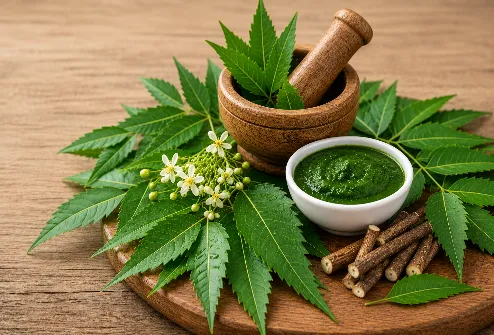
fig 1
Neem possesses strong antimicrobial, antifungal, and anti-inflammatory properties due to the presence of bioactive constituents such as nimbin and azadirachtin. It helps in controlling dandruff, preventing scalp infections, reducing itching, and maintaining scalp hygiene. Neem also helps in reducing excess oil and supports healthy scalp conditions for hair growth.
[2] Amla ((Emblica officinalis) :
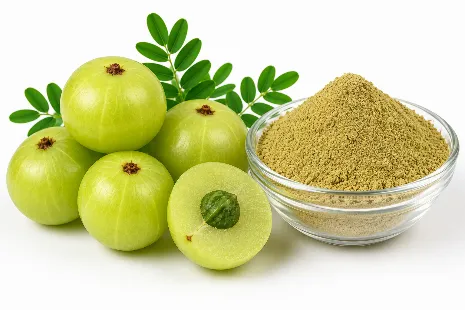
Fig2
Amla is one of the most important herbs used in hair care formulations. It is rich in vitamin C, tannins, and antioxidants which help in strengthening hair follicles and promoting healthy hair growth. Amla helps in reducing hair fall, preventing premature greying, and improving the natural shine and texture of hair. It also nourishes the scalp and protects hair from environmental damage.
[3] Fenugreek (Trigonella foenum-graecum ):

Fig4
It is a well-known medicinal herb belonging to the family Fabaceae. It has been traditionally used in Ayurvedic and herbal medicine for the treatment of various health and hair-related problems. Fenugreek seeds are rich in proteins, nicotinic acid, lecithin, iron, vitamins, and essential nutrients that help nourish the scalp and strengthen hair roots.
Fenugreek possesses antioxidant, antifungal, and anti-inflammatory properties, which make it highly beneficial for hair care formulations. It helps in reducing hair fall, controlling dandruff, promoting hair growth, and improving overall scalp health. The presence of mucilage and natural proteins in fenugreek provides conditioning effects to the hair, making it smoother, shinier, and healthier.
[4] Rosemary (Rosmarinus officinalis) :
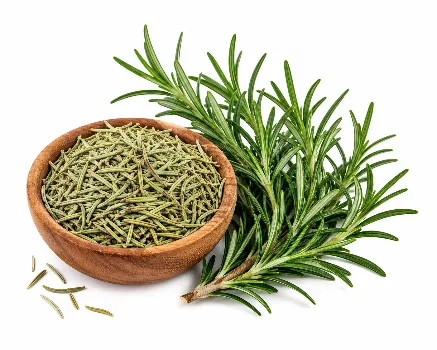
Fig 5
It is an aromatic medicinal herb belonging to the family Lamiaceae.Rosemary contains various bioactive compounds such as flavonoids, phenolic acids, rosmarinic acid, and essential oils, which contribute to its medicinal value.In hair care preparations, rosemary is considered an important natural ingredient because of its ability to stimulate blood circulation in the scalp and promote healthy hair growth. It helps in strengthening hair follicles, reducing hair fall, preventing dandruff, and improving scalp health. The antimicrobial and anti-inflammatory properties of rosemary also help in maintaining a healthy scalp environment.
[5] Hibiscus (Hibiscus rosa-sinensis) :
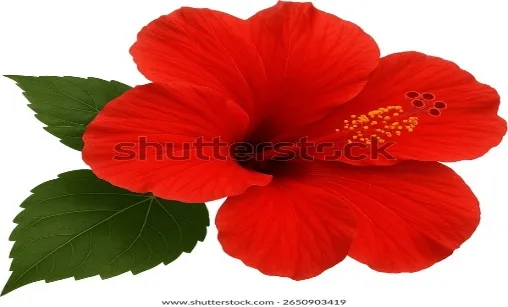
fig 5
Hibiscus possesses antimicrobial, antioxidant, and conditioning properties that help in promoting healthy hair growth and preventing hair damage. It is widely used in herbal hair oil formulations to reduce hair fall, control dandruff, prevent premature graying, and strengthen hair roots. The natural conditioning effect of hibiscus helps make hair soft, shiny, and manageable.
[6] Curry leaves (Murraya koenigii) :
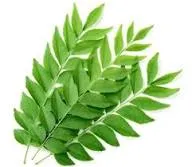
Fig 6
In herbal hair oil formulations, curry leaves play a significant role in reducing hair thinning and preventing premature graying. They help nourish the hair roots, improve scalp condition, and provide natural shine to the hair. The antioxidant activity of curry leaves protects hair follicles from damage caused by environmental factors and oxidative stress.
[7] Coconut oil (Cocos nucifera) :
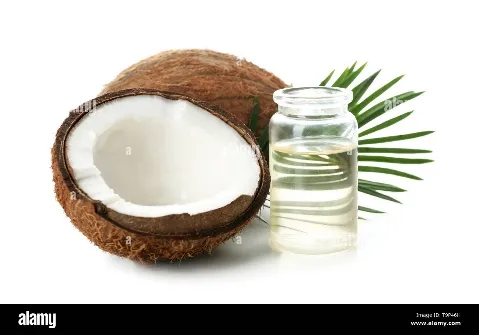
Fig 7
Coconut oil is rich in fatty acids, vitamins, and antioxidants that help maintain healthy hair and scalp condition.Due to its conditioning and strengthening effects, coconut oil is extensively incorporated into poly herbal hair oil formulations to promote soft, healthy, and shiny hair while supporting scalp nourishment and hair growth.
[8] Castor oil (Ricinus communis) :
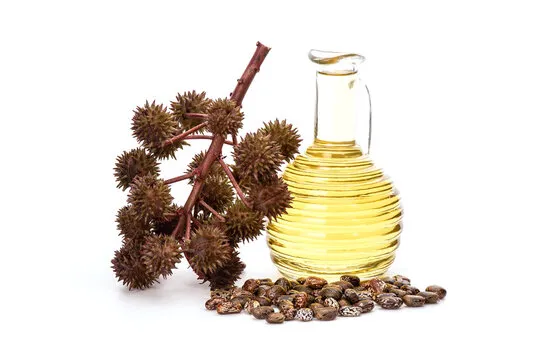
Fig 8
It is a nutrient-rich natural oil widely used in herbal hair care formulations. It helps nourish the scalp, strengthen hair roots, reduce hair fall, and promote healthy hair growth due to its moisturizing and conditioning properties.
[9] Almond oil (Prunus amygdalus) :
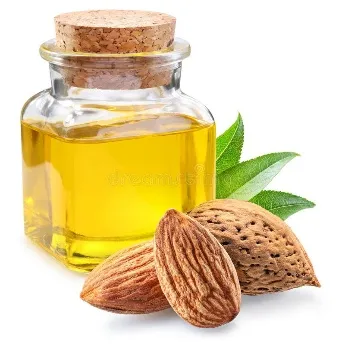
Fig 9
Almond oil (Prunus amygdalus) is a nourishing natural oil commonly used in herbal hair care preparations. It is rich in vitamins, antioxidants, and essential fatty acids that help moisturize the scalp, strengthen hair, reduce dryness, and improve hair softness and shine.
[10] Vitamin E Capsule :
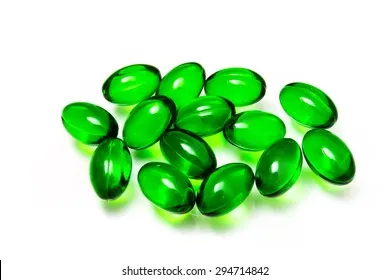
Fig 10
Vitamin E capsules are commonly added to herbal hair oils to improve the nourishment and protection of hair.
[11] Jasmin Perfume :

fig 11
Jasmine fragrance is added to herbal hair oil formulations to provide a pleasant aroma and enhance the overall acceptability of the product.
{3} Method & material :
Table 1
|
Sr no. |
Material |
|
1 |
Coconut oil |
|
2 |
Castor oil |
|
3 |
Almond oil |
|
4 |
Neem |
|
5 |
Amla |
|
6 |
Fenugreek |
|
7 |
Rosemary |
|
8 |
Curry leaves |
|
9 |
Hibiscus |
|
10 |
Vit E capsule |
|
11 |
Jasmin fragrance |
Equipment used :
Table 2
|
Sr no |
Euipement |
|
1 |
Beaker |
|
2 |
Glass rod |
|
3 |
Measuring cyclinder |
|
4 |
Weighing balance |
|
5 |
Morter pestle |
|
6 |
Funnel |
|
7 |
Filter paper |
|
8 |
Storage bottle |
Table 3
|
Sr no |
Ingredient |
F1 |
F2 |
F2 |
|
1 |
Coconut oil |
25ml |
20ml |
18ml |
|
2 |
Almond oil |
10ml |
12ml |
15ml |
|
3 |
Castor oil |
8ml |
8ml |
7ml |
|
4 |
Amla powder |
3g |
4g |
5g |
|
5 |
Fenugreek |
2g |
3g |
2g |
|
6 |
Neem powder |
2g |
2g |
2g |
|
7 |
Rosemary leaves |
2g |
4g |
3g |
|
8 |
Hibiscus |
2g |
3g |
3g |
|
9 |
Curry leaves |
2g |
2g |
2g |
|
1o |
Vit E capsule |
1ml |
1ml |
1ml |
|
11 |
Jasmin fragrance |
qs |
qs |
qs |
The polyherbal hair oil was prepared by the boiling method. Initially, accurately weighed quantities of amla, neem, curry leaves, and hibiscus powders were taken. Coconut oil, almond oil, and castor oil were used as the base oils and added to the herbal powders. The mixture was heated on a water bath with continuous stirring for about 30–45 minutes to facilitate the extraction of active constituents from the herbs into the oil base.
After adequate heating, rosemary leaves and fenugreek were added to the mixture, and heating was continued for complete extraction of the phytoconstituents. The extracted oil was then allowed to cool at room temperature. After cooling, the oil was filtered using muslin cloth or filter paper to remove unwanted plant residues and obtain a clear herbal oil extract.
To the filtered oil, Vitamin E and jasmine perfume were added with continuous stirring to improve the stability and fragrance of the formulation. The final polyherbal hair oil obtained was transferred into a clean, dry, airtight container and stored for further evaluation and use.
[1] organoleptic evaluation –
The prepared poly herbal hair oil was evaluated for organoleptic characteristics including colour, odour, appearance, texture and viscosity.
All observations were recorded for evaluation of the formulation quality.
[2] Physicochemical evaluation --
[3] Stability Test --
{4 } Result :
a. organoleptic evaluation –
The prepared poly herbal hair oil was evaluated for organoleptic characteristics including colour, odour, appearance, texture and viscosity
|
Sr no |
Organoleptic evaluation |
F1 |
F2 |
F3 |
|
1 |
Colour |
Light green |
Greenish brown |
Dark green |
|
2 |
Odour |
Mild pleasant |
Pleasant aromatic |
Strong aromatic |
|
3 |
Appearance |
Clear |
Clear & uniform |
Slightly viscous and clear |
|
4 |
Texture |
Smooth |
Smooth and non sticky |
Slightly oily |
|
5 |
Consistency |
thin |
Moderate |
Thik |
|
Sr no |
Formulation |
pH |
|
1 |
F1 |
6.2 |
|
2 |
F2 |
6. 5 |
|
3 |
F3 |
|
of the formulation was determined using an Ostwald viscometer by measuring the flow time of the oil sample.
|
Sr no |
Formulation |
Viscosity |
|
1 |
F1 |
Low |
|
2 |
F2 |
Moderate |
|
3 |
F3 |
High |
|
Sr no |
Formulation |
Acid value |
|
1 |
F1 |
1.8 |
|
2 |
F2 |
1.5 |
|
3 |
F3 |
1.7 |
[3] stability study –
The optimized formulation (F2) was subjected to stability studies for a period of one month. The formulation was evaluated for various parameters such as colour, odour, appearance, pH and viscosity before and after the storage period. No significant changes were observed in any of the evaluated parameters. The formulation remained clear, uniform and free from phase separation throughout the study period. Among all the formulations, F2 exhibited better physical stability during storage. No significant change in colour, odour, appearance, pH and viscosity was observed after one month.
|
Initial |
Colour |
Greenish brown |
|
Odour |
Pleasant aromatic |
|
|
Appearance |
Clear & uniform |
|
|
PH |
6.5 |
|
|
Viscosity |
moderate |
|
|
After 1 month |
colour |
No significant change |
|
odour |
No significant change |
|
|
PH |
Stable and clear |
|
|
Viscosity |
No change |
DISCUSSION
The results of the present study indicate that the formulated poly herbal hair oil possesses acceptable physicochemical and organoleptic properties. The pH was found to be suitable for topical application, suggesting it is safe for scalp use. The viscosity of the formulation was appropriate, ensuring easy application and uniform spreading on hair and scalp. Stability studies confirmed that the formulation remained physically stable without any significant changes in colour, odour, or consistency. Overall, the incorporation of herbal ingredients contributed to a stable and cosmetically acceptable formulation.
CONCLUSION
The present study successfully developed a poly herbal hair oil using selected medicinal herbs and base oils. The formulation was prepared with the aim of providing a natural, safe, and effective hair care product. The study demonstrated that herbal ingredients can be effectively incorporated into an oil base to produce a stable cosmetic formulation.
The evaluation results indicated that the prepared formulation possessed acceptable physicochemical and organoleptic properties. The pH was found to be within the suitable range for topical application, suggesting that the formulation is safe for scalp use. The viscosity and consistency of the oil were appropriate, ensuring ease of application and uniform distribution over the hair and scalp.
Stability studies confirmed that the formulation remained physically stable without any significant changes in colour, odour, or consistency under storage conditions. Overall, the developed poly herbal hair oil can be considered a stable and effective herbal cosmetic formulation with potential benefits for hair nourishment and care.

Fig 12
POLYHERABL HAIR OIL
REFERENCES


Krushna Zagade, Komal Naikwadi, Dr. Ramesh Ingole, S Gadade, K. Hoge, S. Rathod, P. Chamalwar, Formulation and Evaluation of Poly-Hebal Hair Oil, Int. J. of Pharm. Sci., 2026, Vol 4, Issue 6, 2658-2667, https://doi.org/10.5281/zenodo.20624093
 10.5281/zenodo.20624093