View Article

Abstract

Herbal face serums are widely used in cosmetic formulations because of their lightweight texture, quick absorption, and beneficial effects on the skin. The present study was carried out to formulate and evaluate a polyherbal brightening and hydration face serum using natural ingredients such as turmeric, aloe vera, saffron, papaya, green tea, and licorice, which are known for their antioxidant, moisturizing, soothing, and skin-brightening properties. The serum was prepared by incorporating the herbal extracts into a suitable gel base containing rose water, glycerin, xanthan gum, vitamin E, and preservatives. Three different formulation batches were developed to optimize the consistency, spreadability, stability, and overall skin feel of the product. The prepared formulations were evaluated for various parameters including physical appearance, pH, viscosity, spreadability, homogeneity, irritancy, absorption time, and stability. Among all the batches, the optimized formulation showed good appearance, smooth texture, skin-compatible pH, satisfactory viscosity, easy spreadability, rapid absorption, and non-irritant behavior. The formulation also remained stable during the stability study without significant changes in color, texture, or phase separation. The results of the study suggested that the prepared polyherbal serum can be used as an effective herbal cosmetic formulation for improving skin hydration and enhancing skin brightness.

Keywords

Herbal serum, skin brightening, hydration, turmeric, aloe vera, saffron, papaya, green tea, licorice, polyherbal formulation

Introduction

× Popup Image

The skin is the largest organ of the human body and acts as a dynamic barrier against mechanical insult, chemical exposure, microbial invasion, ultraviolet radiation, and excess transepidermal water loss. When the barrier is compromised, visible manifestations such as dullness, pigmentation irregularity, dehydration, and premature aging become more apparent.Oxidative stress is one of the major biological mechanisms involved in skin damage. Reactive oxygen species generated by ultraviolet exposure, environmental pollution, psychological stress, and normal mitochondrial metabolism can injure lipids, proteins, and DNA. This oxidative burden weakens the epidermal barrier, accelerates collagen breakdown, and enhances melanogenic activity, ultimately contributing to photoaging and hyperpigmentation.

At the same time, the demand for gentle topical products that support hydration and complexion improvement without harsh synthetic actives has increased markedly. Herbal serums are attractive in this context because they can deliver bioactive constituents in a cosmetically elegant form, offer good skin spread, and avoid heavy residue.

The present formulation combines ingredients with complementary roles. Turmeric and green tea provide strong antioxidant support; aloe vera and glycerin improve hydration and skin comfort; saffron and licorice are associated with complexion enhancement and melanin modulation; and papaya contributes gentle enzymatic exfoliation. The system is completed with rose water for sensory acceptability and xanthan gum for a stable serum consistency.

Aloe Vera

Aloe vera (Aloe barbadensis Miller) is a medicinal plant widely used in cosmetic and pharmaceutical preparations because of its moisturizing, soothing, and healing properties. It contains vitamins, enzymes, amino acids, and polysaccharides which help maintain skin hydration and improve skin texture. Aloe vera possesses anti-inflammatory and antioxidant activities that help reduce skin irritation, dryness, and redness. Due to its cooling and skin-repairing effects, it is extensively used in herbal creams, gels, lotions, and serums for improving skin health and hydration.

Turmeric

Turmeric (Curcuma longa) is an important herbal ingredient known for its antioxidant, anti-inflammatory, and antimicrobial properties. The active constituent curcumin helps protect the skin from oxidative stress and environmental damage. Turmeric is traditionally used for improving skin complexion, reducing acne, pigmentation, and blemishes. It also supports wound healing and enhances skin glow. Because of these benefits, turmeric is widely incorporated into cosmetic and herbal skincare formulations.

Green Tea

Green tea (Camellia sinensis) is rich in polyphenols and catechins which exhibit strong antioxidant activity. It helps protect the skin from free radical damage and premature aging caused by ultraviolet radiation and pollution. Green tea also possesses anti-inflammatory and antimicrobial properties that help reduce acne and skin irritation. In cosmetic formulations, it is used for improving skin freshness, hydration, and overall skin appearance.

Saffron

Saffron (Crocus sativus L.) is a valuable medicinal herb commonly used in herbal cosmetics and skincare products. It contains active compounds such as crocin, crocetin, and safranal which provide antioxidant and skin-brightening effects. Saffron helps improve skin radiance, reduce pigmentation, and protect the skin from oxidative stress. Due to its rejuvenating and nourishing properties, saffron is extensively used in herbal creams, serums, and anti-aging products.

Vitamin E

Vitamin E is a fat-soluble vitamin widely used in pharmaceutical and cosmetic formulations because of its excellent antioxidant properties. It helps protect the skin from free radical damage and supports skin repair and moisturization. Vitamin E improves skin softness, elasticity, and hydration while reducing dryness and signs of aging. It also enhances the stability of cosmetic formulations and is commonly used in creams, lotions, and serums.

Glycerin

Glycerin, also known as glycerol, is a clear and odorless liquid commonly used as a humectant in skincare formulations. It attracts moisture from the environment and helps maintain skin hydration, softness, and smoothness. Glycerin improves skin elasticity and prevents dryness by reducing water loss from the skin surface. Due to its moisturizing and soothing properties, it is widely used in creams, lotions, gels, and herbal serums.
Rose Water

Rose water is obtained from the distillation of rose petals, mainly Rosa damascena. It is widely used in cosmetic and pharmaceutical preparations because of its refreshing, soothing, and hydrating properties. Rose water helps maintain skin pH, reduces redness, and provides a cooling effect to the skin. It also contains antioxidant compounds that help protect the skin from environmental damage. Rose water is extensively used in facial mists, creams, lotions, and herbal serums.

    1. Ingredient


Table 1.1 : Ingredient

Ingredient

Primary cosmetic role

Why it was selected

Turmeric

Antioxidant, brightening support

Curcumin is associated with anti-inflammatory, antioxidant, and photoprotective activity.

Aloe vera

Hydration and soothing

Polysaccharide-rich gel supports moisture retention and skin comfort.

Saffron

Complexion support

Crocin-rich extract is linked to antioxidant and pigment-modulating effects.

Papaya

Mild exfoliation

Papain supports gentle removal of dead surface cells.

Green tea

Antioxidant protection

Catechins, especially EGCG, help counter oxidative stress.

Licorice

Brightening and calming

Glabridin is widely used for tyrosinase-related pigmentation support.


This combination is logically suited for a serum because the ingredients act on both perceived dullness and hydration, while also maintaining a relatively mild dermatologic profile.

2. Aim and Objectives

Aim: To formulate and evaluate a stable herbal brightening and hydration serum using natural ingredients possessing antioxidant, moisturizing, and skin-brightening properties.

  • To prepare a polyherbal serum using turmeric, aloe vera, saffron, papaya, green tea, and licorice.
  • To optimize a serum base suitable for topical application and acceptable skin feel.
  • To evaluate physical appearance, pH, viscosity, spreadability, homogeneity, irritancy, absorption time, and stability.
  • To compare three batches and select the most balanced formulation for further use.
  1. MATERIALS AND METHODS


Table 3: Materials and Methods

Material

Function

Source/role

Turmeric extract

Antioxidant and brightening ingredient

Active botanical

Aloe vera gel

Hydration and soothing

Active botanical

Saffron extract

Complexion support

Active botanical

Papaya extract

Mild exfoliant

Active botanical

Green tea extract

Antioxidant protection

Active botanical

Licorice extract

Pigment-modulating support

Active botanical

Rose water

Base and sensory modifier

Aqueous vehicle

Glycerin

Humectant

Excipient

Xanthan gum

Gelling/thickening agent

Excipient

Vitamin E

Antioxidant stabilizer

Excipient

Sodium benzoate

Preservative

Excipient

Potassium sorbate

Preservative

Excipient

Sodium hydroxide

pH adjuster

Excipient

Distilled water

Vehicle

Solvent


3.1 Instrument Used as follows


Table 3.2 : List of major Instrument

Sr. No.

Instrument

Use

1

Beaker

Solution prepare & mixing

2

Measuring Cylinder

Liquid volume measure

3

Pipette / Dropper

Small quantity measure

4

Glass Rod

Manual stirring

5

Magnetic Stirrer

Uniform mixing

6

Homogenizer

Smooth & stable serum preparation

7

Digital Weighing Balance

Accurate weighing of ingredients

8

pH Meter

pH measurement

9

Thermometer

Temperature monitoring

10

Filling Machine

Bottle

Table 3.1 : Instrument Used as follows


3.2 List of major Instrument

SR.NO

Name

Model Manufacturer

1

Digital ph meter

MK VI LABLINE MUMBAI

2

Digital Balance

AA 2000 LABLINE MUMBAI


4. Experimental Work

4.1 Extraction and preparation of herbal ingredients

Turmeric and licorice extracts were prepared by maceration using a hydroalcoholic or aqueous solvent system, followed by filtration and gentle concentration. Aloe vera gel was obtained by carefully removing the outer rind of fresh leaves and collecting the inner mucilaginous gel.

Saffron strands were soaked in a small volume of warm distilled water or rose water to obtain a uniform golden extract. Green tea extract was prepared from authenticated leaves by standard extraction and filtration. Papaya extract was incorporated as a mild exfoliating component, while rose water served as a sensorial and hydrating vehicle.

All ingredients were handled under clean laboratory conditions and stored in airtight containers to avoid contamination and degradation

4.2.  Formulation design: three batches


Table 4.2. : Formulation design: three batches

Ingredient

Function

F1

F2

F3

Papaya extract

Active exfoliant

1.5 mL

2.5 mL

3.5 mL

Aloe vera gel

Hydration/soothing

15 mL

20 mL

20 mL

Rose water

Vehicle/fragrance

5 mL

5 mL

5 mL

Xanthan gum

Viscosity modifier

0.3 g

0.5 g

0.7 g

Turmeric extract

Antioxidant/brightening

0.1 g

0.1 g

0.1 g

Licorice extract

Brightening

0.5 g

0.5 g

0.5 g

Green tea extract

Antioxidant

q.s.

q.s.

q.s.

Saffron extract

Complexion support

q.s.

q.s.

q.s.

Glycerin

Humectant

1.0 mL

1.5 mL

2.0 mL

Vitamin E

Antioxidant

0.2 mL

0.2 mL

0.2 mL

Potassium sorbate

Preservative

0.05 g

0.05 g

0.05 g

Sodium benzoate

Preservative

0.05 g

0.05 g

0.05 g

NaOH (0.1 N)

pH adjuster

q.s.

q.s.

q.s.

Distilled water

q.s. to 50 mL

q.s.

q.s.

q.s.


The three batches were designed to gradually optimize texture and application performance. The final batch was intended to provide the best balance between spreadability, viscosity, and skin feel.

5. RESULT & DISCUSSION

5.1. : Evaluation Parameters of Polyherbal Face Serum


Table 5.1: Evaluation Parameters of Polyherbal Face Serum

Parameter

Purpose

Physical appearance

To assess color, clarity, and overall cosmetic acceptability.

pH

To confirm compatibility with skin and preservative system.

Viscosity

To determine flow behavior and user-friendly application.

Spreadability

To evaluate ease of application over the skin.

Homogeneity

To check for phase separation, clumps, or sedimentation.

Irritancy

To assess topical safety on a small marked area.

Absorption time

To measure the time needed for wet feel disappearance.

Stability

To observe changes in color, texture, and phase behavior.


Phytochemical screening

The prepared extracts were screened for alkaloids, flavonoids, tannins, saponins, glycosides, phenolics, proteins, and carbohydrates using standard qualitative tests. The presence of these classes supports the expected cosmetic relevance of the selected botanicals

5.2 Physical Appearance


Table 5.2 : Physical Appearance

Batch

Colour

Appearance

Odour

F1

Golden yellow

Translucent and smooth

Characteristic rose

F2

Pale yellow

Translucent and smooth

Characteristic rose

F3

Golden yellow

Translucent and smooth

Characteristic rose


All batches exhibited acceptable cosmetic appearance, with the translucent and smooth character suggesting good dispersion of the extract blend within the gel base. The rose-water note improved the sensory profile and reduced the harsh herbal odor often associated with concentrated extracts.

5.3 pH Determination


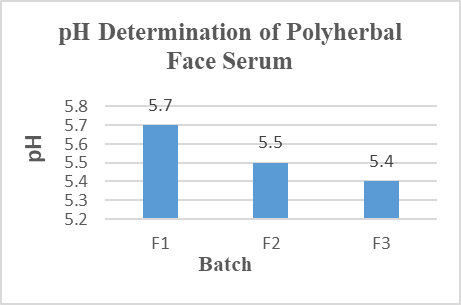
Table 5.3 : pH Determination

Batch

Observed pH

Interpretation

F1

5.7

Skin-compatible slightly acidic range

F2

5.5

Skin-compatible slightly acidic range

F3

5.4

Closest to optimized final batch


A slightly acidic pH is desirable for topical serums because it supports skin compatibility and preserves the effectiveness of the preservative system. The pH values of all batches remained within a practical cosmetic range, and the optimized batch F3 demonstrated the most balanced result.


5.4 Viscosity of Face Serum Formulations


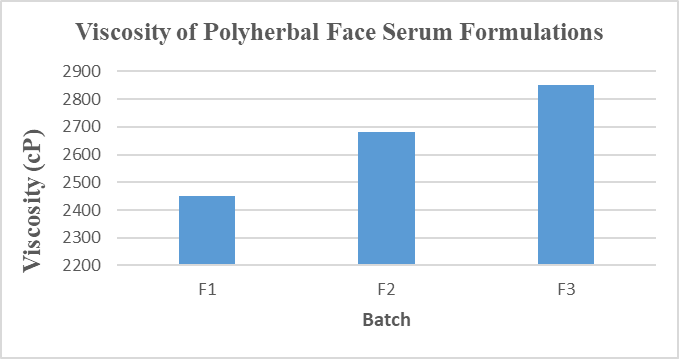
Table  5.4 :  Viscosity of Face Serum Formulations

Batch

Viscosity (cP)

Comment

F1

2450 cP

Acceptable flow

F2

2680 cP

Improved consistency

F3

2850 cP

Optimum balance of flow and application


The optimized batch showed a serum-like consistency that was neither too runny nor overly thick. This is important because a face serum should spread easily, absorb quickly, and leave minimal residue. In the present optimization, the F3 batch offered the most favorable balance between flowability and product control.


5.5 Homogeneity and irritancy


Table 5.5 :  Homogeneity and irritancy

Batch

Homogeneity

Irritancy

F1

Homogeneous

Not irritant

F2

Homogeneous

Not irritant

F3

Homogeneous

Not irritant


All batches remained homogeneous and no visible phase separation or aggregate formation was noted. The irritancy assessment indicated that the formulations were well tolerated on the test area, supporting their suitability for further cosmetic development.

5.6 Absorption Test Results


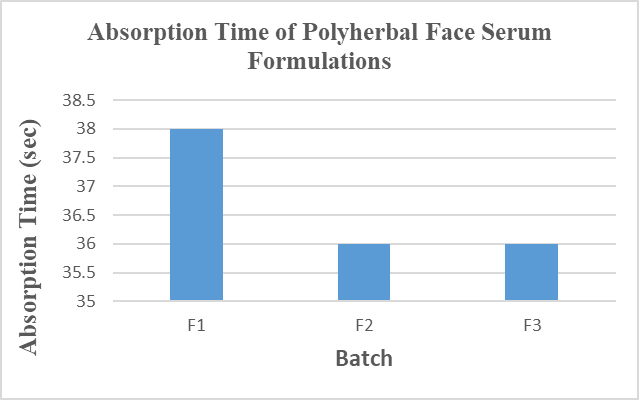
Table 5.6 :  Absorption Test Results

Batch

Absorption time

Interpretation

F1

38 sec

Acceptable

F2

36 sec

Faster absorption

F3

36 sec

Optimized fast absorption


Rapid disappearance of the wet feel is a positive property for facial serums because it improves user acceptability and reduces the perception of greasiness. The absorption profile of F2 and F3 was slightly better than F1, with F3 selected as the preferred batch.


5.7 Stability study


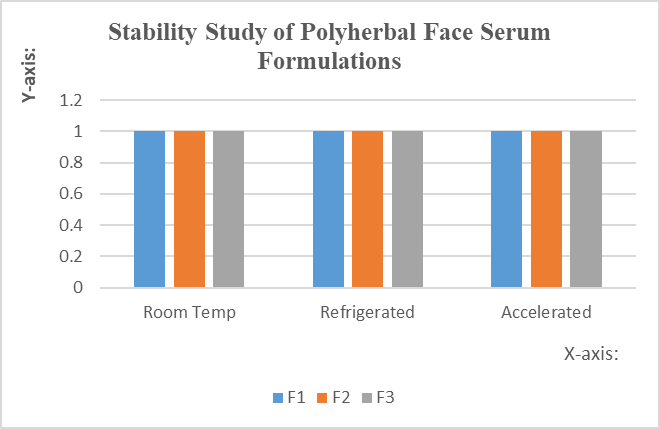
Table 5.7  : Stability study

Batch

Room temperature

Refrigerated

Accelerated

F1

Stable, no change

Stable, no change

Stable, no change

F2

Stable, no change

Stable, no change

Stable, no change

F3

Stable, no change

Stable, no change

Stable, no change


No meaningful separation, color change, or texture collapse was observed during the short-term stability observation. This indicates that the formulation system is sufficiently robust for preliminary storage evaluation.


5.8 Spreadability Test


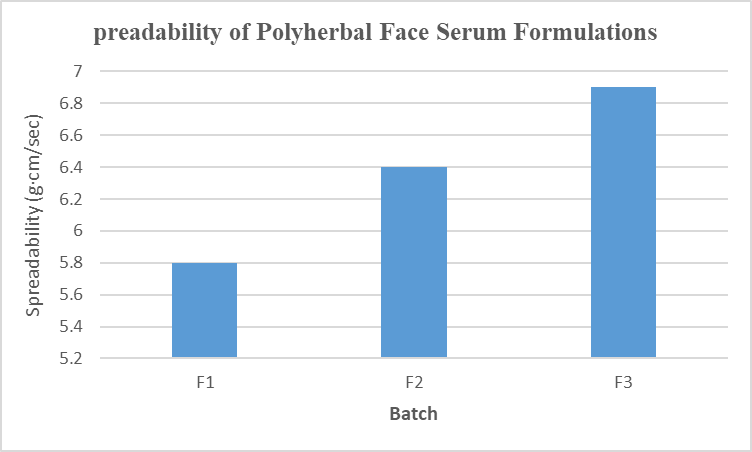
Table 5.8: Spreadability Test Results

Batch

Spreadability (g·cm/sec)

Interpretation

F1

5.8

Good spreadability

F2

6.4

Improved spreading property

F3

6.9

Excellent spreadability


Stability study was carried out for 30 days at room temperature, refrigerated condition (4°C), and accelerated condition (40°C).Spreadability is an important parameter for topical serum formulations because it influences ease of application and uniform distribution on the skin surface. All batches showed satisfactory spreadability characteristics. Batch F1 exhibited acceptable spreading behavior, while F2 demonstrated improved application properties. Batch F3 showed the highest spreadability value, indicating better glide, smooth application, and enhanced user acceptability. The improved spreadability of F3 may be attributed to the optimized concentration of glycerin and xanthan gum in the formulation.


5.9 Overall interpretation

The data support the concept that a carefully balanced polyherbal serum can combine hydration, brightening, and antioxidant functions in one product. Turmeric, green tea, and licorice contribute to oxidative-stress control and complexion support; aloe vera and glycerin reinforce hydration; saffron adds brightening and sensory value; and papaya may provide gentle surface renewal.

From the formulation series, F3 was the most balanced batch because it combined acceptable pH, optimum viscosity, rapid absorption, full homogeneity, non-irritancy, and stable storage behavior. That profile is consistent with the intended use of a lightweight facial serum.

CONCLUSION

The present article presents a journal-style formulation and evaluation framework for a polyherbal brightening and hydration face serum. The study design uses botanicals with complementary actions and a three-batch optimization approach to identify a stable, cosmetically acceptable serum.

On the basis of the recorded observations, the optimized batch demonstrated translucent appearance, skin-compatible pH, acceptable viscosity, rapid absorption, non-irritant behavior, and good short-term stability. These results support the feasibility of the formulation as a mild herbal cosmetic for everyday use.

REFERENCES

  1. Honari G. Skin structure and function. Sensitive skin syndrome. 2017 Mar 31:16-22.
  2. Rawlings AV. Ethnic skin types: are there differences in skin structure and function? 1. International journal of cosmetic science. 2006 Apr;28(2):79-93.
  3. Meyer W, Seegers U. Basics of skin structure and function in elasmobranchs: a review. Journal of fish biology. 2012 Apr;80(5):1940-67.
  4. Chen J, Liu Y, Zhao Z, Qiu J. Oxidative stress in the skin: Impact and related protection. International Journal of Cosmetic Science. 2021 Oct;43(5):495-509.
  5. Rinnerthaler M, Bischof J, Streubel MK, Trost A, Richter K. Oxidative stress in aging human skin. Biomolecules. 2015 Apr 21;5(2):545-89.
  6. Papaccio F, Caputo S, Bellei B. Focus on the contribution of oxidative stress in skin aging. Antioxidants. 2022 Jun;11(6):1121.
  7. Pandya AG, Guevara IL. Disorders of hyperpigmentation. Dermatologic clinics. 2000 Jan 1;18(1):91-8.
  8. Rawlings AV. Dry skin: environmental aspects. Exogenous Dermatology. 2005 Jul 20;3(2):57-71
  9. Genzer J, Groenewold J. Soft matter with hard skin: From skin wrinkles to templating and material characterization. Soft Matter. 2006;2(4):310-23
  10. Thiele JJ, Dreher F, Packer L. Antioxidant defence systems in skin. Journal of Toxicology: Cutaneous and Ocular Toxicology. 2002 Jan 1;21(1-2):119-60.
  11. Yang H, Wang X, Liu X, Wu J, Liu C, Gong W, Zhao Z, Hong J, Lin D, Wang Y, Lai R. Antioxidant peptidomics reveals novel skin antioxidant system. Molecular & Cellular Proteomics. 2009 Mar 1;8(3):571-83
  12. Krinsky NI. Mechanism of action of biological antioxidants. Proceedings of the Society for Experimental Biology and Medicine. 1992 Jun;200(2):248-54.
  13. Vaya J, Aviram M. Nutritional antioxidants mechanisms of action, analyses of activities and medical applications. Current Medicinal Chemistry-Immunology, Endocrine & Metabolic Agents. 2001 May 1;1(1):99-117.
  14. Marković Z. Study of the mechanisms of antioxidative action of different antioxidants. J. Serbian Soc. Comput. Mech. 2016;10(1):135-50.
  15. Masum MN, Yamauchi K, Mitsunaga T. Tyrosinase inhibitors from natural and synthetic sources as skin-lightening agents. Reviews in Agricultural Science. 2019;7:41-58.
  16. Pillaiyar T, Manickam M, Namasivayam V. Skin whitening agents: Medicinal chemistry perspective of tyrosinase inhibitors. Journal of enzyme inhibition and medicinal chemistry. 2017 Jan 1;32(1):403-25.
  17. Goswami P, Sharma HK. Skin hyperpigmentation disorders and use of herbal extracts: A review. Curr Trends Pharm Res. 2020 Jul;7(2):81-104.
  18. Verdier‐Sévrain S, Bonté F. Skin hydration: a review on its molecular mechanisms. Journal of cosmetic dermatology. 2007 Jun;6(2):75-82.
  19. Qassem M, Kyriacou P. Review of modern techniques for the assessment of skin hydration. Cosmetics. 2019 Mar 9;6(1):19.
  20. Sahu PK, Giri DD, Singh R, et al. Therapeutic and Medicinal Uses of Aloe vera: A Review. Pharmacology & Pharmacy. 2013;4:599-610.
  21. Christaki EV, Florou-Paneri PC. Aloe vera: A plant for many uses. Journal of Food, Agriculture & Environment. 2010;8(2):245-249.
  22. Chacko SM, Thambi PT, Kuttan R, Nishigaki I. Beneficial effects of green tea: A literature review. Chinese Medicine. 2010;5:13.
  23. Cabrera C, Artacho R, Giménez R. Beneficial effects of green tea—A review. Journal of the American College of Nutrition. 2006;25(2):79-99.
  24. Zabihi M, Hatefi B, Ardakani ME, Ranjbar AM, Mohammadi F. Impact of licorice root on the burn healing process: A double-blinded randomized controlled clinical trial. Complementary Therapies in Medicine. 2023;73:102941.
  25. Hasan MK, Ara I, Mondal MSA, Kabir Y. Phytochemistry, pharmacological activity, and potential health benefits of Glycyrrhiza glabra. Heliyon. 2021;7(6):e07240.
  26. Vollono L, Falconi M, Gaziano R, Iacovelli F, Dika E, Terracciano C, Bianchi L, Campione E. Potential of Curcumin in Skin Disorders. Nutrients. 2019;11(9):2169.
  27. Vaughn AR, Branum A, Sivamani RK. Effects of Turmeric (Curcuma longa) on Skin Health: A Systematic Review of the Clinical Evidence. Phytotherapy Research. 2016;30:1243 1264.
  28. Keen MA, Hassan I. Vitamin E in dermatology. Indian Dermatology Online Journal. 2016;7(4):311–315.
  29. Thiele JJ, Hsieh SN, Ekanayake-Mudiyanselage S. Vitamin E: Critical review of its current use in cosmetic and clinical dermatology. Dermatologic Surgery. 2005;31:805–813.
  30. Becker LC, Bergfeld WF, Belsito DV, Hill RA, Klaassen CD, Liebler DC, et al. Safety Assessment of Glycerin as Used in Cosmetics. International Journal of Toxicology. 2019;38(Suppl 3):6S–22S.
  31. Fluhr JW, Darlenski R, Surber C. Glycerol and the skin: holistic approach to its origin and functions. British Journal of Dermatology. 2008;159(1):23–34.
  32. Moein M, Zarshenas MM, Delnavaz S. Chemical composition analysis of rose water samples from Iran. Pharmaceutical Biology. 2014;52(10):1358–1361. Saffron
  33. Mzabri I, Addi M, Berrichi A. Traditional and Modern Uses of Saffron (Crocus sativus). Cosmetics. 2019;6(4):63.
  34. Golmohammadzadeh S, Jaafari MR, Hosseinzadeh H. Does saffron have antisolar and moisturizing effects? Iranian Journal of Pharmaceutical Research. 2010;9:133–140.
  35. Krutmann J, Bouloc A, Sore G, Bernard BA, Passeron T. The skin aging exposome. J Dermatol Sci. 2017;85(3):152–161.
  36. Araviiskaia E, Berardesca E, Bieber T, et al. The impact of airborne pollution on skin. J Eur Acad Dermatol Venereol. 2019;33(8):1496–1505.
  37. Kamble R, Gamare D, Yeole P, Pathan MA, Indulkar A, Kale MK, Juvatkar PV. Formulation and evaluation of herbal based anti-aging face serum. Foldscope & its applications. 2022;127.
  38. Kim S, Park TH, Kim WI, et al. The effects of green tea on dermatological conditions. Phytother Res. 2021;35(1):374–383.
  39. Wahab S, Annadurai S, Abullais SS, et al. Glycyrrhiza glabra review. Plants. 2021;10(12):2751.
  40. Rigi H, Mohtashami L, Asnaashari M, et al. Dermoprotective effects of saffron. Curr Pharm Des. 2021;27(46):4693–4698.
  41. Wang H. Beneficial medicinal effects and material applications of rose. Heliyon. 2024;10:e23530.
  42. Rinnerthaler M, Bischof J, Streubel MK, et al. Oxidative stress in aging skin. Biomolecules. 2019;9(8):356.
  43. Chen L, Hu JY, Wang SQ. Antioxidants in photoprotection. J Am Acad Dermatol. 2020;67(5):1013–1024.
  44. Masaki H. Role of antioxidants in skin care. J Dermatol Sci. 2020;58(2):85–90.
  45. Vaughn AR, Branum A, Sivamani RK. Effects of turmeric on skin health. Phytother Res. 2017;30(8):1243–1264.
  46. Simmler C, Pauli GF, Chen SN. Biological properties of glabridin. Fitoterapia. 2018;90:160–184.
  47. Fluhr JW, Darlenski R, Surber C. Glycerol and skin hydration. Br J Dermatol. 2018;159(1):23–34.
  48. Dal’Belo SE, Gaspar LR, Maia Campos PMBG. Aloe vera moisturizing effect. Skin Res Technol. 2018;12(4):241–246.
  49. Dreno B, Araviiskaia E, Berardesca E, et al. Microbiome and skin health. J Eur Acad Dermatol Venereol. 2021;35(1):31–36.
  50. Yahoum MM, Toumi S, Tahraoui H, Lefnaoui S, Kebir M, Amrane A, Assadi AA, Zhang J, Mouni L. Formulation and evaluation of xanthan gum microspheres for the sustained release of metformin hydrochloride. Micromachines. 2023 Mar 6;14(3):609
  51. Jung R, Cojocel C, Müller W, Böttger D, Lück E. Evaluation of the genotoxic potential of sorbic acid and potassium sorbate. Food and chemical toxicology. 1992 Jan 1;30(1):1-7.
  52. Maines E, Urru SA, Burri E, Piccoli G, Pedrolli A, Pasqualini A, Burlina AL, Temporin G. Formulation and clinical evaluation of sodium benzoate oral solution for the treatment of urea cycle disorders in pediatric patients. AAPS PharmSciTech. 2020 Mar 9;21(3):100.
  53. Elferjane MR, Jovanović AA, Milutinović V, Čutović N, Jovanović Krivokuća M, Marinković A. From Aloe vera leaf waste to the extracts with biological potential: Optimization of the extractions, physicochemical characterization, and biological activities. Plants. 2023 Jul 24;12(14):2744.
  54. Popuri AK, Pagala B. Extraction of curcumin from turmeric roots. Int J Innovative Res Stud. 2013 May;2:289-99.
  55. Gazeran S, Tajalli F, Mohamadi Sani A. Effect of ultrasonic extraction on qualitative parameters of saffron edible extract. Journal of Essential Oil Bearing Plants. 2016 Jul 3;19(5):1286-91.
  56. Pasrija D, Anandharamakrishnan CJ. Techniques for extraction of green tea polyphenols: A review. Food and Bioprocess Technology. 2015 May;8(5):935-50.

Reference

  1. Honari G. Skin structure and function. Sensitive skin syndrome. 2017 Mar 31:16-22.
  2. Rawlings AV. Ethnic skin types: are there differences in skin structure and function? 1. International journal of cosmetic science. 2006 Apr;28(2):79-93.
  3. Meyer W, Seegers U. Basics of skin structure and function in elasmobranchs: a review. Journal of fish biology. 2012 Apr;80(5):1940-67.
  4. Chen J, Liu Y, Zhao Z, Qiu J. Oxidative stress in the skin: Impact and related protection. International Journal of Cosmetic Science. 2021 Oct;43(5):495-509.
  5. Rinnerthaler M, Bischof J, Streubel MK, Trost A, Richter K. Oxidative stress in aging human skin. Biomolecules. 2015 Apr 21;5(2):545-89.
  6. Papaccio F, Caputo S, Bellei B. Focus on the contribution of oxidative stress in skin aging. Antioxidants. 2022 Jun;11(6):1121.
  7. Pandya AG, Guevara IL. Disorders of hyperpigmentation. Dermatologic clinics. 2000 Jan 1;18(1):91-8.
  8. Rawlings AV. Dry skin: environmental aspects. Exogenous Dermatology. 2005 Jul 20;3(2):57-71
  9. Genzer J, Groenewold J. Soft matter with hard skin: From skin wrinkles to templating and material characterization. Soft Matter. 2006;2(4):310-23
  10. Thiele JJ, Dreher F, Packer L. Antioxidant defence systems in skin. Journal of Toxicology: Cutaneous and Ocular Toxicology. 2002 Jan 1;21(1-2):119-60.
  11. Yang H, Wang X, Liu X, Wu J, Liu C, Gong W, Zhao Z, Hong J, Lin D, Wang Y, Lai R. Antioxidant peptidomics reveals novel skin antioxidant system. Molecular & Cellular Proteomics. 2009 Mar 1;8(3):571-83
  12. Krinsky NI. Mechanism of action of biological antioxidants. Proceedings of the Society for Experimental Biology and Medicine. 1992 Jun;200(2):248-54.
  13. Vaya J, Aviram M. Nutritional antioxidants mechanisms of action, analyses of activities and medical applications. Current Medicinal Chemistry-Immunology, Endocrine & Metabolic Agents. 2001 May 1;1(1):99-117.
  14. Markovi? Z. Study of the mechanisms of antioxidative action of different antioxidants. J. Serbian Soc. Comput. Mech. 2016;10(1):135-50.
  15. Masum MN, Yamauchi K, Mitsunaga T. Tyrosinase inhibitors from natural and synthetic sources as skin-lightening agents. Reviews in Agricultural Science. 2019;7:41-58.
  16. Pillaiyar T, Manickam M, Namasivayam V. Skin whitening agents: Medicinal chemistry perspective of tyrosinase inhibitors. Journal of enzyme inhibition and medicinal chemistry. 2017 Jan 1;32(1):403-25.
  17. Goswami P, Sharma HK. Skin hyperpigmentation disorders and use of herbal extracts: A review. Curr Trends Pharm Res. 2020 Jul;7(2):81-104.
  18. Verdier?Sévrain S, Bonté F. Skin hydration: a review on its molecular mechanisms. Journal of cosmetic dermatology. 2007 Jun;6(2):75-82.
  19. Qassem M, Kyriacou P. Review of modern techniques for the assessment of skin hydration. Cosmetics. 2019 Mar 9;6(1):19.
  20. Sahu PK, Giri DD, Singh R, et al. Therapeutic and Medicinal Uses of Aloe vera: A Review. Pharmacology & Pharmacy. 2013;4:599-610.
  21. Christaki EV, Florou-Paneri PC. Aloe vera: A plant for many uses. Journal of Food, Agriculture & Environment. 2010;8(2):245-249.
  22. Chacko SM, Thambi PT, Kuttan R, Nishigaki I. Beneficial effects of green tea: A literature review. Chinese Medicine. 2010;5:13.
  23. Cabrera C, Artacho R, Giménez R. Beneficial effects of green tea—A review. Journal of the American College of Nutrition. 2006;25(2):79-99.
  24. Zabihi M, Hatefi B, Ardakani ME, Ranjbar AM, Mohammadi F. Impact of licorice root on the burn healing process: A double-blinded randomized controlled clinical trial. Complementary Therapies in Medicine. 2023;73:102941.
  25. Hasan MK, Ara I, Mondal MSA, Kabir Y. Phytochemistry, pharmacological activity, and potential health benefits of Glycyrrhiza glabra. Heliyon. 2021;7(6):e07240.
  26. Vollono L, Falconi M, Gaziano R, Iacovelli F, Dika E, Terracciano C, Bianchi L, Campione E. Potential of Curcumin in Skin Disorders. Nutrients. 2019;11(9):2169.
  27. Vaughn AR, Branum A, Sivamani RK. Effects of Turmeric (Curcuma longa) on Skin Health: A Systematic Review of the Clinical Evidence. Phytotherapy Research. 2016;30:1243 1264.
  28. Keen MA, Hassan I. Vitamin E in dermatology. Indian Dermatology Online Journal. 2016;7(4):311–315.
  29. Thiele JJ, Hsieh SN, Ekanayake-Mudiyanselage S. Vitamin E: Critical review of its current use in cosmetic and clinical dermatology. Dermatologic Surgery. 2005;31:805–813.
  30. Becker LC, Bergfeld WF, Belsito DV, Hill RA, Klaassen CD, Liebler DC, et al. Safety Assessment of Glycerin as Used in Cosmetics. International Journal of Toxicology. 2019;38(Suppl 3):6S–22S.
  31. Fluhr JW, Darlenski R, Surber C. Glycerol and the skin: holistic approach to its origin and functions. British Journal of Dermatology. 2008;159(1):23–34.
  32. Moein M, Zarshenas MM, Delnavaz S. Chemical composition analysis of rose water samples from Iran. Pharmaceutical Biology. 2014;52(10):1358–1361. Saffron
  33. Mzabri I, Addi M, Berrichi A. Traditional and Modern Uses of Saffron (Crocus sativus). Cosmetics. 2019;6(4):63.
  34. Golmohammadzadeh S, Jaafari MR, Hosseinzadeh H. Does saffron have antisolar and moisturizing effects? Iranian Journal of Pharmaceutical Research. 2010;9:133–140.
  35. Krutmann J, Bouloc A, Sore G, Bernard BA, Passeron T. The skin aging exposome. J Dermatol Sci. 2017;85(3):152–161.
  36. Araviiskaia E, Berardesca E, Bieber T, et al. The impact of airborne pollution on skin. J Eur Acad Dermatol Venereol. 2019;33(8):1496–1505.
  37. Kamble R, Gamare D, Yeole P, Pathan MA, Indulkar A, Kale MK, Juvatkar PV. Formulation and evaluation of herbal based anti-aging face serum. Foldscope & its applications. 2022;127.
  38. Kim S, Park TH, Kim WI, et al. The effects of green tea on dermatological conditions. Phytother Res. 2021;35(1):374–383.
  39. Wahab S, Annadurai S, Abullais SS, et al. Glycyrrhiza glabra review. Plants. 2021;10(12):2751.
  40. Rigi H, Mohtashami L, Asnaashari M, et al. Dermoprotective effects of saffron. Curr Pharm Des. 2021;27(46):4693–4698.
  41. Wang H. Beneficial medicinal effects and material applications of rose. Heliyon. 2024;10:e23530.
  42. Rinnerthaler M, Bischof J, Streubel MK, et al. Oxidative stress in aging skin. Biomolecules. 2019;9(8):356.
  43. Chen L, Hu JY, Wang SQ. Antioxidants in photoprotection. J Am Acad Dermatol. 2020;67(5):1013–1024.
  44. Masaki H. Role of antioxidants in skin care. J Dermatol Sci. 2020;58(2):85–90.
  45. Vaughn AR, Branum A, Sivamani RK. Effects of turmeric on skin health. Phytother Res. 2017;30(8):1243–1264.
  46. Simmler C, Pauli GF, Chen SN. Biological properties of glabridin. Fitoterapia. 2018;90:160–184.
  47. Fluhr JW, Darlenski R, Surber C. Glycerol and skin hydration. Br J Dermatol. 2018;159(1):23–34.
  48. Dal’Belo SE, Gaspar LR, Maia Campos PMBG. Aloe vera moisturizing effect. Skin Res Technol. 2018;12(4):241–246.
  49. Dreno B, Araviiskaia E, Berardesca E, et al. Microbiome and skin health. J Eur Acad Dermatol Venereol. 2021;35(1):31–36.
  50. Yahoum MM, Toumi S, Tahraoui H, Lefnaoui S, Kebir M, Amrane A, Assadi AA, Zhang J, Mouni L. Formulation and evaluation of xanthan gum microspheres for the sustained release of metformin hydrochloride. Micromachines. 2023 Mar 6;14(3):609
  51. Jung R, Cojocel C, Müller W, Böttger D, Lück E. Evaluation of the genotoxic potential of sorbic acid and potassium sorbate. Food and chemical toxicology. 1992 Jan 1;30(1):1-7.
  52. Maines E, Urru SA, Burri E, Piccoli G, Pedrolli A, Pasqualini A, Burlina AL, Temporin G. Formulation and clinical evaluation of sodium benzoate oral solution for the treatment of urea cycle disorders in pediatric patients. AAPS PharmSciTech. 2020 Mar 9;21(3):100.
  53. Elferjane MR, Jovanovi? AA, Milutinovi? V, ?utovi? N, Jovanovi? Krivoku?a M, Marinkovi? A. From Aloe vera leaf waste to the extracts with biological potential: Optimization of the extractions, physicochemical characterization, and biological activities. Plants. 2023 Jul 24;12(14):2744.
  54. Popuri AK, Pagala B. Extraction of curcumin from turmeric roots. Int J Innovative Res Stud. 2013 May;2:289-99.
  55. Gazeran S, Tajalli F, Mohamadi Sani A. Effect of ultrasonic extraction on qualitative parameters of saffron edible extract. Journal of Essential Oil Bearing Plants. 2016 Jul 3;19(5):1286-91.
  56. Pasrija D, Anandharamakrishnan CJ. Techniques for extraction of green tea polyphenols: A review. Food and Bioprocess Technology. 2015 May;8(5):935-50.

Photo
Rutik Jadhao
Corresponding author

DJPS College of Pharmacy, Pathri, Dist. Parbhani, Maharashtra, India.

Photo
Prakash Gupta
Co-author

DJPS College of Pharmacy, Pathri, Dist. Parbhani, Maharashtra, India.

Photo
Pratik Jadhav
Co-author

DJPS College of Pharmacy, Pathri, Dist. Parbhani, Maharashtra, India.

Photo
Vaibhav Ighare
Co-author

DJPS College of Pharmacy, Pathri, Dist. Parbhani, Maharashtra, India.

Photo
Jalde R
Co-author

DJPS College of Pharmacy, Pathri, Dist. Parbhani, Maharashtra, India.

Photo
Dr. Ramesh Ingole
Co-author

DJPS College of Pharmacy, Pathri, Dist. Parbhani, Maharashtra, India.

Rutik Jadhao, Prakash Gupta, Vaibhav Ighare, Pratik Jadhav, Jalde R, Dr. Ramesh Ingole, Formulation and Evaluation of Polyherbal Face Serum for Skin Brightening and Hydration, Int. J. of Pharm. Sci., 2026, Vol 4, Issue 6, 2730-2741, https://doi.org/10.5281/zenodo.20624879

More related articles
Development and Evaluation of Essential Oil-Enrich...
Hritik, Naresh Kumar, Dr. Puneet Kaushal ...
Pharmacological Evaluation Of Withania Somnifera Against Arsenic Induced Nephrot...
Kiran Langhe, Sagar Daitkar, Akshay Borude , S R Ghodake , Dr. A D Kandhare , Dr. H V Kamble ...
Artificial Intelligence in Pharmaceutical Quality Assurance and Good Manufacturi...
Manashri Mokal, Rajendra Patil, Swati Burungale, Teena Dubay, Pranali Sawant...
Related Articles
Review On Tobacco Consumption in Pregnant Women...
Mansimran Kaur, Simran Kaur, Amar Pal Singh, Ajeet Pal Singh, Rajesh Kumar...
Review On Postpartum Anxiety and Depression...
Prerna, Gaurav Hastir, Amar Pal Singh, Ajeet Pal Singh, Rajesh Kumar...
RP-HPLC Method Development of Enzalutamide in Tablet Dosage Form and Its Validat...
Trupti Lade , Sayali Chavan, Pallavi Thombare, Sarika Kumbhar...
A Review on Techniques to Enhance Solubility of Poorly Aqueous Soluble Drug...
Vaishnavi Ramavat, K. Biyani, R. Pagore, Mangesh Gadekar...