

We use cookies to ensure our website works properly and to personalise your experience. Cookies policy
Department of Pharmaceutics, Anurag College of Pharmacy, Warthi, Bhandara, Maharashtra.
Herbal mouthwashes have gained considerable attention in cosmetic oral care because of the naturally occurring phytoconstituents present in medicinal plants. These plant-based ingredients are being explored for their potential cleansing, refreshing and antimicrobial properties. The present study aimed to formulate and evaluate a polyherbal cosmetic mouthwash using eight selected medicinal plants namely neem (Azadirachta indica), tulsi (Ocimum tenuiflorum), guava (Psidium guajava), peppermint (Mentha × piperita), clove (Syzygium aromaticum), fennel (Foeniculum vulgare), liquorice (Glycyrrhiza glabra) and ginger (Zingiber officinale). Three formulations (F1, F2 and F3) were prepared using different proportions of the selected herbal ingredients. The plant materials were dried powdered separately and subjected to aqueous extraction. The resulting extracts were incorporated into the mouthwash formulations. The prepared formulations were evaluated for organoleptic characteristics including appearance, colour, odour and homogeneity as well as physicochemical characteristics, particularly pH. Preliminary in-vitro antimicrobial activity was also evaluated against Staphylococcus aureus. The results showed that F1 and F2 exhibited clear and homogeneous appearances, whereas F3 showed slight turbidity. The pH values of F1, F2 and F3 were recorded as 6.1, 6.3 and 6.5, respectively. The observed zones of inhibition were 10 mm, 12 mm and 14 mm for F1, F2 and F3, respectively. Among the three formulations, F3 exhibited the largest zone of inhibition against the tested microorganism. Overall, the study demonstrated the formulation of three polyherbal cosmetic mouthwash preparations with acceptable observed physical characteristics and preliminary in-vitro antimicrobial activity. However, further investigations, including microbial quality assessment, stability studies and detailed antimicrobial evaluation, are necessary to establish the overall quality and storage suitability of the formulations.
Oral hygiene plays an essential role in maintaining oral cleanliness and supporting everyday personal care. Regular oral-care practices help remove food particles and maintain a clean and comfortable oral environment. Toothbrushing and interdental cleaning are the primary methods of maintaining oral hygiene, while mouthwash is commonly used as an additional preparation to support daily oral care. Depending on its composition, a mouthwash may contain cleansing ingredients, flavouring agents and refreshing substances that improve the overall oral-care experience [1].
Mouthwash, also referred to as mouthrinse, is a liquid preparation intended for use by rinsing the oral cavity. Based on its intended application, mouthwashes are generally divided into cosmetic and therapeutic categories. Cosmetic mouthwashes are mainly used to temporarily reduce unpleasant breath, improve mouth freshness and provide a pleasant taste. They are not intended to treat or prevent oral diseases. Therapeutic mouthwashes contain specific active substances that may help manage conditions such as dental plaque, gingivitis and dental caries. Therefore, mouthwash is generally considered a supplementary oral-care product rather than an alternative to regular toothbrushing and interdental cleaning [1].
The increasing interest in plant-based personal-care products has encouraged the investigation of medicinal plants for oral-care applications. Plant materials contain several naturally occurring chemical constituents, including phenolics, flavonoids, tannins, alkaloids and volatile compounds. Their chemical composition varies according to the plant species, selected plant part, growing conditions and extraction procedure. In mouthwash formulations, plant-derived ingredients may also contribute to flavour, aroma and other sensory characteristics. However, the final properties of herbal preparation depend on the quality of the raw materials, extraction conditions, ingredient concentrations and compatibility of the formulation components.
The present investigation involved eight medicinal plants: neem (Azadirachta indica), tulsi (Ocimum tenuiflorum), guava (Psidium guajava), peppermint (Mentha × piperita), clove (Syzygium aromaticum), fennel (Foeniculum vulgare), liquorice (Glycyrrhiza glabra) and ginger (Zingiber officinale). These plants were selected for the development of a combined herbal oral-care preparation using aqueous extracts. The selected materials represent different botanical sources and plant parts, each having its own chemical composition. Their combination was investigated as a formulation approach. However, the individual contribution of each plant to the characteristics of the final preparation was not separately determined.
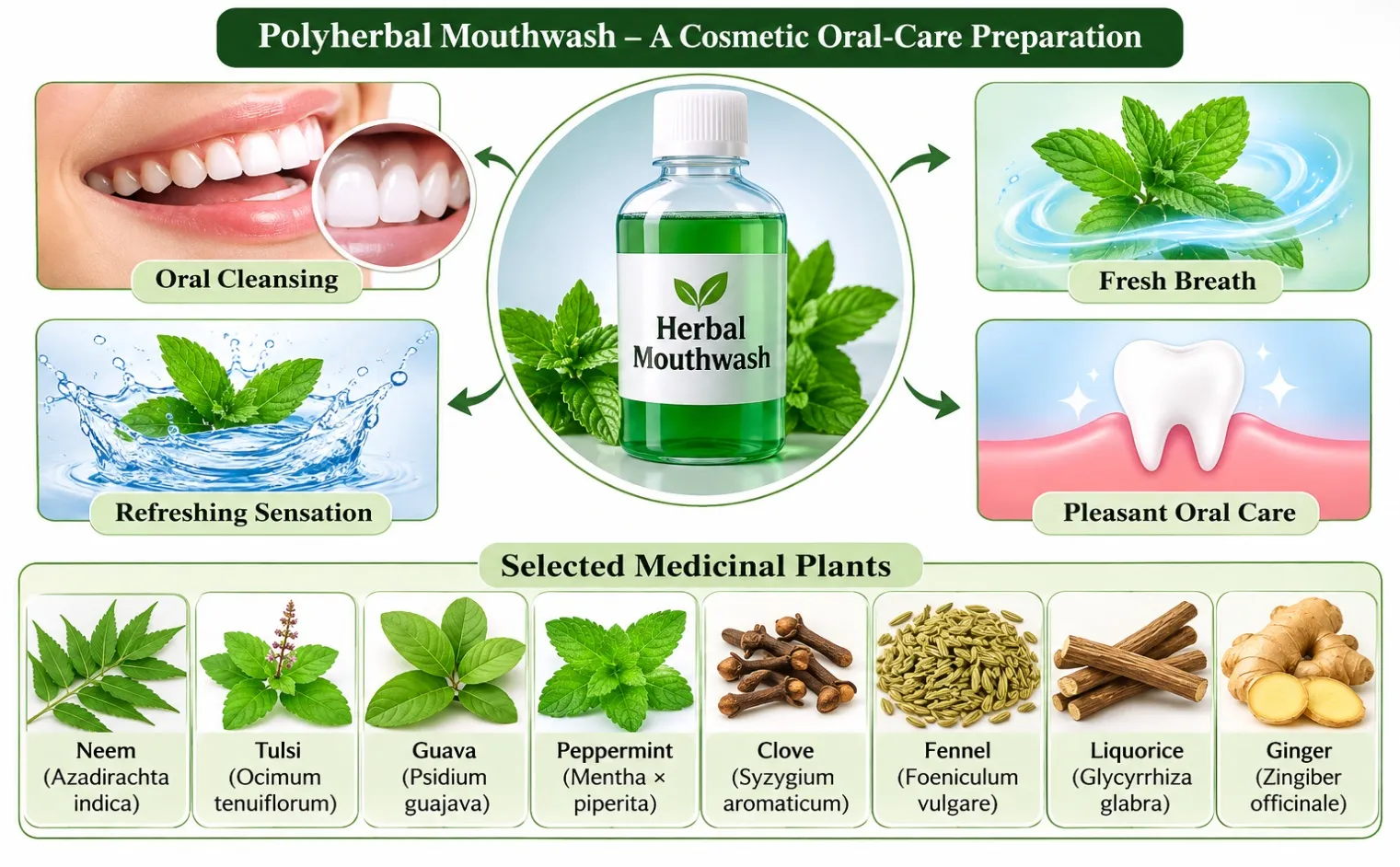
Figure 1: Cosmetic Functions of Mouthwash and the Eight Medicinal Plants Selected for the Formulation.
The preparation of a polyherbal mouthwash involves the appropriate selection of herbal ingredients, extraction of plant constituents and development of a suitable liquid formulation. Evaluation of the finished preparation is necessary to understand its basic physical and physicochemical characteristics. Parameters such as appearance, colour, odour, homogeneity and pH provide useful information about the prepared formulation. Additionally, preliminary in-vitro antimicrobial screening can be performed to investigate the response of a formulation against selected microorganisms under specified laboratory conditions. However, such laboratory observations alone cannot establish clinical effectiveness or therapeutic benefits.
Several research studies have investigated the use of medicinal plants in the preparation of herbal mouthwashes. Haq et al. (2023) reported the development of a nanoemulsion-based polyherbal mouthwash incorporating Curcuma longa extract and clove oil, followed by evaluation of its physicochemical and antimicrobial characteristics [2]. Similarly, an overview of systematic reviews by Mehta et al. (2024) discussed the available evidence concerning herbal oral-care products, particularly mouthrinses, in relation to plaque and gingivitis. Although promising findings were reported, limitations such as short study durations and publication bias indicated the need for further well-designed and standardised investigations [3]. These studies provide a basis for continued research into herbal oral-care formulations and their systematic evaluation.
Research Gap and Rationale
Various herbal mouthwash preparations have been investigated using different plant combinations, extraction procedures and formulation compositions. Differences in these experimental approaches make it difficult to compare the characteristics and performance of individual preparations directly. The present study focuses on a selected combination of eight medicinal plants: neem, tulsi, guava, peppermint, clove, fennel, liquorice and ginger. This combination was used to develop three polyherbal mouthwash formulations (F1, F2 and F3) containing different proportions of the selected ingredients.
The main focus of the investigation was to compare the physical and physicochemical characteristics of the three prepared formulations and examine their preliminary in-vitro antimicrobial activity. Particular attention was given to organoleptic properties, homogeneity, pH and antimicrobial screening. The study was designed to generate initial experimental observations regarding this specific herbal combination and provide a basis for further formulation development and evaluation.
Considering these aspects, the present study was undertaken to formulate and evaluate a polyherbal cosmetic mouthwash using aqueous extracts of eight selected medicinal plants. Three formulations, designated F1, F2 and F3, were prepared using different proportions of the selected herbal ingredients. The formulations were evaluated for appearance, colour, odour, homogeneity and pH. In addition, preliminary in-vitro antimicrobial activity was investigated against Staphylococcus aureus. The findings were used to compare the prepared formulations and identify areas requiring further investigation in the development of polyherbal cosmetic oral-care preparations.
PLANT PROFILE
The polyherbal mouthwash was prepared using eight selected medicinal plants. These plants were selected based on their reported phytochemical constituents and traditional use in personal-care preparations. The plant profiles are presented below, including their botanical names, families, plant parts used and important constituents.
1. Neem [1]
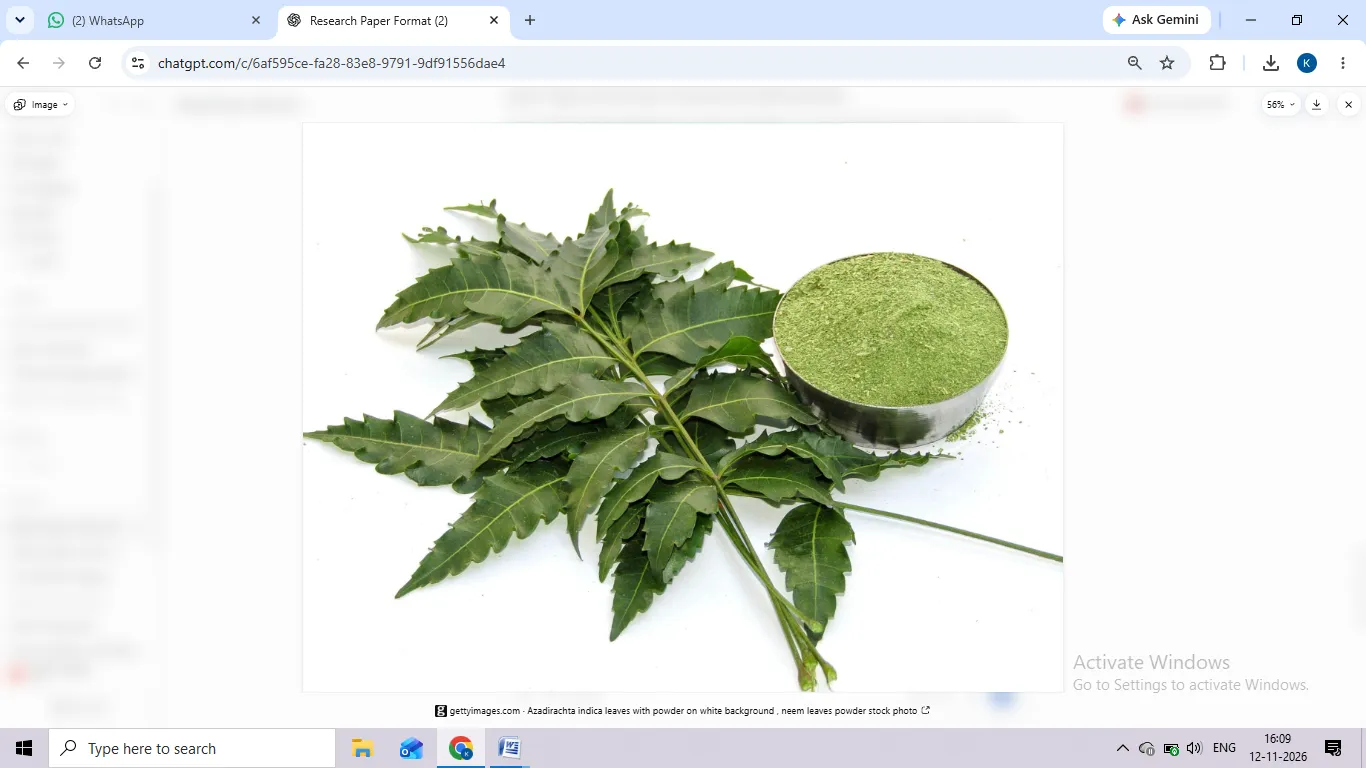
Figure 2: Neem (Azadirachta indica)
Table 1: Plant Profile of Neem (Azadirachta indica)
| Parameter | Description |
|---|---|
| Common name | Neem |
| Botanical name | Azadirachta indica A. Juss. |
| Family | Meliaceae |
| Plant part used | Leaves |
| Major constituents | Limonoids, flavonoids, tannins and phenolic compounds |
| Important constituents | Nimbin, nimbolide and quercetin |
| Use in formulation | Selected as an ingredient in the polyherbal mouthwash. |
2. Tulsi [2]213q
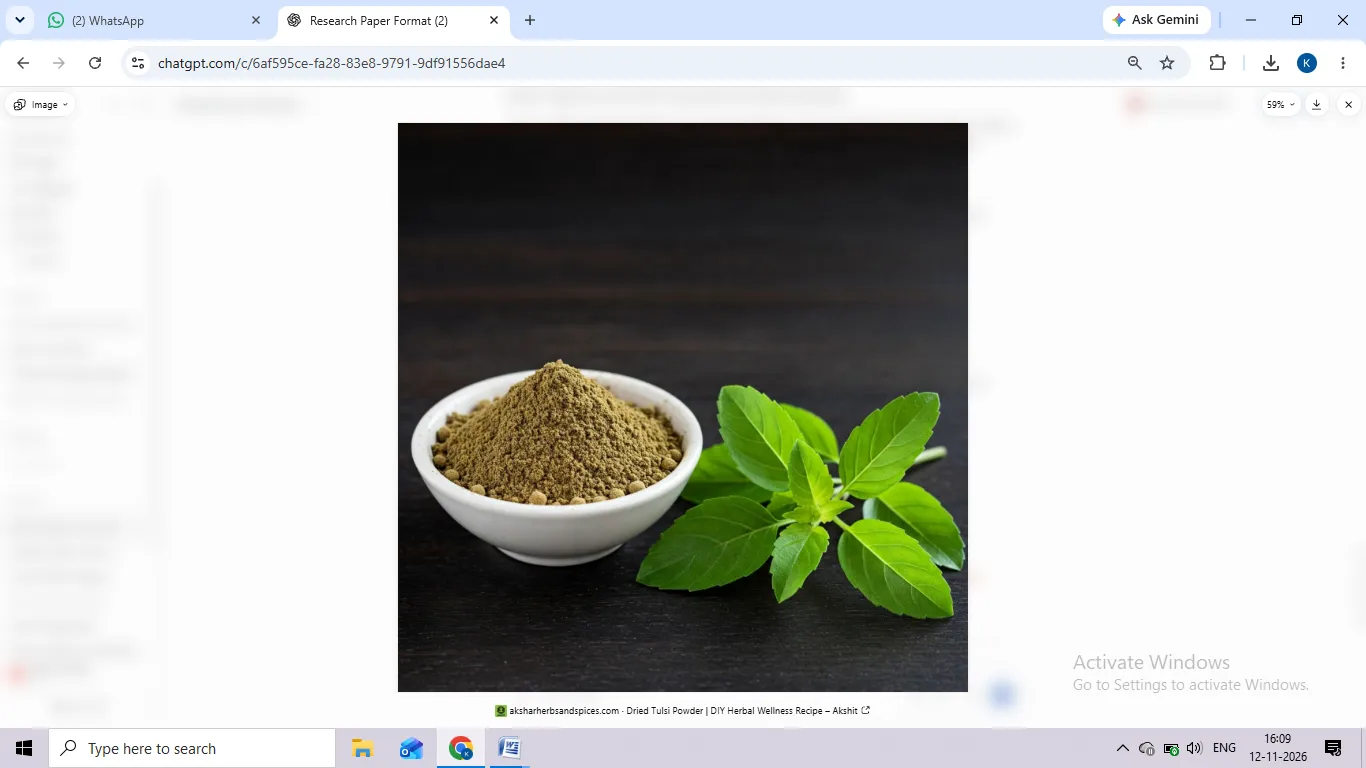
Figure 3: Tulsi (Ocimum tenuiflorum)
Table 2: Plant Profile of Tulsi (Ocimum tenuiflorum)
| Parameter | Description |
|---|---|
| Common name | Tulsi |
| Botanical name | Ocimum tenuiflorum L. |
| Family | Lamiaceae |
| Plant part used | Leaves |
| Major constituents | Phenolic compounds, flavonoids and volatile oils |
| Important constituents | Eugenol, rosmarinic acid and ursolic acid |
| Use in formulation | Selected as an ingredient in the polyherbal mouthwash. |
3. Guava [3]
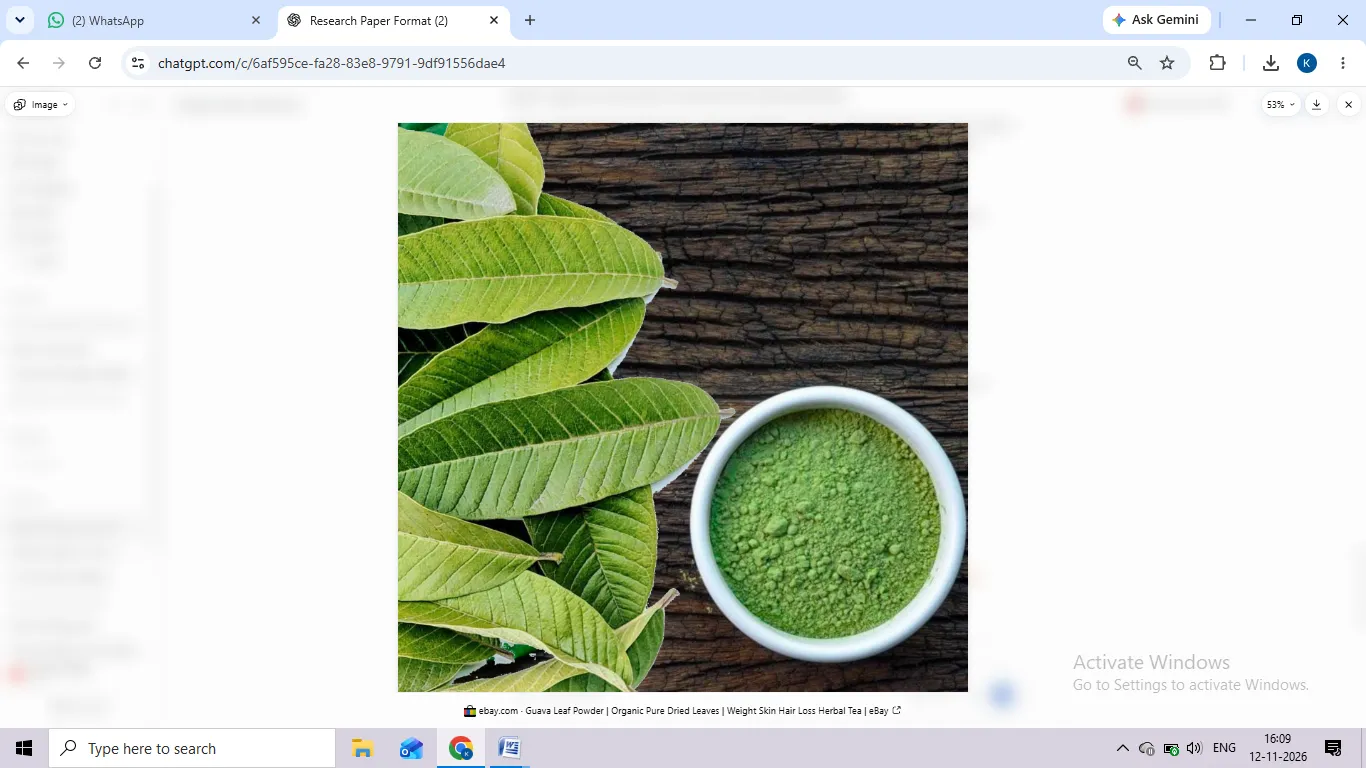
Figure 4: Guava (Psidium guajava)
Table 3: Plant Profile of Guava (Psidium guajava)
| Parameter | Description |
|---|---|
| Common name | Guava |
| Botanical name | Psidium guajava L. |
| Family | Myrtaceae |
| Plant part used | Leaves |
| Major constituents | Flavonoids, tannins and phenolic compounds |
| Important constituents | Quercetin, guaijaverin and gallic acid |
| Use in formulation | Selected as an ingredient in the polyherbal mouthwash. |
4. Peppermint [4]
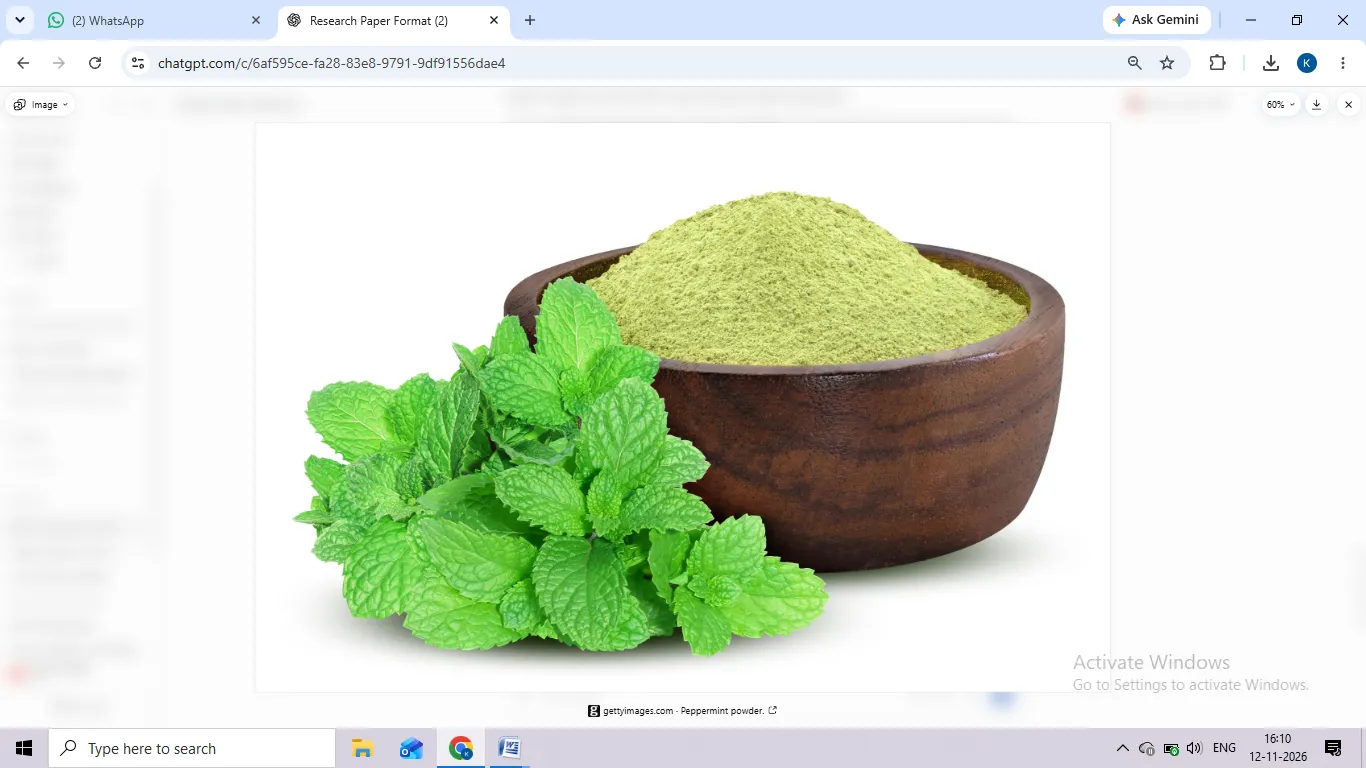
Figure 5: Peppermint (Mentha × piperita)
Table 4: Plant Profile of Peppermint (Mentha × piperita)
| Parameter | Description |
|---|---|
| Common name | Peppermint |
| Botanical name | Mentha × piperita L. |
| Family | Lamiaceae |
| Plant part used | Leaves |
| Major constituents | Volatile oils and flavonoids |
| Important constituents | Menthol, menthone and rosmarinic acid |
| Use in formulation | Selected as an ingredient in the polyherbal mouthwash. |
5. Clove [5]
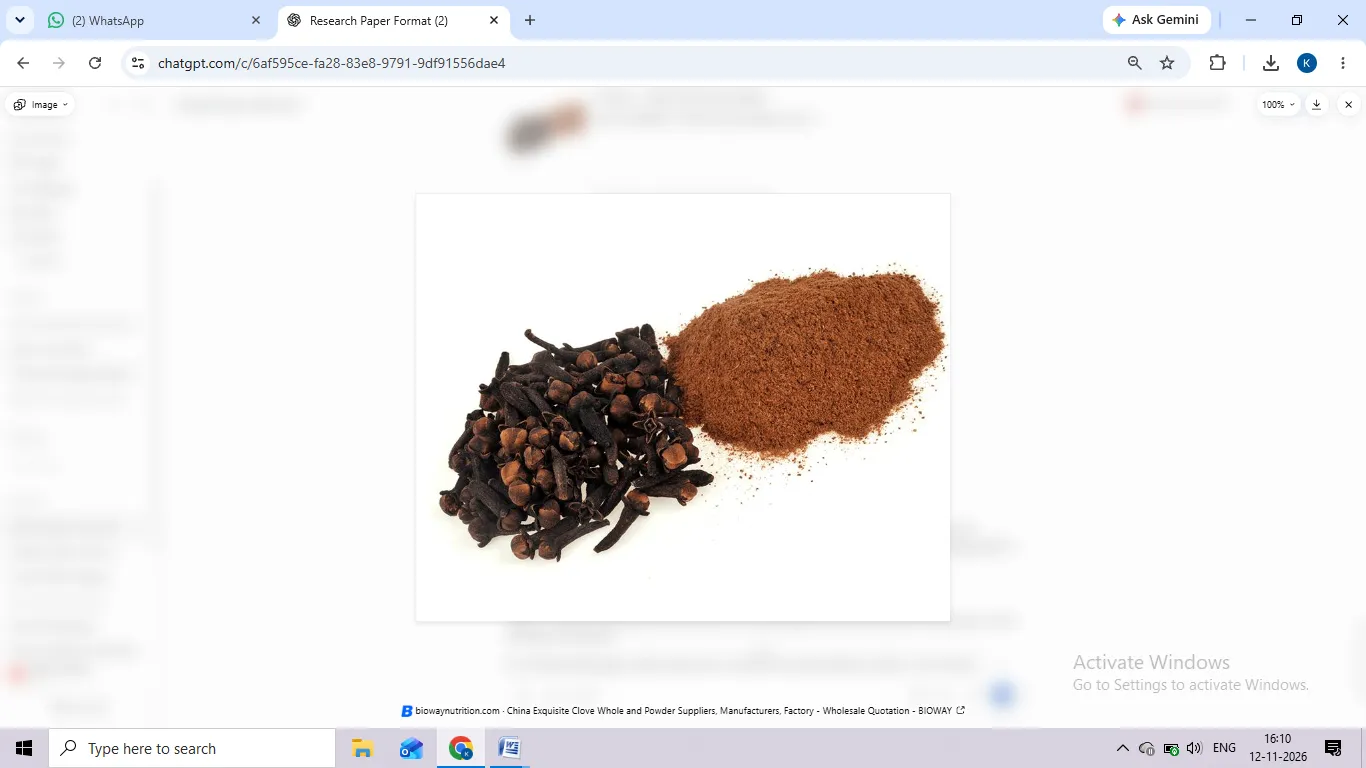
Figure 6: Clove (Syzygium aromaticum)
Table 5: Plant Profile of Clove (Syzygium aromaticum)
| Parameter | Description |
|---|---|
| Common name | Clove |
| Botanical name | Syzygium aromaticum (L.) Merr. & L.M. Perry |
| Family | Myrtaceae |
| Plant part used | Flower buds |
| Major constituents | Volatile oils and phenolic compounds |
| Important constituents | Eugenol, eugenyl acetate and β-caryophyllene |
| Use in formulation | Selected as an ingredient in the polyherbal mouthwash. |
6. Fennel [6]
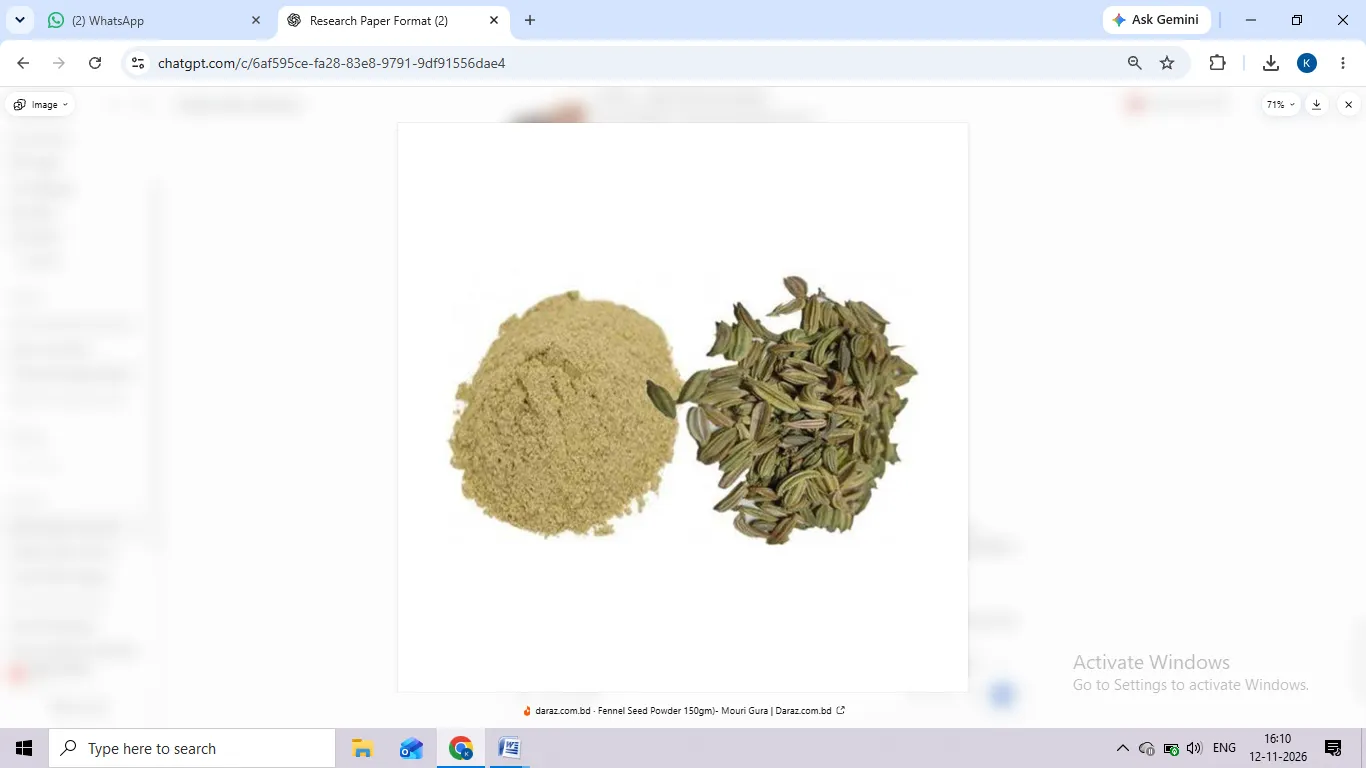
Figure 7: Fennel (Foeniculum vulgare)
Table 6: Plant Profile of Fennel (Foeniculum vulgare)
| Parameter | Description |
|---|---|
| Common name | Fennel |
| Botanical name | Foeniculum vulgare Mill. |
| Family | Apiaceae |
| Plant part used | Fruits (commonly called seeds) |
| Major constituents | Volatile oils |
| Important constituents | Anethole, fenchone and estragole |
| Use in formulation | Selected as an ingredient in the polyherbal mouthwash. |
7. Liquorice [7]
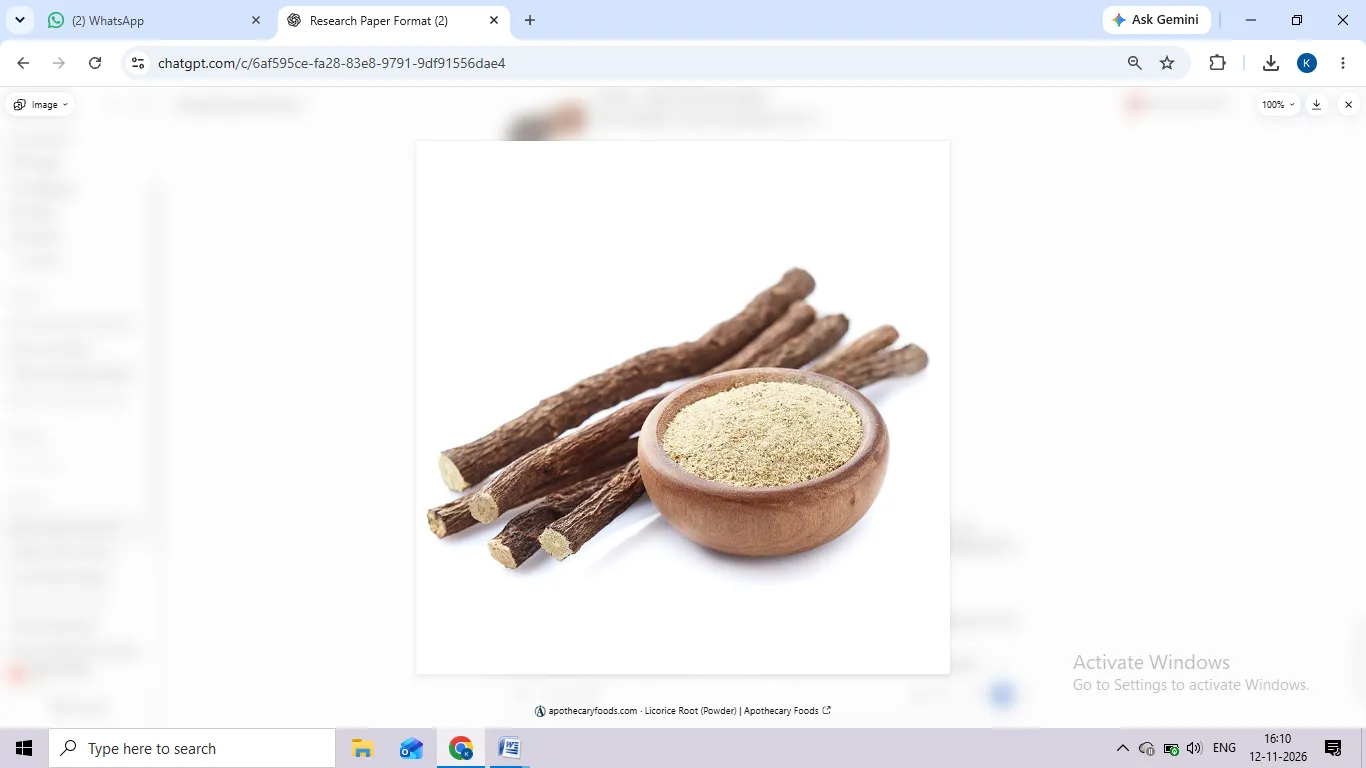
Figure 8: Liquorice (Glycyrrhiza glabra)
Table 7: Plant Profile of Liquorice (Glycyrrhiza glabra)
| Parameter | Description |
|---|---|
| Common name | Liquorice |
| Botanical name | Glycyrrhiza glabra L. |
| Family | Fabaceae |
| Plant part used | Roots |
| Major constituents | Triterpenoid saponins and flavonoids |
| Important constituents | Glycyrrhizin, liquiritin and glabridin |
| Use in formulation | Selected as an ingredient in the polyherbal mouthwash. |
8. Ginger [8]
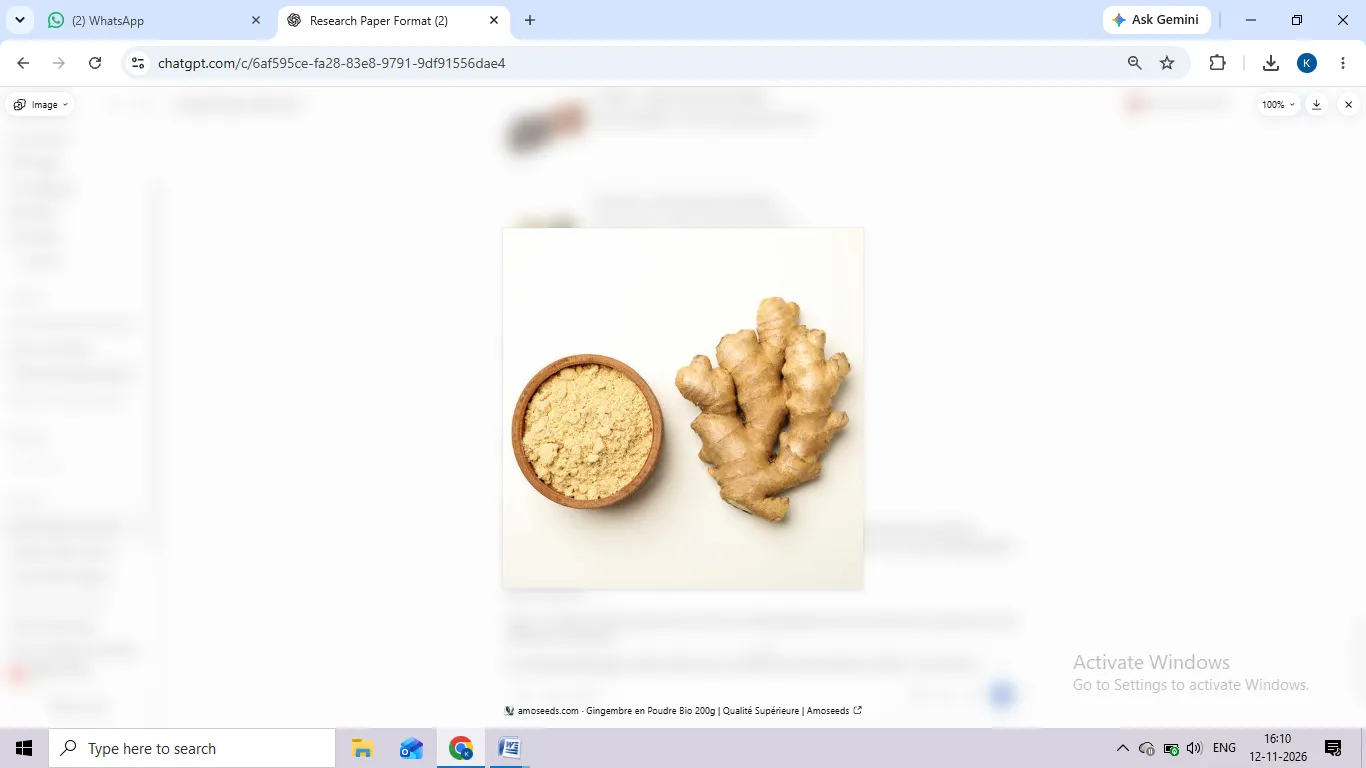
Figure 9: Ginger (Zingiber officinale)
Table 8: Plant Profile of Ginger (Zingiber officinale)
| Parameter | Description |
|---|---|
| Common name | Ginger |
| Botanical name | Zingiber officinale Roscoe |
| Family | Zingiberaceae |
| Plant part used | Rhizome |
| Major constituents | Phenolic compounds and volatile oils |
| Important constituents | Gingerols, shogaols and zingerone |
| Use in formulation | Selected as an ingredient in the polyherbal mouthwash. |
AIM AND OBJECTIVE
Aim: To formulate and evaluate a polyherbal cosmetic mouthwash using aqueous extracts of eight selected medicinal plants and to assess its organoleptic and physicochemical characteristics along with preliminary in-vitro antimicrobial activity.
Objectives:
1. To select eight medicinal plants, namely neem, tulsi, guava, peppermint, clove, fennel, liquorice and ginger, for the development of a polyherbal mouthwash.
2. To prepare aqueous extracts from the selected powdered plant materials using suitable extraction procedures.
3. To prepare three polyherbal mouthwash formulations (F1, F2 and F3) using different proportions of the selected herbal ingredients.
4. To evaluate the prepared formulations for organoleptic characteristics, including appearance, colour, odour and homogeneity.
5. To determine the pH of the prepared mouthwash formulations.
6. To investigate the preliminary in-vitro antimicrobial activity of the formulations against Staphylococcus aureus using the agar cup-plate method.
7. To compare the observed physical characteristics, pH values and antimicrobial activity of the three formulations.
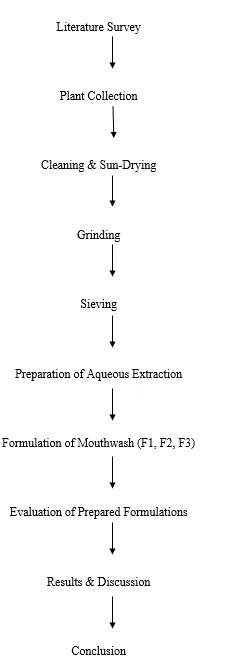
PLAN OF WORK
MATERIALS AND METHODS
• Materials Used for Herbal Formulation
The polyherbal mouthwash was formulated using eight herbal ingredients: neem, tulsi, clove, peppermint, liquorice, fennel, guava and ginger. Distilled water was used as the extraction solvent and formulation vehicle, while sodium chloride (NaCl) was included as an additional ingredient.
The herbal materials were used in dried powdered form. The equipment and glassware required for preparation included beakers, conical flasks, measuring cylinders, a glass stirring rod, a funnel, a heating mantle and Whatman No. 1 filter paper.
• Preparation of Herbal Materials
The selected herbal materials were manually inspected and cleaned to remove visible impurities and foreign particles. They were subsequently sun-dried and individually pulverised using a laboratory grinder. The resulting powders were collected separately, labelled and stored in suitable containers until extraction.
• Formulation Composition
Three batches of polyherbal mouthwash were prepared and designated as F1, F2 and F3. Different quantities of the selected herbal powders were used in each batch. Sodium chloride was incorporated as an additional formulation ingredient, and distilled water served as the extraction solvent and vehicle.
Table 5: Composition of Different Polyherbal Mouthwash Formulations
| Sr. No. | Ingredients | F1 | F2 | F3 |
|---|---|---|---|---|
| 1 | Neem | 1 g | 2 g | 1.5 g |
| 2 | Tulsi | 3 g | 6 g | 5.5 g |
| 3 | Clove | 4 g | 5 g | 6 g |
| 4 | Peppermint | 5 g | 7 g | 7 g |
| 5 | Liquorice | 7 g | 12 g | 12.5 g |
| 6 | Fennel | 6 g | 10 g | 10 g |
| 7 | Guava | 5 g | 9 g | 8 g |
| 8 | Ginger | 3 g | 4.5 g | 5 g |
| 9 | Sodium chloride | 0.05 g | 0.20 g | 0.20 g |
| 10 | Distilled water | 153 mL | 250 mL | 250 mL |
| Total herbal powder | 34 g | 55.5 g | 55.5 g |
• Preparation of Aqueous Herbal Extracts
Water-based extraction was carried out using two conventional techniques, namely decoction and maceration. The extraction approach was selected according to the herbal ingredients used in the formulation. The resulting liquid extracts were collected for the subsequent preparation of the mouthwash.
• Decoction Method
The decoction technique was used to obtain aqueous extracts of neem, tulsi, peppermint, guava and clove. The required quantities of the powdered herbal materials were transferred into a clean beaker, followed by the addition of distilled water. The mixture was heated on a heating mantle until boiling and maintained at boiling temperature for 15 minutes.
After extraction, the mixture was removed from the heating source and allowed to cool to room temperature. The liquid extract was then separated from the remaining plant material by filtration through Whatman No. 1 filter paper. The collected filtrate was transferred into a clean container for further use. [12,13,17]
• Maceration Method
The maceration technique was adopted for the aqueous extraction of liquorice, fennel and ginger. The required quantities of the powdered materials were placed in a clean, closed glass container, and sufficient distilled water was added to immerse the plant materials.
The mixture was maintained at room temperature for 72 hours, away from direct sunlight. Periodic agitation was performed to facilitate interaction between the powdered materials and the extraction medium. After completion of the extraction period, the mixture was strained and filtered through Whatman No. 1 filter paper. The resulting aqueous filtrate was collected in a separate clean container for subsequent formulation. [12,13,17]
EVALUATION OF POLYHERBAL MOUTHWASH
The prepared polyherbal mouthwash formulations (F1, F2 and F3) were evaluated for selected organoleptic and physicochemical characteristics with reference to the applicable requirements of BIS IS 19684:2026 [13]. The evaluation parameters included appearance, colour, odour, homogeneity and pH. In addition, preliminary in-vitro antimicrobial testing and qualitative phytochemical screening were included as research parameters.
• Organoleptic Evaluation
The prepared mouthwash formulations were visually examined for their physical characteristics, including appearance, colour and odour. Each formulation was assessed individually, and the observations were recorded for comparison.
• Homogeneity Test
The homogeneity of each formulation was assessed by visual examination. The samples were observed for uniform distribution, the presence of visible particulate matter and any signs of phase separation. The observations were recorded for all three formulations.
• Determination of pH
The pH of the prepared formulations was measured using a calibrated digital pH meter. Before each measurement, the electrode was rinsed with distilled water. The electrode was then immersed in the respective mouthwash formulation, and the reading was recorded after stabilization. The same procedure was followed for F1, F2 and F3.
• Preliminary In-vitro Antimicrobial Evaluation
The preliminary antimicrobial activity of the prepared polyherbal mouthwash formulations was investigated against Staphylococcus aureus using the agar cup-plate diffusion technique. The antimicrobial activity was assessed by observing the formation of clear inhibition zones around the sample-containing wells. The diameter of the inhibition zones was recorded in millimetres (mm).
• Preparation of Nutrient Agar Medium
The nutrient agar medium was prepared using the ingredients listed in Table 6.
Apparatus: Iodine flask, measuring cylinder, glass stirring rod, burner, tripod stand, wire gauze and Petri plates.
Equipment: Autoclave, incubator and laminar airflow cabinet.
Table 6: Composition of Nutrient Agar Medium for 100 ml
| Sr. No. | Ingredient | Quantity |
|---|---|---|
| 1 | Agar powder | 2–3 g |
| 2 | Peptone | 1 g |
| 3 | Beef extract | 1 g |
| 4 | Sodium chloride (NaCl) | 0.5 g |
| 5 | Distilled water | 100 mL |
Procedure
The required quantities of the medium ingredients were weighed and transferred into a suitable laboratory flask. Distilled water was added, and the mixture was heated with stirring until the ingredients dissolved. The prepared medium was sterilized in an autoclave at 121°C for 15 minutes. Following sterilization, the medium was allowed to cool to a suitable pouring temperature and aseptically distributed into sterile Petri plates. The plates were left undisturbed until the medium solidified. [18]
• Evaluation of Antimicrobial Activity by Agar Cup-Plate Method
The preliminary antimicrobial activity of the three mouthwash formulations was assessed using the agar cup-plate diffusion method.
The prepared agar medium was inoculated with the test microorganism, Staphylococcus aureus, to obtain a uniform bacterial growth surface. Wells of uniform dimensions were prepared aseptically in the solidified agar using a sterile cork borer. The formulations F1, F2 and F3 were separately introduced into the respective wells using a sterile syringe or micropipette.
The inoculated plates were incubated for 24 hours under the experimental conditions used in the laboratory. Following incubation, the plates were examined for the development of clear zones surrounding the wells. The diameters of the observed inhibition zones were measured in millimetres (mm) and compared among the three formulations.
The results were recorded as preliminary observations of antimicrobial activity.
• Preliminary Phytochemical Screening
Qualitative phytochemical screening was undertaken to investigate the presence of selected classes of phytoconstituents in the aqueous herbal extracts. The screening involved standard qualitative chemical reactions for the detection of alkaloids, flavonoids, phenolic compounds, tannins, saponins and cardiac glycosides. The interpretation of the reactions was based on characteristic colour changes or precipitate formation described in previously reported phytochemical methods [14–16].
• Test for Alkaloids
The herbal extract was treated separately with Dragendorff's reagent and Mayer's reagent. The development of an orange-red precipitate with Dragendorff's reagent or a cream-coloured precipitate with Mayer's reagent was considered an indication of the possible presence of alkaloids [14,16].
• Test for Flavonoids
One millilitre of the herbal extract was mixed with one millilitre of lead acetate solution. The formation of a yellow precipitate was considered a positive indication for the possible presence of flavonoids [14,16].
• Test for Phenolic Compounds and Tannins
Two millilitres of the herbal extract were treated with a few drops of ferric chloride solution. The development of a blue-black or greenish colour was considered indicative of the possible presence of phenolic compounds and tannins [14,16].
• Test for Saponins
Five millilitres of the herbal extract were mixed with five millilitres of distilled water and shaken vigorously. The formation of persistent foam was considered a positive indication of the possible presence of saponins [14,15].
• Test for Cardiac Glycosides
The Keller–Killiani test was performed to investigate the possible presence of cardiac glycosides. The herbal extract was treated with glacial acetic acid containing ferric chloride solution, followed by the careful addition of concentrated sulphuric acid. The development of a characteristic brown ring at the interface was considered an indication of the possible presence of cardiac glycosides [15].
RESULTS AND DISCUSSION
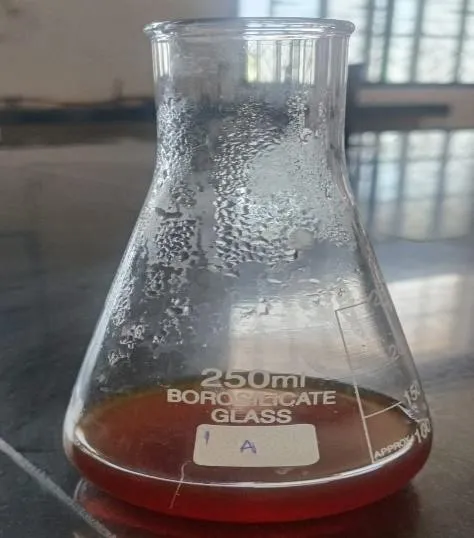
Figure 10: Prepared Polyherbal Mouthwash Formulations (F1, F2 and F3)
The three polyherbal mouthwash formulations (F1, F2 and F3) were evaluated for organoleptic characteristics, homogeneity and pH. Preliminary qualitative phytochemical screening was considered to identify major classes of phytoconstituents in the selected herbal extracts. Preliminary in-vitro antimicrobial activity was also investigated against Staphylococcus aureus. The observations are presented below.
• Organoleptic and Physical Evaluation
The prepared formulations were examined for appearance, colour, odour and homogeneity. Formulations F1 and F2 showed clear and homogeneous characteristics, whereas F3 exhibited slight turbidity.
Table 07: Organoleptic and Physical Evaluation of Polyherbal Mouthwash
| Sr. No. | Evaluation parameter | F1 (A) | F2 (B) | F3 © |
|---|---|---|---|---|
| 1 | Appearance | Clear | Clear | Slightly turbid |
| 2 | Colour | Reddish-brown | Brown | Brown |
| 3 | Odour | Characteristic herbal odour | Characteristic herbal odour | Characteristic herbal odour |
| 4 | Homogeneity | Homogeneous | Homogeneous | Homogeneous with slight turbidity |
• Preliminary Phytochemical Screening
Qualitative phytochemical screening was carried out on the selected aqueous herbal extracts to identify the presence of major phytochemical constituents, including alkaloids, flavonoids, phenolic compounds, tannins, saponins and glycosides. The results of the screening tests are to be recorded as positive (+) or negative (−) according to the observed reactions.
Table 7: Preliminary Phytochemical Screening of Selected Herbal Extracts
| Sr. No. | Herbal extract | Alkaloids | Flavonoids | Phenolics / Tannins | Saponins | Cardiac glycosides |
|---|---|---|---|---|---|---|
| 1 | Neem | + | + | + | + | — |
| 2 | Guava | — | + | + | + | — |
| 3 | Tulsi | + | + | + | + | — |
| 4 | Ginger | + | + | + | + | — |
| 5 | Clove | — | + | + | + | — |
| 6 | Peppermint | — | + | + | + | — |
| 7 | Fennel | + | + | + | + | — |
| 8 | Liquorice | + | + | + | + | — |
Note: Enter (+) for a positive reaction and (−) for a negative reaction only after performing the respective tests. A dash (—) indicates that the result has not yet been recorded.
• Determination of pH
The pH values of the prepared formulations were determined using a calibrated digital pH meter. The recorded pH values were 6.1, 6.3 and 6.5 for F1, F2 and F3, respectively. These values fall within the pH range of 3.0–10.5 previously identified for BIS IS 19684:2026.
Table 8: pH Evaluation of Polyherbal Mouthwash
| Sr. No. | Formulation | pH |
|---|---|---|
| 1 | F1 | 6.1 |
| 2 | F2 | 6.3 |
| 3 | F3 | 6.5 |
• Preliminary In-vitro Antimicrobial Evaluation
The preliminary antimicrobial activity of the formulations was investigated against Staphylococcus aureus. The inhibition zones observed for F1, F2 and F3 were 10 mm, 12 mm and 14 mm, respectively. Among the tested formulations, F3 exhibited the largest inhibition zone against the selected microorganism.
Table 9: Antimicrobial Activity of Polyherbal Mouthwash
| Sr. No. | Formulation | Test microorganism | Zone of inhibition (mm) |
|---|---|---|---|
| 1 | F1 | Staphylococcus aureus | 10 |
| 2 | F2 | Staphylococcus aureus | 12 |
| 3 | F3 | Staphylococcus aureus | 14 |
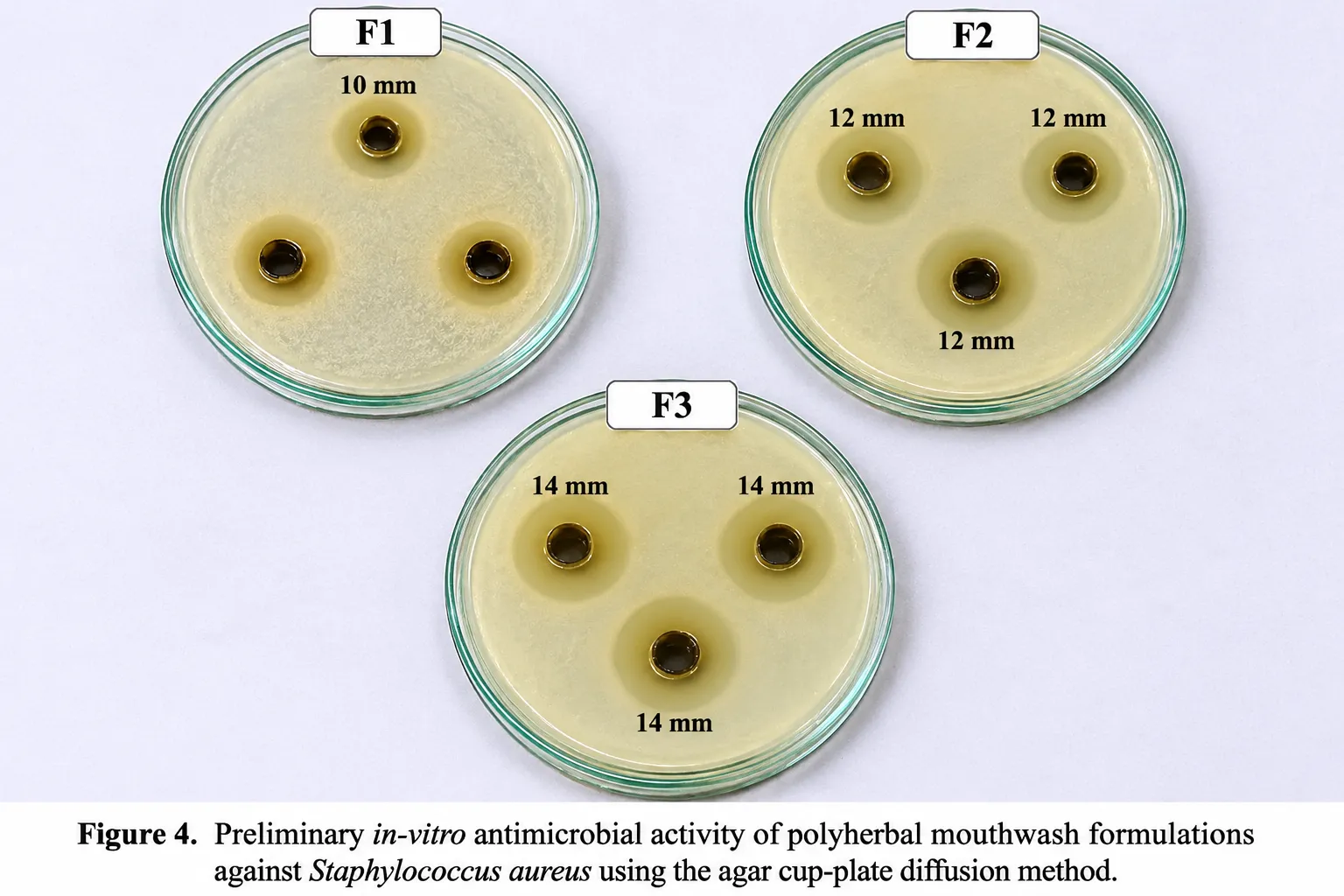
Figure 11: Preliminary in-vitro Antimicrobial Activity of Polyherbal Mouthwash Formulations Against Staphylococcus aureus using the Agar Cup-Plate Diffusion Method.
CONCLUSION
The present study successfully developed three polyherbal cosmetic mouthwash formulations (F1, F2 and F3) using aqueous extracts of eight selected medicinal plants. The prepared formulations were evaluated for organoleptic characteristics, homogeneity, pH and preliminary in-vitro antimicrobial activity against Staphylococcus aureus.
The results showed that F1 and F2 were clear and homogeneous, whereas F3 exhibited slight turbidity. The pH values of F1, F2 and F3 were 6.1, 6.3 and 6.5, respectively. In the preliminary antimicrobial evaluation, inhibition zones of 10 mm, 12 mm and 14 mm were observed for F1, F2 and F3, respectively. Among the tested formulations, F3 showed the largest inhibition zone against S. aureus under the experimental conditions.
Based on these observations, F3 showed the highest preliminary in-vitro antimicrobial response among the three formulations. However, the findings are limited to the tested microorganism and the evaluation parameters included in this study. Further research involving stability studies, microbiological quality testing, additional oral microorganisms and safety assessment is necessary to establish the quality and suitability of the developed formulations as cosmetic oral-care products.
ACKNOWLEDGEMENT
I would like to express my heartfelt gratitude to my guide, Dr. Damodar C. Goupale, Associate Professor, Department of Pharmaceutics, Anurag College of Pharmacy, Warthi, Bhandara, for his constant guidance, encouragement and valuable suggestions throughout the course of this research work. His expertise and support were instrumental in shaping and completing this study.
I am sincerely thankful to the Principal of Anurag College of Pharmacy, Warthi, Bhandara, for providing the necessary facilities and support to carry out this research work.
My sincere appreciation goes to all the faculty members and laboratory staff of Anurag College of Pharmacy for their cooperation and assistance during the experimental work. I also extend my gratitude to my colleagues and friends for their cooperation, motivation and valuable support during the preparation of this research work.
Finally, I am deeply indebted to my family for their unwavering support, encouragement and understanding, which gave me the strength and motivation to complete this research work successfully.
REFERENCES



Khushi Hadke, Damodar Goupale, Sachin Lohe, Formulation and Evaluation of Polyherbal Mouthwash, Int. J. of Pharm. Sci., 2026, Vol 4, Issue 11, 5321-5333. https://doi.org/10.5281/zenodo.24579168
 10.5281/zenodo.24579168