

We use cookies to ensure our website works properly and to personalise your experience. Cookies policy
Jamia Salafiya Pharmacy College, Pulikkal, Malappuram, Kerala., Department of Pharmaceutics, Jamia Salafiya Pharmacy College, Pulikkal, Malappuram, Kerala.
Rhizophora mucronta is a mangrove plant belonging to the family Rhizophoraceae. It is commonly known as loop root mangrove, red mangrove and Asiatic mangroves. It is widely distributed throughout the tropical and subtropical coastal regions, including the coastal areas of southern India. Plant parts such as bark, root, leaves, flowers and fruits have been used in various therapeutic benefits. This review provides its botanical characteristics, geographical distribution, ethnomedicinal importance, phytochemical profile, pharmacological activities and environmental significance. The reported medicinal properties of the plant are associated with a variety of phytoconstituents like alkaloids, terpenoids, tannins, steroids, saponins, phenolic, glycosides and flavonoids. Overall, Rhizophora mucronata shows considerable potential as a source of bioactive compound for future therapeutic research while also contributing significantly to the conservation and sustainability of coastal ecosystem.
Mangroves are medium-sized trees and shrubs that grow in tropical and subtropical coastal region, usually between 25-30 ° north and south of the equator. They can survive in different type of salty environment, including brackish water, sea water and salt pools with salinity levels up to twice that of ocean water[1]. Mangrove plant places a vital role in absorption of carbon to maintain a productive and dynamic ecosystem. The ecosystem of coastal areas is also maintained by mangrove plants because of their ability to tolerate extreme environmental conditions such as high salinity biofouling organism, high temperature, coastal food chain and inundation. About 124 countries including Burma, India, and South Africa contain mangrove ecosystem [2]. These plants have their own morphological structure and physiological mechanism to their harsh natural surroundings. Extracts from the mangrove species have therapeutic activity against humans, animals and plant pathogens. Mangrove plants have both food and medicinal resources with different plant parts such as leaves, stem, root, flower and fruits. They are widely utilized for various medical conditions including Angina, dysentery, ulcer, nausea, hematuria, fever, Hemorrhagic diarrhea, diabetes, constipation, hypertension, menstrual disorders and leprosy [3]. Therefore, it aims to provide an overview of the botanical characteristics, phytochemical constituents, distribution, traditional use and reported pharmacological activities. The purpose of the study is to collect and analyze the available scientific information’s on its medicinal protections and future prospects.
2. Plant Taxonomy
Kingdom: Plantae
Division: Tracheophyta
Class: Magnoliopsida
Order: Malpighiales
Family: Rhizophoraceae
Genus: Rhizophora
Species: Rhizophora mucronate Lam.
The name Rhizophora derived from the Greek words Rhizo (root) and Phoros (bearing). It refers to distinctive stilt roots or prop roots.
3. Botanical Description
Rhizophora mucronata is a small to medium sized mangrove tree that usually reaches to 20-25 m in height. It commonly occurs along river banks and coastal mangrove ecosystem [2].
Its bark is dark brown to black with distinct horizontal fissures. The leaves are simple, opposite and borne on short petioles. They are broadly elliptic-oblong with an acute apex, a cuneate base and an entire margin. The leaf surface is leathery, dark green and pinnately veined, while the lower surface usually contains characteristic black dotes. The leaves are generally 15-18 cm in long and 8-9 cm in width [4].
The inflorescence consists of cymes bearing 2-5 flowers. The flowers are actinomorphic (radially symmetrical) and polypetalous, with four creamy white sepals and four creamy white lanceolate petals that have densely hairy margins. Each flower contains eight stamens. The fruit is solitary; pear shaped and turns dull brown when fully ripe. The species exhibit vivipary, producing a cylindrical hypocotyl (propagule) with a rough surface that is typically 25-60 cm long and 1.0-1.8 cm wide [5].
4. Geographical Distribution
Rhizophora mucronata is distributed across parts of Africa, Middle East, South Asia, Southeast Asia and East Asia. Mangroves are widely distributed throughout the tropical and subtropical intertidal region of the Indo-west pacific. Among these, Rhizophora mucronata is the one of the most common and ecologically significant mangrove species. In India, it is widely distributed along the coastal region of West Bengal, Odisha, Andhra Pradesh, Tamil Nadu, Kerala, Karnataka and Gujarat, where it thrives in estuaries, tidal creeks and sheltered coastal habitats. Mangrove ecosystem, which form an important part of marine environment, recognized as rich reservoirs of bioactive compounds. Exposure to high salinity, changing tidal conditions and other environmental stresses enables mangrove plants to produce a diverse array of secondary metabolites that exhibit significant biological activities [6].
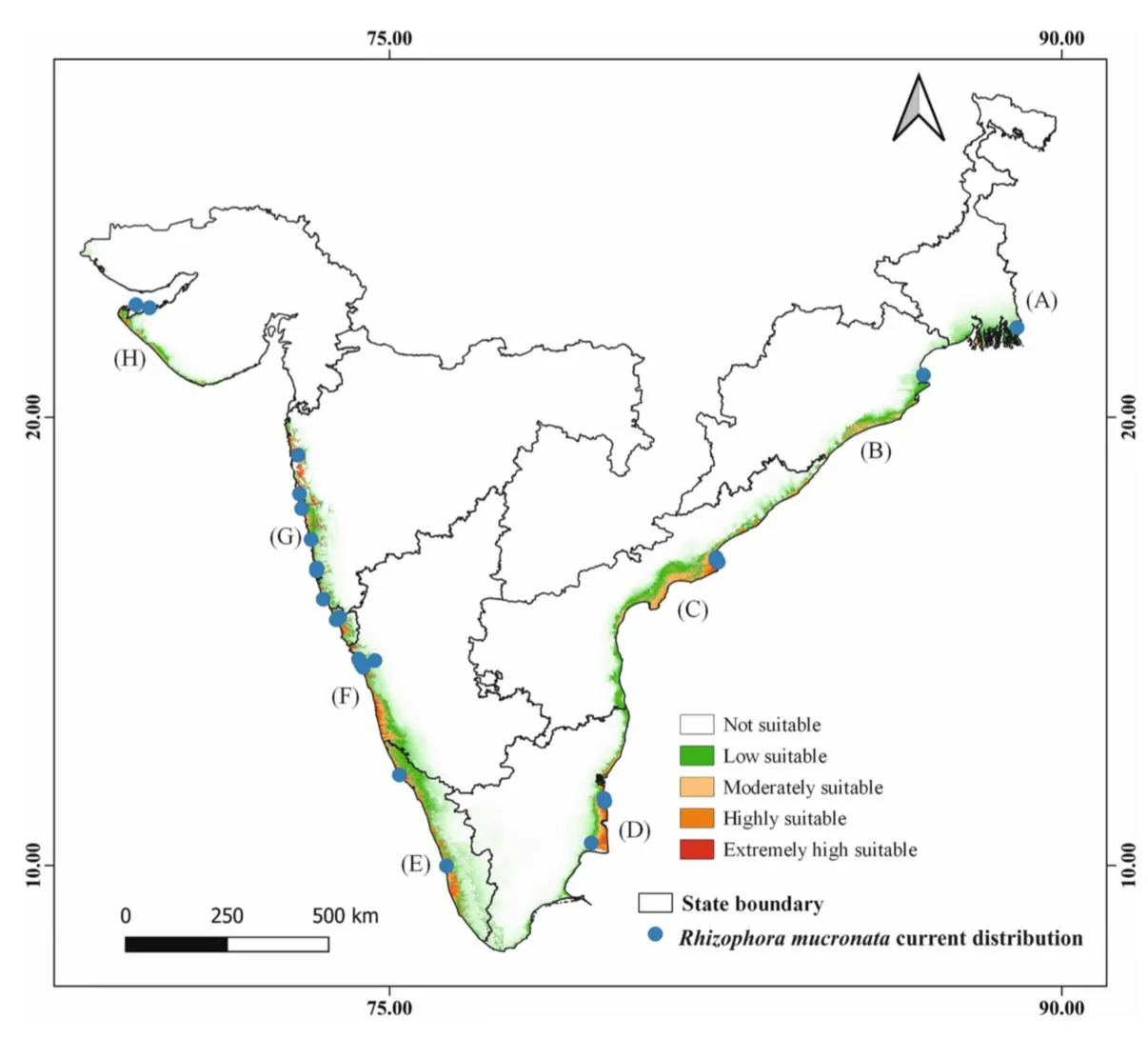
(Fig 1: Geographical distribution of Rhizophora mucronata)
4.1 Ecological Importance
Mangroves are among the most important coastal ecosystem in tropical and subtropical regions; they occur along tidal creeks and in estuarine habitats. They are specially adapted to survive under extreme environmental condition such as high salinity, high temperature, tidal inundation and biofouling pressure. Mangroves play a vital role in protecting coastal environment by acting as natural barriers against tsunamis, storms and hurricanes. Mangrove consist of extensive root system that stabilizes shorelines, minimizes coastal erosion and trap suspended sediments carried by tidal waters. This natural filtration process improves water quality and safeguards nearby seagrass beds and coral reefs from excessive sedimentation, supporting the biodiversity and ecological balance of coastal ecosystem [7].
5. Traditional uses
Rhizophora Mucronata has been used in traditional medicine by local communities to prevent and manage various diseases. It has been widely used as across tropical coastal region of Asia and Africa and utilized for treating various diseases due to rich content bioactive compounds.
It has also been traditionally used to manage Diabates and has been studied for its effect on lipid peroxidation in the liver. The bark contains epitaraxerol and triterpenoids which may have potential alpha glucosidase inhibitory action and relevance to diabetes management. In some regions, the Fruits are used in traditional medicines to manage digestive disorders and promote health.
The plant’s leaves have been reported to exhibit antiviral and antibacterial activities and have also traditionally used for conditions such as diabetes, hepatitis, inflammation, diarrhea, nausea, hemorrhage and hematuria [8].
6. Phytochemical Profile
Rhizophora mucronata contains various phytochemicals including alkaloids, flavonoids, saponins, sugars, tannins, glycosides, steroids, phenolics, terpenoids, inositol, gibberellins, antho-cyanidins, steroids, lipids, proteins, polysaccharides, minerals and polyphenols.
a. Alkaloids
Alkaloids are nitrogen containing compounds which is naturally found in Rhizophora mucronata. several alkaloids containing Trigonelline, xylogranatinin, granatoin and acanthicifoline are the chemical compounds found in Rhizophora mucronata that have antihyperglycemic activity, which means they may help to reduce elevated blood glucose levels.
b. Flavonoids
They help to neutralize harmful free radicals by donating hydrogen atoms and chelating metal ions, reducing oxidative stress in the body. They also inhibit xanthine oxidase and regulate both enzymatic and non-enzymatic redox reaction.
Flavonoids present in the plant are quercetin, kaempferol, rutin, myricetin, epicatechin this compound provides antioxidant, anti-bacterial, anti-inflammatory and anti-diabetic properties.
c. Saponins
They are classified as steroidal glycosides and triterpenoids and known for their ability to produce a stable, soap like foam when mixed with water. The major saponins present in the plant is dioscin, a surface-active compound that contribute to many of its biological effects. It exhibits antiviral, anti-inflammatory, antibacterial, antiparasitic and anti-fungal effect.
d. Tannins
The bark of Rhizophora mucronata is a source of tannins and other polyphenolic compounds containing multiple hydroxyl groups and may dissolve in water, depending on its structure. Condensed tannins have been reported as an important group of tannins in plants.
e. Amino acid
Amino acid reported in this plant include L-tyrosine, L-threonine, L-alanine and L-valine. They play important role in metabolism, plant growth and other biological processes. Amino acids essential for protein synthesis and contribute to energy production and the maintenance of intra cellular PH balance [8].
7. Extraction
Different extraction technique can be used for Rhizophora mucronata, depending on the plant part being studied. Traditional methods such as infusion, decoction, maceration and solvent extraction are commonly used. Among these, Soxhlet extraction is considered as a continuous extraction technique.
In Soxhlet extraction the sample is repeatedly exposed to fresh portion of solvent which helps in improve the extraction efficiency. The use of heat also facilitates the dissolution of desired compound in the solvent. This method is useful for extracting large amount of plant material compared with other extraction method.
In this technique the plant material is placed inside a thimble, which is gradually filled with the condensed solvent from the distillation flask. As the solvent level rises, it reaches the siphon point and flows back into the distillation flask along with the extracted compounds. This cycle is repeated continuously, allowing efficient extraction of the desired compunds from the plant material [7]. After extraction, the mixture was filtered through Whatman No1 filter paper. The plant residue was re-extracted under same condition to maximize the recovery of bioactive compounds. The resulting filtrates were combined and the solvents were removed by concentrating the extract in a water bath at 60°C for 6-8 hours until a semi-solid crude extract was obtained. Soxhlet extraction allows repeated contact between sample and fresh solvents, thereby improving the recovery of the desired constituents [8].
8.Pharmacological activities
8.1 Antimicrobial activity
The plant exhibits antimicrobial activity, which has been associated with the presence of various bioactive phytochemicals. Extracts prepared from various parts of plant shows inhibitory effects against a wide range of pathogenic microorganisms. previous studies have reported that R. mucronata are effective against several Gram-positive and Gram-negative bacteria.[9]
8.2 Anti-inflammatory activity
Rhizophora mucronata has been reported to possess anti-inflammatory properties, which may be attributed to its diverse range of phytochemical constituents including alkaloids, flavonoids, phenolic compounds and tannins. Several alkaloids identified in bark and leaves, including ajmalicine, catharanthine, serpentine and vindoline have associated with anti-inflammatory effect. These compounds have been reported to act through mechanism such as suppression of cox-2 activity, inhibition of protein denaturation, membrane stabilization and anti-proteinase activity.
8.3 Anticancer activity
Rhizophora mucronata has attracted interest as a potential source of natural compounds with anti-cancer properties. This activity has been associated with presence of bioactive constituents that may influence cancer cell growth and apoptosis extract of the plant have been reported to show inhibitory effect against different cancer cell lines. Squalene, a naturally occurring triterpenoids, reported from the plant, has also been investigated for its potential role in inhibiting cancer cell proliferation and promoting apoptosis.
8.4 Other activities
In addition to its anti-microbial, anti-inflammatory and anti-cancer properties, Rhizophora mucronata has been reported to posses several other pharmacological activities, including;
9. Environmental impacts
Rhizophora mucronata plays an important role in maintaining health and stability of coastal ecosystem. Its extensive prop root system helps to protect shorelines from erosion, storm surges and tidal waves by stabilizing the soil. The species also provides important habitat, shelter, breeding ground and food for a wide range of marine organism, birds, reptiles other wild life.
Another important ecological benefit of Rhizophora Mucronata is its ability to store significant amount of carbon in its biomass and surrounding sediments. Therefore, it is recognized as blue carbon species. The mangrove forest also contributes maintaining water quality by trapping sediments, filtering pollutants and reduce nutrient run of in coastal waters.
CONCLUSION
Rhizophora mucronata is an important mangrove species with both medicinal and ecological importance. Its diverse bioactive phytochemicals may contribute to several pharmacological activities and supports its traditional medicinal uses. Previous studies have reported anti-microbial, anti-oxidant, anti-inflammatory, anti-diabetic, anti-cancer and several other therapeutic properties. In addition to its medicinal importance Rhizophora Mucronata plays a vital role in maintaining healthy costal ecosystem by preventing shore line erosion, supporting bio diversity, improving water quality and storing large amount of carbon as blue carbon species. Overall, the species has considerable potential for both pharmaceutical research and environmental conservation.
References;
REFERENCES








Shoaib Quadir, Fathima Henan. K., Huda P. C., Haniya Aysha P., Rufaidha Saleem M., Celestin Baboo R. V., Dr. Sirajudheen M. K., Dr. Elastine Baboo R. V., Rhizophora Mucronata: A Promising Mangrove for Phytochemical and Pharmacological Exploration, Int. J. of Pharm. Sci., 2026, Vol 4, Issue 11, 5241-5246. https://doi.org/10.5281/zenodo.24556021
 10.5281/zenodo.24556021