
View Article

  • Levothyroxine and Liothyronine in the Management of Hypothyroidism

  • PRESS’s College of Pharmacy (for Women) , Chincholi , Nashik , MH , India 422103.

Abstract

Hypothyroidism is an endocrine disorder characterized by insufficient thyroid hormone availability to meet the physiological requirements of the body. Levothyroxine (LT4), a synthetic form of thyroxine, represents the standard pharmacological treatment for this condition. Although LT4 therapy successfully restores serum thyroid-stimulating hormone (TSH) concentrations to the reference range in most patients, a subset continues to experience persistent symptoms, including fatigue, cognitive impairment and metabolic disturbances. These observations have generated interest in the potential therapeutic role of liothyronine (LT3), the synthetic form of triiodothyronine, either as an alternative treatment or in combination with LT4. The physiological regulation of thyroid hormone activity involves the hypothalamic–pituitary–thyroid (HPT) axis, peripheral conversion of T4 into T3 through deiodinase enzymes and tissue-specific thyroid hormone signaling. Differences in circulating T3 and T4 concentrations during LT4 monotherapy may contribute to the clinical variability observed among treated patients. This review discusses the physiological basis of thyroid hormone regulation, the pharmacological characteristics of LT4 and LT3, and the clinical considerations associated with combination replacement therapy. It also highlights emerging therapeutic approaches, including sustained-release LT3 formulations, thyroid organoid technology and tissue-selective thyroid hormone receptor agonists. Understanding these developments may contribute to more individualized approaches to thyroid hormone replacement.

Keywords

Hypothyroidism, Levothyroxine, Liothyronine, Thyroid-stimulating hormone, Thyroid hormone replacement, Deiodinase, Combination therapy, Thyroid hormone signaling

Introduction

× Popup Image

The thyroid gland is an important endocrine organ responsible for synthesizing and releasing thyroid hormones that regulate several physiological processes, including energy metabolism, growth, development and cellular activity. The principal hormones secreted by the thyroid gland are thyroxine (T4) and triiodothyronine (T3). These hormones contribute to the maintenance of normal metabolic and physiological functions throughout the body.[1,2]

Hypothyroidism is an endocrine condition characterized by inadequate thyroid hormone production or availability. Its clinical manifestations vary considerably between individuals and may resemble those of several other medical conditions. Consequently, symptoms alone are insufficient to establish a definitive diagnosis, and biochemical investigations play an essential role in identifying the disorder.[3,4]

Serum thyroid-stimulating hormone (TSH) measurement is commonly used as an initial investigation for suspected primary hypothyroidism. An elevated TSH concentration generally warrants further assessment, including measurement of circulating thyroxine (T4)[5,6]. A combination of increased TSH and decreased T4 supports the diagnosis of overt primary hypothyroidism. In selected clinical circumstances, serum T3 may also be evaluated. When TSH is elevated but circulating T4 and T3 concentrations remain within their respective reference intervals, the condition may be classified as subclinical hypothyroidism. This form is frequently asymptomatic.[7]

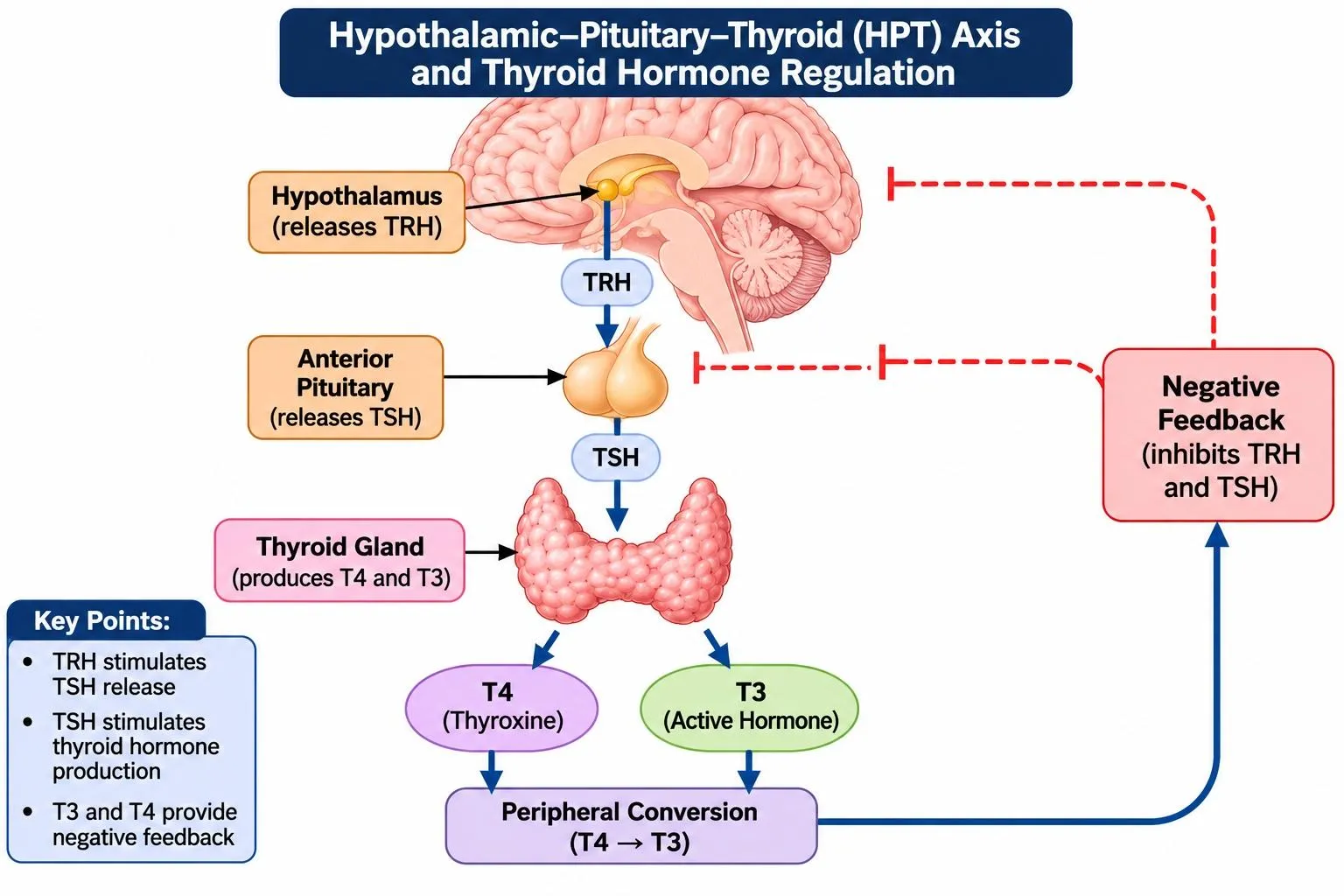
The hypothalamic–pituitary–thyroid (HPT) axis plays a central role in maintaining thyroid hormone homeostasis. Thyrotropin-releasing hormone (TRH), secreted by the hypothalamus, stimulates the anterior pituitary gland to release TSH. Subsequently, TSH regulates thyroid hormone synthesis and secretion. Circulating thyroid hormones exert negative feedback on the hypothalamus and pituitary gland, thereby maintaining hormonal balance.[8,9]. levothyroxine (LT4), a synthetic preparation of thyroxine, is the conventional first-line pharmacological treatment for hypothyroidism. It provides a circulating source of T4, which can subsequently undergo peripheral conversion into biologically active T3. Liothyronine (LT3), a synthetic preparation of triiodothyronine, provides thyroid hormone in its active form. Although LT4 monotherapy is effective in most patients, persistent symptoms in a subset of individuals have encouraged investigations into combined LT4 and LT3 treatment.[10,11]This review examines the physiological and pharmacological differences between levothyroxine and liothyronine, evaluates the rationale for their combined use and discusses emerging approaches that may improve thyroid hormone replacement therapy.[12,13,14]
figure

Figure 1: Hypothalamic–Pituitary–Thyroid (HPT) Axis and Thyroid Hormone Regulation

2. Mechanism of Action of Thyroid Hormone Replacement

2.1 Physiological regulation of thyroid hormones

The secretion and regulation of thyroid hormones are controlled by coordinated interactions between the hypothalamus, pituitary gland and thyroid gland. TRH stimulates pituitary TSH secretion, whereas TSH promotes thyroid hormone synthesis and release[15,16]. Increased circulating thyroid hormone concentrations subsequently suppress TRH and TSH secretion through negative feedback mechanisms[17].

The thyroid gland secretes both T4 and T3, with T4 representing the predominant secreted hormone. The thyroid also contributes to circulating T3 concentrations; however, a substantial proportion of circulating T3 is generated through peripheral conversion of T4.[18,19]

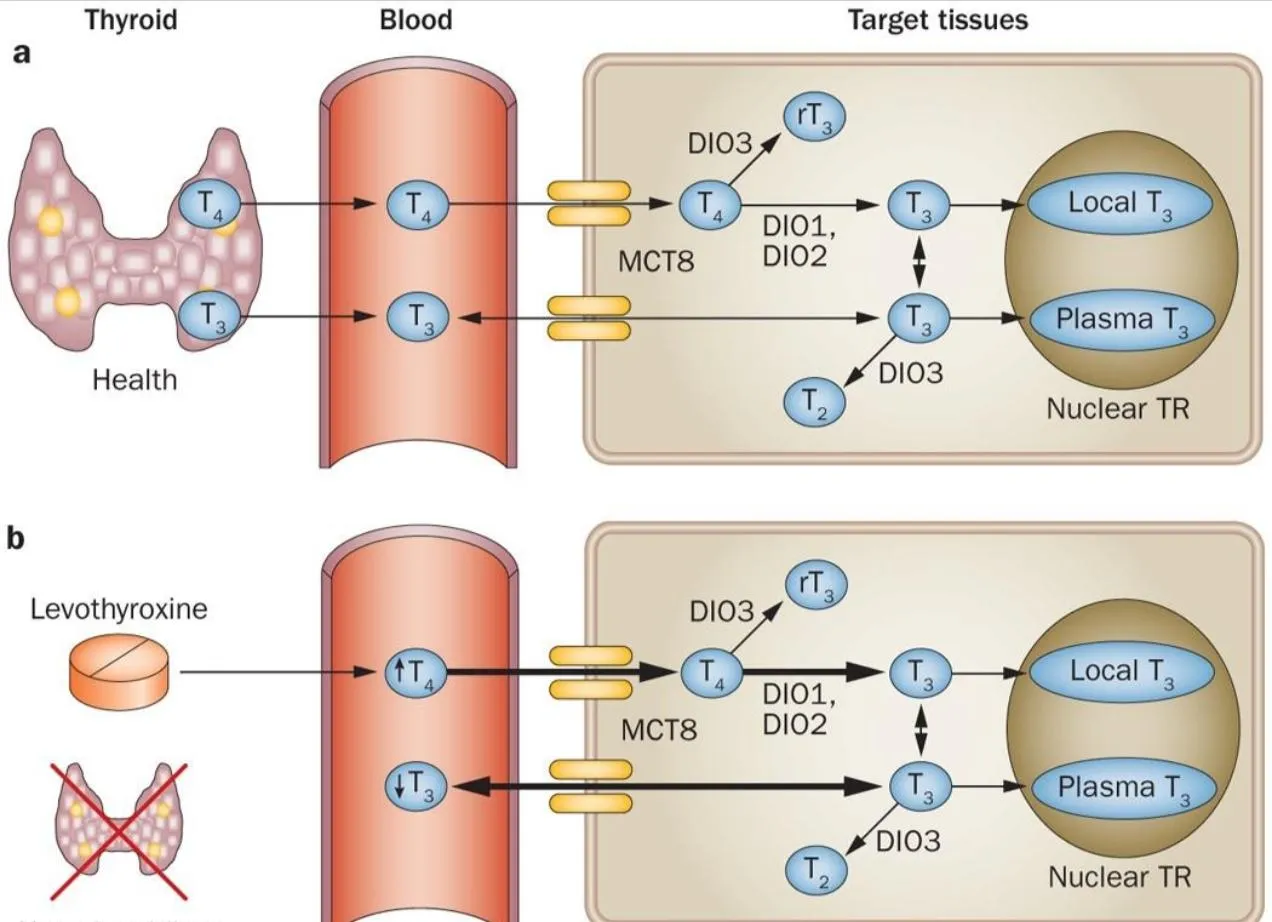
Deiodinase enzymes are essential for this process. In particular, type 2 deiodinase (D2) converts T4 into T3 within specific tissues, including the pituitary gland and hypothalamic tanycytes. This local conversion enables the HPT axis to respond to circulating T4 concentrations and contributes to the regulation of TSH secretion.[20,21]

The sensitivity of TSH secretion to circulating T4 is an important physiological mechanism underlying the diagnostic usefulness of serum TSH measurements in hypothyroidism.[21]

2.2 Mechanism of action of levothyroxine (LT4)

Levothyroxine is a synthetic form of thyroxine and functions primarily as a circulating prohormone that supplies T4 to peripheral tissues. Following absorption and distribution, T4 undergoes enzymatic conversion into T3 through deiodinase activity.

The resulting T3 interacts with intracellular thyroid hormone receptors and regulates the expression of genes involved in metabolic activity, cellular differentiation and physiological development.[22,23]

Most circulating T4 and T3 are associated with plasma carrier proteins, including thyroxine-binding globulin and transthyretin. Protein binding creates a circulating reservoir of thyroid hormones, while the unbound fraction is available for tissue uptake.[24]

Through the restoration of circulating T4 concentrations and subsequent peripheral T3 production, LT4 supports the physiological functions regulated by thyroid hormones.[25]

2.3 Mechanism of action of liothyronine (LT3)

Liothyronine is the synthetic form of T3, the biologically active thyroid hormone responsible for mediating many of the physiological effects of thyroid hormone signaling.[26]Unlike LT4, which requires peripheral conversion to generate T3, LT3 directly supplies the active hormone.[27]Following entry into target cells, T3 interacts with nuclear thyroid hormone receptors and influences transcriptional processes associated with metabolism, growth and cellular function.

Its pharmacological role is particularly relevant when investigating whether differences in T3 availability contribute to persistent symptoms in patients receiving LT4 treatment.[28]

2.4 Rationale for combined LT4 and LT3 therapy

LT4 monotherapy successfully normalizes serum TSH in most individuals with hypothyroidism. [29]Nevertheless, normalization of TSH does not necessarily indicate identical circulating thyroid hormone concentrations or equivalent tissue-level thyroid hormone activity in every patient.

During LT4 treatment, some individuals demonstrate a relatively reduced serum T3/T4 ratio. A proportion of treated patients may also have circulating T3 concentrations below the reference range despite achieving normal TSH values.[29,30]

These alterations have been proposed as potential contributors to reduced metabolic activity, increased serum cholesterol concentrations and persistent symptoms such as fatigue and cognitive impairment.[32]

The addition of LT3 to LT4 treatment aims to provide both circulating thyroid hormone forms. This therapeutic strategy is intended to improve T3 availability and potentially address limitations associated with LT4 monotherapy. However, the clinical response may differ between individuals, and the benefits of combination therapy require careful evaluation.[33,34]

LT4 MONOTHERAPY LT4 + LT3 COMBINATION
Supplies T4 Supplies T4 and T3
Require peripheral T4 – to – T3 conversion Provides T3 directly as well
Generally once-daily administration Require careful dose scheduling
Standard replacement treatment Selected cases under specialist supervision

3. Comparative Clinical Efficacy and Pharmacokinetic Considerations

3.1 Clinical efficacy of levothyroxine

Levothyroxine remains the standard replacement treatment for hypothyroidism because it provides a source of T4 that can be converted into T3 according to peripheral physiological requirements.[35,26]

In most treated patients, LT4 administration restores serum TSH concentrations to the reference range and supports the maintenance of thyroid hormone-dependent physiological functions.[38]

However, a small proportion of individuals continue to report symptoms despite biochemical normalization of TSH. These may include persistent fatigue, impaired cognitive function and metabolic disturbances.[37]

One proposed explanation involves differences in circulating T3 concentrations during LT4 treatment. A reduced T3/T4 ratio and comparatively lower serum T3 levels have been observed in some treated individuals. Such findings suggest that TSH normalization alone may not fully describe thyroid hormone availability in all peripheral tissues.[37,38]

3.2 Clinical considerations associated with liothyronine

Liothyronine supplies T3 directly and therefore differs from LT4 in its dependence on peripheral hormone conversion.[39]

Its potential role in thyroid hormone replacement has been investigated particularly in patients who remain symptomatic during LT4 monotherapy. Clinical investigations have explored the use of combined LT4 and LT3 treatment as an approach to improve treatment satisfaction and patient-reported outcomes.[41]

Some patients have reported improvements in cognitive function and quality of life following a transition from LT4 monotherapy to combined treatment.[39] Nevertheless, these observations should be interpreted in the context of individual clinical responses and differences in study design.[40,41]
figure

Figure 2: Comparison of Levothyroxine and Liothyronine Treatment

3.3 Pharmacokinetic comparison

Both thyroid hormones circulate in the blood in protein-bound and unbound forms. Transthyretin and thyroxine-binding globulin are among the principal proteins responsible for thyroid hormone transport.[42,43]

Protein-bound hormones function as a circulating reservoir, whereas the free hormone fraction is more directly available for cellular uptake.[42]

LT4 provides T4 that undergoes peripheral conversion into T3, whereas LT3 directly supplies the active hormone. This fundamental difference influences their pharmacological handling and therapeutic application.[43,44]

A complete comparison of absorption, oral bioavailability, distribution, elimination half-life, metabolic clearance and dose equivalence requires additional pharmacokinetic evidence. These numerical parameters should be obtained from validated pharmacological references and original clinical studies before manuscript submission.[43,44]

4. Adverse Effects and Safety Profiles

Thyroid hormone replacement requires appropriate dose selection and biochemical monitoring to maintain physiological hormone concentrations.[45]

The available source material primarily addresses treatment efficacy and persistent symptoms rather than detailed adverse-event profiles. Therefore, a comprehensive comparison of LT4 and LT3 safety cannot be established from the current evidence alone.[46]

For the final review, this section should evaluate the consequences of excessive thyroid hormone exposure, dose-related cardiovascular and skeletal risks, relevant contraindications, drug interactions and precautions in special populations.

Patient compliance should also be considered, particularly in relation to dosing schedules, treatment tolerability and the complexity of combination replacement regimens.[45,46]

The clinical safety of LT4–LT3 combination treatment should be evaluated independently of patient preference or reported symptomatic improvement. Appropriate biochemical monitoring and individualized clinical assessment remain important considerations.[45]

5. Recent Advances and Future Therapeutic Prospects

5.1 Sustained-release liothyronine formulations

One important development in thyroid hormone replacement research involves the investigation of slow-release LT3 formulations. Conventional LT3 administration may not reproduce the sustained physiological availability of T3 provided through endogenous hormone production and peripheral T4 conversion.[51,52]

Sustained-release formulations are being investigated to achieve more stable circulating T3 concentrations and potentially improve the pharmacological characteristics of combination therapy.[52]

Such formulations may offer an opportunity to address fluctuations in hormone availability and improve treatment tolerability. Further clinical evaluation is necessary to establish their therapeutic effectiveness and long-term safety.[53]

5.2 Thyroid organoid technology

Advances in regenerative medicine have introduced the possibility of restoring thyroid function through tissue engineering approaches.[54]

Human thyroid organoids represent an emerging technology involving the development of organized thyroid-like cellular structures. Experimental transplantation studies in hypothyroid mice have demonstrated restoration of euthyroid status following transplantation of thyroid organoids.[55,56,57]

These findings provide a scientific basis for investigating regenerative approaches to thyroid hormone deficiency. Nevertheless, further research is necessary before such approaches can be considered established therapeutic alternatives in humans.[54,56]

5.3 Tissue-selective thyroid hormone signaling

Thyroid hormone activity is not necessarily uniform across all tissues. Systemic thyroid hormone concentrations may remain relatively preserved while thyroid hormone signaling is impaired in specific organs.[57]

This tissue-dependent variation has encouraged the development of selective thyroid hormone receptor agonists and T3-like molecules designed to target particular metabolic pathways.[58]

Liver-selective thyroid hormone analogues have been investigated in clinical trials involving individuals with metabolic dysfunction-associated steatotic liver disease. These developments demonstrate the potential of tissue-directed thyroid hormone pharmacology beyond conventional replacement treatment.[59,60]

5.4 Future directions

Future research should focus on identifying the biological factors responsible for persistent symptoms in LT4-treated individuals. Genetic differences, immunological characteristics and variations in peripheral thyroid hormone metabolism may contribute to differences in treatment response.

Improved understanding of these mechanisms could support the development of individualized thyroid hormone replacement strategies.

The optimization of sustained-release LT3 preparations, further investigation of combination therapy and advances in regenerative medicine may contribute to future developments in hypothyroidism management.

CONCLUSION

Levothyroxine remains the conventional pharmacological treatment for hypothyroidism and effectively restores biochemical euthyroidism in most patients. However, normalization of serum TSH does not necessarily correspond to identical circulating T3 concentrations or equivalent tissue-specific thyroid hormone activity in every individual.

Liothyronine provides the biologically active thyroid hormone directly and has therefore attracted interest as a component of combination replacement therapy. Although some patients report improvements in cognitive function and quality of life following combined LT4–LT3 treatment, its clinical benefits require further evaluation and should not be generalized to all patients.

Emerging developments, including sustained-release LT3 formulations, thyroid organoid technology and tissue-selective thyroid hormone analogues, offer promising directions for future research.

Overall, a more comprehensive understanding of thyroid hormone metabolism, peripheral conversion and tissue-specific signaling may help improve the individualization of thyroid hormone replacement therapy. Further well-designed clinical investigations are necessary to establish the long-term efficacy, safety and appropriate clinical applications of combined LT4–LT3 treatment.

REFERENCES

  1. Rousset B, Dupuy C, Miot F, Dumont J. Thyroid hormone synthesis and secretion. In: Endotext [Internet]. South Dartmouth (MA): MDText.com, Inc.; 2015.
  2. Mullur R, Liu YY, Brent GA. Thyroid hormone regulation of metabolism. Physiol Rev. 2014;94 (2):355–382.
  3. Chaker L, Bianco AC, Jonklaas J, Peeters RP. Hypothyroidism. Lancet. 2017;390 (10101):1550–1562.
  4. Chaker L, Razvi S, Bensenor IM, Azizi F, Pearce EN, Peeters RP. Hypothyroidism. Nat Rev Dis Primers. 2022.
  5. Ambasta A, Grenet G, Otte J, et al. Thyroid testing in primary hypothyroidism. Afr J Prm Health Care Fam Med. 2025;17 (1):a5043.
  6. National Institute for Health and Care Excellence. Thyroid disease: assessment and management. NICE Guideline NG145. London: NICE; 2019.
  7. Koulouri O, Gurnell M. How to interpret thyroid function tests. Clin Med (Lond). 2013;13 (3):282–286.
  8. Ortiga-Carvalho TM, Chiamolera MI, Pazos-Moura CC, Wondisford FE. Hypothalamus-pituitary-thyroid axis. Compr Physiol. 2016;6 (3):1387–1428.
  9. Fekete C, Lechan RM. Central regulation of hypothalamic-pituitary-thyroid axis under physiological and pathophysiological conditions. Endocr Rev. 2014;35 (2):159–194.
  10. Jonklaas J, Bianco AC, Bauer AJ, et al. Guidelines for the treatment of hypothyroidism: prepared by the American Thyroid Association Task Force on Thyroid Hormone Replacement. Thyroid. 2014;24 (12):1670–1751.
  11. Jonklaas J, Bianco AC, Cappola AR, et al. Evidence-based use of levothyroxine/liothyronine combinations in treating hypothyroidism: a consensus document. Thyroid. 2021;31 (2):156–182.
  12. Jonklaas J. Role of levothyroxine/liothyronine combinations in treating hypothyroidism. Endocrinol Metab Clin North Am. 2022;51 (2):243–263.
  13. Jonklaas J. Optimal thyroid hormone replacement. Endocr Rev. 2022;43 (2):366–404.
  14. Bianco AC. Emerging therapies in hypothyroidism. Annu Rev Med. 2024;75:307–319.
  15. Ortiga-Carvalho TM, Chiamolera MI, Pazos-Moura CC, Wondisford FE. Hypothalamus-pituitary-thyroid axis. Compr Physiol. 2016;6 (3):1387–1428.
  16. Chiamolera MI, Wondisford FE. Minireview: thyrotropin-releasing hormone and the thyroid hormone feedback mechanism. Endocrinology. 2009;150 (3):1091–1096.
  17. Fekete C, Lechan RM. Central regulation of hypothalamic-pituitary-thyroid axis under physiological and pathophysiological conditions. Endocr Rev. 2014;35 (2):159–194.
  18. Peeters RP, Visser TJ. Metabolism of thyroid hormone. In: Endotext [Internet]. South Dartmouth (MA): MDText.com, Inc.; 2017.
  19. Van Uytfanghe K, Ehrenkranz J, Halsall D, et al. Thyroid stimulating hormone and thyroid hormones (triiodothyronine and thyroxine): an American Thyroid Association-commissioned review of current clinical and laboratory status. Thyroid. 2023.
  20. Fekete C, Lechan RM. Central regulation of hypothalamic-pituitary-thyroid axis under physiological and pathophysiological conditions. Endocr Rev. 2014;35 (2):159–194.
  21. Bianco AC, Kim BW. Deiodinases: implications of the local control of thyroid hormone action. J Clin Invest. 2006;116 (10):2571–2579.
  22. Bianco AC, Kim BW. Deiodinases: implications of the local control of thyroid hormone action. J Clin Invest. 2006;116 (10):2571–2579.
  23. Bianco AC, Dumitrescu A, Gereben B, et al. Paradigms of dynamic control of thyroid hormone signaling. Endocr Rev. 2019;40 (4):1000–1047.
  24. Refetoff S. Thyroid hormone serum transport proteins. In: Endotext [Internet]. South Dartmouth (MA): MDText.com, Inc.; 2023.
  25. Van Uytfanghe K, Ehrenkranz J, Halsall D, et al. Thyroid stimulating hormone and thyroid hormones (triiodothyronine and thyroxine): an American Thyroid Association-commissioned review of current clinical and laboratory status. Thyroid. 2023.
  26. Jonklaas J, Bianco AC, Cappola AR, et al. Evidence-based use of levothyroxine/liothyronine combinations in treating hypothyroidism: a consensus document. Thyroid. 2021;31 (2):156–182.
  27. Bianco AC, Dumitrescu A, Gereben B, et al. Paradigms of dynamic control of thyroid hormone signaling. Endocr Rev. 2019;40 (4):1000–1047.
  28. Ahluwalia R, Baldeweg SE, Boelaert K, et al. Use of liothyronine (T3) in hypothyroidism: Joint British Thyroid Association/Society for Endocrinology consensus statement. Clin Endocrinol (Oxf). 2023;99 (2):206–216.
  29. Peterson SJ, McAninch EA, Bianco AC. Systemic thyroid hormone status during levothyroxine therapy in hypothyroidism: a systematic review and meta-analysis. J Clin Endocrinol Metab. 2018;103 (12):4533–4542.
  30. Serum thyrotropin and triiodothyronine levels in levothyroxine-treated patients
  31. Ettleson MD, Bianco AC. Individualized therapy for hypothyroidism: Is T4 enough for everyone? J Clin Endocrinol Metab. 2020;105 (9):e3090–e3104.
  32. Jonklaas J, Bianco AC, Cappola AR, Celi FS, Fliers E, Heuer H, et al. Evidence-based use of levothyroxine/liothyronine combinations in treating hypothyroidism: A consensus document. Thyroid. 2021;31 (2):156–182.
  33. Millan-Alanis JM, González-González JG, Flores-Rodríguez A, Singh Ospina N, Maraka S, Moreno-Peña PJ, et al. Benefits and harms of levothyroxine/L-triiodothyronine versus levothyroxine monotherapy for adult patients with hypothyroidism: Systematic review and meta-analysis. Thyroid. 2021.
  34. Jonklaas J, Bianco AC, Bauer AJ, Burman KD, Cappola AR, Celi FS, et al. Guidelines for the treatment of hypothyroidism: prepared by the American Thyroid Association Task Force on Thyroid Hormone Replacement. Thyroid. 2014;24 (12):1670–1751.
  35. Bianco AC, Kim BW. Deiodinases: implications of the local control of thyroid hormone action. J Clin Invest. 2006;116 (10):2571–2579.
  36. Chaker L, Bianco AC, Jonklaas J, Peeters RP. Hypothyroidism. Lancet. 2017;390 (10101):1550–1562.
  37. Peterson SJ, McAninch EA, Bianco AC. Systemic thyroid hormone status during levothyroxine therapy in hypothyroidism: a systematic review and meta-analysis. J Clin Endocrinol Metab. 2018;103 (12):4533–4542.
  38. Jonklaas J, Bianco AC, Bauer AJ, Burman KD, Cappola AR, Celi FS, et al. Guidelines for the treatment of hypothyroidism: prepared by the American Thyroid Association Task Force on Thyroid Hormone Replacement. Thyroid. 2014;24 (12):1670–1751.
  39. Millan-Alanis JM, González-González JG, Flores-Rodríguez A, Singh Ospina N, Maraka S, et al. Benefits and harms of levothyroxine/L-triiodothyronine versus levothyroxine monotherapy for adult patients with hypothyroidism: systematic review and meta-analysis. Thyroid. 2021.
  40. Ahluwalia R, Baldeweg SE, Boelaert K, Chatterjee K, Dayan C, Okosieme O, et al. Use of liothyronine (T3) in hypothyroidism: Joint British Thyroid Association/Society for Endocrinology consensus statement. Clin Endocrinol (Oxf). 2023;99 (2):206–216.
  41. Colucci P, Seng Yue C, Ducharme M, Benvenga S. A review of the pharmacokinetics of levothyroxine for the treatment of hypothyroidism. Eur Endocrinol. 2013;9 (1):40–47.
  42. Refetoff S. Thyroid hormone serum transport proteins. In: Feingold KR, Adler RA, Ahmed SF, et al., editors.
  43. U.S. Food and Drug Administration. LEVOXYL (levothyroxine sodium) tablets: prescribing information. 2018. FDA prescribing information⁠.
  44. Ahluwalia R, Baldeweg SE, Boelaert K, Chatterjee K, Dayan C, Okosieme O, et al. Use of liothyronine (T3) in hypothyroidism: Joint British Thyroid Association/Society for Endocrinology consensus statement. Clin Endocrinol (Oxf). 2023;99 (2):206–216.
  45. U.S. National Library of Medicine. CYTOMEL (liothyronine sodium) tablets: prescribing information. DailyMed.
  46. Bianco AC. Emerging therapies in hypothyroidism. Annu Rev Med. 2024;75:307–319.
  47. Dumitrescu AM, Hanlon EC, Arosemena M, Duchon O, Ettleson M, Giurcanu M, et al. Extended absorption of liothyronine from poly-zinc-liothyronine: results from a phase 1, double-blind, randomized, and controlled study in humans. Thyroid. 2022;32 (3):287–292.
  48. Mehran L, Amouzegar A, Foroutan SM, Masoumi S, Tohidi M, Abdi H, et al. Pharmacodynamic and pharmacokinetic properties of the combined preparation of levothyroxine plus sustained-release liothyronine: a randomized controlled clinical trial. BMC Endocr Disord. 2023;23:182. 50 . Azizi F, Amouzegar A, Abdi H, Masoumi S, Mehran L. Treatment of primary hypothyroidism by slow-release liothyronine monotherapy. Endocr Metab Immune Disord Drug Targets. 2026;26:e18715303321830.
  49. 51.Dumitrescu AM, Hanlon EC, Arosemena M, Duchon O, Ettleson M, Giurcanu M, et al. Extended absorption of liothyronine from poly-zinc-liothyronine: results from a phase 1, double-blind, randomized, and controlled study in humans. Thyroid. 2022;32 (3):287–292.
  50. Mehran L, Amouzegar A, Foroutan SM, Masoumi S, Tohidi M, Abdi H, et al. Pharmacodynamic and pharmacokinetic properties of the combined preparation of levothyroxine plus sustained-release liothyronine: a randomized controlled clinical trial. BMC Endocr Disord. 2023;23:182
  51. Azizi F, Amouzegar A, Abdi H, Masoumi S, Mehran L. Treatment of primary hypothyroidism by slow-release liothyronine monotherapy. Endocr Metab Immune Disord Drug Targets.
  52. Li X, Sheng Y, Zeng X, Li Y, Wang X, Ma J, et al. Engineering a functional thyroid as a potential therapeutic substitute for hypothyroidism treatment: a systematic review. Front Endocrinol (Lausanne). 2022;13:1049741.
  53. Romitti M, Tourneur A, de Faria da Fonseca B, Doumont G, Gillotay P, Liao XH, et al. Transplantable human thyroid organoids generated from embryonic stem cells to rescue hypothyroidism. Nat Commun. 2022;13:7057.
  54. Ogundipe VML, Groen AH, Hosper NA, Nirmala E, van der Voort-van Zyp JRN, van Ginkel RJ, et al. Generation and differentiation of adult tissue-derived human thyroid organoids. Stem Cell Reports. 2021;16 (4):913–925.
  55. Romitti M, Costagliola S. Human thyroid organoids: tools for understanding thyroid diseases and development. Nat Rev Endocrinol. 2026;22 (8):463–476.
  56. Bianco AC, Dumitrescu A, Gereben B, Ribeiro MO, Fonseca TL, Fernandes GW, et al. Paradigms of dynamic control of thyroid hormone signaling. Endocr Rev. 2019;40 (4):1000–1047.
  57. Brent GA. Cellular actions of thyroid hormone. In: Feingold KR, Adler RA, Ahmed SF, et al., editors. Endotext [Internet]. South Dartmouth (MA): MDText.com, Inc. NCBI Bookshelf – Cellular Action of Thyroid Hormone⁠.
  58. Harrison SA, Bedossa P, Guy CD, Schattenberg JM, Loomba R, Taub R, et al. A phase 3, randomized, controlled trial of resmetirom in NASH with liver fibrosis. N Engl J Med. 2024;390 (6):497–509.

Reference

  1. Rousset B, Dupuy C, Miot F, Dumont J. Thyroid hormone synthesis and secretion. In: Endotext [Internet]. South Dartmouth (MA): MDText.com, Inc.; 2015.
  2. Mullur R, Liu YY, Brent GA. Thyroid hormone regulation of metabolism. Physiol Rev. 2014;94 (2):355–382.
  3. Chaker L, Bianco AC, Jonklaas J, Peeters RP. Hypothyroidism. Lancet. 2017;390 (10101):1550–1562.
  4. Chaker L, Razvi S, Bensenor IM, Azizi F, Pearce EN, Peeters RP. Hypothyroidism. Nat Rev Dis Primers. 2022.
  5. Ambasta A, Grenet G, Otte J, et al. Thyroid testing in primary hypothyroidism. Afr J Prm Health Care Fam Med. 2025;17 (1):a5043.
  6. National Institute for Health and Care Excellence. Thyroid disease: assessment and management. NICE Guideline NG145. London: NICE; 2019.
  7. Koulouri O, Gurnell M. How to interpret thyroid function tests. Clin Med (Lond). 2013;13 (3):282–286.
  8. Ortiga-Carvalho TM, Chiamolera MI, Pazos-Moura CC, Wondisford FE. Hypothalamus-pituitary-thyroid axis. Compr Physiol. 2016;6 (3):1387–1428.
  9. Fekete C, Lechan RM. Central regulation of hypothalamic-pituitary-thyroid axis under physiological and pathophysiological conditions. Endocr Rev. 2014;35 (2):159–194.
  10. Jonklaas J, Bianco AC, Bauer AJ, et al. Guidelines for the treatment of hypothyroidism: prepared by the American Thyroid Association Task Force on Thyroid Hormone Replacement. Thyroid. 2014;24 (12):1670–1751.
  11. Jonklaas J, Bianco AC, Cappola AR, et al. Evidence-based use of levothyroxine/liothyronine combinations in treating hypothyroidism: a consensus document. Thyroid. 2021;31 (2):156–182.
  12. Jonklaas J. Role of levothyroxine/liothyronine combinations in treating hypothyroidism. Endocrinol Metab Clin North Am. 2022;51 (2):243–263.
  13. Jonklaas J. Optimal thyroid hormone replacement. Endocr Rev. 2022;43 (2):366–404.
  14. Bianco AC. Emerging therapies in hypothyroidism. Annu Rev Med. 2024;75:307–319.
  15. Ortiga-Carvalho TM, Chiamolera MI, Pazos-Moura CC, Wondisford FE. Hypothalamus-pituitary-thyroid axis. Compr Physiol. 2016;6 (3):1387–1428.
  16. Chiamolera MI, Wondisford FE. Minireview: thyrotropin-releasing hormone and the thyroid hormone feedback mechanism. Endocrinology. 2009;150 (3):1091–1096.
  17. Fekete C, Lechan RM. Central regulation of hypothalamic-pituitary-thyroid axis under physiological and pathophysiological conditions. Endocr Rev. 2014;35 (2):159–194.
  18. Peeters RP, Visser TJ. Metabolism of thyroid hormone. In: Endotext [Internet]. South Dartmouth (MA): MDText.com, Inc.; 2017.
  19. Van Uytfanghe K, Ehrenkranz J, Halsall D, et al. Thyroid stimulating hormone and thyroid hormones (triiodothyronine and thyroxine): an American Thyroid Association-commissioned review of current clinical and laboratory status. Thyroid. 2023.
  20. Fekete C, Lechan RM. Central regulation of hypothalamic-pituitary-thyroid axis under physiological and pathophysiological conditions. Endocr Rev. 2014;35 (2):159–194.
  21. Bianco AC, Kim BW. Deiodinases: implications of the local control of thyroid hormone action. J Clin Invest. 2006;116 (10):2571–2579.
  22. Bianco AC, Kim BW. Deiodinases: implications of the local control of thyroid hormone action. J Clin Invest. 2006;116 (10):2571–2579.
  23. Bianco AC, Dumitrescu A, Gereben B, et al. Paradigms of dynamic control of thyroid hormone signaling. Endocr Rev. 2019;40 (4):1000–1047.
  24. Refetoff S. Thyroid hormone serum transport proteins. In: Endotext [Internet]. South Dartmouth (MA): MDText.com, Inc.; 2023.
  25. Van Uytfanghe K, Ehrenkranz J, Halsall D, et al. Thyroid stimulating hormone and thyroid hormones (triiodothyronine and thyroxine): an American Thyroid Association-commissioned review of current clinical and laboratory status. Thyroid. 2023.
  26. Jonklaas J, Bianco AC, Cappola AR, et al. Evidence-based use of levothyroxine/liothyronine combinations in treating hypothyroidism: a consensus document. Thyroid. 2021;31 (2):156–182.
  27. Bianco AC, Dumitrescu A, Gereben B, et al. Paradigms of dynamic control of thyroid hormone signaling. Endocr Rev. 2019;40 (4):1000–1047.
  28. Ahluwalia R, Baldeweg SE, Boelaert K, et al. Use of liothyronine (T3) in hypothyroidism: Joint British Thyroid Association/Society for Endocrinology consensus statement. Clin Endocrinol (Oxf). 2023;99 (2):206–216.
  29. Peterson SJ, McAninch EA, Bianco AC. Systemic thyroid hormone status during levothyroxine therapy in hypothyroidism: a systematic review and meta-analysis. J Clin Endocrinol Metab. 2018;103 (12):4533–4542.
  30. Serum thyrotropin and triiodothyronine levels in levothyroxine-treated patients
  31. Ettleson MD, Bianco AC. Individualized therapy for hypothyroidism: Is T4 enough for everyone? J Clin Endocrinol Metab. 2020;105 (9):e3090–e3104.
  32. Jonklaas J, Bianco AC, Cappola AR, Celi FS, Fliers E, Heuer H, et al. Evidence-based use of levothyroxine/liothyronine combinations in treating hypothyroidism: A consensus document. Thyroid. 2021;31 (2):156–182.
  33. Millan-Alanis JM, González-González JG, Flores-Rodríguez A, Singh Ospina N, Maraka S, Moreno-Peña PJ, et al. Benefits and harms of levothyroxine/L-triiodothyronine versus levothyroxine monotherapy for adult patients with hypothyroidism: Systematic review and meta-analysis. Thyroid. 2021.
  34. Jonklaas J, Bianco AC, Bauer AJ, Burman KD, Cappola AR, Celi FS, et al. Guidelines for the treatment of hypothyroidism: prepared by the American Thyroid Association Task Force on Thyroid Hormone Replacement. Thyroid. 2014;24 (12):1670–1751.
  35. Bianco AC, Kim BW. Deiodinases: implications of the local control of thyroid hormone action. J Clin Invest. 2006;116 (10):2571–2579.
  36. Chaker L, Bianco AC, Jonklaas J, Peeters RP. Hypothyroidism. Lancet. 2017;390 (10101):1550–1562.
  37. Peterson SJ, McAninch EA, Bianco AC. Systemic thyroid hormone status during levothyroxine therapy in hypothyroidism: a systematic review and meta-analysis. J Clin Endocrinol Metab. 2018;103 (12):4533–4542.
  38. Jonklaas J, Bianco AC, Bauer AJ, Burman KD, Cappola AR, Celi FS, et al. Guidelines for the treatment of hypothyroidism: prepared by the American Thyroid Association Task Force on Thyroid Hormone Replacement. Thyroid. 2014;24 (12):1670–1751.
  39. Millan-Alanis JM, González-González JG, Flores-Rodríguez A, Singh Ospina N, Maraka S, et al. Benefits and harms of levothyroxine/L-triiodothyronine versus levothyroxine monotherapy for adult patients with hypothyroidism: systematic review and meta-analysis. Thyroid. 2021.
  40. Ahluwalia R, Baldeweg SE, Boelaert K, Chatterjee K, Dayan C, Okosieme O, et al. Use of liothyronine (T3) in hypothyroidism: Joint British Thyroid Association/Society for Endocrinology consensus statement. Clin Endocrinol (Oxf). 2023;99 (2):206–216.
  41. Colucci P, Seng Yue C, Ducharme M, Benvenga S. A review of the pharmacokinetics of levothyroxine for the treatment of hypothyroidism. Eur Endocrinol. 2013;9 (1):40–47.
  42. Refetoff S. Thyroid hormone serum transport proteins. In: Feingold KR, Adler RA, Ahmed SF, et al., editors.
  43. U.S. Food and Drug Administration. LEVOXYL (levothyroxine sodium) tablets: prescribing information. 2018. FDA prescribing information?.
  44. Ahluwalia R, Baldeweg SE, Boelaert K, Chatterjee K, Dayan C, Okosieme O, et al. Use of liothyronine (T3) in hypothyroidism: Joint British Thyroid Association/Society for Endocrinology consensus statement. Clin Endocrinol (Oxf). 2023;99 (2):206–216.
  45. U.S. National Library of Medicine. CYTOMEL (liothyronine sodium) tablets: prescribing information. DailyMed.
  46. Bianco AC. Emerging therapies in hypothyroidism. Annu Rev Med. 2024;75:307–319.
  47. Dumitrescu AM, Hanlon EC, Arosemena M, Duchon O, Ettleson M, Giurcanu M, et al. Extended absorption of liothyronine from poly-zinc-liothyronine: results from a phase 1, double-blind, randomized, and controlled study in humans. Thyroid. 2022;32 (3):287–292.
  48. Mehran L, Amouzegar A, Foroutan SM, Masoumi S, Tohidi M, Abdi H, et al. Pharmacodynamic and pharmacokinetic properties of the combined preparation of levothyroxine plus sustained-release liothyronine: a randomized controlled clinical trial. BMC Endocr Disord. 2023;23:182. 50 . Azizi F, Amouzegar A, Abdi H, Masoumi S, Mehran L. Treatment of primary hypothyroidism by slow-release liothyronine monotherapy. Endocr Metab Immune Disord Drug Targets. 2026;26:e18715303321830.
  49. 51.Dumitrescu AM, Hanlon EC, Arosemena M, Duchon O, Ettleson M, Giurcanu M, et al. Extended absorption of liothyronine from poly-zinc-liothyronine: results from a phase 1, double-blind, randomized, and controlled study in humans. Thyroid. 2022;32 (3):287–292.
  50. Mehran L, Amouzegar A, Foroutan SM, Masoumi S, Tohidi M, Abdi H, et al. Pharmacodynamic and pharmacokinetic properties of the combined preparation of levothyroxine plus sustained-release liothyronine: a randomized controlled clinical trial. BMC Endocr Disord. 2023;23:182
  51. Azizi F, Amouzegar A, Abdi H, Masoumi S, Mehran L. Treatment of primary hypothyroidism by slow-release liothyronine monotherapy. Endocr Metab Immune Disord Drug Targets.
  52. Li X, Sheng Y, Zeng X, Li Y, Wang X, Ma J, et al. Engineering a functional thyroid as a potential therapeutic substitute for hypothyroidism treatment: a systematic review. Front Endocrinol (Lausanne). 2022;13:1049741.
  53. Romitti M, Tourneur A, de Faria da Fonseca B, Doumont G, Gillotay P, Liao XH, et al. Transplantable human thyroid organoids generated from embryonic stem cells to rescue hypothyroidism. Nat Commun. 2022;13:7057.
  54. Ogundipe VML, Groen AH, Hosper NA, Nirmala E, van der Voort-van Zyp JRN, van Ginkel RJ, et al. Generation and differentiation of adult tissue-derived human thyroid organoids. Stem Cell Reports. 2021;16 (4):913–925.
  55. Romitti M, Costagliola S. Human thyroid organoids: tools for understanding thyroid diseases and development. Nat Rev Endocrinol. 2026;22 (8):463–476.
  56. Bianco AC, Dumitrescu A, Gereben B, Ribeiro MO, Fonseca TL, Fernandes GW, et al. Paradigms of dynamic control of thyroid hormone signaling. Endocr Rev. 2019;40 (4):1000–1047.
  57. Brent GA. Cellular actions of thyroid hormone. In: Feingold KR, Adler RA, Ahmed SF, et al., editors. Endotext [Internet]. South Dartmouth (MA): MDText.com, Inc. NCBI Bookshelf – Cellular Action of Thyroid Hormone?.
  58. Harrison SA, Bedossa P, Guy CD, Schattenberg JM, Loomba R, Taub R, et al. A phase 3, randomized, controlled trial of resmetirom in NASH with liver fibrosis. N Engl J Med. 2024;390 (6):497–509.

Photo
Pranjal Handge
Corresponding author

PRESS’s College of Pharmacy (for Women) , Chincholi , Nashik , MH , India 422103.

Photo
Jyoti Bhagat
Co-author

PRESS’s College of Pharmacy (for Women) , Chincholi , Nashik , MH , India 422103.

Pranjal Handge, Jyoti Bhagat, Levothyroxine and Liothyronine in the Management of Hypothyroidism, Int. J. of Pharm. Sci., 2026, Vol 4, Issue 11, 5232-5240. https://doi.org/10.5281/zenodo.24555904

More related articles
Chemical Remodeling of Antimicrobials: Innovative ...
Gayatri Athalekar, Vaishnavi Padale...
Drug Utilization and Rational Use of Anti-Bacteria...
Alphonsa Mathew, Dr. J. Nandhakumar, Sithara P., Fathima Hiba M. ...
Neuroprotective and Cognitive-Enhancing Properties...
Anjali Wanegaonkar, Vaishnavi Dhavan, Shrutika Patil, Sairaj Mulg...
Polyherbal Hair Dye Shampoo: A Review...
Roopesh P. T., Vismaya Babu K. K., Nida Fathima, Fathimathul Fidha V. K., Aleena Binoy, Adil Abdul A...
Nanotechnology-Based Drug Delivery Systems for Cancer Therapy: Targeting Mechan...
Gayatri Yadav, Vikas Kunde, Priyanka Hire, Nikita Avhad, Jyoti More...
Related Articles
Rhizophora Mucronata: A Promising Mangrove for Phytochemical and Pharmacological...
Shoaib Quadir, Celestin Baboo R. V., Dr. Sirajudheen M. K., Dr. Elastine Baboo R. V., Rufaidha Salee...
Precision Microbiome Modulation in Type 2 Diabetes: Deciphering Metabolite-Signa...
Shilpi Kannaujiya, Sanjay Kumar Gautam, Prachi Maurya, Kalpana Sonwani, Dr. Maninder Kaur, Apoorva Y...
Development and in Vitro Evaluation of Vitis vinifera L.-Loaded Oromucosal Mucoa...
K. Gobinath, Vishnu P., Dr. P. Perumal, Dr. B. Krishnamoorthi...
More related articles
Drug Utilization and Rational Use of Anti-Bacterials in Childhood Pneumonia - a ...
Alphonsa Mathew, Dr. J. Nandhakumar, Sithara P., Fathima Hiba M. T., Aslaha M. P., Amal Fathima E....
Neuroprotective and Cognitive-Enhancing Properties of Curcuma caesia Roxb. in Al...
Anjali Wanegaonkar, Vaishnavi Dhavan, Shrutika Patil, Sairaj Mulghe, Nuzhat Ansari, Bhavik Shinde...