

We use cookies to ensure our website works properly and to personalise your experience. Cookies policy
Department of Pharmacognasy, Dnyanvilas College of Pharmacy, Pune, Maharashtra, India
The present study was aimed at the formulation and evaluation of herbal nanoemulgel containing Tridax procumbens and Moringa oleifera extracts for wound healing activity. Herbal medicines have gained considerable importance due to their safety, efficacy, and minimal side effects. Tridax procumbens possesses significant wound healing, antimicrobial, and anti-inflammatory properties, while Moringa oleifera exhibits antioxidant and tissue regenerative activities. The flavonoid-rich extracts were isolated and incorporated into a nanoemulsion system using oleic acid, surfactant, and co-surfactant followed by conversion into nanoemulgel using Carbopol 940 as gelling agent. The prepared formulations were evaluated for physical appearance, pH, spreadability, viscosity, extrudability, drug content, stability, and in-vitro diffusion studies. The optimized formulation showed good homogeneity, acceptable pH, satisfactory spreadability, and enhanced drug release profile. Stability studies indicated that the formulation remained stable without phase separation or significant changes in physical properties. The developed herbal nanoemulgel demonstrated promising characteristics for effective wound healing therapy and may serve as an alternative to conventional topical formulations.
Wound healing is a complex biological process involving inflammation, proliferation, and remodeling phases. Delayed wound healing may result from microbial infection, oxidative stress, and poor tissue regeneration. Herbal medicines are widely used for wound treatment due to their therapeutic potential and reduced adverse effects. Nanoemulgel is a novel topical drug delivery system combining nanoemulsion and gel technology. Nanoemulsions improve drug solubility and penetration, while gels provide better consistency and patient compliance. Herbal nanoemulgels have gained popularity because of enhanced bioavailability and controlled drug release.
DRUG PROFILE:-
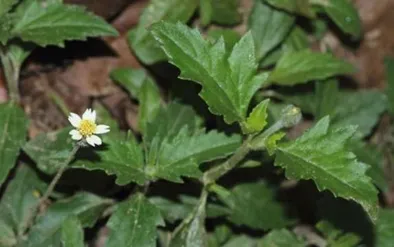
2. Moringa oleifera possesses antioxidant, antimicrobial, and tissue regenerative properties due to the presence of vitamins, flavonoids, and phenolic compounds.
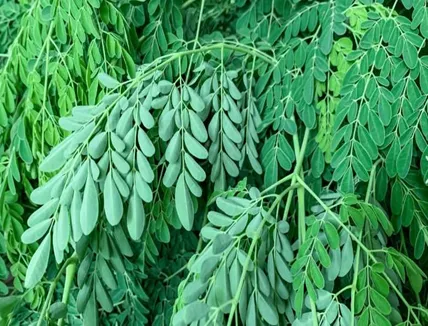
Materials And Methods :-Materials:-
|
Sr no. |
Ingredients |
Uses |
|
1 |
Carbopol 934 |
Used as gelling agent |
|
2 |
Tween 80 |
Used as surfactant |
|
3 |
Ethanol |
Used as surfactant |
|
4 |
Triethanolamin |
Used as PH adjustment |
|
5 |
Methyl paraben |
Used as preservative |
|
6 |
Moringa oleifera extract |
Active ingredient |
|
7 |
Tridax procumbens |
Active ingredient |
|
8 |
Distilled water |
Qs |
Collection And Authentication :-
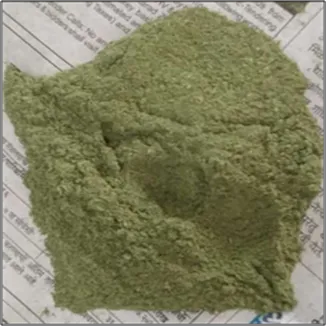
Fresh leaves of Tridax procumbens and Moringa oleifera were collected from the local area. The plant materials were washed thoroughly with water to remove dirt and foreign particles.The leaves were shade dried for several days and powdered using a grinder.The powdered plant materials were stored in airtight containers for further use.
Method Of Extraction:-
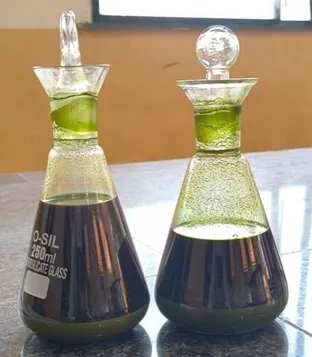
The powdered leaves were extracted using ethanol by maceration method. About 50g of dried powdered leaves were weighed accurately. The powder was soaked in sufficient quantity of ethanol.. The mixture was kept in a closed container for 72 hours The mixture was stirred occasionally to enhance extraction. After extraction, the solution was filtered using Whatman filter paper.The filtrate was concentrated by evaporation to obtain semisolid extract.The extract was stored in refrigerator at 4oC.
Isolation Of Flavonoids:-
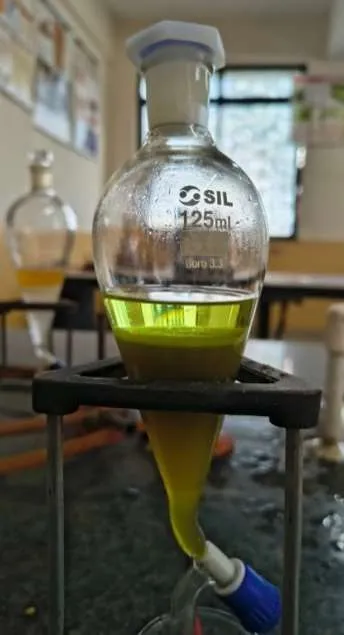
For the isolation of flavonoids, the extract was dissolved in water and mixed with petroleum ether in a separating funnel. Two layers were formed, and the aqueous layer was separated. Ethyl acetate was then added to the aqueous layer resulting in the formation of two layers. The ethyl acetate layer was collected and evaporated until a semisolid mass was obtained containing flavonoid-rich extract.
Formulation Table:-
|
Srno. |
Ingredient |
F1 |
F2 |
F3 |
|
|
Herbal exctract |
0.5gm |
0.5gm |
0.5gm |
|
|
Herbal extract |
0.5gm |
0.5gm |
0.5gm |
|
|
Oleic acid |
5ml |
7ml |
10ml |
|
|
Tween 80 |
25ml |
27ml |
30ml |
|
|
Propylene glycol |
10ml |
10ml |
10ml |
|
|
Carbopol 934 |
0.5gm |
1gm |
1gm |
|
|
Triethanolamine |
Qs |
Qs |
Qs |
|
|
Methyl paraben |
0.1ml |
0.1mk |
0.1ml |
Formulation Method:-Preparation Of Nano-Emulsion:-
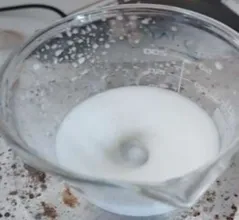
The oil phase containing oleic acid was mixed with surfactant and co-surfactant. The flavonoid extract was incorporated into the oil phase. The aqueous phase was added slowly with continuous stirring to obtain nanoemulsion.
Preparation Of Nanoemulgel:-
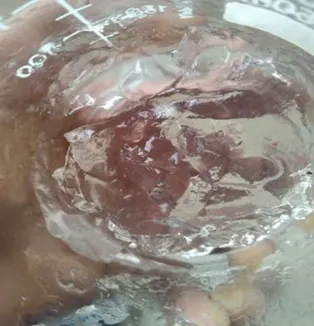
Carbopol 940 was dispersed in distilled water and allowed to hydrate. The prepared nanoemulsion was incorporated slowly into the gel base with continuous stirring. Triethanolamine was added to adjust pH and obtain desired consistency.
Evaluation Parameters :-
RESULTS AND DISCUSSION
The prepared nanoemulgels were smooth, homogeneous, and free from phase separation. The pH of formulations ranged between 5 and 7, indicating compatibility with skin. Spreadability and extrudability studies showed satisfactory application properties. The viscosity of formulations was appropriate for topical administration. Among all formulations, F2 showed optimum characteristics with better consistency, spreadability, and drug release. Stability studies revealed no significant changes in physical appearance, pH, or viscosity during storage. The presence of flavonoids and phenolic compounds in Tridax procumbens and Moringa oleifera contributed to enhanced wound healing activity due to antioxidant and antimicrobial effects.
CONCLUSION
The present investigation successfully formulated and evaluated a herbal nanoemulgel containing Tridax procumbens and Moringa oleifera extracts. The developed formulation showed satisfactory physicochemical characteristics, stability, and drug release profile. Herbal nanoemulgel may provide an effective and safe alternative for wound healing management with improved patient compliance and therapeutic efficacy.
REFERENCES



Bindu Rani Ram, Samiksha Jadhav, Sakshi Surwase*, Pramod Ingale, Formulation And Evaluation of Wound Healing Nanoemulgel Containing Tridax Procumbens and Moringa Oleifera, Int. J. of Pharm. Sci., 2026, Vol 4, Issue 5, 7385-7389. https://doi.org/10.5281/zenodo.20412477
 10.5281/zenodo.20412477