

We use cookies to ensure our website works properly and to personalise your experience. Cookies policy
Siddhant College of Pharmacy, Sudumbre, Pune, Maharashtra 410501
The present study was aimed at the formulation and evaluation of a Gokarna polyherbal face wash using natural herbal ingredients with cleansing, anti-acne, antioxidant, and skin-soothing properties. Herbal cosmetics have gained significant importance due to their safety, effectiveness, and minimal side effects compared to synthetic preparations. In this formulation, Gokarna (Clitoria ternatea) was used as the major active ingredient because of its antioxidant, anti-inflammatory, and antimicrobial activities. Other herbal constituents were incorporated to enhance cleansing action, improve skin nourishment, and maintain skin health. The polyherbal face wash was prepared using suitable excipients and evaluated for various physicochemical parameters such as color, odor, appearance, pH, viscosity, spreadability, foamability, washability, irritancy, and stability. The formulated face wash showed good consistency, satisfactory foaming ability, easy washability, and skin-friendly pH. No signs of irritation or phase separation were observed during stability studies. The formulation demonstrated acceptable cosmetic properties and was found suitable for topical application. The study concludes that the Gokarna polyherbal face wash can be effectively used as a natural herbal skincare preparation with potential cleansing and protective benefits for the skin.
Skin is the largest organ of the human body and acts as a protective barrier against environmental pollutants, microorganisms, and harmful ultraviolet radiation. Proper skin care is essential to maintain hygiene, prevent infections, and preserve healthy skin appearance. Face wash formulations are commonly used to remove dirt, excess oil, sweat, and dead skin cells from the skin surface. [1,2]
In recent years, there has been increasing demand for herbal cosmetic products due to awareness regarding the side effects of synthetic chemicals present in conventional cosmetics. Synthetic surfactants and preservatives may cause skin irritation, dryness, and allergic reactions. Herbal formulations are considered safer, eco-friendly, and more compatible with different skin types because of the presence of natural bioactive constituents. [3,4,5] Clitoria ternatea commonly known as gokarna, is a medicinal plant rich in anthocyanins, flavonoids, and antioxidants. It possesses antioxidant, antimicrobial, and skin-protective properties that help in improving skin texture and protecting the skin from oxidative damage. [6,7] Reetha and Acacia concinna are natural cleansing agents containing saponins which provide mild cleansing and foaming action. Glycerin acts as a humectant that retains skin moisture, while rose water provides soothing and refreshing effects. Guar gum is used as a natural thickening and stabilizing agent in the formulation. [3,4] Therefore, the present study aims to formulate and evaluate a gokarna herbal face wash using natural ingredients to provide effective cleansing, antioxidant protection, and skin- friendly properties with minimal side effects. [5]
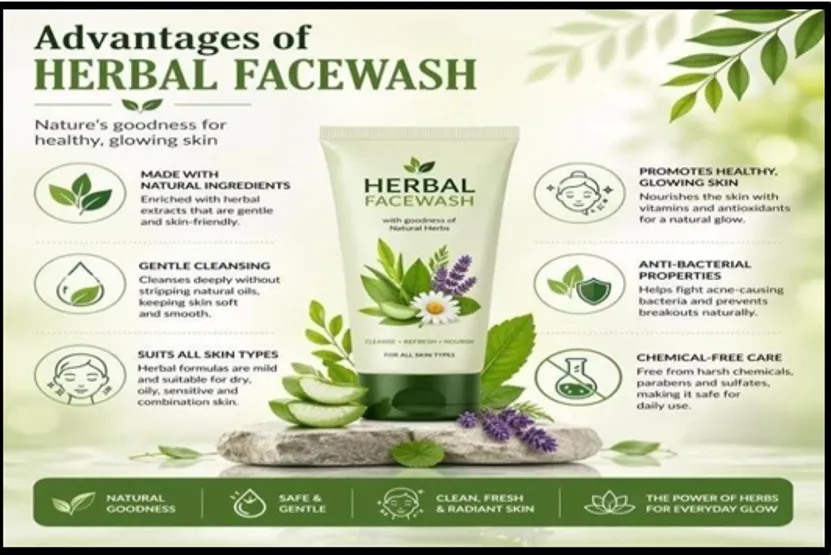
(Fig.no.1.Advantages of herbal face wash)
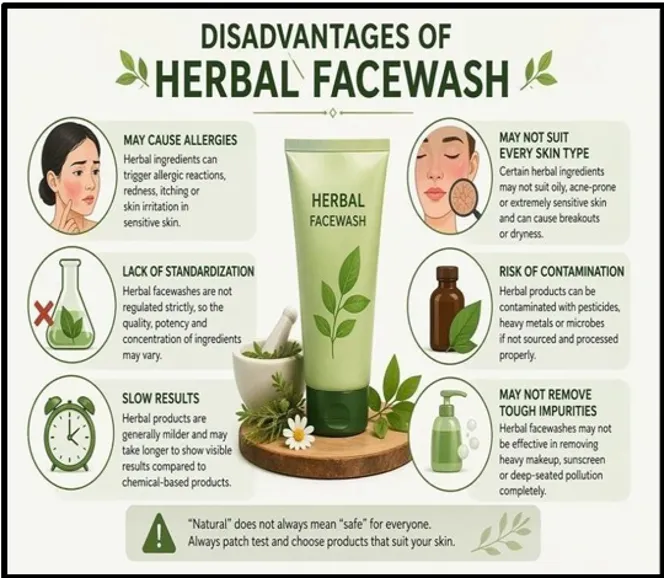
(fig.no.2.Disadvantages of herbal face wash)
AIM AND OBJECTIVE
AIM: To formulate and evaluate a polyherbal face wash containing extract of Clitoria ternatea (Gokarna).
OBJECTIVES:
SKIN PROBLEMS MANAGED BY GOKARNA HERBAL FACE WASH
The herbal face wash formulated using gokarna extract is beneficial in managing various common skin problems due to its antioxidant, anti- inflammatory, and mild antimicrobial properties.
1. Oily Skin
- Excess sebum leads to greasy appearance and acne
- Natural surfactants (e.g., reetha) help remove excess oil
- Maintains oil balance without over-drying
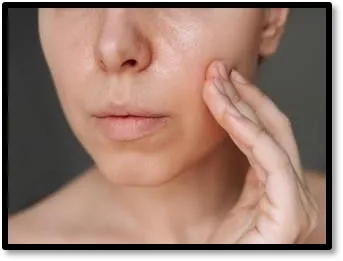
(Fig.no.2.1- Oily Skin)
2. Dull and tired skin
- Pollution and stress cause loss of glow
- Antioxidants in gokarna (anthocyanins) neutralize free radicals
- Improves skin brightness and freshness
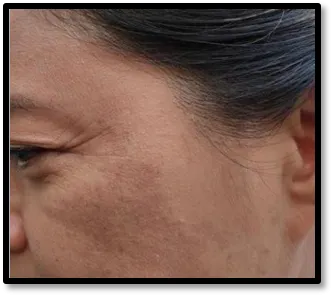
(Fig.no.2.2.Dull and Tired Skin)
3. Skin Inflammation and Redness
- Caused by irritation, sun exposure, or sensitivity
- Anti-inflammatory constituents help calm the skin
- Reduces redness and irritation
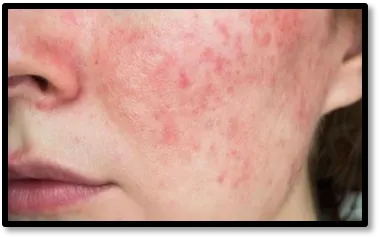
(Fig.no.2.3.Skin inflammation and redness)
4. Mild skin Infections
- Caused by microorganisms on the skin surface
- Herbal ingredients provide mild antimicrobial protection
- Helps maintain skin hygiene
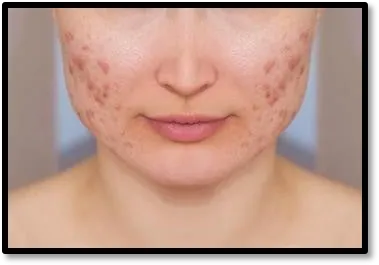
(Fig.no.2.4.Mild skin infections)
5. Dryness and Rough Skin
- Loss of moisture leads to rough texture
- Presence of humectants (glycerin, aloe vera) retains moisture
- Keeps skin soft and hydrated
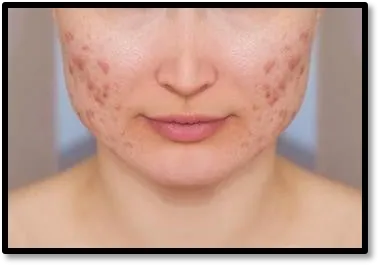
(Fig.no.2.5.Dryness and Rough skin)
6. Early Signs of Skin Aging
- Free radicals cause fine lines and wrinkles
- Antioxidants in gokarna protect against oxidative damage
- Helps maintain youthful skin appearance
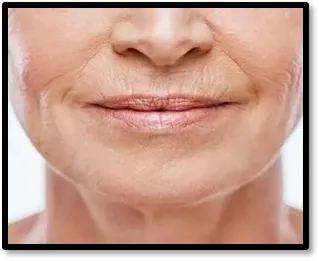
(Fig.no.2.6.Early signs of skin aging)
LITERATURE REVIEW OF INDIVIDUAL INGREDIENTS
1. Gokarna (Clitoria ternatea)
Review 1: Mukherjee, P.K. et al. reported that Clitoria ternatea contains anthocyanins and flavonoids which exhibit strong antioxidant activity and protect skin from oxidative stress. (Journal of Ethnopharmacology, 2008, pp. 51–57)
Review 2: Kamkaen, N. and Wilkinson, J.M. demonstrated that gokarna flower extract possesses significant antioxidant and UV-protective properties, making it useful in cosmetic formulations. (Pharmacognosy Research, 2009, pp. 32–35)
2. Reetha (Sapindus mukorossi)
Review 1: Kokate, C.K. et al. described reetha as a natural surfactant containing saponins that produce cleansing and foaming action. (Pharmacognosy, 55th Edition, p. 312)
Review 2: Sharma, P.P. reported that reetha extract is widely used in herbal cosmetics due to its mild cleansing and non-irritant properties. (Cosmetic Formulation Textbook, 2011, p. 145)
3. Aloe Vera
Review 1: Surjushe, A. et al. highlighted that aloe vera possesses moisturizing, anti- inflammatory, and wound healing properties beneficial for skin care. (Indian Journal of Dermatology, 2008, pp. 163–166)
Review 2: Barel, A.O. et al. reported that aloe vera improves skin hydration and soothes irritated skin when used in cosmetic formulations. (Handbook of Cosmetic Science, 2014, p. 289)
4. Glycerin
Review 1: Allen, L.V. stated that glycerin acts as a humectant by attracting moisture to skin and preventing dryness. (Pharmaceutical Dosage Forms, 2013, p. 210)
Review 2: Barel, A.O. et al. described glycerin as a widely used moisturizing agent in topical formulations due to its safety and effectiveness. (Handbook of Cosmetic Science, 2014, p. 305)
5. Rose Water
Review 1: Barel, A.O. et al. reported that rose water acts as a soothing agent and provides fragrance in cosmetic formulations. (Handbook of Cosmetic Science, 2014, p. 412)
Review 2: Harry, R.G. described rose water as a mild astringent and skin-refreshing agent used in face wash preparations. (Harry’s Cosmeticology , 2000, p. 198)
6. Guar Gum
Review 1: Rowe, R.C. et al. reported that guar gum is a natural polysaccharide used as a thickening and stabilizing agent. (Handbook of Pharmaceutical Excipients, 6th Edition, p. 298)
Review 2: Kokate , C.K. et al. stated that guar gum is widely used in herbal formulations due to its natural origin and viscosity-enhancing properties. (Pharmacognosy, 55th Edition, p. 275)
7. Shikakai
Review 1: Kokate, C.K., Purohit, A.P., and Gokhale, S.B. reported that shikakai contains natural saponins which exhibit excellent cleansing and foaming properties. These saponins act as mild natural surfactants, making shikakai suitable for use in herbal cosmetic formulations such as shampoos and face washes. (Pharmacognosy, 55th Edition, Nirali Prakashan, p. 309) Review 2: Skin-Friendly and Non- Irritant Nature)
Review 2: Barel, A.O., Paye, M., and Maibach, H.I. described that plant-based surfactants like shikakai are preferred in cosmetic preparations due to their low irritancy and compatibility with sensitive skin. Shikakai helps cleanse the skin without disturbing the natural oil balance. (Handbook of Cosmetic Science and Technology, 4th Edition, CRC Press, 2014, p. 35
METHODOLOGY ADOPTED
Formulation- The herbal face wash consists of active ingredients and excipients, each having a specific role in ensuring effectiveness, stability, and safety.
1. Gokarna (Clitoria ternatea) Extract
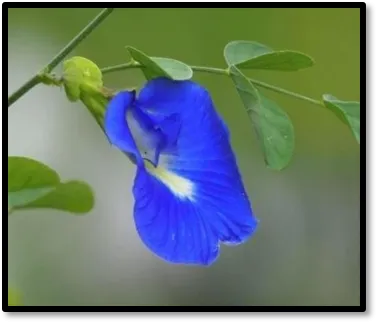
(Fig.no.3.1.Clitoria Ternatea)
Category: Active ingredient
Source: Flowers of Clitoria Ternatea
Chemical Constituents: Anthocyanins, flavonoids, phenolic compounds
Function:
- Antioxidant activity
- Anti-inflammatory effect
- Protects skin from oxidative stress
- Role in formulation: Provides therapeutic and skin-protective benefits
2. Reetha (Sapindus mukorossi) Extract
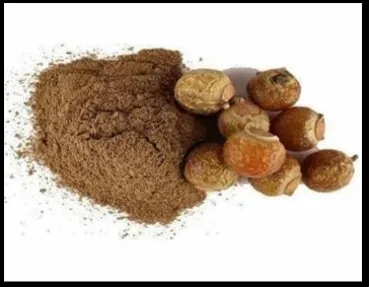
(Fig.no.3.2.Sapindus mukorossi)
Category: Natural surfactant
Chemical Constituents: Saponins
Function:
Role: Provides cleansing action without harsh effects
3. Shikakai (Acacia concinna) Extract
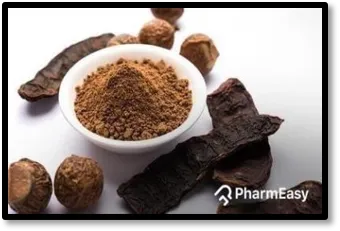
(Fig.no.3.3.Acacia concinna)
Category: Natural cleansing agent
Source: Derived from the dries fruits pods of climbing shrub
Function:
- Mild cleansing
- Maintains natural oil balance
Role: Enhances gentle cleansing property
4. Aloe Vera Gel
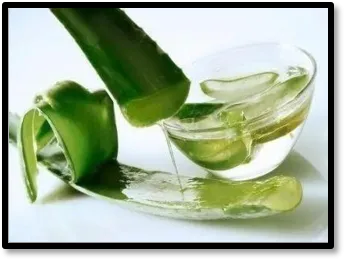
(Fig.no.3.4.Aloe Vera)
Category: Moisturizer and soothing agent
Chemical Constituents: Vitamins, enzymes, polysaccharides
Function:
- Hydrates skin
- Reduces irritation
Role: Improves skin softness and prevents dryness
5. Glycerin
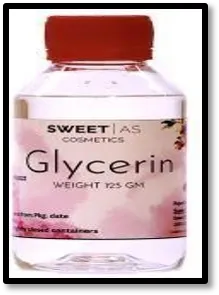
(Fig.no.3.5.Glycerin)
Category: Humectant
Function:
- Attracts moisture
- Prevents dryness
Role: Maintain hydration of skin
6. Guar Gum
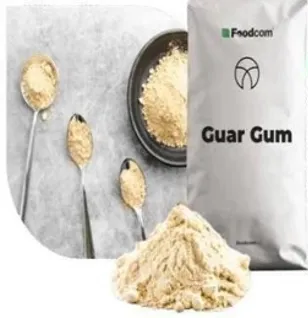
(Fig.3.6.Guar Gum)
Category: Natural gelling and thickening agent
Source: Endosperm of guar seeds
Chemical Nature: Polysaccharide
Functions:
- Provides viscosity and thickness
- Stabilizes formulation
- Improves texture and spread ability.
Advantages:
- Natural and biodegradable
- Cost-effective
- Suitable for herbal formulations
- Non-toxic and skin friendly
Formulation:
Guar gum forms a smooth gel base that helps in uniform distribution of all ingredients and improves the consistency of the face wash
7. Rose Water
(Fig.no.3.7.Rose water)
Category: Vehicle/Base
Function:
- Acts as solvent
- Provides mild fragrance
- Soothes skin
Role: Makes up final volume of formulation
8. Distilled Water
Category: Solvent
Function: Used for extraction and dilution
Role: Maintains purity of formulation
PROCEDURE
|
Step no. |
Procedure |
|
1 |
Prepare Clitoria ternatea extract by heating dried flowers in water and filter it. |
|
2 |
Prepare reetha and Acacia concinna extracts separately and filter. |
|
3 |
Disperse guar gum in rose water with continuous stirring to prepare gel base. |
|
4 |
Add glycerin and mix properly. |
|
5 |
Add gokarna, reetha, and shikakai extracts slowly with stirring. |
|
6 |
Add distilled water q.s. to adjust final volume. |
|
7 |
Stir continuously to obtain homogeneous face wash. |
|
8 |
Check pH and fill in clean airtight container. |
PROCEDURE
1. Preparation of Gokarna Extract
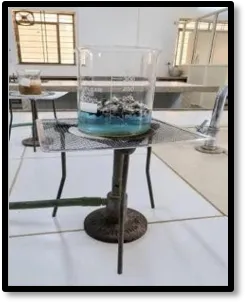
(Fig.no.4.1.Gokarna extraction)
Materials Required:
- Dried gokarna flowers
- Distilled water
- Beaker
- Heating mantle/water bath
- Filter paper Procedure:
The obtained extract is rich in anthocyanins and used as the active ingredient.
2. Extraction of Reetha
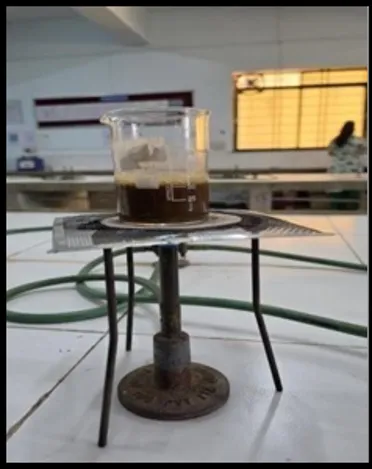
(Fig.no.4.2.Extraction of reetha)
1. Crush the outer shells into small pieces
2. Take 10 g of crushed reetha in a beaker
3. Add 100 ml distilled water
4. Heat at 60–70°C for 20–30 minutes
5. Allow to cool
6. Filter using muslin cloth or filter paper
7. Collect the filtrate → reetha extract
3. Extraction of shikakai
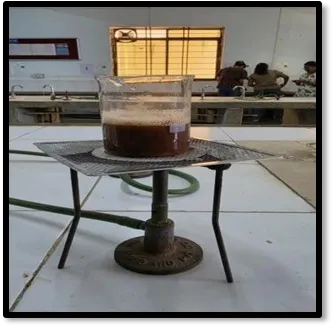
(Fig.no.4.3.Extraction of shikakai)
1. Dry and grind shikakai pods into coarse powder
2. Take 10 g powder in a beaker
3. Add 100 ml distilled water
4. Heat at 60–70°C for 20–30 minutes
5. Allow to cool
6. Filter using muslin cloth or filter paper
7. Collect filtrate → shikakai extract
1. Preparation of Face Wash (Using Guar Gum)
|
Ingredients |
Quantity |
|
Gokarna extract |
20ml |
|
Reetha extract |
15ml |
|
Guargum |
1gm (1%) |
|
Rosewater |
Qs to 100ml |
|
Aloevera gel |
10g |
|
Glycerin |
5ml |
|
Shikakai extract |
10ml |
2. Formulation Procedure
Step 1: Preparation of Gel Base
Step 2: Addition of Humectant
Step 3: Addition of Active Ingredient
Step 4: Addition of Cleansing Agent
Step 5: Addition of Aloe Vera
Step 6: Final Adjustment
Step 7: Packaging
1. Transfer the prepared face wash into a clean, dry container or tube.
2. Label and store at room temperature.
4. Precautions
8. Evaluation Test
Evaluation Tests of Herbal Face Wash
Procedure: Observe the face wash visually for: Color, Odor, Texture, Consistency
Result: Smooth, uniform, and pleasant formulation.
Procedure: 1 g face wash is dissolved in 10 ml distilled water and pH is measured using pH meter.
Result: Ideal pH = 5.7
Procedure: Apply small quantity on glass slide and observe for lumps or phase separation.
Result: Uniform and smooth formulation.
Procedure: 1% face wash solution is shaken in measuring cylinder and foam formation observed
Result: Moderate and stable foam observed.
Procedure: Place the sample between two glass slides and spread gently.
Result: Face wash spreads easily and uniformly.
Procedure: Apply on skin and wash with water.
Result: Easily washable without residue.
Procedure: Apply on small area of skin and observe for redness or itching for several hours.
Result: No irritation observed.
Procedure: Store formulation at room temperature and 40°C for several days and observe changes.
Result: No color change or phase separation.
Procedure: Measure viscosity using Brookfield viscometer.
Result: Suitable viscosity for topical application.
Procedure: Add dirt and face wash in water, shake and observe dispersion.
Result: Dirt dispersed properly without redeposition.
RESULT
The herbal face wash formulated using gokarna extract obtained from and guar gum as a natural gelling agent was successfully prepared and evaluated for various physicochemical and performance characteristics.
|
Sr. No. |
Parameter |
Result |
Significance |
|
1 |
Organoleptic Properties |
Smooth gel, bluish-purple color, pleasant odor |
Indicates good formulation quality |
|
2 |
pH |
5.5 – 6.0 |
Suitable for skin, non-irritating |
|
3 |
Viscosity |
Moderate |
Ensures proper consistency and easy application |
|
4 |
Foamability |
Good foam formation |
Indicates effective cleansing |
|
5 |
Spreadability |
Easily spreadable |
Ensures uniform application |
|
6 |
Washability |
Easily washable, no residue |
Improves user acceptability |
|
7 |
Skin Irritation |
No irritation observed |
Safe for topical use |
|
8 |
Homogeneity |
Uniform, no lumps |
Confirms proper mixing |
|
9 |
Stability |
No change in color, odor, consistency |
Indicates good shelf stability |
|
10 |
After-feel |
Smooth, non-drying |
Enhances product quality |
DISCUSSION
The formulation of the herbal face wash was successfully developed using gokarna extract as the primary active ingredient and guar gum as the natural gelling agent.
Gokarna is rich in anthocyanins and flavonoids, which provide strong antioxidant activity. These compounds help in protecting the skin from oxidative stress and environmental damage. The presence of these phytoconstituents contributes to improved skin tone and anti-aging effects.
Guar gum was selected as a substitute for synthetic polymers like HPMC and xanthan gum. It effectively provided therequired viscosity and gel consistency. Additionally, it is biodegradable, non-toxic, and suitable for herbal formulations, making the product more natural and skin-friendly.
Shikakai acted as a natural surfactant due to its saponin content, producing sufficient foam and ensuring effective cleansing without causing dryness. Glycerin served as a humectant, maintaining skin hydration and preventing excessive moisture loss.
The pH of the formulation (5.5–6.0) was found to be within the acceptable range for skin, ensuring that the formulation is gentle and non-irritating. The absence of skin irritation during testing confirms its safety for topical application.
The formulation also demonstrated good stability with no phase separation, color change, or degradation observed during the study period. This indicates compatibility among the ingredients.
Overall, the combination of herbal ingredients resulted in a formulation that is effective, safe, and suitable for daily use.
CONCLUSION
The present study successfully focused on the formulation and evaluation of a herbal face wash incorporating gokarna extract obtained from along with other natural ingredients. The objective of developing a safe, effective, and eco-friendly alternative to conventional synthetic face washes was achieved.
The formulation was prepared using guar gum as a natural gelling agent, which effectively replaced synthetic polymers such as HPMC and xanthan gum. Guar gum provided suitable viscosity, consistency, and stability to the formulation without causing any irritation to the skin. The inclusion of shikakai as a natural surfactant contributed to efficient cleansing action due to the presence of saponins, while glycerin acted as a humectant, ensuring proper hydration and preventing dryness.
The evaluation parameters such as pH, viscosity, foamability, spreadability, washability, and skin irritation were found to be within acceptable limits. The pH of the formulation (5.5–6.0) was compatible with the natural pH of the skin, ensuring safety for regular use. The product exhibited good foam formation, easy spreadability, and effective cleansing action without stripping the skin of its natural oils.
The antioxidant properties of gokarna, mainly due to anthocyanins and flavonoids, play a significant role in protecting the skin from oxidative stress and environmental damage. These properties also contribute to improved skin appearance, reduced dullness, and prevention of early signs of aging
In conclusion, the developed gokarna herbal face wash is an effective, safe, and economical formulation with multiple skin benefits. It serves as a promising alternative to synthetic cosmetic products and supports the growing demand for herbal and natural skincare solutions.
REFERENCES

Snehal Dhamodkar, Pranali Burde, Shradha Nangare, Sanika Bende, Althmas Shaikh, Vaibhav Patange, Formulation & Evaluation of Gokarna Polyherbal Face Wash, Int. J. of Pharm. Sci., 2026, Vol 4, Issue 6, 3407-3420. https://doi.org/10.5281/zenodo.20689945
 10.5281/zenodo.20689945