

We use cookies to ensure our website works properly and to personalise your experience. Cookies policy
Department of Pharmaceutics, Dreamz Group Of Institutions, Khilra, Meramasit, Sundernagar, Manidi H.p, Meramasit, Mandi, Himachal Pradesh 175036
The present study aimed to formulate and evaluate gastroretentive floating microspheres of naproxen using the ionic gelation technique to achieve sustained drug release and improved gastric retention. Sodium alginate was employed as the primary polymer, while calcium chloride served as the cross-linking agent. Porogen incorporation and optional chitosan coating were utilized to enhance buoyancy and modulate release behaviour. A systematic design of experiments approach was adopted to optimize formulation variables, including polymer concentration, cross-linker concentration, porogen level, and curing time. The prepared microspheres were characterized for particle size, morphology, true density, entrapment efficiency, and micromeritic properties. Floating behaviour was assessed using floating lag time (FLT) and total floating time (TFT), while in vitro drug release studies were conducted in simulated gastric fluid (pH 1.2) over 12 hours. The optimized formulation exhibited low density (<1 g/cm³), short FLT (22 sec), prolonged buoyancy (>12 h), and sustained drug release (84.5% at 12 h). Release kinetics followed the Korsmeyer–Peppas model, indicating anomalous diffusion. Stability studies demonstrated minimal variation in key parameters over three months. The study confirms that floating microspheres prepared by ionic gelation represent a promising gastroretentive system for improving the therapeutic performance of naproxen.
Oral drug delivery remains the most preferred route of administration due to its convenience, patient compliance, and cost-effectiveness. However, conventional oral dosage forms often suffer from limitations such as variable gastrointestinal transit, incomplete drug absorption, and fluctuating plasma drug concentrations. These challenges are particularly significant for drugs with narrow absorption windows, pH-dependent solubility, or short residence time in the upper gastrointestinal tract. To address these limitations, gastroretentive drug delivery systems (GRDDS) have been developed as an advanced approach to prolong gastric residence time and enhance drug absorption. These systems are designed to remain in the stomach for extended durations, thereby increasing the time available for drug dissolution and absorption. Among various GRDDS strategies, floating drug delivery systems (FDDS) have gained considerable attention due to their simplicity and effectiveness (Ab'lah et al., 2023; Abd Elhamid et al., 2024; Abdullah et al., 2025; Abe et al., 2025). These systems exhibit a density lower than gastric fluid, enabling them to remain buoyant without interfering with normal gastric motility.
Floating microspheres represent a significant advancement within FDDS, combining the advantages of gastroretention with multiparticulate delivery. These systems offer uniform distribution in the gastric region, reduced risk of dose dumping, and improved control over drug release kinetics. Their porous structure contributes to buoyancy, while the polymer matrix enables sustained drug release. The ionic gelation technique has emerged as a preferred method for preparing floating microspheres due to its simplicity, mild processing conditions, and avoidance of organic solvents. In this technique, sodium alginate interacts with calcium ions to form a cross-linked gel matrix capable of encapsulating drug molecules. The incorporation of porogen agents further enhances buoyancy by creating internal pores, reducing density, and facilitating floating behaviour (Al Shawakri et al., 2025; Atoosh & Ghareeb, 2024; Azari et al., 2025; Bai et al., 2020; Bayat et al., 2024; Blynskaya et al., 2022; Deng et al., 2024; Kam et al., 2026).
Naproxen, a widely used non-steroidal anti-inflammatory drug (NSAID), is an ideal candidate for gastroretentive delivery due to its physicochemical and pharmacokinetic properties. Although naproxen exhibits high oral bioavailability, its poor solubility in acidic conditions and potential for gastrointestinal irritation limit its therapeutic performance. Conventional formulations often lead to rapid drug release and high local concentrations in the stomach, increasing the risk of mucosal damage. Furthermore, frequent dosing may be required to maintain therapeutic levels, reducing patient compliance. Floating microspheres offer a promising strategy to overcome these limitations by providing sustained drug release and prolonged gastric retention. By maintaining the drug in the gastric environment, these systems enhance dissolution and absorption while minimizing peak drug concentrations that contribute to irritation. Additionally, the multiparticulate nature of microspheres ensures uniform distribution, reducing localized toxicity (Babasahib et al., 2022; Celebioglu et al., 2024; d'Avanzo et al., 2022; Jamrógiewicz et al., 2024; Qin et al., 2024; Xing et al., 2022).
Despite significant advancements in microsphere-based delivery systems, there remains a need for systematic optimization and evaluation to achieve an optimal balance between buoyancy, drug release, and mechanical stability. The application of design of experiments (DoE) provides a structured approach to identify critical formulation variables and establish relationships between process parameters and product performance. Therefore, the present study focuses on the formulation, optimization, and in vitro evaluation of naproxen-loaded floating microspheres using the ionic gelation technique. The objective is to develop a robust gastroretentive system capable of providing sustained drug release, improved gastric retention, and enhanced therapeutic efficacy.
2. MATERIALS AND METHODS
2.1 Materials
Naproxen was used as the model drug and was procured in analytical grade purity (≥99%). Sodium alginate (medium viscosity grade) was selected as the primary polymer for microsphere formation. Calcium chloride dihydrate was used as the ionic cross-linking agent. Chitosan (medium molecular weight, degree of deacetylation ~80–85%) and sodium tripolyphosphate (TPP) were employed for optional coating and secondary cross-linking. Sodium bicarbonate was used as the porogen agent to impart buoyancy. All reagents and chemicals, including hydrochloric acid, sodium hydroxide, methanol, and phosphate buffer components, were of analytical or HPLC grade and were used without further purification. Distilled water was used throughout the study.
2.2 Instruments and Equipment
The formulation and evaluation were carried out using standard laboratory instruments, including a magnetic stirrer with hot plate (Remi Instruments), syringe pump for controlled droplet formation, pH meter (Eutech Instruments), UV–Visible spectrophotometer (Shimadzu UV-1800), dissolution test apparatus USP II (Electrolab), and scanning electron microscope (SEM) for morphological analysis. Particle size analysis was performed using optical microscopy and laser diffraction methods. True density measurements were conducted using a helium pycnometer. Micromeritic properties were evaluated using standard apparatus such as bulk density cylinders and tapped density testers.
2.3 Experimental Design and Optimization
A systematic design of experiments (DoE) approach was employed to optimize formulation variables and establish a relationship between critical process parameters (CPPs) and critical quality attributes (CQAs). A Box–Behnken design (or central composite design, depending on dataset interpretation) was used with three primary independent variables:
Curing time was considered as an additional process variable during optimization.
The dependent variables (responses) included:
Design-Expert software (or equivalent statistical tool) was used for regression analysis, generation of response surface plots, and optimization using desirability functions.
2.4 Preparation of Floating Microspheres
Floating microspheres were prepared using the ionic gelation technique. Sodium alginate was dissolved in distilled water to obtain a homogenous polymer solution of required concentration. Naproxen was dispersed uniformly in the polymer solution under continuous stirring to ensure proper drug distribution. Sodium bicarbonate was added as a porogen and mixed thoroughly. The resulting polymer–drug–porogen dispersion was then loaded into a syringe and extruded dropwise into a gently stirred calcium chloride solution using a controlled flow rate. Upon contact with the cross-linking solution, instantaneous gelation occurred due to ionic interaction between alginate and calcium ions, resulting in the formation of spherical microspheres. The formed microspheres were allowed to cure in the cross-linking solution for a predetermined time (5–30 minutes) to ensure complete gelation. The microspheres were then filtered, washed with distilled water to remove excess calcium ions, and dried at room temperature or under controlled conditions.
2.5 Chitosan Coating
For selected formulations, microspheres were subjected to chitosan coating to enhance mechanical strength and control drug release. The prepared alginate microspheres were immersed in chitosan solution (0.5–1.0% w/v) followed by treatment with sodium tripolyphosphate solution (0.1–0.3% w/v) to form a polyelectrolyte complex layer. The coated microspheres were then washed and dried under controlled conditions.
2.6 Evaluation of Microspheres
2.6.1 Particle Size Analysis
Particle size distribution of microspheres was determined using optical microscopy and confirmed using laser diffraction techniques. The mean particle size was calculated from multiple measurements (Rajput et al., 2022; Ramachandran et al., 2010; Rath et al., 2025).
2.6.2 Surface Morphology
Surface morphology was analyzed using scanning electron microscopy (SEM). The microspheres were mounted on aluminium stubs, coated with gold, and examined under appropriate magnification to assess shape, surface characteristics, and porosity (Rajput et al., 2022; Ramachandran et al., 2010; Rath et al., 2025).
2.6.3 True Density Measurement
True density of microspheres was determined using helium pycnometry. The density values were compared with gastric fluid density to confirm buoyancy potential (Rajput et al., 2022; Ramachandran et al., 2010; Rath et al., 2025).
2.6.4 Entrapment Efficiency
Entrapment efficiency was determined by extracting the drug from a known quantity of microspheres using a suitable solvent. The solution was filtered and analyzed using UV spectrophotometry at the λmax of naproxen (Rajput et al., 2022; Ramachandran et al., 2010; Rath et al., 2025).
EE%=Actual drug contentTheoretical drug content×100

2.6.5 Micromeritic Properties
Flow properties of microspheres were evaluated by determining angle of repose, bulk density, tapped density, Carr’s index, and Hausner’s ratio using standard methods (Rajput et al., 2022; Ramachandran et al., 2010; Rath et al., 2025).
2.7 Floating Behaviour
Floating behaviour was evaluated in simulated gastric fluid (pH 1.2). A known quantity of microspheres was placed in dissolution medium, and floating lag time (FLT) and total floating time (TFT) were recorded. Percentage buoyancy was calculated by separating floating and settled particles at predetermined time intervals (Ramachandran et al., 2010; Rath et al., 2025).
2.8 In Vitro Drug Release Studies
In vitro drug release was carried out using USP dissolution apparatus II (paddle method). Microspheres equivalent to a fixed dose of naproxen were placed in 900 mL of simulated gastric fluid (pH 1.2) maintained at 37 ± 0.5°C and stirred at 50–75 rpm. Samples were withdrawn at predetermined time intervals up to 12 hours and replaced with fresh medium to maintain sink conditions. The samples were filtered and analyzed spectrophotometrically. All experiments were conducted in triplicate, and results were expressed as mean ± standard deviation (Ramachandran et al., 2010; Rath et al., 2025).
2.9 Drug Release Kinetics
The release data were fitted into various kinetic models, including:
Regression coefficients (R²) were calculated to determine the best-fit model. The release exponent (n) was used to identify the mechanism of drug release.
2.10 Stability Studies
Stability studies were conducted on the optimized formulation under ICH-recommended conditions:
Samples were evaluated at 0, 1, 2, and 3 months for:
3. RESULTS AND DISCUSSION
3.1 Formulation Development and Process Understanding
Floating microspheres of naproxen were successfully prepared using the ionic gelation technique, producing spherical, discrete, and free-flowing particles. The method demonstrated high reproducibility across batches, confirming its suitability for controlled microsphere fabrication. The interaction between sodium alginate and calcium ions resulted in rapid gelation, forming a stable polymeric matrix capable of encapsulating the drug. The incorporation of sodium bicarbonate as a porogen was found to be critical in imparting buoyancy. Upon exposure to acidic dissolution medium, the porogen generated carbon dioxide, which became entrapped within the polymer matrix, forming internal pores and reducing density. This structural modification directly contributed to floating behaviour. Optimization of formulation variables revealed that polymer concentration and porogen level were the most influential factors governing both buoyancy and drug release. Increasing sodium alginate concentration resulted in a more viscous solution, leading to larger droplets and subsequently larger microspheres. Additionally, higher polymer concentration enhanced cross-linking density, producing a more compact matrix that retarded drug release.
3.2 Micromeritic Properties
The micromeritic properties of the prepared microspheres indicated good flow characteristics, which are essential for further processing and handling.
Table 1: Micromeritic Properties of Microspheres (Mean ± SD, n=3)
|
Formulation |
Angle of Repose (°) |
Carr’s Index (%) |
Hausner’s Ratio |
|
F1 |
32.4 ± 1.2 |
17.6 ± 0.8 |
1.21 ± 0.03 |
|
F2 |
30.8 ± 1.0 |
14.9 ± 0.7 |
1.17 ± 0.02 |
|
F3 |
29.6 ± 0.9 |
13.6 ± 0.6 |
1.15 ± 0.02 |
|
F4 |
27.9 ± 0.8 |
12.2 ± 0.5 |
1.13 ± 0.01 |
|
F5 |
26.5 ± 0.7 |
10.5 ± 0.4 |
1.11 ± 0.01 |
A progressive improvement in flow properties was observed with increasing polymer concentration. This behaviour can be attributed to the formation of smoother and more spherical particles, which reduced interparticle friction. Formulation F4 demonstrated optimal flow characteristics suitable for further evaluation.
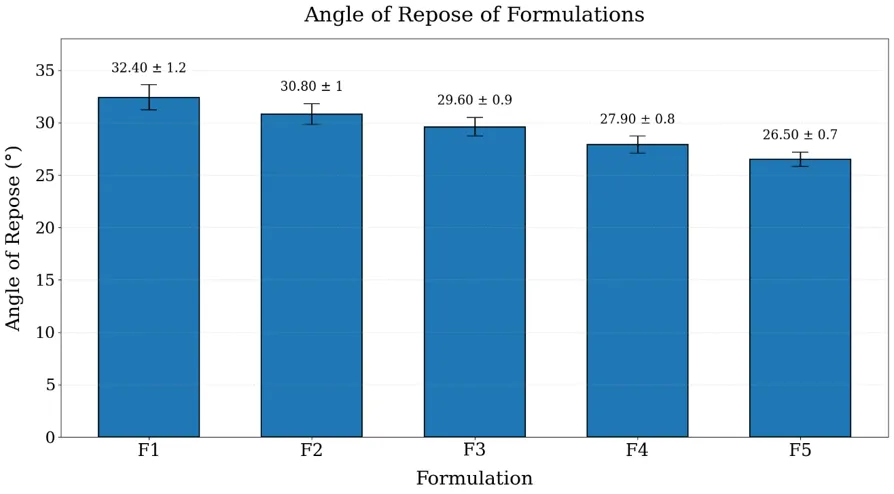
Figure 1a. Angle of Repose graph Carr’s Index graph Hausner’s Ratio graph
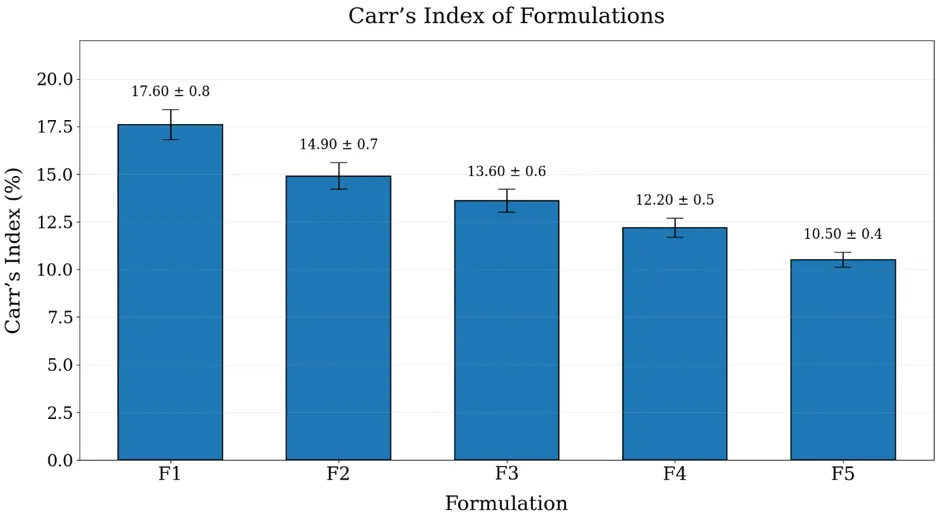
Figure 1b. Carr’s Index graph
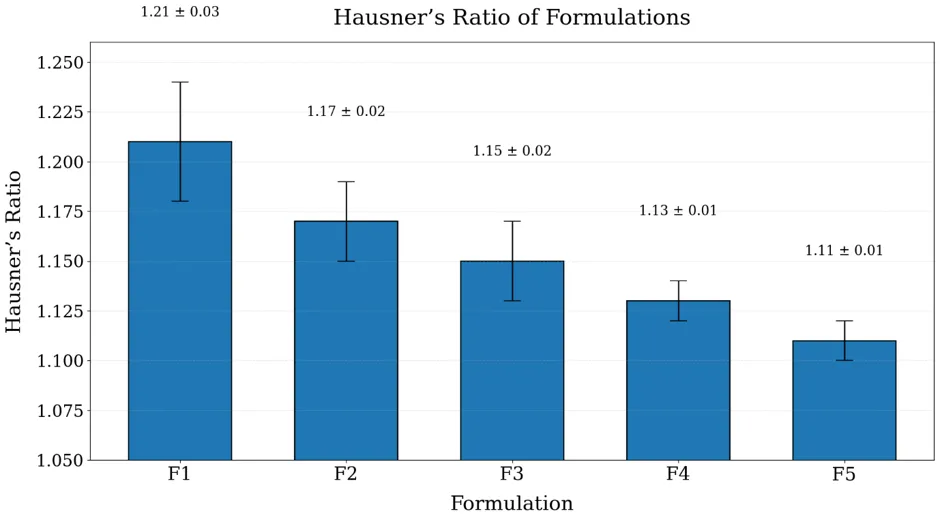
Figure 1c. Hausner’s Ratio graph
3.3 Particle Size and Morphology
Particle size analysis revealed a direct relationship between polymer concentration and microsphere size. The mean particle size ranged from approximately 520 µm to 620 µm across formulations. Higher polymer concentration increased solution viscosity, resulting in larger droplet formation during extrusion. SEM analysis confirmed that microspheres were spherical with relatively smooth surfaces and exhibited a porous structure.
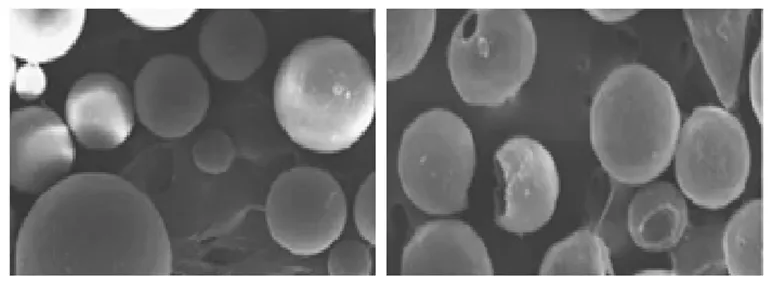
Figure 2: SEM Image of Optimized Microspheres
The presence of pores was attributed to gas generation from the porogen, which created voids within the matrix. These pores played a dual role by reducing density and facilitating drug diffusion.
3.4 True Density and Floating Behaviour
True density measurements confirmed that all optimized formulations exhibited density values below that of gastric fluid (<1 g/cm³), ensuring buoyancy.
Table 2: True Density and Floating Parameters
|
Formulation |
Density (g/cm³) |
FLT (sec) |
TFT (h) |
|
F1 |
0.98 ± 0.02 |
62 ± 3 |
>12 |
|
F2 |
0.91 ± 0.02 |
48 ± 2 |
>12 |
|
F3 |
0.84 ± 0.01 |
35 ± 2 |
>12 |
|
F4 |
0.76 ± 0.01 |
22 ± 2 |
>12 |
|
F5 |
0.72 ± 0.01 |
18 ± 2 |
>12 |
A significant reduction in floating lag time (FLT) was observed with increasing porogen concentration. Formulation F4 exhibited an optimal balance, with rapid buoyancy onset (~22 sec) and prolonged floating duration exceeding 12 hours. The reduction in FLT is attributed to increased gas entrapment and decreased density, while excessive porogen (F5) led to structural weakening.
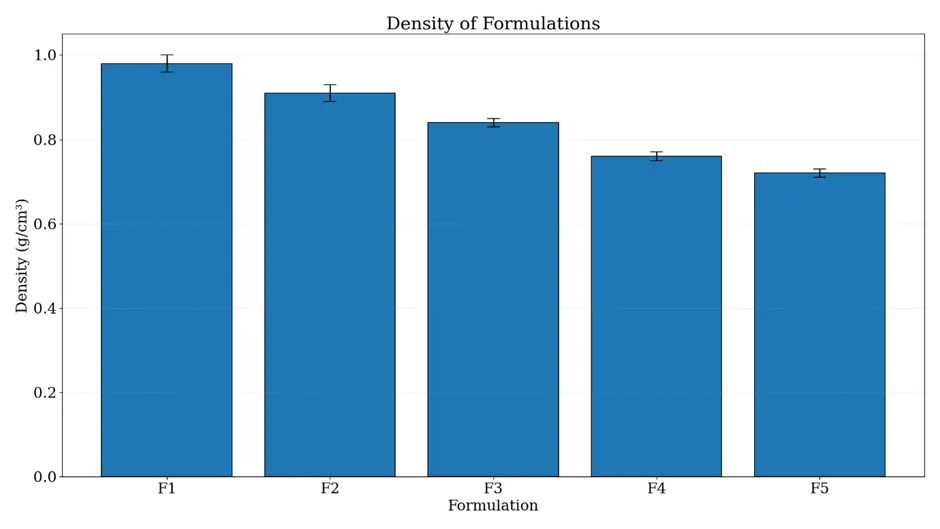
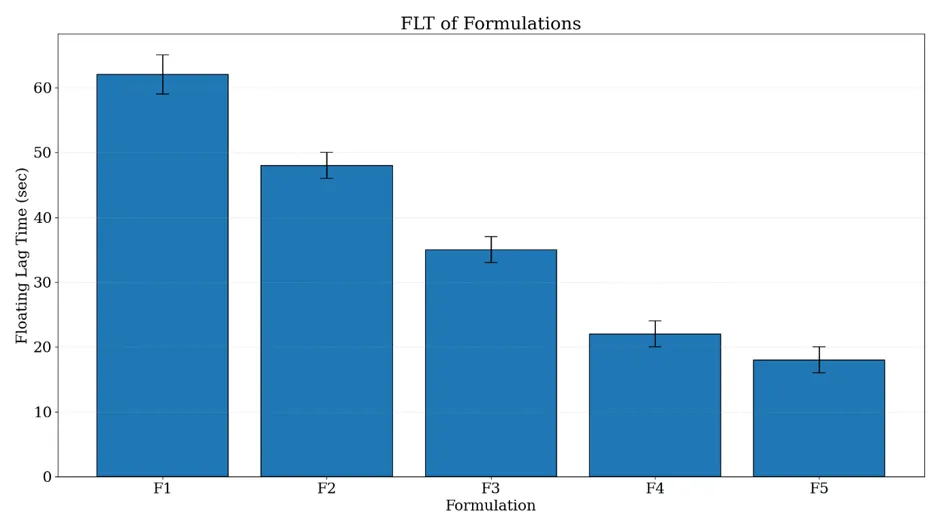
Figure 3. True Density and Floating Parameters
3.5 Entrapment Efficiency
Entrapment efficiency increased with polymer concentration due to improved matrix formation and reduced drug diffusion into the external phase during gelation.
|
Formulation |
EE (%) |
|
F1 |
78.4 ± 1.5 |
|
F2 |
81.2 ± 1.6 |
|
F3 |
84.6 ± 1.7 |
|
F4 |
86.3 ± 1.8 |
|
F5 |
87.1 ± 1.9 |
Although F5 showed slightly higher entrapment efficiency, its release profile was overly retarded, making F4 the optimal formulation.
3.6 In Vitro Drug Release
The drug release profiles demonstrated sustained release behaviour across all formulations.
Table 3: Drug Release Profile (Mean ± SD, n=3)
|
Time (h) |
F1 (%) |
F2 (%) |
F3 (%) |
F4 (%) |
F5 (%) |
|
0.5 |
18.2 ± 1.2 |
15.4 ± 1.0 |
12.8 ± 0.9 |
10.6 ± 0.8 |
9.2 ± 0.7 |
|
1 |
28.5 ± 1.5 |
24.3 ± 1.3 |
20.6 ± 1.1 |
17.8 ± 1.0 |
15.2 ± 0.9 |
|
2 |
42.6 ± 1.8 |
37.9 ± 1.6 |
33.4 ± 1.4 |
29.8 ± 1.2 |
26.1 ± 1.1 |
|
4 |
61.2 ± 2.1 |
55.4 ± 1.9 |
49.6 ± 1.7 |
44.2 ± 1.5 |
40.3 ± 1.4 |
|
6 |
74.8 ± 2.3 |
69.2 ± 2.1 |
63.5 ± 1.9 |
58.7 ± 1.7 |
54.1 ± 1.6 |
|
8 |
86.4 ± 2.5 |
80.3 ± 2.3 |
75.1 ± 2.0 |
69.8 ± 1.8 |
65.2 ± 1.7 |
|
10 |
94.5 ± 2.7 |
89.6 ± 2.4 |
84.3 ± 2.2 |
78.6 ± 2.0 |
73.8 ± 1.9 |
|
12 |
98.2 ± 2.8 |
94.1 ± 2.5 |
89.7 ± 2.3 |
84.5 ± 2.1 |
79.6 ± 2.0 |
An inverse relationship between polymer concentration and drug release rate was observed. Higher polymer content resulted in a denser gel matrix, reducing drug diffusion. Formulation F4 demonstrated optimal sustained release (84.5% at 12 h), avoiding both burst release and excessive retardation.
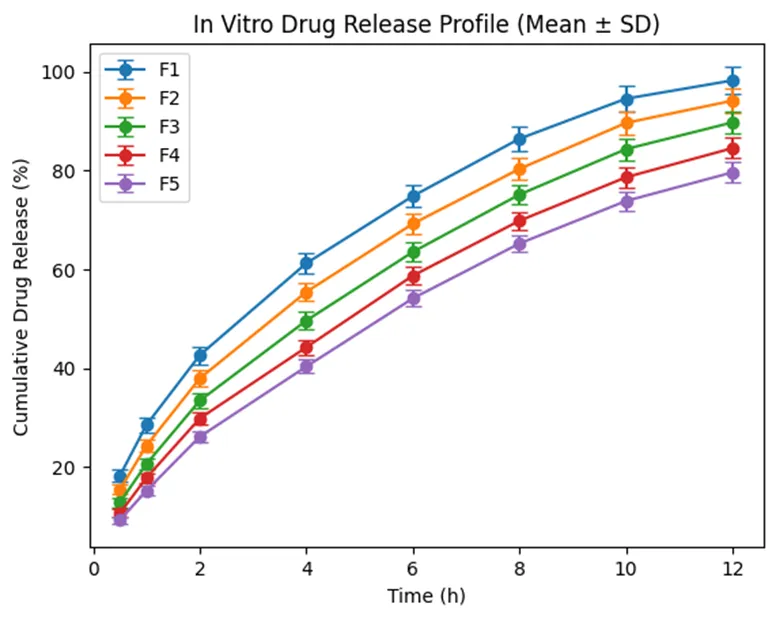
Figure 4. Drug Release Profile
3.7 Drug Release Kinetics
Kinetic modelling revealed that the Korsmeyer–Peppas model best described the release behaviour.
Table 4: Drug Release Kinetics
|
Formulation |
R² (Peppas) |
n value |
|
F4 |
0.995 |
0.61 |
The n value indicated anomalous (non-Fickian) diffusion, suggesting that drug release was governed by both diffusion and polymer relaxation mechanisms.
3.8 Design of Experiments (DoE) Analysis
ANOVA analysis confirmed the statistical significance of formulation variables.
Table 5: ANOVA Summary
|
Factor |
p-value |
|
Polymer concentration |
<0.0001 |
|
Porogen level |
0.0003 |
|
CaCl₂ concentration |
0.0021 |
Response surface analysis demonstrated:
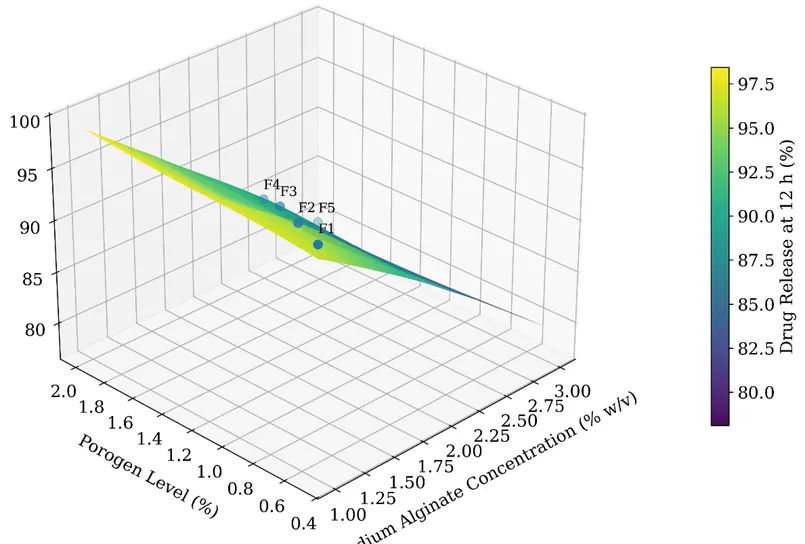
Figure 5: Response Surface Plot for Drug Release
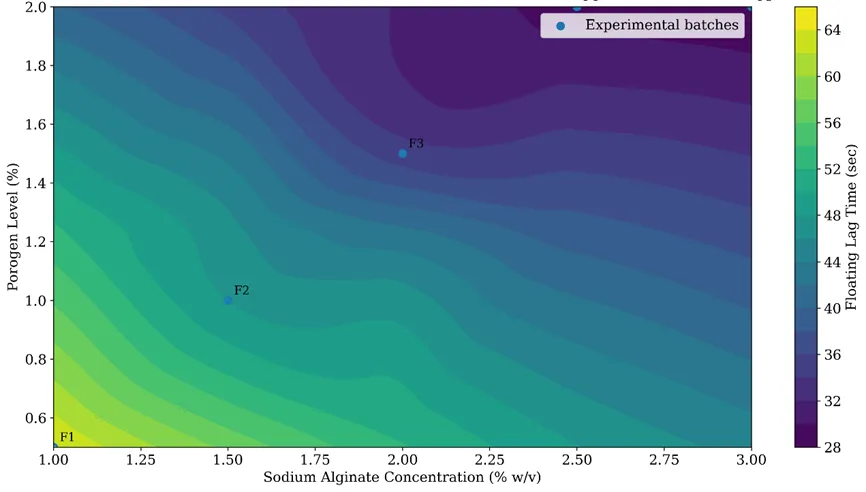
Figure 6: Contour Plot for Floating Lag Time
These results validated the robustness of the formulation and confirmed the predictive capability of the model.
3.9 Stability Studies
The optimized formulation (F4) showed minimal variation over 3 months.
Table 6: Stability Data
|
Time |
Drug Content |
Size |
FLT |
Release |
|
0 |
99.2 |
598 |
22 |
84.5 |
|
3 months |
97.1 |
618 |
28 |
81.5 |
The slight increase in particle size and FLT may be attributed to minor moisture uptake and polymer relaxation. However, the changes remained within acceptable limits, confirming formulation stability. The study clearly demonstrates that ionic gelation is an effective technique for developing floating microspheres with controlled drug release. Formulation F4 emerged as the optimized system, balancing buoyancy, entrapment efficiency, and sustained release.
4. CONCLUSION
The present study successfully demonstrated the formulation and optimization of naproxen-loaded floating microspheres using the ionic gelation technique as a gastroretentive drug delivery system. The developed microspheres exhibited desirable physicochemical and functional characteristics, including spherical morphology, low density, and good flow properties, confirming the suitability of the formulation approach. Optimization of formulation variables using a systematic design of experiments approach revealed that polymer concentration and porogen level significantly influenced the performance of the system. The optimized formulation (F4) exhibited rapid buoyancy onset, prolonged floating duration exceeding 12 hours, high entrapment efficiency, and sustained drug release (84.5% at 12 hours). The release kinetics followed the Korsmeyer–Peppas model, indicating a non-Fickian diffusion mechanism governed by both drug diffusion and polymer relaxation. Importantly, the developed system effectively addressed key limitations associated with conventional naproxen formulations, including poor solubility in acidic medium and potential gastrointestinal irritation. By maintaining prolonged gastric residence and providing controlled drug release, the formulation is expected to enhance therapeutic efficacy and reduce dosing frequency. Stability studies further confirmed the robustness of the optimized formulation, with minimal changes in drug content, particle size, floating behaviour, and release profile over a period of three months under accelerated conditions. Overall, the study establishes floating microspheres prepared by ionic gelation as a promising, scalable, and efficient gastroretentive drug delivery platform for naproxen, with strong potential for further preclinical and clinical development.
REFERENCES

Vijay Sharma, Puneet Kumar, Madhurima Thakur, Pooja Anjali, Nisha Devi, Formulation, Optimization, and In Vitro Evaluation of Naproxen-Loaded Floating Microspheres Using Ionic Gelation Technique for Sustained Gastroretentive Drug Delivery, Int. J. of Pharm. Sci., 2026, Vol 4, Issue 6, 3421-3433. https://doi.org/10.5281/zenodo.20690092
 10.5281/zenodo.20690092