

We use cookies to ensure our website works properly and to personalise your experience. Cookies policy
Department of pharmacutic, SMES Mahavir institute of pharmacy, Nashik Maharashtra.
The integration of Artificial Intelligence (AI) and Large Language Models (LLMs) is fundamentally transforming healthcare and clinical pharmacy practice. Built on transformer-based architectures and capable of processing, interpreting, and generating complex biomedical text, LLMs serve as powerful computational tools for drug information retrieval, medication therapy management, patient counselling, clinical documentation, and pharmacovigilance. When deployed effectively, these technologies enhance workflow efficiency, bolster clinical decision support, democratize access to healthcare information, and drive personalized patient care. However, the adoption of LLMs in clinical pharmacy introduces significant ethical, legal, and operational challenges, including output accuracy, hallucinations, algorithmic bias, patient data privacy, transparency, legal liability, and regulatory compliance. Safe and sustainable deployment requires rigorous clinical validation, human-in-the-loop oversight, robust data protection measures, explainable AI frameworks, and continuous system monitoring. This review examines the multifaceted benefits and inherent drawbacks of utilizing LLMs in clinical decision support, outlining strategies for their safe integration into healthcare systems. Ultimately, realizing the potential of LLMs requires fostering ethical governance, strict regulatory compliance, and active collaboration among healthcare professionals, developers, and policymakers to optimize medicine safety and clinical outcomes
The integration of artificial intelligence (AI) is rapidly transforming modern healthcare delivery, offering innovative solutions to optimize clinical decision-making, streamline patient management, and enhance operational efficiency. Among these technologies, Large Language Models (LLMs) have emerged as a pivotal advancement. These sophisticated AI systems are capable of processing, interpreting, and generating human language with high linguistic and contextual fidelity. Built on deep learning transformer architectures and trained on extensive, multi-domain datasets, LLMs excel at complex tasks such as medical information retrieval, automated text summarization, clinical documentation, and real-time clinical question-answering. The fast-paced evolution and clinical adaptation of state of the art models such as Chat GPT, Med PaLM, and domain-adapted architectures provide healthcare practitioners with unprecedented capabilities to synthesize and apply complex medical knowledge at the point of care (1).
1.1 The Evolving Role of Clinical Pharmacy
Clinical pharmacy focuses on optimizing individual drug therapy to ensure safe, cost-effective, and evidence-based medication use. In practice, pharmacists review patient profiles, assess potential drug-drug interactions, monitor adverse events, and counsel patients on complex regimens. However, managing modern pharmacotherapy especially with rising rates of polypharmacy, specialized biologics, and personalized medicine imposes a heavy cognitive burden on practitioners. At the same time, the sheer volume of new biomedical research makes it difficult for pharmacists to stay current with every updated practice guideline. This workload highlights a clear need for reliable decision-support systems that streamline clinical information processing (2).
1.2 Applications of LLMs in Pharmaceutical Care
LLMs offer practical solutions to many of these workflow bottlenecks. In daily practice, these tools can assist with medication therapy management, drug information requests, pharmacovigilance tracking, and patient counselling (3). Specifically, LLMs can flag drug interactions, convert complex clinical guidelines into patient-friendly instructions, and speed up medication reconciliation. Delegating these routine, time-consuming tasks to automated systems reduces administrative overhead, allowing pharmacists to spend more time on direct patient interactions and multidisciplinary care. As electronic health record (EHR) platforms continue to modernize, integrating LLMs into clinical software represents a logical step toward smarter healthcare delivery (3).
1.3 Challenges, Risks, and Oversight
Despite these clear operational benefits, bringing LLMs into pharmacy practice introduces real-world ethical, legal, and safety risks. Key concerns centre on factual accuracy, algorithmic bias, patient data privacy, and accountability (4, 5). The primary clinical risk is model "hallucination" where an LLM outputs incorrect or fabricated medical data with high linguistic confidence. Relying on unverified outputs can directly compromise patient safety, making clinician oversight essential. Furthermore, open questions remain regarding data ownership, legal liability for AI-influenced errors, and equitable technology access. Until regulatory bodies establish clear governance and validation protocols, widespread clinical deployment requires caution (4, 5).
1.4 Recommendations, Governance, and Future Outlook
Realizing the full benefits of large language models while minimizing clinical risks requires clear organizational governance. Healthcare institutions need robust frameworks centred on human oversight, output verification, continuous performance tracking, and clear ethical guidelines. Training programs must adapt as well, preparing pharmacists to critically evaluate algorithmic recommendations before applying them to patient care. Looking ahead, research priorities should focus on improving model transparency, reducing demographic and data biases, boosting domain-specific precision, and establishing standardized evaluation benchmarks tailored to pharmacy workflows. When implemented responsibly under proper supervision, LLMs can improve medication safety, support clinical decision-making, and modernize pharmaceutical care in digital healthcare settings (6).
2. Overview of Large Language Models
Built on deep learning transformer architectures, Large Language Models (LLMs) represent advanced artificial intelligence systems trained on expansive textual datasets. By learning linguistic patterns, contextual relationships, and domain-specific terminology from scientific literature, clinical manuals, and digital repositories, these models process and generate text with high contextual accuracy. Their underlying architecture enables tasks such as automated text generation, dynamic summarization, query response, and targeted information retrieval. State-of-the-art models including GPT-4, Gemini, Claude, and medical-specific variants like Med-PaLM have significantly expanded the scope of conversational and analytical AI in professional domains (7, 8)
A fundamental distinction exists between LLMs and traditional Clinical Decision Support Systems (CDSS). Conventional CDSS rely on rigid, rule-based algorithms and structured relational databases, limiting their capability to process unstructured clinical text. In contrast, LLMs interpret complex narrative clinical data, generating contextually aware responses through natural language interactions. Within clinical pharmacy, these models show practical utility across multiple workflows, including medication regimen reviews, drug information delivery, pharmacovigilance tracking, clinical documentation, and patient communication. By rapidly synthesizing complex evidence across heterogeneous medical databases, LLMs can streamline administrative overhead and support evidence-based decision-making. However, human expert validation remains mandatory to verify model outputs and safeguard patient outcomes (1, 3)
Table 1: Major Large Language Models and Their Features
Overview of leading AI architectures, capabilities, and clinical pharmacy applications
|
Model |
Developer |
Architecture & Core Capabilities |
Primary Clinical Pharmacy Applications |
Strengths & Considerations |
|
GPT (Series) |
Open AI |
Generative pretrained transformer; broad contextual reasoning, zero-shot/few-shot learning. |
Clinical note drafting, patient instruction simplification, literature synthesis, and drug info responses. |
High linguistic fluency; requires strict oversight to prevent hallucinations in specialized drug dosing. |
|
Gemini |
|
Native multimodal architecture (text, vision, code); large context window processing. |
Multimodal diagnostic correlation, structured EHR integration, complex multi-page patient chart review. |
Excellent for long-context analysis; strong performance across diverse health data types. |
|
Claude |
Anthropic |
Constitutional AI framework; long-context reasoning, strong alignment, safety-first design. |
Complex clinical protocol evaluation, pharmacovigilance report drafting, ethical decision support. |
High safety adherence and steerability; reduced tendency toward ungrounded responses. |
|
Med-PaLM / MedLM |
|
Domain-specific model fine-tuned on medical corpora and USMLE-style clinical benchmarks. |
Point-of-care clinical Q&A, evidence-based medical knowledge synthesis, specialized pharmacotherapy guidance. |
High baseline medical accuracy; fine-tuned specifically for clinical reasoning and medical alignment. |
3. Applications of LLMs in Clinical Pharmacy Decision Support
3.1 Drug Information Retrieval
Large Language Models (LLMs) enable rapid, point-of-care retrieval of complex pharmacological data, including therapeutic indications, contraindications, dosing schedules, adverse effect profiles, and therapeutic monitoring requirements. By processing queries in natural language, these tools allow pharmacists to quickly synthesize evidence from large biomedical repositories during clinical consultations. This rapid retrieval improves communication efficiency among multidisciplinary team members and supports timely clinical decisions (9–11).
3.2 Medication Therapy Management
Clinical pharmacists regularly conduct Medication Therapy Management (MTM) to optimize therapeutic regimens, minimize adverse events, and promote patient adherence. LLMs can streamline this labor intensive process by scanning comprehensive patient profile data—including electronic health records, past prescription histories, and lab results—to highlight clinical concerns. Specifically, LLMs assist practitioners in detecting potential drug-drug interactions, identifying therapeutic duplications, screening for inappropriate drug dosages, and pinpointing opportunities for regimen optimization. By flagging complex regimen conflicts automatically, LLMs help pharmacists make informed adjustments to individualized treatment plans (12, 13).
3.3 Pharmacovigilance and Automated Adverse Event Monitoring
Detecting adverse drug reactions (ADRs) from unstructured clinical notes and patient narratives remains a labour-intensive aspect of post-marketing surveillance. Recent systematic evaluations demonstrate that fine-tuned transformer models and domain-adapted LLMs can automatically extract, classify, and triage ADR mentions directly from electronic health records (EHRs) and patient portals (14). By processing narrative text rather than relying solely on structured billing codes, LLMs help clinical pharmacists detect subtle safety signals and report adverse events rapidly, contributing to proactive drug safety monitoring (15).
3.4 Medication Reconciliation and Chart Review
Hospital admission and discharge transitions present a high risk for prescribing discrepancies, such as omitted home medications or incorrect dosages. Proof-of-concept studies investigating LLMs in medication review demonstrate that Retrieval-Augmented Generation (RAG) frameworks allow models to cross-reference multi-source clinical data (16). When functioning as a "co-pilot" alongside clinical pharmacists, LLMs assist in flagging high-risk prescribing errors and medication discrepancies across diverse specialties, thereby reducing diagnostic workload and improving overall reconciliation accuracy (17).
3.5 Automated Clinical Documentation and Administrative Workflow
Drafting comprehensive clinical notes—such as Pharmacotherapy Consult Notes, Subjective-Objective-Assessment-Plan (SOAP) summaries, and discharge counselling reports—consumes a significant portion of a pharmacist's operational hours. Advanced LLMs excel at processing multi-page patient charts to generate standardized, high-quality draft documentation (18). Automating these administrative overhead duties allows clinical pharmacy specialists to devote more time to direct patient interactions and multidisciplinary rounding (19).
3.6 Patient Counselling Support
Patient education is a cornerstone of clinical pharmacy practice, directly influencing treatment adherence and therapeutic outcomes. LLMs can assist pharmacists in delivering clear, accessible counselling by translating complex clinical protocols into lay terminology tailored to a patient's health literacy level (20). These tools can rapidly generate customized educational materials regarding drug administration instructions, expected side effects, potential drug-drug interactions, and missed-dose management strategies (21). Additionally, LLMs can simplify complex multi-drug regimens into structured daily schedules and address multi-lingual communication barriers, enabling clinicians to provide more personalized and effective patient-centred care (20, 21).
3.7 Clinical Documentation and Administrative Efficiency
Healthcare practitioners allocate a substantial portion of their daily routines to administrative tasks and medical record-keeping. Large Language Models can streamline these workflows by processing unstructured clinical notes, patient rounding discussions, and consultation records to draft comprehensive medical documentation (22). Specifically, LLMs assist clinical pharmacists in generating standardized Subjective-Objective-Assessment-Plan (SOAP) notes, discharge medication summaries, and detailed pharmacotherapy review reports (23). By reducing documentation burden, these systems allow clinicians to dedicate more time to direct patient care and multidisciplinary rounding without compromising record accuracy (24).
3.8 Evidence-Based Practice and Literature Synthesis
The rapid expansion of biomedical literature presents a continuous challenge for clinicians seeking to stay updated with current evidence. LLMs address this information overload by rapidly synthesizing large volumes of clinical trial data, practice guidelines, and systematic reviews (25). When integrated into decision-support systems, these models can evaluate clinical literature to provide pharmacists with concise, evidence-based recommendations at the point of care (26). This capability accelerates the translation of recent research into everyday clinical practice, supporting informed decision-making in complex therapeutic management (27).
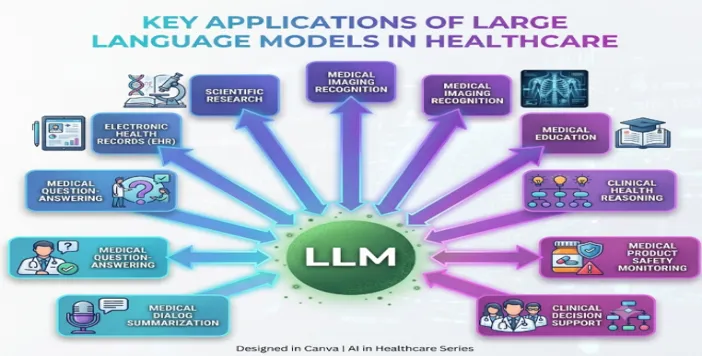
Fig.2.1 Applications of LLMs in Clinical Pharmacy Decision Support (diagram created using canva)
4. Opportunities and Benefits
Large Language Models offer significant advantages across clinical, operational, and educational domains in pharmacy practice. By automating data-intensive tasks and structuring complex medical knowledge, these tools enhance overall productivity and clinical decision-making. Table 2 outlines the primary opportunities provided by LLMs alongside their corresponding clinical benefits.
Table 2: Opportunities and Benefits of LLMs in Clinical Pharmacy Practice
Summary of clinical, operational, and educational benefits across healthcare domains.
|
Section |
Opportunity |
Clinical & Operational Benefits |
Citations |
|
4.1 |
Improved Workflow Efficiency |
Dramatically reduces time spent searching for drug parameters and medical literature, accelerating clinical decision-making and boosting pharmacist productivity. |
(28, 29) |
|
4.2 |
Enhanced Decision Support |
Synthesizes rapid evidence summaries and clinical guidance to complement pharmacist expertise, improving therapeutic decision quality in high-complexity cases. |
(30, 31) |
|
4.3 |
Increased Information Accessibility |
Bridges regional knowledge gaps by providing real-time, AI-assisted access to drug guidance and protocols for clinicians in resource-limited settings. |
(32, 33) |
|
4.4 |
Support for Personalized Care |
Analyses patient-specific profiles, laboratory values, and histories to help pharmacists tailor drug selections and dosing to individual clinical needs. |
(34, 35) |
|
4.5 |
Educational Applications |
Functions as dynamic interactive tools for pharmacy students and trainees by generating case studies, simplifying complex pharmacology concepts, and explaining guidelines. |
(36, 37) |
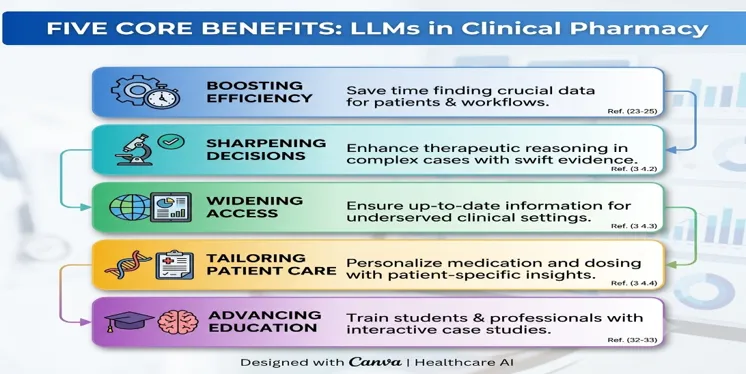
Fig.4.1 Opportunities and Benefits (diagram created using canva)
5. Ethical Concerns and Challenges
While large language models offer significant utility in clinical pharmacy, their integration into patient care workflows presents critical ethical, regulatory, and technical challenges. Addressing these limitations is essential to safeguard patient health, protect sensitive data, and maintain professional accountability.
5.1 Model Accuracy, Reliability, and Hallucinations
A primary limitation of LLMs is their propensity to produce plausibly written but factually incorrect or ungrounded outputs, commonly termed "hallucinations." In pharmaceutical care, unverified AI recommendations such as inaccurate dosing guidelines, unrecognized drug interactions, or erroneous contraindications can directly jeopardize patient safety and lead to severe clinical complications (1, 34).
5.2 Patient Privacy and Data Security
Clinical decision support systems routinely handle Protected Health Information (PHI) and sensitive patient data. Integrating LLMs into electronic health records introduces risks related to data breaches, unauthorized third-party access, and non-compliance with privacy regulations such as HIPAA and GDPR. Robust data anonymization and secure local deployment frameworks are mandatory to maintain ethical standards and regulatory compliance (4, 35).
5.3 Algorithmic Bias and Equity
LLMs inherit the implicit biases present within their underlying training datasets, which often reflect demographic, socioeconomic, or geographical disparities in healthcare representation. Consequently, model-generated recommendations may unintentionally propagate health inequities, leading to suboptimal care suggestions for marginalized or underrepresented patient populations (36, 37).
5.4 Transparency and the "Black-Box" Problem
The neural architectures of advanced transformer models operate as "black boxes," providing limited interpretability regarding how specific clinical conclusions or text generations are derived. This lack of algorithmic transparency makes it difficult for practitioners to audit AI reasoning, potentially undermining clinical trust and complicating diagnostic accountability (38, 39).
5.5 Professional Accountability and Liability
Attributing clinical responsibility when utilizing AI advice remains a complex legal and ethical challenge. While LLMs can generate point-of-care recommendations, ultimate professional and legal liability rests solely with the clinician. Pharmacists must maintain practice autonomy, utilizing model outputs strictly as consultative guidance while performing independent verification prior to implementation (40, 41).
5.6 Deskilling and Overdependence on Technology
Uncritical reliance on automated systems risks fostering cognitive offloading and clinical deskilling among healthcare providers. Over time, excessive dependence on algorithmic suggestions may dull critical reasoning and clinical intuition. Continuous human scrutiny and independent problem-solving skills remain essential for high-quality pharmaceutical care (5, 16).
5.7 Regulatory, Validation, and Legal Frameworks
The rapid pace of AI development has significantly outpaced the establishment of comprehensive legal frameworks and clinical validation standards. Standardized evaluation protocols, post-market surveillance mechanisms, and institutional governance guidelines are urgently required to ensure that healthcare LLMs meet strict safety and efficacy standards before widespread clinical deployment (42, 43)
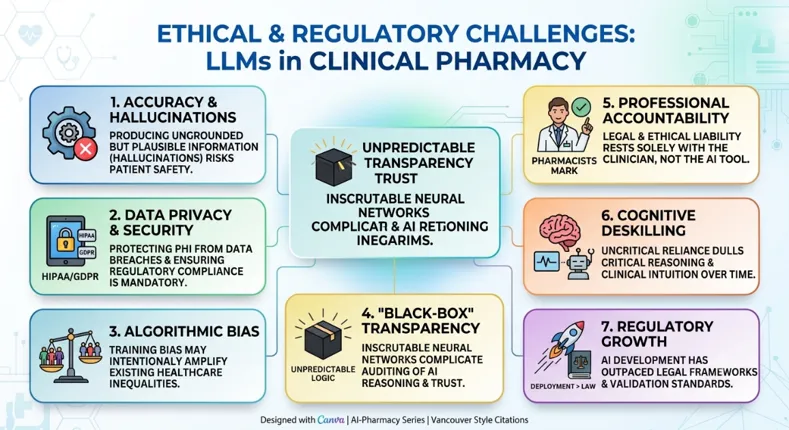
Fig.5.1 Ethical Concerns and Challenges (diagram created using canva)
6. Strategies for Responsible Implementation
The integration of Large Language Models into clinical pharmacy requires a robust, multidisciplinary governance framework to ensure patient safety, regulatory compliance, and ethical utility. To transition LLMs safely from theoretical models to point-of-care tools, healthcare institutions must prioritize rigorous clinical validation, secure data infrastructure, continuous human oversight, and ongoing workforce education.
6.1 Clinical Validation and Rigorous Benchmark Testing
Before clinical deployment, LLMs must undergo comprehensive pre-implementation testing to evaluate their diagnostic accuracy, therapeutic reliability, and clinical feasibility (44). Benchmarking should extend beyond standard natural language processing metrics to include real-world clinical performance evaluations, multi-centre trials, and adversarial testing for hallucination rates in complex pharmacotherapy scenarios.
6.2 Data Security, Governance, and Privacy Infrastructure
Protecting sensitive patient information requires healthcare organizations to establish robust cybersecurity protocols and stringent data governance policies. Deploying LLMs within HIPAA-compliant, locally hosted environments or end-to-end encrypted cloud architectures minimizes the risk of Protected Health Information (PHI) exposure, unauthorized third-party data access, and regulatory breaches (45).
6.3 Human-in-the-Loop Supervision and Clinical Autonomy
Continuous human oversight remains non-negotiable in AI-assisted pharmaceutical care. LLMs must function strictly as consultative support tools, with clinical decisions subject to final evaluation and authorization by a
Qualified pharmacist. Establishing clear "human-in-the-loop" protocols prevents automated bias propagation and ensures that professional judgment remains the primary driver of patient care decisions (46).
6.4 Professional Education and Workforce Training
Achieving institutional transparency and clinical efficacy requires comprehensive education for pharmacy practitioners and trainees. Training programs should focus on prompt engineering, critical evaluation of AI outputs, understanding algorithmic limitations, and recognizing underlying bias. Continuous professional development ensures that clinicians remain adept at navigating evolving AI technologies while maintaining high standards of care (44, 46).
6.5 Post-Deployment Surveillance and System Monitoring
Safe integration demands post-implementation monitoring to continuously track system performance, drift, and clinical outcomes. Real-time feedback loops and systematic auditing allow health systems to identify emergent errors, refine model outputs, and adjust clinical workflows promptly to prevent adverse events (45).
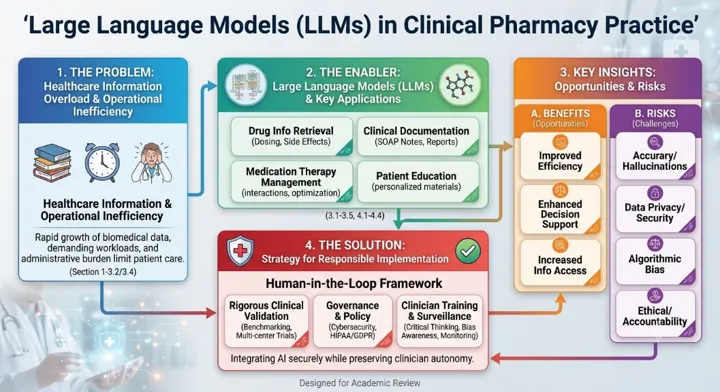
Fig.6.1 Strategies for Responsible Implementation (diagram created using canva)
7. Future Perspectives
The evolution of Large Language Models (LLMs) in clinical pharmacy is entering a pivotal phase, transitioning from standalone conversational interfaces to deeply integrated, autonomous clinical tools. Realizing the full potential of these technologies will require key advancements across technological, clinical, regulatory, and educational domains.
7.1 Multimodal AI Integration and Real-Time EHR Interoperability
Future healthcare LLMs will increasingly move toward multimodal architectures capable of simultaneously interpreting text, high-resolution diagnostic imaging, genomic profiling, and real-time physiological telemetry. Rather than processing static clinical notes in isolation, next-generation models will interface directly with Electronic Health Record (EHR) systems via standardized Fast Healthcare Interoperability Resources (FHIR) APIs. This seamless connectivity will enable real-time medication therapy management, automatically flagging drug-drug interactions, lab-drug incompatibilities, and dosing adjustments based on live organ function parameters at the bedside.
7.2 Retrieval-Augmented Generation (RAG) and Dynamic Knowledge Graphs
To resolve the critical challenge of AI hallucinations, future clinical LLMs will rely heavily on Retrieval-Augmented Generation (RAG) coupled with dynamic medical knowledge graphs. Instead of relying solely on parametric memory stored during training, RAG-enabled models actively query updated biomedical databases such as PubMed, Lexicomp, and clinical practice guidelines before generating responses. This architectural evolution ensures that therapeutic recommendations remain grounded in verified, real-time evidence, drastically reducing ungrounded outputs and improving clinical trust.
7.3 Multi-Agent Orchestration for Complex Care
Complex clinical scenarios often require input from multiple clinical sub-specialties. Emerging research points toward "multi-agent" AI frameworks, where specialized LLM agents acting as virtual pharmacotherapy specialists, oncology experts, renal dosing calculators, and drug safety monitors collaborate iteratively to evaluate a single patient profile. These multi-agent networks cross-examine each other's outputs before presenting a unified, synthesized pharmacotherapy plan for final pharmacist review.
7.4 Pharmacogenomics and Precision Dosing
As personalized medicine becomes standard practice, future LLMs will play a vital role in synthesizing complex pharmacogenomics data. Models fine-tuned on genomic and metabolic datasets will assist clinical pharmacists in interpreting genetic variants (e.g., CYP450 enzyme polymorphisms) to tailor drug selection, optimize dosage titrations, and minimize severe adverse drug reactions (ADRs) prior to therapy initiation.
7.5 Adaptive Regulatory Frameworks and AI Auditability
The rapid pace of AI evolution requires a shift from static approval models to dynamic regulatory surveillance. Future regulatory standards driven by bodies like the FDA, EMA, and WHO will likely mandate continuous post-market surveillance, standardized clinical benchmark suites, and "algorithmic nutrition labels" detailing training data provenance, bias metrics, and confidence thresholds. Furthermore, advances in Explainable AI (XAI) will render previously opaque "black-box" decision paths auditable, allowing pharmacists and legal bodies to trace the exact clinical logic behind automated recommendations.
7.6 Interprofessional Governance and Equity-Driven Deployment
Finally, successful AI integration hinges on multidisciplinary collaboration among clinical pharmacists, physicians, medical informaticians, AI developers, and policy makers. Future implementation strategies must prioritize healthcare equity, ensuring that models are rigorously benchmarked across diverse global populations to prevent the widening of socioeconomic health disparities. Ultimately, while AI will automate data synthesis and administrative workflows, the essence of clinical pharmacy ethical accountability, empathetic communication, and critical therapeutic decision-making will remain firmly centred on human expertise.
CONCLUSION
Large Language Models present transformative opportunities for clinical pharmacy decision support, offering capabilities across drug information retrieval, medication therapy management, patient counselling, documentation, evidence synthesis, and pharmacovigilance. By automating data-intensive tasks and processing complex clinical text at scale, these technologies can streamline operational workflows, strengthen evidence-based decision-making, and elevate the overall quality of pharmaceutical care.
However, realizing this potential requires addressing fundamental challenges regarding diagnostic accuracy, data privacy, algorithmic bias, model transparency, professional liability, and regulatory oversight. To ensure safe integration, healthcare LLMs must undergo rigorous clinical validation, adhere to strict data governance standards, and operate under robust human-in-the-loop supervision. When ethically deployed and critically evaluated, LLMs can serve as powerful tools to enhance medication safety, optimize patient outcomes, and advance patient-centred healthcare delivery.
REFERENCES


Rushikesh Desale, Trupti Cholera, Large Language Models in Clinical Pharmacy Decision Support: Opportunities and Ethical Concern, Int. J. of Pharm. Sci., 2026, Vol 4, Issue 9, 3074-3087, https://doi.org/10.5281/zenodo.22939232
 10.5281/zenodo.22939232