

We use cookies to ensure our website works properly and to personalise your experience. Cookies policy
Department of pharmaceutical analysis, RBVRR Women’s college of pharmacy, Barkatpura Hyderabad -500027, Telangana, India.
Proteome of a biological system can be analyzed using lc-ms based proteomics. Through enzymatic digestion, complex protein mixtures are broken down into smaller peptide fragments. These fragments are then segregated according to their physicochemical characteristics and subjected to mass spectrometry analysis. Liquid chromatography combined with mass spectrometry (LC–MS) combines the specificity and sensitivity of mass spectrometric detection with the high resolving power of liquid chromatography to overcome these difficulties. post-translational modification characterization, protein-protein interaction, assessment of differential protein expression across healthy and pathological situations are made by LC-MS-based proteomics. The combination of LC-MS data with bioinformatics tools and machine learning techniques has verification and revelation. To study structural and post-translational modification (PTM) information, LC–MS supports a variety of proteomic strategies, top-down proteomics, which analyzes intact proteins; middle-down approaches, which analyze large peptide fragments; and bottom-up proteomics, which breaks down proteins into peptides before analysis. By enabling comparative analyses protein expression under both healthy are pathological settings, LC-MS also plays a crucial role in quantitative proteomics through label-free analysis and isotope-based labeling techniques. Personalized medicine, medication target identification, disease mechanism research, and biomarker discovery are the applications. Recent advancements in computer analysis, sophisticated peptide separation techniques, and high-resolution LC-MS equipment have greatly improved the precision, sensitivity, and proteome studies. In clinical and pharmacological research, quantitative procedures like SILAC, iTRAQ, TMT labelling have improved comparative proteome profiling. These developments have strengthened the significance of LC-MS proteomics in precision diagnostics and biomedical research by
The 1990s saw the quick development of DNA microarray and genome sequencing technologies, which marked the beginning of the "omics" era in biology. Since transcriptomics made it possible to analyze gene expression on a broad scale, proteomics—which focuses on the thorough examination of a cell, tissue, or organism's entire protein complement—emerged as a logical development of transcriptomics. Proteomics is the study of how proteins work together in intricate biological networks and multiprotein systems, as opposed to analyzing individual proteins separately. Protein separation and comparative expression analysis were two common uses of two-dimensional gel electrophoresis (2-DE) in early proteomic studies. Using this technique, proteins are taken out of biological samples, separated on gels, and fractionated to get rid of impurities and very common housekeeping proteins that could obscure changes that are physiologically significant. 1
Variations in protein expression can be detected by differences in staining intensity between gels. Nevertheless, technical constraints have diminished the dependability of 2-DE, especially for complex protein combinations. These constraints include poor reproducibility, issues with spot matching, and difficulty with precise measurement. Even if spot detection and image processing techniques have advanced, 2-DE is no longer the recommended approach for large-scale quantitative proteomics. 2
Enzymatic digestion of proteins into peptides, post-digestion peptide separation to improve sample homogeneity, protein extraction from the biological sample, fractionation to eliminate contaminants and lessen the dominance of highly abundant proteins, and mass spectrometric analysis for identification and quantification are the main steps of a typical bottom-up experiment. Since it allows for thorough and high-throughput characterization of intricate biological systems, this integrated approach has emerged as the cornerstone of contemporary proteomics. 3
AIM: To determine the role of lc-ms in proteomics.
OBJECTIVES: Workflows for proteomics have changed as a result of developments in liquid chromatography combined with mass spectrometry (lc–ms). Lc-ms-based bottom-up proteomics analyzes proteins following enzymatic digestion into peptides, in contrast to top-down proteomics, which looks at intact proteins and works best with very basic samples.
OVERVIEW OF PRINCIPLE INVOLVED IN PROTEOMICS : Proteins are the main structural and functional elements of each cell. A functional protein is created by folding the linear sequence of amino acids that make up proteins. Genes included in a DNA molecule encode the amino acid sequence found in proteins. A gene's during the translation stage after it exits the nucleus. For cells to survive and function, information must be transferred from DNA to mRNA to protein. Microarray investigations quantify the transcribed mRNA abundance in genomic research to determine the levels of gene expression. 4 These measurements can reveal whether a gene is overexpressed, under expression, or absent under certain circumstances. However, for several reasons, including This includes alternative splicing and post translational modifications (PTMs). protein levels may not necessarily match mRNA levels. A codon encodes one amino acid in a protein. a three-nucleotide mRNA sequence. Because many codons might specify the same amino acid, the genetic code is said to be degenerating. Since it must first fold into its three-dimensional shape, The raw polypeptide chain, which is a chain of amino acids that makes up a protein, is not yet a functional protein. Additionally, proteins go through a number of PTMs that include the addition or removal of particular chemical groups, including phosphorilation, methylation, acetylation, glycosylation, etc. 5
PRINCIPLE FOR LC-MS: The principle of LC-MS proteomics depends on selective chromatographic separation, accurate mass detection, and database-driven spectrum interpretation. The combination of lc-ms based detection and molecular separation concepts 6. In order to detect and measure proteins in intricate biological materials, the method combines the analytical precision of mass spectrometry (MS) with the resolving power of liquid chromatography—LC.Following that, these peptides are separated using liquid chromatography based on their size, charge, and hydrophobicity, among other physicochemical characteristics.These ions' mass-to-charge (m/z) ratios are measured at the first stage (MS) by the mass spectrometer.In order to thoroughly examine the composition and abundance of proteins in biological systems. 7
INSTRUMENTATION : Mass spectrometry (MS) for detection and liquid chromatography (LC) for separation are the two main analytical systems that are integrated by LC–MS instruments via a specialized interface. In order to provide accurate, sensitive, and repeatable analysis of complex biological samples, each component is essential. 8
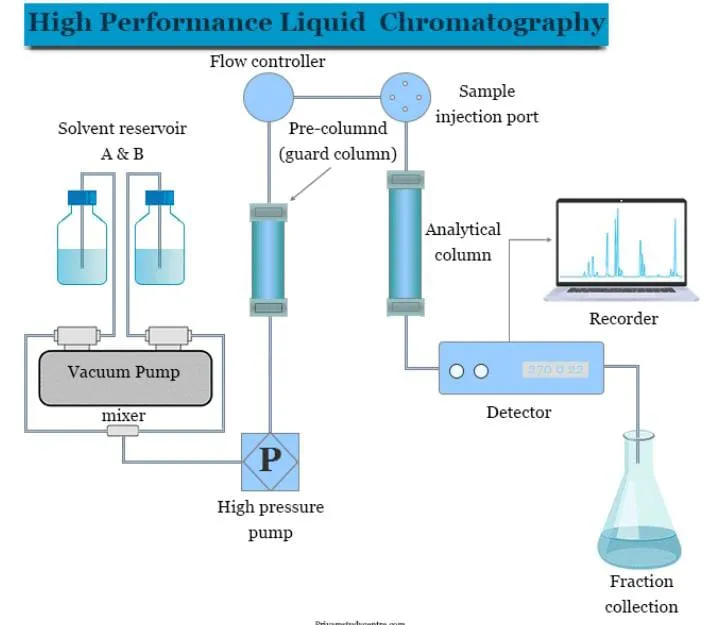
Figure no: 1 This image explains about Instrumentation of LC-MS (liquid chromatography – mass spectroscopy).
1) HPLC (HIGH PERFORMANCE LIQUID CHROMATOGRAPHY): Analytes must be separated by the LC unit before they may enter the mass spectrometer. This separation improves detection sensitivity and lowers sample complexity. 9
a) Reservoirs of Solvents: These containers contain the solvents used in the mobile phase, which are usually combinations of water, organic solvents (such methanol or acetonitrile), and modifiers like formic acid. The effectiveness of peptide retention and separation is influenced by the mobile phase's composition. 10
b) Degasser: Bubbles created by dissolved gases in solvents can interfere with the stability of the flow. To keep solvent pressure and flow constant, an online degasser eliminates air. 11
c) High pressure pump: Up to 10 mL/min of mobile phase volume is provided. Syringe, constant-pressure, and reciprocating pumps are the three main kinds that are utilized. 12
d) sample injector: It is employed to supplement the chromatographic system with a sample volume. A sample volume of one to one hundred microliters can often be injected. The injector loop can be used to boost the injection volume by up to 2 milliliter. Automatic and manual injectors are the two main types. Compared to manual injectors, automatic injectors are more precise, accurate, and user-friendly. 13
e)columns: The stationary phase, where separation takes place, is located in the column. Proteomics uses hydrophobic interactions with the stationary phase to separate peptides. The columns used in HPLC include octadecyl(C18), octyl(C8),cyano, amino and phenyl packings. 14
f) Recorder and detectors: Ion signals are separated by the mass analyzer and then recorded by the detector. Analyte quantity is correlated with the observed ion intensity. Data are transformed into mass spectra, which show signal intensities and m/z values. 15
2) MASS SPECTROMETRY: This analytical method determines the mass-to-charge ratio of ionic species related to the analyte being studied. Analytes can have their molecular mass and elemental content detected, as well as their structure completely clarified, using mass spectrometry (MS).16
a) Interfaces: The interface transforms liquid-phase analytes into gas-phase ions appropriate for mass analysis and links the LC and MS systems.17
b)Sources of Ionization: Analytes that elute are converted into charged ions by the ion source. Typical ionization methods consist of: Electrospray Ionization (ESI) is a soft ionization technique that creates multiple charged ions and is perfect for peptides and proteins. For smaller, less polar molecules, atmospheric pressure chemical ionization (APCI) is an appropriate method.MALDI, or matrix-assisted laser desorption/ionization, is frequently employed in imaging and specialized proteomics applications.18-19
c) Mass Analyzers: Ions are separated using the mass analyzer based on their mass-to-charge (m/z) ratios. Different kinds offer different levels of accuracy and resolution:Utilizing oscillating electric fields, the quadrupole is frequently employed for precise quantification.20
Time-of-Flight (TOF): Offers great mass accuracy and measures the duration of ion flight.
For sequential fragmentation, ions are captured by an ion trap.
A popular high-resolution analyzer in proteomics is Orbitrap.
Mass precision and ultra-high resolution are achieved with Fourier Transform Ion Cyclotron Resonance (FT-ICR).
Analyzers are combined in hybrid systems (like Q-TOF and Q-Orbitrap) to increase performance.
Sample Preparation Techniques: Protein Extraction: Chemical lysis, mechanical disruption, and enzymatic digestion are common methods for extracting proteins. To denature proteins and increase their solubility, chaotropic chemicals like urea and guanidine hydrochloride disrupt hydrogen bonds and protein folding. Lipid bilayers are broken down by detergents such as Triton X-100 and NP-40, which cause membrane lipids to break down and release the contents of cells 21. By breaking down cells or tissues with physical forces like sonication, homogenization, or grinding, mechanical disruption releases proteins into the extraction buffer. In order to facilitate further analysis, proteolytic enzymes such as trypsin, chymotrypsin, or proteinase K are used in enzymatic digestion to break down proteins into peptides.22-23
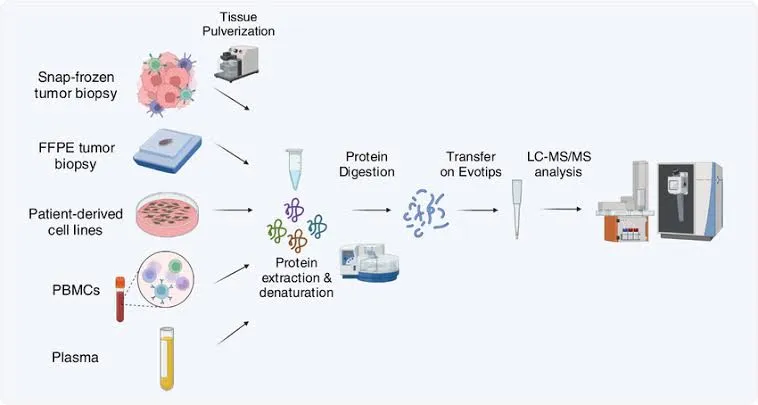
Figure no: 2 This image explains about steps in protein extraction.
Protein Digestion: Peptide bonds are selectively hydrolyzed, trypsin and other proteolytic enzymes are used to break down proteins, producing peptides with distinct ends and predictable patterns. Protein linkages at the carboxyl-terminal side of the amino acids of arginine and lysine are particularly broken by trypsin, resulting in fragments that are ideal for mass spectrometric examination. a serine protease, unless proline comes after them. Peptides with positively charged amino termini are produced as a result of this specificity, improving their ionization efficiency during MS analysis. Digestion efficiency and specificity are influenced by the ratio of digestion substrate to incubation duration.24-26
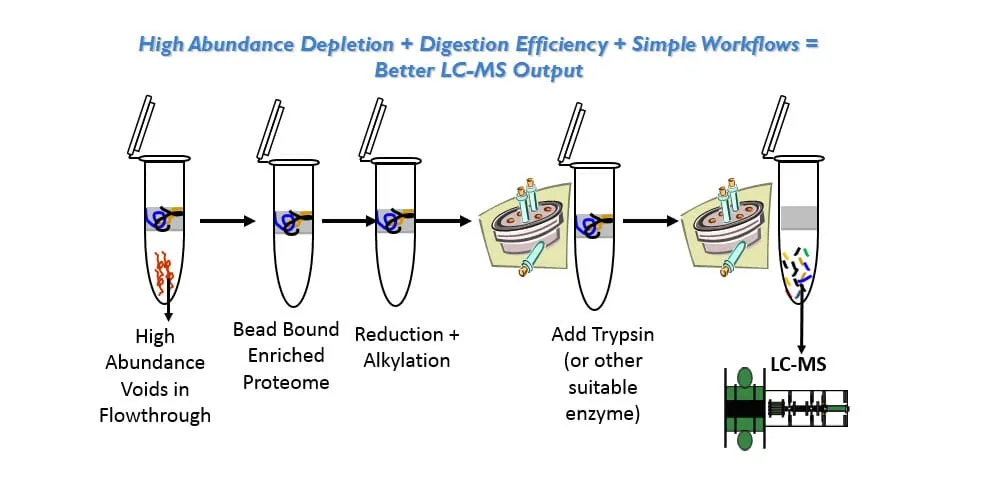
Figure no: 3 This image explains about steps in protein digestion.
Pre-Analytical Separation Techniques: Using gel-based techniques like two-dimensional polyacrylamide gel electrophoresis (2D-PAGE) and sodium dodecyl sulfate–polyacrylamide gel electrophoresis (SDS–PAGE), proteins are separated based on their isoelectric point and molecular weight, respectively. These methods make complex protein mixtures visible and enable initial resolution. Highly precise interactions between antibodies and their target antigens or between affinity ligands and tagged proteins are essential to immunoaffinity purification. This method extracts specific proteins or peptides from complicated mixtures and enriches them.27-30
Figure no: 4 This image explains about two-dimensional polyacrylamide gel electrophoresis
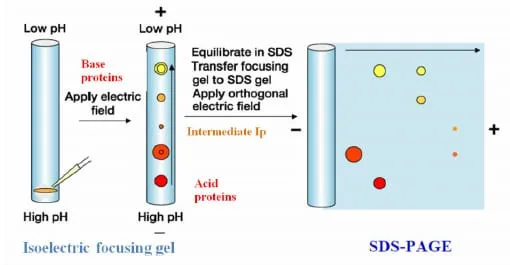
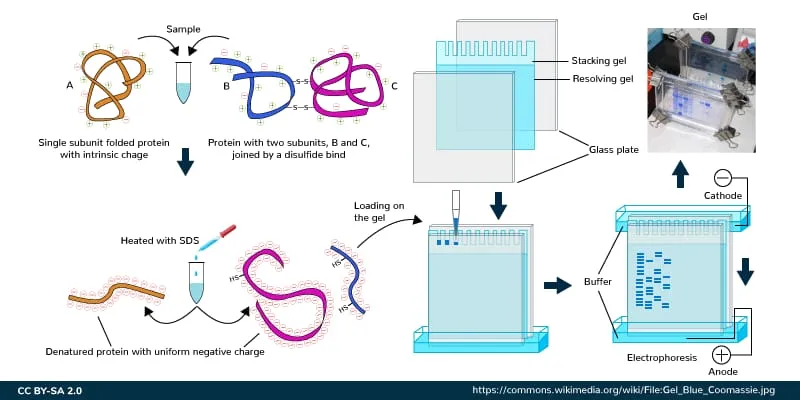
Figure no: 5 This image explains about sodium dodecyl sulfate–polyacrylamide gel electrophoresis (SDS–PAGE).
LC-MS WORKFLOW IN PROTEOMICS:
Chromatographic separations: In LC-MS-based proteomic operations, proteins are broken down enzymatically into peptides, which are subsequently separated using chromatographic columns filled with specific stationary phases. The most widely used approach is reversed-phase liquid chromatography, in which peptides are kept on a hydrophobic stationary phase and eluted using a gradient of increasing concentration of organic solvent; peptides that are more hydrophobic elute later than those that are less).Other methods of separation, like size-exclusion chromatography, hydrophilic interaction chromatography, and ion-exchange chromatography, separate molecules according to their size, polarity, and net charge, respectively.31,32
Mass Spectrometric Detection: The first analytical step in LC-MS-based proteomics is mass spectrometric detection, which makes it possible to precisely identify and quantify peptides and proteins. The mass spectrometer is where peptides are transformed into gas-phase ions following chromatographic separation, usually using soft ionization methods like electrospray ionization (ESI). These ionized peptides are subsequently moved into a high-vacuum system, which enables precise mass analysis by avoiding air molecule interference. Ions are sent into a mass analyzer inside the device, where their mass-to-charge (m/z) ratios are used to separate them. The instrument design—quadrupole, time-of-flight (TOF), ion trap, Orbitrap, or hybrid systems—determines the analyzer's mass accuracy, sensitivity, and resolution.33-34
Data Analysis and Interpretation: In LC-MS-based proteomics, data analysis and interpretation are the last and most computationally demanding phases. Chromatographic peaks, precursor ion masses, and tandem MS fragmentation spectra are among the vast amounts of raw spectrum data produced during mass spectrometric acquisition. It is necessary to use specific bioinformatics workflows to process, organize, and convert these raw data into biologically useful information. Data preprocessing, which includes noise reduction, baseline correction, peak identification, and alignment of retention periods over several runs, is usually the initial step. False discovery rate (FDR) estimation is one statistical validation technique used to reduce false positives and guarantee identification certainty. Understanding the biological roles of identified proteins is achieved by mapping them to cellular pathways,35 gene ontology categories, and interaction networks.In LC-MS-based proteomics, data analysis and interpretation are the last and most computationally demanding phases. Chromatographic peaks, precursor ion masses, and tandem MS fragmentation spectra are among the vast amounts of raw spectrum data produced during mass spectrometric acquisition. It is necessary to use specific bioinformatics workflows to process, organize, and convert these raw data into biologically useful information. Data preprocessing, which includes noise reduction, baseline correction, peak identification, and alignment of retention periods over several runs, is usually the initial step. False discovery rate (FDR) estimation is one statistical validation technique used to reduce false positives and guarantee identification certainty. Understanding the biological roles of identified proteins is achieved by mapping them to cellular pathways, gene ontology categories, and interaction networks.36
Proteomics in the Omics Revolution: Concepts and Experimental Strategies: Nearly every cellular function, including molecular transport, signaling, immunological defense, structural support, and catalysis, is carried out by proteins. Chemical changes that affect proteins' activity, localization, stability, and interactions include phosphorylation, glycosylation, acetylation, ubiquitination, and methylation. Pathological changes in many diseases, such as cancer and neurodegenerative disorders, result from particular modifications or structural variants rather than just changes in protein abundance. Top-down proteomics, on the other hand, examines whole proteins without first digesting them, allowing for the immediate identification of post-translational modifications and proteomics.37,38
PROTEIN IDENTIFICATION- One of proteomics' primary goals is protein identification, which is the act of identifying the proteins that are present in a biological sample. First, proteins are separated from cells or tissues and purified to get rid of impurities including lipids, salts, and nucleic acids. Trypsin, which cleaves proteins at particular amino acid sites to form predictable peptide fragments, is most frequently used to digest the purified proteins into smaller peptides for analysis. Protein identification heavily relies on bioinformatics. Experimental data can be accurately matched thanks to databases like Uniports, which provide curated protein sequences and functional annotations. To uncover the makeup of intricate proteomes, protein identification generally combines biochemical preparation, high-resolution mass spectrometry, and exacting computational analysis.39
PROTEIN QUANTATION: The two main techniques used in quantitative proteomics are label-free analysis and stable isotope labeling. Before liquid chromatography–mass spectrometry (LC–MS) analysis, proteins or peptides from control and experimental samples are combined after being differently tagged with non-radioactive isotopes using stable isotope labeling techniques. In order to introduce isotopic differences between samples, chemical labeling techniques like isotope-coded affinity tags (ICAT) preferentially target particular amino acid residues, most often cysteine residues.The process of metabolic labeling entails adding stable isotope-containing amino acids to proteins during cell growth, such as those enriched with nitrogen-15 (¹⁵N), carbon-13 (¹³C), or deuterium (²H).Another variant is enzymatic labeling, where proteins are broken down with either normal water (H₂¹⁶O) or isotopically labeled water (H₂¹⁸O) present. Its limitations include (i) the fact that it only includes two comparison groups; (ii) the challenges that come with adding new samples to an existing dataset; and (iii) the cost. iTRAQ is a more recent technique that doesn't have the cystine selective selectivity of ICAT and compares four treatment samples at once. Reporter and balance moieties are the two components of the isobaric labels used at the N-terminus by iTRAQ. Masses of 145 Da are consistently found for combined reporter and balance moieties.40-41
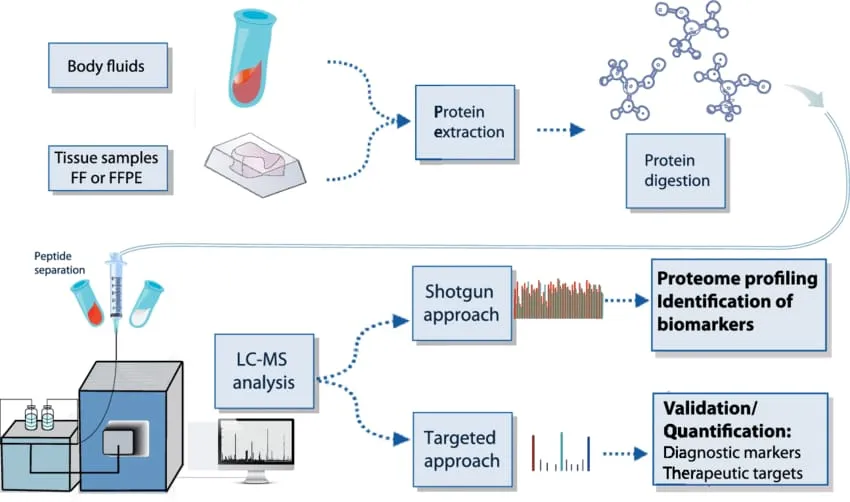
Figure no: 6 This image explains about protein identification and protein quantification.
Hybrid Instrumentation:Complementary technologies are combined in hybrid LC-MS equipment (such as Triple Quadrupole-Orbitrap and Quadrupole-TOF):The triple quadrupole offers superior quantitation.Orbitrap/TOF provides precise mass data with high resolution.In a single run, these combinations allow for both high-resolution structural insights and tailored quantification.42
Advanced Ionization Techniques:Modified interfaces and new ion sources have increased the applicability of LC-MS:improvements for improved ion yield by electrospray ionization (ESI).APPI, or atmospheric pressure photoionization, is used for non-polar substances.Surface-Assisted Laser Desorption (SALDI) and Desorption/Ionization on Silicon (DIOS) are two methods for challenging analytes.43
Software-Driven Data Acquisition and Interpretation: Modern LC-MS systems are powered by robust software that makes use of:algorithms for real-time decision-making, or "intelligent acquisition."automated deconvolution, peak identification, and annotation.machine learning to rectify spectra or forecast fragmentation.Data sharing and collaborative annotation between labs are made possible by cloud-based solutions. 44
Future Perspectives in LC-MS Technology: Artificial Intelligence (AI) and Machine Learning Integration: AI will be crucial for processing LC-MS data:predictive models for fragmentation and retention time.automated annotating that requires little human intervention.AI-driven approach optimization (gradients, collision energies, etc.).Complex non-targeted analysis will have fewer false positives thanks to machine learning.45
Deeper Integration with ‘Omics’ Technologies: LC-MS will become more compatible with transcriptomics, lipidomics, and genomics:platforms with many omics for systems biology.Integrated analysis using unified data models.Analytics across platforms to connect molecular control and function.46
Green and Sustainable Chromatography: Innovation will be fueled by sustainability: reduced use of solvents thanks to supercritical fluids and microfluidics.recycling as well as secure disposal methods.Hardware that uses less energy is more efficient.Green LC-MS will be in line with environmental goals around the world.47
Innovative and Quantum Detection Technologies: For increased sensitivity, use quantum enhanced detection.Unconventional physics in novel mass analyzers. Novel ion manipulation methods with almost no loss.
PROTEOMICS METHODS: TOP DOWN PROTEOMIC(TDP) METHOD, MIDDLE DOWN PROTEOMIC METHOD, BOTTOM UP PROTEOMIC METHOD
TOP- DOWN PROTEOMIC(TDP) METHOD: Top-down proteomics (TDP) is a sophisticated mass spectrometry-based method that analyzes intact proteins without first breaking them down into peptides by enzymes.TDP allows for accurate characterisation of the protein's precise molecular mass, sequence variations, and post-translational modifications (PTMs) while maintaining the protein's entire molecular structure during analysis.For researching protocorms, which are unique molecular forms of a protein resulting from chemical changes, alternative splicing, or genetic diversity. The extraction of intact proteins in a state that preserves their native or nearly natural state usually starts the TDP procedure.In order to research phosphorylation, acetylation, glycosylation, and other changes that control protein function and cellular signaling cascades, this skill is essential.It provides direct proof of proteoform composition by removing any ambiguity in the reconstruction of proteins from peptide fragments.In fields including precision medicine, structural biology, and biomarker identification, top-down proteomics has grown in significance.48,49
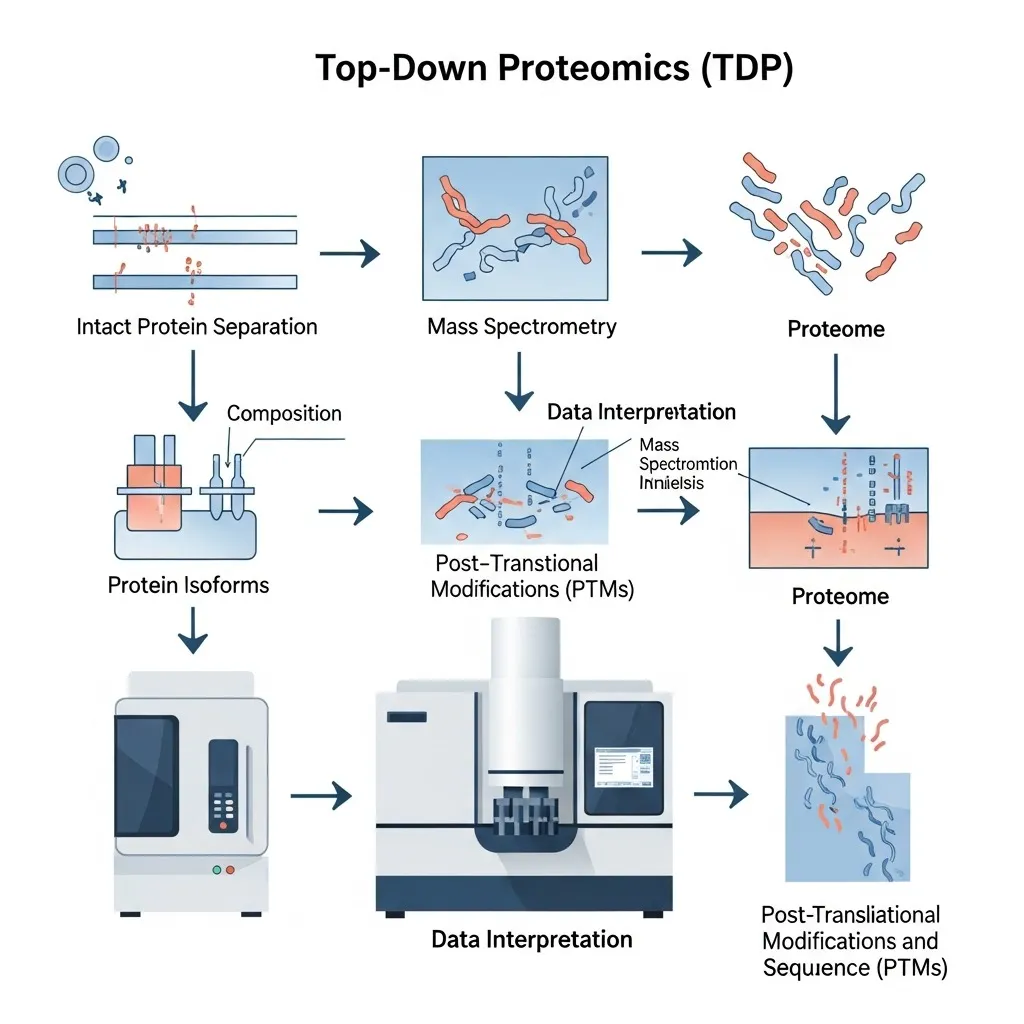
Figure no: 7 This image explains about top down proteomics.
MIDDLE- DOWN PROTEOMIC METHOD: By exposing proteins to restricted or regulated enzymatic digestion, this technique produces polypeptide fragments, which are usually smaller than full-length proteins but larger than ordinary tryptic peptides.A balanced method that enhances sequence coverage and post-translational modification (PTM) mapping without the technical complexity sometimes associated with full top-down analysis is thus provided by middle-down proteomics.To produce longer peptide fragments, proteases with broader or alternate cleavage specificity, such Glu-C or Lys-C, may be utilized in place of full digestion using highly specific enzymes like trypsin.It improves confidence in differentiating closely related isoforms and aids in the correct localization of changes.By making it possible to map protein sequences and alterations more thoroughly than bottom-up techniques while yet being more useful than complete top-down methods, The study of protein regulation, signaling cascades, and disease-associated molecular alterations has made it a crucial approach.50-51
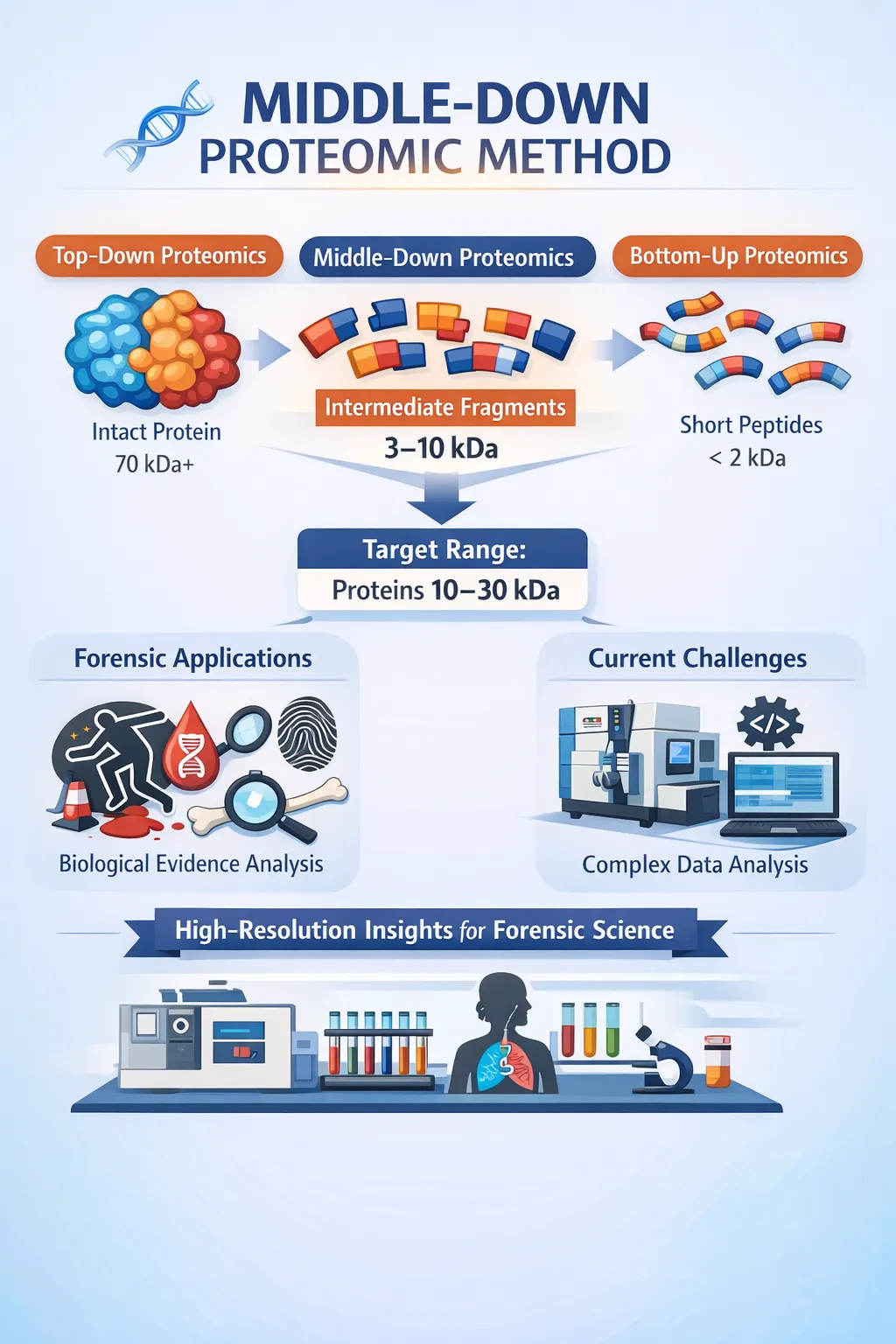
Figure no: 8 This image explains about middle down proteomics.
BOTTOM-UP PROTEOMIC METHOD: whole proteins are enzymatically broken down into smaller peptide fragments. denaturation to unfold protein structures, reduction to break disulfide bonds, and alkylation to stop their reformation when proteins are extracted from cells, tissues, or biological fluids. After that, the proteins are broken down by sequence-specific proteolytic enzymes like trypsin, which cleaves the carboxyl side of arginine and lysine residues to produce peptides that have the right size and charge for mass spectrometric measurement. After being separated via high-performance liquid chromatography, these peptides are added to a mass spectrometer. Protein identification in bottom-up proteomics is accomplished by employing specialized bioinformatics tools to compare theoretical spectra produced from protein sequence databases with empirically observed peptide mass spectra. It is possible to quantify utilizing label-free techniques that compare signal intensities between samples or label-based techniques such stable isotope labeling. The precise combinations of post-translational modifications and information regarding intact protein isoforms may occasionally be lacking because proteins are inferred from peptide data.52
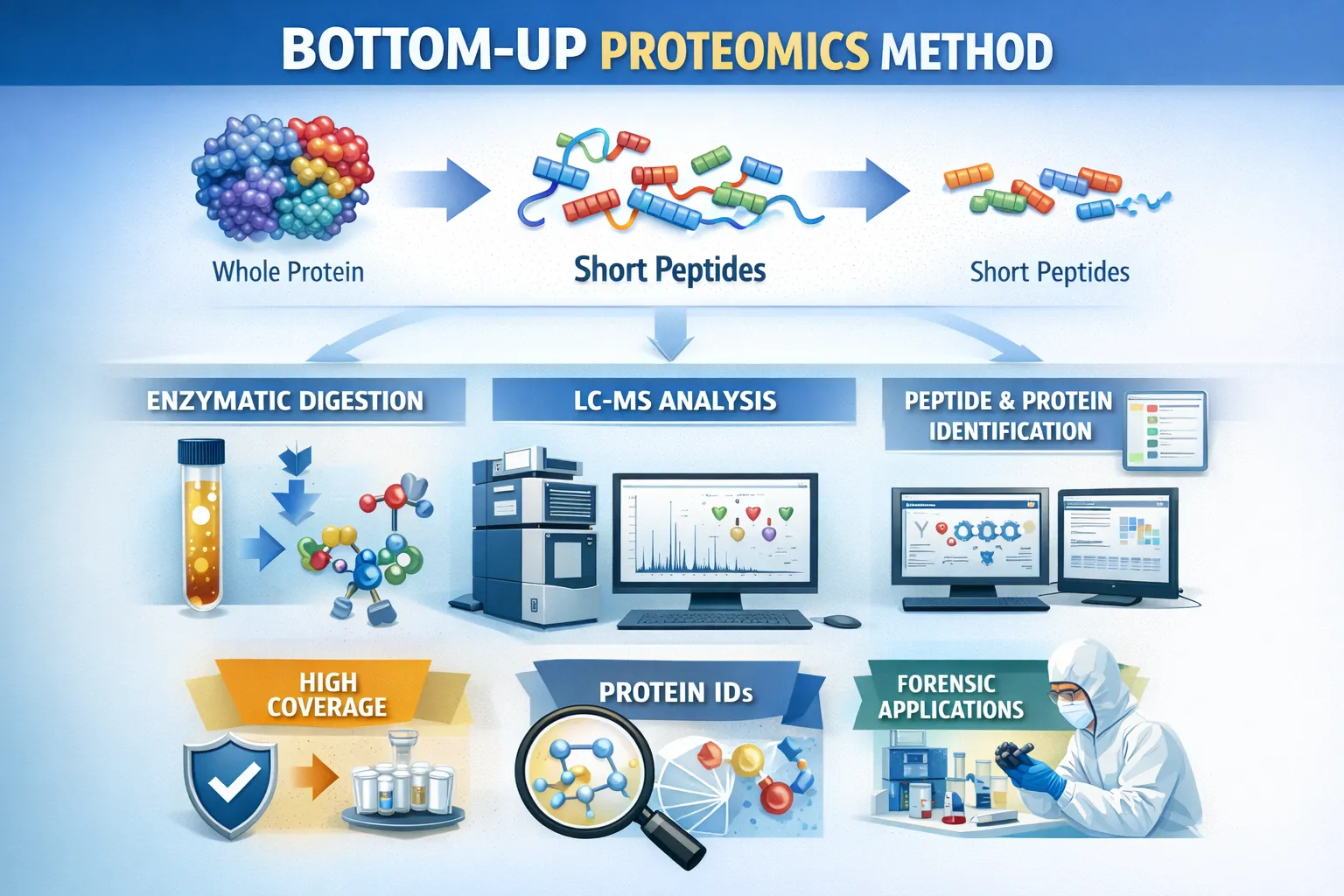
Figure no: 9 This image explains about bottom up proteomics.
CASE STUDIES BASED ON LC-MS IN PROTEOMICS:
CASE STUDY 1: Electrospray LC-MS for Peptide Sequencing, Mann & Wilm & et al (1994):Mann and Wilm showed that peptides from enzymatically digested proteins may be consistently analyzed using electrospray ionization (ESI) in conjunction with LC-MS. Their work established ESI-LC-MS as a useful tool for proteome studies and greatly increased the sensitivity and accuracy of protein identification.54
CASE STUDY 2:Washburn, Yates, and Wolters et al (2001) - MudPIT Technology: By combining tandem MS with reverse-phase LC and strong cation exchange, these researchers developed multidimensional protein identification Technology(MUDPIT). This method revolutionized shotgun proteomics by enabling the large scale identification of proteins from complicated mixtures without the need for prior gel separation.56
CASE STUDY 3:Ong et al. (2002): Quantitative Proteomics using SILAC: stable isotope labelling by amino acids in cell culture (SILAC) was created by Ong and associates in conjunction with LC–MS. Comparative proteomics was advanced by the accurate assessment of protein expression variations across cell groups made possible by this metabolic labeling technique. 53
CASE STUDY 4: Aebersold and Mann& etal (2003): Mapping the Proteome at Large Scale: They laid the foundation for systems-level proteomic research by demonstrating how LC–MS procedures could methodically identify thousands of proteins in biological samples.56
CASE STUDY 5:The Study of Protein vs. mRNA Expression by Gygi et al. (1999):Gygi and colleagues found a limited association between mRNA abundance and protein levels using LC–MS analysis in yeast, highlighting the importance of proteomics for precise biological interpretation.55
CASE STUDY 6: MaxQuant Software, Cox & Mann et al (2008):MaxQuant is a computer platform for high-resolution LC-MS data analysis that was created by Cox and Mann. It allowed for trustworthy label-free quantification and improved the accuracy of peptide identification.57
CASE STUDY 7: Gillet and colleagues et al (2012)—SWATHDIA/MS: with the introduction of data-independent acquisition (SWATH-MS), Gillet enhanced the quantitative consistency and repeatability of LC-MS experiments, particularly for clinical research.54
CASE STUDY 8: Nagaraj et al. (2011): Deep Profiling of the Human Proteome: By identifying more than 10,000 proteins in human cells using sophisticated high-resolution LC–MS equipment, our researchers greatly increased proteome coverage.58
CASE STUDY 9: Kim et al. (2014): Human Proteome Map Draft:Kim and colleagues contributed to international proteomics efforts by creating one of the first thorough drafts of the human proteome utilizing large LC-MS datasets.55
CASE STUDY 10: Cancer Phosphoproteomics, Zhang et al. (2013):This work used LC-MS to uncover signaling pathways implicated in the progression of cancer by characterizing phosphorylation patterns in tumor cells.57
CASE STUDY 11: Ovarian Cancer Biomarkers by Nilsson et al. (2010):In order to find potential biomarkers for the early identification of ovarian cancer, Nilsson and associates employed LC–MS plasma proteomics.58
CASE STUDY 12: Liu and colleagues (2014): Proteomics of the Heart:Liu's team used label-free LC-MS quantification to investigate variations in protein expression linked to heart conditions.54
CASE STUDY 13: Neurodegenerative Protein Interactions, Richards et al. (2015)Protein–protein interactions in neurodegenerative diseases were examined in this work using LC–MS-based interactome analysis.59
CASE STUDY 14 Bekker-Jensen and colleagues published High-Speed Orbitrap Proteomics et al (2017):The researchers used cutting-edge Orbitrap technology to enhance LC–MS procedures, allowing for quick, highly sensitive protein identification that is appropriate for clinical samples.60
CASE STUDY 15: Meier et al. (2018) Ion Mobility and timsTOF Pro:By combining LC-MS with trapped ion mobility spectrometry, Meier improved the sensitivity, speed, and depth of proteome investigations on a broad scale.56
CONCLUSION
The proteomics, LC-MS, or liquid chromatography–mass spectrometry, has established itself as a crucial instrument, revolutionizing the identification, measurement, and characterization of proteins in intricate biological systems. Through the combination of mass spectrometry's accuracy and sensitivity and liquid chromatography's high separation efficiency, LC-MS for the through the examination of thousands of proteins in a single experiment. LC-MS is essential for translational and clinical applications in addition to basic research. It supports efforts in therapeutic monitoring, drug target validation, biomarker identification, and personalized medicine. Combining cutting-edge bioinformatics tools with machine learning algorithms has improved biological knowledge and repeatability while fortifying data interpretation. Peptide sequences, complete proteins, structural variations, and post-translational changes can all be studied using the variety of proteomic methodologies that LC-MS offers, including top-down, middle-down, and bottom up approaches. It has greatly improved our knowledge of protein function, signaling pathways, and regulatory processes by detecting minute molecular changes. Its value is further increased in comparison studies of healthy and pathological states by its quantitative capabilities, which are attained using label-free approaches and stable isotope tagging techniques.
ACKNOWLEDGEMENT
Thankyou RBVRR women’s college of pharmacy for giving me this opportunity.
REFERENCES

C. A. Ranjani, P. Revathi, Khagga Bhavyasri, LC–MS-Based Proteomics: Analytical Strategies, Technological Advances, and Biomedical Applications, Int. J. of Pharm. Sci., 2026, Vol 4, Issue 7, 5316-53, https://doi.org/10.5281/zenodo.21672478
 10.5281/zenodo.21672478