

We use cookies to ensure our website works properly and to personalise your experience. Cookies policy
Department of Pharmacy. Lokmanya Tilak Institute of Pharmacy, Kharghar, 410210, Maharashtra, India.
Alzheimer’s disease (AD) is basically an age?related neurodegenerative condition where cognitive abilities keep slipping, and with that memory problems arise , language troubles occur, and changes in behavior that seem to get worse bit by bit, over time. Medicinal plants have been used for ages in traditional medicine, and lately people are even more interested in plant based, bioactive compounds, mainly for possible neuroprotective effects. Black turmeric (Curcuma caesia Roxb.), which is a medicinal plant from the Zingiberaceae family, has been used traditionally for quite different therapeutic needs, and it has also started getting attention in scientific studies because it carries a broad set of phytochemical constituents. Research so far has offered evidence for the pharmacological effects of Curcuma caesia, including antidepressant, analgesic, anticonvulsant, and antioxidant activities. The present work looks at the bioactivity of its essential oil and several solvent?partitioned fractions with different polarities, in terms of possible anti?amnesic, anxiolytic, and antidepressant potential, using the Elevated Plus Maze and Morris Water Maze models. All of these black turmeric properties suggest a possible role in neuroprotection,and maybe in dealing with neurological disorders, too.
Alzheimer’s disease is, basically a progressive neurodegenerative condition and it keeps increasing over time. Most people identify it by dementia being the main symptom, where the patient shows a steady drop in cognitive function—especially memory, plus learning, reasoning, and also behavioural skills ,which can become quite noticeable. The World Health Organization (WHO) says that in 2021 around 57 million people were living with dementia worldwide, and close to 10 million new cases show up each year. In India the share of older adults has been rising, and that has pushed the dementia load higher. A national level work using the Longitudinal Ageing Study in India (LASI) data estimated that about 7.4% of people aged 60+ live with dementia, meaning nearly 8.8 million individuals are affected [1-5]
Alzheimer’s disease (AD) is the most usual kind of dementia, making up roughly 60–70% of all dementia cases. The decline in central cholinergic neurotransmission, particularly acetylcholine (ACh) levels, resulting from neurodegeneration, is considered a major neuropathological feature of Alzheimer's disease (AD). AD is a progressive neurodegenerative disorder classified into two major forms: familial and sporadic. Familial Alzheimer's disease is characterized by an early age of onset and is associated with genetic mutations in the amyloid precursor protein (APP), presenilin-1 (PSEN1), and presenilin-2 (PSEN2) genes. In contrast, sporadic Alzheimer's disease is more common and generally manifests at a later age. Its development is associated with several factors, including ageing, mitochondrial dysfunction, insulin-dependent diabetes mellitus, environmental influences, and nutritional factors. Although the pathological cellular changes progress gradually in sporadic Alzheimer's disease, genetic mutations contribute to an accelerated disease progression in familial Alzheimer's disease. [2-5,43]
The illness can actually last for decades, and it advances gradually [1]. People often report symptoms like apathy, odd motor behavior, problems with sleeping or eating, anxiety, violence, euphoria, and of course memory trouble. As for treatment, N-methyl-d-aspartate and acetylcholinesterase inhibitors are used, such as galantamine, donepezil, rivastigmine. Receptor antagonists like memantine are more for later-stage features. These medications can slow down disease advancement, but they still do not give a final, definite cure [1,6-9]
Now, turning to Indian Traditional medicine, a well known herb, Curcuma caesia Roxb., is commonly called Black Turmeric. It comes from the family Zingiberaceae and is traditionally valued for its medicinal properties, with possible brain-tonic type effects. It has gotten scientific attention too, mostly due to potential neuropharmacological actions—especially memory-improving, neuroprotective, antioxidant, and acetylcholinesterase-inhibitory effects. Its rhizomes include multiple bioactive phytoconstituents, such as sesquiterpenes and essential oil components, which might support its effects on the central nervous system. So, the current review is basically putting forward the idea that black turmeric could also act as a memory enhancer, and it may be relevant as a therapeutic candidate in neurodegenerative disorders, in particular Alzheimer’s disease.
Plant Profile
Kingdom: Plantae
Subkingdom: Viridaeplantae
Phylum: Tracheophyta Sinnott
Subphylum: Euphyllophytina
Class: Magnoliopsida “monocotyledons” “commelinids”
Order: Zingiberales
Family: Zingiberaceae
Subfamily: Zingiberoideae
Tribe: Hedychieae
Genus: Curcuma
Species: C. caesia Roxb
Other Species of Black Turmeric
Curcuma aromatica Salisb.
Curcuma aeruginosa Roxb.
Curcuma amada Roxb.
Curcuma longa L.
Curcuma zanthorrhiza Roxb.
Vernacular names [10]
Hindi: Kali Haldi,
Manipuri: Yaingang Amuba
Marathi: Kala-haldi
Kannada: Kariarishina,
Bengali: Kala Haldi
Mizo: Aihang, Ailaihang
Telugu: Nalla Pasupu
Assamese: Kala Haladhi
Nepalese: Kaal Hardi
Geographical Distribution of Curcuma caesia
Black turmeric (Curcuma caesia Roxb.) comes from Northeast and Central India, and in Asia people have a long standing respect for its medicinal properties. It usually manages pretty well in warm , wet places and it can keep going in humid deciduous forests too, especially when sandy or clay-loam soils show up, and particularly when the ground is full of humus. In India, you’ll tend to notice it more in Chhattisgarh, Madhya Pradesh, Odisha, Uttar Pradesh, and West Bengal. It is typically spread using short thick underground rhizomes, and under the right conditions it can reach roughly 4,000 feet above sea level. [10,11]
2. Taxonomy and Morphology of Curcuma caesia
Curcuma caesia Roxb. is one of those plants that is included in Kingdom Plantae, and then, more specifically in the subkingdom Viridaeplantae. If you follow the taxonomy it gets placed in the phylum Tracheophyta Sinnott, and the subphylum Euphyllophytina. After that it goes into the class Magnoliopsida, and yeah this is the part connected with monocotyledons and commelinids, then it’s ordered as Zingiberales. From there it gets stored in the family Zingiberaceae, subfamily Zingiberoideae, tribe Hedychieae, and finally the genus is Curcuma. The scientific name is Curcuma caesia Roxb. and that’s, pretty much the end of it. People also use different common names depending on where they are located. In Nepal it’s often said as Kaalo Beshar or Kaalo Haledo, and in Sanskrit the listings go like Rajani, Nishaa, Nishi, and Raatri. In India and Bangladesh, it is known as Kala Haldi, while in English you’ll usually hear Black Turmeric. [10-16]
Black turmeric is a perennial herb and it typically grows to about 0.5–1.0 m, roughly. The habit is kind of characteristic: there’s this bigger underground ovoid tuberous rhizome, plus an erect shoot above the ground that supports leaves and flowers. The rhizome itself is around 2–6 cm across, it’s sessile and also laterally flattened, with warty, kinda rough like surfaces and root scars. On the surface you can notice circular patterns made by scaly leaf remnants, almost like growth rings, if you look closely. [10,11,13-16]
The leaves are oblong-lanceolate, and you see that ferruginous-purple median part, while the petioles are ivory-coloured. The inflorescence starts off as a dense spike at first, before the leaves are completely spread out. It has green bracts and also deep-pink coma bracts, then gradually these bracts shift toward crimson. The flowers are on the small side, and they look pale yellowish-pink overall. Each flower has a calyx about 10–15 mm long, plus a long tubular corolla. The floral lip is pale yellow, semi-elliptical, and split into three lobes. [10,11,13-16]
So basically, Curcuma caesia tends to be recognized because of that special underground ovoid rhizome, the erect aerial shoot, the leaf coloration, and those specialized floral details. These morphological and anatomical features, honestly help a lot with description and identification of the species. [10,11,13-16]
| Figure 1. Leaves of Curcuma caesia | Figure 2. Rhizomes of Curcuma caesia |
|---|
Morphological Characters
Curcuma caesia Roxb., which people commonly call black turmeric, is a perennial, upright plant, basically rhizome-bearing, and it sits in the Zingiberaceae family. Usually it grows somewhere about 0.5–1.0 metres tall, depending on habitat it can look a bit different but yeah. It has an underground tuber like rhizome, broad leaves and that inflorescence is kind of noticeable so the whole plant stands out, not just the leaves. [10,11,13-16]
Rhizome
The rhizome stays under ground, is kind of tuberous, ovoid, though in shape it can be a little irregular overall. The outer covering looks brownish, while inside it turns bluish-black, sometimes described like dark violet. In size it is often around 2–6 cm across. Inside there are essential oils, plus several bioactive phytocompounds, and those are thought to tie in with the medicinal effects. [10,11,13-16]
Stem
From that underground rhizome, the plant forms an erect aerial shoot, and that shoot carries leaves as well as flowers. [10,11]
Leaves
The leaves are broad and oblong-lanceolate, with a deep red-violet midrib, or sometimes ferruginous-purple, running straight down the center. The petioles are usually ivory-coloured , like a pale off-white, nothing flashy. [10,11,13-15]
Flowers and Inflorescence
The inflorescence is typically a dense spike, and it appears before the leaves actually show up. There are green bracts together with deep-pink coma bracts, which later shift toward crimson while they mature. The flowers themselves are pale yellowish, so the bracts kind of do the heavy visual work. [10,11,13-15]
Roots
The plant has fibrous adventitious roots that come out from the underground rhizome. [10,11] It is green with a ferruginous tinge, and the flower petals can be deep pink or red. It is perennial herb with blue to black rhizome. The rhizome are mostly tuberous in nature and has a sweet smell [10,11]
Microscopy
The transverse section (T.S.) of the rhizome of Curcuma caesia looks triangular to circular in outline and it shows the usual monocotyledonous anatomical structure. The outermost layer, called the epidermis, is one layer of thick-walled cells, and it’s covered by a well-developed cuticle. These epidermal cells are tightly packed and act like protection for the tissues underneath. After the epidermis, the cortex includes roughly three to five layers of thick-walled collenchymatous and parenchymatous cells, that basically make the ground tissue and mainly serve storage. The endodermis is not strongly developed, so it forms an indistinct line between the cortex and the central vascular part. The pericycle has clearly defined cells, compact and radially arranged beneath the endodermis. The vascular bundles are conjoint, collateral, and scattered through the ground tissue. The xylem has vessels plus xylem parenchyma, while the phloem includes sieve tubes and phloem parenchyma.[40] The transverse section (T.S.) of the leaf of Curcuma caesia shows a typical monocotyledonous anatomical layout with an isobilateral arrangement. The upper and lower epidermal layers look similar, both having a single layer of compactly arranged cells and each covered with a distinct cuticle. Stomata occur on both surfaces, so it behaves as amphistomatic. The mesophyll isn’t clearly split into palisade and spongy parts; instead it’s made of compactly arranged parenchymatous cells holding chloroplasts. Oil cavities are scattered through the mesophyll, with well-defined boundaries, and secretory epithelial cells that produce and store essential oils. The vascular bundles are conjoint, collateral and closed, and they’re distributed through the mesophyll. Each vascular bundle contains xylem and phloem, with xylem oriented toward the upper epidermis and phloem toward the lower epidermis. These vascular bundles are usually surrounded by a bundle sheath and linked with sclerenchymatous tissues, which help give mechanical support to the leaf. [41]
3. Ethnopharmacology and uses of Curcuma caesia
The Curcuma genus, including Curcuma caesia, has been used for ages now for its nutritional as well as medicinal “goodness”, kind of. At first it was indigenous communities who relied on it, and later modern people started to notice it too, bit by bit. For C. caesia, the rhizome has a kind of special place in Ayurveda, because it ties in with therapeutic action and useful medicinal constituents. The leaves and stalks are often thrown into salads, soups or even brewed teas, for those supposed health upsides, while the dried rhizomes get processed mainly into powder then mixed into dishes to boost flavour, plus nutritional value. Also, when the rhizomes are boiled they are used as a nutritional tonic, and traditionally people drink it in order to back up the immune system. On top of that, C. caesia is viewed as a plentiful source of essential mineral items like iron, potassium , and sodium. [7,10,11]
Phytochemical and bioactive compound of curcuma caesia
Black turmeric has a whole bunch of chemical constituents, like alkaloids terpenes and also amino acids , carbohydrates, tannins. Then there are flavones, flavonoids , steroids , reducing sugars proteins, anthraquinones, glycosides, even cardiac glycosides too. When it comes to the rhizome essential oil, it looks like there are around 30 components, and together they account for about 97.48% of the entire oil. If you break it down the main parts are pretty clear, camphor is listed first at 28.3%, then ar-turmerone at 12.3% (Z)-ocimene 8.2% , ar-curcumene 6.8%. After that, 1,8-cineole comes in close to 5.3%, elemene 4.8%, borneol 4.4%, bornyl acetate 3.3% and curcumene shows up at 2.82%. Overall, these phytochemical components seem tied to the plant medicinal potential, and also a lot of biological activities. [7,10,11,14,17,18] shown in Table No .1 and Phytochemical structure shown in Table No .2
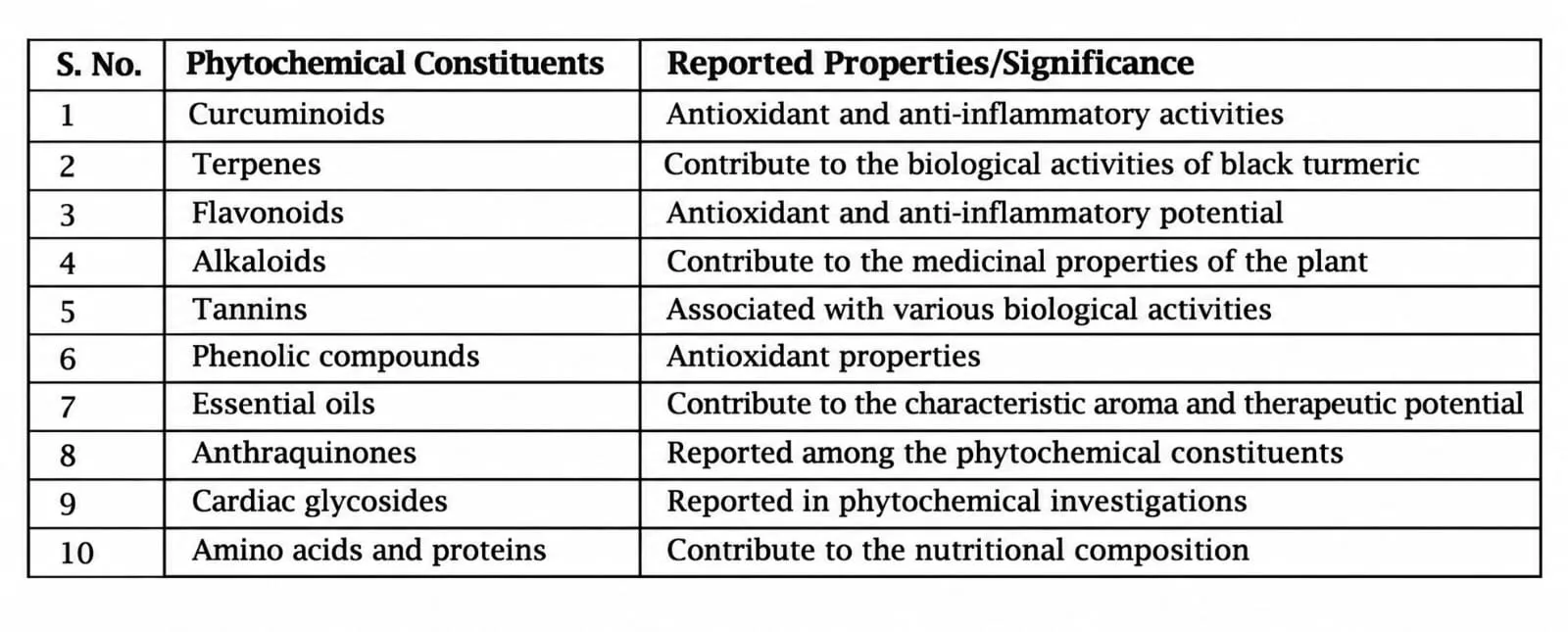
Table 1: Bioactive and Phytochemical Constituents of Black Turmeric
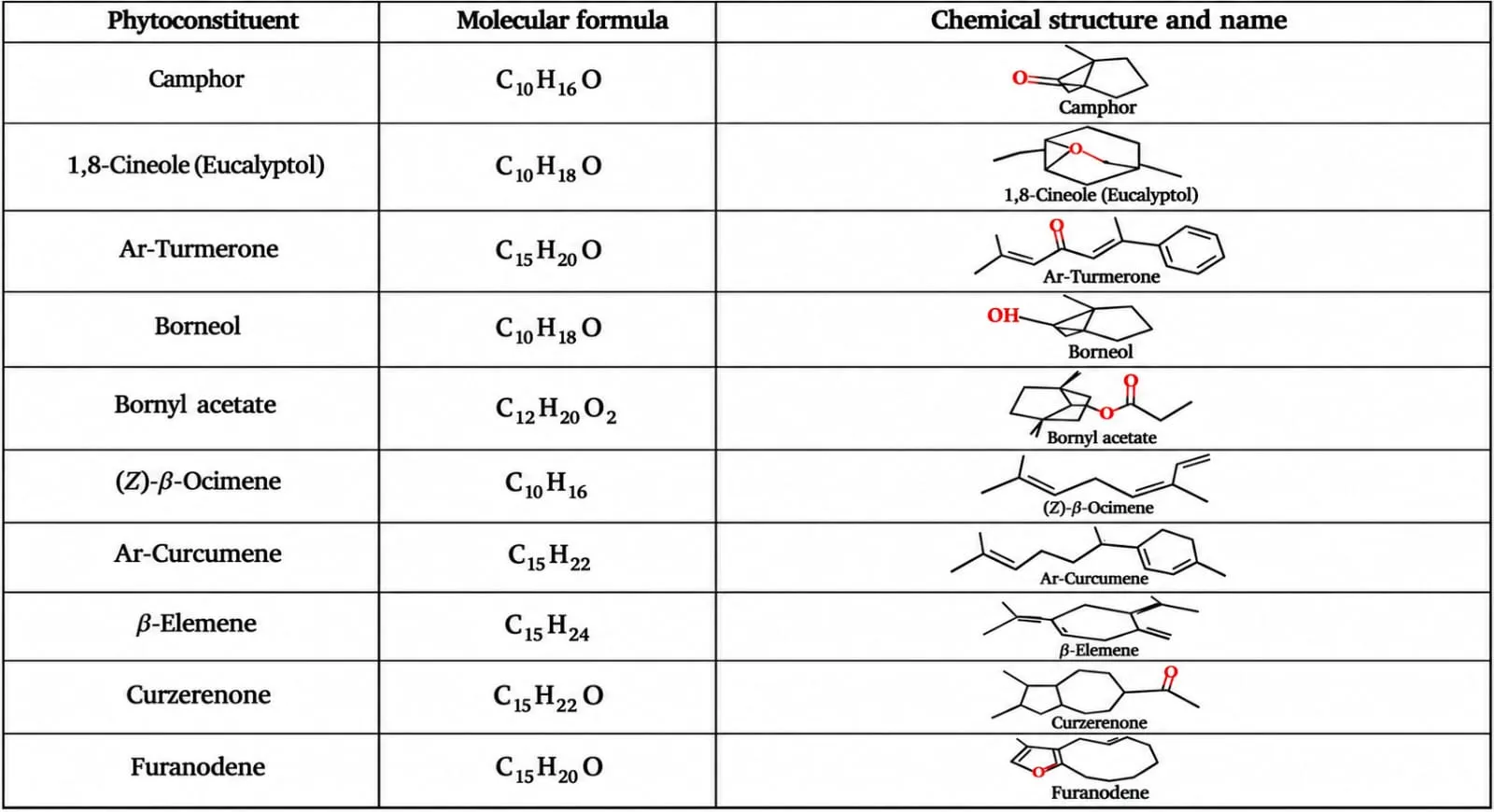
Table 2: Major Phytoconstituents of Black Turmeric (Curcuma caesia) and Their Chemical Structures (2D Skeletal Structures)
4. Neuropharmacological Properties of Black Turmeric
Analgesic Activity
Analgesics give relief from pain, without making a person unconscious , or anything like that. In one study, the methanolic extract of C. caesia showed both peripheral and central analgesic action in mice, using the acetic acid writhing method and the hot plate test, kinda similar overall. When the dose was 100, 200 , and 400 mg/kg, it decreased the number of writhes by 11.94%, 22.38% and 31.34% respectively. At the same time it made the pain response time longer , in a clear dose dependent way, (p < 0.001). Analgesic activity was not just seen in those tests, it was also noticed in tail flick assays. The bioactive stuff, like alkaloids, flavonoids, phenols, saponins and tannins could be part of why this happens. Curcumin too was reported to lessen thermal hyperalgesia and mechanical allodynia, probably by tweaking inflammatory mediators. [19,20]
Anticonvulsant, Muscle Relaxant, and Locomotor Depressant Activity
Hydroalcoholic C. caesia extract showed a kind of muscle-relaxant action in respiratory bronchioles, and also in the vasculature,maybe via blocking intracellular calcium discharge, plus reducing extracellular calcium entry. The methanolic rhizome extract, on the other hand really did cut down locomotor activity in a significant way , and it also helped protect mice from PTZ- induced convulsions, by pushing back the onset, while improving survival rates. It further decreased the fall-off time in muscle-relaxant assays , so there was less muscle grip and more relaxation. Taken together these results point toward a CNS-depressant influence, and a rather calming or soothing effect. [19,20]
Anxiolytic and CNS Depressant Activity
Methanolic C. caesia rhizome extract showed kind of hypnotic, plus antidepressant effects in Swiss albino mice, it was noticed via longer sleeping duration and also better responses in forced swim and tail suspension tests. The proposed idea is that it may raise monoaminergic neurotransmitter levels, through nonselective monoamine oxidase inhibition, and at the same time lower oxidative stress that usually links with depression, maybe because tannic acid shows up in the extract. [19-21]
Antidepressant Activity
The antidepressant potential of Black Turmeric was checked with forced swim and tail suspension tests in animal models. The methanolic extract lowered immobility, and boosted climbing behavior, so the outcomes were comparable to imipramine. Likewise the aqueous extract decreased immobility in depressed female mice in a noticeable way, which supports the antidepressant potential. Yet, the exact mechanism and the active constituents are still not clear, so additional studies are needed. [6,19-21]
Antianxiety Activity
The alcoholic extract from the aerial parts of Black Turmeric produced beneficial effects on spatial discrimination in rats. When given orally at 460 mg/kg, it reduced maze traversal time, with effects similar to chlorpromazine. Also, doses in the 100–400 mg/kg range reduced the time spent in the dark compartment, while increasing time in the illuminated area and open arms, which points to dose dependent anxiolytic activity. But at 30 mg/kg there were no significant effects in the anxiety models. Treatment at 100 mg/kg also improved inflexion ratio and discrimination index, so a possible nootropic activity might be involved. [19-22]
Cytotoxic Activity
Cytotoxic activity refers to the capacity of a substance to suppress cellular proliferation or induce cell death. Black turmeric (Curcuma caesia Roxb.), a medicinal plant belonging to the family Zingiberaceae, has exhibited considerable cytotoxic and antiproliferative potential in various experimental investigations. The rhizomes contain several biologically active phytoconstituents, such as terpenoids, phenolic acids and flavonoids, which may contribute to these pharmacological activities.
Liu et al. (2013) investigated the biological properties of Curcuma caesia in comparison with other species of the genus Curcuma. Their findings revealed that black turmeric exhibited notable inhibitory effects on tumour cell growth. Furthermore, the identification of various terpenoid compounds in the rhizomes suggests their potential involvement in the observed pharmacological activities. [44,45,46,47,50]
5. Future Prospective
The broad spectrum of pharmacological actions seen in black turmeric (Curcuma caesia Roxb.) really suggests plenty of future directions. However, to make these findings more reliable, the extracts should be properly standardized, and that should run in parallel with clinical trials and pharmacokinetic work. Doing this can help confirm its therapeutic promise and support actual clinical use. The neuroprotective angle makes black turmeric a fairly sensible candidate for deeper investigations in neurodegenerative conditions, like Alzheimer’s and Parkinson’s. Still, converting strong preclinical observations into clinical benefit usually needs carefully planned clinical investigations, good safety checks, and suitable formulations, so therapeutic effectiveness and bioavailability can improve. [6,7,11]
CONCLUSION
In general, this review positions black turmeric (Curcuma caesia Roxb.) as a medicinal plant with promising pharmacological, plus neuroprotective, traits. Traditionally it has been used for medicinal purposes, and now it’s getting more scientific attention regarding its potential link to neurodegenerative disorders, especially Alzheimer’s and Parkinson’s. The bioactive constituents, such as terpenoids, flavonoids, alkaloids and other phytochemicals, may contribute to the antioxidant, anti inflammatory, and neuroprotective effects that have been reported. Its antioxidant effects might help limit oxidative stress tied to neurodegeneration, and the anti inflammatory properties could help reduce neuroinflammation. Additionally, some phytoconstituents may influence biological pathways related to neuronal protection and cognitive function. Still, the evidence for neuroprotective effects of black turmeric, particularly for Alzheimer’s disease, is not yet sufficient, so more scientific work is required to verify its true therapeutic value. Overall, this review can serve as a base, for future studies on black turmeric’s pharmacological actions and possible formulation development for neurodegenerative disorders. More preclinical experiments, clinical trials, and mechanistic investigations are essential to confirm both safety and therapeutic efficacy.
REFERENCES


Anjali Wanegaonkar, Bhavik Shinde, Sairaj Mulghe, Nuzhat Ansari, Vaishnavi Dhavan, Shrutika Patil, Neuroprotective and Cognitive-Enhancing Properties of Curcuma Caesia Roxb. in Alzheimer’s Disease, Int. J. of Pharm. Sci., 2026, Vol 4, Issue 11, 5158-5167. https://doi.org/10.5281/zenodo.24554665
 10.5281/zenodo.24554665