View Article

  • Marine And Algal Drug Technology: An Overview Of Bioactive Compounds And Pharmaceutical Applications

  • 2Principal and Professor, Department of Pharmaceutical Analysis, SIMS College of Pharmacy, Mangaladas Nagar, Guntur.
    1Professor and Research guide, Department of Pharmaceutics, SIMS College of Pharmacy, Mangaladas Nagar, Guntur.
    3,4,5III/IV B-Pharmacy Student,SIMS college of Pharmacy ,Guntur
     

Abstract

Marine biosphere is the largest one of the earth-composed of enormous number of different organisms. Marine plants and algae in particular, is an unexplored space in terms of its resource potential and development of new bioactive compounds for new drugs. These are composed of peptides, lipids, polysaccharides, alkaloids and polyphenols which help to cure cancer-fighting, bacteria killing, reducing inflammation and inflammation protecting. Seaweed derived compounds as a valuable reservoir for drug leads and to the product development. The present review covers the recent advances on marine natural products for drug discovery. The sustainable use of the seas and the cooperation with other fields are stressed and the potential for seas to be used as a raw material for medication is described. In the future, marine plants and algae may be the heroes of the field's future treatments, possibly offering a solution to a better, less dangerous way of delivering medications.

Keywords

Marine plants, Algae, Bioactive compounds, Nutraceutical, Seaweeds derived compounds, drug development

Introduction

× Popup Image

Marine plants and algae are being considered more appropriate in drug discovery because of the variety of different bioactive chemicals. Marine plants and algae harbour several natural products cure cancer, infectious diseases, inflammatory disorders, and numerous other diseases. Marine algae are the sources of bioactive compounds known to be beneficial to human health comes from aquatic environments. Aquatic plants are photosynthetic organisms which consume the resources like  carbon, nutrients, and solar energy and convert them into organic compounds. These algae, includes various brown, red, and green types, intensely impact the marine ecosystem due to their diverse biological roles. The marine algal provides many therapeutic functions such as antioxidant, antibacterial, anti-inflammatory and anti-cancer. Due to their multidirectional chemical outline, compounds originated from the ocean are attractive new therapeutic assets. Seaweed, which belongs to the group of miscellaneous, proven source of bioactive compounds and a rich nutritional composition, and is now regarded as a nutraceutical ingredient in the field of nutrition. Seaweeds are abundant sources containing a unique secondary-metabolites which reveal a wide range of biological activities. Sea weed is generally used in variety of industries (food, nutraceuticals, cosmetics, pharmaceuticals). There should be a development in seaweed cultivation, processing, and procedures to boost their efficiency and efficacy. Seaweeds are prospective sources of high biotechnological awareness due to the production of a wide range of chemicals with assorted biological functions.

Sources and classification of Marine plants and Algae

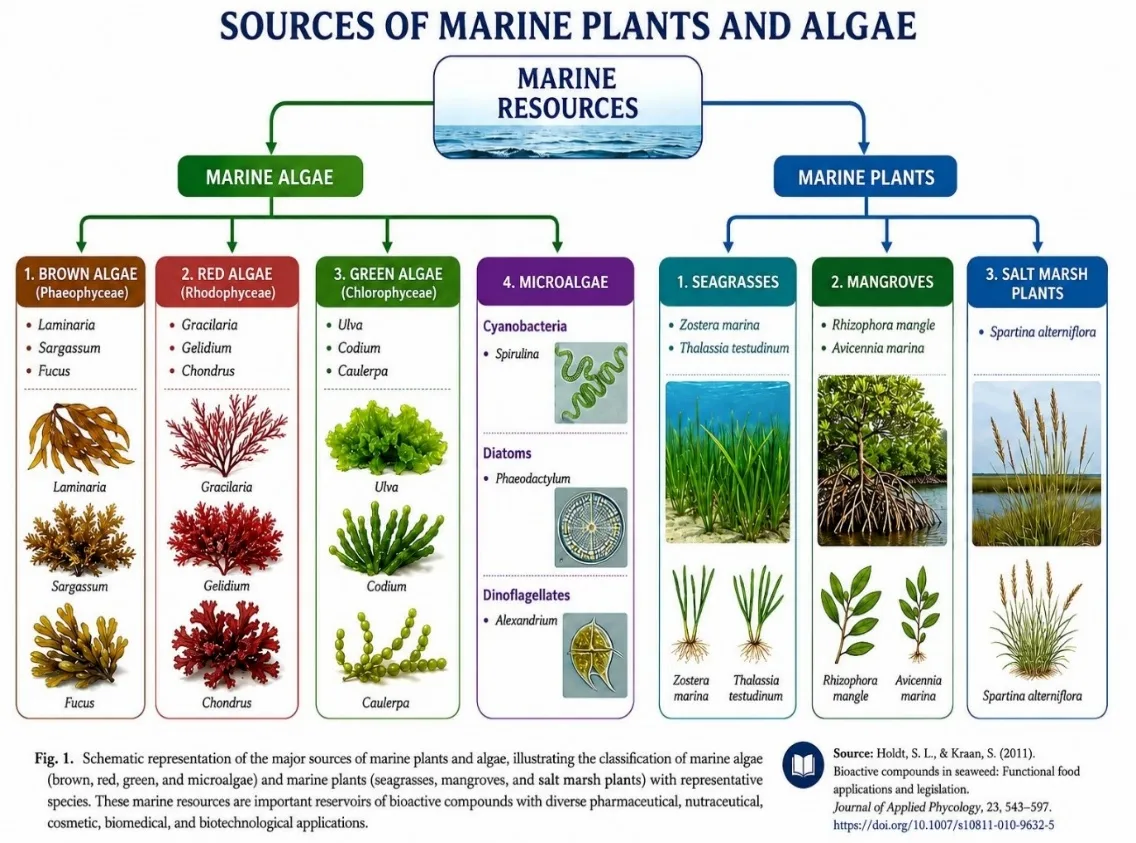
Marine plants and algae are an ecologically diverse group of aquatic photosynthetic organisms located in marine and coastal ecosystem which are esteemed reservoirs of structurally diverse bioactive compounds. Marine algae can be classified into four groups, such as brown algae (Phaeophyceae), red algae (Rhodophyceae), green algae (Chlorophyceae) and microalgae are represented in [fig.1] each with its examples.

 Marine plants like seagrasses, mangroves, salt marsh plants represented in [fig.1] with their species. These are currently being studied for their pharmacologically active metabolites. These marine resources are capable of synthesizing [1] various secondary metabolites, such as polysaccharides, phenolic compounds, flavonoids, terpenoids, carotenoids, proteins, peptides, sterols and alkaloids which possess antioxidant, antimicrobial, antiviral, anti-inflammatory, anticancer, and immunomodulatory activity. Due to their amazing chemical diversity and sustainable availability, marine plants and algae are an important natural resource for the production of pharmaceuticals, nutraceuticals, cosmeceuticals, functional foods and other biotechnological uses.

Some of the examples of species belonging to the category of Brown Algae include Laminaria japonica ,Sargassum fusiform represented in [fig.1], the Red Algae includes the species like Gracilaria vermiculophylla, Chondrus crispus ,Euchema cottonii,Kappaphycus alvarezii represented in schematic view of [fig.1], and the Green Algae species are Ulva Lactuca ,Codium fragile ,Chaemtomorpha linum. The marine algae also includes the Cynaobacterium, Diatoms and Dinoflagellate which comes under the category of Microalgae  and the included species are Spirulina plantensis, Arthrosporia, Phaeodactylum tricornutum,Alexandrium tamarenese,Karenia brevis.
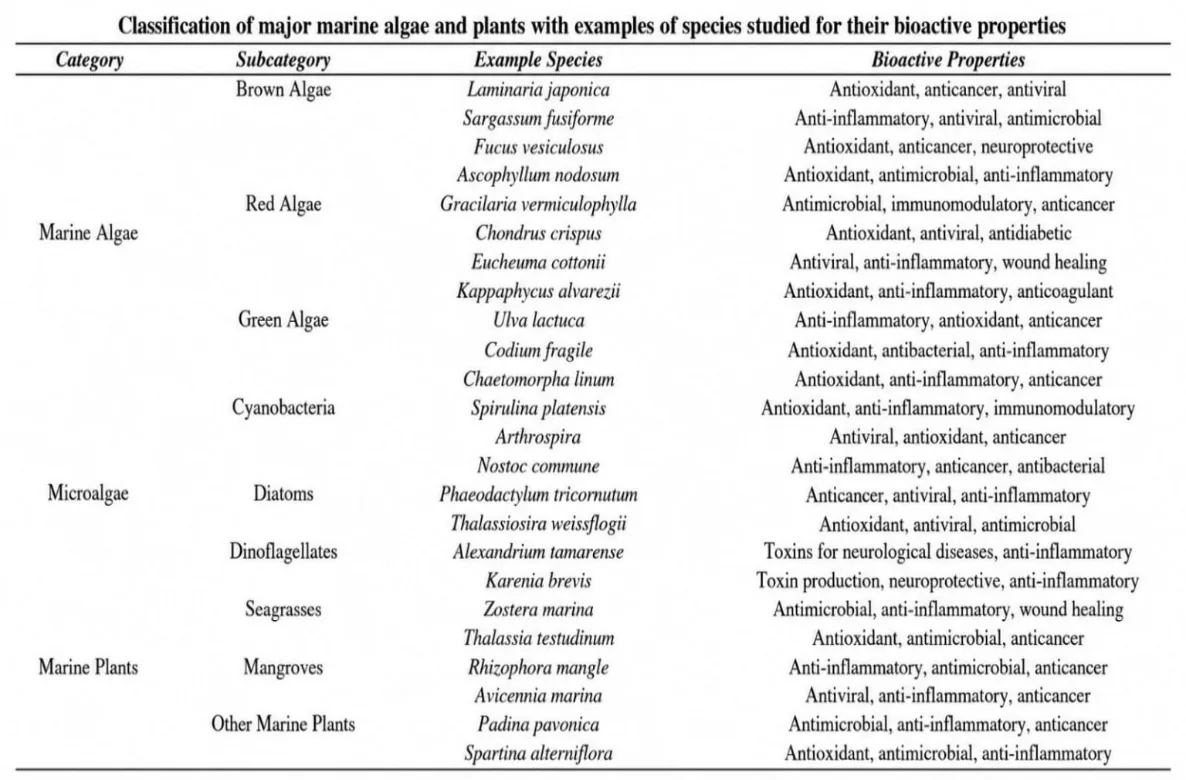


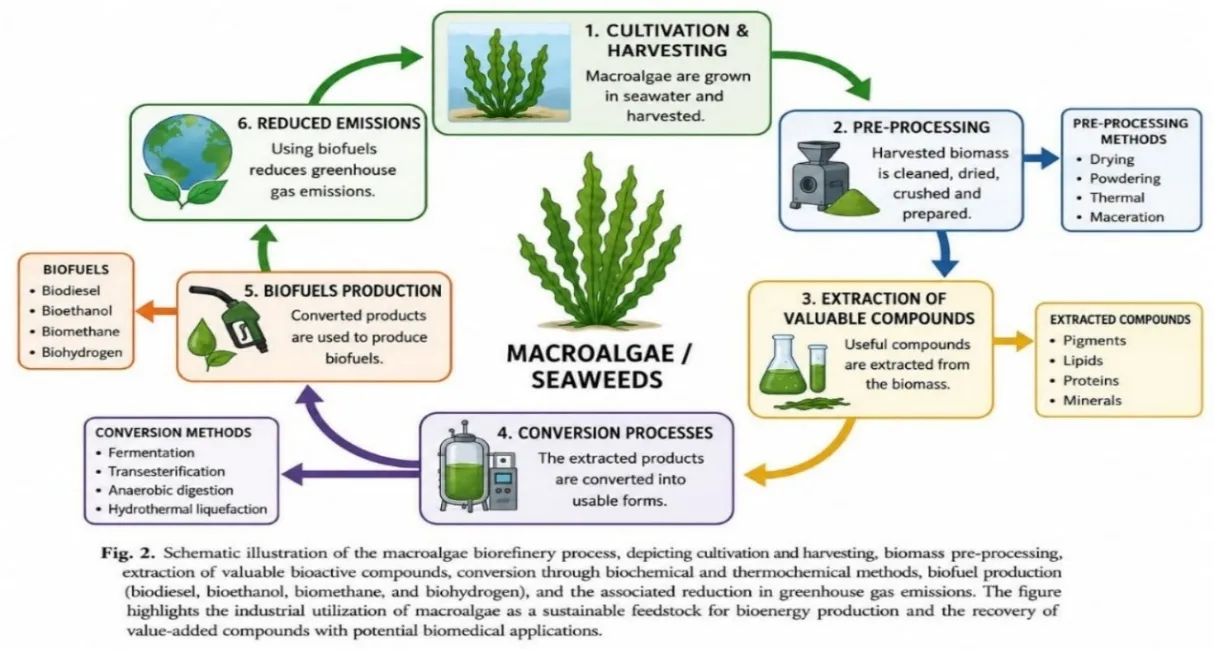
Macroalgae: It has antioxidant properties in marine algae brown, green and red species extracts [2]. Brown algae Sargassum wightii Padina gymno-spora, green algae Caulerpa peltata, and red algae Gelidiella-acerosa were subjected to DPPH radical-scavenging assay. It contains amounts of bioactive compounds such as phloro tannins, bromophenols, and flavonoids with antioxidant, antimicrobial, and anticancer properties [3]. The below schematic [fig.2] represents the illustration of the macroalgae biorefinery process and industrial utilisation with potential biomedical applications.
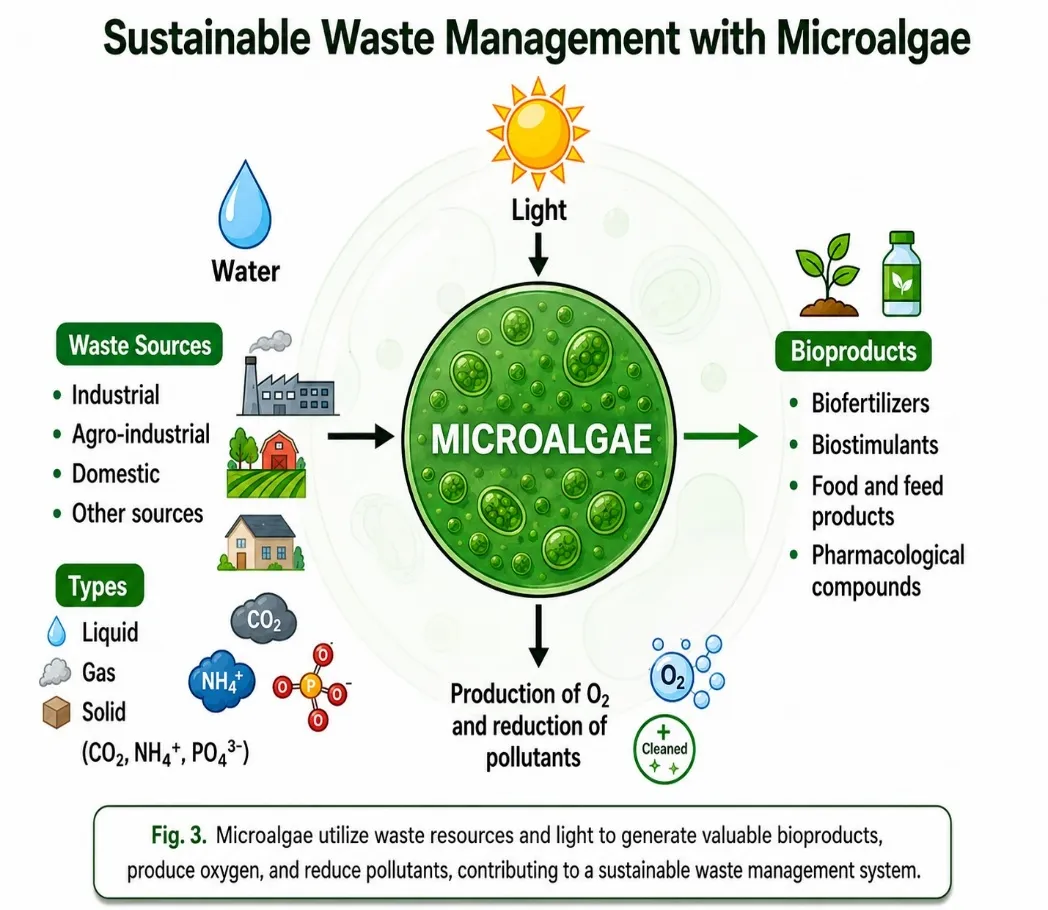
Microalgae: Microalgae are the single celled,almost microscopic organisms.Microalgae are the chief producers in the marine food chain of organic production through photosynthesis. They’ re often found in water, whether it's seawater or freshwater, and grow quickly, have a high photosynthetic rate, and can survive in a wide range of environmental conditions. They contain a rich biomass of proteins, essential amino acids, polyunsaturated fatty acids, vitamins, minerals, pigments (chlorophyll and carotenoids), polysaccharides and many bioactive compounds with antioxidant, antimicrobial, anti-inflammatory, anti-carcinoma and neuroprotective properties [4]. Due to such a varied biochemical content, microalgae have become an increasingly popular source of food, nutraceuticals, pharmaceuticals, cosmetics, aquaculture, agriculture, and [5]. Furthermore, they have the ability to sequester carbon dioxide, reuse nutrients and create added value biomass, the [fig 3] represents the sustainable waste management system.
Bioactive properties of marine collagen

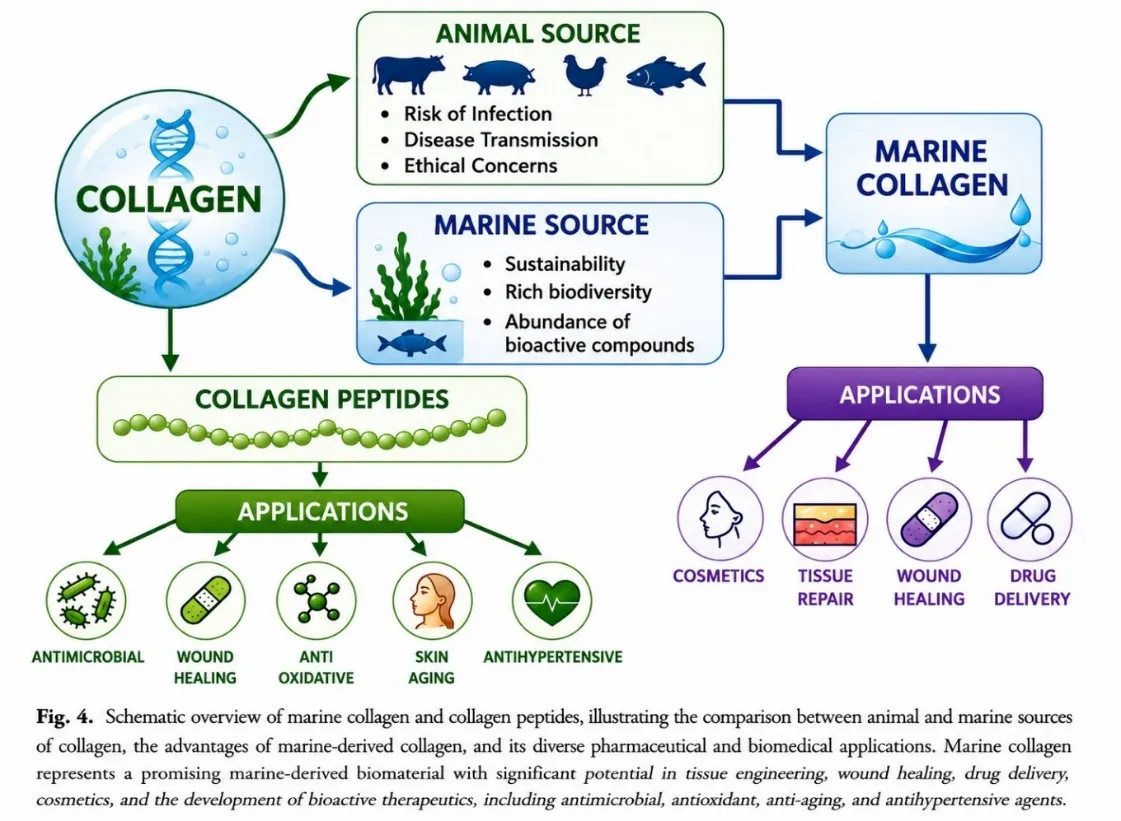
The discovery proved that there are many unexplored resources in the marine plant and algae specifically for the discovery of new medicine. The two broad classifications of marine flora variety are marine algae and marine plants which can be used in developing new medications marine [6]. Macroalgae and microalgae represent two groups of marine algae that contain numerous bioactive compounds. Collagen extracted from the sea comes from different sea creatures like fish, jellyfish and sponges. It's been a big focus lately for its sustainable and environmentally friendly nature as compared to collagen derived from land animals. Marine collagen has a lower risk of transmitting diseases, compared to animal collagen, and it does not raise many of the ethical issues that come with animal collagen [7]. Very biocompatible, biodegradable, and containing a rich amount of bioactive compounds, it can be used in medicine, pharmaceuticals, cosmetics and tissue engineering [8]. The collagen and peptides in the sea are used in a variety of different ways. They aid in wound healing and skin repair, enhance skin elasticity and diminish the appearance of aging. They also have properties such as antioxidant, antimicrobial, antihypertensive, and can be used for drug delivery systems because of their excellent biological compatibility [9]. The benefits of marine collagen along with its diverse pharmaceutical and biomedical applications are represented in the [fig.4 below highlighting its development of bioactive therapeutics.
Marine Drugs in Clinical Practice

Marine organisms are an important source of bioactive compounds with significant therapeutic potential, and many marine-derived molecules are currently being evaluated through clinical trials [10]. These compounds undergo rigorous assessments of safety, efficacy, and optimal dosage before being approved for clinical use for a wide range of diseases. Several products derived from marine organisms are currently being tested for viability in clinical trials in order to determine their effectiveness as human medicines [11]. Some of the marine-drugs with current status are represented below in the tabulae column. Before such molecules can be deemed potential marketable drugs, they are subjected to efficacy and safety tests, dose-setting trials among others.
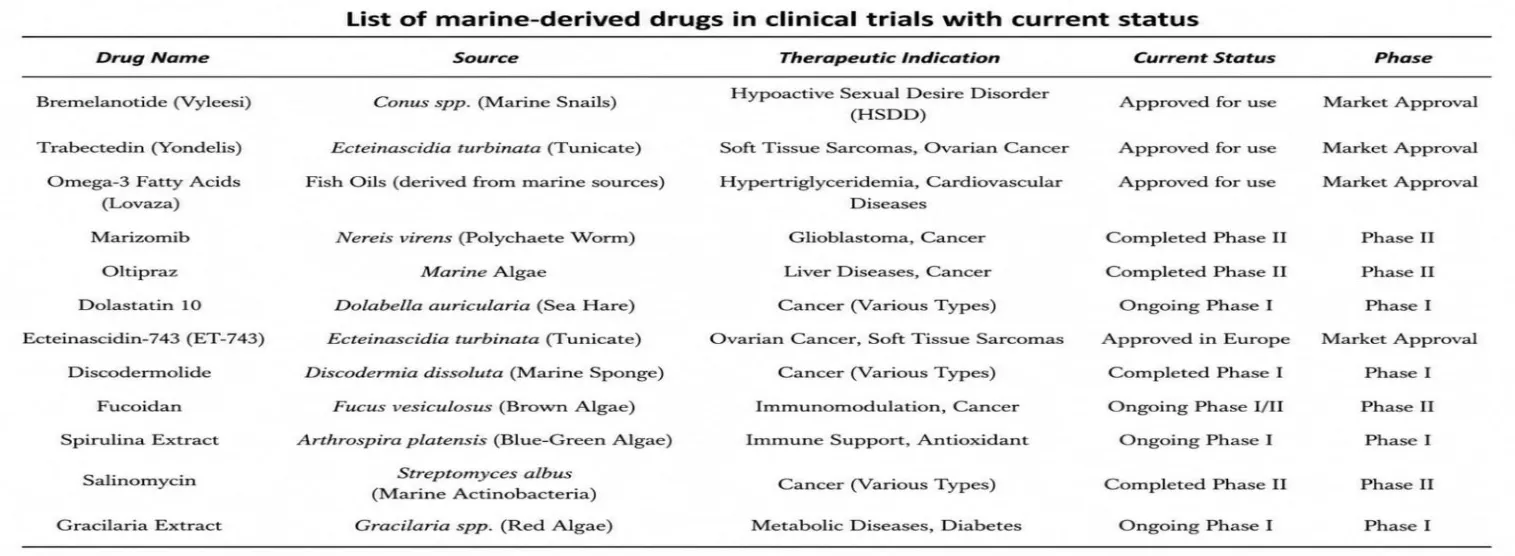
  • Bremelanotide (Vyleesi®): Women suffering from hypoactive sexual desire disorder (HSDD) can use bremelanotide, a peptide that can be outlined from marine cone snails. Research has shown that it is effective in enhancing sexual desire through the melanocortin receptors that are present in the brain [12].
  • Marine-Derived Anticancer Agents: Various substances from marine organisms have been shown to possess potential anticancer properties; several are currently undergoing clinical trials [13]
  • Omega-3 Fatty Acids: Studies are ongoing to determine the potential of omega-3 polyunsaturated fatty acid supplements from fish oil and marine algae, for metabolic syndromes, inflammatory diseases and cardiovascular health. They have also been shown to in clinical trials [14].

Further Aspects of Marine and algal Technology

Marine and algal biotechnology offers beneficial bioactive compounds with a wide range of therapeutic profiles. The metabolites of marine microorganisms and algae have antimicrobial, antiviral, anticancer, antioxidant and anti-inflammatory properties, which are supportive of drug discovery and development [15]. Biomaterials from sea origin like chitosan, collagen, alginate and gelatin are also widely studied for the use in controlled drug delivery, wound healing, tissue engineering and regenerative medicine as they have excellent biocompatibility and biodegradability. Bioactive molecules like marine pigments, polysaccharides, proteins, fatty acids and others also have potential applications in pharmaceutical, nutraceutical, and biomedical fields. In addition, the recent progress in algal genomics and synthetic biology is helping identify and produce valuable therapeutic metabolites, which is aiding in the development of novel marine [16] and algal based therapeutics. The marine and algal drug technology is now at an advanced stage where there is clear promise in the pre-clinical development, but clinical success will require continued interdisciplinary collaboration, standardized research methods, and clinical trials with human populations to facilitate the pharmaceutical potential of marine biodiversity.

Discussion

The marine and algal drug technology is a new area of pharmaceutical research, owing to marine organism's capability to generate large number of bioactive compounds with significant therapeutic value. The metabolites of algae possess antioxidant, antimicrobial, anti-inflammatory, anticancer and immunomodulatory properties including polysaccharides, flavonoids, alkaloids, peptides, carotenoids and omega-3 fatty acids. Macroalgae (brown algae, red algae, and green algae) are important sources of compounds such as phlorotannin and bromophenols and microalgae are sources of essential nutrients, as well as play an important role in environmental sustainability through carbon sequestration and nutrient recycling. Furthermore, marine biomaterials like collagen, alginate and chitosan are having important biomedical applications. The excellent biocompatibility and biodegradability and low disease-transmission risk of marine collagen make it particularly attractive for use in wound healing, tissue engineering, and drug delivery.

CONCLUSION

A number of marine products are already being used in the clinic including: Trabectedin for cancer, Bremelanotide for sexual dysfunction, and omega-3 fatty acids for cardiovascular and metabolic benefits. There are some difficulties like sustainable harvesting, low biomass yields and complicated extraction processes that restriction the large-scale application. Furthermore, there are many compounds that are still in the preclinical stage and need to be more clinically validated and standardized. These challenges are likely to be met by improvements in marine biotechnology, synthetic biology and computational drug discovery. In general, marine and algal resources are very potential for drug development as they provide novel ways to produce pharmaceuticals, nutraceuticals and biomaterials.

REFERENCES

  1. Zhou L, Li K, Duan X et al (2022b) Bioactive compounds in microalgae and their potential health benefits. Food Biosci 49:101932. https://doi.org/10.1016/j.fbio.2022.101932
  2. Negreanu-Pirjol B-S, Negreanu-Pirjol T, Popoviciu DR et al (2022) Marine bioactive compounds derived from macroalgae as new potential players in drug delivery systems: a review. Pharmaceutics 14:1781. https://doi.org/10.3390/pharmaceutics14091781
  3. Liu C (2021) Application of marine collagen for stem-cell-based therapy and tissue regeneration (Review). Med Int 1:6. https://doi.org/10.3892/mi.2021.5
  4. Ampofo J, Abbey L (2022) Microalgae: bioactive composition, health benefits, safety and prospects as potential high-value ingredients for the functional food industry. Foods 11:1744. Foods | An Open Access Journal from MDPI
  5. AlNadhari S, Al-Enazi NM, Alshehrei F, Ameen F (2021) A review on biogenic synthesis of metal nanoparticles using marine algae and its applications. Environ Res194:110672. https://doi.org/10.1016/j.envres.2020.110672
  6. Barzkar N, Sukhikh S, Babich O et al (2023) Marine collagen: purification, properties and application. Front Mar Sci. https://doi.org/10.3389/fmars.2023.1245077.
  7. Pereira L (2021) Macroalgae. Encyclopedia 1(1):177–188. https://doi.org/10.3390/encyclopedia1010017
  8. Geahchan S, Baharlouei P, Rahman A (2022) Marine collagen: a promising biomaterial for wound healing, skin anti-aging, and bone regeneration. Mar Drugs 20:61. https://doi.org/10.3390/md20010061
  9. Subhan F, Ikram M, Shehzad A, Ghafoor A (2015) Marine collagen: an emerging player in biomedical applications. J Food Sci Technol 52:4703–4707. https://doi.org/10.1007/s13197-0141652-8
  10. Daniotti S, Re I. Marine biotechnology: Challenges and development market trends for the enhancement of biotic resources in industrial pharmaceutical and food applications. A statistical analysis of scientific literature and business models. Marine drugs. 2021 Jan 26;19(2):61. doi:10.3390/md19020061.
  11. Xiong ZQ, Wang JF, Hao YY, Wang Y.Mar Drugs. 2013 Mar 8;11(3):700-17. doi: 10.3390/md11030700.
  12. Otvos Jr L, Wade JD. Big peptide drugs in a small molecule world. Frontiers in Chemistry. 2023 Dec 7;11:1302169. Front Chem. 2014 Aug 8;2:62. doi: 10.3389/fchem.2014.00062.
  13. Okeke ES, Okagu IU, Chukwudozie K, Ezike TC, Ezeorba TP. Marine-Derived Bioactive Proteins and Peptides: A Review of Current Knowledge on Anticancer Potentials, Clinical Trials, and Future Prospects. Natural Product Communications. Heliyon. 2023 Feb 2;9(2):e13296. doi: 10.1016/j.heliyon.2023.e13296.
  14. Gammone MA, Riccioni G, Parrinello G, D’Orazio N. Omega-3 polyunsaturated fatty acids: benefits and endpoints in sport. Nutrients. 2019 Jan;11(1):46. https://pmc.ncbi.nlm.nih.gov/articles/PMC6357022/
  15. 15.Simón L, Arazo-Rusindo M, Quest AFG, Mariotti-Celis MS (2023) Phlorotannins: novel orally administrated bioactive compounds that induce mitochondrial dysfunction and oxidative stress in cancer. Antioxidants 12:1734. https://doi.org/10.3390/antiox12091734
  16. 16.Vo TP, Nguyen DQ, Thi Ho TA et al (2024) Novel extraction of bioactive compounds from algae using green solvent: principles, applications, and future perspectives. J Agric Food Res 18:101535. https://doi.org/10.1016/j.jafr.2024.101535
  17. Lomartire S., Gonçalves A.M.M. An Overview of Potential Seaweed-Derived Bioactive Compounds for Pharmaceutical Applications. Mar. Drugs. 2022;20:141. doi: 10.3390/md20020141. [DOI] [PMC free article] [PubMed] [Google Scholar]
  18. Atanasov A.G., Zotchev S.B., Dirsch V.M., Supuran C.T. Natural Products in Drug Discovery: Advances and Opportunities. Nat. Rev. Drug Discov. 2021;20:200–216. doi: 10.1038/s41573-020-00114-z. [DOI] [PMC free article] [PubMed] [Google Scholar]
  19. Veluchamy C, Palaniswamy R (2020) A Review on marine algae and its applica-tions. Asian J Pharmaceut Clin Res 13:21–27. https://doi.org/10.22159/ajpcr.2020.v13i3.3613.
  20. Thurstan RH, Brittain Z, Jones DS et al (2018) Aboriginal uses of seaweeds in temperate Australia: an archival assessment. J Appl Phycol 30:1821–1832. https://doi.org/10.1007/s10811-017-1384-z
  21. Miyahara, T. ∙ Murai, A. ∙ Tanaka, T. ...Age-related differences in human skin collagen: solubility in solvent, susceptibility to pepsin digestion and the spectrum of solubilized polymeric collagen moleculesJ Gerontol. 1992; 37:651-655Crossref Scopus (39) Google Scholar
  22. P. Bhatnagar, P. Gururani, A. Parveen, P. Gautam, N. Chandra Joshi, M.S. Tomar, M. Nanda, M.S. Vlaskin, V. Kumar.Algae: a promising and sustainable protein-rich food ingredient for bakery and dairy products Food Chem., 441 (2024), Article 138322, 10.1016/j.foodchem.2023.138322
  23. J. Velazquez-Lucio, R.M. Rodríguez- Jasso, L.M. Colla, A. SáenzGalindo, D.E. Cervantes-Cisneros, C.N. Aguilar, B.D. Fernandes, H.A. RuizMicroalgal biomass pretreatment for bioethanol production: a reviewBiofuel Res. J., 5 (1) (2018), pp. 780-791, 10.18331/BRJ2018.5.1.5
  24. Pina-Pérez, M. C., Rivas, A., Martínez, A., & Rodrigo, D. (2017). Antimicrobial potential of macro and microalgae against pathogenic and spoilage microorganisms in food. Food chemistry, 235, 34-44. [Google Scholar]
  25. Song E, Yeon Kim S, Chun T, Byun HJ, Lee YM (2006) Collagen scaffolds derived from a marine source and their biocompatibility. Biomaterials 27:2951–2961. doi:10.1016/j.biomaterials.2006.01.015

Reference

  1. Zhou L, Li K, Duan X et al (2022b) Bioactive compounds in microalgae and their potential health benefits. Food Biosci 49:101932. https://doi.org/10.1016/j.fbio.2022.101932
  2. Negreanu-Pirjol B-S, Negreanu-Pirjol T, Popoviciu DR et al (2022) Marine bioactive compounds derived from macroalgae as new potential players in drug delivery systems: a review. Pharmaceutics 14:1781. https://doi.org/10.3390/pharmaceutics14091781
  3. Liu C (2021) Application of marine collagen for stem-cell-based therapy and tissue regeneration (Review). Med Int 1:6. https://doi.org/10.3892/mi.2021.5
  4. Ampofo J, Abbey L (2022) Microalgae: bioactive composition, health benefits, safety and prospects as potential high-value ingredients for the functional food industry. Foods 11:1744. Foods | An Open Access Journal from MDPI
  5. AlNadhari S, Al-Enazi NM, Alshehrei F, Ameen F (2021) A review on biogenic synthesis of metal nanoparticles using marine algae and its applications. Environ Res194:110672. https://doi.org/10.1016/j.envres.2020.110672
  6. Barzkar N, Sukhikh S, Babich O et al (2023) Marine collagen: purification, properties and application. Front Mar Sci. https://doi.org/10.3389/fmars.2023.1245077.
  7. Pereira L (2021) Macroalgae. Encyclopedia 1(1):177–188. https://doi.org/10.3390/encyclopedia1010017
  8. Geahchan S, Baharlouei P, Rahman A (2022) Marine collagen: a promising biomaterial for wound healing, skin anti-aging, and bone regeneration. Mar Drugs 20:61. https://doi.org/10.3390/md20010061
  9. Subhan F, Ikram M, Shehzad A, Ghafoor A (2015) Marine collagen: an emerging player in biomedical applications. J Food Sci Technol 52:4703–4707. https://doi.org/10.1007/s13197-0141652-8
  10. Daniotti S, Re I. Marine biotechnology: Challenges and development market trends for the enhancement of biotic resources in industrial pharmaceutical and food applications. A statistical analysis of scientific literature and business models. Marine drugs. 2021 Jan 26;19(2):61. doi:10.3390/md19020061.
  11. Xiong ZQ, Wang JF, Hao YY, Wang Y.Mar Drugs. 2013 Mar 8;11(3):700-17. doi: 10.3390/md11030700.
  12. Otvos Jr L, Wade JD. Big peptide drugs in a small molecule world. Frontiers in Chemistry. 2023 Dec 7;11:1302169. Front Chem. 2014 Aug 8;2:62. doi: 10.3389/fchem.2014.00062.
  13. Okeke ES, Okagu IU, Chukwudozie K, Ezike TC, Ezeorba TP. Marine-Derived Bioactive Proteins and Peptides: A Review of Current Knowledge on Anticancer Potentials, Clinical Trials, and Future Prospects. Natural Product Communications. Heliyon. 2023 Feb 2;9(2):e13296. doi: 10.1016/j.heliyon.2023.e13296.
  14. Gammone MA, Riccioni G, Parrinello G, D’Orazio N. Omega-3 polyunsaturated fatty acids: benefits and endpoints in sport. Nutrients. 2019 Jan;11(1):46. https://pmc.ncbi.nlm.nih.gov/articles/PMC6357022/
  15. 15.Simón L, Arazo-Rusindo M, Quest AFG, Mariotti-Celis MS (2023) Phlorotannins: novel orally administrated bioactive compounds that induce mitochondrial dysfunction and oxidative stress in cancer. Antioxidants 12:1734. https://doi.org/10.3390/antiox12091734
  16. 16.Vo TP, Nguyen DQ, Thi Ho TA et al (2024) Novel extraction of bioactive compounds from algae using green solvent: principles, applications, and future perspectives. J Agric Food Res 18:101535. https://doi.org/10.1016/j.jafr.2024.101535
  17. Lomartire S., Gonçalves A.M.M. An Overview of Potential Seaweed-Derived Bioactive Compounds for Pharmaceutical Applications. Mar. Drugs. 2022;20:141. doi: 10.3390/md20020141. [DOI] [PMC free article] [PubMed] [Google Scholar]
  18. Atanasov A.G., Zotchev S.B., Dirsch V.M., Supuran C.T. Natural Products in Drug Discovery: Advances and Opportunities. Nat. Rev. Drug Discov. 2021;20:200–216. doi: 10.1038/s41573-020-00114-z. [DOI] [PMC free article] [PubMed] [Google Scholar]
  19. Veluchamy C, Palaniswamy R (2020) A Review on marine algae and its applica-tions. Asian J Pharmaceut Clin Res 13:21–27. https://doi.org/10.22159/ajpcr.2020.v13i3.3613.
  20. Thurstan RH, Brittain Z, Jones DS et al (2018) Aboriginal uses of seaweeds in temperate Australia: an archival assessment. J Appl Phycol 30:1821–1832. https://doi.org/10.1007/s10811-017-1384-z
  21. Miyahara, T. ? Murai, A. ? Tanaka, T. ...Age-related differences in human skin collagen: solubility in solvent, susceptibility to pepsin digestion and the spectrum of solubilized polymeric collagen moleculesJ Gerontol. 1992; 37:651-655Crossref Scopus (39) Google Scholar
  22. P. Bhatnagar, P. Gururani, A. Parveen, P. Gautam, N. Chandra Joshi, M.S. Tomar, M. Nanda, M.S. Vlaskin, V. Kumar.Algae: a promising and sustainable protein-rich food ingredient for bakery and dairy products Food Chem., 441 (2024), Article 138322, 10.1016/j.foodchem.2023.138322
  23. J. Velazquez-Lucio, R.M. Rodríguez- Jasso, L.M. Colla, A. SáenzGalindo, D.E. Cervantes-Cisneros, C.N. Aguilar, B.D. Fernandes, H.A. RuizMicroalgal biomass pretreatment for bioethanol production: a reviewBiofuel Res. J., 5 (1) (2018), pp. 780-791, 10.18331/BRJ2018.5.1.5
  24. Pina-Pérez, M. C., Rivas, A., Martínez, A., & Rodrigo, D. (2017). Antimicrobial potential of macro and microalgae against pathogenic and spoilage microorganisms in food. Food chemistry, 235, 34-44. [Google Scholar]
  25. Song E, Yeon Kim S, Chun T, Byun HJ, Lee YM (2006) Collagen scaffolds derived from a marine source and their biocompatibility. Biomaterials 27:2951–2961.

Photo
P.Vinaya Keerthi
Corresponding author

B-Pharmacy Student,SIMS college of Pharmacy ,Guntur

Photo
T.Srinivas Thota
Co-author

Professor and Research guide, Department of Pharmaceutics, SIMS College of Pharmacy, Mangaladas Nagar, Guntur

Photo
S.K.Naziya
Co-author

B-Pharmacy Student,SIMS college of Pharmacy ,Guntur

Photo
Y.Yeswanthi
Co-author

B-Pharmacy Student,SIMS college of Pharmacy ,Guntur

Photo
B.Thangabalan
Co-author

Principal and Professor, Department of Pharmaceutical Analysis, SIMS College of Pharmacy, Mangaladas Nagar, Guntur

T.SrinivasThota1,B.Thangabalan,P.VinayaKeerthi,S. k.Naziya , Y.Yeswanthi, Marine And Algal Drug Technology: An Overview Of Bioactive Compounds And Pharmaceutical Applications, Int. J. of Pharm. Sci., 2026, Vol 4, Issue 8, 3140-3148. https://doi.org/10.5281/zenodo.22032294

More related articles
Formulation And Characterization Of Copper Nanopar...
Devshankar Dwivedi, Deepak Basedia, B. K. Dubey, Sunil Kumar Shah...
A Comprehensive Overview of Literature Review: Con...
Dr. Rushda Saeedi, Saiyad Shah Alam, Dr. Mohammad Asif Khan...
Formulation & Evaluation of Herbal Hair Dye Powder Containing Manjistha as a Nat...
Pratibha Ayanar, Nilesh Devasi, Datta Avchar, Pratik Sagade, Isha Kadam...
Gastroretentive Amoxicillin Trihydrate-Loaded Alginate Beads for the Treatment o...
Ankush maurya, Mohd. Zubair Arshad , Raushan Kumar , Dileep Kumar , Anshuman Viswakarma , Dr. Saurab...