

We use cookies to ensure our website works properly and to personalise your experience. Cookies policy
Sage Institute of Research and Technology-Pharmacy, Sanjeev Agrawal Global Educational University, Sahara Bypass Road, Katara, Extension, Bhopal, Madhya Pradesh, India 462022.
Background: Talisadi Churna, a classical polyherbal Ayurvedic formulation, is traditionally used for respiratory and inflammatory ailments, but its analgesic and antipyretic properties have not been scientifically validated. Objective: This study evaluated the analgesic and antipyretic activities of Talisadi Churna in albino rats. Methods: Acute oral toxicity was assessed as per OECD guidelines up to 2000 mg/kg. Analgesic activity was assessed by the tail-immersion method using Talisadi Churna (100, 200 and 400 mg/kg, p.o.) with ibuprofen (10 mg/kg) as the standard, and antipyretic activity was assessed using the Brewer's yeast-induced pyrexia model with paracetamol (100 mg/kg) as the standard; reaction time and rectal temperature were recorded at 0, 60, 90 and 120 min. Data were analysed by one-way ANOVA followed by Dunnett's post-hoc test. Results: Talisadi Churna produced no signs of toxicity or mortality up to 2000 mg/kg. In the tail-immersion test, Talisadi Churna (400 mg/kg) significantly (P<0.05) prolonged the reaction time at 90 and 120 min compared with control. In the pyrexia model, Talisadi Churna (200 and 400 mg/kg) significantly (P<0.05) reduced the elevated rectal temperature at 120 min. Conclusion: These findings scientifically validate the traditional use of Talisadi Churna as an analgesic and antipyretic agent, an effect likely mediated through inhibition of prostaglandin synthesis.
Natural plant products are a source of new chemical compounds and are the choice of today's human race. There is strong evidence that natural plant products play a significant role in the livelihoods of the rural poor population of the world especially tribal communities in many countries like India Baccou et al., 1977; Bhagat et al., 2007; Chatterjee et al., 1983; D’amour and Smith, 1941; Das and Kanodia, 2011). It is estimated that 25% of people of most of the countries depend on plant resources for their livelihood. About 80% of the people living in developing countries depend on non-timber plant products. India is a major exporter of medicinal plants of 800 million are exported annually from India (Guardia et al., 2001; Patra et al., 2010; Zafar et al., 2005). To promote the Indian Ayush industry nationally and globally, Assocham has partnered with the Ministry of Ayush, Government of India to organize ‘Global Ayush Mela’, a three-day virtual expo to provide a platform for various stakeholders to network, encourage education and honour the leaders of the industry. AYUSH, an acronym for Ayurveda, Yoga & Naturopathy, Unani, Siddha and Homeopathy is a classical medical system based largely on the use of the medicinal properties in plants and a healthy way of life with established concepts on prevention of diseases and promotion of health. Standardization of herbal medicines is the process of prescribing a set of standards or inherent characteristics, constant parameters, and definitive qualitative and quantitative values that carry an assurance of quality, efficacy, safety and reproducibility. It is the process of developing and agreeing upon technical standards. Specific standards are worked out by experimentation and observations, which would lead to the process of prescribing a set of characteristics exhibited by the particular herbal medicine (Dascombe, 1985; Dewanjee et al., 2009; Hagerman et al., 2000). Chromatography and spectroscopy techniques are the most commonly used methods in the standardization of herbal medicines, but the herbal system is not easy to analyze because of the complexity of chemical composition. Many cutting-edge analytical technologies have been introduced to evaluate the quality of medicinal plants and significant amount of measurement data has been produced (Harris and Spencer 1962; Ibrahim et al., 2012). Chemo metric techniques provide a good opportunity for mining more useful chemical information from the original data. Then, the application of Chemo metrics in the field of medicinal plants is spontaneous and necessary. Comprehensive methods and hyphenated techniques associated with Chemo metrics used for extracting useful information and supplying various methods of data processing are now more and more widely used in medicinal plants, among which Chemo metrics resolution methods and principal component analysis (PCA) are the most commonly used techniques (D’Amour and Smith, 1941; Parveen et al., 2014; Yadav and Dixit, 2008).
Management of pain is one of clinical medicine’s greatest challenges. Pain is defined as an unpleasant sensation that can be either acute or chronic and that is the consequence of the complex neurochemical process in the peripheral and central nervous system. It is subjective, and the physician must rely on the patient’s perception and many cases. For example, a headache or mild to moderate arthritis is effective. Neurogenic pain responds best to tricyclic antidepressants. Opioids are natural or synthetic compounds that produce morphine-like effects. All drugs in this category act by binding to specific opioid receptors in the central nervous system (CNS) to produce effects that mimic the action of endogenous peptide neurotransmitters. Dependence is not a problem in patients being treated with these agents for severe pain. Antagonists that can reverse the action of Opioids are also very important clinically for use in cases of overdose (Amresha et al., 2007; Jain and Parmar 2011). Therefore, on the basis of the above evidences, present study was designed to scientifically validate anti-inflammatory, analgesic and anti-pyretic activities of Taalishadi churna.
MATERIALS AND METHODS
Animals
Albino rats weighing 150–200 g were used throughout the experiments. The animals were procured from the institutional experimental animal facility. All animals were housed in rectangular polypropylene cages (32×24×16cm, four per cage) kept on racks built of slotted angles and the cage were provided with dust free paddy husk as a bedding material. The animals were housed in environmentally controlled condition of temperature (24 ±1 ℃), relative humidity (65±10%), light and dark cycle (14:10 h) and fed with standard pellet food and water ad libitum. The norms of Good Laboratory Practice (GLP) were followed for care of laboratory animals.
Acute toxicity
Acute toxicity study of Talisadi Churna was carried out in rats according to Organisation for Economic Co-operation and Development (OECD) guidelines. Doses up to 2000 mg/kg, p.o., were administered, and the animals were observed for behavioural changes, toxicity and mortality for up to 48 h. No toxic reaction or mortality was observed, and the formulation was found to be safe.
In-Vivo Model
Tail immersion Model
The procedure is based on the observation that morphine-like drugs are selectively capable of prolonging the reaction time of the typical tail-withdrawal reflex in rats induced by immersing the end of the tail in warm water of 55 °C. The lower 5 cm portion of the tail is marked. This part of the tail is immersed in to the water bath of exactly 55 °C. Within a few seconds the rat reacts by withdrawing the tail. The reaction time is recorded in 0.5 s units by a stopwatch. After each determination the tail is carefully dried. The reaction time is determined before and periodically after oral administration of the test and standard substance. The cut-off time was 15 s. Albino rats weighing 150–200 g were used for evaluation of analgesic activity in each group. Talisadi Churna (100, 200 and 400 mg/kg) and the standard drug ibuprofen (10 mg/kg) were suspended in 10 ml/kg of normal saline. Wistar albino rats of either sex were divided into four groups of six animals each, and the animals were marked individually, weighed and numbered appropriately. The test and standard drugs were administered orally, and the reaction time was recorded at 0, 60, 90 and 120 min after drug administration.
Brewer’s Yeast Pyrexia model
Six albino rats kept in each cage, and 24 ± 1℃ temperature maintained on a 12 h light/dark cycle and given ad libitum access to food and water. Pyrexia was induced by injecting 20 mg/kg of Brewer’s yeast suspension, or the pyrogen-free 0.9% NaCl vehicle, subcutaneously behind the neck. Rectal temperature was recorded using a digital thermometer inserted into the rectum, and the rise in temperature was recorded after 17 h. Induction of pyrexia was confirmed by a rise in temperature of more than 1 °C; animals showing a rise in temperature of less than 0.5 °C were excluded from the experiment. Paracetamol (100 mg/kg) was used as the positive control.
Statistical Analysis
One-way analysis of variance (ANOVA) was used to compare the effects of different doses of treatment with the control. Dunnett’s post-hoc test was performed for specific group comparisons. Differences with *P<0.05 between experimental groups at each time point were considered statistically significant.
RESULTS
Preliminary screening of acute toxicity studies
Albino rats were selected for this study. They were divided into five groups each containing six animals. Talisadi Churna was administered orally in varying doses (0.50, 1.00, 1.50, 1.75, 2.00 g/kg) to these animals. They were continuously observed for 2 h to detect changes in the autonomic or behavioural responses viz. alertness, spontaneous activity, irritability, pinna reflex, corneal reflex, urination, salivation, piloerection etc. Any mortality during experimentation and the following 7 days was also recorded. A group of animals treated with the vehicle (distilled water) served as control. Based on the results of preliminary toxicity testing, the doses of 10, 20 and 30 mg/kg of Talisadi Churna were chosen for further experiments.
In-Vivo study for Pain activity
Tail immersion Method
Table 1. Effect of Talisadi Churna on tail-immersion-induced reaction time
|
Drug |
Treatment |
Dose |
Reaction time in seconds at time minutes |
|||
|
0 minutes |
60 minutes |
90 minutes |
120 minutes |
|||
|
Control |
Normal Saline |
10 ml/kg |
0.70 ± 0.22 |
0.78 ± 0.17 |
0.78 ± 0.25 |
0.78 ± 0.20 |
|
Standard |
Ibuprofen (p.o) |
10 mg/kg |
0.81 ± 0.02 |
2.92 ± 0.24 |
3.29 ± 0.27 |
4.00 ± 0.26* |
|
Test -1 |
Talisadi Churna |
100 mg/kg |
0.79 ± 0.21 |
0.79 ± 0.32 |
0.78 ± 0.21 |
0.77 ± 0.24 |
|
Test -2 |
Talisadi Churna |
200 mg/kg |
0.82 ± 0.22 |
1.90 ± 0.30 |
2.00 ± 0.19 |
2.50 ± 0.26 |
|
Test-3 |
Talisadi Churna |
400 mg/kg |
0.78 ± 0.20 |
2.00 ± 0.44 |
2.56 ± 0.20* |
2.60 ± 0.20* |
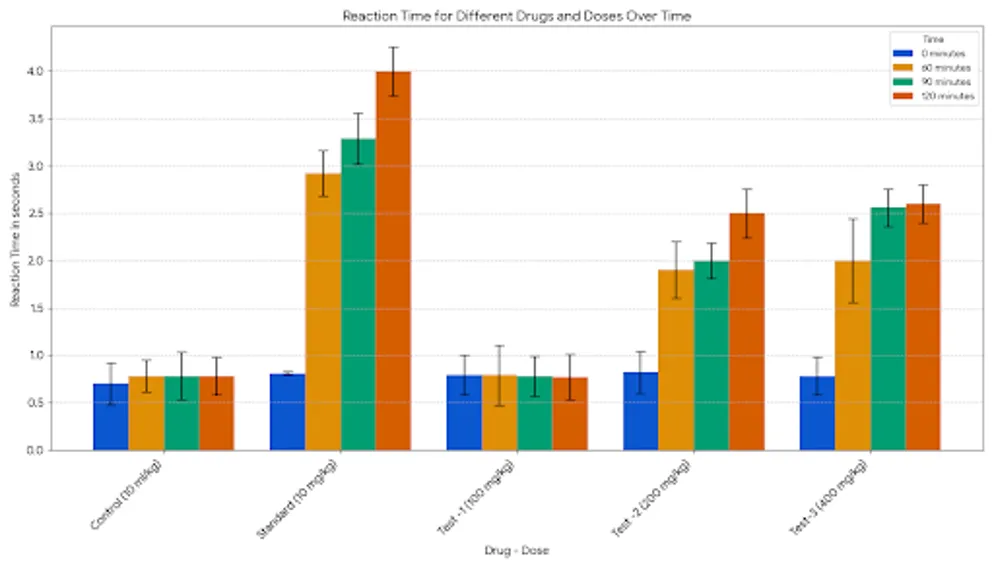
Figure 1. Tail-immersion Method (Reaction time in Seconds) in different groups
Values are expressed as Mean ± SE. P values *P<0.05 as compared to saline treated group (n=6). Statistical test employed was ANOVA followed by Dunnett’s test.
Table 2. Effect of Talisadi Churna on Brewer’s yeast-induced hyperpyrexia
|
Drug |
Treatment |
Dose |
Temperature in ℃ |
|||
|
0 minutes |
60 minutes |
90 minutes |
120 minutes |
|||
|
Control |
Normal Saline |
10 ml/kg |
36.33± 0.21 |
40.17± 0.48 |
40.17± 0.48 |
40.00± 0.26 |
|
Standard |
Paracetamol |
100 mg/kg |
36.17± 0.40 |
40.17± 0.31 |
39.50± 0.22 |
37.00± 0.26* |
|
Test -1 |
Talisadi Churna |
100 mg/kg |
36.50± 0.22 |
40.00± 0.26 |
39.83± 0.31 |
39.83± 0.48 |
|
Test -2 |
Talisadi Churna |
200 mg/kg |
36.00± 0.26 |
40.33± 0.56 |
39.67± 0.21 |
38.17± 0.17* |
|
Test-3 |
Talisadi Churna |
400 mg/kg |
36.17± 0.65 |
39.67± 0.33 |
38.33±0.21* |
38.00± 0.26* |

Figure 2. Effect of Talisadi Churna on Brewer’s yeast-induced hyperpyrexia
Values are expressed as Mean ± SE. P values *P<0.05 as compared to saline treated group (n=6). Statistical test employed was ANOVA followed by Dunnett’s test.
DISCUSSION
The present study demonstrates that Talisadi Churna possesses significant analgesic and antipyretic activity, which may be attributed to the cumulative effect of its phytoconstituents. In the tail-immersion model, Talisadi Churna significantly increased the reaction time in a dose-dependent manner, confirming its anti-nociceptive potential, while in the Brewer’s yeast-induced pyrexia model it significantly reduced the elevated rectal temperature, confirming its antipyretic activity. Inflammation, pain and fever are largely attributed to elevated levels of prostaglandins, tumour necrosis factor and interleukins; consequently, most anti-inflammatory agents also possess analgesic and antipyretic properties. A survey of the literature confirms that Talisadi Churna has traditionally been used to treat inflammation, fever and pain, and the present investigation was undertaken to scientifically validate these uses and to distinguish between central and peripheral analgesic action. The results suggest that the analgesic effect of Talisadi Churna is mediated predominantly through a peripheral mechanism involving inhibition of prostaglandin synthesis. Thus, the present study scientifically validates the traditional use of Talisadi Churna in the treatment of pain- and fever-related ailments.
The absence of mortality or overt toxic signs at oral doses up to 2000 mg/kg in the acute toxicity study indicates a wide margin of safety for Talisadi Churna, consistent with its long history of traditional use. Based on this favourable safety profile, the sub-toxic doses of 100, 200 and 400 mg/kg were selected for evaluation of pharmacological activity, well below the no-observed-adverse-effect level established during toxicity screening.
In the tail-immersion test, the analgesic effect of Talisadi Churna was dose-dependent, with the highest dose (400 mg/kg) producing a significant increase in reaction time from 90 min onward; the trend was comparable to, though of lower magnitude than, the standard drug ibuprofen (10 mg/kg). The lower doses (100 and 200 mg/kg) produced comparatively modest and largely non-significant changes, suggesting that a threshold dose is required before analgesic activity becomes measurable in this assay. Because the tail-immersion test is considered relatively selective for centrally acting analgesics, the significant prolongation of reaction time observed with Talisadi Churna suggests that it may possess a central component of action, in addition to any peripheral anti-inflammatory contribution.
Similarly, in the Brewer’s yeast-induced pyrexia model, Talisadi Churna produced a dose-dependent reduction in the yeast-elevated rectal temperature, reaching statistical significance at the 200 and 400 mg/kg doses by 120 min, an effect comparable in direction to that of the standard antipyretic paracetamol. Because Brewer’s yeast pyrexia is closely linked to increased hypothalamic prostaglandin E2 synthesis, the antipyretic action observed here is consistent with inhibition of the cyclooxygenase pathway, mirroring the mechanism proposed for the analgesic activity.
These findings are consistent with several previously reported studies on plant-derived analgesic and antipyretic agents evaluated using comparable models. The dose- and time-dependent antipyretic effect of Talisadi Churna, approaching the efficacy of paracetamol by 120 min, parallels the findings of Afsar et al. (2015), who reported that a methanolic extract of Acacia hydaspica produced a dose- and time-dependent fall in Brewer’s yeast-elevated body temperature comparable to paracetamol. Similarly, Purnima et al. (2010) reported significant analgesic and antipyretic activity for Mimusops elengi in the tail-immersion and Brewer’s yeast models, while Parveen et al. (2014) and Ibrahim et al. (2012) demonstrated comparable dose-dependent analgesic, anti-inflammatory and antipyretic effects for Caesalpinia decapetala and Cyathula prostrate, respectively, supporting the broader observation that polyphenol- and flavonoid-rich plant extracts commonly display this combination of activities.
The peripheral analgesic action inferred for Talisadi Churna in the present study is also broadly consistent with the report of Asongalem et al. (2004), who found that Acanthus montanus exhibited anti-inflammatory and antipyretic activity together with a peripherally, rather than centrally, mediated analgesic action. In contrast, Nwafor and Okwuasaba (2003) and Silva et al. (2005) described both central and peripheral components of antinociceptive activity for Asparagus pubescens and Lantana trifolia, respectively, indicating that the relative contribution of central and peripheral mechanisms can vary considerably between herbal formulations depending on their specific phytoconstituents. Compared with these single-plant extracts, Talisadi Churna, being a polyherbal formulation, produced an antinociceptive and antipyretic profile of a magnitude broadly comparable to the pure standard drugs, an observation in line with the generally gradual, cumulative onset of action reported for polyherbal Ayurvedic preparations relative to single synthetic agents (Amresha et al., 2007; Jain and Parmar, 2011).
Talisadi Churna is a polyherbal formulation containing ingredients reported to be rich in flavonoids, tannins and volatile oils, several of which have documented anti-inflammatory, analgesic and antipyretic properties in the literature cited above. The combined pharmacological effect observed in the present study is therefore likely to result from the additive or synergistic action of these phytoconstituents rather than a single active principle, consistent with the traditional rationale for using polyherbal rather than single-herb Ayurvedic formulations.
These findings should, however, be interpreted in light of certain limitations: the study evaluated only one animal model for each activity, chemical standardisation of the extract with respect to marker phytoconstituents was not performed, and the precise mechanism of action was not confirmed through biochemical assays such as prostaglandin or cytokine estimation. Future studies incorporating detailed dose–response modelling, phytochemical standardisation and mechanistic biomarkers are warranted to further substantiate these findings.
CONCLUSION
The present study demonstrates that Talisadi Churna possesses significant, dose-dependent analgesic and antipyretic activity in albino rats, without evidence of acute toxicity at doses up to 2000 mg/kg. These findings provide scientific support for the traditional use of Talisadi Churna in the management of pain and fever, and suggest that its pharmacological effects are mediated, at least in part, through inhibition of prostaglandin synthesis. Further pharmacokinetic, biochemical and clinical studies are recommended to establish its therapeutic potential and to support its development as a standardised, evidence-based Ayurvedic formulation for analgesic and antipyretic indications.
REFERENCES

Nidhi Parihar, Sarika Shrivastava, Jitendra Banweer, Phytochemical and Pharmacological Evaluation of Talisadi Powder for Analgesic and Antipyretic Activity, Int. J. of Pharm. Sci., 2026, Vol 4, Issue 7, 5433-5441. https://doi.org/10.5281/zenodo.21662105
 10.5281/zenodo.21662105