

We use cookies to ensure our website works properly and to personalise your experience. Cookies policy
1 Student of Srinath College of Pharmacy, Chhatrapati Sambhajinagar
2 Assistant Professor of Srinath College of Pharmacy, Chhatrapati Sambhajinagar
This study focuses on the pharmacological assessment and phytochemical-guided formulation of an antibacterial gel that contains methanolic extract of Plumeria Alba, a plant with a rich bioactive profile and traditional usage. Plumeria Alba, sometimes known as frangipani or West Indian jasmine, has strong anti-inflammatory, antibacterial, and antioxidant qualities. The study used 95% methanol to extract the active chemicals from P. Alba flowers, which were then added to a gel base made of carbomer and aloe vera gel. Three formulations with different extract amounts were made, and their physicochemical characteristics—including pH, homogeneity, spreadability, viscosity, drug content, and stability—were methodically assessed. Every formulation showed smooth texture, high homogeneity, and pH values between 4.7 and 5.7 that are suitable for skin application. Crucially, there were no indications of skin irritation, indicating the gels' safety for topical application. Strong antifungal efficacy was demonstrated by formulation F3, which showed the widest zone of inhibition (21 mm) when tested against Candida albicans. The drug content showed effective drug integration, ranging from 91.8% to 97.6%. Overall, the investigation confirms that a stable, non-irritating herbal gel with strong antibacterial action can be made using Plumeria Alba methanolic extract. This validates Plumeria Alba’s historic medical use and suggests a promising application in treating skin infections.
The antioxidant, antibacterial, and anti-inflammatory qualities of Plumeria alba, often known as West Indian jasmine or frangipani, make it a popular and ancient folklore cure.1 Plumeria, also known as frangipani, is essentially the same blooming plant that is a member of the Pinaceae family, which includes dogbane. These are essentially small, flowering trees and shrubs that are native to Central America, Mexico, the Caribbean, South America, and even Brazil. However, they may be grown in any tropical region. This 4.5-meter-tall plant is occasionally planted for decorative purposes in gardens, according to observations. The plant is undoubtedly grown mostly for its lovely, fragrant blossoms. Furthermore, it is mostly grown for aesthetic reasons.2 The flowers are white and fragrant, and the leaves are lance-shaped. While the seeds cease bleeding, the fruit itself can be consumed. Additionally, the plant's latex helps heal wounds and skin issues. Crushed bark is applied as a plaster to hard tumours, and this plant is undoubtedly effective in lowering blood pressure, clearing the stomach, and treating cardiac issues. Additionally, the plant extract has the ability to eradicate dangerous bacteria like Pseudomonas aeruginosa and Bacillus anthracis. It also contains significant ingredients like sitosterol and iminoacetate. Frangipani flower extract has been shown to be an antibacterial agent that inhibits a variety of bacterial strains and acts as an antioxidant by stabilizing or neutralizing free radicals. It must be created for the good of humanity. The potential of frangipani flowers as antioxidants and antibacterials, as well as their use in pharmacological activities that may lead to the creation of new drugs for a number of illnesses, will be discussed in this paper.3
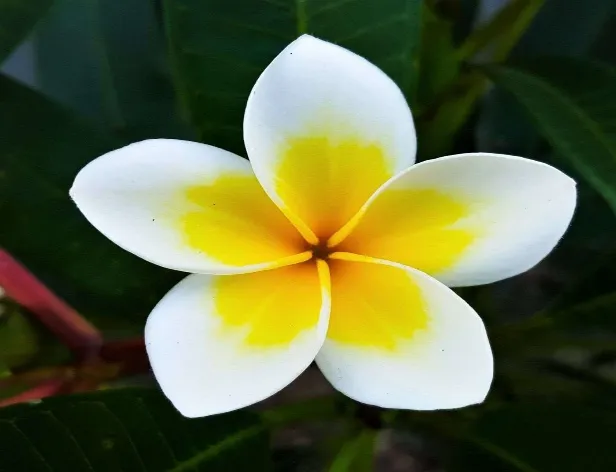
Figure No: 014
Major Chemical Constituent:
Table No: 01 Major Chemical Constituent 5-7
|
Plant Part |
Major Chemical Constituent |
|
Flowers |
Linalool, Terpineol, Plumieride, Quercetin, Kaempferol, sitosterol |
|
Leaves |
Hexadecane, Octadecane, arnesene, Phytol, Flavonoids, Terpenoids |
|
Bark |
Plumieride, Isoplumericin, Plumericin, amyrin, Lupeol, Tannins |
|
Latex |
Tannine, sitosterol, Amyrin acetate, Resins, Cardiac glycosides |
Anti-Microbial Activity:
When it comes to common Ur gastrointestinal pathogens like Escherichia coli, Plumeria Alba seems to have significant antimicrobial qualities, functioning similarly to a broad-spectrum antibiotic. Since many E. coli strains are known to be harmful and frequently exhibit resistance to synthetic medications, finding efficient natural substitutes is crucial. This fragrant plant exhibits potential as a source of novel antibacterial chemicals and as a safe, non-toxic source of molecules that resemble antibiotics.
Mechanism of Action

Figure No.: 02 Mechanism of Action
Table No: 02 Mechanism of Action8-9
|
Phytochemical |
Class |
Mechanism of Antimicrobial Action |
Activity Against |
|
Flavonoids |
Polyphenols |
Disrupt microbial cell membrane, inhibit enzyme activity |
Bacteria, fungi |
|
Alkaloids |
Nitrogen-containing compounds |
Interfere with DNA replication and protein synthesis |
Bacteria |
|
Tannins |
Phenolic compounds |
Precipitate proteins, damage microbial cell wall |
Bacteria, fungi |
|
Saponins |
Glycosides |
Increase cell membrane permeability → cell lysis |
Bacteria, fungi |
|
Terpenoids |
Lipid-soluble compounds |
Disrupt membrane integrity and respiration |
Bacteria |
|
Glycosides |
Sugar-containing compounds |
Interfere with microbial metabolism |
Bacteria |
|
Steroids |
Lipid compounds |
Affect membrane stability and permeability |
Bacteria |
Advantages of Herbal Antimicrobial Gel
LITERATURE REVIEW:
Plumeria alba (White Champa) is a tropical ornamental plant valued for its fragrant white flowers and medicinal uses. Its leaves, stem, latex, seeds, and bark contain bioactive compounds used in traditional medicine. The latex is applied for skin conditions like ulcers, herpes, and scabies, seeds have haemostatic properties, and bark is used on tumors. The plant also shows purgative, cardiotonic, diuretic, and hypotensive effects. Its therapeutic value is documented in Ayurvedic texts like the Charaka Samhita and Sushruta Samhita, reflecting the long-standing reliance on plant-based medicine.
The methanolic flower extract of Plumeria alba showed strong antimicrobial activity against various fungal (Trichoderma spp.) and bacterial species, with effectiveness varying by concentration and organism. Growth inhibition was significant across all tested microbes. GC–MS analysis identified 21 compounds, with benzofuran derivatives being the most abundant, likely contributing to the extract’s antimicrobial effects.
Frangipani (Plumeria spp.) is an ornamental plant with medicinal value, traditionally used for conditions like inflammation, itching, diabetes, and malaria. Its flowers show broad antimicrobial activity against various bacteria and fungi, as well as strong antioxidant properties due to phenols and flavonoids. Compounds such as saponins contribute to its antimicrobial effects, highlighting its potential for pharmaceutical use.
Since ancient times, plants have served as a major source of medicine, and modern research continues to explore those mentioned in traditional systems. Plumeria alba and Plumeria rubra, belonging to the genus Plumeria and family Apocynaceae, are widely used for their therapeutic properties. P. alba is traditionally used to treat ulcers, herpes, and scabies; its seeds have haemostatic properties, and its bark is applied to hard tumors. P. rubra is used in the treatment of venereal diseases, as well as in indigenous medicine for rheumatism, diarrhoea, blennorrhea, and leprosy. The present study focuses on a comparative preliminary phytochemical screening of the flowers of these two species.
The present study aimed to formulate and evaluate herbal gels containing extracts of Allium cepa (Chinese onion), Azadirachta indica (Yin Lian Ye), and Mentha piperita (Chinese peppermint), and to assess their antimicrobial activity against various microorganisms. These plants are well known for their medicinal value in traditional Chinese medicine. Topical gel formulations were prepared individually and in combination using Carbopol-940 as a gelling agent along with suitable excipients. The antimicrobial activity was tested against selected microbial strains, including Staphylococcus aureus, Bacillus subtilis, Escherichia coli, Pseudomonas aeruginosa, and Aspergillus tubingensis, which are associated with acne and other skin infections.
AIM:
To assess Plumeria Alba extract's antibacterial efficacy against particular microbes when added to a gel composition.
OBJECTIVES:
PLAN OF WORK:
Selection of Topic
This is the project's initial phase. Based on interest, necessity, and resource availability, an appropriate and pertinent topic is selected at this stage. The subject should be understandable, researchable, and beneficial to the study.
Literature Review
A literature review entails gathering and analysing data from books, research papers, journals, articles, and earlier studies on the subject. It aids in identifying research gaps and comprehending current knowledge.
Selection Ingredients
The materials or substances needed for formulation are chosen in this step based on their qualities, uses, compatibility, and suitability for the research or product development.
Procurements of Material
Once the ingredients have been chosen, the necessary supplies, chemicals, tools, and equipment are bought or gathered from reputable sources for the experiment.
Formulation Development
In this step, the formulation is prepared utilizing specific ingredients in various ratios and techniques. It is possible to prepare trial batches in order to achieve the necessary product attributes.
Optimization of Formulation
To find the optimal formulation among various trials, optimization is done. To determine the ideal formulation, a number of factors are assessed, including stability, efficacy, appearance, and performance.
Result
The collected experimental data are carefully interpreted and analyzed using appropriate techniques. To ascertain whether the study's goals have been met, data are compared and discussed.
Conclusion and Summary
The study's overall conclusions are summed up in the conclusion. It emphasizes the formulation's success, significant findings, and potential recommendations or future scope.
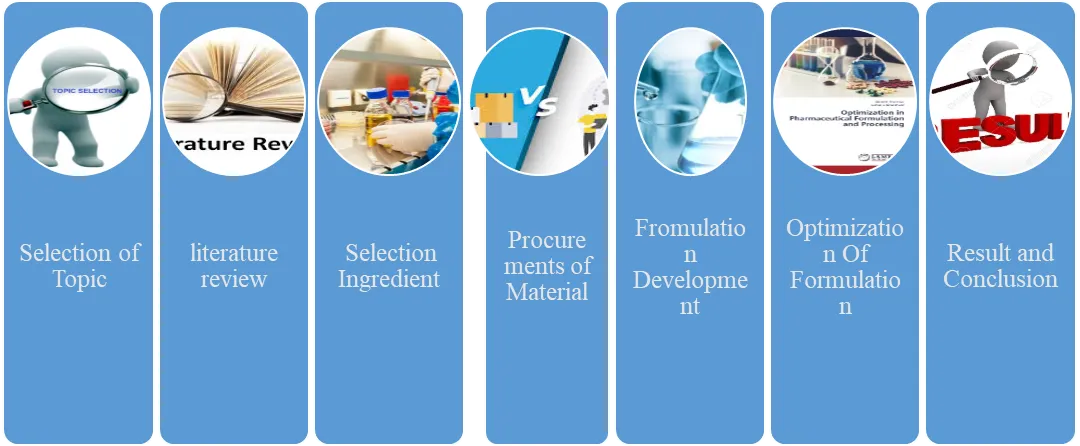
Figure No.: 03 Plan of Work
MATERIALS AND METHODS:
Extraction:
Formula
Table No: 03 Formulas
|
Ingredients |
Formulation 1 |
Formulation 2 |
Formulation 3 |
|
Plumeria alba |
2ml |
4ml |
6ml |
|
Alvera Gel |
1g |
1g |
1g |
|
Polyethylene Glycol |
3ml |
3ml |
3ml |
|
Methyl Paraben |
2mg |
2mg |
2mg |
|
Propyl Paraben |
2mg |
2mg |
2mg |
|
glycerine |
2ml |
2ml |
2ml |
|
Carbomer |
4mg |
5mg |
6mg |
|
Rose water |
q. s |
q. s |
q. s |
|
Triethanolamine |
q. s |
q. s |
q. s |
Table No: 04 Ingredients and Use
|
Ingredients |
Uses |
|
Plumeria alba |
Active Ingredient |
|
Alovera Gel |
Skin Conditioning |
|
Polyethylene Glycol |
Penetration |
|
Methyl Paraben Propyl paraben |
Preservative |
|
Carbamer |
Base Agent |
|
Rose Water |
Buffer |
Preparation of Gel:
Preparation of gel base:
Preparation of gel:
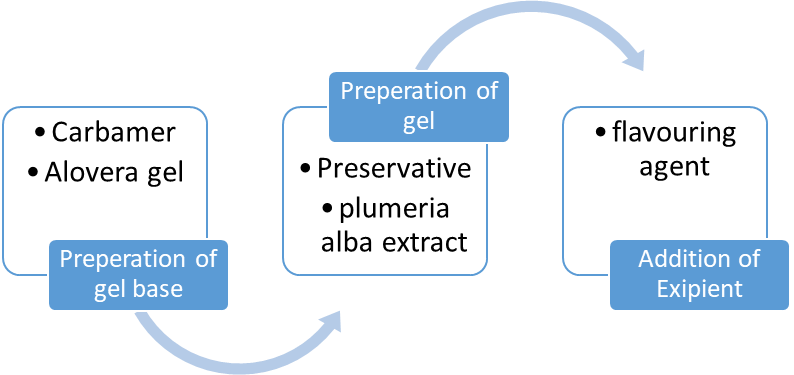
Figure No: 04 Preparation of Gel
EVALUATION PARAMETER:
A number of physicochemical characteristics, including colour, odour, consistency, homogeneity, pH, spreadability, grittiness, washability, viscosity, and drug content, were assessed for prepared formulations.
Organoleptic characteristic:
Gels are homogeneous, translucent, fluid, elastic, and plastic substances with a viscous consistency.
In vitro observations were made to determine the type of gel and its organoleptic properties.
The colour, smell, and texture of the herbal gel were assessed.
pH:
A digital pH meter was used to measure the pH of the suspension after 5 grams of the gel formulation were individually dispersed in 45 millilitres of water.
Every formulation's pH was measured three times, and the averages of the three values were recorded.
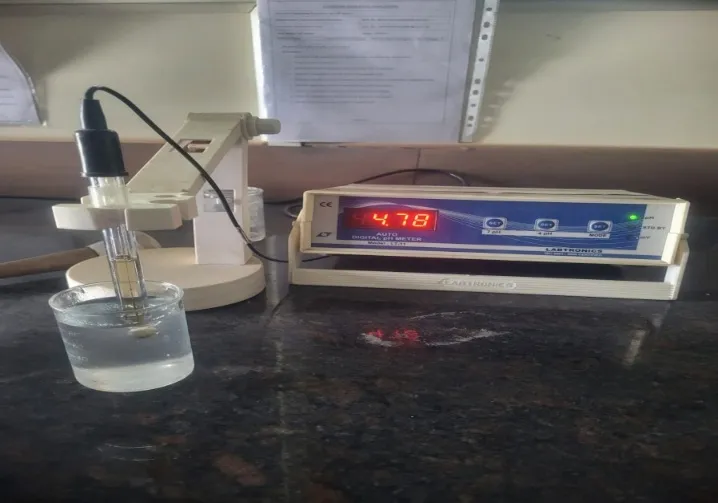
Figure No: 06 pH Determination
Homogeneity:
After the formulations were placed in the container, their homogeneity was examined visually. Their appearance and the existence of any aggregates were examined.
Drug Content:
Weigh one gram of the created gel formulation precisely, and then pour it into a beaker.
To fully dissolve the gel, add an appropriate amount of phosphate buffer (pH 6.8).
To create a homogenous mixture, the fluid was constantly swirled.
Whatman filter paper was used to filter out insoluble particles from the prepared solution.
Phosphate buffer solution was used to provide appropriate dilutions.
A UV-visible spectrophotometer set to 282 nm was used to measure the absorbance of the diluted solution.
The extract's calibration curve was used to determine the formulation's medication content.
The test was performed in triplicate and the average value was recorded.
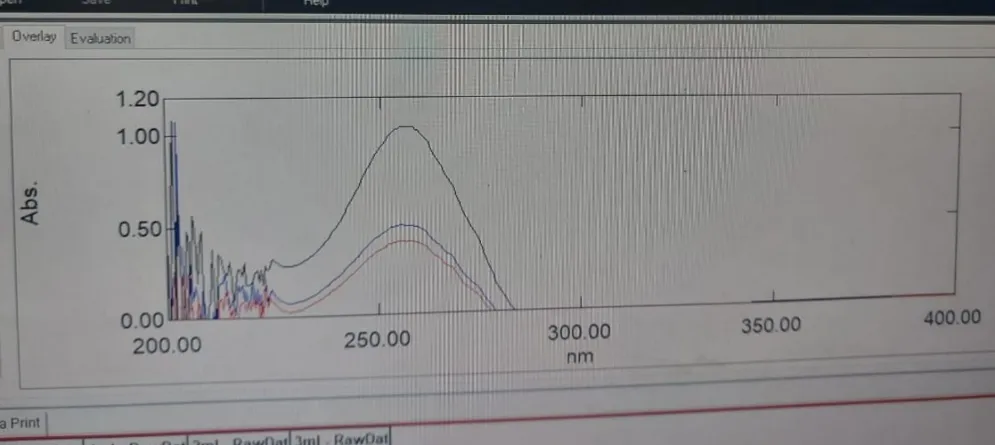
Figure No: 07 Absorbance
Viscosity:
A Brookfield viscometer DVII model with a T-Bar spindle and helipath stand was used to measure the gel's viscosity. A 100 ml beaker was filled with 50 g of gel.
The viscosity of each gel was measured using a T-bar spindle (64).
Viscosity was measured at 6 and 10 rpm as the helipath T-bar spindle was raised and lowered.
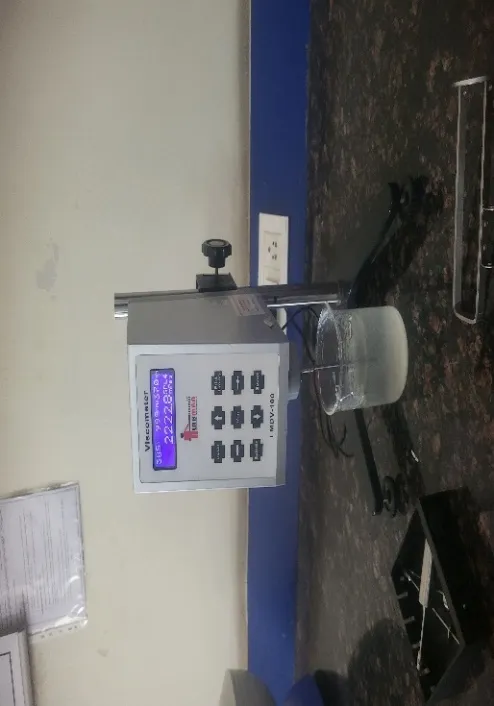
Figure No: 08 Viscosity Determinations
Skin irritation test:
The procedure applies a chemical topically for 42 minutes using the skin tissue rebuilt human epidermis model.
After applying the gel preparation to the skin, it was left for 30 minutes to check for any irritation. The skin showed no signs of redness or itching.
Spreadability test:
The gel was weighed up to 0.5 g before being put on glass-coated graph paper.
Next, we placed a second glass over the gel pile.
The diameter length of many sides was measured in order to calculate the gel diameter. Apply the formulated gel to the wound; it spreads evenly, easily, and without tiny particles.
The following formula was used to determine spreadability:
S = M × L / T
Where, S = Spreadability,
M = Weight in the pan (tied to the upper slide),
L = Length moved by the glass slide and
T = Time (in sec.) taken to separate the slide completely each other.11-14
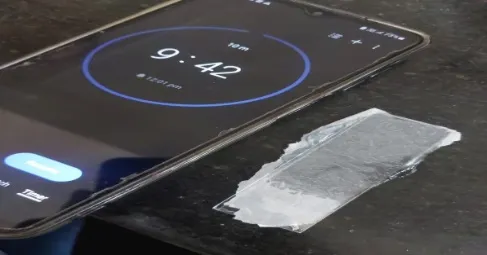
Figure No: 09 Spreadability Determinations
Stability Study:
The produced antifungal gel was kept at various temperatures in hermetically sealed containers.
At prearranged intervals, samples were taken out.
Color, odor, and physical characteristics were noted.
A digital pH meter was used to measure the pH.
A viscometer was used to measure viscosity.
The glass slide method was used to determine spreadability.
A UV spectrophotometer was used to measure the drug content.
|
Condition |
Temperature |
|
Room Temperature |
25 ± 2°C |
|
Refrigerated Temperature |
4 ± 2°C |
|
Accelerated Temperature |
40 ± 2°C |
Table No: 05 Storage Condition
Antifungal Activity:
The potato dextrose agar medium was correctly prepared and sterilized.
After being transferred into sterile petri dishes, the sterile medium was left to harden.
A sterile cotton swab was used to evenly distribute the Candida albicans fungal culture across the agar surface.
A sterile cork borer was used to create wells in the agar plate.
Each well was filled with the necessary amount of antifungal gel.
To allow the gel to diffuse into the medium, the plates were left at room temperature for a while.
For 24 to 48 hours, the plates were incubated at 25 to 28°C.
The zone of inhibition's diameter was measured in millimetres following incubation.

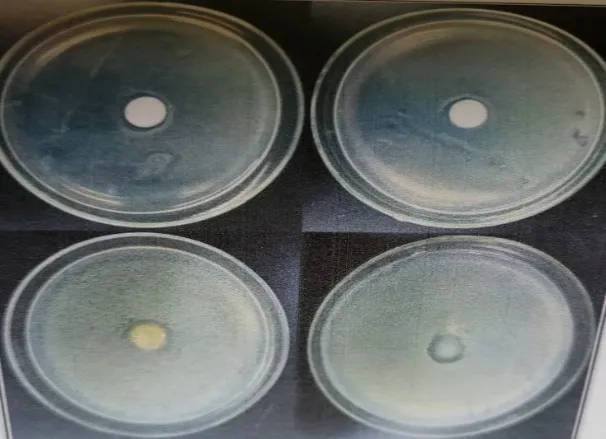
Figure No: 10 Figure No: 11
RESULT AND DISCUSSION:
Drug Content:
Observation:
Table No: 06 Observations
|
Sample |
Absorbance |
|
1ml |
1.037 |
|
2ml |
0.399 |
|
2ml |
0.488 |
Selected absorbance: 0.488
Lambda max: 258
Standard concentration: 100ug/ml
Concentration Calculation = 0.488/0.500*100
= 97.6
Drug Content% = 97.6/100*100
= 97.6 %
Drug Content % = 97.6 %
Result Table: Table No: 07 Result
|
Evaluation Parameter |
F1 |
F2 |
F3 |
|
Colour |
Light white |
Light white |
white |
|
Odour |
Pleasant |
Pleasant |
Pleasant |
|
Appearance |
Smooth |
Smooth |
Smooth |
|
Homogeneity |
Good |
Good |
Better |
|
pH |
4.7 |
5.4 |
5.7 |
|
Spreadability |
18 sec |
15 sec |
20 sec |
|
Drug Content |
95% |
97.6% |
91.8% |
|
Skin Irritation |
No irritation |
No irritation |
No irritation |
|
Stability |
Stable |
Stable |
Stable |
|
Antifungal Activity (Zone of inhibition) |
16mm |
17mm |
21mm |
CONCLUSION:
Using methanolic extract from Plumeria Alba flowers, the study successfully created and assessed an antimicrobial gel with the goal of offering a safe and efficient substitute for traditional synthetic antibacterial agents. Flavonoids, terpenoids, tannins, and glycosides are just a few of the many bioactive substances found in Plumeria Alba that have been shown to have antibacterial and antioxidant qualities.
To improve stability, penetration, and preservation, three gel formulations (F1, F2, and F3) with increasing concentrations of Plumeria Alba extract (2 ml, 4 ml, and 6 ml, respectively) were made utilizing carbomer and aloe vera gel as bases in addition to additional excipients. The gels showed good physicochemical properties: they were uniform, smooth, and had skin-compatible pH values (4.7 to 5.7), which reduced the possibility of discomfort. Tests for spreadability and viscosity verified the gels' uniform coverage, acceptable consistency, and ease of application.
High entrapment efficiency was demonstrated by drug content analysis, with values as high as 97.6%, indicating that the extract was properly incorporated into the gel matrix. The gels retained their chemical and physical characteristics throughout time, indicating formulation robustness, according to stability tests carried out at different temperatures. With a maximum zone of inhibition of 21 mm by the highest concentration gel (F3), antimicrobial testing against Candida albicans revealed significant antifungal activity, highlighting effective microbial growth suppression possibly due to the synergistic action of multiple phytochemicals disrupting microbial membranes and metabolism. Tests for skin irritation confirmed the gel's safety with no discernible negative effects, confirming its appropriateness for topical application.
In conclusion, the project's goals were met by creating a stable, natural, and strong antibacterial gel that may be used to treat skin infections. The study establishes the foundation for next clinical assessments and more extensive antibacterial research while validating Plumeria Alba extract as a viable phytotherapeutic agent.
FUTURE SCOPE:
ACKNOWLEDGEMENT:
The Authors are thankful to Guide Ms. Sameena Ibrahim Shaikh for providing the laboratory facility and her persistent creative encouragement and valuable guidance throughout the research work. Also, I would like to thank my supervisor, for all his help, guidance and assistance throughout the course of the work. It has been a great pleasure and wonderful learning experience to work under his supervision.
CONFLICTS OF INTEREST
The authors declare that they have no competing financial interests or personal relationships that could have appeared to influence the work reported in this paper.
REFERENCES





Komal Gutte*, Sameena Shaikh, Gayatri Kale, Dipti Kanke, Apeskha Jaybhaye, Akash Jadhav., Phytochemical-Guided Formulation and Pharmacological Evaluation of Plumeria Alba Extract-Based Antimicrobial Gel, Int. J. of Pharm. Sci., 2026, Vol 4, Issue 7, 1184-1197. https://doi.org/10.5281/zenodo.21218902
 10.5281/zenodo.21218902