

We use cookies to ensure our website works properly and to personalise your experience. Cookies policy
P. R. Pote Patil College of Pharmacy, Amravati, Maharashtra, India.
Obesity is a major public health challenge and one of the most common nutritional disorders worldwide because of its close association with metabolic syndrome, type 2 diabetes, cardiovascular disease, hypertension, dyslipidemia and chronic inflammation. Although several anti-obesity drugs are available, adverse effects often restrict their clinical use, and plant-based therapies have therefore received increasing attention as safer options. This review emphasises the anti-obesity potential of ten medicinal plants: Camellia sinensis, Hibiscus sabdariffa, Curcuma longa, Cinnamomum verum, Trigonella foenum-graecum, Citrus limon, Momordica charantia, Moringa oleifera, Panax ginseng and Zingiber officinale. These plants act through several mechanisms, including inhibition of adipocyte differentiation and proliferation, pancreatic lipase inhibition, promotion of lipid and glucose metabolism, and antioxidant and anti-inflammatory activity. Among them, green tea and its catechin, epigallocatechin-3-gallate, showed promising anti-obesity, anti-diabetic and cardioprotective effects in experimental studies. Despite this evidence, clinical application remains limited by the lack of high-quality randomized controlled trials. The review also summarises current dietary, pharmacological, endoscopic and surgical approaches to obesity management, and discusses safety limitations, the research gap and future perspectives for herbal anti-obesity therapy.
Obesity is a chronic, multifactorial disease characterized by excessive body fat accumulation that significantly impairs health. It is not simply a result of overeating or lack of willpower, but stems from complex interactions among environmental, genetic, metabolic and social influences.1 Obesity has become a major health concern worldwide because of its strong association with increased morbidity and mortality. Although dietary habits and physical activity play an important role in weight gain, other factors such as age, gender, marital status, educational level, existing health conditions and the use of certain medications also influence body weight.2
Obesity is assessed mostly by body mass index (BMI), a measure of general obesity; waist and hip circumferences and the waist-to-hip ratio are also used.3 National studies in Turkish adults between 1990 and 2010 reported obesity prevalence ranging from 18.8% to 39.7%, with an increasing trend in recent years,4 and a survey in the city of Bursa, Turkey, reported a prevalence of 35.5%.5
Obesity is defined as an excess of adipose tissue that imparts health risk; a body weight 20% above the ideal weight for age, sex and height is considered a health risk. BMI, equal to weight in kg divided by height in m², is the most widely used method to gauge obesity.6 It is a chronic, relapsing, multifactorial and progressive disease in which increased body fat promotes adipose tissue metabolic dysfunction, resulting in adverse metabolic, biomechanical and psychosocial consequences. Its development reflects an interplay of genetic, environmental, socioeconomic and behavioural factors and cannot be attributed solely to individual lifestyle choices.6
Etiology and causes
Obesity results when caloric intake exceeds energy utilization. This imbalance can arise from overeating, a sedentary lifestyle, genetic predisposition, and diets rich in carbohydrates and fats rather than protein. Secondary obesity may follow underlying diseases such as hypothyroidism, Cushing's disease, insulinoma and hypothalamic disorders.6 Other recognised causes include frequent consumption of energy-dense foods, lack of physical exercise, endocrine disorders, and drugs such as corticosteroids, antidepressants, antipsychotics, insulin and antidiabetic agents.
Pathogenesis
Excess calorie intake and genetic factors promote increased fat storage in adipocytes, causing adipocyte hypertrophy and hyperplasia and increased adipose tissue mass. Enlarged adipose tissue releases adipokines and inflammatory mediators such as leptin, TNF-α, IL-6, adiponectin, resistin and PAI-1, which disturb appetite regulation, insulin sensitivity, inflammation and blood pressure, contributing to obesity and its metabolic complications (Fig. 1).6
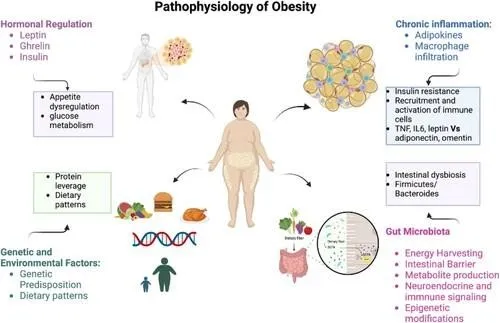
Figure 1: The Pathophysiology of Obesity.1
Effects of obesity
MATERIALS AND METHODS
This review was prepared by compiling and critically analysing published literature on obesity, its pathophysiology, conventional management and anti-obesity medicinal plants. Peer-reviewed review articles, experimental studies, randomized trial reports, systematic reviews, clinical practice guidelines and standard textbooks were consulted; all sources are listed in the reference section. Ten medicinal plants with reported anti-obesity activity were selected, and their synonyms, families, parts used, bioactive constituents and pharmacological activities were tabulated along with plant photographs. As this is a review, no experiments were conducted on animals or human subjects by the authors, and ethical committee approval was therefore not required.
RESULTS AND DISCUSSION
Medicinal plants with anti-obesity potential
Natural plant products are widely used in healthcare and as dietary supplements. Dietary phytochemicals have recently attracted considerable interest as potential agents for health promotion and for counteracting obesity. Because of their chemical diversity and ability to act on various biological targets, plants have long been a source of new drugs, and they are widely used in complementary and alternative medicine systems. The presence of multiple phytochemicals in a plant drug may produce a synergistic effect on several molecular targets, offering an advantage over treatments based on a single constituent.7 The ten plants reviewed here are summarised in Tables 1 and 2.
Table 1: Medicinal Plants Showing Antiobesity Effect (Plants 1-5)
| Sr. No. | Plant | Synonyms | Family and part used | Bioactive constituents | Pharmacological activities | Image | Ref. |
|---|---|---|---|---|---|---|---|
| 1 | Camellia sinensis | Green tea, black tea, tea shrub, tea plant | Theaceae; Part: leaves | Epigallocatechin gallate, epicatechin, caffeine | Antiobesity, antidiabetic, antioxidant, anti-inflammatory, cardiovascular activity | 8 | |
| 2 | Curcuma longa | Turmeric, Indian saffron | Zingiberaceae; Part: rhizome | Curcumin, demethoxycurcumin, curcumin derivatives | Antiobesity, antimicrobial, antiviral, antioxidant, anticancer, antidiabetic | 9 | |
| 3 | Cinnamomum verum | Ceylon cinnamon, C. zeylanicum | Lauraceae; Part: stem bark | Cinnamaldehyde, cinnamyl alcohol, cinnamic acid, cinnamate | Antiobesity, antihyperlipidemic, antimicrobial, antihypertensive | 10 | |
| 4 | Zingiber officinale | Ginger, stem ginger, common ginger, Z. roscoe | Zingiberaceae; Part: rhizome | Gingerenone A, 6-shogaol, 6-gingerol | Antioxidant, anti-inflammatory, antimicrobial, antiobesity, antiemetic, antidiabetic | 11 | |
| 5 | Moringa oleifera | Moringa pterygosperma Gaertn., Guilandina moringa L., drumstick tree, horseradish tree, miracle tree | Moringaceae; Part: leaves | Quercetin, isoquercetin, quercetin-3-O-malonylglucoside, astragalin | Antioxidant, anticancer, antidiabetic, antiobesity, anti-inflammatory, anti-allergic, antiasthmatic, anti-ulcer, antiepileptic, antipyretic | 12 |
| Sr. No. | Plant | Synonyms | Family and part used | Bioactive constituents | Pharmacological activities | Image | Ref. |
|---|---|---|---|---|---|---|---|
| 6 | Momordica charantia | Bitter gourd, bitter melon, kugua, balsam pear, karela | Cucurbitaceae; Part: fruit and seeds | Triterpenoids, saponins, phenolics, conjugated linolenic acid | Antiobesity, antidiabetic, hypolipidemic, antioxidant | 13 | |
| 7 | Trigonella foenum-graecum L. | Fenugreek, methi, methika, hulba, vendhayam, menthe | Fabaceae; Part: seeds | Graecunins, fenugrin B, fenugreekine, trigofoenosides A-G | Antidiabetic, antiobesity, hypolipidemic, hypocholesterolemic, antioxidant | 7 | |
| 8 | Citrus limon | Lemon, kaghzi lemu | Rutaceae; Part: fruit peel and juice | D-limonene | Anti-inflammatory, antiobesity, antimicrobial, anticancer, antiparasitic | 14 | |
| 9 | Panax ginseng | Asian ginseng, Chinese ginseng, Korean ginseng | Araliaceae; Part: root | Ginsenosides, ginseng polysaccharides | Antiobesity, antioxidant, anti-inflammatory, antidiabetic, antimicrobial, anticancer, cardioprotective | 15 | |
| 10 | Hibiscus sabdariffa Linn. | Roselle, Furcaria sabdariffa, Hibiscus cruentus, Hibiscus fraternus, Hibiscus palmatilobus | Malvaceae; Part: calyces | Anthocyanins, flavonoids, phenolic acids, organic acids, polysaccharides | Antioxidant, anti-inflammatory, antidiabetic, antihyperlipidemic, antihypertensive | 16 |
Phytochemical constituents responsible for anti-obesity activity
Medicinal plants contain several bioactive phytochemicals that may influence body weight and obesity-related metabolic processes, including polyphenols, flavonoids, catechins, alkaloids, saponins and terpenoids. Their proposed anti-obesity effects involve regulation of adipocyte differentiation, lipid metabolism, energy expenditure, appetite and inflammatory pathways. The activity of a plant extract, however, depends on its chemical composition, extraction method, dose and bioavailability.17
Epigallocatechin-3-gallate (EGCG), a major catechin of Camellia sinensis, has been investigated for its effects on energy metabolism, fat oxidation and lipid accumulation. Curcumin from Curcuma longa has shown anti-inflammatory and metabolic effects, while ginger constituents such as gingerols, shogaols and gingerenone A have been studied for their effects on adiposity and adipose tissue inflammation.11 Other plants, including Moringa oleifera, Momordica charantia and Trigonella foenum-graecum, contain diverse phytochemicals that may influence glucose and lipid metabolism. The evidence differs among plants, and findings from laboratory and animal studies should not be interpreted as proof of clinical weight-loss efficacy in humans.
Epigallocatechin-3-gallate (EGCG): EGCG is a major bioactive catechin of green tea and is widely investigated for anti-obesity properties. It may regulate body fat accumulation by activating AMP-activated protein kinase (AMPK), a key regulator of cellular energy metabolism. AMPK activation can suppress adipogenesis and lipogenesis while promoting lipolysis and fatty acid oxidation. EGCG may also influence enzymes involved in lipid metabolism and reduce intestinal lipid absorption, and its antioxidant and anti-inflammatory properties may contribute to improved metabolic health. Experimental studies have also examined its anti-diabetic and cardioprotective effects. However, findings from human studies on weight reduction are inconsistent, and further clinical trials are needed to establish its effectiveness and long-term safety.18,19
Evidence from in vitro, in vivo and clinical studies
Research on medicinal plants for obesity includes in vitro experiments, animal studies and clinical trials. In vitro studies identify the effects of plant extracts or isolated compounds on adipocyte differentiation, lipid accumulation and metabolic signalling pathways. Animal studies provide information on body weight, adipose tissue, glucose regulation and lipid profiles under controlled conditions, but these models cannot fully predict the effectiveness or safety of a plant-derived product in humans.
Clinical evidence is particularly important for determining whether experimental effects translate into meaningful weight reduction. A systematic review of medicinal plants with clinical evidence identified promising findings for selected extracts, including green tea, green coffee, Phaseolus vulgaris and Gynostemma pentaphyllum,17 and a systematic review and meta-analysis of herbal clinical trials also reported beneficial findings for selected preparations, although results varied between plants and outcomes.20 These findings support further investigation but do not establish that every medicinal plant has clinically proven anti-obesity effects. Differences in study duration, sample size, plant preparation, dosage and outcome measures make comparison difficult, so the evidence for each plant should be evaluated separately.17,20
Safety and limitations of medicinal plants
Natural origin alone does not guarantee safety. The safety of a herbal preparation depends on the plant species, plant part, chemical composition, extraction method, dosage, duration of use and individual patient characteristics. Variations in cultivation, harvesting, processing and extraction may change the concentration of active constituents, herbal preparations may interact with conventional medicines, and long-term effects may not be adequately established. Weight reduction in laboratory or animal studies does not necessarily indicate the same effect in humans, and systematic reviews have highlighted the need for better-designed trials to establish effective doses, long-term safety and reproducible outcomes.17,18,20
Future research should therefore prioritise botanical authentication, phytochemical standardization, toxicity assessment, evaluation of herb-drug interactions and well-designed randomized controlled trials. Medicinal plants should be regarded as potential complementary therapeutic agents rather than automatic replacements for established obesity treatments.
Mechanism of action of medicinal plants against obesity
Medicinal plants and their phytochemicals exert anti-obesity effects through multiple mechanisms, including suppression of appetite, inhibition of pancreatic lipase, inhibition of adipogenesis, stimulation of lipolysis and fatty acid oxidation, enhancement of thermogenesis and energy expenditure, induction of adipocyte apoptosis, regulation of lipid and glucose metabolism, modulation of gut microbiota, reduction of oxidative stress and inflammation, and epigenetic regulation (Figs. 2 and 3).21,22
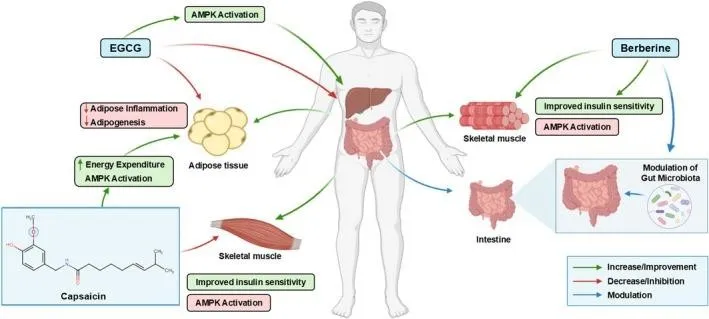
Figure 2: Multi-targeted Molecular Mechanisms of Selected Natural Products in Obesity Management.22
Suppression of appetite: Certain phytochemicals influence appetite-regulating hormones, neuropeptides and gastrointestinal signals, reducing food intake. EGCG from Camellia sinensis and saponins from Panax ginseng are among the compounds associated with appetite regulation.22
Inhibition of pancreatic lipase: Pancreatic lipase digests dietary triglycerides; its inhibition reduces fat hydrolysis and absorption and so decreases calorie availability.22
Inhibition of adipogenesis: Plant constituents can inhibit differentiation of preadipocytes into mature adipocytes by regulating adipogenic transcription factors and metabolic pathways, thereby limiting adipose tissue formation.22
Stimulation of lipolysis and fatty acid oxidation: Some phytochemicals promote breakdown of stored triglycerides into free fatty acids and enhance their oxidation, increasing utilization of stored fat.22
Enhancement of thermogenesis and energy expenditure: Certain constituents increase energy expenditure by promoting thermogenesis and regulating energy-metabolism pathways.22
Induction of adipocyte apoptosis: Some phytochemicals promote apoptosis of adipocytes at different stages of the cell life cycle, reducing adipose tissue mass.22
Regulation of lipid and glucose metabolism: Natural products can modulate lipid metabolism and insulin-related pathways, potentially improving glucose utilization and lipid handling.22
Modulation of gut microbiota: Phytochemicals can alter the composition and function of intestinal microbiota, affecting metabolic signalling, intestinal inflammation and energy homeostasis.22
Reduction of oxidative stress and inflammation: Plant polyphenols have antioxidant and anti-inflammatory activity that may counter the oxidative damage and chronic low-grade inflammation associated with obesity.22
Epigenetic regulation: Some phytochemicals influence obesity-related gene expression through DNA methylation, histone modification, chromatin remodelling and microRNA regulation, affecting adipocyte differentiation and energy balance.22
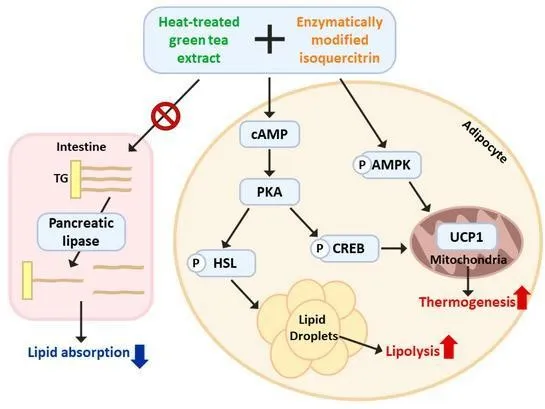
Figure 3: Proposed Mechanisms of Medicinal Plants Against Obesity.22
Current treatment of obesity
Maintaining weight loss is difficult and may need continued clinical intervention.23 In longitudinal observational studies, people who successfully maintain weight often use behavioural strategies such as physical activity, regular self-weighing, a reduced-calorie diet and a consistent eating pattern.24,25 More than 200 minutes of physical activity per week is often required.26 Clinical guidelines support long-term anti-obesity medication in selected patients, and lifelong monitoring and treatment escalation may be required; rapid weight regain after bariatric surgery, for example, may signal a need for additional intervention such as anti-obesity medication.27-29
Dietary therapy
Macronutrient composition: fat provides the most energy (9 kcal/g), whereas carbohydrates and proteins provide about 4 kcal/g. Low-carbohydrate diets may produce faster initial weight loss, while high-protein diets may increase satiety.30 Calorie restriction: reducing calorie intake creates an energy deficit and promotes weight loss; very-low-calorie diets give greater short-term loss but may lead to regain. Meal replacement: partial or complete meal replacements offer convenient calorie restriction and may give greater weight loss than conventional diets. Mediterranean diet: rich in fruits, vegetables, grains and healthy fats with limited red meat, it supports weight loss and cardiovascular health.
Pharmacotherapy
The pharmacological effects, benefits and common adverse effects of the main anti-obesity drugs are summarised in Table 3.
Table 2: Pharmacological Effects of Anti-Obesity Drugs31
| Drug | Pharmacological effect | Improvement / benefits | Common adverse effects |
|---|---|---|---|
| Orlistat | Inhibits pancreatic and gastric lipases, reducing dietary fat absorption. | Promotes weight loss; may reduce cholesterol and triglyceride levels and lower the risk of developing type 2 diabetes. | Oily stools, faecal urgency, diarrhoea and gastrointestinal discomfort. |
| Liraglutide | GLP-1 receptor agonist that suppresses appetite, slows gastric emptying and improves glucose regulation. | Significant weight loss, improved glycaemic control; may improve blood pressure and lipid levels. | Nausea, vomiting, diarrhoea and other gastrointestinal symptoms. |
| Naltrexone / bupropion | Acts on central pathways involved in appetite and food intake, reducing hunger and cravings. | Supports weight reduction when combined with diet and lifestyle modification. | Nausea, headache, constipation and increased blood pressure. |
| Phentermine / topiramate | Reduces appetite through central nervous system effects and alters energy balance. | Significant weight loss; helps maintain reduced body weight with lifestyle modification. | Dry mouth, constipation, insomnia, dizziness and increased heart rate. |
| Lorcaserin | Selective 5-HT2C receptor agonist that suppresses appetite through central serotonin pathways. | Previously used to promote weight loss and appetite control. | Headache, dizziness, nausea and fatigue; withdrawn from the US market in 2020 due to a cancer-safety concern. |
Intragastric balloon
The intragastric balloon (IGB) has been used as an anti-obesity intervention since 1985. It is an endoscopically deployed silicone balloon filled with saline and left inflated in the stomach for about six months (Fig. 4). IGBs offer an alternative for patients who decline or are unfit for bariatric surgery, but a Cochrane review concluded that there is little data supporting its efficacy compared with conventional medical management.32
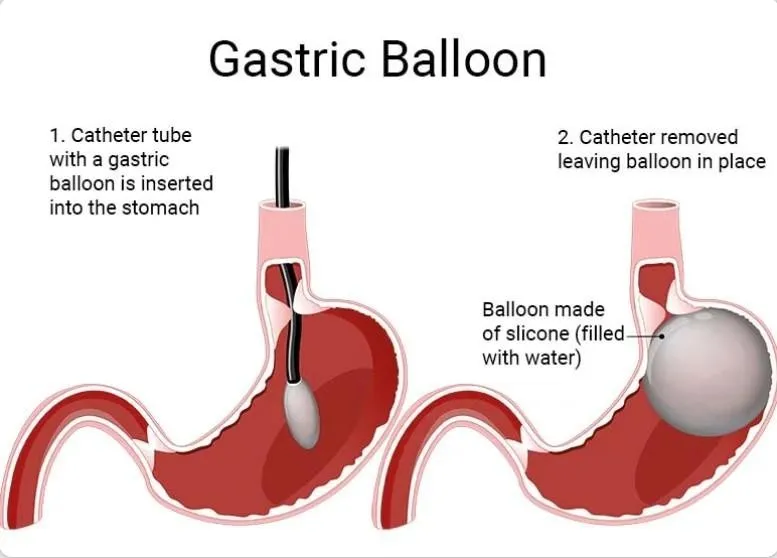
Figure 4: Intragastric Balloon.32
Bariatric surgery
Bariatric surgery is the treatment of choice when other interventions have failed. Regardless of the procedure, its effects on weight loss and associated co-morbidities are superior to those of non-surgical interventions.33 The principal procedures are laparoscopic adjustable gastric banding (LAGB), Roux-en-Y gastric bypass (RYGB), sleeve gastrectomy (SG) and biliopancreatic diversion with duodenal switch (BPD-DS) (Fig. 5).34
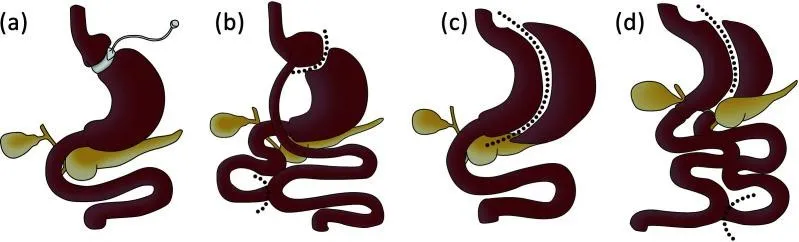
Figure 5: Bariatric Surgeries Schematic. (a) Adjustable Gastric Banding. (B) Roux-en-Y Gastric Bypass. (C) Sleeve Gastrectomy. (D) Biliopancreatic Diversion with Duodenal Switch.34
Laparoscopic adjustable gastric banding (LAGB): an inflatable silicone band is placed around the upper stomach to form a small proximal pouch and narrow the lumen, restricting the quantity of food that can be ingested. Band tightness can be adjusted by injecting fluid through a subcutaneous port. LAGB yields excess weight loss of up to 55% two years after surgery and promotes remission of diabetes (74%), hypertension (54%), dyslipidaemia (40%) and sleep apnoea (94%).31
Roux-en-Y gastric bypass (RYGB): the stomach is divided to form a small proximal pouch, and the small intestine is divided at the jejunal level so that the distal limb is attached to the new pouch. Food passes through the small pouch, limiting intake, and flows directly into the distal small intestine, limiting absorption. RYGB is mostly performed laparoscopically and yields an estimated weight loss of 73% within one year, good long-term maintenance, and remission of diabetes (95%), dyslipidaemia (80%), hypertension (81%) and sleep apnoea (95%).35 Thirty-day mortality is lower with the laparoscopic than the open approach (0.2% vs 2.1%); serious complications include anastomotic leaks (3-5%) and internal bowel herniation (3.1%), which can lead to obstruction and perforation.36
Sleeve gastrectomy (SG): about 80% of the stomach is excised, leaving a narrow sleeve with lower motility that restricts the volume of ingested food. SG is usually laparoscopic and can yield excess weight loss of up to 70% within one year, maintained for at least three years. Like RYGB, it increases remission of diabetes (86%), hypertension (82%), dyslipidaemia (83%) and sleep apnoea (91%). Mortality is low; the most serious complication is leakage (2-3%), and others include strictures (4%) and gastro-oesophageal reflux.31
Biliopancreatic diversion with duodenal switch (BPD-DS): this two-stage, open or laparoscopic and usually irreversible procedure combines a sleeve-like gastrectomy with an intestinal bypass, producing both restriction and malabsorption. It gives substantial long-term weight loss but carries a higher risk of nutritional complications.37
Complications and limitations of bariatric surgery
Emerging therapies and endoscopic interventions
Numerous drugs are in clinical trials. Central nervous system agents include monoamine reuptake inhibitors such as tesofensine and zonisamide-bupropion, novel D3 dopamine antagonists, μ-opioid inverse agonists, AgRP inhibitors and neuropeptide Y5 receptor antagonists such as velneperit. Gut-specific agents include cetilistat (a pancreatic lipase inhibitor), oxyntomodulin (a dual GLP-1 and glucagon receptor agonist), sodium-dependent glucose co-transporter inhibitors and DGAT-1 inhibitors; systemic agents include resveratrol (a sirtuin 1 activator) and beloranib (a methionine aminopeptidase 2 inhibitor).31
Endoscopic devices have also developed rapidly, either as adjuncts to bariatric surgery or as alternatives for patients who are unsuitable for, or decline, surgery. They act by reducing gastric capacity or gastric contents, or by excluding the proximal small intestine to mimic surgical effects. Their main limitation is that most are indicated only for a finite period and require removal, so benefit may be transient.31
Review of related literature
Marie and Abu-Elsaoud (2026) reviewed natural products in obesity management and highlighted that plant phytochemicals combat obesity by inhibiting adipogenesis, regulating lipid metabolism, reducing oxidative stress and inflammation and improving energy expenditure, while stressing the need for further clinical trials.21
Ahmed and Mohammed (2025) reviewed the prevalence, causes, consequences, management and preventive strategies of obesity, emphasising early prevention, lifestyle modification and multidisciplinary care.1
Paixão et al. (2020) systematically reviewed weight control registries and found that regular physical activity, healthy dietary patterns and self-monitoring characterise successful weight-loss maintenance.25
Garvey et al. (2016) developed clinical practice guidelines recommending lifestyle modification as the foundation of obesity care, with pharmacotherapy and bariatric surgery when indicated.27 Jensen et al. (2014) similarly emphasised comprehensive lifestyle interventions and showed that sustained weight reduction improves cardiovascular health,26 and Wing and Phelan (2005) identified physical activity, reduced calorie intake and self-monitoring as keys to preventing weight regain.24
Research gap
Despite promising in vitro and in vivo findings, a significant gap remains between experimental evidence and clinical application. Many plant-derived compounds influence adipogenesis, lipid metabolism, pancreatic lipase activity, energy expenditure, oxidative stress, inflammation and appetite, but high-quality randomized controlled trials evaluating efficacy, safety, optimal dosage, long-term effects and standardized preparations are still limited. Differences in plant species, phytochemical composition, extraction methods, doses and study designs further complicate comparison between studies.21,22
Future perspectives
Future research should establish the clinical efficacy, safety and therapeutic potential of medicinal plants in obesity management. Although Camellia sinensis, Curcuma longa, Zingiber officinale, Moringa oleifera and Momordica charantia have shown promising activity in experimental studies, well-designed human trials are required to confirm their effectiveness.17,20 Isolation and characterization of active phytochemicals such as EGCG, curcumin and ginger-derived compounds may identify the constituents responsible for these effects, and standardized extracts with consistent concentrations of bioactive compounds are needed for reproducibility and quality control.17 Long-term toxicological studies are also necessary to determine appropriate doses, adverse effects and interactions with conventional medicines. Future trials should include adequate sample sizes, appropriate controls, longer follow-up and clinically relevant outcomes such as body weight, waist circumference, lipid profile and blood glucose.17,20
CONCLUSION
Obesity is a chronic, multifactorial disease associated with type 2 diabetes mellitus, cardiovascular disease, hypertension and dyslipidemia. Its management combines dietary modification, physical activity, pharmacological treatment and bariatric surgery according to severity and patient needs. The limitations and adverse effects of some conventional anti-obesity drugs have increased interest in medicinal plants as complementary therapeutic agents. This review highlights the anti-obesity potential of Camellia sinensis, Hibiscus sabdariffa, Curcuma longa, Cinnamomum verum, Trigonella foenum-graecum, Citrus limon, Momordica charantia, Moringa oleifera, Panax ginseng and Zingiber officinale, whose constituents may regulate body weight through inhibition of adipocyte differentiation and lipid accumulation, pancreatic lipase inhibition, improved lipid and glucose metabolism, enhanced energy expenditure and reduced oxidative stress and inflammation. Green tea and EGCG have shown the most promising effects in experimental studies. Further research is required to establish clinical efficacy, safety, dosage and long-term effects before these plants can be recommended as established treatments.
ACKNOWLEDGEMENT
The authors are thankful to P. R. Pote Patil College of Pharmacy, Amravati, for providing the facilities and support for this work.
CONFLICT OF INTEREST
The authors declare that there is no conflict of interest.
REFERENCES




Gauri Rawarkar, Pankaj Chaudhary, Smruti Kale, Vaishnavi Rathod, Plant Based Therapeutic Approaches and Current Strategies for Management of Obesity, Int. J. of Pharm. Sci., 2026, Vol 4, Issue 11, 6021-6033. https://doi.org/10.5281/zenodo.24645852
 10.5281/zenodo.24645852