

We use cookies to ensure our website works properly and to personalise your experience. Cookies policy
Department of Pharmacognosy, Al-Ameen College of Pharmacy, Hosur Road, Bengaluru-560027, Karnataka, India.
Gummies are soft, chewable, gelatin-based dosage forms that can make bitter herbal ingredients easier to take. The present study aimed to formulate and evaluate a herbal gummy containing Shankhpushpi (Convolvulus pluricaulis) extract, flaxseed oil (Linum usitatissimum) and liquorice root powder (Glycyrrhiza glabra) in a gelatin base sweetened with honey and sucrose, intended for cognitive support. The ingredients were examined for macroscopic characters and preliminary phytochemical constituents, and Shankhpushpi was extracted by maceration. Gummies were prepared as a 100 g batch by a hot-mixing and mould-casting method, with glycerin, citric acid and sodium benzoate as excipients. Phytochemical screening of Shankhpushpi indicated carbohydrates, alkaloids, sterols/terpenoids, tannins and flavonoids, while cardiac glycosides were absent. The gummies were crimson red, sweet, smooth and oval, with an average weight of 2.7 g, a pH of 4.82, a dissolution time of 8 min and a viscosity of 3450 ± 50 cP at 25 °C. The formulation is a physically acceptable herbal gummy. Standardisation of the extract, content uniformity, microbial and oxidative stability, and safety and efficacy studies are required before any claim of cognitive benefit can be made.
Herbal medicines are prepared from the leaves, stems, roots, flowers, fruits or seeds of medicinal plants, and they underpin Ayurveda, Unani and several other traditional systems of medicine. Many people, however, find bitter powders, decoctions, tablets and capsules unpleasant or difficult to swallow, which limits regular use. Presenting plant ingredients in a confectionery-type format is one way to improve acceptance. The gummy, a soft chewable gel made mainly with gelatin, can be taken without water, is easy to carry, can be moulded into units of a defined size, and hides unpleasant tastes with sweeteners and flavours.1,2
Maintenance of memory, learning, attention and concentration is a common reason for which consumers turn to herbal and nutritional products, and a gummy carrying a traditional ingredient of this kind could suit people who dislike swallowing tablets. Gummies also have drawbacks. They contain a substantial amount of sugar, gelatin is of animal origin, oils held in the gel may oxidise during storage, excess moisture favours stickiness and microbial growth, and the benefits claimed for herbal gummies are usually inferred from the individual ingredients rather than shown for the finished product.
Profile of the Selected Ingredients
Shankhpushpi consists of the whole dried plant of Convolvulus pluricaulis Choisy (family Convolvulaceae) and is classed in Ayurveda among the Medhya Rasayana, the drugs used to support memory and mental function. It contains alkaloids (shankhapushpine, convolvine and convolamine), flavonoids, coumarins such as scopoletin, and phytosterols such as β-sitosterol. Nootropic, anxiolytic, neuroprotective and antioxidant activities have been reported, mostly from experimental studies, and clinical evidence remains limited.3-5 The name Shankhpushpi is applied in trade to more than one botanical species, so the identity of commercial material needs to be checked.4,6
Flaxseed oil is the fixed oil of the ripe seeds of Linum usitatissimum L. (family Linaceae). It is one of the richest plant sources of alpha-linolenic acid, an essential omega-3 fatty acid, and also contains linoleic and oleic acids, lignans, phytosterols and tocopherols.7,8 Because it is highly unsaturated, it oxidises readily when exposed to heat, light and air.7 Flaxseed has already been used to prepare gummy candy.9
Liquorice is the root and stolon of Glycyrrhiza glabra L. (family Fabaceae). Its main constituents are the sweet triterpenoid saponin glycyrrhizin and several flavonoids, and it is used in traditional medicine and as a sweetening and flavouring agent.10 Heavy or prolonged intake of glycyrrhizin can raise blood pressure and lower serum potassium, and liquorice can interact with some drugs, which matters when it is added to a product taken regularly.10,11
Honey, produced by Apis mellifera from floral nectar, consists mainly of fructose and glucose together with water, organic acids, enzymes, minerals and phenolic compounds. In gummies it acts as a sweetener, taste-masking agent and humectant.12
Gelatin is a protein obtained by partial hydrolysis of collagen from animal skin, bones and connective tissue and is rich in glycine, proline and hydroxyproline. It forms a thermoreversible gel that melts near body temperature, which gives gummies their elastic, chewable texture.13,14
The aim of the present study was to formulate and evaluate a herbal gummy containing Shankhpushpi extract, flaxseed oil and liquorice root powder in a gelatin base, intended for cognitive support. The objectives were to collect the ingredients and record their macroscopic characters, prepare a Shankhpushpi extract by maceration, carry out preliminary phytochemical screening, prepare the gummies, and evaluate them for organoleptic characters, weight, moisture content, pH, dissolution time and viscosity.
MATERIALS AND METHODS
Collection of Samples
Shankhpushpi powder (Shankhapushpi churna, whole-plant powder of C. pluricaulis; batch no. 00182; Vyas Pharmaceuticals, Indore, Madhya Pradesh, India), liquorice root powder, flaxseed oil (cold-pressed, unrefined; Krishna’s), honey and gelatin were collected from the Pharmacognosy laboratory of Al-Ameen College of Pharmacy, Bengaluru, Karnataka. The identity of Shankhpushpi was taken from the supplier’s labelling and macroscopic examination; no further authentication was carried out.
Chemicals, Excipients and Instruments
Molisch’s reagent, concentrated H₂SO₄, Fehling’s A and B solutions, dilute HCl, ferric chloride, lead acetate, acetic anhydride, and Mayer’s, Dragendorff’s, Hager’s and Wagner’s reagents, together with the other solvents and reagents used, were of analytical grade. Gelatin was used as the gelling agent, honey and sucrose (sugar syrup) as sweeteners, glycerin as humectant, citric acid as acidulant, sodium benzoate as preservative,15 and strawberry flavour and red food colour as flavouring and colouring agents. The instruments used were a digital weighing balance (INFRA DIGI IN201L), hot air oven (SURVEWELL), pH meter (LAB MAN LMPH-10), dissolution rate tester (Campbell Electronics) and Brookfield DV-III+ programmable rheometer.
Macroscopic Evaluation of the Ingredients
The colour, odour, taste, shape and size of Shankhpushpi powder, liquorice, honey, flaxseed oil and gelatin were recorded by visual and sensory examination.
Preparation of Shankhpushpi Extract
The extract was prepared by maceration.16,17 Shankhpushpi powder was macerated with [solvent] at a ratio of 1:10 (w/v) in a covered container at room temperature for [duration], protected from direct sunlight and stirred intermittently. The mixture was filtered through Whatman filter paper, and the filtrate was concentrated on a heating mantle to remove the solvent. The residue was scraped into a labelled airtight container and stored until use. The extractive yield (% w/w) was calculated as the weight of dried extract divided by the weight of powder taken × 100.
Preliminary Phytochemical Screening
The Shankhpushpi extract and the liquorice sample were screened by standard qualitative tests:16,17 Molisch’s and Fehling’s tests for carbohydrates and reducing sugars; Dragendorff’s, Mayer’s, Hager’s and Wagner’s tests for alkaloids; Keller-Killiani test for cardiac glycosides; ferric chloride test for tannins and phenolic compounds; Shinoda test for flavonoids; and Liebermann-Burchard test for sterols and terpenoids. Gelatin was examined by the biuret, xanthoproteic, ninhydrin, Millon’s, sulphur and protein-precipitation tests and for gel formation on cooling. Flaxseed oil was examined by the spot, Sudan III, iodine, bromine, solubility and acrolein tests. Honey was tested with Molisch’s, Fehling’s, Benedict’s, Seliwanoff’s, Barfoed’s, iodine, Fiehe’s and ferric chloride tests.
Formulation of Herbal Gummies
A 100 g batch of gummies was prepared by a hot-mixing and mould-casting method according to the formula in Table 1. Gelatin was sprinkled over 25–30 g of purified water, allowed to swell for 20–30 min and dissolved by gentle heating in a water bath at 50–60 °C without boiling. In a separate beaker, sucrose, honey and glycerin were dissolved in the remaining water with gentle warming. The Shankhpushpi extract and sieved liquorice powder were dispersed in this sweetening phase, and flaxseed oil was added slowly with continuous stirring. No emulsifier was used, and the mixture was inspected for oil droplets and phase separation. The herbal mixture was then added gradually to the gelatin solution held at 50–60 °C and stirred gently, avoiding vigorous stirring and excessive heating to limit air incorporation and oxidation of the oil. Sodium benzoate (dissolved in a small volume of water), citric acid, strawberry flavour and red food colour were added and mixed until uniform. The weight was made up to 100 g with purified water, and the mass was poured into silicone moulds while still pourable, cooled at room temperature and kept at about 4 °C for 8–12 h until firm. The gummies were demoulded and examined for uniformity of shape, colour, texture and surface defects. The steps are summarised in Figure 1.
Table 1: Formulation of Herbal Gummies (100 G Batch)
| Ingredient | Quantity | Function |
|---|---|---|
| Shankhpushpi extract | 2 g | Herbal ingredient |
| Flaxseed oil | 1 mL | Herbal ingredient (oil) |
| Liquorice root powder | 1 g | Herbal ingredient |
| Gelatin | 8 g | Gelling agent |
| Honey | 15 g | Sweetener |
| Sucrose (sugar syrup) | 20 g | Sweetener, binder |
| Glycerin | 3 g | Humectant |
| Citric acid | 0.5 g | Acidulant |
| Sodium benzoate | 0.1 g | Preservative |
| Strawberry flavour | 0.5 g | Flavouring agent |
| Red food colour | 0.05 g | Colourant |
| Purified water | q.s. to 100 g | Vehicle |
q.s. = quantity sufficient.
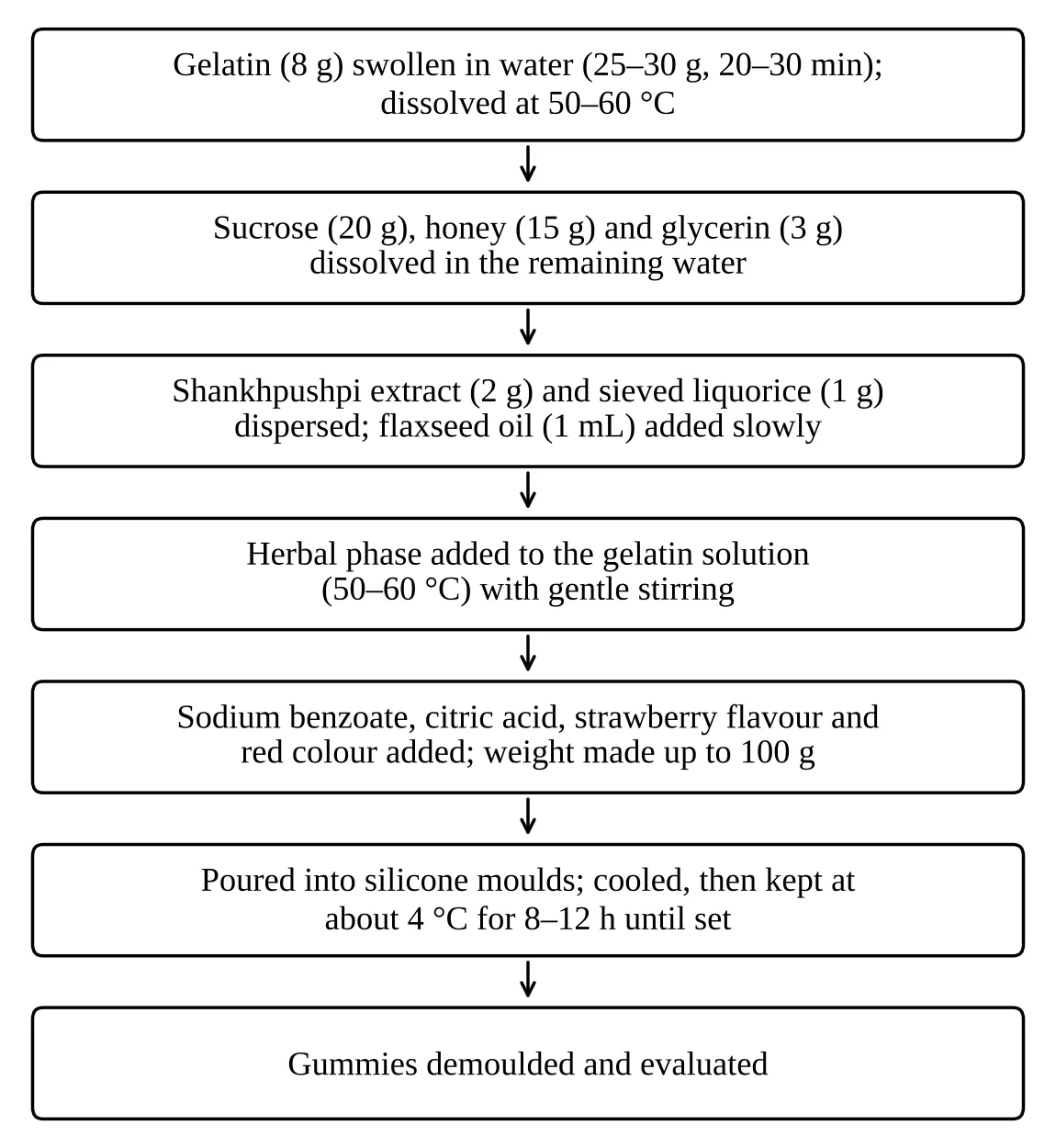
Figure 1: Flow Chart of the Preparation of Herbal Gummies
Evaluation of Gummies
Organoleptic evaluation. Colour, odour, taste, texture, shape and surface of the gummies were assessed visually and by sensory examination.
Weight variation. Five gummies were selected at random and weighed individually on a digital balance, and the average weight was calculated. Individual weights within 90–110% of the average weight were considered acceptable.
Moisture content. Moisture was determined by the loss on drying method.18 About 1 g of gummy was weighed, dried in a hot air oven at 100–120 °C for 4 h, cooled in a desiccator and weighed again, and drying was repeated until constant weight. Moisture content (%) = (loss in weight/initial weight) × 100.
pH. A portion of gummy was cut into pieces and dissolved in distilled water, and the pH was measured with a pH meter calibrated with standard buffer solutions.
Dissolution time. The time taken for a gummy to dissolve completely was determined in the dissolution rate tester in [medium, volume, temperature and stirring speed], by observation at regular intervals.
Viscosity. The viscosity of the formulation was measured at 25 °C with a Brookfield DV-III+ programmable rheometer ([spindle and speed]) and is expressed in centipoise (cP).
RESULTS AND DISCUSSION
Macroscopic Characters of the Ingredients
The macroscopic characters of the ingredients are given in Table 2. Shankhpushpi was greenish-brown to brown, with a mild characteristic odour and a bitter to slightly sweet taste. Liquorice was yellowish-brown to dark brown and distinctly sweet. Flaxseed oil was a pale to golden-yellow oily liquid with a mild nutty taste, honey was a viscous golden-yellow to dark amber liquid, and gelatin was colourless to pale yellow granules or powder with little odour or taste.
Table 2: Macroscopic Characters of the Ingredients
| Character | Shankhpushpi | Liquorice | Honey | Flaxseed oil | Gelatin |
|---|---|---|---|---|---|
| Colour | Greenish-brown to brown | Yellowish-brown to dark brown | Golden yellow to dark amber | Pale yellow to golden yellow | Colourless to pale yellow |
| Odour | Characteristic, mild | Characteristic, faint | Characteristic, sweet | Characteristic, mild | Odourless to faint |
| Taste | Bitter, slightly sweet | Distinctly sweet | Sweet | Mild, nutty | Tasteless to bland |
| Shape and size | Irregular pieces or powder; variable | Cylindrical root or powder; variable | Viscous liquid; no definite shape | Oily liquid; no definite shape | Granules, flakes or powder; variable |
Shankhpushpi Extract
Maceration of the Shankhpushpi powder gave a dark-coloured extract (Figure 2), with an extractive yield of [value]% w/w.
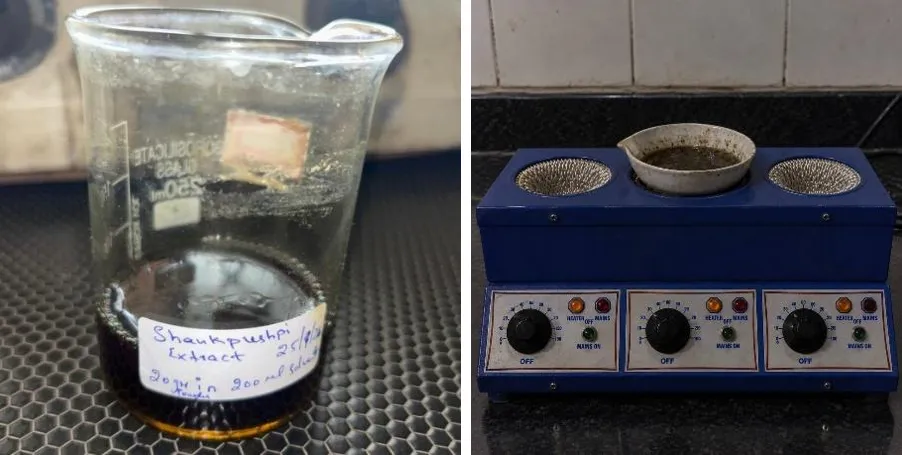
Figure 2: (A) Shankhpushpi Extract After Maceration; (B) Concentration of the Filtrate on a Heating Mantle
Preliminary Phytochemical Screening
The results of the phytochemical tests are summarised in Table 3. Shankhpushpi gave positive tests for carbohydrates, reducing sugars, sterols/terpenoids, alkaloids (with all four reagents), tannins/phenolic compounds and flavonoids, and was negative for cardiac glycosides. The alkaloids, flavonoids and phytosterols are consistent with the constituents reported for C. pluricaulis,3-5 although qualitative tests do not identify individual compounds and cannot confirm the identity of the species. Liquorice gave positive tests for carbohydrates, reducing sugars, sterols/terpenoids, alkaloids, flavonoids and phenolic compounds. Because only Dragendorff’s reagent was used for liquorice, and this reagent can also react with non-alkaloidal constituents, the alkaloid result for liquorice is only presumptive.
Table 3: Preliminary Phytochemical Screening of Shankhpushpi and Liquorice
| Test (constituent) | Shankhpushpi | Liquorice |
|---|---|---|
| Molisch (carbohydrates) | + | + |
| Fehling (reducing sugars) | + | + |
| Liebermann-Burchard (sterols/terpenoids) | + | + |
| Dragendorff (alkaloids) | + | + |
| Mayer (alkaloids) | + | NT |
| Hager (alkaloids) | + | NT |
| Wagner (alkaloids) | + | NT |
| Ferric chloride (tannins/phenolics) | + | + |
| Shinoda (flavonoids) | + | + |
| Keller-Killiani (cardiac glycosides) | − | NT |
+ = present; − = absent; NT = not tested.
Gelatin gave positive biuret, xanthoproteic, ninhydrin, Millon’s and protein-precipitation tests, indicating protein, gave no black precipitate in the sulphur test, and formed a gel on cooling that melted on warming, which confirms its gelling property. Flaxseed oil left a permanent translucent greasy spot on filter paper, stained with Sudan III, decolourised iodine and bromine solutions (indicating unsaturation), was insoluble in water but soluble in ether and chloroform, and gave a positive acrolein test, as expected for a fixed oil containing glycerol esters. Honey gave positive tests for reducing sugars (Fehling’s, Benedict’s and Barfoed’s tests) and for ketose sugars such as fructose (Seliwanoff’s test), showed no starch with iodine, and gave no strong reaction with ferric chloride. The cherry-red colour in Fiehe’s test may point to hydroxymethylfurfural, which forms when honey is overheated or stored for long, so the heat applied to honey during manufacture should be kept low.
Formulation and Organoleptic Properties
The gummies prepared by hot-mixing and mould-casting set into firm, individual units on cooling (Figure 3). They were crimson red, sweet, smooth and oval (Table 4). In gummy systems the gelatin network provides the gel structure, while sugars, glycerin and water content govern texture and firmness.19 Honey and sucrose provided sweetness and helped to mask the bitter taste of Shankhpushpi, and citric acid and sugars also influence how strawberry flavour is perceived in gummies.20 The approach is similar to that used for other herbal gummies.1,2 Sensory evaluation by a trained or consumer panel was not carried out.
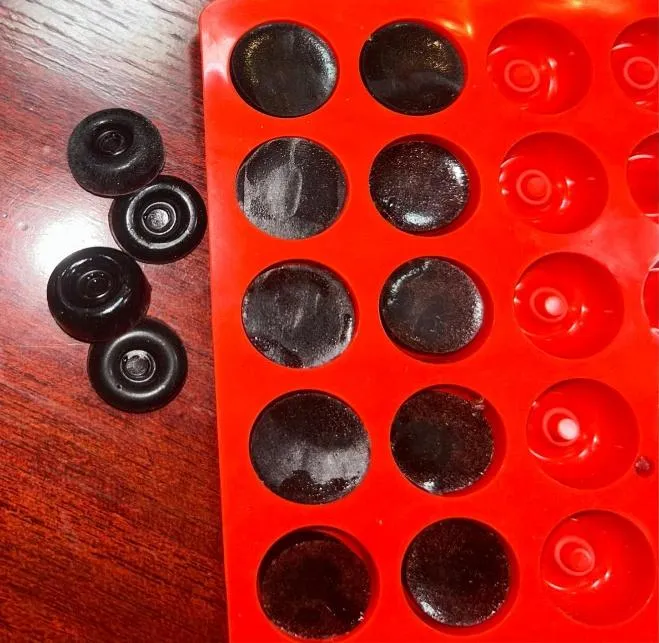
Figure 3: Herbal Gummies, Demoulded (Left) and in the Silicone Mould (Right)
Physicochemical Evaluation
The physicochemical results are given in Table 4. The average weight of five gummies was 2.7 g. The moisture content determined by loss on drying was [value] ± 0.4%. Moisture is an important quality attribute of gummies, since too much makes them sticky and supports microbial growth, whereas too little makes them hard and brittle.
The pH of the gummies was 4.82. This mildly acidic value mainly reflects the citric acid added. Sodium benzoate is generally considered most effective as a preservative under acidic conditions, usually below about pH 4.5, so the observed pH is close to but above this range, and preservative efficacy should be confirmed by microbial testing.
The gummies dissolved completely in 8 min under the test conditions, indicating that the gel matrix softens and disperses readily in an aqueous medium. This value refers to dissolution of the gummy matrix; release of the individual herbal constituents was not measured. The viscosity of the formulation was 3450 ± 50 cP at 25 °C, indicating a thick but flowable consistency. These values were obtained for a single formulation and no comparison with other formulations was made, so they serve as a baseline for later optimisation.
Table 4: Evaluation of the Herbal Gummies
| Parameter | Observation |
|---|---|
| Colour | Crimson red |
| Taste | Sweet |
| Texture | Smooth |
| Shape | Oval |
| Average weight (n = 5) | 2.7 g |
| Moisture content (loss on drying) | [value] ± 0.4% |
| pH | 4.82 |
| Dissolution time | 8 min |
| Viscosity at 25 °C | 3450 ± 50 cP |
Packaging and Storage
Gummies take up moisture and can become sticky, and flaxseed oil is prone to oxidation. Each gummy should therefore be packed in moisture-resistant, light-resistant and airtight packaging, such as food-grade containers or blister packs, and stored in a cool, dry place away from direct sunlight and heat, with the container kept tightly closed after opening.
Limitations of the Study
Cognitive activity of the gummies was not tested, and the effects attributed to Shankhpushpi, flaxseed oil and liquorice come from the literature on the individual ingredients, not from this product. The identity of Shankhpushpi was not confirmed beyond supplier labelling and macroscopic examination, the extract was not standardised, and the content of the herbal ingredients per gummy and the content uniformity were not determined. Only the average weight of the gummies was recorded. Flaxseed oil was added without an emulsifier, so its dispersion, peroxide value and storage stability need to be examined. Stability, microbial quality and safety were not studied. Liquorice contains glycyrrhizin, whose amount per gummy and cumulative intake should be assessed, gelatin is of animal origin and may not suit vegetarian users, and the sugar content makes the gummies unsuitable for people who must limit sugar.
CONCLUSION
A gelatin-based herbal gummy containing Shankhpushpi extract, flaxseed oil, liquorice root powder and honey was prepared and showed acceptable organoleptic and physicochemical characters, with an average weight of 2.7 g, a pH of 4.82, a dissolution time of 8 min and a viscosity of 3450 ± 50 cP. The gummy is a convenient and palatable way of presenting the selected ingredients. Further work should include standardisation of the extract, content uniformity, oxidative and microbial stability studies, development of sugar-reduced and plant-based gelling alternatives, and safety and efficacy evaluation before any cognitive benefit can be claimed.
ACKNOWLEDGEMENTS
The authors thank Dr. Md. Salahuddin, Principal, Dr. Krishnamurthy, Professor and Head of the Department of Pharmacognosy, Dr. Vinutha Bhat, Associate Professor, and the laboratory staff of Al-Ameen College of Pharmacy, Bengaluru, for providing the facilities and support to carry out this work.
REFERENCES



Mohammed Mushraff Pasha, Mohammed Aqeel, Netravati Deshpande, Formulation and Evaluation of a Herbal Nutraceutical Gummy Containing Convolvulus Pluricaulis (Shankhpushpi) Extract for Cognitive Support, Int. J. of Pharm. Sci., 2026, Vol 4, Issue 11, 5882-5889. https://doi.org/10.5281/zenodo.24645582
 10.5281/zenodo.24645582