

We use cookies to ensure our website works properly and to personalise your experience. Cookies policy
Bhujbal Knowledge City, Met’s Institute of Pharmacy, Adgaon, Nashik
Title: Assessment of Prescribing Pattern and Medication Regimen Complexity Index in Myocardial Infarction Patients with Comorbidities: A Prospective Cross-Sectional Study Background: Myocardial infarction (MI) is a major cause of morbidity and mortality worldwide. The coexistence of comorbidities such as diabetes mellitus (DM), hypertension (HTN), and chronic kidney disease (CKD) often necessitates complex pharmacotherapy, increasing the risk of polypharmacy and medication-related problems. The Medication Regimen Complexity Index (MRCI) is a validated tool used to quantify regimen complexity and identify patients at risk of poor adherence. Objectives: To evaluate prescribing patterns, assess medication regimen complexity using MRCI, and identify factors associated with high regimen complexity among MI patients with comorbidities. Methods: A prospective cross-sectional observational study was conducted among 150 MI patients admitted to a tertiary care hospital in Nashik, India, over six months. Demographic and clinical data, comorbidities, and prescribed medications were collected. MRCI scores were calculated, and statistical analyses including chi-square tests, independent t-tests, and binary logistic regression were performed using SPSS version 29.0. Results: The mean age of participants was 60.92 10.05 years, with males constituting 68.67% of the study population. Diabetes mellitus, hypertension, and CKD were present in 49.33%, 43.33%, and 25.33% of patients, respectively. Cardiovascular polypharmacy was observed in 42% of patients. Statins (12.43%), antiplatelets (11.26%), betablockers (9.90%), and vasodilators (9.13%) were among the most commonly prescribed medications.The mean total MRCI score was 16.96 7.13. Diabetes mellitus was significantly associated with higher MRCI scores (p = 0.003). A significant association was observed between cardiovascular polypharmacy and medication regimen complexity (p < 0.001). Logistic regression analysis identified diabetes mellitus (OR = 3.25, 95% CI: 1.417.51, p = 0.006) and cardiovascular polypharmacy (OR = 4.09, 95% CI: 1.948.59, p < 0.001) as independent predictors of high regimen complexity. Conclusion: Medication regimen complexity is common among MI patients with comorbidities and is strongly influenced by diabetes mellitus and cardiovascular polypharmacy. Routine assessment of MRCI may aid in identifying patients requiring medication review and regimen simplification strategies to improve adherence and clinical outcomes.
Myocardial infarction (MI) is one of the leading manifestations of cardiovascular disease (CVD) and remains a major cause of mortality and morbidity worldwide. According to the World Health Organization (WHO), cardiovascular diseases account for approximately 17.9 million deaths annually, with ischemic heart disease representing the largest proportion of these deaths. Early diagnosis and prompt evidence-based treatment are essential to reduce myocardial damage, prevent complications, and improve survival outcomes in patients with MI (1,2).
Myocardial infarction occurs due to prolonged myocardial ischemia resulting from an abrupt reduction or complete cessation of coronary blood flow, most commonly caused by rupture of an atherosclerotic plaque followed by thrombus formation. Depending on electrocardiographic findings, MI is classified into ST-elevation myocardial infarction (STEMI) and non-ST-elevation myocardial infarction (NSTEMI), each requiring specific pharmacological and interventional management strategies (3,4).
The burden of myocardial infarction is increasing rapidly in developing countries such as India due to urbanization, sedentary lifestyle, unhealthy dietary habits, smoking, obesity, diabetes mellitus, and hypertension. Furthermore, the age of onset of coronary artery disease among the Indian population is considerably younger than that observed in Western countries, making cardiovascular disease a significant public health concern (5,6).
Patients admitted with myocardial infarction frequently present with multiple comorbid conditions, particularly hypertension, diabetes mellitus, chronic kidney disease (CKD), dyslipidemia, and heart failure. These comorbidities substantially increase disease severity and complicate therapeutic management because each condition requires additional pharmacological treatment. Consequently, most patients receive multiple medications simultaneously, resulting in polypharmacy and increased treatment burden (7,8).
Polypharmacy, generally defined as the concurrent use of five or more medications, has become increasingly common among patients with myocardial infarction. Although evidence-based cardiovascular pharmacotherapy involving antiplatelets, statins, beta-blockers, angiotensin-converting enzyme inhibitors (ACEIs), angiotensin receptor blockers (ARBs), anticoagulants, and other supportive medications has significantly improved survival, the addition of medications for associated comorbidities substantially increases medication burden (9,10). Excessive polypharmacy has been associated with poor medication adherence, drug-drug interactions, adverse drug reactions, medication errors, increased healthcare costs, prolonged hospitalization, and higher rates of hospital readmission (11,12).
Current international guidelines from the American College of Cardiology (ACC), American Heart Association (AHA), and European Society of Cardiology (ESC) strongly recommend evidence-based pharmacotherapy for the management of myocardial infarction. However, several studies have demonstrated considerable variations in prescribing practices due to physician preference, institutional protocols, patient-specific characteristics, socioeconomic factors, and healthcare resource availability. Therefore, evaluating real-world prescribing patterns is essential to determine whether current treatment practices are consistent with established clinical guidelines (13–15).
Drug utilization research plays an important role in evaluating the quality of prescribing practices and promoting rational drug use. Prescription pattern analysis provides valuable information regarding the selection of medications, frequency of drug use, combination therapy, and adherence to standard treatment guidelines. Such studies help identify inappropriate prescribing practices and provide opportunities to optimize pharmacotherapy, improve clinical outcomes, and reduce unnecessary medication use (16,17).
Medication regimen complexity has emerged as another important determinant of successful pharmacotherapy. The complexity of a medication regimen depends not only on the number of prescribed medications but also on dosage forms, dosing frequency, administration schedules, and additional instructions. Increasing medication regimen complexity is strongly associated with poor medication adherence, reduced treatment effectiveness, increased medication errors, and poorer clinical outcomes (18).
The Medication Regimen Complexity Index (MRCI), developed by George et al., is a validated and reliable tool designed to objectively quantify medication regimen complexity. Unlike simple medication counts, the MRCI evaluates three major components of the prescription: dosage forms, dosing frequency, and additional administration instructions. The cumulative score provides a comprehensive assessment of the overall complexity of an individual's medication regimen (19).
Several studies have demonstrated that higher MRCI scores are significantly associated with poor medication adherence, increased hospitalization, greater healthcare utilization, and lower quality of life among patients with chronic diseases, including cardiovascular disorders (20,21). Therefore, assessment of medication regimen complexity provides clinicians with an opportunity to identify patients at higher risk of non-adherence and implement strategies such as medication review, regimen simplification, patient counseling, and pharmacist-led interventions.
Despite the growing recognition of medication regimen complexity, limited evidence is available regarding prescribing patterns and MRCI assessment among Indian patients with myocardial infarction, particularly those with multiple comorbidities. Most available studies have been conducted in Western populations, where healthcare delivery systems, prescribing practices, and patient characteristics differ substantially from those observed in India. Consequently, there remains a need for region-specific data to better understand real-world prescribing practices and medication complexity in Indian clinical settings (22,23).
Therefore, the present prospective cross-sectional observational study was undertaken to evaluate the prescribing pattern of drugs used in patients with myocardial infarction and associated comorbidities and to assess medication regimen complexity using the Medication Regimen Complexity Index (MRCI). The findings of this study are expected to provide valuable evidence regarding cardiovascular polypharmacy, identify factors associated with high medication regimen complexity, promote rational prescribing practices, and support the development of interventions aimed at improving medication adherence and clinical outcomes among patients with myocardial infarction.
Need of Study
The high incidence of myocardial infarction (MI), along with the frequent presence of comorbidities such as type 2 diabetes mellitus (T2DM), hypertension (HTN), chronic kidney disease (CKD), and acute kidney injury (AKI), significantly increases the complexity of clinical management. These conditions often require multiple pharmacological therapies, leading to polypharmacy. Polypharmacy, while often necessary, is associated with an increased risk of drug drug and drug disease interactions, adverse drug reactions, poor medication adherence, and therapeutic duplication. Such complexities can compromise treatment effectiveness and result in suboptimal clinical outcomes. Therefore, evaluating and optimizing medication regimens in MI patients is essential. Understanding polypharmacy can help improve treatment strategies, enhance patient safety, reduce healthcare costs, and ultimately improve clinical outcomes.
OBJECTIVES
MATERIALS AND METHODS
Study Design and Setting
A prospective, cross-sectional observational study was carried out to quantify medication regimen complexity using the Medication Regimen Complexity Index (MRCI) and to examine the prescription patterns of drugs used in patients with myocardial infarction (MI). The study was conducted at Sahyadri Hospital, a tertiary care multispecialty facility offering specialist cardiovascular care, in Nashik, Maharashtra, India. The investigation was carried out between November 2024 and April 2025, a span of six months. The Institutional Ethics Committee examined and approved the study protocol prior to its start, and all operations were carried out in compliance with the ethical guidelines for biomedical research involving human subjects.
Study Population
Inclusion Criteria
Patients with a confirmed diagnosis of myocardial infarction who were admitted to the cardiology department were included in the study. During the study period, 150 patients who fit the eligibility requirements were enrolled. Individuals of any gender who were diagnosed with ST-Elevation Myocardial Infarction (STEMI), Non-ST-Elevation Myocardial Infarction (NSTEMI), In order to assess their influence on prescription patterns and medication complexity, patients with related comorbidities such as diabetes mellitus, hypertension, chronic kidney disease.
Exclusion Criteria
Patients with serious mental disease, those under the age of eighteen, pregnant or nursing women, and those with insufficient medical records were not allowed to participate in the study. Additionally, patients who refused to give informed consent were not allowed to participate.
Study Materials
Patient case records, treatment charts, laboratory investigation reports, drug administration records, discharge summaries, and a specifically created data collection form were among the resources used in the study. The complexity of the drug regimens given to research participants was evaluated using the drug Regimen Complexity Index (MRCI) tool. Data entry, administration, and statistical analysis were done using Microsoft Excel and the Statistical Package for Social Sciences (SPSS) version 29.0.
Data Collection Procedure
Prospective data collection was carried out by examining patient medical records and conducting patient interviews as needed. Prior to data collection, each subject provided written informed consent. A verified and organized data collecting form created especially for the study was used to gather information.
Age, gender, height, weight, body mass index (BMI), and social history were among the demographic information gathered. Clinical data was recorded, including the diagnosis, type of myocardial infarction, length of hospital stay, prior history of cardiovascular illness, and related comorbid diseases. Additionally included were specifics of laboratory tests, including cardiac biomarkers, serum creatinine, blood glucose levels, lipid profiles, and other pertinent biochemical characteristics.
Medication-related data was gathered from discharge prescriptions and inpatient treatment charts. The medication's name, dosage form, dose, frequency of administration, method of administration, length of therapy, and therapeutic category were all recorded. Antiplatelet agents, anticoagulants, statins, beta-blockers, angiotensin-converting enzyme inhibitors (ACE inhibitors), angiotensin receptor blockers (ARBs), vasodilators, calcium channel blockers, antidiabetic agents, antihypertensive drugs, proton pump inhibitors, and other supportive medications were among the various therapeutic categories into which prescribed medications were divided.
Evaluation of Prescription Patterns
The use of different drug classes administered to patients with myocardial infarction was assessed using prescription pattern analysis. Calculations were made for the frequency and percentage of specific medications and therapeutic classes. Monotherapy and combination therapy patterns were evaluated. Analysis was done on the prescribing patterns in patients with various comorbid diseases, such as diabetes mellitus, hypertension, and chronic kidney disease. The degree of polypharmacy among patients was also assessed in the study.
The concurrent use of five or more drugs was referred to as polypharmacy. Each patient's number of prescribed cardiovascular drugs was taken into account when evaluating cardiovascular polypharmacy. Standard treatment guidelines for managing myocardial infarction were used to assess the appropriateness of prescribed drugs.
Assessment of Medication Regimen Complexity
Medication regimen complexity was assessed using the Medication Regimen Complexity Index (MRCI), a validated and reliable tool designed to quantify the complexity of medication regimens. Unlike simple medication counts, the MRCI evaluates multiple aspects of a prescription that may influence patient adherence and treatment outcomes.
The MRCI consists of three sections:
Section A: Dosage Forms
This section assigns scores based on the type of dosage form prescribed, such as tablets, capsules, injections, inhalers, topical preparations, and other formulations.
Section B: Frequency of Dosage
This section evaluates how frequently medications are administered. Higher scores are assigned to regimens requiring multiple daily doses compared to once-daily medications.
Section C: Additional Directions
This section evaluates unique administration guidelines that may complicate a regimen, such as breaking pills, taking drugs with food, or using different dose schedules.
Individual scores from all three sections were summed to obtain the total MRCI score for each patient. Higher scores indicated greater medication regimen complexity. Patients were categorized based on their complexity scores to evaluate factors associated with increased treatment burden.
Outcome Measures
The primary result of the study was to evaluate prescription patterns in patients with myocardial infarction and to assess the complexity of medication regimens by the MRCI tool. Secondary outcomes were factors associated with high MRCI scores and the impact of comorbidities and polypharmacy on medication complexity.
Statistical Analysis
The collected data were checked for completeness, coded, and entered into Microsoft Excel before being exported to SPSS version 29.0 for statistical analysis. Descriptive statistics were used to summarize demographic and clinical characteristics. Continuous variables were expressed as mean ± standard deviation, while categorical variables were presented as frequencies and percentages.
Mean MRCI scores were compared between different patient groups using the independent sample t-test. Chi-square test was used to evaluate the associations between categorical variables. Binary logistic regression was used to identify predictors of increased medication regimen complexity. Variables included in the regression model were age, gender, diabetes mellitus, hypertension, chronic kidney disease, number of prescribed medications and cardiovascular polypharmacy. The level of statistical significance was p < 0.05.
This methodological approach enabled an in-depth assessment of prescribing practices and complexity of medication regimens in patients with myocardial infarction and concomitant comorbidities, which in turn provided meaningful insights for improving pharmacotherapy and enhancing patient care outcomes.
RESULTS AND DISCUSSION
Results
A total of 150 patients diagnosed with myocardial infarction (MI) with or without associated comorbidities were included in the study. The mean age of the study population was 60.92 ± 10.05 years, indicating that MI predominantly affected older adults in the present study (Table 1).
Table 1. Descriptive analysis.
|
Descriptive Statistics |
N |
Mean |
Std. Deviation |
|
Age |
150 |
60.92 |
10.0539 |
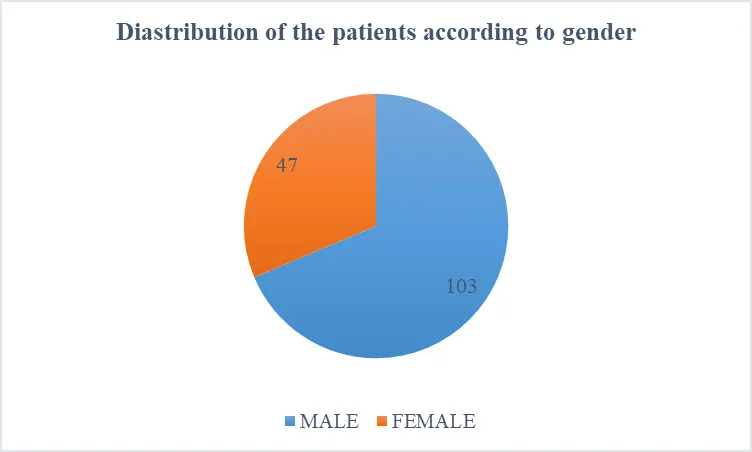
The gender distribution revealed a predominance of male patients. Out of 150 participants, 103 (68.67%) were males and 47 (31.33%) were females (Table 2; Graph 1). This finding highlights the higher prevalence of myocardial infarction among males, which may be attributed to greater exposure to cardiovascular risk factors such as smoking, sedentary lifestyle, occupational stress, and dyslipidemia.
Table 2. Distribution of the patients according to gender.
|
GENDER |
Frequency |
Percent |
|
MALE |
103 |
68.67 |
|
FEMALE |
47 |
31.33 |
|
TOTAL |
150 |
100 |
Graph 1. Distribution of the patients according to gender.
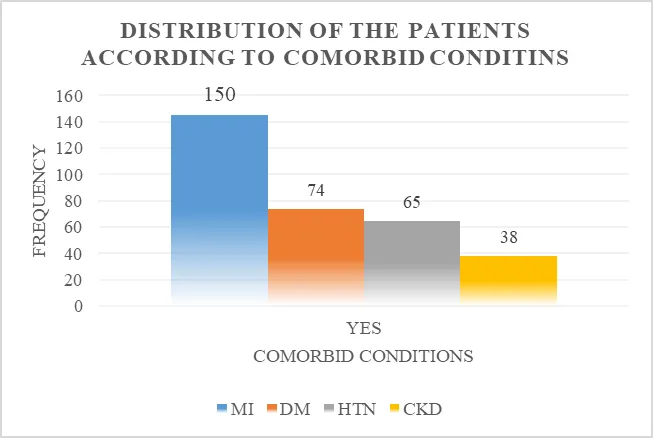
In our study majority of participants were diagnosed with myocardial infarction (MI), observed in 150 patients (100%), confirming the primary focus of the study population (Table 3.). Among the comorbid conditions, diabetes mellitus (DM) was present in 74 patients (49.33%), followed by hypertension (HTN) in 65 patients (43.33%) and chronic kidney disease (CKD) in 38 patients (25.33%)
Table 3. Distribution of the patients according to comorbidities.
|
Comorbid Conditions (N=150) |
Frequency |
Percent |
|
MI |
150 |
100 |
|
DM |
74 |
49.33 |
|
HTN |
65 |
43.33 |
|
CKD |
38 |
25.33 |
Graph 2. Distribution of the patients according to comorbidities
In our study, cardiovascular polypharmacy defined as the concurrent use of multiple cardiovascular medications was observed in 63 patients (42%), while 87 patients (58%) were not on a polypharmacy regimen.
Table 4. Distribution of the patients according to polypharmacy.
|
Cardiovascular Polypharmacy |
Frequency |
Percent |
|
YES |
63 |
42 |
|
NO |
87 |
58 |
|
TOTAL |
150 |
100 |
In the analysis of monotherapy drug utilization among the study participants (Table 5.), nonsteroidal anti-inflammatory drugs (NSAIDs) were the most frequently prescribed class, accounting for 69 prescriptions (13.40%), followed closely by statins with 64 prescriptions (12.43%) and antiplatelets with 58 prescriptions (11.26%). Beta blockers were also commonly used, comprising 51 prescriptions (9.90%), followed by vasodilators at 47 (9.13%) and antianginal agents at 31 (6.02%). Less frequently prescribed classes included alpha-glucosidase inhibitors, lipid-lowering agents (ATP citrate lyase inhibitor), selective serotonin reuptake inhibitor (SSRI) antidepressants, vasopressors, and thiazolidinediones, each with ≤4 prescriptions (≤0.78%). The diverse range and distribution of prescribed drugs reflect the clinical complexity of managing myocardial infarction with multiple comorbidities, further supporting the importance of evaluating therapeutic burden using the Medication Regimen Complexity Index (MRCI).
Table 5. Analysis of monotherapy drugs according to monotherapy.
|
Sr. No. |
Classes (Monotherapy Drugs) |
Frequency (N=515) |
Percent |
|
|
Alpha Blocker |
10 |
1.94 |
|
|
Alpha-Glucosidase Inhibitors |
4 |
0.78 |
|
|
Antianginal |
31 |
6.02 |
|
|
Antiarrhythmic (Class Iii) |
23 |
4.47 |
|
|
Anticoagulant |
17 |
3.30 |
|
|
Anticonvulsant |
8 |
1.55 |
|
|
Antiplatelet |
58 |
11.26 |
|
|
Arb |
9 |
1.75 |
|
|
Beta Blocker |
51 |
9.90 |
|
|
Biguanide |
8 |
1.55 |
|
|
Ccb |
10 |
1.94 |
|
|
Diuretic |
3 |
0.58 |
|
|
Dpp-4 Inhibitor |
15 |
2.91 |
|
|
Hcn Channel Blocker |
12 |
2.33 |
|
|
Insulin |
15 |
2.91 |
|
|
Lipid-Lowering Agent (Atp Citrate Lyase Inhibitor) |
1 |
0.19 |
|
|
Loop Diuretic |
19 |
3.69 |
|
|
Nsaid |
69 |
13.40 |
|
|
Potassium Sparing Diuretic |
16 |
3.11 |
|
|
Selective Serotonin Reuptake Inhibitor (Ssri) Antidepressant |
1 |
0.19 |
|
|
Sglt 2 Inhibitor |
3 |
0.58 |
|
|
Statin |
64 |
12.43 |
|
|
Sulfonylurea |
6 |
1.17 |
|
|
Thiazide-Like Diuretic |
3 |
0.58 |
|
|
Thiazolidinediones |
2 |
0.39 |
|
|
Vasodilator |
47 |
9.13 |
|
|
Vasopressor |
1 |
0.19 |
|
28 |
Xnathine Oxidase Inhibitor |
9 |
1.75 |
The Medication Regimen Complexity Index (MRCI) assessment for the study population revealed a mean total score of 16.957 with a standard deviation of 7.13, indicating a moderate to high level of regimen complexity among the patients. Section-wise analysis showed mean scores of 5.31 (Section A: dosage forms), 6.02 (Section B: dosing frequency), and 6.21 (Section C: additional instructions), suggesting that all components contributed significantly to overall complexity. The median total MRCI was 16.00, with an interquartile range (IQR) spanning from 12.00 (Q1) to 21.00 (Q3), reflecting substantial variability across individual medication regimens (Table 5.)
Table 5. Descriptive analysis of the MRCI Scores.
|
N=150 |
Section A |
Section B |
Section C |
MRCI |
|
|
Mean |
5.31 |
6.017 |
6.21 |
16.957 |
|
|
Median |
5.00 |
6.000 |
5.00 |
16.000 |
|
|
Std. Deviation |
2.570 |
2.6498 |
7.156 |
7.1259 |
|
|
Quartiles
|
Q1 |
4.00 |
4.000 |
4.00 |
12.000 |
|
Q3 |
6.00 |
7.625 |
7.00 |
21.000 |
|
The independent t-test evaluating differences in MRCI according to demographic and clinical variables demonstrated that Diabetes Mellitus was the only statistically significant factor associated with increased medication complexity (t = -3.004, p = 0.003) (Table 6).
Age group, gender, MI status, hypertension, and CKD did not show statistically significant associations with MRCI scores. However, gender approached significance (p = 0.072), suggesting a potential influence on regimen complexity.
Table 6. Assessment of differences in MRCI by sex, age groups, and comorbidities.
|
Parameters |
t-test for Equality of Means |
||||||
|
t |
df |
p-value
|
Mean Difference |
Std. Error Difference |
95% Confidence Interval of the Difference |
||
|
Lower |
Upper |
||||||
|
Age Group |
.544 |
148 |
.587 |
.096 |
.176 |
-.251 |
.442 |
|
Gender |
1.813 |
148 |
.072 |
.137 |
.075 |
-.012 |
.286 |
|
MI |
.513 |
148 |
.609 |
.015 |
.029 |
-.043 |
.073 |
|
DM |
-3.004 |
148 |
.003 |
-.240 |
.080 |
-.398 |
-.082 |
|
HTN |
.207 |
148 |
.836 |
.017 |
.081 |
-.144 |
.178 |
|
CKD |
.558 |
148 |
.578 |
.040 |
.071 |
-.101 |
.181 |
The association between cardiovascular polypharmacy and medication regimen complexity was statistically significant (p < 0.001) (Table 7.). Among patients with cardiovascular polypharmacy (N = 62), 42 (67.74%) exhibited high medication complexity, compared to 20 (32.26%) with lower complexity. Conversely, in the non-polypharmacy group (N = 88), only 31 patients (35.23%) demonstrated high complexity, while 57 (64.77%) had lower complexity. These findings indicate a strong positive relationship between polypharmacy and increased medication regimen complexity, underscoring the importance of comprehensive management strategies to address the challenges posed by complex therapeutic regimens in patients with myocardial infarction and comorbidities.
Table 7. Association between the cardiovascular polypharmacy and medication regimen complexity.
|
Cardiovascular Polypharmacy |
Complexity |
Total |
p-value |
|
|
Yes |
No |
|||
|
Yes |
42 |
20 |
62 |
<.001 |
|
No |
31 |
57 |
88 |
|
|
Total |
73 |
77 |
150 |
|
DISCUSSION
This study evaluated the prescribing patterns of myocardial infarction (MI) patients with associated comorbidities and the complexity of medication regimens using the Medication Regimen Complexity Index (MRCI). The mean age of the study population was 60.92 ± 10.05 years, with a predominance of male patients (68.67%). These findings are consistent with previous studies reporting a higher prevalence of MI among older adults and males, highlighting the influence of age and gender on cardiovascular disease burden (34,35).
The most common co-morbidities in the study population were diabetes mellitus (49.33%), hypertension (43.33%) and chronic kidney disease (25.33%). Similar observations were also reported in previous studies where hypertension and diabetes were found to be major risk factors associated with myocardial infarction (38). The combination of these comorbidities raises cardiovascular risk, and often requires multiple medications, increasing treatment complexity.
Prescription pattern analysis showed common use of statins, antiplatelets, beta-blockers, vasodilators and antianginal agents. These results reflect the use of current guideline-directed medical therapy for the treatment of MI. The widespread use of antiplatelets and lipid-lowering agents in MI patients has also been described previously and indicates their importance in secondary prevention (34,35,38).
Combination treatments, especially those including statins, antiplatelets, and antihypertensive drugs, were frequently administered. To obtain the best possible control of cardiovascular disease and related comorbidities, combined therapy is frequently required. However, especially in patients receiving numerous treatment agents, a growing medication load may lead to adverse drug events and medication non-adherence (3,28,29).
A moderate-to-high degree of pharmaceutical regimen complexity is indicated by the study's mean overall MRCI score of 16.96 ± 7.13. The overall complexity was significantly influenced by all three MRCI domains, including dosage forms, dosing frequency, and supplementary administration instructions. Similar results have been seen in cardiovascular patients, where high MRCI scores were found to be significantly influenced by dose frequency (36). Increased medication complexity has been associated with reduced adherence and poorer clinical outcomes (5,7).
Diabetes mellitus and the intricacy of drug regimens were shown to be significantly correlated (p = 0.003). Diabetes mellitus was also found to be an independent predictor of high MRCI scores using logistic regression analysis. The necessity for several antidiabetic medications, regular dosage schedules, and extra monitoring needs in diabetic patients may be the cause of this discovery. There have been prior reports of similar links between diabetes and more complicated regimens (36).
42% of patients had cardiovascular polypharmacy, which was significantly correlated with the complexity of the treatment regimen (p < 0.001). MRCI scores were significantly higher in patients using five or more cardiovascular medicines. Drug-drug interactions, adverse drug responses, and poor medication adherence are all linked to polypharmacy, which is acknowledged as a significant factor in regimen complexity (3,5,28,29).
The results of this study highlight the significance of routinely evaluating medication complexity in patients with MI who have comorbidities. drug burden reduction techniques that preserve therapeutic efficacy include drug evaluation, the use of fixed-dose combinations, patient counseling, and clinical pharmacist interventions (30, 32, 33).
Overall, the study shows that complicated drug regimens are often encountered by MI patients who had diabetes mellitus, hypertension, and chronic kidney disease. The complexity of drug regimens was found to be significantly influenced by diabetes mellitus and cardiovascular polypharmacy. In this patient population, routine examination using the MRCI tool may help optimize pharmacotherapy, increase drug adherence, and improve clinical outcomes (5,7,36).
CONCLUSION
MI patients with comorbidities commonly received moderate to highly complex medication regimens. Diabetes mellitus and cardiovascular polypharmacy (≥5 cardiovascular drugs) were significant predictors of increased medication regimen complexity, whereas age, gender, hypertension, and CKD showed no significant association. These findings emphasize the need for regimen simplification and greater clinical pharmacist involvement to improve medication adherence and clinical outcomes.
REFERENCES


Vaishnavi Kulkarni, Payal Gavande*, Gauri Game, Tanishka Kesharwani, Prajakta Avhad, Suvarna Bhalerao, Prescribing Pattern of Drugs Used in Myocardial Infarction with Comorbidity and Assessment of Complexity Using Medication Regimen Complexity Index (MRCI): Prospective, Cross Sectional Observational Study, Int. J. of Pharm. Sci., 2026, Vol 4, Issue 7, 1349-1363. https://doi.org/10.5281/zenodo.21238989
 10.5281/zenodo.21238989