

We use cookies to ensure our website works properly and to personalise your experience. Cookies policy
1,2Shree S. K. Patel College of Pharmaceutical Education and Research (SKPCPER), Ganpat University, Ganpat Vidyanagar, Kherva, Mehsana, Gujarat, India.
3Nootan Pharmacy College, Sankalchand Patel University, Visnagar, Gujarat, India.
4Institute of Pharmacy, Ganpat University, Ganpat Vidyanagar, Kherva, Mehsana, Gujarat, India.
Oral solid dosage (OSD) forms remain the workhorse of pharmaceutical manufacturing, yet the facilities that produce them are now judged against several regulatory codes at once rather than a single national standard. This review draws on a structured gap analysis, completed in March 2026, comparing India's Revised Schedule M (2023) with United States Food and Drug Administration regulations (21 CFR Part 211), European Union good manufacturing practice, the Pharmaceutical Inspection Co-operation Scheme guide (PE 009-17), World Health Organization technical guidance, and the Chinese and Japanese national systems. The comparison covered area planning; heating, ventilation, and air-conditioning strategy; air classification; utilities; lighting; personnel and material flow; airlock engineering; dosage-form-specific rooms; and safety, health, and environment provisions. Schedule M proves comparatively demanding on pressure differentials, high-efficiency particulate air-filtered recirculation, compressed-air filtration, and clean-steam quality testing, but is thinner on occupational exposure limits, combustible-dust protection, ergonomics, and facility guidance for newer platforms such as orally dissolving films. Indian plants can close these gaps without abandoning Schedule M by adopting a harmonized design posture built on risk management, functional room sizing, corridor-centric pressure cascades, interlocked transfer systems, qualified utilities, and stronger safety governance, remaining inspection-ready for export markets.
Oral solid dosage (OSD) forms, including tablets, capsules, powders, granules, and the more recently developed oral films, account for a large share of drug manufacturing because they are easily scaled, stable, inexpensive to produce, and well accepted by patients [1,2]. None of these advantages, however, can withstand poor facility design. Contamination, dust migration, environmental drift, unrestricted movement of people and materials, and unreliable utilities can each compromise product quality before a batch even reaches the laboratory. In today's context, the facility is no longer merely a shell in which equipment happens to be kept; it is a control system in its own right, one that determines the level of compliance achievable, how productive the operation can be, and how it will be regulated.
Through the amendments incorporated in Schedule M, India has considerably strengthened its national baseline standard for good manufacturing practice (GMP), particularly in the areas of premises, utilities, environmental control, and documentation [3]. Indian manufacturers, however, no longer answer to a single regulatory body. A pharmaceutical plant that primarily exports OSD forms may have to satisfy multiple quality audits and inspections conducted against United States Food and Drug Administration (FDA) regulations under Title 21, Code of Federal Regulations (CFR), Parts 210 and 211[4,5], European Union (EU) GMP[6], the Pharmaceutical Inspection Co-operation Scheme (PIC/S) Guide[7], World Health Organization (WHO) guidance[8], and the national regulatory systems of China and Japan[9,10] at the very least, some of which may occur within the same calendar year. Facility design based on shared standards is therefore no longer a luxury; it is an essential component both of the ability to withstand regulatory challenge and of maintaining a strong presence in overseas markets.
This paper translates the differences between these regulatory frameworks into practical design decisions. The intended readers are professionals who must convert multiple regulations into a single set of building requirements, including industrial pharmacists, regulatory experts, facility designers, validation engineers, and researchers.
MATERIALS AND METHODS:
Data Sources:
The analysis underlying this review was compiled by the authors as an indexed comparative matrix, completed in March 2026, covering Revised Schedule M alongside FDA 21 CFR Parts 210 and 211, EudraLex Volume 4, WHO technical report guidance, PIC/S PE 009-17, the GMP of China's National Medical Products Administration (NMPA), Japan's ordinance on manufacturing and quality control administered through the Pharmaceuticals and Medical Devices Agency (PMDA), and the aligned frameworks of Australia[11], South Africa[12], and Saudi Arabia[13].
Study Selection and Organization:
The matrix is organized by engineering domain: area requirements; heating, ventilation, and air-conditioning (HVAC); lighting, utilities, and water; occupational safety, health, and environment (SHE); personnel and material flow; airlocks and buffer zones; and dosage-form-specific requirements.
Data Extraction and Analysis:
Each row of the matrix states a comparative parameter, records what each jurisdiction expects, and classifies the relationship as aligned, partially divergent, significantly divergent, or not specified. The full matrix is available from the corresponding author and is offered as supplementary material.
A review of this kind should interpret the matrix rather than merely restate it. Reading the matrix through the lens of harmonization, we identified in each section the common requirement that is justified from a quality risk management perspective for plants manufacturing for multiple markets [14]. The numbers reported should be understood as practical design benchmarks and risk management targets rather than regulatory minimums that are universally enforceable, particularly where authorities use performance-based language for non-sterile product manufacture.
This review analysed publicly available regulatory, pharmacopoeial and technical documents only and did not involve human participants or animals; ethics committee approval was therefore not required.
RESULTS AND DISCUSSION:
Regulatory Context for OSD Facility Harmonization:
On the basis of the comparison, the fundamentals of GMP facility design are common ground. All major regulatory authorities agree on sufficient premises, separation of incompatible activities, prevention of contamination and cross-contamination, appropriate environmental control, utilities of suitable quality, defined and controlled movement of people and materials, and properly documented operational discipline [3–10]. The codes differ only in the amount of detail offered, the number of quantitative values stated, and how conservative their engineering assumptions are.
Schedule M tends toward the explicit, stating pressure differentials and utility quality expectations directly [3]. WHO guidance supplies practical environmental ranges for non-sterile operations [15,16], while PIC/S, like the wider International Council for Harmonisation (ICH) quality-system model, treats contamination control as the output of a functioning pharmaceutical quality system rather than a list of fixed numbers [7,17]. FDA and EU texts, by contrast, often settle for performance-based wording such as “adequate” or “appropriate” for non-sterile facilities [5,6]. The consequence for design is straightforward: textual equivalence across codes is unattainable, so the defensible approach is to select a scientifically justified common denominator that would withstand the most stringent reasonable inspection.
Area Planning and Functional Room Sizing:
Most international authorities decline to prescribe room dimensions for non-sterile OSD facilities, requiring instead enough space for orderly operations, cleaning, maintenance, material staging, and contamination control [5,6]. Our comparison nevertheless yields engineering benchmarks that planners will recognize from established industry guidance[18,19]: roughly 48 m² for a material receipt bay, 9 m² for a sampling room or booth, 20 m² for dispensing and weighing, 48 m² for wet granulation, 30 m² for compression, 42 m² for coating, 48 m² for primary packaging, 80 m² for secondary packaging, and 20 m² for an equipment wash room.
Compared with these benchmarks, minimal conventional room allocations appear archaic. A planning model that allows only 60 m² altogether for tablet manufacturing activities cannot be adequate when wet granulation alone occupies around 48 m² of basic floor space. The coating situation is no better: the layout must include not one but two large rooms, one for the actual coating and the other for solution preparation, because of pan clearance, service pipework, exhaust ducts, solvent-protection features, and worker movement [19].
The biggest challenges arise during brownfield modifications. Undersized rooms create a form of continuous compliance pressure, squeezing maintenance, cleaning, environmental recovery, and segregated staging. A facility can be nominally the right size on paper and still, when checked against contemporary contamination-control expectations, prove operationally weak.
HVAC Strategy, Air Classification, and Pressure Cascades:
HVAC is arguably the most demanding technical discipline in OSD design because it serves several goals at once: particle containment, product and worker protection, thermal comfort, and moisture control [15,16,20]. The usual non-sterile operating conditions emerging from our comparison are 22 ± 3 °C and around 50 ± 10% relative humidity (RH) in most tablet-processing areas, approximately 40 ± 5% RH for hard gelatin capsule processing, and much more aggressive air conditioning for moisture-sensitive products such as effervescent tablets and oral films. The recommended supply air rate for a controlled room is commonly 10 to 20 air changes per hour, whereas warehouses and secondary packaging rooms can operate at lower rates.
Classification of exposed-product rooms and pressure-differential philosophy is where jurisdictions genuinely diverge. Schedule M is strict, expecting at least 15 Pa between manufacturing and support areas and applying Grade C logic to exposed non-sterile operations [3]. WHO guidance for non-sterile HVAC accepts 5 to 20 Pa as a practical range and generally reasons in Grade D or ISO 8 terms [15,16], with the underlying cleanliness classes defined operationally by the ISO 14644 series [21,22], while the NMPA commonly expects at least 10 Pa between clean and non-clean areas [9]. FDA and EU texts are numerically quieter for non-sterile OSD rooms, emphasizing adequacy of contamination prevention instead [5,6].
A corridor-centric pressure-cascade architecture reconciles these positions elegantly. The clean corridor serves as the highest-pressure spine of the processing zone, with pressure stepping up progressively through the change areas and each room biased positive or negative according to its dominant risk. Dispensing and in-process-control sampling rooms sit positive to the corridor, favouring product protection; blending, granulation, compression, and encapsulation sit negative, containing dust at source. One engineering logic thus serves both contamination control and operator safety.
Filtration strategy follows the same conservative principle. Controlled OSD rooms are best served by staged filtration on the pattern of G4 plus F8, or F9 plus H13 high-efficiency particulate air (HEPA)-filtered recirculation, drawing on filter classes defined under EN 779 and its ISO 16890 successor and HEPA grades classified under EN 1822[23–25]. This reflects the more prescriptive strands of Schedule M and WHO-oriented engineering practice [3,15]. Because most authorities never specify exact cascades for non-sterile rooms, building to the stricter pattern removes interpretive ambiguity and strengthens inspection readiness.
Lighting, Utilities, Water, Steam, and Process Gases:
Support systems turn out to be more harmonized across jurisdictions than room-classification language, and they repay explicit specification. Sensible lighting targets are 400 to 500 lux for general production; 300 to 500 lux for weighing, dispensing, sampling, and packaging or labeling; 500 to 750 lux for quality-control laboratories; 150 to 250 lux for storage; and 200 to 300 lux for corridors, figures consistent with general workplace-lighting standards [26]. Since most regulatory texts ask only that rooms be adequately lit, committing to lux criteria gives design qualification something objective to verify.
Compressed air attracts differing standards across the codes, which converge on product-contacted air being oil-free, particle-controlled, humidity-limited, and microbiologically suitable wherever the product contacts the air. Schedule M is the only code that explicitly requires product-contact compressed air to be filtered to the 0.2 µm level [3]. Industry practice additionally calls for dew-point control between –40 °C and –70 °C where product is exposed to compressed air, and purity classes following ISO 8573-1[27], consistent with current technical literature on process gases [28].
Clean steam is governed with similar rigor. Schedule M is notably detailed on condensate testing: for clean steam contacting product surfaces, condensate is tested for dryness, superheat, and non-condensable gases [3]. The practical limits are dryness of at least 95%, superheat of no more than about 25 °C, and non-condensable gases of 3.5% v/v maximum, values equal to the steam-quality tests long established in EN 285[29]. Expectations for nitrogen and carbon dioxide contacting product or contact surfaces include pharmacopeial-grade purity, filtration, moisture control, and particulate suitability; nitrogen for inert blanketing additionally requires low oxygen content and dried delivery [28].
Perhaps no case is as clear as the cross-pharmacopoeial harmony of purified water. Conductivity of 1.3 µS/cm, total organic carbon of 500 ppb, and a microbial limit of 100 CFU/mL are shared by the United States Pharmacopeia and the Indian Pharmacopoeia and are also consistent with WHO standards for pharmaceutical-grade water [30–32]. Endotoxin requirements are not stipulated for purified water, and an engineering solution is the best approach: a validated, continuously recirculating system with online conductivity and total organic carbon monitoring, supported by periodic offline microbiological testing [33].
Wastewater is largely excluded from the main GMP provisions and falls first and foremost under environmental law: grey water, black water, and pharmaceutical wastewater belong mostly under pollution-control regimes such as the Environment (Protection) Rules executed through the Central and State Pollution Control Boards in India and effluent standards for pharmaceutical manufacturing in the United States [34,35]. Nevertheless, drainage design must be considered at the very beginning of construction if the facility as a whole is to be GMP-compliant.
Personnel Flow and Material Flow Architecture:
Personnel flow is ideally a series of progressively restricted stages: controlled entry from outside, a first-phase change room, a controlled buffer or corridor, a second-phase gowning area, and finally production entry through interlocked personnel airlocks. This staged control is the largest point of agreement among the regulatory references on facility design and cleanroom operation, namely Schedule M, FDA, EU GMP, PIC/S, and WHO. All of these sources require that staff be permitted access only when properly gowned, that written procedures be in place, and that exit and de-gowning operations be clearly defined [3–8].
The concept of staged areas benefits both behavior and hygiene. It guides people from uncontrolled to controlled spaces in a planned way, teaches proper gowning by making the required sequence visible, and erects visual barriers that discourage casual entry and cross-flow. Reverse-exit concepts and assigned exits complement this by reducing contamination risk during egress.
Material flow follows an equally structured path: receipt, quarantine, sampling, approved storage, dispensing transfer, production transfer, in-process transfer, packaging transfer, finished-goods quarantine, and dispatch. Along that path, the recurring design obligations are covered receipt, dedusting, protected sampling under laminar airflow or an equivalent, status segregation, transfer through material airlocks, in-process containment, and line clearance before packaging and dispatch. The lesson is blunt: physical layout is a primary compliance control, and procedures cannot be expected to compensate indefinitely for weak architecture.
Airlocks, Buffer Zones, and Interlock Engineering:
Airlocks convert high-level contamination-control expectations into standardizable design modules, which makes them unusually useful to planners. Workable benchmark dimensions are about 2.0 × 2.5 × 2.7 m for personnel and material airlocks, with a minimum floor area of 5 m², and roughly 0.6 × 0.6 × 0.6 m for pass-through hatches serving small controlled transfers. No major authority prescribes these numbers directly, but all require transfer interfaces that prevent simultaneous open-door conditions and preserve directional environmental separation [3,6,7].
First- and second-stage change rooms of about 12 m² and 9 m², respectively, complete the module set, with the clean corridor acting as the highest-pressure buffer in the production zone. Interlocks may be mechanical or electronic; either way they should prevent simultaneous opening, indicate status visually or audibly, and allow emergency override under documented control. That philosophy sits comfortably within the convergent expectations of Schedule M, WHO, PIC/S, EU GMP, and the NMPA.
Dosage-Form-Specific Facility Requirements:
There is no one-size-fits-all template for OSD manufacture. Each product platform determines its own environmental, ergonomic, containment, and equipment-access requirements, and hence its room design, utility support, and transfer strategy [1,18]. The resulting differences in relative plant complexity across the dosage forms analyzed are summarized in Figure 1. The simplest case is the conventional uncoated tablet. Normal dust-controlled suites are satisfactory provided granulation, drying, blending, and compression operations are separated, dust extraction is provided, and processing rooms run negative to the corridor. Conditions of around 22 ± 3 °C and 50 ± 10% RH are appropriate as established practice rather than regulatory mandates.
Film-coated tablets require dedicated coating rooms, a separate solution-preparation room, and properly designed exhaust ducts when organic solvents such as isopropyl alcohol or dichloromethane are used. Sugar-coating processes generally require considerably more space and lower humidity because of multiple pans, long residence times, and prolonged syrup application.
Extended-release, modified-release, and enteric-coated tablets affect operations more than architecture; what counts is in-process control, dissolution-related process monitoring, and, in some cases, special coating machinery or multiparticulate handling [2]. Effervescent and soluble tablets are the most environmentally demanding. In practice, 25% RH or below is necessary to avoid premature reaction, sticking, and instability, requiring dehumidified rooms, sealed containers, and prudent transfers.
Hard gelatin capsules require a closed environment with controlled relative humidity, because the moisture content of the shell directly affects its brittleness, elasticity, filling behavior, and subsequent processing. The practical setpoint is 40 ± 5% RH, with an encapsulation room of approximately 30 m². For soft gelatin capsules, gelatin preparation, encapsulation, tumble drying, and inspection are steps that require visual segregation and close humidity control; no regulation specifies softgel room sizes, so design relies entirely on risk-based engineering judgment. Sachet powders and granules need dust-free filling rooms, a dry environment, and well-designed filling areas of about 30 m² for mixing and filling; granule production may additionally require a wet-granulation suite (on the 48 m² pattern) plus separate filling and auxiliary facilities.
Mouth-dissolving and buccal-adhesive films remain regulatory orphans; no major authority has a dedicated facility clause for either product. Rational engineering solutions include film-casting rooms of about 20 m² and inspection and drying rooms held stable at about 25 ± 2 °C and 50 ± 5% RH, reflecting how sensitive casting uniformity, drying stability, and handling dynamics are.
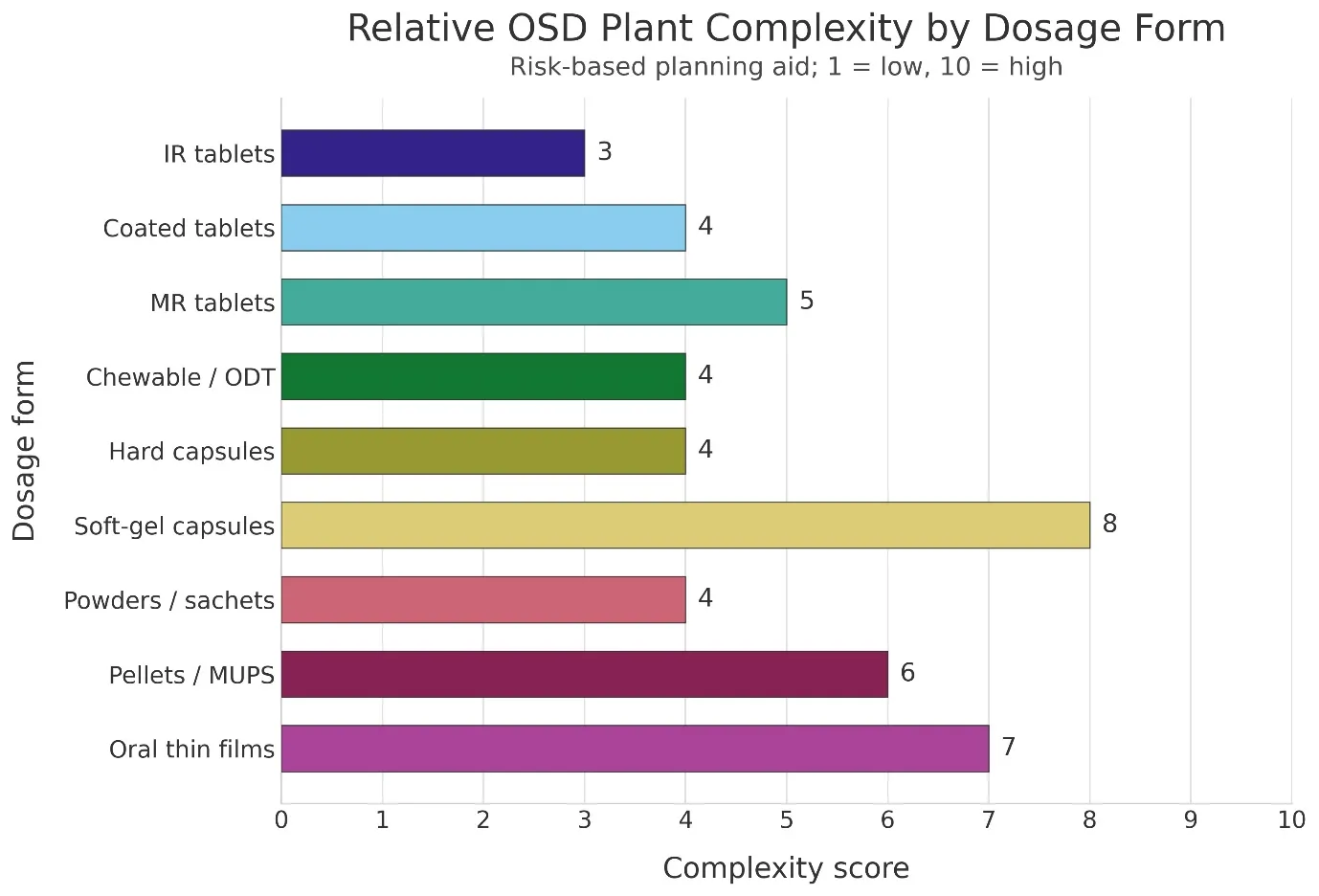
Figure 1: Relative Plant Complexity Associated with Each Oral Solid Dosage Form Analyzed. Higher Scores Indicate Greater Facility, Containment, and Process-Control Demands. IR: Immediate Release; MR: Modified Release; ODT: Orally Disintegrating Tablet; MUPS: Multiple-Unit Pellet System; OSD: Oral Solid Dosage.
Safety, Health, and Environment:
The widest cross-jurisdictional gaps in the entire comparison appear under SHE. Occupational Safety and Health Administration (OSHA) standards [36], EU directives on noise and on chemical agents at work [37,38], and the United Kingdom's control-of-substances regime with its published workplace exposure limits [39,40] all speak far more explicitly to airborne exposure, combustible-dust control, noise, and ergonomics than Schedule M does directly.
Noise illustrates the pattern. India and OSHA converge on 90 dBA over an 8-hour time-weighted average [36], whereas the EU, United Kingdom, Japan, South Africa, and Saudi Arabia work to stricter 85 dBA-style thresholds or action values [37]. A multinational site engineered to the stricter benchmark simply carries less occupational-health risk.
Occupational exposure limits (OELs) represent a larger deficiency. OSHA permissible exposure limits, the EU chemical-agents framework, control-of-substances regimes, published workplace exposure limits, and threshold limit values together provide a structured OEL architecture [36,38–41], and the pharmaceutical sector adds discipline of its own through health-based exposure limits and risk-based containment strategies [42,43]. Schedule M leans on general occupational-health provisions without a comparable explicit scheme [3]. In OSD operations handling potent active ingredients, nuisance dusts, sensitizers, or excipient particulates with chronic inhalation significance, that absence is anything but academic.
Dust-explosion prevention and solvent fire safety follow the same pattern: the ATEX equipment directive, the United Kingdom's dangerous-substances regulations, and the National Fire Protection Association (NFPA) codes for combustible dust and for flammable liquids are all more explicit than India's GMP-linked provisions for combustible dusts and flammable coating environments [44–47]. Within India, the Factories Act and the consolidating Occupational Safety, Health and Working Conditions Code supply the general statutory net [48,49], but neither delivers the pharmaceutical-specific exposure architecture that international practice now assumes. Ergonomics, too, receives more specific treatment abroad, despite the repetitive handling, bin transfers, line loading, and maintenance work that OSD facilities involve daily, all of which bear directly on both worker performance and GMP reliability.
The conclusion for design practice is that SHE cannot remain a post-design compliance overlay. A globally competitive OSD facility should carry an internal OEL program, containment assessment, verified local exhaust ventilation, fire and explosion risk analysis, ergonomic planning, and integrated emergency-response design from the first drawing onward, ideally governed through a certified occupational health and safety management system [50].
Synthesis and Design Implications:
Figure 2 summarizes the relative burden of divergence across the domains analyzed: gaps are heaviest in SHE and HVAC interpretation, intermediate in area planning, airlocks, and dosage-form-specific requirements, and lightest in personnel and material flow and in utilities and water systems. Figure 3 translates that pattern into strategic priorities for harmonization, led by SHE and exposure control, HVAC and pressure-cascade design, and area planning, followed by dosage-form-specific environmental controls and airlock engineering.
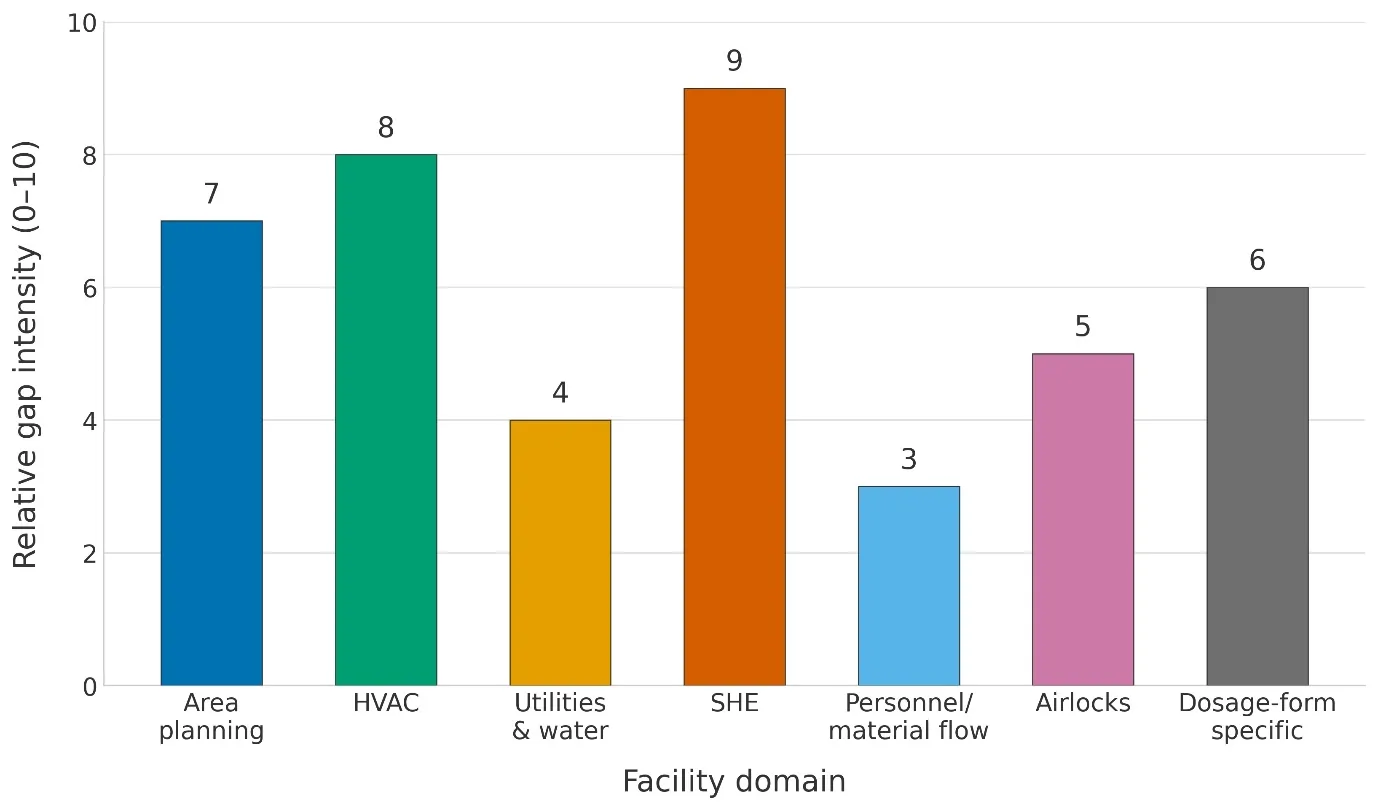
Figure 2: Relative Intensity of Regulatory Divergence Between Revised Schedule M and International Frameworks Across the Seven Facility-Design Domains Analyzed. Higher Scores Indicate Wider Gaps. HVAC: Heating, Ventilation, and Air-Conditioning; SHE: Safety, Health, and Environment.
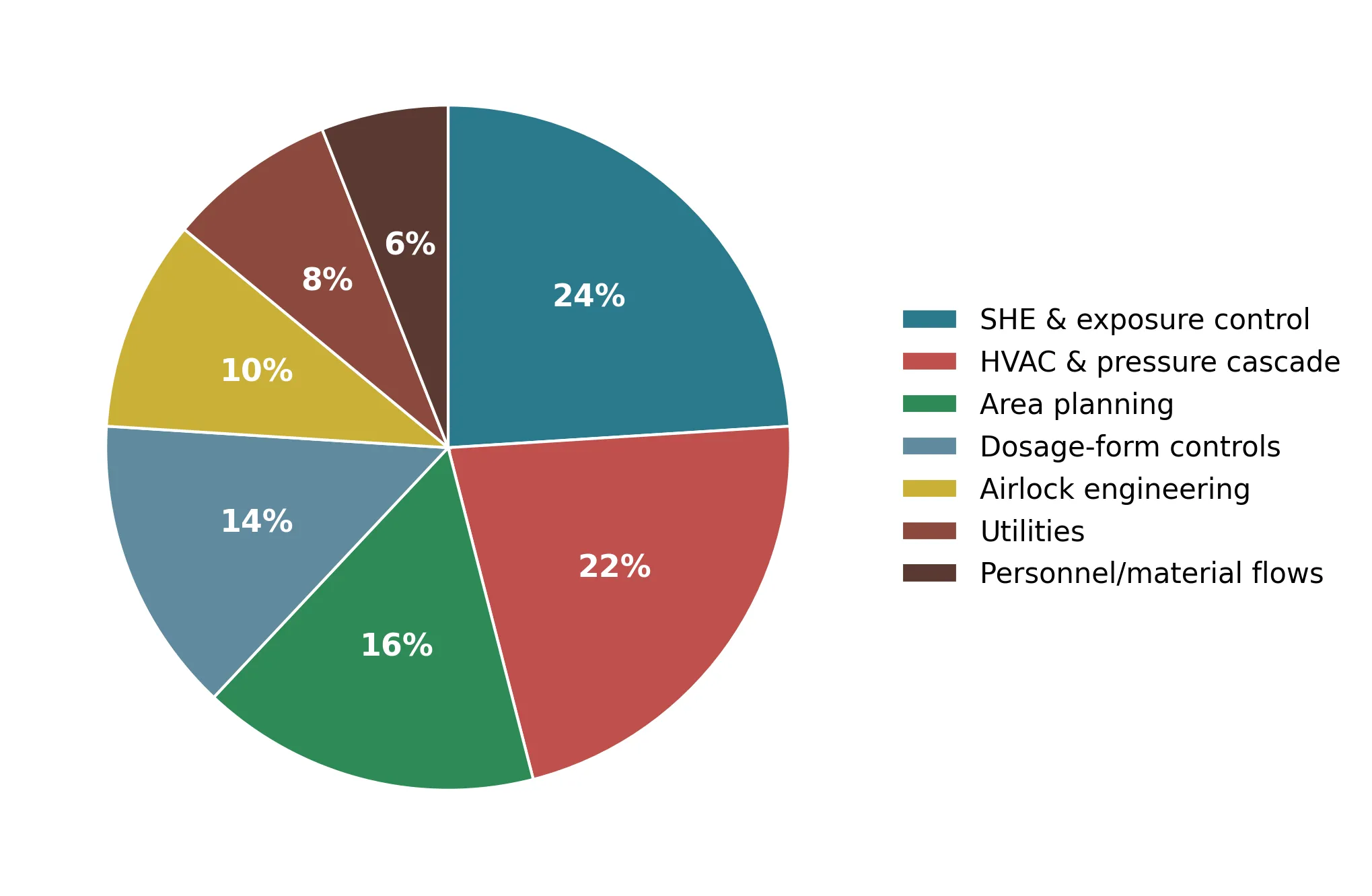
Figure 3: Strategic Harmonization Priorities for Export-Ready Oral Solid Dosage Facilities, Weighted by Gap Intensity and Design Impact. HVAC: Heating, Ventilation, and Air-Conditioning; SHE: Safety, Health, and Environment.
Taken together, the analysis leads to a straightforward conclusion: true harmonization requires neither identical wording nor even very similar wording across sources. What counts is a design posture able to withstand the strictest reasonable interpretation any of these authorities might apply. For OSD manufacturing, that posture is a blend of the infrastructural robustness of Schedule M, the practical environmental guidance of WHO, the contamination-control logic of PIC/S, and the more pointed occupational-safety rules of the EU and occupational health and safety tradition. The engineering consequences are direct: room sizes should be decided by function, not by required minimums; air handling should be governed by risk control rather than comfort, with rooms biased positive or negative according to their dominant need for product protection or dust containment; and utilities should be qualified against written specifications rather than assumed adequate by installation. This is an encouraging conclusion, because it means Indian OSD operations can attain a high level of international readiness without deviating from Schedule M.
The Schedule M framework nevertheless needs to be reinforced with more rigorous SHE elements, explicit exposure control, and better incorporation of engineering principles for modern dosage forms. This review is not an exhaustive literature survey; it is limited to the regulatory documents and engineering methods combined in the underlying matrix. The values presented should not be generalized uncritically but should feed project-specific risk assessments. These limitations open a line of further research on facility performance based on empirical data.
CONCLUSION:
The most important regulatory development in the new edition of Schedule M is that it now reflects, to a considerable degree, WHO guidance documents. When plants are compared against the full requirements of international bodies such as WHO, FDA, PIC/S, and EU GMP, together with international occupational-safety instruments, a number of requirements nevertheless remain unmet. The greatest potential for harmonization lies in the integration and interpretation of SHE provisions, HVAC standards, functional room layout, and dosage-form-specific control strategies; convergence is already strong for utility systems and for the design of personnel and material flow. Future OSD facilities will therefore need to be thought of as integrated compliance systems that address contamination control, employee safety, environmental stability, and multi-market regulatory readiness simultaneously through a single design.
ACKNOWLEDGEMENT:
None.
CONFLICT OF INTEREST:
The authors declare that they have no conflicts of interest with respect to the research, authorship, or publication of this article.
FUNDING:
The authors received no financial support for the research, authorship, or publication of this article.
AUTHORS' CONTRIBUTIONS:
All authors contributed to the conception and design of the work, the acquisition and analysis of the comparative regulatory data, and the drafting and critical revision of the manuscript. All authors approved the final version to be published and agree to be accountable for all aspects of the work.
ABBREVIATIONS:
ATEX: Appareils destinés à être utilisés en ATmosphères EXplosibles (EU explosive-atmospheres directive)
CFR: Code of Federal Regulations
CFU: colony-forming units
EU: European Union
FDA: United States Food and Drug Administration
GMP: good manufacturing practice
HEPA: high-efficiency particulate air
HVAC: heating, ventilation, and air-conditioning
ICH: International Council for Harmonisation
ISO: International Organization for Standardization
ISPE: International Society for Pharmaceutical Engineering
NFPA: National Fire Protection Association
NMPA: National Medical Products Administration (China)
OEL: occupational exposure limit
OSD: oral solid dosage
OSHA: Occupational Safety and Health Administration
PIC/S: Pharmaceutical Inspection Co-operation Scheme
PMDA: Pharmaceuticals and Medical Devices Agency (Japan)
RH: relative humidity
SHE: safety, health, and environment
WHO: World Health Organization
REFERENCES

Praful Bharadia, Himanshu Chawda, Rakesh Patel, Rahul Sharma, Regulatory Harmonization and Design Optimization of Oral Solid Dosage Manufacturing Facilities: A Comparative Gap Analysis of Schedule M (India) with FDA, EU GMP, Who, PIC/S, and Other Global Standards, Int. J. of Pharm. Sci., 2026, Vol 4, Issue 11, 4465-4476. https://doi.org/10.5281/zenodo.24525812
 10.5281/zenodo.24525812