

We use cookies to ensure our website works properly and to personalise your experience. Cookies policy
Guru Nanak College of Pharmaceutical Sciences, Dehradun.
Regulatory Affairs (RA) is a specialized professional function that serves as the critical bridge between pharmaceutical companies and health authorities, ensuring that drug products meet all legal, scientific, and ethical standards before reaching patients. This paper comprehensively examines the multifaceted role of RA across the entire drug development lifecycle—from preclinical research through post-market pharmacovigilance. Historically, the thalidomide tragedy of the 1960s catalyzed modern regulation, leading to the formation of agencies like the FDA, EMA, and PMDA, and the evolution of RA from a clerical, compliance-driven function into a strategic business partner. Today, RA actively influences early drug development through regulatory intelligence and pathway design, masters expedited approval mechanisms (Breakthrough Therapy, PRIME, SAKIGAKE), and drives competitive advantage by anticipating regulatory trends and benchmarking competitor submissions. As the essential liaison, RA translates complex scientific data into regulatory language, manages pre-submission meetings, responds to health authority queries, coordinates inspections, and maintains product labeling and safety surveillance. The paper details core responsibilities including IND, NDA, ANDA, BLA, and MAA submissions, GLP/GCP compliance, and post-approval change management. Ultimately, RA is positioned not merely as a corporate compliance function but as an indispensable pillar of public health—safeguarding patients, enabling medical innovation, reducing drug costs through generics and biosimilars, and upholding trust in the pharmaceutical ecosystem amid emerging challenges such as personalized medicines, gene therapies, and digital health technologies.
Core definition and fundamental purpose of Regulatory Affairs. Regulatory Affairs (RA) is a specialized professional function within pharmaceutical companies that acts as the bridge between scientific research and commercial market access. Its primary purpose is to ensure that drug products meet all legal, scientific, and ethical standards required by health authorities before they can be approved for patient use. Unlike research and development (R&D), which focuses on discovering new molecules, or marketing, which targets physician and patient adoption, RA is exclusively concerned with navigating the complex web of regulations that govern drug development, manufacturing, labeling, and post-market surveillance. Without RA, no pharmaceutical product—regardless of its therapeutic breakthrough—could legally reach a patient[1]. The full lifecycle scope of Regulatory Affairs in drug development. The scope of RA is not limited to the final approval stage; it spans the entire product lifecycle from preclinical research to post-marketing activities. In the early discovery phase, RA provides guidance on the regulatory feasibility of targeting specific disease areas, helping companies avoid investing in molecules that would face insurmountable regulatory hurdles. During preclinical and clinical development, RA prepares Investigational New Drug (IND) applications, designs clinical trial protocols that comply with Good Clinical Practice (GCP), and manages interactions with ethics committees and health authorities. At the submission stage, RA compiles the Common Technical Document (CTD) and files New Drug Applications (NDA) or Marketing Authorization Applications (MAA)[2][3]. After approval, RA continues to manage variations, renewals, pharmacovigilance reporting, label updates, and compliance with post-marketing commitments. Key specific activities and deliverables within RA's scope. The day-to-day scope of RA includes a wide array of technically demanding activities[4]. These include preparing and submitting IND/NDA/ANDA/BLA (Biologics License Application) dossiers, managing orphan drug designations and pediatric investigation plans, drafting prescribing information (labeling) and patient package inserts, ensuring promotional materials are compliant with false-claims laws, coordinating responses to health authority deficiency letters, leading regulatory inspections and audits, and maintaining product licenses across multiple jurisdictions. Additionally, RA monitors emerging regulations and assesses their impact on existing products, advises on supply chain changes (e.g., manufacturing site transfers), and manages crisis responses such as recalls or safety-related label changes. Each of these activities requires a deep understanding of both scientific data and legal interpretations[5].

Fig: 1 Phases of the drug discovery and development process. ADME: absorption, distribution, metabolism, and excretion; High-Throughput Screening; IND: Investigational New Drug; HTS: ND: New Drug
Distinction between Regulatory Affairs and other corporate functions. It is crucial to understand that RA is neither a purely scientific nor a purely legal function; it is an integrated discipline that sits at the intersection of science, law, and business strategy. Unlike R&D scientists who ask “does the molecule work? RA professionals ask“does the evidence meet the authority’s standard for safety and efficacy Unlike legal counsel who focus on liability and contracts, RA focuses on prospective compliance with FDA/EMA rules[6][7]. Unlike commercial teams who prioritize speed-to-market and revenue, RA prioritizes risk mitigation and documentation rigor. This unique position means RA often mediates internal conflicts—for example, when R&D wants to change a manufacturing process to improve yield, RA must evaluate whether that change triggers a regulatory filing or a new clinical study[8].
Global scope and jurisdictional variation. The scope of RA expands dramatically when considering global markets[9]. A pharmaceutical company seeking to launch the same drug in the United States, European Union, Japan, China, and Brazil must navigate five different regulatory systems with different requirements for preclinical data, clinical trial design, submission formats (e.g., eCTD in ICH regions vs. paper in some emerging markets), review timelines, and post-approval obligations. The International Council for Harmonisation (ICH) has reduced some differences, but significant national variations remain in areas such as pediatric studies, risk management plans, and generic drug approvals. Consequently, large pharma companies maintain regional RA teams that specialize in specific health authorities, and the global RA function must orchestrate a coordinated submission strategy to avoid delays or conflicting requirements[10].
The Historical Evolution and Growing Strategic Importance of the RA Function
The pre-regulation era and the thalidomide tragedy as a turning point. Before the mid-20th century, pharmaceutical regulation was minimal or non-existent in most countries. Drugs could be marketed with little proof of safety or efficacy, relying largely on physician judgment and testimonials. The catastrophic thalidomide disaster of the late 1950s and early 1960s—in which a seemingly safe morning sickness drug caused severe phocomelia (limb malformations) in over 10,000 newborns—fundamentally changed this landscape. In the United States, Dr. Frances Kelsey of the FDA famously delayed approval of thalidomide due to concerns about neuropathy, preventing the worst of the tragedy on American soil. The resulting public outrage led to the 1962 Kefauver-Harris Amendments, which for the first time required pharmaceutical companies to prove efficacy as well as safety through “adequate and well-controlled studies.” This legislation created the modern regulatory framework and, with it, the need for dedicated regulatory professionals[11].
The formation of major health authorities and the rise of RA as a defined function. In the decades following thalidomide, regulatory bodies were strengthened or newly created worldwide. The FDA evolved from a small bureau into a comprehensive science-based agency. Europe, initially with fragmented national systems, progressively harmonized through the Committee for Proprietary Medicinal Products (CPMP) and eventually established the European Medicines Agency (EMA) in 1995, introducing the centralized procedure for EU-wide approval[12]. Japan’s Pharmaceuticals and Medical Devices Agency (PMDA) similarly matured. As these authorities issued increasingly detailed guidance documents—covering Good Laboratory Practice (GLP), Good Manufacturing Practice (GMP), clinical trial standards, and pharmacovigilance—pharmaceutical companies realized that informal compliance was no longer sufficient. During the 1970s and 1980s, the first dedicated RA departments emerged, initially as small clerical units responsible for compiling submission binders and tracking correspondence with health authorities[13][14].
The shift from administrative support to strategic partner (1990s–2000s). A major transformation occurred in the 1990s with the launch of the ICH process, which created the Common Technical Document (CTD) and standardized submission formats across the US, EU, and Japan[15][16]. This harmonization allowed RA to move beyond formatting and translation into substantive strategic planning. Meanwhile, the explosion of biotechnology—with complex products like monoclonal antibodies, gene therapies, and cell-based treatments—presented regulatory challenges that no preclinical scientist or clinical investigator could solve alone. RA professionals became indispensable for designing development programs that would satisfy both scientific rigor and regulatory expectations. By the early 2000s, leading pharmaceutical companies had elevated the Head of RA to the executive committee, recognizing that regulatory strategy directly impacts time-to-market, patent life, and competitive positioning. For example, RA input on the choice of clinical endpoints, comparator arms, and statistical analysis plans can mean the difference between a priority review and a complete response letter[17][18].
RA as a driver of accelerated approval pathways and competitive advantage. Over the past two decades, health authorities have introduced multiple expedited pathways—FDA’s Fast Track, Breakthrough Therapy, Priority Review, and Accelerated Approval; EMA’s PRIME scheme; and Japan’s SAKIGAKE designation[19][20]. These pathways offer shorter review times, rolling submissions, and intensive guidance, but they require companies to proactively build the regulatory case for designation. RA has evolved from a passive responder into an active architect of these strategies. A skilled RA team can shave years off development timelines by identifying opportunities for surrogate endpoints, adaptive trial designs, or real-world evidence integration. Conversely, companies that neglect RA strategy often find themselves in prolonged review cycles or receiving Refusal to File letters, losing millions in revenue while competitors capture market share[20]. Thus, RA is no longer a cost center but a value driver—one that can determine whether a blockbuster drug reaches patients three years earlier or three years later. The modern strategic importance in personalized medicine, biosimilars, and global health crises. Today’s RA function faces unprecedented complexity and strategic importance. Personalized therapies—such as CAR-T cell therapies that are manufactured individually for each patient—require novel regulatory frameworks for lot release, potency testing, and supply chain traceability that did not exist a decade ago. Biosimilars demand comparative analytical and clinical data to demonstrate similarity to a reference product, with RA navigating patent settlements and interchangeability designations. The COVID-19 pandemic provided a dramatic case study in RA’s strategic value: companies with agile RA teams successfully executed rolling submissions, Emergency Use Authorizations (EUAs), and real-time pharmacovigilance across dozens of countries simultaneously, achieving vaccine approvals in under a year—a process that historically took a decade. Post-pandemic, regulators have permanently adopted many flexibilities (e.g., remote inspections, virtual advisory committees), and RA must now master an evolving toolkit that includes artificial intelligence for submission compilation, global regulatory intelligence platforms, and risk-based lifecycle management[21].
Serving as the Essential Liaison Between Pharmaceutical Companies and Health Authorities (FDA, EMA, etc.)
The communication bridge – translating science into regulatory language. At its core, the RA function is a specialized translation service. Pharmaceutical scientists generate vast amounts of complex data: pharmacokinetic profiles, toxicology histopathology slides, clinical trial case report forms, statistical analyses, and manufacturing validation reports[22]. Health authorities, however, do not receive this raw data directly; they require it to be organized, summarized, and interpreted according to specific regulatory templates (e.g., ICH M4 CTD). RA professionals take the scientific output from R&D, clinical operations, and CMC (Chemistry, Manufacturing, and Controls) and convert it into a coherent submission that addresses the authority’s legal standards and scientific questions[23]. Conversely, when an authority issues an Information Request or a Complete Response letter, RA translates the often-cryptical regulatory language back into actionable scientific questions for internal teams[24][25]. Without RA acting as this bidirectional interpreter, companies risk submitting dossiers that are scientifically sound but administratively non-compliant—leading to rejection on technical grounds alone. Managing pre-submission interactions and scientific advice procedures. One of RA’s most critical liaison functions is organizing and leading formal meetings with health authorities before a submission is ever filed[26][27]. The FDA offers Type A (dispute resolution), Type B (pre-IND, EOP2, pre-NDA), and Type C (other) meetings; the EMA offers scientific advice and protocol assistance; Japan’s PMDA offers similar consultations. RA professionals prepare briefing packages that frame scientific questions in a way that elicits actionable regulatory guidance. During these meetings, RA representatives lead the presentation and ensure that the company’s clinical and CMC experts answer precisely what is asked—no more, no less. After the meeting, RA produces the official meeting minutes (often requested by the authority to avoid misunderstandings) and circulates actionable items internally. A successful scientific advice meeting, orchestrated by RA, can prevent costly Phase 3 failures or confirm that an accelerated approval pathway is viable. Submissions management and the art of responding to health authority queries[22]. Once a submission is filed (e.g., NDA or MAA), the health authority begins its formal review and inevitably issues a series of information requests, deficiencies, or major objections. RA serves as the single point of contact for all official correspondence, tracking timelines (e.g., FDA’s 74-day filing review, 10-month standard review, 6-month priority review) and coordinating internal responses[23][24]. The response to a Complete Response Letter or a Day 120 List of Questions from the EMA is a high-stakes, time-bound process. RA organizes review teams, drafts responses that directly cite the authority’s original question, ensures that supplementary data (e.g., additional analyses, new stability studies) meet submission standards, and transmits the response through official portals (e.g., FDA’s ESG, EMA’s eCTM)[25]. RA also negotiates extensions when necessary and advises leadership on when to escalate disputes—always maintaining a professional, non-confrontational tone that preserves trust. Managing inspections, advisory committees, and post-approval commitments[27][28]. The liaison role extends beyond the written submission into live interactions. RA coordinates health authority inspections of clinical sites, manufacturing facilities, and pharmacovigilance systems—preparing employees, managing document requests, and serving as the escort for inspectors. When a product is reviewed by an FDA Advisory Committee (Ad Com)—a public panel of external experts—RA leads the preparation of briefing materials, organizes mock panels, and coaches company presenters on how to answer committee questions without introducing unsubstantiated claims. After approval, RA manages post-marketing commitments (Phase 4 studies, registries) and submits periodic safety updates (PSURs/PBRERs), annual reports, and variation applications. If a serious safety issue arises, RA leads the communication of label changes, Dear Healthcare Provider letters, and even recalls—maintaining a transparent dialogue with the authority to avoid enforcement actions.
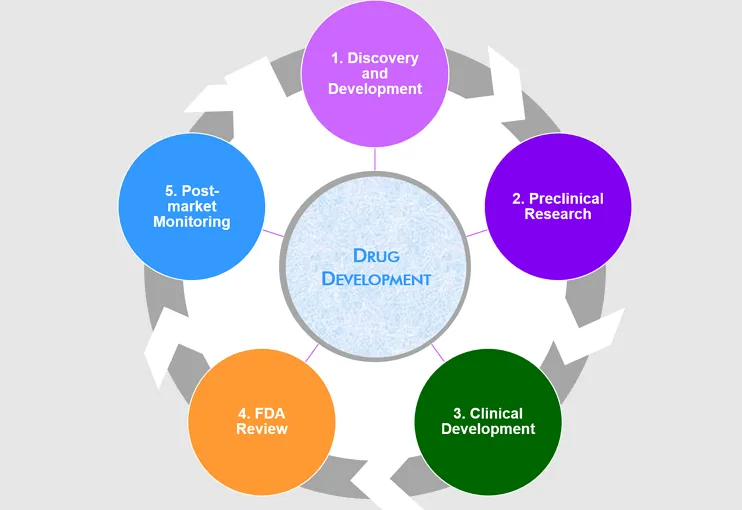
Fig: 2 Drug devlopment process
Building long-term relationships and regulatory intelligence. Effective liaison is not transactional; it relies on trust and mutual understanding built over years[25][26]. RA professionals cultivate relationships with review division staff, project managers, and ombudsmen at each health authority, learning their preferences for communication (e.g., frequency, format, level of detail) and anticipating their concerns[27]. This relationship management allows RA to pick up the phone informally before a formal submission to clarify a ambiguous guidance, or to request a mid-cycle review readout. RA also monitors regulatory intelligence tracking new guidance documents, draft rules, policy changes, and enforcement trends and advises internal teams on how to adapt. For example, when the FDA signals a new focus on diversity action plans for clinical trials, RA ensures the company’s development program aligns before it becomes a mandatory requirement. In this sense, RA serves not only as a liaison but as an early warning system and strategic advisor, ensuring the company remains in regulatory lockstep rather than playing catch-up. Future challenges and the evolving role of RA as strategic bridge. As health authorities embrace novel approaches—real-world evidence for label expansions, platform trials, digital health technologies, and AI-assisted review—the liaison function of RA will become even more demanding. RA professionals must now understand data governance, algorithm validation, and cybersecurity as they relate to regulatory submissions. They must also navigate divergent global responses to emerging technologies, such as the EU’s proposed AI Act versus the FDA’s flexible Software as a Medical Device (SaMD) framework. Simultaneously, supply chain disruptions (e.g., from geopolitical events or pandemics) require RA to negotiate import/export waivers and manufacturing changes without triggering approval delays. The essential nature of the RA role remains unchanged—serving as the critical link between the science inside the company and the market access controlled by health authorities—but the knowledge domain and speed required are expanding exponentially. Pharmaceutical companies that invest in RA as a strategic, empowered liaison function will thrive in this environment; those that relegate RA to a clerical back-office role will face repeated regulatory setbacks, lost market exclusivity, and ultimately, the inability to deliver medicines to patients who need them[30].
The Strategic Role of Regulatory Affairs
Evolving from a Compliance Gatekeeper to a Strategic Business Partner
The traditional view of Regulatory Affairs as a reactive compliance gatekeeper—a function that simply checks boxes, files forms, and says “no” to anything uncertain—has become obsolete in today’s fast-paced pharmaceutical industry. Leading companies have transformed RA into a proactive strategic business partner that sits at the product team’s core from the very first concept. Where a gatekeeper mentality focuses on avoiding regulatory risk at all costs, a strategic partner focuses on managing risk intelligently to enable innovation and accelerate patient access. This evolution manifests in several concrete ways: RA now participates in portfolio prioritization, advising leadership on which drug candidates have the most favorable regulatory pathways and which markets offer the fastest return on investment[31]. RA leads the design of global development plans that harmonize clinical trial requirements across the FDA, EMA, and PMDA, avoiding duplicate studies and saving millions. RA also drives the selection of contract research organizations and manufacturing partners based on their regulatory compliance track records, not just cost. Furthermore, as a strategic partner, RA negotiates with health authorities for waivers, deferrals, and alternative approaches rather than passively accepting every requirement. During internal governance meetings, the Head of RA is now expected to present not only the regulatory risks but also the competitive opportunities—for example, suggesting that a Breakthrough Therapy designation could accelerate launch by two years and generate an additional $500 million in peak sales. This shift from gatekeeper to enabler requires RA professionals to develop business acumen, financial literacy, and negotiation skills alongside their scientific and legal expertise. In return, companies that embrace RA as a strategic partner consistently achieve shorter development timelines, fewer Complete Response letters, and stronger post-market positioning than those that treat RA as an administrative overhead[32].
Influencing Early Drug Development with Regulatory Intelligence and Pathway Design
The most impactful regulatory decisions are made not during the submission phase but years earlier, when a molecule is still in lead optimization or preclinical testing. RA’s ability to influence early drug development hinges on two tools: regulatory intelligence (RI) and pathway design. Regulatory intelligence involves continuously monitoring health authority guidance documents, advisory committee meetings, competitor approval histories, and enforcement actions to extract actionable insights. Armed with this intelligence, RA guides discovery scientists on which pharmacological profiles are likely to receive expedited review—for example, steering teams toward biomarkers that have previously supported Accelerated Approval[33]. In the preclinical phase, RA advises on the minimum nonclinical battery required for a first-in-human trial, preventing over-testing that wastes time and under-testing that triggers a clinical hold. Pathway design is the art of selecting the most efficient regulatory route from IND to NDA. RA evaluates whether a drug qualifies for orphan designation (affecting trial size and market exclusivity), whether a rare disease pathway allows for smaller placebo-controlled trials, or whether a biosimilar pathway can avoid lengthy efficacy studies altogether. RA also designs the clinical trial protocol from a regulatory lens: choosing endpoints that authorities have previously accepted, selecting patient populations that maximize the chance of statistically significant results, and incorporating adaptive designs that allow sample size re-estimation without formal protocol amendments. By embedding RA into early development teams, companies avoid the costly scenario of completing Phase 2 only to learn from a pre-Phase 3 meeting that the chosen primary endpoint is unacceptable. Real-world examples abound: in oncology, RA input on the choice of progression-free survival versus overall survival as the primary endpoint has directly determined whether a drug reached market three years earlier via Accelerated Approval or was delayed by a failed confirmatory trial[35].
Mastering Regulatory Intelligence as a Competitive Advantage
In an era where drug development costs exceed $2 billion per successful NDA, regulatory intelligence has emerged as a distinct competitive advantage that separates market leaders from perpetual followers[36]. Mastering RI goes beyond simply reading FDA guidance documents; it requires systematic collection, analysis, and dissemination of regulatory information across the entire organization. Leading companies build dedicated RI databases that track approval trends by therapeutic area, review times by division, common deficiency letters, and even the specific preferences of individual FDA review divisions (e.g., how the Division of Cardiology and Nephrology interprets the requirement for cardiovascular outcome trials versus the Division of Oncology)[37]. This intelligence allows RA to predict with high confidence whether a proposed development program will face a complete response letter or a priority review. Competitive advantage flows from RI in several ways: first, by identifying regulatory gaps that competitors have overlooked—such as a pediatric exclusivity incentive that can extend patent life by six months[38]. Second, by anticipating regulatory changes before they become mandatory; for example, companies that began collecting patient-reported outcome data early, based on RI about the FDA’s Patient-Focused Drug Development initiative, avoided costly retrospective analyses later. Third, by benchmarking competitor submissions: RI can reveal that a rival’s approved label includes a broader indication because they used a composite endpoint, providing a template for the company’s own supplemental application[39]. Fourth, by mapping global regulatory timelines to sequence submissions strategically—for instance, filing first in a country with a fast review but weak pricing protection versus filing in a country with slower review but strong data exclusivity. Companies that treat RI as a sporadic activity react to the market; those that embed RI into daily decision-making—through morning regulatory news briefings, quarterly horizon scans, and cross-functional RI review boards—consistently outmaneuver competitors, secure first-in-class approvals, and capture premium pricing. In pharmaceutical competition, regulatory intelligence is no longer a nice-to-have; it is the difference between leading the market and chasing it.
Core Responsibilities and Cross-Functional Collaboration
The preparation and management of key regulatory submissions—Investigational New Drug (IND) applications, New Drug Applications (NDA), Marketing Authorization Applications (MAA), and Clinical Trial Applications (CTA)—represent the core operational deliverables of the Regulatory Affairs function. Each submission type serves a distinct regulatory gateway: the IND seeks FDA permission to initiate human clinical trials in the United States, while the CTA serves a similar purpose for the European Union and other ICH regions, requiring detailed protocols, investigator brochures, and manufacturing data. The NDA and MAA are comprehensive dossiers that compile all preclinical, clinical, and CMC data to demonstrate safety and efficacy for marketing approval. RA professionals orchestrate the assembly of these submissions using the Common Technical Document (eCTD) format, manage electronic publishing and validation, track submission timelines against regulatory clocks, and lead responses to health authority queries such as Information Requests or Day 120 Lists of Questions. Beyond document management, RA ensures that every claim in the submission is supported by verifiable data, that all required modules are complete, and that the submission strategy aligns with the designated review pathway (e.g., priority review vs. standard review). Equally critical is RA’s role as the “voice of the regulator” within cross-functional drug development teams[41]. In practice, this means that during team meetings, RA proactively raises questions that a health authority would ask: Is the statistical analysis plan adequately powered to detect a clinically meaningful difference? Does the proposed manufacturing change require a prior approval supplement? Has the pharmacovigilance system been tested for serious adverse event reporting? By voicing these concerns early, RA prevents teams from pursuing costly or non-compliant strategies and transforms regulatory requirements from external constraints into internal design criteria. This “pre-emptive regulatory critique” saves months of rework and reduces the likelihood of complete response letters. Finally, RA manages post-approval changes and maintains product labeling throughout the drug’s lifecycle. After a drug is on the market, manufacturing processes may shift, suppliers may change, or new impurities may emerge—each triggering a regulatory filing such as a Prior Approval Supplement (PAS), Changes Being Effected (CBE), or Annual Report, depending on the level of risk. RA evaluates these changes against FDA or EMA requirements, compiles supporting stability and validation data, and submits the variation within mandated timelines. Concurrently, RA maintains the product’s prescribing information (label), package insert, and patient information leaflets, updating them with new safety data, expanded indications, or pediatric information. Labeling management requires meticulous version control and cross-functional alignment with medical, legal, and commercial teams, as any discrepancy between the approved label and promotional materials invites regulatory action. Through submission excellence, regulatory voice, and diligent lifecycle management, RA ensures that a drug not only reaches the market but remains compliant and competitive for its entire commercial lifespan[42][43].
Regulatory Affairs Across the Drug Development Lifecycle
Preclinical Phase: Advising on studies, GLP compliance, and drafting early development plans. Regulatory Affairs involvement begins long before the first human dose, at the preclinical stage where molecules transition from discovery to candidate selection. Here, RA advises discovery teams on the minimum nonclinical data package required to support an Investigational New Drug (IND) or Clinical Trial Application (CTA). This includes specifying which toxicology studies (e.g., acute, subchronic, genotoxicity), safety pharmacology assessments (CNS, cardiovascular, respiratory), and pharmacokinetic evaluations are necessary based on the drug’s mechanism of action and intended patient population. Crucially, RA ensures that all pivotal nonclinical studies comply with Good Laboratory Practice (GLP) regulations, which mandate standardized protocols, quality assurance oversight, and raw data retention. Without GLP compliance, health authorities will reject the data, forcing costly study repetitions. RA also drafts the early development plan—a strategic document that integrates regulatory milestones (pre-IND meeting request, IND submission, Phase 1 start) with CMC, pharmacology, and toxicology timelines. By designing this plan, RA identifies potential regulatory hurdles early, such as the need for juvenile animal studies if the drug is intended for pediatrics, or specialized carcinogenicity assays for chronic use indications[44]. Proactive RA involvement at this phase prevents the common and expensive mistake of advancing a molecule through IND-enabling studies only to discover that a required reproductive toxicology study was conducted under non-GLP conditions or that a critical safety endpoint was omitted. Regulatory Submissions: Navigating the review and approval process for NDAs, ANDAs, and BLAs. Following successful clinical development, RA compiles the definitive submission for marketing approval. For a new chemical entity, this is the New Drug Application (NDA) in the US; for a biologic, the Biologics License Application (BLA); and for a generic drug, the Abbreviated New Drug Application (ANDA), which relies on bioequivalence rather than full efficacy trials. RA organizes the submission into the Common Technical Document (eCTD) modules, harmonizing data from clinical, nonclinical, and CMC teams into a single electronic package. Prior to filing, RA requests key milestone meetings with health authorities: the End-of-Phase 2 (EOP2) meeting to confirm Phase 3 design, and the pre-NDA meeting to identify any residual deficiencies. After submission, RA navigates the review process by managing day-to-day correspondence, coordinating responses to Information Requests, preparing teams for Advisory Committee hearings, and tracking review clock stoppages. For ANDAs, RA also handles patent certifications (Paragraph IV challenges) and ensures that the generic product is identical to the reference listed drug in active ingredient, strength, dosage form, route of administration, and labeling. Success at this stage requires RA to anticipate review questions before they are asked, provide complete and traceable data packages, and negotiate with reviewers when disagreements arise—all while maintaining strict compliance with filing fees, user fee goals (e.g., PDUFA dates), and post-submission amendments[45].
CONCLUSION
Regulatory Affairs stands as an indispensable pillar of public health, weaving together scientific rigor, legal compliance, and ethical responsibility into a unified framework that protects patients while enabling medical progress. Throughout the drug development lifecycle—from preclinical GLP compliance to post-market pharmacovigilance—RA serves as the guardian of safety and efficacy, ensuring that no medicine reaches a patient unless it has met the exacting standards of health authorities like the FDA and EMA. By preventing unsafe or ineffective drugs from entering the market, RA directly reduces morbidity and mortality; by accelerating the development of breakthrough therapies through strategic pathway design, RA brings life-saving treatments to waiting patients years sooner. The function’s role in pharmacovigilance—tracking adverse events, updating labels with new safety information, and managing risk evaluation plans—continues to safeguard public health long after a product’s launch, catching rare or long-term side effects that clinical trials cannot detect. Moreover, RA’s stewardship of generic drug approvals (ANDAs) and biosimilars drives down drug costs, expanding patient access to essential medicines across socioeconomic boundaries. During public health emergencies such as the COVID-19 pandemic, RA demonstrated its critical value by orchestrating rolling submissions, Emergency Use Authorizations, and real-time safety monitoring, delivering vaccines and therapeutics in record time without compromising safety standards. Beyond individual products, RA contributes to the integrity of the entire pharmaceutical ecosystem by fostering transparency, maintaining public trust in regulatory systems, and ensuring that innovation serves patient welfare rather than commercial expediency. As drug development becomes increasingly complex—with gene therapies, personalized medicines, and digital health technologies—RA will only grow in importance, acting as the bridge between scientific possibility and safe, equitable patient access. In essence, Regulatory Affairs is not merely a corporate compliance function; it is a public health discipline that saves lives, enables innovation, and upholds the covenant between pharmaceutical companies and the patients they serve.
REFERENCES

Asmita Pal, Anisha Arya, Role Of Regulatory Affairs in Pharmaceutical Industry, Int. J. of Pharm. Sci., 2026, Vol 4, Issue 6, 1278-1290, https://doi.org/10.5281/zenodo.20552521
 10.5281/zenodo.20552521