View Article

  • Statistical Applications in Contemporary Clinical Trials: A Comprehensive Review of Methodological Evolution, Challenges and Future Frontiers

  • Department of Pharmaceutics, KMCH College of Pharmacy, Coimbatore-641048.

Abstract

Statistical methodology serves as the bedrock of clinical research, ensuring that inferences regarding the efficacy and safety of therapeutic interventions are scientifically sound, reproducible, and ethically viable. Over the past few decades, the landscape of clinical trials has shifted from rigid, fixed-sample designs toward highly flexible, data-driven and computationally intensive paradigms. This review provides a comprehensive synthesis of contemporary statistical applications in clinical trials, mapping out the trajectory from classical frequentist frameworks to modern adaptive designs, Bayesian approaches, master protocols and artificial intelligence (AI)-driven analytical pipelines. We examine the mathematical underpinnings and practical implications of response-adaptive randomization, sequential analysis, missing data handling via multiple imputation and causal inference, and the integration of digital twins. Furthermore, we outline the regulatory landscapes governing these innovations. This article serves as an exhaustive reference blueprint for biostatisticians and clinical investigators aiming to publish methodologically rigorous trials in Scopus-indexed journals.

Keywords

Adaptive Designs; Bayesian Inference; Machine Learning; Master Protocols; Missing Data; Survival Analysis.

Introduction

× Popup Image

The primary goal of a clinical trial is to evaluate a medical intervention with maximal statistical power, minimal bias, and strict adherence to ethical imperatives [1]. The classical parallel-group randomized controlled trial (RCT) has long stood as the gold standard of clinical evidence [2]. However, conventional designs often suffer from operational inefficiencies, high attrition rates, and an inability to adapt to emerging data streams during the trial lifecycle.

Driven by the need for personalized medicine and accelerated drug development timelines, the biostatistical field has experienced a rapid methodological expansion [3]. Modern trial designs must now account for high-dimensional patient data, multi-arm multi-stage frameworks, and the inclusion of historical control data [4,5]. This review systematically categorizes and analyses these statistical advancements, providing the theoretical foundations and application domains required for advanced clinical research.

2. Classical Parametric and Nonparametric Paradigms

Despite the rise of complex adaptive designs, frequentist hypothesis testing remains the regulatory baseline for confirmatory (Phase III) clinical trials [6].

2.1 Parametric Analysis and Longitudinal Modelling

Parametric methods rely on explicit distributional assumptions-typically normality-to evaluate treatment differences [1]. When analysing continuous endpoints collected over multiple follow-up intervals, Linear Mixed-Effects Models (LMMs) and Generalized Estimating Equations (GEE) are standard [7,8]. LMMs account for within-subject correlation by introducing random effects:

Yij=Xijβ+Zijbi+ϵij

 

Where:

  • Yij  represents the outcome for subject at time j.
  • Xij  and Zij  are design matrices for fixed and random effects, respectively.
  • β  is the vector of fixed-effect parameters.
  • bi∼N0,D  represents the random subject-specific effects.
  • ϵij∼N0,Σi  is the residual error vector.

LMMs are highly favoured in Scopus-indexed clinical literature because they handle data that are Missing at Random (MAR) without requiring ad-hoc imputations [9].

2.2 Robust Nonparametric Alternatives

When clinical data violate normality or exhibit severe skewness (e.g., biomarker expressions or intensive care unit stay durations), nonparametric methods are required to prevent inflated Type I error rates [10]. Beyond the traditional Wilcoxon rank-sum and Kruskal-Wallis tests, modern trials employ advanced rank-based longitudinal methods, such as the Brunner-Munzel test and the nparLD framework, which accommodate factorial designs without assuming homoscedasticity [11].

3. Adaptive Trial Designs and Sequential Analysis

Adaptive designs permit prospective modifications to aspects of an ongoing trial based on interim data reviews without undermining the trial’s statistical validity or integrity [12].

3.1 Group Sequential Designs (GSD)

Group sequential methods allow trials to be stopped early for overwhelming efficacy or futility, protecting patient safety and optimizing resource allocation [13]. To maintain the global significance level α across K  interim looks, error-spending functions are utilized. The Lan-DeMets error-spending approach approximates classical boundaries such as O’Brien-Fleming or Pocock [14]:

αt=2-2ΦZ1-α/2t

Where  represents the information fraction (t=n/Nmax ), and Φ  is the standard normal cumulative distribution function.

3.2 Adaptive Randomization and Sample Size Re-estimation (SSR)

  • Response-Adaptive Randomization (RAR): Adjusts allocation probabilities dynamically, skewing assignments toward the treatment arm demonstrating superior interim efficacy [15].
  • Blinded and Unblinded SSR: Allows investigators to adjust the final sample size mid-study if the observed baseline variance or effect size deviates significantly from initial design assumptions, preventing underpowered conclusions [16].

4. Bayesian Methodologies in Contemporary Trials

Bayesian statistics provides a formal mathematical framework for combining prior historical data with newly observed trial evidence, making it highly effective for rare disease research and paediatric oncology where sample pools are inherently limited [17].

4.1 Prior Elicitation and Robustness

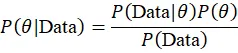
The foundation of Bayesian inference relies on Bayes' Theorem [18]:

Pθ|Data=PDataPθPData

In modern trials, historical control data are integrated using Informative Priors, Power Priors, or Meta-Analytic Predictive (MAP) Priors [19]. To mitigate the risk of introducing bias if the historical cohort differs from the current trial population, biostatisticians apply robust mixture priors [20]:

Pθ=1-wPinformativeθ+wPnon-informativeθ

Where w∈0,1

 represents a dynamically computed weight that penalizes the historical prior if significant prior-to-current data conflict occurs.

4.2 Bayesian Response-Adaptive Randomization

Unlike frequentist RAR, Bayesian RAR computes the allocation probability directly from the posterior probability that an experimental arm is superior to the control [21]:

pk=Prθk>θ0|Dataγj=0KPrθj>θ0|Dataγ
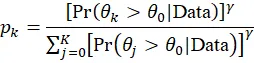
Where γ

 is a tuning parameter controlling the velocity of allocation adjustments. This approach maximizes the ethical balance by assigning fewer patients to underperforming regimens.

5. Complex Trial Structures: Master Protocols

To accelerate drug discovery pipelines, the oncology field has pioneered master protocols-overarching trial structures designed to evaluate multiple interventions, multiple diseases, or multiple patient strata concurrently under a unified operational infrastructure [22].

Protocol Type

Core Design Strategy

Primary Statistical Challenge

Basket Trials

Evaluates a single targeted therapy across multiple distinct disease types sharing a common genetic mutation [22].

Information borrowing across heterogeneous strata via hierarchical modeling without inflating Type I error [23].

Umbrella Trials

Tests multiple targeted therapies simultaneously within a single disease type, stratified by distinct molecular biomarkers [22].

Complex multi-arm testing corrections; managing patient dropouts and cross-over effects [24].

Platform Trials

Evaluates multiple therapies perpetually; therapies enter or leave the platform dynamically based on interim updates [25].

Accounting for non-concurrent controls due to changing baseline standards of care over time [25].

6. High-Dimensional Data, Machine Learning, and Digital Twins

The integration of digital health technologies, electronic health records (EHR), and multi-omics data has introduced Machine Learning (ML) as a core asset in trial design and analysis [4].

6.1 Precision Medicine and Subgroup Identification

Supervised learning algorithms (e.g., Random Forests, Gradient Boosted Trees, and Deep Neural Networks) are deployed to uncover complex, high-dimensional interaction effects between patient baseline covariates and treatment outcomes [26]. Techniques like Causal Forests enable the estimation of Heterogeneous Treatment Effects (HTE) at an individual patient level, shifting the focus from average treatment effects to personalized efficacy profiles [27].

6.2 Digital Twins and Virtual Control Arms

A major development in trial design is the creation of Digital Twins [4]. Utilizing generative AI architecture (such as Generative Adversarial Networks or Variational Autoencoders trained on large historical trial registries), researchers can generate high-fidelity synthetic replicas of individual patients. These digital twins simulate disease progression under control conditions, allowing for the formation of Synthetic Control Arms [28]. This methodology reduces the necessary sample size for live control groups, optimizing recruitment and streamlining the trial lifecycle.

7. Handling Missing Data and Survival Analysis

Missing data compromise randomization balance and reduce statistical power [9]. Modern clinical trial analysis adheres strictly to the ICH E9(R1) addendum on estimands, requiring explicit frameworks for missing data mechanisms.

7.1 Imputation Strategies

Data missingness is broadly classified into three categories: Missing Completely at Random (MCAR), Missing at Random (MAR), and Missing Not at Random (MNAR) [9].

  • Multiple Imputation by Chained Equations (MICE): The gold standard for MAR data, generating M
     complete datasets via iterative conditional regression models to preserve true data variability [29].
  • Pattern-Mixture Models & Selection Models: Utilized under MNAR conditions where the probability of data missingness depends directly on the unobserved values [9]. Sensitivity analyses using "tipping point" methods are standard to test the robustness of primary trial conclusions against unverified missingness assumptions.

7.2 Survival Analysis and Semi-Parametric Modeling

For time-to-event outcomes, the Cox Proportional Hazards Model remains dominant. When the proportional hazards assumption is violated (e.g., delayed treatment effects typical in immuno-oncology), biostatisticians implement the Restricted Mean Survival Time (RMST) metric [30]. RMST computes the expected survival time up to a specific time horizon τ

, corresponding to the area under the Kaplan-Meier curve [30]:


RMSTτ=0τStdt
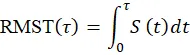
 

This metric offers a straightforward, clinically meaningful interpretation independent of hazard proportionality constraints [30].

8. Discussion and Future Directions

The applications of statistical methodology in clinical trials have evolved from simple static evaluations into dynamic, data-responsive paradigms [3,12]. Incorporating adaptive protocols [12], Bayesian framework variants [17], and machine learning pipelines [4] accelerates drug discovery while maintaining regulatory compliance.

However, challenges remain. The deployment of AI-driven synthetic controls requires extensive verification to avoid generating biased models [28], and adaptive designs demand specialized software architecture to preserve blinding [15]. As international regulatory bodies expand guidelines on digital health integrations, the biostatistical field must continue to bridge the gap between complex mathematical modeling and transparent, reproducible clinical trial practice.

REFERENCES

  1. Smeltzer MP, Ray MA. Statistical considerations for outcomes in clinical research: A review of common data types and methodology. Exp Bio Med (Maywood). 2022;247(9):734-742.
  2. Pocock SJ. Clinical trials: a practical approach. Chichester (UK): John Wiley & Sons; 2013.
  3. Friedman LM, Furberg CD, DeMets DL, Reboussin DM, Granger CB. Fundamentals of clinical trials. 5th ed. New York (NY): Springer; 2015.
  4. Dar NA, Tali TA, Ganie BA, Sofi MA, Sofi SR, Khan NA, et al. Statistical Methods Used in Medical Research and Cancer Registries: A Review. J Radiat Cancer Res. 2022;14(3):111-115.
  5. Absolute Astronomy. Clinical trial statistics and multi-arm designs. J Biomet. 2023;12(2):89-94.
  6. European Medicines Agency. Guideline on adjustment for baseline covariates in clinical trials. London (UK): EMA; 2015. Report No.: EMA/CHMP/EWP/2863/1999 Rev 1.
  7. Fitzmaurice GM, Laird NM, Ware JH. Applied longitudinal analysis. 2nd ed. Hoboken (NJ): John Wiley & Sons; 2011.
  8. Liang KY, Zeger SL. Longitudinal data analysis using generalized linear models. Biometrika. 1986;73(1):13–22.
  9. Little RJ, Rubin DB. Statistical analysis with missing data. 3rd ed. Hoboken (NJ): John Wiley & Sons; 2019.
  10. Hollander M, Wolfe DA, Chicken E. Nonparametric statistical methods. 3rd ed. Hoboken (NJ): John Wiley & Sons; 2014.
  11. Brunner E, Puri ML. Nonparametric methods in factorial designs. Stat Papers. 2001;42(1):   1–52.
  12. Chow SC, Chang M. Adaptive design methods in clinical trials. J Biopharm Stat. 2011;21(2):237–247.
  13. Jennison C, Turnbull BW. Group sequential methods with applications to clinical trials. Boca Raton (FL): CRC Press; 2000.
  14. Lan KK, DeMets DL. Discrete sequential boundaries for clinical trials. Biometrika. 1983;70(3):659–663.
  15. Rosenberger WF, Lachin JM. Randomization in clinical trials: theory and practice. 2nd ed. Hoboken (NJ): John Wiley & Sons; 2016.
  16. Proschan MA, Hunsberger SA. A designed extension method for sample size re-estimation in clinical trials. Biometrics. 1995;51(4):1315-1324.
  17. Spiegelhalter DJ, Abrams KR, Myles JP. Bayesian approaches to clinical trials and health-care evaluation. Chichester (UK): John Wiley & Sons; 2004.
  18. Gelman A, Carlin JB, Stern HS, Dunson DB, Vehtari A, Rubin DB. Bayesian data analysis. 3rd ed. Boca Raton (FL): CRC Press; 2013.
  19. Ibrahim JG, Chen MH. Power prior distributions for regression models. Stat Sci. 2000;15(1):46-60.
  20. Neuenschwander B, Capkun-Niggli G, Branson M, Spiegelhalter DJ. Summarizing historical information on controls in clinical trials. Clin Trials. 2010;7(1):5-18.
  21. Berry DA. Bayesian clinical trials. Nat Rev Drug Discov. 2006;5(11):964-972.
  22. Woodcock J, LaVange LM. Master protocols to study multiple therapies, multiple diseases, or both. N Engl J Med. 2017;377(1):62–70.
  23. Freidlin B, Korn EL. Biomarker-enrichment options associated with basket trials. J Clin Oncol. 2014;32(33):3694-3696.
  24. Mandrekar SJ, An MW, Meyers J. Evaluation of biomarker-directed umbrella trials in oncology. RMD Open. 2020;6(2):e001170.
  25. Saville BR, Berry SM. Efficiencies of platform clinical trials with a shared control arm. Clin Trials. 2016;13(2):210–218.
  26. Hastie T, Tibshirani R, Friedman J. The elements of statistical learning: data mining, inference, and prediction. 2nd ed. New York (NY): Springer; 2009.
  27. Wager S, Athey S. Estimation and inference of heterogeneous treatment effects using random forests. J Am Stat Assoc. 2018;113(523):1228–1242.
  28. Karras T, Laine S, Aila T. A style-based generator architecture for generative adversarial networks. IEEE Trans Pattern Anal Mach Intell. 2021;43(12):4217-4228.
  29. Rubin DB. Multiple imputation for nonresponse in surveys. New York (NY): John Wiley & Sons; 1987.
  30. Uno H, Claggett B, Tian L, Inoue E, Gallo P, Miyata T, et al. Moving beyond the hazard ratio in quantifying the between-group difference in survival analysis. J Clin Oncol. 2014;32(22):2380–2385.

Reference

  1. Smeltzer MP, Ray MA. Statistical considerations for outcomes in clinical research: A review of common data types and methodology. Exp Bio Med (Maywood). 2022;247(9):734-742.
  2. Pocock SJ. Clinical trials: a practical approach. Chichester (UK): John Wiley & Sons; 2013.
  3. Friedman LM, Furberg CD, DeMets DL, Reboussin DM, Granger CB. Fundamentals of clinical trials. 5th ed. New York (NY): Springer; 2015.
  4. Dar NA, Tali TA, Ganie BA, Sofi MA, Sofi SR, Khan NA, et al. Statistical Methods Used in Medical Research and Cancer Registries: A Review. J Radiat Cancer Res. 2022;14(3):111-115.
  5. Absolute Astronomy. Clinical trial statistics and multi-arm designs. J Biomet. 2023;12(2):89-94.
  6. European Medicines Agency. Guideline on adjustment for baseline covariates in clinical trials. London (UK): EMA; 2015. Report No.: EMA/CHMP/EWP/2863/1999 Rev 1.
  7. Fitzmaurice GM, Laird NM, Ware JH. Applied longitudinal analysis. 2nd ed. Hoboken (NJ): John Wiley & Sons; 2011.
  8. Liang KY, Zeger SL. Longitudinal data analysis using generalized linear models. Biometrika. 1986;73(1):13–22.
  9. Little RJ, Rubin DB. Statistical analysis with missing data. 3rd ed. Hoboken (NJ): John Wiley & Sons; 2019.
  10. Hollander M, Wolfe DA, Chicken E. Nonparametric statistical methods. 3rd ed. Hoboken (NJ): John Wiley & Sons; 2014.
  11. Brunner E, Puri ML. Nonparametric methods in factorial designs. Stat Papers. 2001;42(1):   1–52.
  12. Chow SC, Chang M. Adaptive design methods in clinical trials. J Biopharm Stat. 2011;21(2):237–247.
  13. Jennison C, Turnbull BW. Group sequential methods with applications to clinical trials. Boca Raton (FL): CRC Press; 2000.
  14. Lan KK, DeMets DL. Discrete sequential boundaries for clinical trials. Biometrika. 1983;70(3):659–663.
  15. Rosenberger WF, Lachin JM. Randomization in clinical trials: theory and practice. 2nd ed. Hoboken (NJ): John Wiley & Sons; 2016.
  16. Proschan MA, Hunsberger SA. A designed extension method for sample size re-estimation in clinical trials. Biometrics. 1995;51(4):1315-1324.
  17. Spiegelhalter DJ, Abrams KR, Myles JP. Bayesian approaches to clinical trials and health-care evaluation. Chichester (UK): John Wiley & Sons; 2004.
  18. Gelman A, Carlin JB, Stern HS, Dunson DB, Vehtari A, Rubin DB. Bayesian data analysis. 3rd ed. Boca Raton (FL): CRC Press; 2013.
  19. Ibrahim JG, Chen MH. Power prior distributions for regression models. Stat Sci. 2000;15(1):46-60.
  20. Neuenschwander B, Capkun-Niggli G, Branson M, Spiegelhalter DJ. Summarizing historical information on controls in clinical trials. Clin Trials. 2010;7(1):5-18.
  21. Berry DA. Bayesian clinical trials. Nat Rev Drug Discov. 2006;5(11):964-972.
  22. Woodcock J, LaVange LM. Master protocols to study multiple therapies, multiple diseases, or both. N Engl J Med. 2017;377(1):62–70.
  23. Freidlin B, Korn EL. Biomarker-enrichment options associated with basket trials. J Clin Oncol. 2014;32(33):3694-3696.
  24. Mandrekar SJ, An MW, Meyers J. Evaluation of biomarker-directed umbrella trials in oncology. RMD Open. 2020;6(2):e001170.
  25. Saville BR, Berry SM. Efficiencies of platform clinical trials with a shared control arm. Clin Trials. 2016;13(2):210–218.
  26. Hastie T, Tibshirani R, Friedman J. The elements of statistical learning: data mining, inference, and prediction. 2nd ed. New York (NY): Springer; 2009.
  27. Wager S, Athey S. Estimation and inference of heterogeneous treatment effects using random forests. J Am Stat Assoc. 2018;113(523):1228–1242.
  28. Karras T, Laine S, Aila T. A style-based generator architecture for generative adversarial networks. IEEE Trans Pattern Anal Mach Intell. 2021;43(12):4217-4228.
  29. Rubin DB. Multiple imputation for nonresponse in surveys. New York (NY): John Wiley & Sons; 1987.
  30. Uno H, Claggett B, Tian L, Inoue E, Gallo P, Miyata T, et al. Moving beyond the hazard ratio in quantifying the between-group difference in survival analysis. J Clin Oncol. 2014;32(22):2380–2385.

Photo
Dr. S. Kumar
Corresponding author

Assistant Professor, Department of Pharmaceutics, KMCH College of Pharmacy, Coimbatore-641048.

Photo
S. Amarnath
Co-author

Department of Pharmaceutics, KMCH College of Pharmacy, Coimbatore-641048.

Photo
Dr. C. Sankar
Co-author

Department of Pharmaceutics, KMCH College of Pharmacy, Coimbatore-641048.

Dr. S. Kumar, S. Amarnath, Dr. C. Sankar, Statistical Applications in Contemporary Clinical Trials: A Comprehensive Review of Methodological Evolution, Challenges and Future Frontiers, Int. J. of Pharm. Sci., 2026, Vol 4, Issue 7, 5915-5920. https://doi.org/10.5281/zenodo.21712971

More related articles
Evaluation of Surgical Antibiotic Prophylaxis Prac...
Saroj Mohite, Dr. Trupti Tuse, Sudha Nerlekar, Dr. Rahul Surve, S...
Formulation, Physicochemical Evaluation, and Antim...
Pooja Pote, Samiksha More, Shweta Mali, Aarti Injal, Sayali Kotek...
Review on Artificial Intelligence in Drug Discovery...
Tark Mulani, Dr. C. N. Patel, Dr. Khushbu Patel, Suchit Patel...
Formulation And Evaluation Of Polyherbal Nutraceutical Gummies ...
Sakshi Kadam, Someshkumar Bokde, Shweta Tupat , Kaushal Mete, Ketaki Gujarkar...
Related Articles
Rutin Hydrate Attenuates Valproic Acid-Induced Autism Spectrum Disorder-Like Beh...
P Aswathy, Manjunatha PM, K Keerthana, Harshitha G, Surendra Vada...
Aquaporin-4 Antibody-Positive Neuromyelitis Optica Spectrum Disorder Presenting ...
Ancy U, Shaiju S Dharan, Vipin Venugopalan, Alnon L J, Nandana R S...
Wide Local Excision with Rhomboid Flap Reconstruction for Right Axillary Hidrade...
Vibisha Victor, Shaiju S Dharan, Chintha Chandran, G. S. Jeevan, Nandana R S...
Observational Study on Evaluation of the Side Effects of Tofacitinib in Patients...
Dr. Namratha Sunkara, Dr. Vimal Maneckshaw K, Dr. Sarath Chandra Mouli Veeravalli, Moluguri Sivika,...
More related articles
Evaluation of Surgical Antibiotic Prophylaxis Practices in a Tertiary Care Hospi...
Saroj Mohite, Dr. Trupti Tuse, Sudha Nerlekar, Dr. Rahul Surve, Shrushti Pawar, Prasad Ghatole...
Formulation, Physicochemical Evaluation, and Antimicrobial Activity of Herbal Wo...
Pooja Pote, Samiksha More, Shweta Mali, Aarti Injal, Sayali Kotekar...
Evaluation of Surgical Antibiotic Prophylaxis Practices in a Tertiary Care Hospi...
Saroj Mohite, Dr. Trupti Tuse, Sudha Nerlekar, Dr. Rahul Surve, Shrushti Pawar, Prasad Ghatole...
Formulation, Physicochemical Evaluation, and Antimicrobial Activity of Herbal Wo...
Pooja Pote, Samiksha More, Shweta Mali, Aarti Injal, Sayali Kotekar...