

We use cookies to ensure our website works properly and to personalise your experience. Cookies policy
Department of Pharmaceutics, BCDA College of Pharmacy & Technology, 78, Jessore Road, Hridaypur, Barasat, Kolkata 700127, West Bengal, India.
Stimuli-responsive hydrogels, often referred to as 'smart hydrogels,' are three-dimensional crosslinked polymer networks capable of undergoing reversible structural or volumetric transitions in response to specific physical, chemical, or biochemical triggers. Over the past two decades, these intelligent biomaterials have attracted immense interest from researchers across pharmaceutical science, biomedical engineering, and materials chemistry owing to their ability to mimic dynamic biological microenvironments and enable precision drug delivery, tissue engineering scaffolding, biosensing, and wound care. This review systematically examines the classification of stimuli-responsive hydrogels based on the nature of triggering stimuli, underlying mechanisms of responsiveness, polymer chemistry, fabrication strategies, and emerging biomedical applications. The article also critically analyses current limitations such as slow kinetic response, compromised mechanical integrity, and translational barriers, alongside strategies proposed to address them. Future perspectives on multi-stimuli-responsive systems and their clinical translation are discussed. This overview aims to serve as a comprehensive reference for researchers and formulation scientists working in the domain of advanced hydrogel-based drug delivery systems
Hydrogels are viscoelastic, water-swollen polymer networks that can absorb large quantities of water or biological fluids while maintaining their structural integrity. The distinctive capacity of hydrogels to incorporate and release bioactivemolecules in a controlled manner has made them central to modern pharmaceutical and biomedical research. Conventional hydrogels, however, release their payloads through simple diffusion-driven mechanisms, limiting spatiotemporal precision in therapeutic delivery. This shortcoming prompted the development of stimuli-responsive, or 'smart,' hydrogels — systems that change their physicochemical properties only when a specific environmental cue is detected [1, 2].
The concept of stimuli-responsive hydrogels emerged in the early 1990s when Tanaka and colleagues demonstrated volume-phase transitions in poly(N-isopropylacrylamide) (PNIPAAm) gels induced by temperature changes [3]. Since then, the field has expanded dramatically to include systems responsive to pH, light, magnetic and electric fields, specific biomolecules such as glucose and enzymes, and combinations thereof. The global hydrogel market was valued at approximately USD 20 billion in 2023 and is projected to grow at a compound annual growth rate (CAGR) of around 7.4% through 2030, a trajectory largely fuelled by advancements in smart hydrogel technologies [4].
The stimulus-responsiveness of these hydrogels originates from structural elements within the polymer backbone — ionic groups, hydrophobic segments, supramolecular recognition moieties, or crosslinks susceptible to specific chemical or enzymatic cleavage. A change in the surrounding stimulus alters these interactions, resulting in conformational changes, chain collapse or extension, gel-sol transitions, or differential swelling-shrinkage behaviour. Depending on the application, these transitions can be exploited to control drug release kinetics, modulate scaffold stiffness for cell mechanosensing, or act as a signal transducer in diagnostic platforms [5, 6].
This review provides a structured and comprehensive overview of stimuli-responsive hydrogels: their classification by stimulus type, the polymer systems underlying each class, fabrication approaches, a critical survey of biomedical applications, current challenges, and future directions. The authors have drawn on both seminal foundational studies and the most recent primary research and review literature to deliver an authoritative reference document suitable for submission to IJPS.
2. Classification of Stimuli-Responsive Hydrogels
Stimuli-responsive hydrogels are broadly grouped into three hierarchical categories based on the origin of the triggering signal: (i) physical stimuli-responsive, (ii) chemical stimuli-responsive, and (iii) biochemical stimuli-responsive. Systems that integrate more than one responsive modality are termed 'multi-stimuli-responsive' or 'dual-responsive' hydrogels. Table 1 summarises this classification with representative polymer systems for each stimulus type.
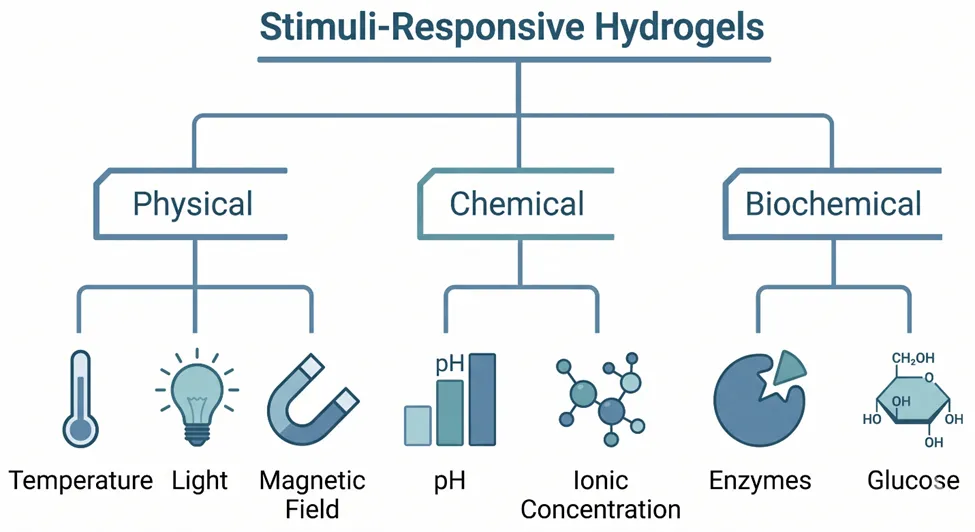
Figure 1. Schematic classification of stimuli-responsive hydrogels by trigger category
.
Table 1. Classification of stimuli-responsive hydrogels based on stimulus type
|
Category of Stimulus |
Type of Stimulus |
Example Polymers / Systems |
|
Physical |
Temperature |
PNIPAAm, PVCL, Pluronic F127 |
|
Physical |
Light (UV/Vis/NIR) |
Azobenzene-PEG, spiropyran-chitosan |
|
Physical |
Magnetic field |
Fe3O4-PAAm nanocomposite hydrogel |
|
Physical |
Electric field |
Polyacrylic acid, polyvinyl alcohol |
|
Physical |
Pressure / Mechanical |
Alginate, agarose blends |
|
Chemical |
pH |
Poly(acrylic acid), chitosan, alginate |
|
Chemical |
Ionic strength |
Poly(methacrylic acid)-co-PEG |
|
Chemical |
Redox (GSH/H2O2) |
Disulfide-crosslinked PEG hydrogel |
|
Chemical |
CO2 / Gas |
Amine-functionalized polyacrylamide |
|
Biochemical |
Enzyme |
Peptide-crosslinked PEG, hyaluronate |
|
Biochemical |
Glucose |
Boronate ester-PVA, ConA-based gels |
|
Biochemical |
Antigen / Antibody |
Protein-grafted polyacrylamide |
|
Dual/Multi |
pH + Temperature |
PNIPAAm-co-PAA, chitosan-PNIPAAm |
|
Dual/Multi |
pH + Redox |
Disulfide PAA hybrid systems |
2.1 Physical Stimuli-Responsive Hydrogels
Physical stimuli cause reversible conformational or phase transitions via non-covalent forces, without altering the primary chemical structure of the polymer. Temperature-responsive hydrogels are the most extensively studied subclass. PNIPAAm, the archetypal thermo-responsive polymer, exhibits a lower critical solution temperature (LCST) of approximately 32 °C in water. Below the LCST, the polymer chains are hydrated and adopt a random-coil conformation, resulting in a swollen hydrogel. Above the LCST, hydrophobic interactions dominate, causing rapid chain collapse and gel contraction [7]. This thermoresponsive transition can be fine-tuned by copolymerisation with hydrophilic monomers such as acrylamide (raising LCST) or hydrophobic comonomers such as N-tert-butylacrylamide (lowering LCST) [8].

Figure 2. Conceptual schematic of thermoresponsive coil-to-globule transition.
Photo-responsive hydrogels incorporate chromophore moieties — most commonly azobenzene, spiropyran, or diarylethene groups — that undergo reversible photoisomerisation upon UV or visible light irradiation. The resulting geometry change of the chromophore disrupts or reinforces host-guest interactions within the network, causing macroscopic volume changes or gel-sol transitions [9]. Magnetic-field-responsive hydrogels typically incorporate superparamagnetic iron oxide nanoparticles (SPIONs) within a polymer matrix; an alternating magnetic field generates localised hyperthermia, triggering thermoresponsive behaviour or direct mechanical deformation [10].
2.2 Chemical Stimuli-Responsive Hydrogels
Chemical stimuli alter protonation states, ionic environments, or chemical bond integrity within the hydrogel network. pH-responsive hydrogels contain ionisable groups such as carboxylic acids (e.g., poly(acrylic acid), PAA) or amines (e.g., chitosan). At physiological pH, these groups ionise, increasing electrostatic repulsion within the network and promoting swelling. The pH gradient between healthy tissue (pH ~7.4) and tumour microenvironments (pH 5.5–6.5) or endosomal compartments (pH ~5.0) provides a clinically meaningful trigger for anticancer drug delivery [11]. Crosslinks formed by boronate esters, disulfide bonds, or dynamic covalent linkages respond to glucose concentration or redox gradients (glutathione, H2O2), respectively [12, 13].
2.3 Biochemical Stimuli-Responsive Hydrogels
Biochemical triggers exploit the specificity of biomolecular recognition events. Enzyme-responsive hydrogels are crosslinked via enzyme-cleavable peptide sequences (e.g., MMP-cleavable PVGLIG motif) or contain substrates that are modified by enzymes overexpressed at disease sites. Glucose-responsive hydrogels typically rely on boronic acid–diol dynamic covalent chemistry or lectin (concanavalin A)–polysaccharide competitive binding to deliver insulin in a self-regulated fashion [14]. Antigen-responsive hydrogels utilise antibody–antigen interactions to trigger volume transitions, with applications in immunosensor fabrication [15].
3. Polymer Chemistry and Network Architecture
The functional behaviour of any stimuli-responsive hydrogel is ultimately determined by its molecular composition — the choice of polymer backbone, the nature and density of crosslinks, and the incorporation of functional pendant groups. Hydrogel-forming polymers can be of natural origin (chitosan, hyaluronic acid, alginate, gelatin, collagen, dextran), synthetic origin (PNIPAAm, poly(ethylene glycol) (PEG), polyvinyl alcohol (PVA), polyacrylamide (PAAm)), or semi-synthetic hybrids. Natural polymers offer excellent biocompatibility and inherent biological signalling, while synthetic polymers provide precise chemical control and reproducibility [16].
Crosslinking strategies profoundly influence network responsiveness and mechanics. Chemical crosslinking via covalent bonds (e.g., glutaraldehyde, carbodiimide chemistry, photo-initiated radical polymerisation) yields mechanically robust gels but can introduce cytotoxic reagents. Physical crosslinking through hydrogen bonds, electrostatic interactions, hydrophobic associations, or crystalline domains produces injectable, self-healing hydrogels with reversible gelation, which is particularly desirable for minimally invasive delivery [17]. Interpenetrating polymer networks (IPNs), where two independently crosslinked networks are interlocked without covalent bonds between them, represent a versatile architecture for combining responsiveness with enhanced toughness [18]. Nanocomposite hydrogels incorporating nanoclay, carbon nanotubes, or metallic nanoparticles further augment mechanical and stimulus-responsive properties [19].

Figure 3. Schematic comparison of hydrogel network architectures.
4. Fabrication Strategies and Processing
The synthesis and processing of stimuli-responsive hydrogels must balance responsiveness, biocompatibility, and scalability. Free-radical polymerisation remains the most widely employed method for producing synthetic hydrogels, offering versatility in monomer choice and crosslinker identity. Controlled living radical techniques such as RAFT and ATRP enable precise control over molecular weight and architecture, reducing batch-to-batch variability [20]. For natural polymer-based hydrogels, ionic gelation (e.g., calcium-crosslinked alginate), enzymatic crosslinking (e.g., horseradish peroxidase-mediated crosslinking of tyramine-modified polymers), and self-assembly via peptide amphiphiles have been broadly adopted [21].
Emerging fabrication platforms include microfluidics-assisted synthesis, which produces monodisperse hydrogel microparticles with exquisite control over size and morphology — a significant advantage for parenteral administration. Three-dimensional bioprinting, which deposits hydrogel bioinks layer-by-layer, has transformed tissue engineering by enabling spatially complex scaffolds with embedded vascular channels [22]. Electrospinning of hydrogel precursors followed by crosslinking produces nanofibrous mats with high surface area-to-volume ratios, beneficial for wound-dressing applications. The choice of fabrication strategy is dictated by the intended application, target anatomy, and the physicochemical constraints of the encapsulated therapeutic agent.
5. Mechanism of Stimulus-Response: Step-by-Step Overview
The following flowchart (Figure 4) depicts the generalised sequence of events that underpin the stimulus-triggered response in smart hydrogels, from stimulus detection through network rearrangement to therapeutic payload release.

Figure 4. Generalised mechanism flowchart for stimulus-triggered hydrogel response and drug release.
6. Biomedical Applications
The biomedical versatility of stimuli-responsive hydrogels has been demonstrated across a wide array of clinical and pre-clinical contexts. Table 2 summarises key application areas, the stimulus exploited, the hydrogel system employed, and salient outcomes.
Table 2. Representative biomedical applications of stimuli-responsive hydrogels
|
Application Area |
Stimulus Used |
Hydrogel System |
Key Finding / Outcome |
|
Drug delivery (cancer) |
pH + Temp |
PNIPAAm-co-PAA |
Enhanced doxorubicin release at tumor pH (5.5) |
|
Wound healing |
pH |
Chitosan-PAA hybrid |
Accelerated closure; antibacterial activity |
|
Tissue engineering |
Temperature |
PNIPAAm scaffold |
Cell sheet detachment at 32 °C without enzymes |
|
Glucose monitoring |
Glucose |
Boronate-PVA |
Reversible swelling; insulin on-demand |
|
Ocular drug delivery |
Temperature |
Pluronic F127 gel |
Sol-gel transition at eye temperature (35 °C) |
|
Gene therapy |
Redox (GSH) |
Disulfide-PEG |
Intracellular siRNA release triggered by GSH |
|
Cartilage repair |
Enzyme (MMP) |
Peptide-PEG |
Selective degradation at inflammation site |
|
3D bioprinting |
Light (UV) |
GelMA / PEGDA |
On-demand photo-crosslinking; high fidelity |
6.1 Controlled and Targeted Drug Delivery
Drug delivery remains the most intensively explored application of smart hydrogels. The spatial and temporal control that stimulus-responsiveness provides is especially valuable in oncology, where conventional chemotherapy causes significant systemic toxicity. Tumour microenvironments are characterised by lower extracellular pH, elevated glutathione concentrations, and hypoxia relative to normal tissue — each an exploitable trigger. Doxorubicin-loaded PNIPAAm-co-PAA hydrogels demonstrate accelerated release at pH 5.5 and 40 °C, conditions approximating the endosomal environment after receptor-mediated endocytosis [23]. Similarly, disulfide-crosslinked PEG carriers disintegrate rapidly in the cytoplasm owing to the high intracellular glutathione concentration, enabling cytosolic delivery of nucleic acids [12].
Oral drug delivery systems employing pH-responsive hydrogels protect acid-labile proteins and peptides in the stomach (pH~ 1.5–3.0) and release them selectively in the intestine (pH~ 6.8–7.4). Insulin encapsulated in chitosan-alginate polyelectrolyte complex hydrogels showed over 90% retention at gastric pH and efficient release in simulated intestinal fluid, offering a promising oral insulin formulation strategy [24].
6.2 Tissue Engineering and Regenerative Medicine
The extracellular matrix (ECM) is a dynamic hydrogel-like environment that transmits biochemical and mechanical cues to cells. Stimuli-responsive hydrogel scaffolds can mimic ECM dynamism, enabling researchers to modulate cell adhesion, proliferation, and differentiation in a spatiotemporally controlled manner. Thermoresponsive PNIPAAm-based cell culture surfaces allow intact cell sheet harvesting at temperatures below the LCST without proteolytic damage to cell surface proteins — a technique pioneered by Okano et al. and now applied in clinical-grade cardiac cell sheet transplantation [25]. Stiffness-switchable hydrogels whose modulus can be tuned by light or redox stimuli are employed to direct stem cell fate by mimicking the mechanical evolution of developmental microenvironments [26].
6.3 Wound Healing
Smart wound dressings that respond to the pH and protease activity of chronic wound exudate represent an exciting translational opportunity. Wounds typically progress from an acidic inflammatory phase (pH ~5.5–6.5) toward a neutral or slightly alkaline healing phase (pH ~7.4–8.0). pH-responsive hydrogels containing antimicrobial agents can release them selectively during the acidic inflammatory phase, providing infection control without prolonged exposure. Chitosan-PAA hydrogels exhibited both pH-triggered ciprofloxacin release and physical barrier properties that accelerated wound closure by approximately 35% compared with conventional dressings in a murine excision model [27].
6.4 Biosensing and Diagnostics
Stimuli-responsive hydrogels function as transducers in label-free biosensors. Glucose-responsive boronic acid-PVA hydrogels exhibit a measurable swelling response proportional to glucose concentration, which can be transduced optically or mechanically for continuous glucose monitoring [28]. Molecularly imprinted hydrogels, where template molecules are removed from a crosslinked network after synthesis, create stereospecific binding cavities for the analyte of interest, forming the basis of plastic antibody-type sensors with clinical diagnostic potential [29].
7. Current Challenges and Proposed Solutions
Despite remarkable progress, several obstacles must be overcome before stimuli-responsive hydrogels achieve widespread clinical translation. Table 3 outlines the principal challenges alongside strategies proposed in the literature to address them.
Table 3. Challenges in stimuli-responsive hydrogel development and proposed mitigation strategies
|
Challenge |
Proposed Strategy / Solution |
Representative Reference |
|
Slow stimulus-response kinetics |
Reduce crosslink density; incorporate macroporous architecture |
Zhang et al., 2023 |
|
Limited mechanical strength |
Interpenetrating polymer network (IPN); nanocomposite reinforcement |
Li & Mooney, 2021 |
|
Poor biocompatibility of synthetic polymers |
Hybrid natural-synthetic copolymers; surface functionalization |
Peppas et al., 2020 |
|
Burst drug release |
Gradient crosslinking; multi-layer hydrogel design |
Hoare & Kohane, 2018 |
|
In vivo stability degradation |
Click-chemistry crosslinks; protease-resistant backbone |
Drury & Mooney, 2019 |
|
Scale-up / manufacturing |
Microfluidics-assisted fabrication; 3D bioprinting |
Khademhosseini et al., 2022 |
Mechanical fragility is a persistent limitation of many hydrogels. The high water content that confers cytocompatibility simultaneously reduces stiffness and toughness. IPN architectures, double-network hydrogels (e.g., polyampholyte-polyacrylamide), and nanocomposite reinforcement strategies have demonstrated order-of-magnitude improvements in fracture toughness [30]. Slow response kinetics — the time required for the hydrogel volume to reach a new equilibrium after stimulus application — remain problematic for applications demanding rapid drug delivery. Strategies including macroporous architectures, thin-film geometries, and the incorporation of rapidly responsive nanogels within a macrogel matrix substantially accelerate response times [31].
Immunogenicity and long-term biocompatibility of synthetic polymers require thorough preclinical evaluation. PEGylation of hydrogel surfaces mitigates protein adsorption and immune recognition, but anti-PEG antibodies identified in a subpopulation of humans have raised concerns [32]. Natural polymer-based and hybrid hydrogels may offer more favourable immunological profiles. Regulatory and manufacturing scale-up considerations add further complexity; reproducible batch synthesis, sterilisation without compromising responsiveness, and long-term stability testing are critical milestones for clinical translation.
FUTURE PERSPECTIVES
The next frontier in stimuli-responsive hydrogel research lies in multi-stimuli-responsive ('AND gate') systems where drug release requires the simultaneous detection of two or more disease-specific signals — substantially improving selectivity and reducing off-target effects. Integration with wearable and implantable electronics creates opportunities for closed-loop therapeutic devices that sense a biomarker, process the signal, and trigger on-demand drug release — the so-called 'smart implant' paradigm [33]. Artificial intelligence-assisted materials design, leveraging machine learning on large polymer property datasets, promises to accelerate the identification of novel monomer combinations with optimal responsive characteristics [34].
Additive manufacturing techniques, particularly extrusion-based and digital light processing (DLP) bioprinting, will enable patient-specific hydrogel implants with complex geometry and compositional gradients. The merger of stimuli-responsive hydrogels with synthetic biology, where living cells are encapsulated as 'living therapeutics' capable of in situ synthesis and release of biologics, represents perhaps the most transformative long-term vision for the field. As these technologies mature, regulatory science and translational frameworks must evolve in parallel to ensure safe and efficacious clinical use.
CONCLUSION
Stimuli-responsive hydrogels represent a paradigm shift from passive biomaterial platforms to dynamic, environment-sensing systems with programmable functionality. This review has systematically covered their classification by stimulus type, the underlying polymer chemistry and network architectures, diverse fabrication strategies, and extensive biomedical applications spanning drug delivery, tissue engineering, wound care, and diagnostics. The field has matured significantly from early demonstrations of temperature-induced volume transitions to sophisticated multi-stimuli systems engineered with molecular precision. Ongoing innovations in polymer chemistry, nanotechnology, biofabrication, and digital health integration continue to expand the translational potential of these smart materials. Addressing residual challenges in mechanical performance, response kinetics, biocompatibility, and manufacturing scalability will be essential for realising the clinical promise of stimuli-responsive hydrogels and delivering tangible patient benefit.
AUTHOR CONTRIBUTIONS
Author 1, Author 2, Author 3, and Author 4: Conceptualization, literature search, data collection, writing – original draft, visualization, and manuscript editing.
Author 5 and Author 6: Draft editing, supervision, scientific guidance, critical review of the manuscript and editing, final approval of the manuscript.
FUNDING
The authors received no specific funding for this work.
ETHICS STATEMENT
The authors have nothing to report.
CONFLICTS OF INTEREST
The authors declare no conflicts of interest.
DECLARATION OF GENERATIVE AI AND AI-ASSISTED TECHNOLOGIES IN THE MANUSCRIPT PREPARATION PROCESS
In preparing this manuscript, the authors made use of ChatGPT (OpenAI) for support with language refinement, correction of grammar, organisation of content, and the conceptualisation of figures. Following this use, the authors examined, edited, and revised the material as required, and they accept full responsibility for the content of the publication.
DATA AVAILABILITY STATEMENT
The data that support the findings of this study are available from the corresponding author upon reasonable request.
ORCID:
Suvodip Ghosh
https://orcid.org/0009-0000-0812-6204
Niharika Sarkar
https://orcid.org/0009-0008-8308-1833
Arnab Bhunia
https://orcid.org/0009-0008-2278-8165
Kankana Koner
https://orcid.org/0009-0006-2337-3477
Sanjiban Utpalkumar Sarkar
https://orcid.org/0009-0005-3587-2655
Nityananda Mondal
https://orcid.org/0009-0001-8024-2872
REFERENCES






Suvodip Ghosh, Niharika Sarkar, Arnab Bhunia, Kankana Koner, Sanjiban Utpalkumar Sarkar, Nityananda Mondal, Stimuli-Responsive Hydrogel: An Overview, Int. J. of Pharm. Sci., 2026, Vol 4, Issue 7, 1070-1080, https://doi.org/10.5281/zenodo.21217394
 10.5281/zenodo.21217394