

We use cookies to ensure our website works properly and to personalise your experience. Cookies policy
Dhanalakshmi Srinivasan University Institute Of Pharmacy, Perambalur, Tamil Nadu, India 621212
The Impact of AI on drug discovery, drug development, and pharmacy practice is explored in this addresses multiple ways in which AI is changing the landscape of drug discovery, including speeding up the processes of target identification, lead optimization, toxicity prediction, and formulation development ultimately reducing the time and expense associated with traditional methods and decreasing failure rates. In particular, it discusses the use of machine learning, deep learning, and generative chemistry in improving decision-making in preclinical studies by providing better estimates of bioactivity, pharmacokinetics and adverse events. Additionally, it examines the use of AI algorithms in conjunction with 3D printing and digital therapeutics to facilitate the development of personalized medicine and patient-specific dosing design. AI will enhance medication therapy management, improve the detection of drug-drug interactions, support monitoring of pharmacy adherence, and enhance pharmacovigilance through real-time analyses of electronic health records and applications of natural language processing. The legal and ethical considerations related to the use of AI, such as liability, data privacy, algorithmic bias, the need for informed consent, and the requirement of human oversight when using AI to make decisions about patients. It concludes that AI should complement and enhance pharmacists' professional judgement, not replace it. When appropriately combined with clinical knowledge and ethical standards, AI has the potential to increase patient safety, increase the efficiency of pharmacy operations and ultimately promote a future defined by precision medicine.
Artificial intelligence, or AI, is essentially changing the way drugs are discovered and developed and the way patients receive their medications by AI assists in analyzing large amounts of biological data, finding potential disease targets, modeling physiological/biological scenarios, and predicting drug-drug interactions through previously unseen accuracy. The integration of AI with 3D printing also aids in customizing treatment for individual patients, including modifying strength of dosage forms, speed of release, and combination of medications based on unique characteristics such as age, weight, and genetic information.Deep learning and neural network AI technologies are explored regarding use for diagnosing diseases, digital therapies, and predictive modeling therefore, as the pharmaceutical industry continues to transform, traditional pharmaceutical practices will need to be adapted to support precision medicine.[1]Target discovery of AI will serve as a powerful catalyst to narrowing the gap between our understanding of the disease and identifying possible therapeutic agents allowing researchers to accurately identify molecular targets.Preclinical AI is considered to a powerful tool for eliminating bottlenecks by optimizing the prediction of toxicity, pharmacokinetic characterizations and development of formulation.[2]
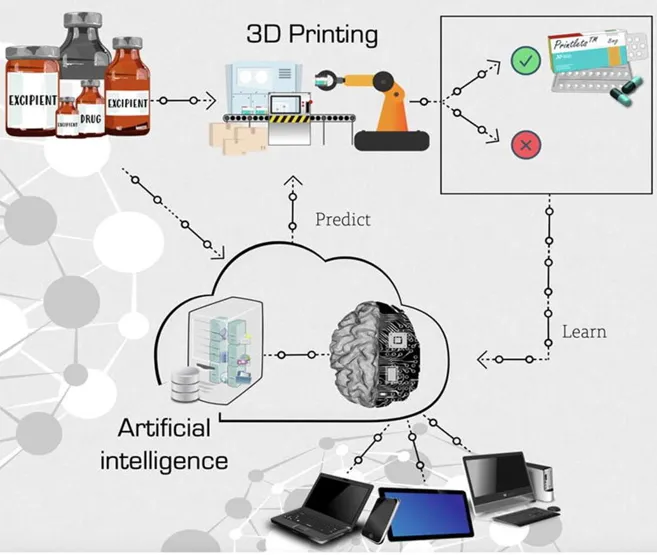
Figure 1: An advanced, closed-loop pharmaceutical manufacturing system that integrates 3D Printing and Artificial Intelligence (AI) to optimize medicine production.
THE TRADITIONAL DRUG DISCOVERY PIPELINE: BOTTLENECKS AND TIME COSTS
The traditional drug development pipeline is associated with extremely high costs and very long timelines and has an approximately 90% failure rate. As reported by the HUB Organoids group, only 10% (1 in 10) of all drug programs will result in a drug receiving regulatory approval. The cost of all unsuccessful programs is borne by the one successful program; consequently, the average cost of an approved drug is approximately 2.5 billion dollars, with the average time to market for a new drug exceeding ten years.
Challenge Statistic:
1. Success - 10% (1 out of 10)
2. Average Cost - 2.5 billion Approved Drug
3. Time to Market - 10 year average
4. Clinical Trial Failure - 90% of clinical trials with drugs fail
5. Primary Cost Driver - Late phase clinical failures (Phase II/Phase III)
The primary bottleneck is late-phase clinical failures, representing over 90% of the total costs associated with R&D efforts in drug development. Traditional preclinical models utilized during preclinical drug testing (animal studies and in vitro studies) do not accurately predict the human clinical response to new drugs and allow unsatisfactory drug candidates to be tested in expensive clinical trials, which occur, in many cases, with exponentially increasing costs.[3]
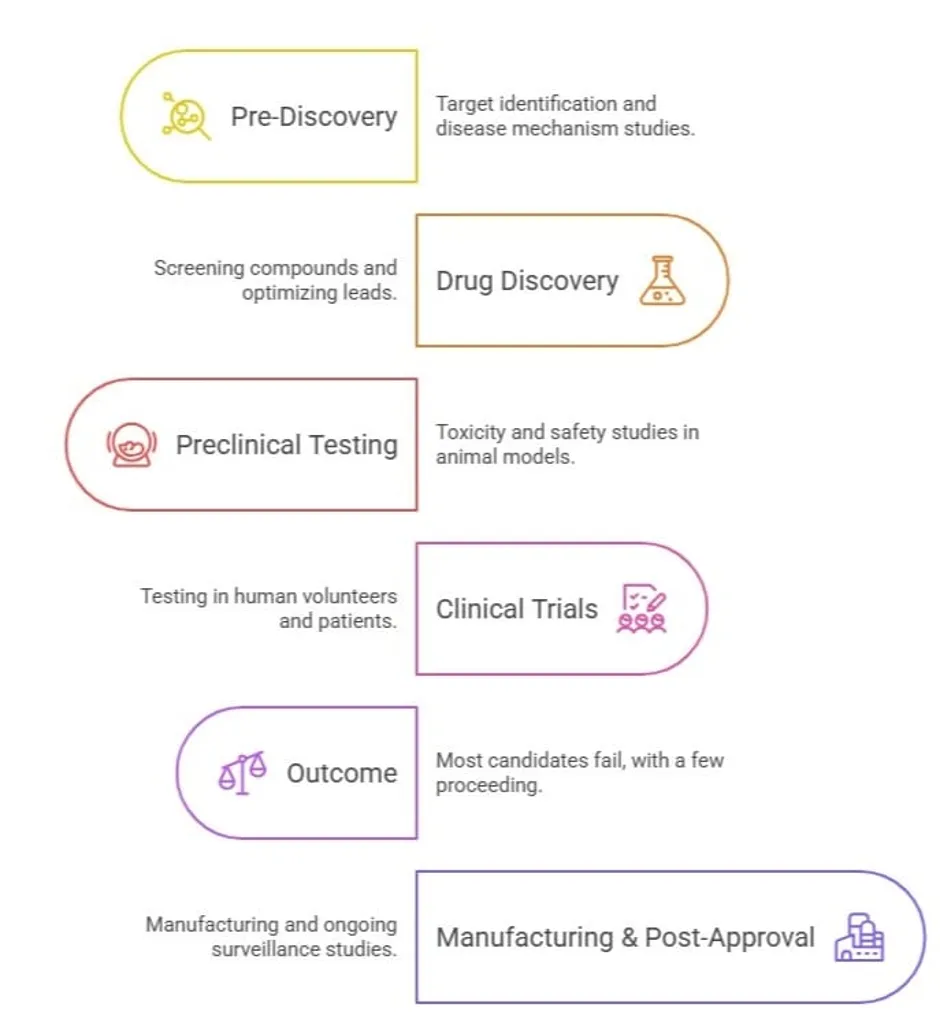
Figure 2: The depicts the sequential phases of the classic drug research, development and commercialization pipeline. Each phase is described from top to bottom.
AI-DRIVEN ULTRA-FAST DRUG DISCOVERY: MECHANISMS AND BREAKTHROUGHS
AI-enabled drug discovery leverages Machine Learning (ML) to eliminate traditional methodologies of drug development that rely on trial and error. Employing Generative Chemistry (GC), these algorithms design and generate new chemical structures (molecules) based upon their predicted binding affinity for a known target. Of note, Convolutional Neural Networks (CNNs) have been used to perform deep learning of protein-ligand interactions at the atomic level, thereby narrowing down the time for lead identification from years to weeks. By integrating High-Throughput Screening (HTS) results into the process of predicting bioactivity, there is a significant decrease in the costs incurred by the overall drug development process. Consequently, this paradigm shift opens up opportunities for rapid response to newly emerging pathogens and provides a platform to develop individualized therapeutics more quickly and efficiently.[4]
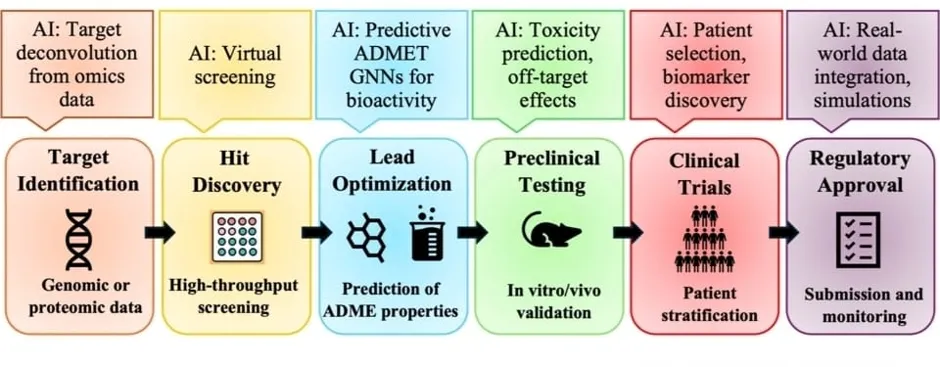
Figure 3: Artificial Intelligence process Improvement(s) is employed throughout all points of product development including but not limited to, identification of drugging targets for new products, to receiving regulatory approval on finished dosage forms based on safety and efficacy data.
SILENT TOXICITY FORECASTS: AI IN PREDICTIVE TOXICOLOGY
Predictive toxicology applies In Silico systems to recognize potential adverse effects from drug appearance before human clinical exposure occurs. Quantitative Structure-Activity Relationship (QSAR) modeling by means of AI can forecast Genotoxicity & Hepatotoxicity based upon chemical structures in populated datasets compared against pre-existing toxic listed chemicals. By utilizing these “silent” prognostic tools as part of any early-phase general toxicology studies and reducing the concerns about the need to use experimental animals for prototype development, an overall reduction in late-stage drug candidate attrition can be achieved via the proactive use of Deep Neural Network processing of multi-omic datasets to define unique and discrete non-linear relationships between chemical exposure and cellular responses associated with ADMET issues.[5]
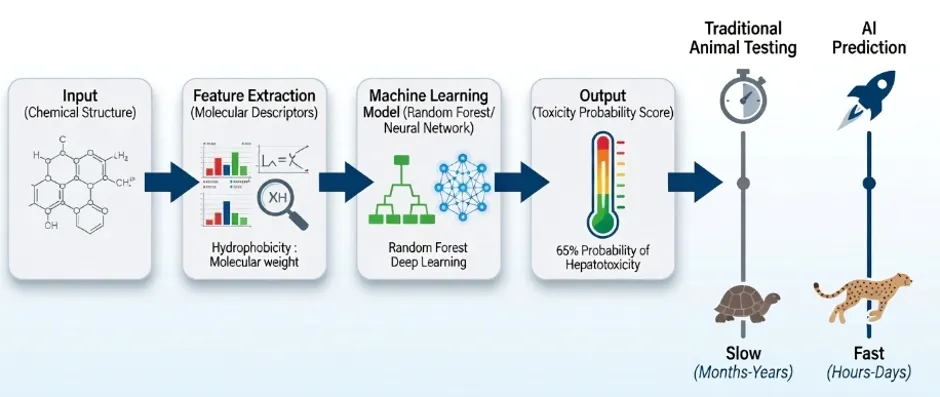
Figure 4: Machine learning is much faster than traditional animal testing; therefore, it only takes hours or days to predict a drug's toxicity from its chemical structure, as opposed to several months to years for animal testing.
FROM LAB TO PATIENT: THE CRITICAL TRANSITION GAP
The transition from the lab to the clinic, also known as the “Valley of Death,” poses a substantial challenge for Translational Medicine. The gap created during this transition arises from the inability of preclinical models to adequately predict human safety and efficacy. In order to bridge the gap successfully, strong PK modeling and biomarker validation will be required. AI has the ability to assist with bridging this gap by providing analysis of Electronic Health Records (EHR) and real-world evidence in order to find subpopulations of patients who are most likely to benefit from treatment. Well-designed Clinical Trials, coupled with regulatory alignment, will be necessary for innovative therapies to successfully move from the bench to bedside, thereby improving patient outcomes.[6]
In Pharmacy, developing a patient care system from laboratory-based research involves overcoming significant roadblocks. The rate at which drug candidates go from the laboratory to the market is around 10%. The gap between laboratory research and clinical use is often called the bench-to-bedside gap. This gap exists because preclinical studies (animal models, in vitro studies) do not accurately predict physiological reactions in humans, thus wasting valuable resources on expensive clinical trials.
The bench-to-bedside gap is symptomatic of poor communication between the academic field and the pharmaceutical industry's challenges in developing reliable, reproducible human-based models and overcoming logistical barriers to the scale of drug production. These barriers can be addressed with cutting-edge technologies such as organ-on-chip devices, utilizing artificial intelligence to develop better predictive computer models, and by utilizing improved biomarker techniques. These tools help close the gap between laboratory research and clinical application, giving patients access to safe, effective medicines.[7]
INTELLIGENT SYSTEMS IN COMMUNITY PHARMACY: TECHNOLOGIES AND APPLICATIONS
Community pharmacy intelligent systems enhance Medication Therapy Management (MTM) by incorporating automation and analytics. Automated Dispensing Systems reduce the risk of human error, while AI-enabled Clinical Decision Support Systems (CDSS) identify potential Drug-Drug Interactions (DDIs). This permits community pharmacists to focus less on technical duties and more on providing direct patient care and providing Telepharmacy services to their patients. Predictive analytics can also be utilized in determining medication adherence behaviour patterns to allow pharmacists to target specific patients with interventions to improve adherence.
By implementing Internet of Things (IoT) devices into pharmacy operations, community pharmacies can monitor cold-chain logistics and inventory in real-time for maintaining the integrity of the pharmaceutical supply chain and for optimising the operational efficiency of the pharmacy.[8]
AI-enhanced technology advancing intelligent systems in the community pharmacy sector are revolutionizing the pharmacy experience by providing tools to improve patient safety with medication; improve efficiency & workflow; and enhance overall quality of care delivered to patients. These tools utilize data analysis for patient medication history, lab values & clinical notes to improve drug interaction detection, provide prediction of likely non-adherence, and recommend individualized therapy modification(s). The most prolific utilizations of this improved technology will be in the areas of managing medication (15% reduction in medication errors and 10% improvement in compliance); automating prescription processing; improving inventory forecasting; providing tele-pharmacy support; and supporting patient experience via AI-based chatbots.
The impact that AI has had on community Pharmacy while identifying potential areas for improvement within the scope of medication management, telepharmacy solutions, as well as some of the challenges faced.[9]
The established that community pharmacy's have experienced a 40% increase in medication adherence and a 55% decrease in the number of missed refills at these locations due to the use of Artificial Intelligence; Additionally, pharmacy staff was able to concentrate on providing individualized care due (to less time spent on managing the workflow).[10]
The mobile connected pharmacy solutions can provide Community Pharmacies with efficient Pharmaceutical Service along with Digital Innovation, this requires a client centric and community centric strategy of care delivery to compliment the individualized nature of patient care and the full electronic integration of all services provided within this facility.[11]
LEGAL FRAMEWORKS GOVERNING AI IN PHARMACY PRACTICE
A comprehensive legal infrastructure is needed to address questions of liability, data sovereignty, and regulatory compliance regarding the use of artificial intelligence (AI) in pharmacy practice. Existing legal infrastructures, such as the European Union's General Data Protection Regulation (GDPR) and the United States' Health Insurance Portability and Accountability Act (HIPAA) establish some level of data protection; however, there are no established and specific legal standards yet for using a machine learning (ML) algorithm in making clinical decisions AI.
The primary legal concern is regarding ML algorithms’ "black box" nature. If a pharmacist uses an AI recommendation and it results in a dispensing error, it is difficult to determine if the pharmacist, software developer, or institution is liable for negligence. The Food and Drug Administration (FDA) recently implemented its Software as a Medical Device (SaMD) action plan to develop regulation for AI modifications. This includes requiring manufactures to provide premarket verification of safety and efficacy. Legal experts suggest that the requirement for a "human-in-the-loop" exists to hold pharmacists ultimately responsible for their professional judgment to reduce the impact of algorithmic failure.[12]
The FDA has provided draft guidance for the use of AI in drug development in the US, including a risk-based framework to assess the credibility of AI models used in this process. This guidance, titled "Considerations for the Use of Artificial Intelligence to Support Regulatory Decision-Making for Drug and Biological Products," represents the first time the FDA has published guidance on the topic of AI and drug development and seeks to encourage early engagement with sponsors who will be developing AI-supported products. Louisiana's Board of Pharmacy has also issued pioneering policy language that states that "AI shall be used exclusively as a support mechanism and shall not serve as a substitute for the pharmacist's professional judgment, clinical decision-making ability, patient counseling capabilities, final verification of prescriptions, or regulatory compliance responsibilities".[13]
This policy will allow for the same use of AI as is currently permitted for other existing forms of decision support such as drug interaction databases and Drug Utilization Review (DUR) systems, whereby the pharmacist will continue to have ultimate accountability for dispensing medications correctly. The FDA has also issued guidance on the use of Clinical Decision Support Software (CDSS) that clarifies the ability to define public oversight of CDSS activities based on the specific functions performed by the AI system, such as the performance of certain functions that are subject to device regulation under the 21st Century Cures Act and that there are many types of devices for which CDSS are not devices and so are not subject to regulation.[14]
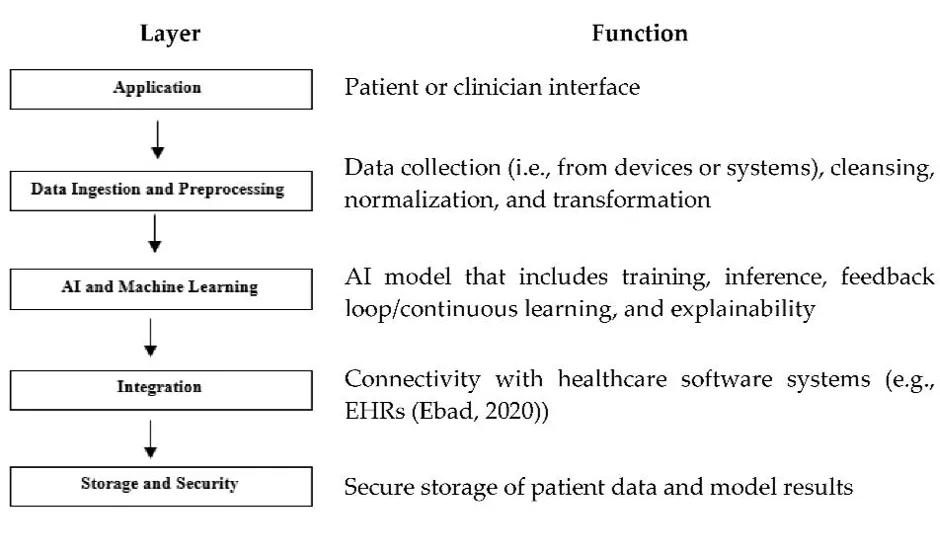
Figure 5: The system operates as a five-step pipeline where user data is collected and cleaned an AI model, and then seamlessly integrated and securely stored within heathcare software networks
ETHICAL DIMENSIONS OF AI-SUPPORTED PHARMACY CARE
The ethical use of artificial intelligence (AI) in pharmacy falls under the four principles of bioethics: autonomy, beneficence, non-maleficence and justice. One important ethical issue associated with the deployment of AI in pharmacies is algorithmic bias. AI models that are built using unrepresentative data sets could give poor-quality recommendations to minority groups. This violates the principle of justice and will further worsen health inequities. Additionally, when patients do not know that an algorithmic system is conducting medication therapy management or helping to optimize medication therapy, the principle of informed consent is undermined.
The concept of Explainable AI (XAI) has been developed in order to achieve transparency whereby pharmacy staff can understand why AI produced particular outputs. The pharmacist must be able to communicate to patients the reasoning behind any drug recommendations provided by AI and this maintains the integrity of the pharmacist-patient relationship. Ethical frameworks must also account for the presence of "automation bias," whereby pharmacists may become overly dependent on AI recommendations and not use their own judgment when providing care.[15]
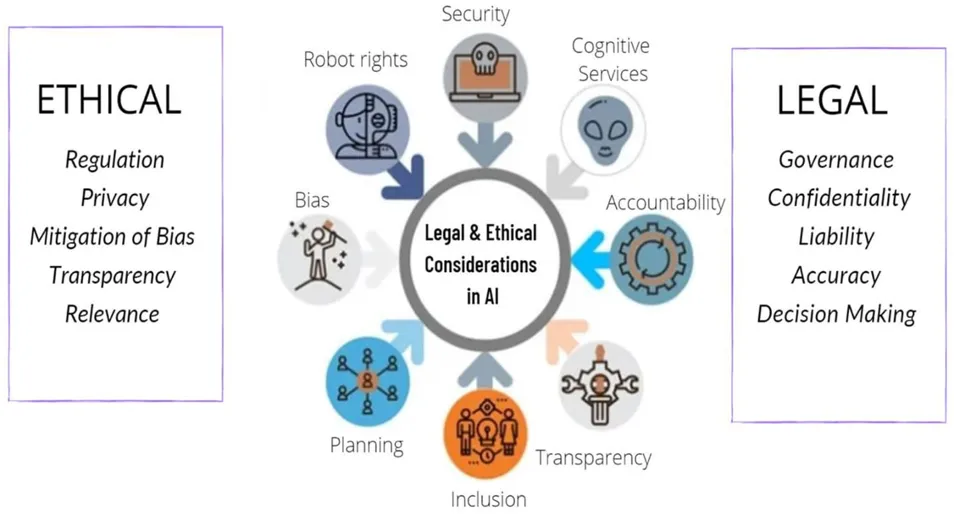
Figure 6: Various ethical and legal conundrums involved with the usage of artificial intelligence in healthcare
MEDICATION MONITORING AND PATIENT SAFETY: THE PHARMACIST’S INTELLIGENT GUARDIANSHIP
Artificial intelligence works as an "intelligent guardian" through improving pharmacovigilance and decreasing the amount of Medication Errors (MEs). Traditional monitoring methods can frequently have "alert fatigue" from the high rate of false positives. However, AI algorithms are capable of analyzing extensive Electronic Health Record (EHR) data in real time and can find less evident patterns related to Adverse Drug Events (ADEs). Additionally, AI is able to utilize Natural Language Processing (NLP) to interpret clinical notes and discover possible side effects well in advance of their being officially acknowledged.[16]
As the last line of defense against errors in the medication use process, pharmacists have a unique position to prevent medication errors prior to patients receiving their medication. In addition to all of their many responsibilities, one of the most important responsibilities of a pharmacist is to help ensure medications are prepared and used safely. Pharmacists look at how to properly dose patients, whether there are contraindications to taking certain medications, whether there are potential drug-drug interactions, possible adverse effects, etc., and make recommendations to the practitioner on how to address any of these concerns. Because pharmacists are experts in the medication field, they are excellent resources for both prescribers and patients when it comes to developing safe medication use practices.
Pharmacists have a critical role in identifying and preventing medication errors during all four phases of use: storage, prescribing, transcription, preparation, dispensing, administration, and monitoring. In addition to assisting with medication-related problems throughout all stages of medication use, pharmacists play an important role in promoting safe medication use by counseling patients regarding the indications for taking a medication, the outcomes desired from therapy, what the patient should expect from therapy, how to take the medication, how to store the medication, how to monitor their condition, and what to do if they experience an adverse effect.
A cluster-randomized controlled trial of hospitalized patients with complex medication regimens found that when a pharmacist was involved in the medication therapy of those patients, there was a tremendous reduction in the number of errors made while giving those medications to those patients within the first 24 hours. A meta-analysis of studies examining the role of pharmacists in providing medication therapy to patients during the transition from hospital to home estimated that pharmacist interventions.
Through the use of Artificial Intelligence in the field of Clinical Pharmacy, Clinical Pharmacists can quickly identify potential adverse drug events (ADEs), prescription errors, and personalize their patients' treatment plans based on their history of drug use. Artificial Intelligence-based algorithms have been established as an effective method of finding potential ADEs, predicting how individual patients will respond to medications and creating treatment plans based on their needs.When looking specifically at older patients, the results indicate that Machine Learning algorithms can accurately identify potentially Inappropriate medications (PIMs) in the elderly.
Similarly, An additional benefit of using AI-driven systems in pharmacies is the enhanced operational efficiencies created by improving inventory management systems and prescription processing time, allowing pharmacists to spend more time providing direct patient care. However, there are limitations to AI use in pharmacy practice, such as lack of consensus regarding clinically significant DDI prediction between pharmacists and AI systems and complications surrounding the development of region-specific clinical guidelines. Therefore, AI should always be viewed as a complementary tool to human professionals and never as a replacement for the human pharmacist's clinical judgement.[17]
MTM (Medication Therapy Management) is an effective tool to help people adhere to their medications. Studies have shown that adherence increases by 10% when patients receive MTM services compared to other methods of treatment. MTM has also shown to reduce the use of healthcare services. There are significant reductions (20%) in hospitalizations of heart failure patients and (15%) in emergency room visits due to MTM service provisions.
Some of the ways pharmacists help their patients adhere to their medications through MTM services include monitoring patient adherence through reviewing the patient's history and recommending/improving adherence, by determining why the patient might not be taking their medication as prescribed For patients receiving MTM services, ongoing support from their pharmacist through the Adherence Monitoring Program (AMP), which is a longitudinal service (multiple patient contacts), enable them to achieve their target adherence rates (≥80% Proportion of Days Covered).
Pharmacists perform MTM services to help identify patients taking multiple medications or medications that may be causing side effects and recommend a simpler medication regimen.. Pharmacists also work in collaboration with prescribers and clinicians through routine medication management to improve the overall clinical outcomes by closely monitoring how the patient responds to the prscribed medication and making adjustments as needed.
Pharmacists' continued involvement with a patient greatly improves patient adherence, which results in increased patient outcomes, providing positive impacts to adherence-related quality measure(s). There are many patients receiving MTM services that report they have improved physical & mental health, indicating the broad impact on their overall well-being, particularly for patients with chronic diseases such as diabetes and hypertension.
CONCLUSION
The triad of clinical expertise, legal and ethical governance, and advanced technology will play an integral part in developing pharmacy into a viable profession over the coming years. The role of the pharmacist is expected to evolve significantly as we prepare for a single, unified artificial intelligence-enabled future. Currently, the pharmacists' primary function is to perform routine technical functions (such as dispensing), but in the future, their role will be to provide advanced precision medicine and patient counseling. By combining human intelligence with machine-based artificial intelligence (AI), there will be opportunities to develop individualized therapeutic regimens using each person's genetic, lifestyle, and metabolic information.
AUTHOR CONTRIBUTIONS: All authors have contributed equally and substantially.
FUNDING: No funding.
CONFLICT OF INTEREST: The author declares no conflict of interest. The manuscript has not been submitted for publication in any other journal.
ETHICS APPROVAL: Not applicable.
AI TOOL DECLARATION: No Al and associated tools are used for writing scientific content in the article.
REFERENCES

Karthikeyan Ganesamoorthi, Synaptic Molecules to Street-Level Care: AI’s Unseen Triad of Ultra-Fast Drug Discovery, Silent Toxicity Forecasts, and Community Pharmacists’ Intelligent Ethical Guardianship, Int. J. of Pharm. Sci., 2026, Vol 4, Issue 6, 4066-4076. https://doi.org/10.5281/zenodo.20727788
 10.5281/zenodo.20727788